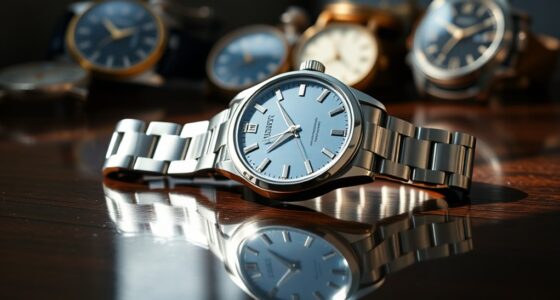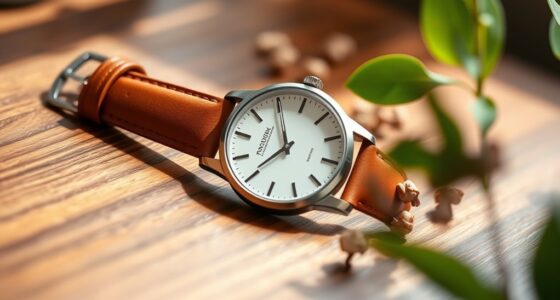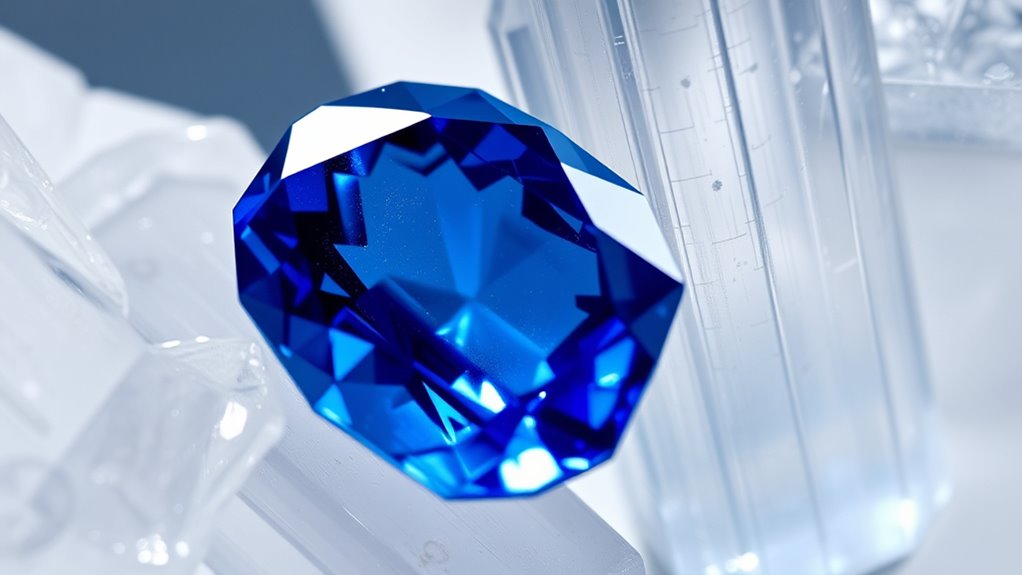

If you’re choosing between sapphire and mineral crystal for your watch, sapphire crystal is the better option because it’s highly scratch-resistant and maintains a clear, pristine appearance over time. Mineral crystal is more affordable but is easily scratched and less durable in the long run. While sapphire may be more prone to shattering upon hard impacts, it offers superior overall durability. Keep going to discover more details to help you decide the best fit for your needs.
Key Takeaways
- Sapphire crystal has a higher hardness (Mohs 9), making it more scratch-resistant than mineral crystal (Mohs 5-6).
- Mineral crystal is more prone to surface scratches and dulling over time compared to sapphire crystal.
- Sapphire offers superior optical clarity and minimal distortion, enhancing the watch’s appearance.
- Mineral crystal can absorb impacts better but is more likely to shatter than sapphire during hard hits.
- Sapphire crystal generally costs more but provides greater durability and long-term pristine condition.
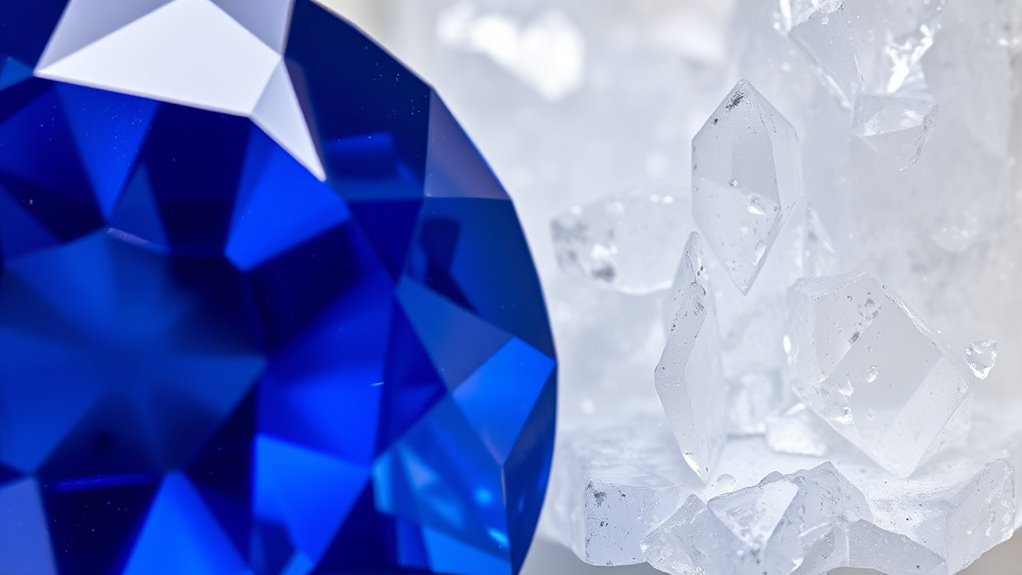
When choosing a watch or jewelry, understanding the difference between sapphire and mineral crystal is essential, as it directly affects durability and clarity. One of the key factors you should consider is the watch face durability, especially how well it withstands daily wear and tear. Sapphire crystal is renowned for its exceptional scratch resistance, making it highly durable against accidental bumps and abrasions. If you tend to wear your watch frequently or work in environments where the face could easily get scratched, opting for a sapphire crystal will keep your watch looking pristine for years. Mineral crystal, on the other hand, offers decent durability but isn’t quite as resistant to scratches. It can withstand minor impacts, but over time, small scratches may accumulate, dulling the clarity of your watch face.
Sapphire crystal offers superior scratch resistance, ensuring your watch remains pristine through daily wear and tear.
The difference in scratch resistance between these two materials is significant. Sapphire crystal’s hardness score on the Mohs scale is around 9, just below diamond, which means it’s highly resistant to scratches. Mineral crystal, with a Mohs hardness of about 5 to 6, is much more susceptible to surface damage. This means that, without proper care, mineral crystal can show signs of wear relatively quickly, especially if you’re rough on your possessions or work in demanding environments. So, if keeping your watch face looking flawless is a priority, sapphire crystal provides a clear advantage.
Additionally, the clarity of the watch face depends on the material used. Sapphire crystal generally offers excellent transparency, providing a crystal-clear view of the dial with minimal distortion. Its optical clarity is superior, which enhances the overall appearance of the watch. Mineral crystal, while still transparent, may have slight distortions or a less polished finish, which can affect how you perceive the dial underneath. If you want a clean, sharp look that remains clear over time, sapphire crystal is the better choice. Moreover, sapphire crystal’s resistance to surface damage helps maintain a pristine appearance longer than mineral crystal.
However, it’s worth noting that sapphire crystal can be more prone to shattering upon hard impacts compared to mineral crystal, which tends to absorb shocks better due to its slightly more flexible nature. But in terms of everyday scratch resistance and maintaining a pristine appearance, sapphire crystal clearly outperforms mineral crystal. When considering your purchase, weigh these aspects carefully: if durability and maintaining a flawless watch face matter most, go for sapphire. If you’re on a budget and can accept some scratches over time, mineral crystal might suffice, but remember that your watch’s clarity could diminish faster.
Top picks for "sapphire mineral crystal"
Open Amazon search results for this keyword.
As an affiliate, we earn on qualifying purchases.
Frequently Asked Questions
Which Watch Brands Predominantly Use Sapphire Crystals?
You’ll find that luxury brands like Rolex, Omega, and Tag Heuer mainly use sapphire crystals for their watches, offering durability and scratch resistance. If you’re on a budget, some brands may use mineral crystals instead, which are less expensive but also less scratch-resistant. By choosing a watch with a sapphire crystal, you guarantee better long-term clarity and protection, making it a smart investment regardless of your preferred brand.
How Does Temperature Affect Sapphire and Mineral Crystal Durability?
When exposed to temperature changes, you might notice that sapphire and mineral crystals behave differently. Sapphire’s exceptional thermal expansion makes it resistant to cracking, but extreme heat can still cause brittle behavior, risking damage. Mineral crystals, being more prone to thermal expansion, may crack or shatter faster under sudden temperature shifts. So, always avoid exposing your watch to extreme heat or cold, or you risk costly damage from these subtle, yet impactful, effects.
Can Mineral Crystals Be Easily Repaired or Replaced?
Mineral crystals can be challenging to repair or replace due to repairability concerns and replacement challenges. You might find that repairing a scratched or damaged mineral crystal isn’t straightforward, often requiring professional polishing or replacement. Unlike sapphire, mineral crystals lack the durability for easy repairs, so you should be prepared for potential replacement costs and efforts if they become considerably damaged.
Are There Differences in Scratch Resistance Between Sapphire and Mineral?
You’ll find that sapphire has markedly better scratch resistance due to its higher surface hardness compared to mineral crystal. This means it’s less likely to develop scratches from everyday impacts. While mineral crystal offers decent impact resistance, it’s more prone to scratches and surface damage. So, if you want durability and a pristine look, sapphire is the better choice for resisting scratches and maintaining clarity over time.
What Are the Environmental Impacts of Manufacturing Sapphire vs. Mineral Crystals?
Manufacturing sapphire involves high-temperature processes and significant energy consumption, which can lead to a larger environmental impact due to higher carbon emissions. In contrast, mineral crystals like glass are produced through simpler, less energy-intensive manufacturing processes, resulting in a smaller environmental footprint. You should consider these factors when choosing materials, as sapphire’s production may contribute more to environmental degradation, while mineral crystals tend to be more eco-friendly.
Conclusion
When choosing between sapphire and mineral crystal, you should consider durability and clarity. Sapphire, being more scratch-resistant, offers lasting beauty, while mineral crystal provides a budget-friendly option. But isn’t investing in quality worth it when it comes to your timepiece? Ultimately, it depends on what matters most to you—longevity or affordability. So, which crystal will you trust to protect your watch and keep it looking new for years to come?

Born in Dubai to Pakistani parents, Aisha deeply understands Middle Eastern and South Asian luxury markets. She excels in forging strategic partnerships with top-tier luxury brands worldwide, fostering cross-cultural collaborations that enhance our global presence.