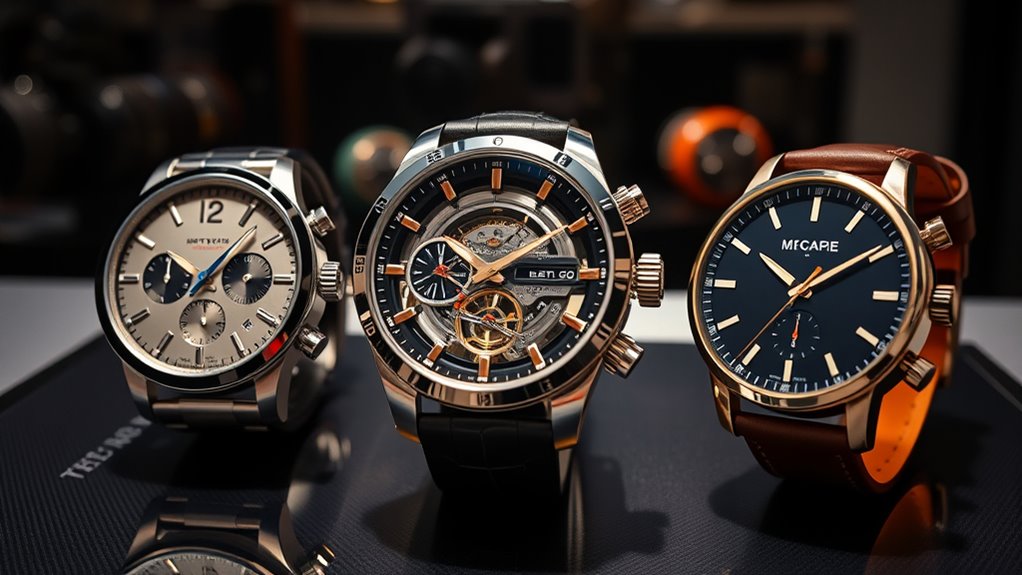

When choosing between ETA movements, in-house calibers, and microbrand innovations, you’re considering different levels of craftsmanship, exclusivity, and innovation. ETA offers reliable and affordable performance, perfect for practical daily wear. In-house movements showcase mastery and uniqueness, appealing to collectors seeking exclusivity. Microbrands focus on innovation, storytelling, and niche appeal, standing out with fresh ideas. Each choice shapes how you connect with a watch’s history and value—explore further to discover which best matches your passion.
Key Takeaways
- In-house movements showcase craftsmanship and exclusivity, emphasizing technical mastery and brand authenticity.
- ETA calibers offer reliability, affordability, and widespread availability, making them popular for practicality and ease of maintenance.
- Microbrands innovate by developing or customizing movements, emphasizing uniqueness, storytelling, and technological advancement.
- Movement choice influences consumer perception, aligning with values of tradition, innovation, or exclusivity.
- Each movement type impacts brand identity, market positioning, and consumer appeal within the watch industry.
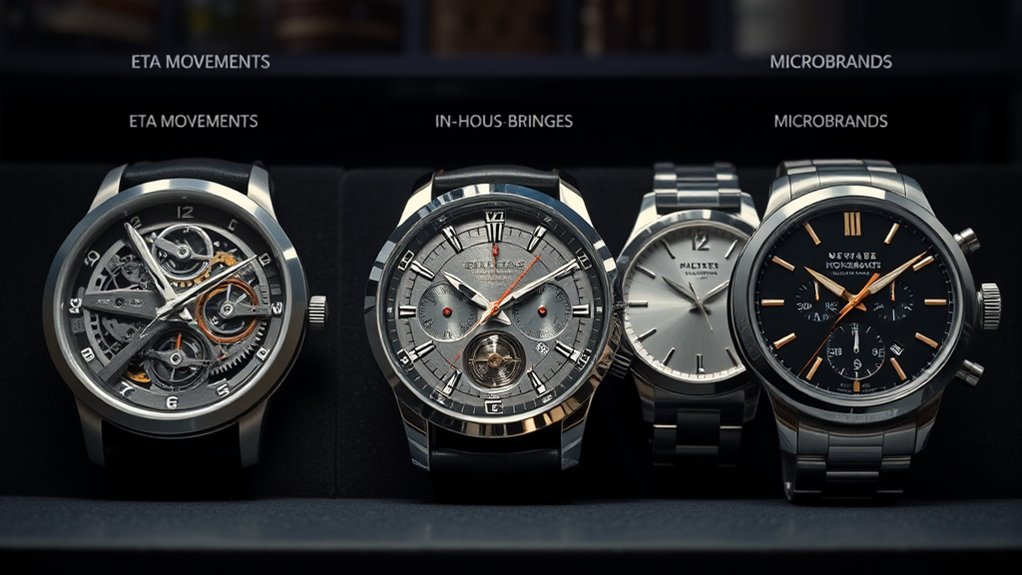
When it comes to watch movements, enthusiasts and collectors often find themselves choosing between established ETA calibers, in-house developments, and microbrand innovations. Each option reflects different philosophies and appeals to distinct segments within the luxury market. Your decision hinges on understanding how consumer behavior influences preferences and what each movement type signifies for quality, exclusivity, and value. In the luxury market, brands with in-house movements often project a sense of mastery and innovation. These developments emphasize craftsmanship, technical prowess, and a desire to stand out through unique, proprietary parts. For you, choosing a watch with an in-house movement can symbolize a commitment to exclusivity and an appreciation for the brand’s technical achievements. It’s a statement of owning a piece of watchmaking history that’s less likely to be replicated, aligning with consumer behavior that seeks authenticity and prestige. However, these movements generally come with higher price tags, as the investment in R&D and manufacturing is substantial. This appeals to collectors who prioritize craftsmanship and are willing to pay a premium for a piece that reflects a brand’s horological independence. On the other hand, ETA calibers—produced by the Swiss company ETA—are renowned for their reliability, affordability, and widespread availability. They form the backbone of many luxury and mid-tier brands, offering a dependable, mass-produced option that balances quality with cost. If you’re driven by practicality and value, opting for a watch with an ETA movement aligns with consumer behavior focused on versatility and proven performance. Many buyers appreciate the familiarity and ease of maintenance associated with ETA calibers, making them a popular choice among those new to watch collecting or seeking a versatile daily wearer. Microbrands, meanwhile, often innovate by developing their own movements or customizing existing ones. Their approach reflects a desire to differentiate themselves and appeal to niche markets. If you’re the type who values uniqueness and innovation, microbrand movements might resonate with your preferences. These brands tend to appeal to consumers who want something less mainstream, emphasizing storytelling, craftsmanship, and a sense of community. Microbrands often leverage emerging technologies and unconventional designs to create watches that feel fresh and original. Additionally, some microbrands invest heavily in movement innovation, demonstrating their commitment to technical advancement and differentiation. This aligns with consumer behavior that favors individuality and supporting smaller, independent companies. Overall, your choice among ETA, in-house, or microbrand movements depends on what you value most—whether it’s tradition, innovation, or exclusivity—and how you perceive your role within the luxury market. Each movement type reflects different consumer preferences, shaping not just what you wear but how you connect with watchmaking’s broader narrative.
ETA watch movement
As an affiliate, we earn on qualifying purchases.
As an affiliate, we earn on qualifying purchases.
Frequently Asked Questions
How Do Movement Types Impact Watch Pricing?
The type of movement considerably impacts watch pricing because it affects brand reputation and customization options. In-house movements often elevate a brand’s prestige, justifying higher prices due to craftsmanship and exclusivity. Microbrands and ETA movements might lower costs but can also limit customization options, influencing affordability. Your choice of movement reflects the quality and prestige you desire, which directly shapes the watch’s overall value and price point.
What Are the Durability Differences Among ETA, In-House, and Microbrands?
You’ll notice durability varies based on movement innovation and brand prestige. ETA movements are reliable, proven over time, but may lack the latest tech. In-house movements often incorporate advanced materials, boosting durability and performance, reflecting a brand’s prestige. Microbrands, with less extensive resources, might use more basic movements, which can be less durable. Your choice depends on balancing innovation, reputation, and how tough you need your watch to be daily.
Can Movement Origin Affect Watch Resale Value?
Yes, movement origin can affect your watch’s resale value because collector preferences often favor specific origins. While some might think brand reputation matters more, many buyers value the craftsmanship behind the movement. Knowing whether a watch has an ETA, in-house, or microbrand movement can influence your resale price, especially if collectors seek authenticity or specific movement origins. So, understanding this can help you make smarter buying and selling decisions.
Are In-House Movements More Reliable Than ETA?
In-house movements generally offer better reliability because they embody heritage craftsmanship, reflecting meticulous attention to detail. They also showcase innovation efficiency, as brands continuously improve their designs. While ETA movements are proven and dependable, in-house calibers often benefit from dedicated research and development, leading to enhanced durability. Ultimately, your choice depends on your preference for tradition versus innovation, but in-house movements typically provide a more refined, reliable experience.
How Do Maintenance Needs Vary Between Movement Types?
You’ll find that maintenance needs vary based on movement type. For example, in-house movements often require factory calibration more frequently due to complex components, while microbrands with sourced components might need less frequent adjustments. Regular servicing ensures peak performance; consider that factory calibration and consistent component sourcing help maintain accuracy and reliability, reducing long-term maintenance. Stay proactive to keep your watch running smoothly, regardless of the movement type.
in-house watch movement
As an affiliate, we earn on qualifying purchases.
As an affiliate, we earn on qualifying purchases.
Conclusion
So, here you are, caught between the allure of ETA’s legacy, the charm of in-house innovation, and the rebellious spirit of microbrands. It’s a thrilling chaos, isn’t it? Just remember, whether you’re chasing tradition or the next big thing, you’re basically auditioning for a role in the grand soap opera of horology. Keep watching, keep questioning—after all, in this game, everyone’s a potential star, or just a fleeting cameo.
microbrand watch movement
As an affiliate, we earn on qualifying purchases.
As an affiliate, we earn on qualifying purchases.
automatic watch movement
As an affiliate, we earn on qualifying purchases.
As an affiliate, we earn on qualifying purchases.

Born in Dubai to Pakistani parents, Aisha deeply understands Middle Eastern and South Asian luxury markets. She excels in forging strategic partnerships with top-tier luxury brands worldwide, fostering cross-cultural collaborations that enhance our global presence.