

To properly manually wind your watch, hold it firmly but gently, turning the crown smoothly clockwise until you feel resistance—stop there to avoid damage. Wind at the same time every day to keep the mainspring fully charged and guarantee accurate timekeeping. Always check for any unusual resistance or looseness, and don’t force it. Keeping your watch clean and having it serviced regularly helps it run smoothly for years—learn more about best practices to preserve its longevity.
Key Takeaways
- Wind the crown slowly and smoothly clockwise until resistance is felt; avoid forcing beyond this point.
- Wind daily at the same time to maintain consistent power and accuracy.
- Keep the watch clean and check for dirt or moisture buildup regularly.
- Stop winding immediately if resistance feels unusual or the crown feels loose; seek professional inspection.
- Handle the watch gently to prevent internal damage and extend its lifespan.
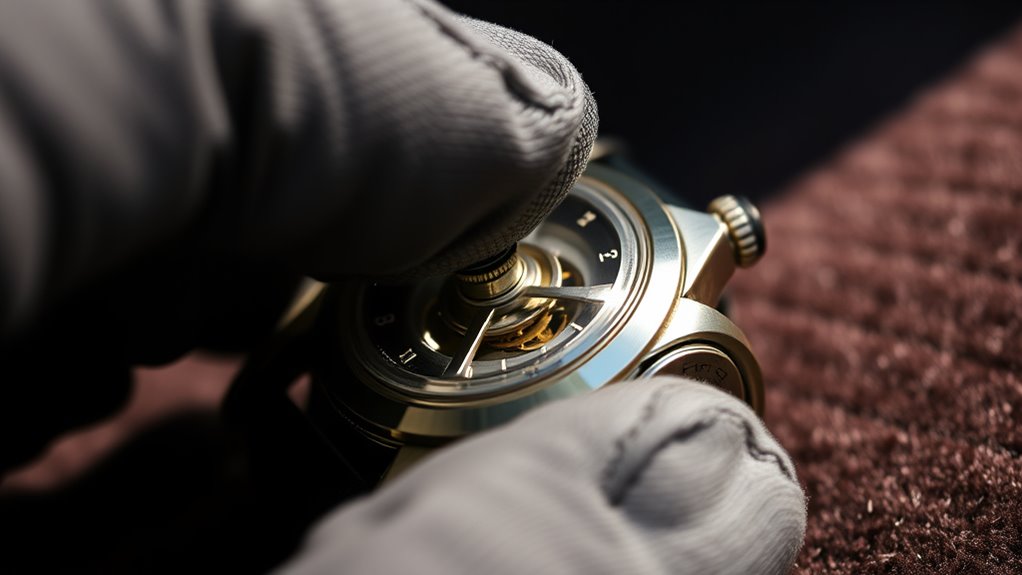
Have you ever wondered how to keep a mechanical watch running without relying on batteries? Manual winding is a simple yet precise process that requires your attention to detail and a bit of care. To guarantee your watch keeps accurate time and remains in good condition, understanding proper watch maintenance and winding techniques is essential. When you wind your watch correctly, you improve winding accuracy and extend its lifespan, making sure it functions smoothly for years to come.
The first step is to handle your watch gently. Hold it firmly but avoid applying excessive force when winding. Over-winding can damage the mainspring, which is responsible for powering your watch. Most manual watches have a crown, usually located at 3 o’clock, which you use to wind the movement. Start by turning the crown slowly and smoothly in a clockwise direction. You’ll feel some resistance as the mainspring tightens; once you feel resistance and the crown stops turning easily, you’ve reached the ideal winding point. Don’t force it beyond this, as over-winding can cause strain or damage the internal components.
Handle your watch gently—stop winding when resistance is felt to prevent damage.
Winding your watch at regular intervals is key to maintaining its accuracy. Typically, daily winding, preferably at the same time each day, helps keep the watch running consistently. This habit ensures that the mainspring remains fully wound, which directly impacts winding accuracy and timekeeping. If your watch has a power reserve indicator, aim to wind it until you see it is fully charged, but avoid going past that point. Proper watch maintenance isn’t just about winding; it also involves keeping your watch clean and free from dust and moisture. Regularly check the crown and case for dirt, and have your watch serviced professionally every few years to keep the movement in top shape.
Another aspect of good watch maintenance is to be aware of how the watch responds during winding. If you notice unusual resistance or if the crown feels loose, stop winding immediately and have it checked by a professional. This could indicate internal issues that need addressing before they worsen. Additionally, watch manufacturers recommend avoiding exposure to strong magnetic fields, which can disrupt the accuracy of your watch’s movement. Winding accuracy depends on your gentle handling and consistency. By winding carefully and regularly, you ensure your watch remains precise and reliable. Over time, you’ll develop a feel for the right amount of tension, which helps prevent damage and keeps your timepiece performing at its best.
In essence, manual winding isn’t just about turning the crown; it’s about respecting your watch’s mechanics and taking proactive steps to preserve its accuracy and longevity. Proper watch maintenance and mindful winding practices allow you to savor the craftsmanship of your mechanical watch and enjoy accurate timekeeping for years.
manual watch winding tool
As an affiliate, we earn on qualifying purchases.
As an affiliate, we earn on qualifying purchases.
Frequently Asked Questions
How Often Should I Manually Wind My Watch?
You should manually wind your watch once a day, especially if it has a limited power reserve. This keeps the automatic winding mechanism active and makes certain your watch stays accurate. If you wear it daily, automatic winding usually takes care of itself, but manual winding helps when it’s not worn regularly. Be gentle and stop winding once you feel resistance to avoid damaging the movement.
Can Manual Winding Damage My Watch?
Winding your watch too aggressively might be like giving it a rough hug; it’s unlikely to cause damage if you’re gentle. By maintaining proper winding frequency and handling it with care, you keep your watch in good shape. Watch wear is designed for regular winding, so as long as you’re respectful of its limits, you won’t harm it. Just avoid overwinding, and your watch will reward you with years of reliable service.
What Is the Ideal Position for Winding?
You should hold your watch in a comfortable, upright position for winding, guaranteeing the watch position allows a gentle winding angle. Keep the crown vertical or slightly inclined to avoid excessive pressure on the movement. Winding at the correct angle helps prevent damage and ensures smooth tension. Avoid winding your watch at extreme angles or with too much force, as this can strain the movement and affect its accuracy over time.
How Do I Know if My Watch Is Fully Wound?
You’ll know your watch is fully wound when it stops running or you feel resistance while turning the crown. Automatic winding watches rely on movement to stay powered, but manual winding fills the power reserve. If your watch isn’t wearing or moving regularly, winding it until you feel slight resistance guarantees you’ve reached its maximum power reserve. Don’t overwind, as it can damage the movement over time.
Is Manual Winding Suitable for All Watch Types?
You might think manual winding suits all watches, but that’s not true. Automatic watches are designed for manual winding, enhancing their accuracy and lifespan, while quartz watches don’t need winding at all. Winding a manual watch won’t harm it, but it’s unnecessary for quartz models. So, check your watch type first—manual winding is perfect for automatics, but not for quartz watches, which rely on batteries instead.
watch crown winder
As an affiliate, we earn on qualifying purchases.
As an affiliate, we earn on qualifying purchases.
Conclusion
So, after all that fuss about careful winding and gentle handling, you’d think your watch would run forever. But don’t forget, even with tender love, it’s still a tiny machine that needs your attention—like a pet that prefers daily walks over neglect. So go ahead, wind it up. Just remember, your watch’s reliability depends on your care, proving that sometimes, the tiniest effort makes the biggest difference—until it doesn’t.
watch cleaning kit
As an affiliate, we earn on qualifying purchases.
As an affiliate, we earn on qualifying purchases.
watch servicing tools
As an affiliate, we earn on qualifying purchases.
As an affiliate, we earn on qualifying purchases.

Born in Dubai to Pakistani parents, Aisha deeply understands Middle Eastern and South Asian luxury markets. She excels in forging strategic partnerships with top-tier luxury brands worldwide, fostering cross-cultural collaborations that enhance our global presence.