
TL;DR

Get your wardrobe favorites delivered free with Prime
- Fast, free delivery on millions of items
- Prime Video, Amazon Music and more included
- Member-only deals all year
Luxury men’s watches combine purposeful design, considered materials, and careful construction, but a high price or famous name does not guarantee better quality or investment returns. Choose by how the watch fits, works, and feels in your daily life, then budget for service, insurance, and repairs.
A watch can cost as much as a used car and still feel wrong on your wrist. The best luxury watch for you is the one that fits your day, your comfort, and your taste—not the one with the loudest name.
Here’s how to compare movements, materials, styles, fit, and ownership costs. You’ll also learn what to check before buying pre-owned, so the watch you choose feels like a pleasure to wear rather than a puzzle to justify.
Choose mechanical or quartz by your preferences for winding, accuracy, and upkeep.
Compare materials by their tradeoffs: steel is versatile, precious metals cost more, and ceramic resists scratches but can chip.
Try watches on; case diameter alone can’t tell you how a model will fit.
Budget for service, insurance, taxes, and repairs, and treat resale value as uncertain.
For a pre-owned watch, check the seller, reference, condition, service history, and return policy; box and papers alone don’t establish authenticity.
What makes a men’s watch feel luxurious?
A luxury men’s watch pairs reliable construction with thoughtful design, careful finishing, and support you can access over time. Its value can come from the movement, materials, assembly, brand history, or a combination of these. The word “luxury” describes a range, not a universal quality score.
Imagine two steel watches with similar cases. One may have crisp edges, a bracelet that moves smoothly, and a clear, well-balanced dial; another may rely more on its logo. Those small details are like the stitching on a well-made jacket: you notice them most when you live with the object. They matter because they shape both daily comfort and how the watch holds up to regular handling. Fine finishing can make a watch feel considered, but it does not automatically make the movement more accurate or the watch easier to service.
Brand history and the “Swiss Made” label can help you understand a watch’s background, but neither answers every question about workmanship. A well-made sourced movement can serve you as well as an in-house one, and a familiar name doesn’t guarantee a bargain. An in-house movement may appeal if its design or finishing interests you, while a widely used movement may offer more repair options; the practical difference depends on the specific watch and local service support. Judge the watch you can actually inspect, wear, and service.
Choose a movement that suits how you keep time
Luxury men’s watches use either mechanical or quartz movements, and the right choice depends on how you want to wear and maintain yours. Mechanical watches use a mainspring and a system of gears to keep time. In an automatic watch, movement from your wrist winds the spring; a manual watch needs winding by hand. That mechanism gives many owners a tactile connection to the watch, but it also means timekeeping and upkeep depend on a small machine with moving parts.
Quartz watches run on a battery and are generally more accurate and lower maintenance. Mechanical watches offer the pleasure of a tiny moving machine, while quartz often makes sense if you want to pick up a watch and trust it to be ready. Neither choice says anything about how much you care about watches. With an automatic, a watch left unworn may stop and need resetting; with quartz, battery replacement is a simpler routine task, though the watch still needs checks and repairs over its lifetime. Mechanical service can cost more because it involves inspecting and adjusting the movement, so consider whether the ritual and feel are worth that commitment to you.
A chronograph adds stopwatch functions, while a date display or second time zone can make travel easier. These features, called complications, add practical uses and mechanical complexity. Each added function can make the dial busier and may add parts that need adjustment or repair, so choose features you expect to use. If you regularly call family overseas, a second time zone may earn its space on the dial; if you never time anything, a plain face may feel calmer.
Match the case and strap to the way you’ll wear it
Steel suits regular wear, while gold and platinum add weight and cost; ceramic resists scratches but can be brittle. Sapphire crystal is prized for its scratch resistance. These materials give you different tradeoffs, much like choosing a suitcase: a lighter option may travel easily, while a heavier one can feel substantial in hand. Think about where the watch will meet hard surfaces and whether you value a material’s appearance enough to accept its care needs. Scratch resistance can keep a watch looking newer, but it cannot prevent every kind of damage.
| Feature | What it offers | What to weigh |
|---|---|---|
| Stainless steel | Versatile and durable | Can feel heavy, depending on the case and bracelet |
| Gold or platinum | Precious-metal character and weight | Higher cost; scratches still happen |
| Ceramic | Strong resistance to scratches | Can crack or chip if struck |
| Sapphire crystal | Good scratch resistance | Can still be damaged by a hard impact |
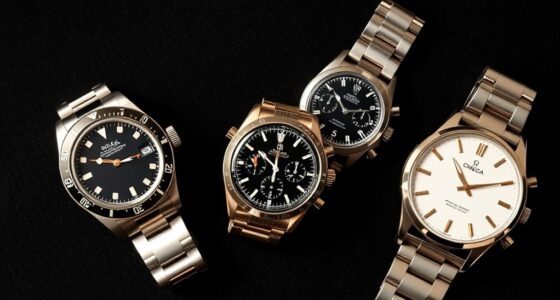
Style labels can help you narrow the field: dive watches favor clear markers and water-focused construction; dress watches often look slimmer and quieter; pilot, field, and chronograph designs each carry their own cues. Modern watches mix these traditions freely. If you want one watch for work and weekends, a simple steel model may suit more outfits than a thick, highly specialized design. That versatility can mean fewer occasions when the watch feels out of place, though a distinctive specialist may be more satisfying if it fits a hobby or routine you actually have.
Water resistance depends on the watch’s design and current condition, not just the number printed on the dial or case. Seals age and may be affected when a watch is opened, so follow the maker’s guidance and have resistance checked when needed. A depth rating alone does not mean every watch is ready for swimming or diving. Treat water resistance as a maintenance-dependent feature: if water use matters to you, confirm the model’s intended use and keep its seals in suitable condition.
Find a watch that sits comfortably on your wrist
A watch fits well when its case, lugs, thickness, and bracelet feel balanced on your wrist. Case diameter gets the most attention, but lug-to-lug length—the distance from one end of the case to the other—often tells you more about how far the watch will extend across your arm. A case that overhangs can feel unstable and catch on sleeves, while one that sits within the wrist’s edges is more likely to move naturally with you.
Try on the exact model if you can. A 40 mm case can wear compactly with short lugs or feel broad with a long case and thick bracelet. Picture the difference between a flat leather cuff and a rigid one: the material and shape change how each sits, even when they share the same width. Thickness also affects how a watch slides under a cuff and how top-heavy it feels; bracelet links and strap flexibility change how securely it rests on the wrist.
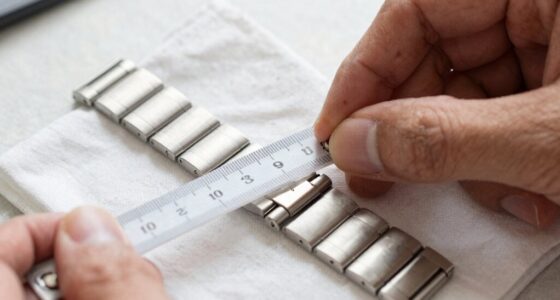
For a useful try-on, wear the watch for a few minutes and check whether the lugs stay within your wrist’s edges, the crown digs in, or the bracelet pinches when you bend your hand. Notice whether the watch shifts when you move and whether you can adjust the bracelet to a comfortable fit. Sizing varies by brand, so don’t assume the same case measurement will feel the same across labels. Your comfort is the measurement that matters.
Set a budget for owning the watch, not just buying it
Set aside money for servicing, insurance, taxes, and repairs alongside the purchase price. Mechanical watches need periodic service, although recommended intervals vary by movement, maker, and use. Ask an authorized service center for a current estimate for the specific reference before you buy. That estimate helps reveal whether an attractive purchase price reflects a real saving or simply leaves you with a large near-term bill.
For example, if you’re comparing a new watch with a pre-owned one, the lower asking price may leave room for a service or replacement strap—but only if the condition and history support that choice. A watch you wear every day may need different care from one that spends most of its time in a drawer. Keep service records and store the watch securely when you’re not wearing it. Insurance can protect against a loss that repair savings cannot address, while routine care helps preserve function; weigh both against how often and where you plan to wear the watch.
Buy for enjoyment first, since a luxury watch is not a guaranteed investment. Some models have appreciated, but resale prices can change with demand, condition, originality, and selling fees. Brand prestige and retail price alone cannot promise what you’ll recover later. If resale matters to your decision, use realistic completed-sale prices and account for service and transaction costs rather than treating a listed asking price as money you can count on.
Check the seller and the watch before buying pre-owned
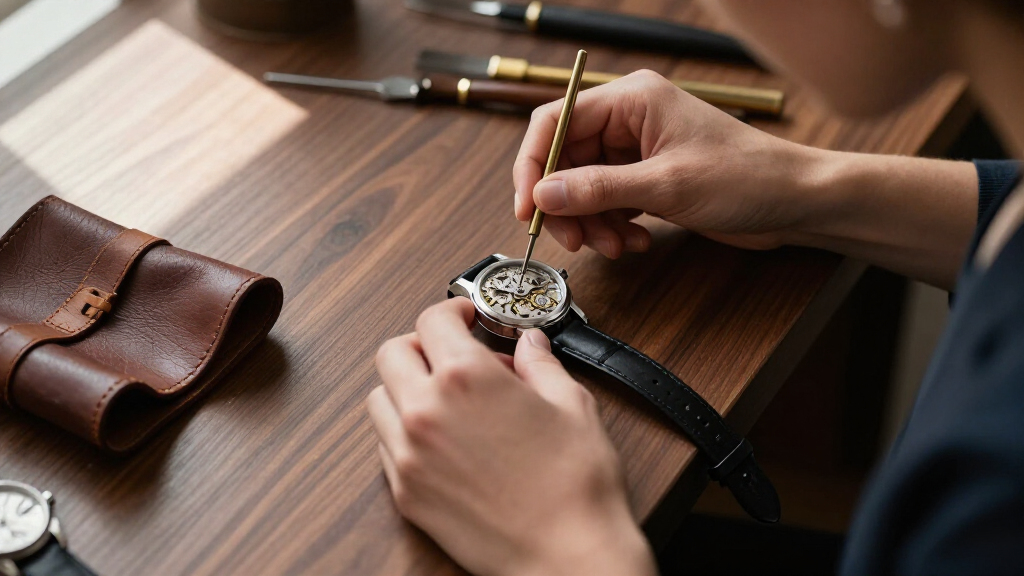
Before buying pre-owned, check the seller’s reputation, the watch’s reference and serial details, its condition, and any service history. Box and papers can support a watch’s history, but they do not prove authenticity on their own. A careful seller should welcome clear questions and provide a return policy you can read before paying. These checks work together: matching details can establish consistency, while an independent inspection can reveal issues that photos or paperwork miss.
- Confirm the exact reference. Compare the seller’s details and photos with the manufacturer’s information for that model. Small reference differences can mean different materials, movements, or parts, which affects both value and service.
- Inspect condition and originality. Ask whether the dial, hands, bracelet, or other parts have been replaced or refinished. A replacement part is not automatically a problem, but it can affect originality, price, and whether the watch matches your expectations.
- Review service records. Confirm when the watch was last serviced and who handled the work. A recent service may reduce the chance of an immediate expense, but the paperwork should correspond to the watch and describe the work clearly.
- Understand your recourse. Read the return terms and use a reputable dealer or a qualified independent watchmaker to inspect the watch when possible. A return window gives you time to resolve uncertainty; an inspection can identify mechanical or condition concerns before that window closes.
For instance, a polished case may look bright in photos but have softened edges that change the watch’s original shape. Detailed images and an in-person inspection can help you spot that difference. Documentation matters most when it matches the watch and comes with a credible account of its history.
Make your first luxury watch easy to wear
Your first luxury watch should work with your real routine: the clothes you wear, the places you go, and the amount of care you want to give it. A versatile design can bridge a weekday meeting and a relaxed dinner, while a more specialized watch may bring more joy if you already know what you like. The best starting point is often the occasions you want the watch to serve, because that helps you decide which features and tradeoffs will matter after the excitement of buying it fades.
Try several styles and movements before deciding, even if you think you’ve settled on a model. A clean dial might suit your office days, while a dive-style watch may feel more at home on weekends. Buying pre-owned can widen your choices, but it calls for close checks on authenticity, condition, and service history. Compare how each option feels after a few minutes on your wrist and what it will ask of you in upkeep; that makes the choice easier to live with as well as easier to justify.
Choose the watch you’ll reach for on an ordinary Tuesday, not just the one that looks impressive in a display case.
Frequently Asked Questions
How much should I spend on my first luxury watch?
Spend an amount that leaves room in your budget for service, insurance, and repairs. Compare the full cost of ownership and try the watch on before buying; price alone can’t tell you whether you’ll enjoy wearing it.
Is an automatic watch better than a quartz watch?
Neither is automatically better. Automatic movements wind themselves through your wrist’s motion and offer mechanical appeal, while quartz watches generally keep time more accurately and need less routine attention.
What watch size suits my wrist?
Case diameter is only one part of fit. Check lug-to-lug length, thickness, bracelet shape, and comfort, and try the watch on if possible; sizing varies by brand.
Are luxury watches a good investment?
Some watches have appreciated, but prices can fall and resale is never guaranteed by a brand name or retail price. Condition, originality, demand, service costs, and selling fees all affect what you may get back.
Do box and papers prove a pre-owned watch is authentic?
No. They can help document a watch’s history, but they do not prove authenticity by themselves. Check the seller’s reputation, reference and serial details, condition, and service records, and consider an inspection by a qualified watchmaker.
Conclusion
Choose a watch that fits your wrist, your routine, and the kind of care you’re happy to give it. Try it on, check the whole ownership cost, and let the dial earn its place in your day.
The best luxury watch is the one that makes an ordinary glance at the time feel like a small pleasure.
Halloween Picks
halloween
As an affiliate, we earn on qualifying purchases.