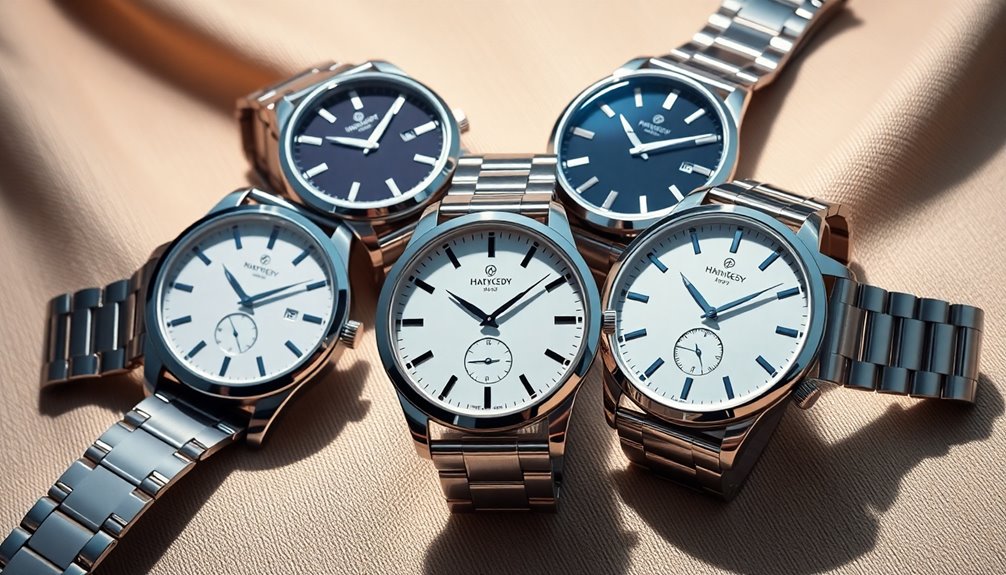
If you own automatic watches that you don’t wear daily, a watch winder can keep them accurately timed and ready to go. It’s especially helpful if you have multiple pieces or rarely wear certain watches. But if you wear your watch every day or own manual and quartz watches, a winder isn’t necessary. To decide if one suits your collection, consider your watch types and routine—you’ll find useful tips ahead.
Key Takeaways
- Automatic watches benefit from winders if not worn daily to maintain accuracy and lubrication.
- Manual and quartz watches generally do not require winders, as they do not rely on movement to operate.
- Small collections or frequently worn watches often don’t need winders, as daily wear keeps them wound naturally.
- Winders are ideal for collectors with multiple automatic watches or rare pieces that aren’t worn regularly.
- Overusing winders on infrequently worn watches may cause unnecessary wear; manual winding and proper storage may suffice.
What Are Watch Winders and How Do They Keep Your Watches Running
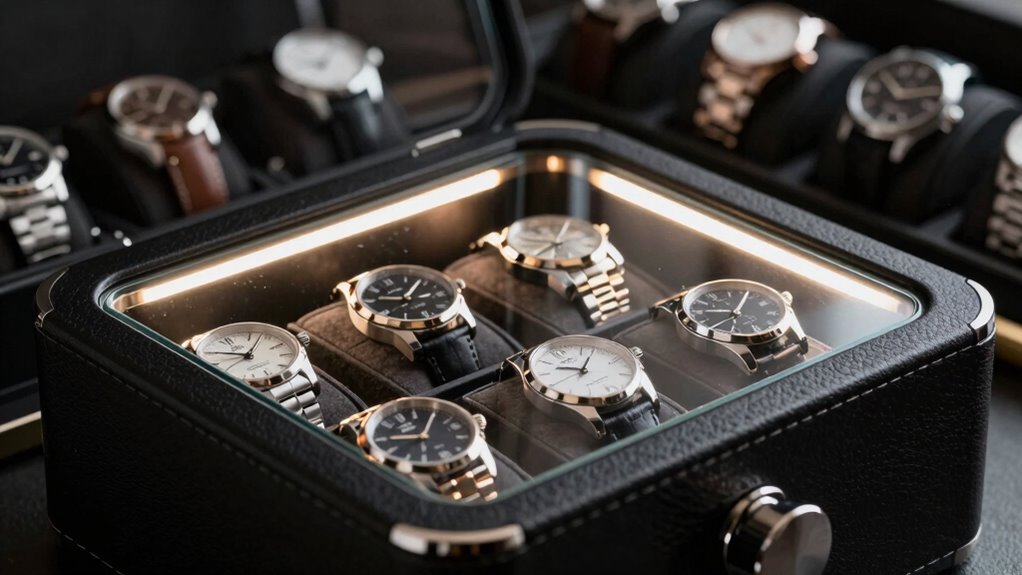
Watch winders are devices designed to keep automatic watches running when you’re not wearing them. They work by rotating your watch at specific intervals, mimicking the motion you create while wearing it. Proper watch winder maintenance ensures your device functions smoothly, preventing mechanical issues and prolonging its lifespan. When not in use, consider watch winder storage options that protect your device from dust and damage. Using a watch winder correctly means setting it to match your watch’s winding requirements, avoiding over-winding or unnecessary wear. This helps keep your watch’s movement precise and ready to wear at any moment. Regular maintenance and thoughtful storage are essential to maximize your watch winder’s effectiveness and safeguard your valuable watches. Additionally, choosing a energy-efficient watch winder can reduce power consumption and promote sustainable practices. Incorporating advanced technology into your watch winder can further optimize its performance and longevity. For optimal performance, ensure your watch winder has the appropriate programming settings tailored to your specific watch model. Moreover, selecting a reliable brand can provide added peace of mind and durability for your investment.
Which Watches Need a Watch Winder? (Automatic vs. Manual)

If you own an automatic watch, a watch winder helps maintain it running smoothly when you’re not wearing it. Manual watches, on the other hand, don’t need a winder since you wind them by hand. Knowing which type benefits from a winder ensures your timepieces stay accurate and ready to go.
Automatic Watches Necessity
Automatic watches rely on movement to keep running, so a watch winder becomes essential if you own multiple or rarely worn automatic timepieces. Without one, your watches may stop, affecting their accuracy and watch maintenance. If you value your luxury accessories, a winder helps preserve their precision and prolongs their lifespan. Proper handling of narcissistic traits can also prevent unnecessary damage to your relationships with others. Additionally, understanding the artistry involved in haute couture design can deepen your appreciation for craftsmanship and the value of delicate accessories like watches.
Manual Watches and Winders
Manual watches don’t rely on movement to keep running, so they don’t need a watch winder to stay powered. Instead, they operate through manual winding, which you do by turning the crown regularly. This process ensures the mainspring is wound, maintaining accurate time. Because of this, battery life isn’t a concern—manual watches don’t use batteries at all. If you prefer a traditional approach, manual winding watches give you full control over power reserve and maintenance. You only need to wind them periodically, typically daily or every few days, depending on the model. Unlike automatic watches, they won’t stop if you don’t wear them every day, making them ideal for collectors or those who don’t wear their watch continuously.
Do I Really Need a Watch Winder for My Collection?
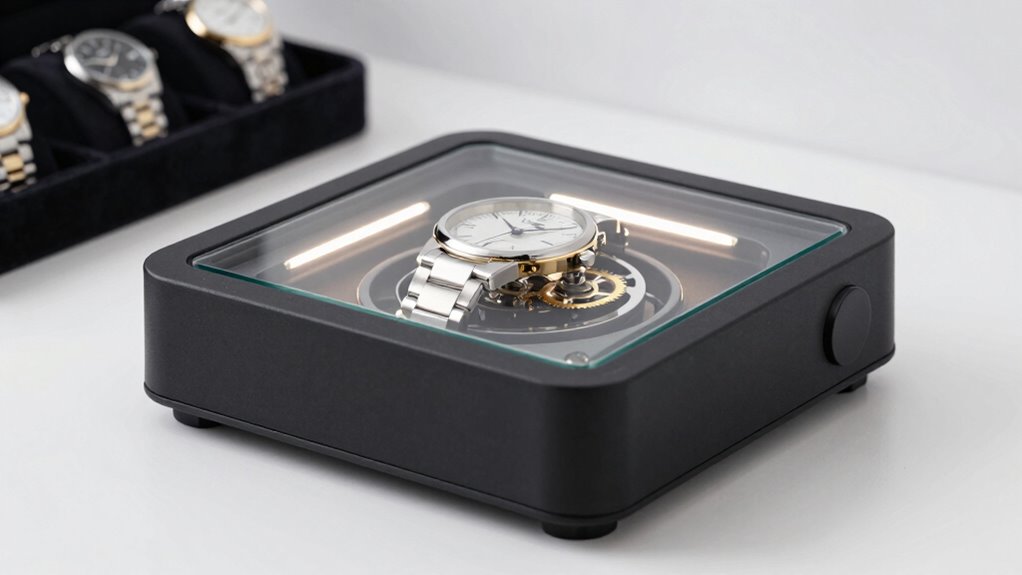
Deciding whether you need a watch winder depends on how you manage your collection. If you own automatic watches that you wear infrequently, a winder can keep them running smoothly and save you time. However, if most of your watches are manual or rarely worn, you might not need one. Consider watch winder maintenance; improper use can damage your collection or reduce its lifespan. Also, watch winder aesthetics matter; choose a design that complements your space. Here’s a quick comparison:
| Feature | Pros | Cons |
|---|---|---|
| Automatic watches | Keeps them ready to wear | Extra maintenance needed |
| Manual watches | No winding needed | Winder isn’t essential |
| Infrequent wear | Less benefit from a winder | Saves space and money |
| Aesthetics | Enhances display | Might clash with decor |
| Maintenance | Requires upkeep | Can be overlooked |
Additionally, understanding the mechanics of automatic movements can help you determine if a watch winder will benefit your collection long-term. Proper piercing care and hygiene can also help in maintaining jewelry, which can be an important aspect of personal style and collection management. Recognizing the importance of proper storage is essential to preserving your watches’ condition and value over time. For collectors, knowing the net worth of certain personalities can also add context to the value of their collections.
How to Decide If a Watch Winder Is Worth It for You

Consider how many watches you own and how often you wear them. If you have a small collection or rarely switch watches, a winder might not be necessary. But if you wear multiple watches regularly, a winder can keep them ready to go without hassle.
Watch Collection Size
Have you ever wondered if a watch winder is a worthwhile investment for your collection? If you have a large watch collection, especially with multiple automatic watches, a watch winder can be a valuable addition. It guarantees your watches stay wound and ready to wear, saving you time and effort in manual winding. On the other hand, if your collection is small or mostly consists of quartz watches, a winder might be unnecessary. Consider your watch storage setup—if space is limited or you prefer simple display cases, a watch winder may not fit your needs. Ultimately, the size of your collection influences whether a winder is practical. Think about how often you wear each piece and your convenience preferences before deciding if investing in a watch winder makes sense. Additionally, understanding watch winder features can help you choose the right model for your needs. For those with automatic watches, a winder can be an essential accessory, while others may find it an unnecessary expense. Evaluating battery life and power consumption is also important to ensure your winder remains reliable over time. Moreover, considering winder rotation settings can help you customize the winding process to suit different watch movements and prevent over-winding. In addition, reviewing winder maintenance requirements can help you keep your device functioning smoothly for years to come.
Frequency of Wear
If you rarely wear your automatic watches, investing in a watch winder might not be worth it. Consider your watch frequency—if you only wear a watch once a week or less, a winder may be unnecessary. Manual winding or letting the watch sit idle won’t harm it, and winding it periodically is simple enough. Also, think about battery impact: some winders run on batteries, which can drain quickly if used daily, leading to frequent replacements. If your wear pattern is sporadic, the cost of maintenance can outweigh the benefits of owning a winder. Additionally, mammography guidelines can help make your decision clearer when considering health-related screening tools. Detecting passive voice can help make your writing clearer and more direct. However, if you wear your watch regularly, a winder ensures it stays accurate and ready to wear. Regular use of a watch winder can help maintain the watch’s lubrication and movement, preventing the oils inside from settling or drying out. Moreover, choosing a solar-powered winder could reduce reliance on batteries and lower long-term costs. Ultimately, your watch frequency determines whether a watch winder is a practical investment for you.
When a Watch Winder Can Save You Time and Hassle
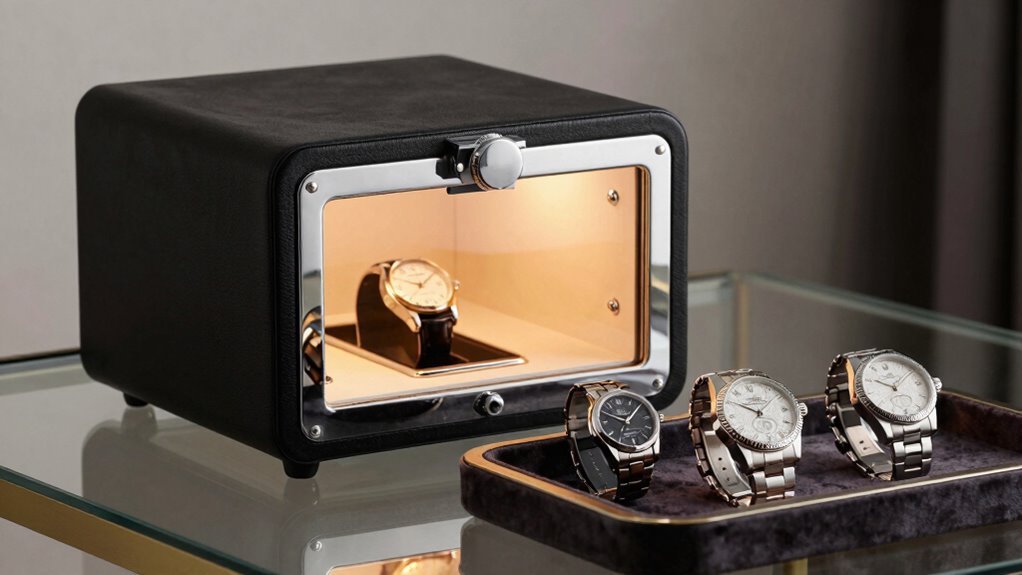
A watch winder can save you time and hassle when you own automatic watches that aren’t worn daily. If you own luxury brands, a winder guarantees they stay accurate without frequent manual winding. It’s especially helpful if your watches have complex mechanisms that need consistent movement. Plus, it preserves your watch’s battery life by reducing unnecessary manual winding. Imagine avoiding the frustration of setting your watch after weeks of inactivity. Proper automatic watch maintenance can extend the lifespan of your timepieces and ensure optimal performance. Using a winder also helps maintain the integrity of watch mechanisms, preventing potential damage caused by irregular movement. Additionally, understanding the Fifty States and their unique attractions can inspire you to explore different locations to complement your watch collection or leisure activities. To further safeguard your investment, consider proper storage practices that protect your watches from environmental damage and dust.
When You Can Skip a Watch Winder in Your Routine
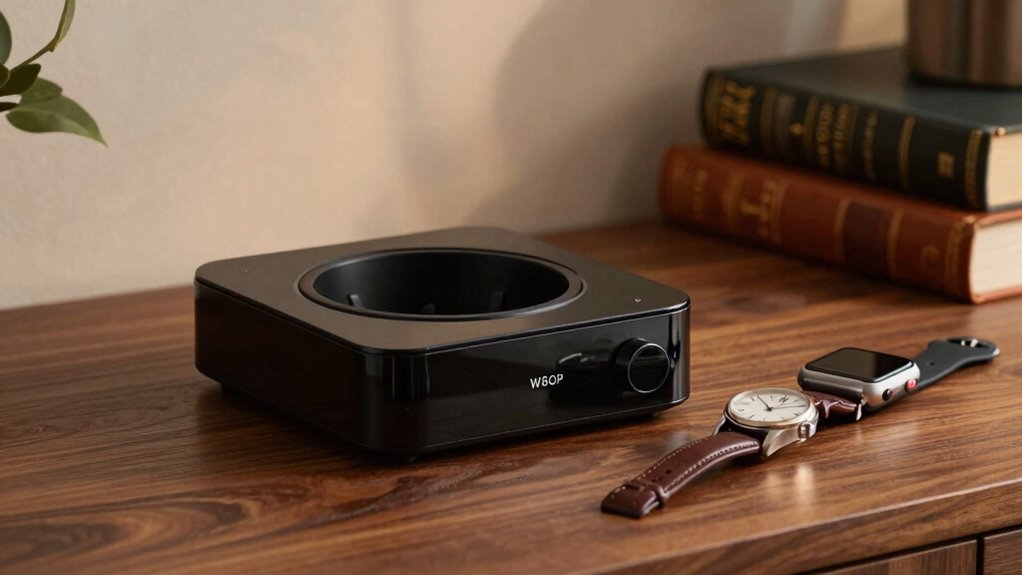
While watch winders are convenient for many collectors, there are times when you can confidently skip using one. If your watch is a luxury accessory you wear regularly, routine watch maintenance through wear can keep it running smoothly without a winder. Mechanical watches that are worn daily stay wound naturally, so you don’t need extra devices to keep them ticking. Additionally, if you own a vintage or rarely worn piece, winding it manually before use is sufficient. Using a watch winder unnecessarily can even cause wear over time. Unless you have multiple watches you rotate infrequently, you can skip the winder without compromising your watch’s performance or appearance. In these cases, manual winding and proper storage are all you need.
How to Choose the Best Watch Winder for Your Needs

Choosing the best watch winder for your needs involves considering several key factors to guarantee it complements your collection and lifestyle. First, assess the number of watches you own, especially if you favor luxury watch brands, which often require specific winding settings. Look for a winder with customizable rotation options to match your watches’ requirements. Consider the quality of materials and construction, as luxury watch brands tend to demand durable, elegant designs. Additionally, think about watch winder maintenance—choose models that are easy to service and clean, ensuring longevity. Noise level is also important; a quiet winder minimizes disruptions. By evaluating these factors, you can select a winder that not only preserves your watches but also fits seamlessly into your daily routine.
Frequently Asked Questions
Can a Watch Winder Damage My Automatic Watches?
A watch winder can damage your automatic watches if used improperly, affecting watch winder safety and automatic watch longevity. Overwinding or incorrect settings may cause unnecessary wear or stress on the movement. However, using a high-quality, well-designed winder with proper settings minimizes these risks. To protect your watches, always follow manufacturer guidelines and regularly check your winder’s performance, ensuring it supports your watch’s longevity and prevents damage.
What Are the Different Types of Watch Winders Available?
Think of watch winders like a toolbox, each tool serving a different purpose. You’ll find single-watch winders perfect for one piece, while multi-watch models handle several at once. There are also watch winders with adjustable rotation settings, allowing for automatic winding tailored to your watch’s needs. Some winders mimic natural wrist movements, ensuring your automatic winding stays smooth. Choose the type based on your collection’s size and your winding preferences.
How Much Should I Expect to Spend on a Quality Watch Winder?
You should expect to spend between $100 and $500 on a quality watch winder. Investing in a durable model helps with watch winder maintenance, ensuring smooth operation over time. Higher-end winders often offer better watch winder storage options, protecting your watches from dust and damage. Keep in mind that a good winder enhances your collection’s longevity, so choose one that fits your needs and budget for reliable performance.
Are Watch Winders Suitable for All Automatic Watch Brands?
Watch winders are generally suitable for most automatic watch brands, but you should verify their compatibility first. Different brands and models may require specific winding settings or rotation directions. You can usually find this info in your watch’s manual or on the manufacturer’s website. To guarantee your automatic watch stays in perfect condition, choose a watch winder that offers adjustable settings tailored to your watch’s needs.
How Often Should I Use a Watch Winder for Maintenance?
You should use a watch winder based on your watch’s winding needs, typically setting it for about 24-48 hours for maximum watch winding frequency. Incorporate the winder into your maintenance schedule by winding your watch regularly to keep it running smoothly, especially if you don’t wear it daily. This routine helps prevent oils from settling and ensures consistent accuracy, ultimately extending your watch’s lifespan.
Conclusion
Whether a watch winder is worth it depends on your collection and lifestyle. Did you know that over 60% of automatic watch owners use winders regularly? If you have multiple automatic watches or travel often, a winder can save you time and keep your watches ready to wear. Consider your needs, and you’ll find the perfect solution—saving hassle and ensuring your watches stay in top condition.