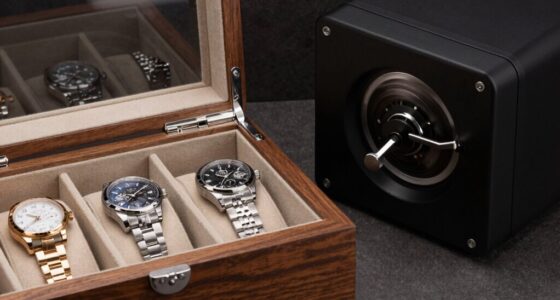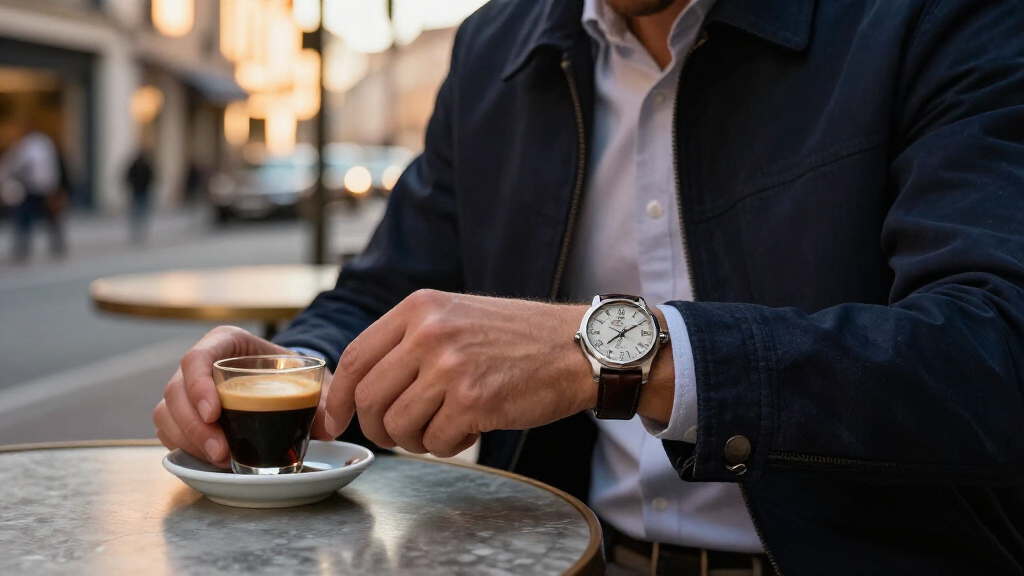

The Rolex Datejust and Omega Aqua Terra both work as luxury men’s watches for daily wear, but they make different promises. The Datejust leans on a long-running design, strong brand recognition, and consistent demand on the secondary market. The Aqua Terra pairs a sportier appearance with strong water resistance and a modern movement, often at a lower retail price. That makes the choice less about which watch is objectively superior and more about what you want your watch to do: signal a familiar classic, or handle a wider range of casual and active settings. Choose the Datejust if heritage, status, and resale matter most. Choose the Aqua Terra if versatility and technical specification matter more.

Get your wardrobe favorites delivered free with Prime
- Fast, free delivery on millions of items
- Prime Video, Amazon Music and more included
- Member-only deals all year

Versace V-Auria Men’s Bracelet Watch
- ✔ Case diameter: 39 mm
- ✔ Case material: Yellow gold IP stainless steel
- ✔ Bracelet: Gold stainless steel

Versace Luxury Men’s 42mm Stainless Steel Watch
- ✔ Case diameter: 42 mm
- ✔ Case material: Stainless steel
- ✔ Bracelet finish: IP yellow gold

Armani Exchange A|X Men’s Stainless Steel Chronograph Watch
- ✔ Case diameter: 44 mm
- ✔ Material: Stainless steel
- ✔ Dial: Gold sunray
At a Glance
| Criteria | Rolex Datejust | Omega Aqua Terra | Winner |
|---|---|---|---|
| Design versatility | Classic dress-sport design; many dial, bezel, and bracelet combinations | Sportier, cleaner dial; fits casual and smart-casual wear | Depends |
| Brand recognition | Exceptionally high recognition across luxury-watch buyers | Strong recognition among watch enthusiasts, less universal than Rolex | A |
| Movement and accuracy | Modern automatic caliber; performance varies by reference | Co-Axial Master Chronometer calibers on many current models; high magnetic resistance | B |
| Water resistance | 100 meters | 150 meters | B |
| Wear comfort | Available in multiple sizes; Jubilee and Oyster bracelets suit different preferences | Often sits comfortably as an everyday watch; bracelet and case feel are personal | Depends |
| Resale and value | Typically stronger demand and resale performance | Generally less resale support than the Datejust | A |
| Retail price | Usually higher, depending on size, configuration, and market | Often lower than a comparable Datejust | B |
Versace V-Auria Men’s Bracelet Watch
For buyers who want a designer watch that reads as jewelry as much as timekeeping, the Versace V-Auria makes the most immediate impression. Its 39 mm case is the smallest stated size in this group, while the black guilloche dial, Medusa logo, and yellow gold-tone case create strong contrast. Against the silver-dial 42 mm Versace, this one feels more overtly branded and visually dramatic; compared with the 44 mm Armani, it is more compact and adds a date display.The listing specifies a Swiss-made movement and a date window, giving us more functional detail than the other Versace listing. However, it does not name the movement type or provide a water-resistance rating. The gold stainless-steel construction may also feel substantial, so a smaller case diameter does not guarantee a lightweight feel. We would choose it for its distinctive dial and relatively compact proportions, while treating it as a dry-use watch unless the manufacturer confirms otherwise.
Pros:
- 39 mm case is the smallest stated size in this comparison.
- Black guilloche dial and Medusa emblem create a distinctive designer look.
- Date window adds a useful everyday display.
- Gold stainless-steel bracelet and deployment clasp provide a coordinated metal finish.
Cons:
- No water-resistance rating is provided.
- Heavy metal construction may feel bulky despite the smaller case diameter.
- Movement type and other technical details are not specified.
Best for: We recommend it to buyers who want a compact, recognizable Versace design, a date display, and a black dial that stands out against a gold-tone bracelet.
Not ideal for: We would skip it if we need documented water resistance, a discreet logo, or a particularly light watch.
Bottom line: We rank the V-Auria first for pairing the lineup’s most compact stated case with Versace’s boldest dial and a practical date display, provided water use is not a priority.
“We rank the V-Auria first for pairing the lineup’s most compact stated case with Versace’s boldest dial and a practical date display, provided water use is not a priority.”
Versace Luxury Men’s 42mm Stainless Steel Watch
The 42 mm Versace takes a quieter route than the V-Auria. A silver guilloche dial softens the effect of its yellow gold-tone bracelet and case, while the Medusa emblem keeps the watch unmistakably designer-led. That combination makes it the more balanced choice for someone who likes a jewelry-inspired metal finish but does not want the black-and-gold contrast of the 39 mm V-Auria. Its stated case size also sits between the V-Auria and the larger 44 mm Armani.Both Versace options list Swiss-made movement and a deployment clasp, but the V-Auria provides a date window and a more complete description. This model’s description does not state a date display, water resistance, crystal material, or the movement type. We should therefore view its appeal primarily through its finish and proportions rather than assume additional capabilities. Buyers seeking an understated dial in a designer bracelet watch may prefer it; those who want the clearest feature set should look at the Armani, which documents a chronograph and water rating.
Pros:
- Silver guilloche dial offers a more restrained contrast than the V-Auria’s black dial.
- 42 mm case sits between the other two stated case sizes.
- Swiss-made movement is specified.
- Yellow gold-tone bracelet and deployment clasp create a coordinated finish.
Cons:
- No water-resistance specifications are provided.
- The listing omits movement type and several practical details.
- Limited finish options may not suit buyers seeking a neutral or leather strap.
Best for: We see it as a fit for buyers who want a mid-size Versace bracelet watch with a silver dial and a gold-tone finish that feels less high-contrast than the V-Auria.
Not ideal for: We would pass if we need a stated water rating, detailed movement information, or a confirmed date or chronograph function.
Bottom line: We place this Versace second for buyers who prefer a more balanced dial and mid-size case, while its sparse specifications keep it behind the more fully described picks.
“We place this Versace second for buyers who prefer a more balanced dial and mid-size case, while its sparse specifications keep it behind the more fully described picks.”
Armani Exchange A|X Men’s Stainless Steel Chronograph Watch
The Armani Exchange A|X Chronograph is the practical outlier in this trio. Its 44 mm case and gold sunray dial make it the largest, most uniformly gold-toned design, and its quartz chronograph adds a timing function absent from the Versace descriptions. The stated 50 m (5 ATM) water resistance is also useful context the two Versace listings do not provide, though it should not be read as a recommendation for deeper water activities. For a buyer who values a documented function set over Swiss-made branding, this is the clearest specification-led option.That utility comes with style and material tradeoffs. The 44 mm case wears larger than either Versace, so it may overwhelm a smaller wrist, and the mineral crystal is less scratch-resistant than sapphire. Its gold-on-gold look is also less versatile than the silver dial on the 42 mm Versace. We would choose the A|X when a chronograph, removable bracelet links, and a stated water rating matter; for a compact logo-focused piece, the V-Auria is a better match.
Pros:
- Quartz chronograph adds a timing function not stated for either Versace.
- 50 m (5 ATM) water-resistance rating is provided.
- Removable bracelet links allow fit adjustment.
- Gold sunray dial and stainless-steel bracelet deliver a coordinated dressy look.
Cons:
- 44 mm case is the largest in this lineup and may feel oversized.
- Mineral crystal is less scratch-resistant than sapphire.
- 5 ATM rating is not intended for deeper water activities.
- Gold-on-gold styling is less visually versatile than the silver-dial Versace.
Best for: We recommend it to buyers who prefer a large gold-tone designer watch with a quartz chronograph, removable links, and a stated 50 m water-resistance rating.
Not ideal for: We would skip it if we want a compact case, sapphire crystal, Swiss-made movement, or a less conspicuous dial and bracelet combination.
Bottom line: We rank the A|X third for this luxury-design comparison because it is the most functionally documented, but its oversized gold presentation and mineral crystal make it a more specific style choice.
“We rank the A|X third for this luxury-design comparison because it is the most functionally documented, but its oversized gold presentation and mineral crystal make it a more specific style choice.”
As an Amazon Associate we earn from qualifying purchases.
Key Differences
The Datejust’s advantage is the strength of its identity. Its fluted bezel, date display, and familiar proportions make it recognizable without needing an unusual color or oversized case. Rolex’s broad appeal can also make the watch easier to resell, though actual resale depends on the reference, condition, completeness, and purchase price. Buyers pay for the design and the market around it as much as for its mechanics.
The Aqua Terra makes a more practical case on paper. Many current versions offer Master Chronometer certification, substantial resistance to magnetic fields, and 150 meters of water resistance. Its dial and case read more like a refined sports watch than a dressier classic. It usually costs less at retail, leaving more budget for another watch or other priorities. The tradeoff is weaker resale demand and less immediate recognition outside watch circles. Neither is a bargain purchase: the better value is the one whose strengths you will use.
Detailed Comparison
Design versatility (moderate difference)
The Datejust wins for buyers who want a recognizable classic that can dress up easily. Its many combinations of size, dial, bezel, and bracelet let owners tune the look, from understated to conspicuous. The Aqua Terra is more naturally at home with casual clothes and smart-casual workwear; its clean, sportier dial can still look polished with a jacket. The gap is moderate and depends on wardrobe: choose the Datejust for traditional office or formal settings, the Aqua Terra for a relaxed daily rotation.
Brand recognition (Rolex Datejust wins — major)
The Datejust wins by a major margin in broad public recognition. Many people who do not follow watches know the Rolex name and can identify the general look. Omega has substantial heritage and respect among enthusiasts, but the Aqua Terra is less likely to be recognized across a room. That visibility can be a benefit or a drawback: pick Rolex if the signal matters to you; pick Omega if you prefer a fine watch with a lower profile.
Movement and accuracy (Omega Aqua Terra wins — moderate)
The Aqua Terra has the edge for published technical credentials on many current references. Master Chronometer certification includes accuracy testing and resistance to magnetic fields, features that matter if a watch will encounter electronics or a demanding routine. The Datejust’s modern automatic movements are well regarded and designed for dependable everyday use, though its headline specifications do not match that particular certification. The difference is moderate: most owners are unlikely to notice a meaningful daily accuracy gap without tracking it, but technically minded buyers may prefer Omega’s documented standard.
Water resistance (Omega Aqua Terra wins — minor)
The Aqua Terra wins on specification, with 150 meters of water resistance on many models compared with 100 meters for the Datejust. Both can suit ordinary daily exposure when properly maintained, and water resistance depends on seals being in good condition. The extra margin gives the Omega more reassurance for swimming and active use, though it is not a substitute for checking the manual and service condition. The practical gap is minor for desk wear and moderate for owners who regularly take their watch near water.
Wear comfort (moderate difference)
Neither watch wins for everyone. Datejust sizing options and its choice of Jubilee or Oyster bracelet let buyers adjust the feel and visual weight. The Aqua Terra’s sport-watch case and bracelet suit some wrists better, while its range of sizes and dial designs also changes how it wears. Try the exact reference if possible: case thickness, bracelet fit, and clasp feel matter more than the name on the dial. This is a minor paper comparison but a major personal factor after hours on the wrist.
Resale and value retention (Rolex Datejust wins — major)
The Datejust wins on typical resale demand, although no specific return is guaranteed. Rolex’s wider buyer pool can make a desirable reference easier to sell, particularly when condition and documentation are strong. Aqua Terra prices on the secondary market are often less supported relative to retail, which can make a new purchase less attractive if you expect to sell soon. This is a major difference for short-term ownership, but less important if you plan to keep the watch for years. Paying a premium for Rolex only makes sense if the design and brand appeal justify it to you even without resale gains.
Retail price and value (Omega Aqua Terra wins — major)
The Aqua Terra usually wins on purchase price against a comparable Datejust, though exact prices vary by market, configuration, and availability. It delivers strong movement credentials, water resistance, and a refined finish at a lower entry point. The Datejust’s premium buys a more recognized name, an enduring design, and stronger resale support. That premium is worth paying for buyers who specifically want those qualities and expect to keep the watch; it is poor value for someone who mainly wants a capable luxury daily watch at the lowest cost between these two.
Rolex Datejust: Pros and Cons
Pros:
- Highly recognizable design and brand
- Broad choice of sizes, dials, bezels, and bracelets
- Typically stronger resale demand
- Classic look works in many professional and formal settings
Cons:
- Usually costs more than a comparable Aqua Terra
- Less water resistance than the Aqua Terra
- High recognition may feel conspicuous to some buyers
- Resale strength varies by reference and purchase price
Omega Aqua Terra: Pros and Cons
Pros:
- Many current models offer Master Chronometer credentials
- 150-meter water resistance on many references
- Sporty design suits casual daily use
- Usually lower retail cost than the Datejust
Cons:
- Less recognizable to the general public
- Typically weaker resale support
- Sportier styling may feel less at home with formal clothing
- The large model range makes reference-by-reference comparison important
Who Should Choose What
Choose Rolex Datejust if:
- You want a classic luxury watch with immediate brand recognition.
- Resale demand matters because you may sell or trade the watch later.
- You prefer traditional styling and want bracelet and dial combinations.
Choose Omega Aqua Terra if:
- You want a versatile, sportier daily watch with stronger water-resistance figures.
- Movement certification and magnetic resistance matter to you.
- You want to spend less while still buying from a major Swiss luxury brand.
Skip both if: Skip both if your budget would be strained or you need a low-cost, easy-to-service watch for rough work; neither is a sensible tool-watch purchase for that situation.
Value for Money
The Aqua Terra is the better value for most buyers comparing function against retail cost. It offers useful technical credentials, more water resistance on many current models, and a polished everyday design while usually asking less upfront. That makes it a strong pick if you want one luxury watch to wear often and do not plan around resale.
The Datejust can justify its higher price for a buyer who specifically values Rolex recognition, the classic design, and a broader secondary-market audience. Those qualities are real, but they do not make every Datejust a sound investment. Pay more only if you would still want the watch even if resale prices softened. If the premium is the only reason you are interested, the Aqua Terra is the more rational buy.
Final Verdict
For the broader everyday-watch buyer, the Omega Aqua Terra is the more practical recommendation: it costs less in many comparable configurations, has strong technical credentials, and is comfortable across casual and smart-casual use. The Rolex Datejust is the better choice for someone who puts a high value on iconic design, public recognition, and resale demand. The deciding factor is whether those Rolex-specific benefits are worth the premium to you. Buy the Datejust for the status and classic look; buy the Aqua Terra for everyday capability and stronger specification for the money.
Frequently Asked Questions
Is the Rolex Datejust better than the Omega Aqua Terra?
The Datejust is better for brand recognition, classic styling, and typical resale demand. The Aqua Terra is stronger on water resistance and technical credentials on many current models, often at a lower retail price. The better fit depends on which of those qualities you will use.
Which watch holds its value better?
The Datejust generally has stronger resale demand. That does not guarantee a profit: condition, reference, purchase price, and market conditions all affect what a seller receives. The Aqua Terra can be better value if you buy it to wear for years rather than resell.
Can you swim with either watch?
Many current Datejust references are rated to 100 meters, while many Aqua Terra references are rated to 150 meters. Either rating should be confirmed for the specific model, and seals need to be in good condition. Check the manufacturer’s guidance before swimming or diving with a particular watch.
Which is better as a first luxury watch?
Choose the Aqua Terra if you want a capable, versatile watch and prefer to spend less. Choose the Datejust if its design and recognition are the main reason you are buying a luxury watch. Try both on before deciding, since fit and bracelet comfort are personal.