If you’re choosing between automatic and quartz watches, consider your priorities: automatic watches offer craftsmanship and a traditional feel but need regular winding and can be more delicate, while quartz watches deliver high accuracy, low maintenance, and affordability. Automatic models are often more stylish and suited for formal wear, whereas quartz is practical for everyday use. Want to find out which one truly matches your lifestyle? A deeper look reveals all the key differences.
Key Takeaways
- Automatic watches are powered by mechanical movement and require wrist motion, offering craftsmanship and a traditional appeal.
- Quartz watches use batteries and quartz crystals for highly accurate, low-maintenance timekeeping at an affordable price.
- Automatics are more delicate and costly, suitable for enthusiasts valuing artistry; quartz are durable, practical, and ideal for everyday use.
- Automatic watches often have a visible movement and manual winding feature, while quartz watches focus on precision and ease of use.
- Choose automatic for luxury, tradition, and craftsmanship; opt for quartz for reliability, affordability, and low upkeep.
What Are Automatic and Quartz Watches?

Have you ever wondered how different watches keep time? Automatic and quartz watches are two popular types, each with unique features. Automatic watches are powered by your wrist’s movement, emphasizing luxury branding and craftsmanship. They often symbolize cultural significance, representing tradition and artistry. The intricate mechanisms** of automatic watches highlight the craftsmanship involved in mechanical timepieces, which many collectors find highly valuable. Additionally, the wearable nature of automatic watches means they require regular movement to stay accurate, reflecting their reliance on physical motion. The power reserve of automatic watches determines how long they keep running without movement, adding an extra layer of complexity. Quartz watches, on the other hand, use a battery and a tiny quartz crystal to keep accurate time. They’re typically more affordable and practical, making them accessible to a broader audience. While automatic watches are prized for their intricate mechanisms and status, quartz watches excel in precision and convenience. Understanding these differences helps you appreciate the cultural value of mechanical watches and the technological efficiency of quartz models. Considering battery reconditioning** techniques can also influence the maintenance and longevity of quartz watches.
How Do Automatic and Quartz Movements Work?
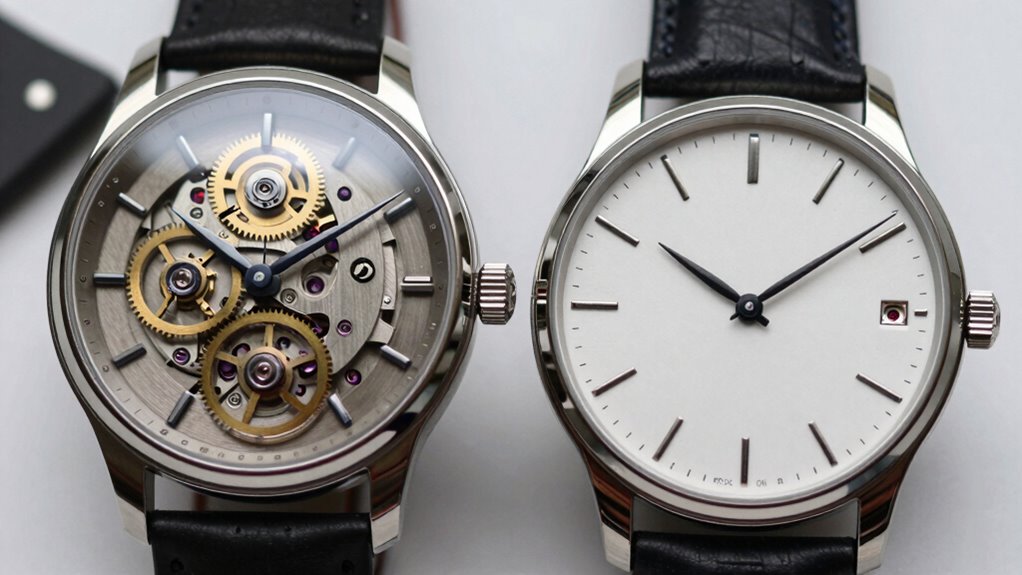
You’ll notice that automatic watches are powered by mechanical movements driven by a rotor, while quartz watches run on a small battery. The regulation of their timekeeping relies on different mechanisms: gears and springs for automatics, and a quartz crystal oscillator for quartz watches. Understanding these core differences helps explain how each type keeps time accurately. Additionally, the movement types influence the maintenance and longevity of each watch. For example, ventilation considerations are important for automatic watches to ensure proper heat dissipation and prevent moisture buildup. Proper temperature regulation is essential to maintain accuracy and prevent damage over time. Moreover, ensuring adequate dust protection can help extend the lifespan of both movement types by preventing debris from interfering with their delicate components.
Mechanical vs Battery Power
Automatic and quartz watches differ fundamentally in how they generate power to keep time. Automatic watches rely on watch craftsmanship, using a rotor that spins with your wrist movement to wind the mainspring. This stored energy powers the gear train and keeps the watch running. In contrast, quartz watches use a battery as their power source, providing consistent energy to a tiny quartz crystal. When electricity flows through the crystal, it vibrates at a precise frequency, driving the movement. Accurate timekeeping is often a key factor in choosing between the two types. Brand reputation often influences your choice, as many respected brands emphasize their mastery in mechanical watchmaking, while others excel in reliable quartz technology. Your decision depends on whether you value traditional craftsmanship or the accuracy and convenience of battery-powered movement, with movement type playing a crucial role in your selection. A thorough understanding of watch mechanism can help you make an informed choice based on your preferences.
Movement Regulation Mechanisms
How do automatic and quartz watches maintain their precise time? Automatic watches rely on a small oscillation frequency generated by a rotor that moves with your wrist’s motion. This oscillation drives the escapement mechanism, which controls the release of energy to the gear train, regulating the watch’s movement. The escapement mechanism ensures consistent timekeeping by dividing the energy into precise, equal parts. Quartz watches, on the other hand, use an electronic oscillator powered by a battery. The crystal inside vibrates at a high, stable oscillation frequency—usually 32,768 Hz—causing the circuit to generate regular electrical pulses. These pulses drive a stepping motor, which moves the gear train and keeps time accurately. This combination makes quartz watches highly precise and low-maintenance. Additionally, the movement regulation mechanisms in each type are designed to optimize their respective timekeeping processes.
Which Is More Accurate and Easier to Maintain?

You’ll notice that quartz watches generally keep better time than automatic ones, making them more accurate for everyday use. When it comes to maintenance, quartz watches require less effort since they only need battery replacements every few years. Understanding these differences helps you choose a watch that fits your needs for precision and ease of care. Additionally, piercing care and hygiene practices highlight the importance of proper maintenance to prevent infections and ensure longevity.
Accuracy Comparison
When comparing accuracy, quartz watches generally outperform automatic watches by a wide margin. Quartz movements deliver consistent precision with minimal variability because they rely on a battery-powered oscillator. Automatic watches, on the other hand, depend on intricate mechanical parts whose precision variability can be affected by environmental influences like temperature, humidity, and position. This makes automatic watches less reliable for precise timekeeping. Quartz watches typically gain or lose only a few seconds per month, while automatic watches may vary by several seconds daily. If you’re seeking accuracy with less fuss, quartz watches provide a straightforward, dependable option. However, automatic watches might require more frequent adjustments, especially if environmental conditions fluctuate profoundly.
Maintenance Requirements
Automatic watches generally require more maintenance than quartz watches, primarily because of their complex mechanical components that need regular care to stay in ideal condition. You’ll need to schedule watch servicing every 3 to 5 years to ensure smooth operation. Unlike quartz watches, which only need battery replacement approximately every 1 to 2 years, automatics rely on intricate gears and springs that benefit from professional upkeep. Imagine:
- Opening the case to check for dust and lubricate moving parts and maintaining optimal performance
- Replacing worn-out gears or springs during servicing
- Replacing the battery in a quartz watch without much hassle
- Ensuring the automatic’s winding mechanism stays functional
While quartz watches are easier to maintain, automatics demand regular attention to keep ticking accurately. Additionally, filtration efficiency plays a role in the long-term performance and durability of automatic movements, emphasizing the importance of proper maintenance. Regular cleaning and lubrication help prevent wear and tear on the delicate parts inside the movement.
How Durable and Reliable Are These Watches?
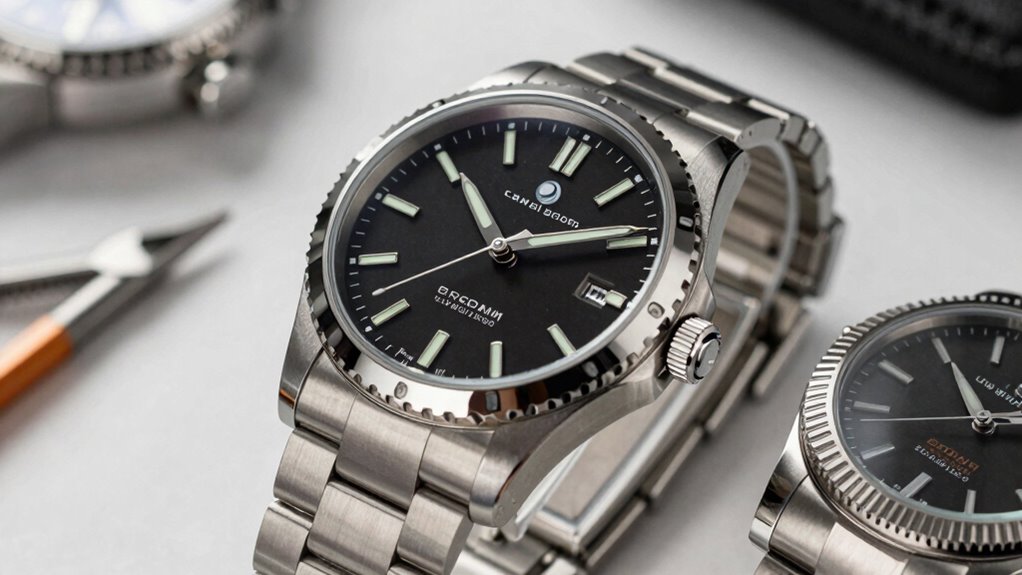
Automatic and quartz watches are both built to withstand daily wear, but their durability and reliability can differ markedly. Quartz watches often excel in shock resistance because their electronic components are less affected by impacts. Automatic watches, with moving parts, are more vulnerable to shocks but tend to be more water-resistant if properly sealed. Additionally, movement complexity can influence how well each type performs over time and under different conditions. The engineering design of each watch type also plays a significant role in their overall durability and maintenance needs. For example, material quality is crucial in determining how well a watch withstands environmental factors over the years. Furthermore, understanding the manufacturing standards can help in assessing the longevity of each watch type. The wear and tear that each watch experiences depends heavily on the user’s habits and maintenance practices. Here’s a quick comparison:
| Aspect | Automatic Watches | Quartz Watches | Common Features |
|---|---|---|---|
| Shock Resistance | Moderate; sensitive to impacts | High; handles shocks well | Durable with proper care |
| Water Resistance | Usually higher; depends on seal | Varies; often water-resistant | Both can be water-resistant |
| Reliability | Long-term; needs servicing | Very reliable; low maintenance | Depend on build quality |
What Do Automatic and Quartz Watches Cost?
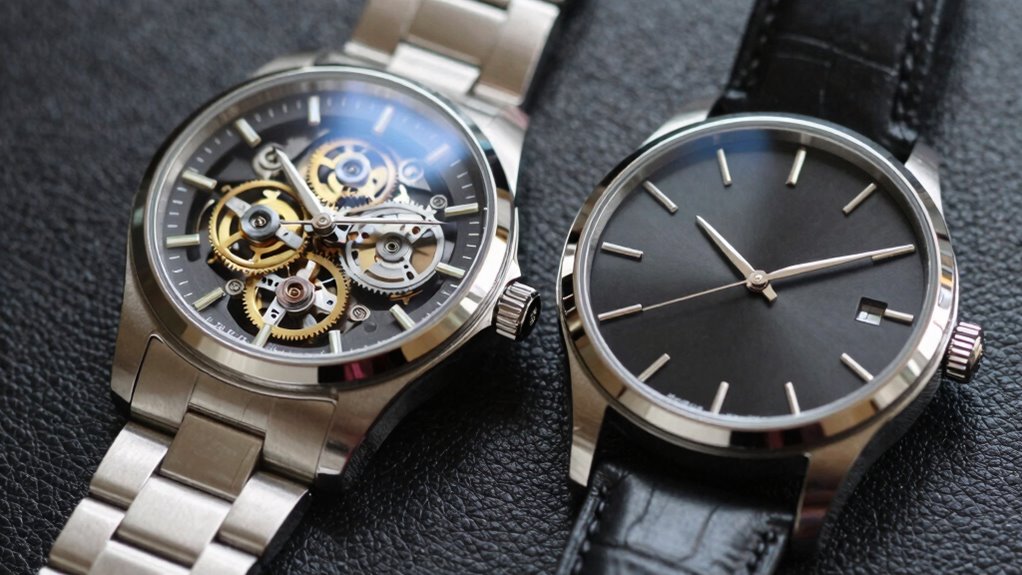
The cost of watches varies widely depending on the type and quality, with automatic and quartz models falling into different price ranges. For luxury pricing, automatic watches often start around $1,000 and can soar into tens of thousands, with craftsmanship and brand prestige driving the price. Quartz watches, on the other hand, typically offer affordability options, starting as low as $50 for basic models. Imagine:
- A sleek automatic watch with a gold case and intricate movement.
- A high-end quartz piece with diamond accents.
- A reliable, budget-friendly quartz watch perfect for everyday wear.
- An elegant automatic watch with a leather strap for special occasions.
Your choice depends on your budget and how much you value craftsmanship versus affordability options.
Which Watch Fits Your Lifestyle and Needs?
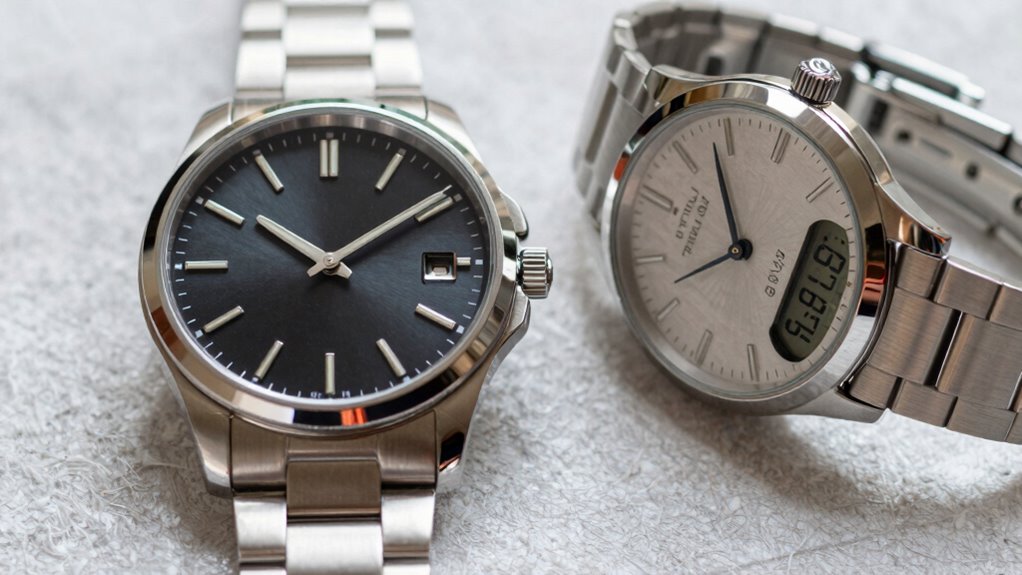
Choosing the right watch depends on how you plan to use it daily. If you want a piece that aligns with current fashion trends, consider styles that complement your wardrobe and reflect your personality. For formal occasions or business settings, a watch from a brand with prestige adds sophistication and credibility. If you lead an active lifestyle, durability and water resistance might matter most, making a quartz watch practical for everyday wear. On the other hand, if you appreciate craftsmanship and timeless elegance, an automatic watch with a luxury brand name could suit you better. Advances in nanotechnology are also beginning to influence watchmaking, leading to innovative materials and enhanced durability, which can be especially beneficial for those seeking long-lasting performance. Incorporating advanced materials can further improve a watch’s resilience and longevity. Ultimately, your choice should match your lifestyle needs and style preferences, ensuring your watch isn’t just fashionable but also functional for your daily routine.
Which Should You Choose: Automatic or Quartz?

Deciding between an automatic and a quartz watch depends on what you value most in a timepiece. If you prioritize fashion trends and brand prestige, your choice might differ. An automatic watch offers:
- A timeless, sophisticated look that elevates your style.
- Craftsmanship that signals luxury and tradition.
- A mechanical movement admired by collectors.
- A sense of connection, as it winds with your daily motion.
In contrast, quartz watches excel in accuracy, affordability, and low maintenance, making them ideal for everyday wear. If staying on trend with high-end brands matters, automatic watches often lead. But if practicality and precision are your goals, quartz might be the smarter choice. Your decision hinges on whether craftsmanship or convenience matters most to you.
Frequently Asked Questions
Can Automatic Watches Be Powered Manually?
Yes, automatic watches can be powered manually through manual winding. This process involves turning the crown to wind the mainspring, which stores energy and keeps the watch running. Manual winding is especially useful if your watch has a limited power reserve or hasn’t been worn for a while. By doing this, you guarantee your watch stays accurate and maintains its power reserve, even without regular wrist movement.
How Often Do Quartz Watches Need Battery Replacements?
Most quartz watches need battery replacements every 1 to 2 years. On average, their battery lifespan is about 18 to 24 months, depending on the watch’s power reserve and features. Notably, some models with energy-efficient movements can last up to 3 years before needing a change. Regular maintenance ensures your watch keeps ticking accurately, making it a reliable choice for everyday wear.
Are Automatic Watches Suitable for Everyday Wear?
Yes, automatic watches are suitable for everyday wear. They serve as stylish fashion statements and often carry collector appeal, making them perfect for daily use. You’ll appreciate their craftsmanship and timeless design, which adds a touch of elegance to your routine. Just keep in mind that they require regular wearing or winding to keep running accurately, but their durability and classic appeal make them a smart, everyday choice.
Do Luxury Brands Prefer Automatic or Quartz Movements?
Luxury brands tend to prefer automatic movements because they showcase superior craftsmanship and underline their brand prestige. You’ll find that automatic watches are valued for their intricate engineering and tradition, aligning with a luxury’s commitment to quality. Quartz movements, while precise, often don’t convey the same level of artisanal skill. As a result, most high-end brands emphasize automatic watches to reinforce their reputation for excellence and timeless elegance.
Which Watch Type Is Better for Sports Activities?
For sports activities, quartz watches quickly qualify as your go-to gear. They offer superior sport-specific durability, dependable precision, and minimal maintenance, making them ideal for active pursuits. Automatic watches, while appealing, tend to be less suited for vigorous sports due to their sensitivity to shocks and the need for regular winding. So, if you’re after activity suitability and sporty durability, quartz watches clearly lead the league.
Conclusion
Choosing between automatic and quartz watches depends on what matters most to you—accuracy, maintenance, or tradition. Did you know that quartz watches make up over 80% of the global watch market due to their affordability and precision? Whether you prefer the craftsmanship of automatic watches or the convenience of quartz, knowing these differences helps you make an informed decision. Ultimately, your choice reflects your style and lifestyle—so pick the one that ticks your boxes!