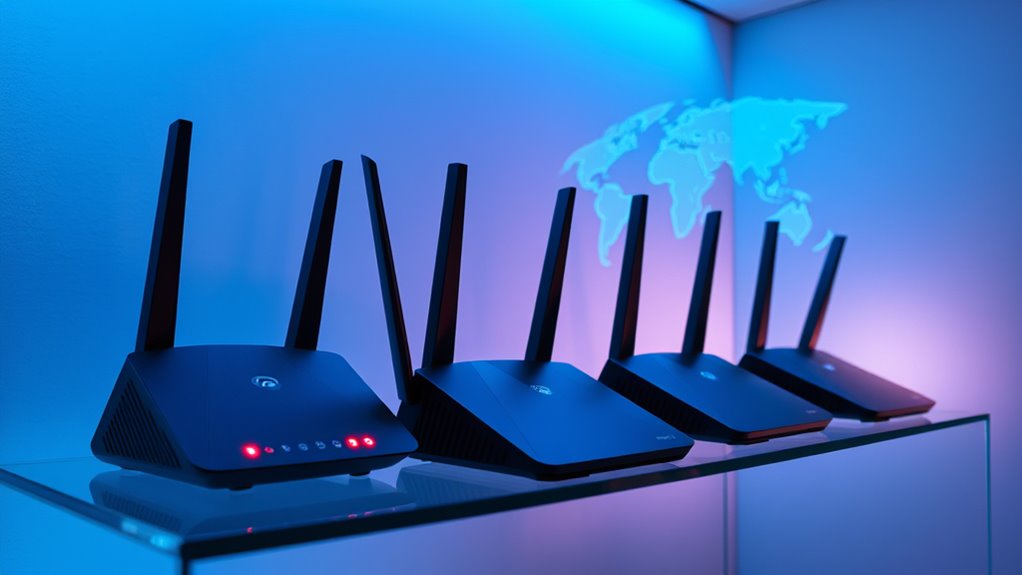

WiFi 7 routers are transforming home and office networks with faster speeds, lower latency, and improved reliability. The best models offer cutting-edge features like multi-gig ports and advanced mesh capabilities, but they come at varied price points and complexity levels. The top pick for overall performance is the ASUS ROG Rapture GT-BE98 Pro, thanks to its robust gaming features and high throughput. Meanwhile, the TP-Link Deco 7 Mesh System excels in coverage and ease of use, making it ideal for large homes. This category presents a tradeoff between raw speed, coverage, user-friendliness, and price. Keep reading for a detailed breakdown to find the best fit for your needs.

Get your wardrobe favorites delivered free with Prime
- Fast, free delivery on millions of items
- Prime Video, Amazon Music and more included
- Member-only deals all year
Key Takeaways
- The top contenders deliver real-world speeds exceeding 5 Gbps, suitable for demanding multi-device environments.
- Mesh systems provide broader coverage but often come with higher upfront costs compared to single-router solutions.
- Gaming routers in this lineup emphasize low latency and stable connections, but may sacrifice some ease of setup.
- Tri-band models generally outperform dual-band options in crowded networks, though they tend to be more expensive.
- Build quality and firmware stability vary, so investing in well-reviewed brands ensures longer-lasting performance.
| ASUS ROG Rapture GT-BE98 Pro WiFi 7 Gaming Router |  | Best Overall for High-Performance Gaming and Future-Proof Speeds | WiFi Standard: WiFi 7 (802.11be) | Bands: Quad-band | Max Speed: 30 Gbps | VIEW ON AMAZON | See Our Full Breakdown |
| ASUS RT-BE55 Dual-Band WiFi 7 Router |  | Best for Whole-Home Coverage with Smart Mesh | WiFi Standard: WiFi 7 (dual-band) | Max Speed: 3600 Mbps | Coverage: Up to 2,000 sq. ft. | VIEW ON AMAZON | See Our Full Breakdown |
| TP-Link Deco 7 Dual-Band BE5000 WiFi 7 Mesh Wi-Fi System |  | Best for Large-Scale Whole Home Coverage and Device Support | WiFi Standard: WiFi 7 (BE5000) | Bands: Dual-band | Max Speed: 4,324 Mbps on 5 GHz | VIEW ON AMAZON | See Our Full Breakdown |
| TP-Link Archer BE230 Dual-Band BE3600 Wi-Fi 7 Router |  | Best for Compact, High-Speed Home or Small Office Networks | Wi-Fi Standard: Wi-Fi 7 (802.11be) | Max Speed: 2882 Mbps | Bands: Dual-band | VIEW ON AMAZON | See Our Full Breakdown |
| TP-Link Deco 7 Pro Tri-Band WiFi 7 BE10000 Whole Home Mesh System |  | Best for Premium Whole-Home Mesh with Extreme Coverage | WiFi Standard: WiFi 7 (BE10000) | Bands: Tri-band (6 GHz, 5 GHz, 2.4 GHz) | Max Speeds: 10 Gbps total | VIEW ON AMAZON | See Our Full Breakdown |
| ASUS ROG Strix GS-BE12000 WiFi 7 Tri-Band Gaming Router |  | Best Overall for High-End Gaming and Extensive Wired Connectivity | WiFi Standard: WiFi 7 (802.11be) | Bands: Tri-Band | Max Throughput: 12000 Mbps | VIEW ON AMAZON | See Our Full Breakdown |
| TP-Link Archer BE550 Tri-Band BE9300 WiFi 7 Router |  | Best Value for Fast, Reliable Tri-Band WiFi 7 with Smart Home Features | WiFi Standard: WiFi 7 (802.11be) | Bands: Tri-Band | Max Speeds: 5760 Mbps | VIEW ON AMAZON | See Our Full Breakdown |
| TP-Link Archer BE670 Tri-Band Wi-Fi 7 Router (BE12000) |  | Best for High-Speed Streaming and Gaming with 12Gbps Capabilities | WiFi Standard: WiFi 7 (802.11be) | Bands: Tri-Band | Max Throughput: 12218 Mbps | VIEW ON AMAZON | See Our Full Breakdown |
| NETGEAR Nighthawk RS140 Dual-Band WiFi 7 Router |  | Best for Small to Medium Homes Needing Reliable Dual-Band WiFi 7 | WiFi Standard: WiFi 7 (802.11be) | Bands: Dual-Band | Max Wireless Speed: 5 Gbps | VIEW ON AMAZON | See Our Full Breakdown |
| TP-Link Dual-Band WiFi 7 Gaming Router Archer GE400 |  | Best for Gamers Seeking High-Speed, Low-Latency Connection | WiFi Speed: up to 5765 Mbps (5 GHz) and 688 Mbps (2.4 GHz) | Ports: 1x 2.5 Gbps WAN/LAN, 1x 2.5 Gbps LAN, 3x 1 Gbps LAN | Coverage: up to 2,600 sq. ft. | VIEW ON AMAZON | See Our Full Breakdown |
| TP-Link Archer BE6500 Dual-Band WiFi 7 Router (BE400) |  | Best for Future-Ready, Multi-Device Homes with Wide Coverage | WiFi Standard: Wi-Fi 7 (802.11be) | Bands: Dual-Band (2.4 GHz / 5 GHz) | Total Bandwidth: 6.5 Gbps | VIEW ON AMAZON | See Our Full Breakdown |
| NETGEAR Nighthawk RS90 Dual-Band WiFi 7 Router (BE3600) |  | Best for High-Speed Gaming and Streaming in Moderate Homes | WiFi Standard: WiFi 7 | Bands: Dual-Band (2.4 GHz + 5 GHz) | Max Speed: up to 3.6 Gbps | VIEW ON AMAZON | See Our Full Breakdown |
| Amazon eero 7 Dual-Band Mesh Wi-Fi 7 Router, 3-Pack (Newest Model) |  | Best for Large Homes with Extensive Coverage and Device Capacity | Wi-Fi Standard: Wi-Fi 7 | Max Internet Plan Support: 2.5 Gbps | Wireless Speed: Up to 1.8 Gbps | VIEW ON AMAZON | See Our Full Breakdown |
| wifi 7 router | Coverage | WiFi Standard | Bands |
|---|---|---|---|
| ASUS ROG Rapture GT-BE98 Pro W | — | WiFi 7 (802.11be) | Quad-band |
| ASUS RT-BE55 Dual-Band WiFi 7 | Up to 2,000 sq. ft. | WiFi 7 (dual-band) | — |
| TP-Link Deco 7 Dual-Band BE500 | Up to 6,600 sq. ft. | WiFi 7 (BE5000) | Dual-band |
| TP-Link Archer BE230 Dual-Band | Up to 2,000 sq. ft. | — | Dual-band |
| TP-Link Deco 7 Pro Tri-Band Wi | Up to 7,600 sq. ft. | WiFi 7 (BE10000) | Tri-band (6 GHz, 5 GHz, 2.4 GHz) |
| ASUS ROG Strix GS-BE12000 WiFi | Up to 3000 sq. ft. | WiFi 7 (802.11be) | Tri-Band |
| TP-Link Archer BE550 Tri-Band | Whole-home with EasyMesh | WiFi 7 (802.11be) | Tri-Band |
| TP-Link Archer BE670 Tri-Band | Up to 3000 sq. ft. | WiFi 7 (802.11be) | Tri-Band |
| NETGEAR Nighthawk RS140 Dual-B | Up to 2,250 sq. ft. | WiFi 7 (802.11be) | Dual-Band |
| TP-Link Dual-Band WiFi 7 Gamin | up to 2,600 sq. ft. | — | — |
| TP-Link Archer BE6500 Dual-Ban | up to 2,400 sq. ft. | Wi-Fi 7 (802.11be) | Dual-Band (2.4 GHz / 5 GHz) |
| NETGEAR Nighthawk RS90 Dual-Ba | up to 2,000 sq. ft. | WiFi 7 | Dual-Band (2.4 GHz + 5 GHz) |
| Amazon eero 7 Dual-Band Mesh W | up to 6,000 sq. ft. | — | — |
More Details on Our Top Picks
ASUS ROG Rapture GT-BE98 Pro WiFi 7 Gaming Router
This flagship gaming router stands out primarily for its extraordinary speeds of up to 30 Gbps thanks to WiFi 7’s 320MHz channels and 4096-QAM, surpassing most consumer models like the TP-Link Deco 7 Pro. Its extensive wired options, including dual 10G and quad 2.5G ports, cater well to power users who rely on wired connections for stability. The addition of Multi-link Operation and external dual-feeding antennas enhances signal strength and stability, making it ideal for demanding gaming setups. However, this level of performance comes at a premium, and WiFi 7’s full potential requires compatible client devices. Compared to the ASUS RT-BE55, it’s better suited for users prioritizing ultra-fast, low-latency gaming rather than general browsing. Tradeoffs include the high cost and the need for compatible devices to utilize full speeds.
Pros:- Speeds up to 30 Gbps with WiFi 7 (802.11be)
- Extensive wired connectivity including dual 10G ports
- Advanced Multi-link Operation and external antennas for stable coverage
- Triple-Level Game Acceleration for prioritized gaming traffic
Cons:- Premium price point may be prohibitive for many users
- Requires compatible client devices to realize full speeds
- Overkill for typical home internet needs
Best for: Gamers or tech enthusiasts seeking the highest speeds, maximum stability, and future-ready connectivity for demanding applications
Not ideal for: Casual users or those with limited budgets, as the advanced features and price may be overkill for basic internet needs
- WiFi Standard:WiFi 7 (802.11be)
- Bands:Quad-band
- Max Speed:30 Gbps
- Channel Width:320MHz (6 GHz band)
- Modulation:4096-QAM
- WAN/LAN Ports:2x 10G, 4x 2.5G
- Antennas:External dual-feeding
Our verdict“This router is best suited for high-end gamers and tech aficionados who need maximum performance and are willing to pay for it.”
ASUS RT-BE55 Dual-Band WiFi 7 Router
This dual-band WiFi 7 router makes a compelling choice for users seeking fast speeds up to 3600 Mbps, especially with MLO and 4K-QAM technology, which outperforms many older WiFi 6 models. Its AI-powered Smart AiMesh creates a cohesive whole-home network that can cover up to 2,000 sq. ft., making it ideal for medium-sized homes. The four internal antennas with high-power modules help eliminate dead zones, and the integrated security features like AiProtection and VPN support add peace of mind. Compared to the TP-Link Deco 7, it offers better security and more advanced mesh integration, but it is limited to three SSIDs and lacks WiFi 6E support. This pick is perfect for families or small households wanting reliable, fast WiFi across multiple rooms.
Pros:- Fast WiFi 7 speeds up to 3600 Mbps
- AI-powered Smart AiMesh for expandable whole-home coverage
- Built-in security with AiProtection and VPN support
- Supports up to three SSIDs for device management
Cons:- Limited to three SSIDs, restricting device segmentation
- Mesh extension requires compatible ASUS routers
- No WiFi 6E support for future-proofing
Best for: Homeowners wanting seamless coverage and solid security without the complexity of high-end gaming routers
Not ideal for: Heavy gamers or power users who need ultra-high speeds or extensive wired options, as it focuses more on coverage than raw performance
- WiFi Standard:WiFi 7 (dual-band)
- Max Speed:3600 Mbps
- Coverage:Up to 2,000 sq. ft.
- Antennas:4 internal
- Security:AiProtection, VPN
- Mesh Support:Smart AiMesh
Our verdict“Ideal for families seeking reliable, secure, and expandable WiFi coverage across multiple rooms and floors.”
TP-Link Deco 7 Dual-Band BE5000 WiFi 7 Mesh Wi-Fi System
The Deco 7 mesh system stands out for its ability to blanket up to 6,600 sq. ft. with WiFi 7 speeds supporting 150+ devices, making it a solid choice for large households or small offices. Its 4-stream setup and support for simultaneous wired and wireless backhaul help maintain stability even under heavy load, a clear advantage over single-router setups like the Archer BE230. Setup via the Deco app is straightforward, and security features like TP-Link HomeShield add value. However, performance can vary depending on obstacles and placement, and mesh expansion is limited to Deco units. Compared to the TP-Link Archer BE230, the Deco 7 offers significantly larger coverage but at a higher price point and with more setup complexity. This system is best for users wanting extensive coverage and device capacity without sacrificing WiFi 7 speeds.
Pros:- Massive coverage up to 6,600 sq. ft.
- Supports 150+ devices with WiFi 7 speeds
- Simultaneous wired and wireless backhaul for stable mesh network
- User-friendly setup with comprehensive security features
Cons:- Performance varies with physical obstacles and placement
- Higher cost compared to single-router solutions
- Mesh expansion limited to Deco units
Best for: Large households or small offices needing broad coverage and support for many devices
Not ideal for: Users with modest internet needs or limited budgets, as the system can be overkill and costly
- WiFi Standard:WiFi 7 (BE5000)
- Bands:Dual-band
- Max Speed:4,324 Mbps on 5 GHz
- Coverage:Up to 6,600 sq. ft.
- Device Capacity:150+
- Backhaul:Simultaneous wired/wireless
Our verdict“Best suited for large homes or small offices requiring extensive, fast WiFi coverage for many devices.”
TP-Link Archer BE230 Dual-Band BE3600 Wi-Fi 7 Router
The Archer BE230 offers a balanced mix of speed and simplicity, with WiFi 7 speeds up to 2882 Mbps on the 5 GHz band, thanks to Multi-Link Operation and 4K-QAM. Its dual 2.5 Gbps ports support fast wired connections, while the quad-core 2.0 GHz processor ensures smooth handling of multiple devices. It’s an excellent choice for users seeking reliable performance in smaller spaces up to 2,000 sq. ft., and the EasyMesh support allows for potential expansion. Compared to the ASUS RT-BE55, it offers higher wired port speeds but lacks a dedicated mesh system, making it less suitable for very large homes. This router fits well for small to medium-sized homes needing dependable WiFi 7 without overextending.
Pros:- WiFi 7 speeds up to 2882 Mbps
- Dual 2.5 Gbps ports for fast wired connections
- Supports EasyMesh for future expansion
- Powerful quad-core processor for multitasking
Cons:- Limited to dual-band, no 6 GHz support
- Performance drops with obstacles or distance
- Requires separate modem for internet connection
Best for: Small households or small offices requiring high-speed WiFi with straightforward setup
Not ideal for: Large households or demanding gamers who need extensive coverage or ultra-high speeds
- Wi-Fi Standard:Wi-Fi 7 (802.11be)
- Max Speed:2882 Mbps
- Bands:Dual-band
- Ports:2x 2.5G WAN/LAN
- Coverage:Up to 2,000 sq. ft.
- Processor:2.0 GHz quad-core
Our verdict“A reliable, high-speed option for small to medium-sized homes or offices with moderate coverage needs.”
TP-Link Deco 7 Pro Tri-Band WiFi 7 BE10000 Whole Home Mesh System
The Deco 7 Pro stands out as a comprehensive mesh system offering speeds up to 10 Gbps across a sprawling 7,600 sq. ft., supporting over 200 devices. Its tri-band setup with a dedicated 6 GHz band ensures reliable, high-speed connections even in large, device-dense environments. The inclusion of a 10G WAN port, four 2.5G ports, and a USB 3.0 port provides versatile wired options, making it ideal for small businesses or very large homes. AI-driven roaming, HomeShield security, and VPN support add layers of convenience and security. Compared to the Deco 7, it’s more capable in large-scale deployments but at a higher price and complexity. This system is best for users who demand maximum coverage, device support, and future-proofed wired connections.
Pros:- Massive coverage up to 7,600 sq. ft.
- Supports over 200 devices with WiFi 7 speeds
- Dedicated 6 GHz band for stable, high-speed connections
- Includes 10G WAN port and multiple 2.5G ports
Cons:- High cost and setup complexity
- Requires multiple units for optimal backhaul
- Performance varies with physical obstacles
Best for: Large homes, small offices, or environments demanding extensive coverage and device capacity
Not ideal for: Budget-conscious users or those with modest coverage needs, as it involves a significant investment
- WiFi Standard:WiFi 7 (BE10000)
- Bands:Tri-band (6 GHz, 5 GHz, 2.4 GHz)
- Max Speeds:10 Gbps total
- Coverage:Up to 7,600 sq. ft.
- Device Capacity:200+
- Ports:1x 10G WAN, 4x 2.5G
Our verdict“Best suited for users needing extensive, reliable coverage with high device support and future-ready wired options.”
ASUS ROG Strix GS-BE12000 WiFi 7 Tri-Band Gaming Router
The ASUS ROG Strix GS-BE12000 stands out for its extraordinary throughput of up to 12Gbps, thanks to 320 MHz channels and Multi-Link Operation, making it ideal for households with intense gaming and streaming needs. Its eight 2.5G ports and 20G wired capacity surpass most competitors like the TP-Link BE670, providing unparalleled wired flexibility. The router’s coverage extends to 3,000 sq. ft. with eight internal antennas, ensuring robust signal even in large homes. However, this power comes with a premium price—not suitable for casual users or those with basic internet plans—and its large size may challenge smaller setups. Compared to the TP-Link options, this model’s gaming enhancements and wired ports make it a clear choice for enthusiasts who prioritize speed and stability over cost or compactness.
Pros:- Unmatched WiFi 7 throughput up to 12Gbps with 320 MHz channels
- Eight 2.5G LAN ports and 20G wired capacity for extensive wired connections
- Coverage up to 3,000 sq. ft. with powerful internal antennas
- Gaming-focused features like Triple-Level Game Acceleration
Cons:- High price point makes it less accessible for average users
- Large footprint may be difficult to accommodate in compact spaces
- Overkill for households with basic internet needs
Best for: Gamers and power users who demand maximum performance and extensive wired options in large homes
Not ideal for: Casual internet users or those with smaller spaces seeking a simpler, more affordable router
- WiFi Standard:WiFi 7 (802.11be)
- Bands:Tri-Band
- Max Throughput:12000 Mbps
- WAN Ports:1x 2.5G
- LAN Ports:7x 2.5G
- Wired Capacity:Up to 20G
- CPU:Quad-core 2.0GHz
- Antennas:8 internal
- Coverage:Up to 3000 sq. ft.
Our verdict“This router is best suited for gamers and tech enthusiasts who want top-tier WiFi 7 performance and wired flexibility in a large setup.”
TP-Link Archer BE550 Tri-Band BE9300 WiFi 7 Router
The TP-Link Archer BE550 offers tri-band WiFi 7 speeds up to 5760 Mbps, making it a strong contender for high-speed home networks, especially compared to dual-band options like the NETGEAR RS140. Its five 2.5G ports provide future-proof wired connectivity, and the EasyMesh compatibility facilitates seamless coverage expansion—though it doesn’t support TP-Link’s Deco mesh systems, unlike the BE670. Setup via the Tether app is straightforward, and features like HomeShield security and parental controls enhance usability. While it’s more advanced than basic routers, some users may find the premium price unnecessary if they don’t need the full speed or multiple wired ports, and its lack of mesh compatibility with Deco systems could limit flexibility for some homes. Overall, it hits a sweet spot for users wanting speed, security, and easy management without the highest price tag.
Pros:- Fast tri-band WiFi 7 speeds up to 5760 Mbps
- Five 2.5G ports for high-speed wired connectivity
- Easy setup via Tether app with comprehensive security features
- Supports whole-home coverage with EasyMesh
Cons:- Premium price may be unnecessary for casual users
- Not compatible with Deco mesh systems
- Speed benefits depend on WiFi 7 client devices
Best for: Tech-savvy households seeking fast WiFi 7 speeds with integrated security and simple setup
Not ideal for: Basic users or those with existing Deco mesh systems who need compatibility across the entire home
- WiFi Standard:WiFi 7 (802.11be)
- Bands:Tri-Band
- Max Speeds:5760 Mbps
- Ports:5x 2.5G
- Security:HomeShield
- Coverage:Whole-home with EasyMesh
Our verdict“Ideal for tech-savvy users who want fast, secure WiFi 7 with reliable wired options in a straightforward package.”
TP-Link Archer BE670 Tri-Band Wi-Fi 7 Router (BE12000)
The TP-Link Archer BE670 delivers up to 12,218 Mbps total speeds, making it an excellent choice for users who need robust performance for 4K/8K streaming and AR/VR gaming. Its 10 Gbps WAN port and multiple 2.5G ports support multi-gigabit wired connections, surpassing many rivals like the NETGEAR RS140. The router’s coverage of 3,000 sq. ft. and ability to connect up to 128 devices ensure stable performance in busy homes. Setup is straightforward through the Tether app, but users should be aware that it requires a separate modem and it isn’t compatible with TP-Link Deco mesh systems. This makes it less ideal for users seeking an all-in-one mesh solution or those with basic internet needs. For demanding households, this router offers significant speed and capacity advantages.
Pros:- Exceptional speeds up to 12Gbps with WiFi 7 features like Multi-Link Operation
- 10 Gbps WAN port plus multiple 2.5G ports for multi-gig wired connections
- Large coverage area supporting many devices simultaneously
- Easy setup via Tether app with security features
Cons:- Requires a separate modem, adding complexity and cost
- Not compatible with Deco mesh systems
- High price may be prohibitive for average users
Best for: Power users with multiple 4K streams, VR devices, and large households who demand maximum speed and wired flexibility
Not ideal for: Casual users or those with simple internet plans who don’t need multi-gig speeds or extensive wired connections
- WiFi Standard:WiFi 7 (802.11be)
- Bands:Tri-Band
- Max Throughput:12218 Mbps
- WAN Ports:1x 10 Gbps
- LAN Ports:3x 2.5G
- Coverage:Up to 3000 sq. ft.
- Security:HomeShield
Our verdict“Best suited for demanding households with high bandwidth needs and multiple wired devices seeking maximum performance.”
NETGEAR Nighthawk RS140 Dual-Band WiFi 7 Router
The NETGEAR Nighthawk RS140 provides dual-band WiFi 7 speeds up to 5 Gbps, making it suitable for smaller households or users with moderate bandwidth needs. While it doesn’t match the multi-gig capabilities of routers like the TP-Link BE670, it still offers reliable performance for streaming, gaming, and general browsing across 2,250 sq. ft. with support for up to 80 devices. Its 1.2x faster speeds than WiFi 6 ensures noticeable improvements, and the easy setup via the Nighthawk app simplifies installation. However, the limited LAN ports and the need for a separate modem or ISP gateway can be downsides for some. Its coverage and speed are well-suited for smaller homes but may fall short in larger, demanding environments.
Pros:- WiFi 7 speeds up to 5 Gbps for faster streaming and gaming
- Coverage up to 2,250 sq. ft. supports multiple devices
- Easy app-based setup and management
- Built-in security including NETGEAR Armor trial
Cons:- Requires a separate modem or ISP gateway
- Limited LAN ports (only 3x 1G)
- Coverage may be reduced by physical obstacles
Best for: Small to medium households seeking a straightforward, reliable dual-band WiFi 7 setup
Not ideal for: Large households or power users needing extensive wired connections or multi-gig ports
- WiFi Standard:WiFi 7 (802.11be)
- Bands:Dual-Band
- Max Wireless Speed:5 Gbps
- Coverage:Up to 2,250 sq. ft.
- Max Connected Devices:80
- WAN Port:1x 2.5 Gbps
- LAN Ports:3x 1 Gbps
Our verdict“A reliable choice for small to medium homes needing solid dual-band WiFi 7 performance without complex setup.”
TP-Link Dual-Band WiFi 7 Gaming Router Archer GE400
The TP-Link Archer GE400 shines for gaming enthusiasts who prioritize speed and dedicated performance. Its impressive WiFi speeds of up to 5765 Mbps on 5 GHz surpass many competitors like the NETGEAR RS90, offering a clear edge in latency-sensitive tasks. The dedicated gaming port and QoS ensure prioritized game traffic, which can significantly reduce lag during intense sessions. However, it lacks support for the 6 GHz band, unlike more advanced WiFi 7 models such as the TP-Link BE6500, which could limit future-proofing as devices evolve. Its coverage of 2,600 sq. ft. is solid for typical homes, but environment and obstacles may reduce actual range. This router makes the most sense for gamers who want fast, reliable wired and wireless connections without the need for mesh expansion or multi-band complexity.
Pros:- High WiFi speeds up to 5765 Mbps on 5 GHz for low-latency gaming
- Dedicated gaming port and QoS for optimized traffic prioritization
- Multiple high-speed wired ports for versatile wired connections
- Easy setup via mobile app or web interface
Cons:- Does not support 6 GHz band or WiFi 6E, limiting future device compatibility
- Lacks mesh support, so coverage may require additional hardware
Best for: Dedicated gamers and streamers who need a high-performance router with prioritized traffic management
Not ideal for: Small households seeking budget-friendly, simple WiFi solutions or those wanting mesh capabilities
- WiFi Speed:up to 5765 Mbps (5 GHz) and 688 Mbps (2.4 GHz)
- Ports:1x 2.5 Gbps WAN/LAN, 1x 2.5 Gbps LAN, 3x 1 Gbps LAN
- Coverage:up to 2,600 sq. ft.
- Antennas:6 external antennas with Beamforming technology
- Security:TP-Link security services, Secure-by-Design pledge
- Setup:Easy setup via Tether app or web interface
Our verdict“This router is ideal for serious gamers who want fast, reliable performance with minimal latency but don’t need mesh expansion or the latest WiFi 7 features like 6 GHz support.”
TP-Link Archer BE6500 Dual-Band WiFi 7 Router (BE400)
The TP-Link Archer BE400 stands out for users seeking the latest WiFi 7 features like Multi-Link Operation (MLO) and 4K-QAM, which enable lower latency and higher throughput across multiple devices. Its 6 streams and total bandwidth of 6.5 Gbps make it a step ahead of dual-band options like the NETGEAR RS90, which maxes out at 3.6 Gbps. The dual-band setup means it’s less complex than tri-band routers but still offers robust performance for small to medium homes—up to 2,400 sq. ft. supporting 90 devices. Its multi-gig ports, including two 2.5 Gbps ports, support high-speed wired connections, and EasyMesh compatibility allows expansion into mesh networks. The main tradeoff is that it doesn’t include a 6 GHz band, which could limit its advantage against tri-band models, especially as more WiFi 7 devices adopt the 6 GHz spectrum.
Pros:- Supports advanced WiFi 7 features like MLO and 4K-QAM for lower latency
- Multi-gig wired ports with 2.5 Gbps support for fast wired connections
- Supports up to 90 devices over 2,400 sq. ft.
- EasyMesh compatibility for expanding into a mesh network
Cons:- Lacks support for 6 GHz band, limiting maximum future throughput
- Full performance depends on newer WiFi 7 devices; older clients won’t benefit
Best for: Tech-savvy households wanting a future-proof, high-throughput WiFi 7 router with mesh expandability
Not ideal for: Homes with very large area requiring extensive mesh systems or users seeking tri-band performance with 6 GHz support
- WiFi Standard:Wi-Fi 7 (802.11be)
- Bands:Dual-Band (2.4 GHz / 5 GHz)
- Total Bandwidth:6.5 Gbps
- Max 5GHz Speed:5764 Mbps
- Streams:6
- Coverage:up to 2,400 sq. ft.
- Ports:1x 2.5 Gbps WAN/LAN, 1x 2.5 Gbps LAN, 3x 1 Gbps LAN
- Key Features:MLO, 4K-QAM, Beamforming, EasyMesh
Our verdict“This router suits users wanting cutting-edge WiFi 7 features and expandable coverage, but it doesn’t yet include 6 GHz, which could be a limitation down the line.”
NETGEAR Nighthawk RS90 Dual-Band WiFi 7 Router (BE3600)
The NETGEAR Nighthawk RS90 provides a solid WiFi 7 experience with speeds up to 3.6 Gbps, making it appealing for gamers and streamers who require reliable, fast connections. Its quad-core 2.0 GHz processor ensures smooth handling of gaming, 4K streaming, and multiple device connections, surpassing the capabilities of older WiFi 6 routers. Though it’s a standalone device requiring a separate modem, its 2.5 Gbps WAN port supports multi-gig internet plans, and security features like WPA3 and NETGEAR Armor protect your network. Compared to the TP-Link BE6500, it offers less overall bandwidth but is easier to set up for users with existing modem setups. Its coverage of 2,000 sq. ft. is suitable for medium-sized homes, but large households might find it necessary to pair with a mesh system for complete coverage.
Pros:- Speeds up to 3.6 Gbps, faster than WiFi 6 options
- 2.5 Gbps WAN port supports high-speed internet plans
- Quad-core processor for handling demanding activities
- Strong security with WPA3 and Armor trial
Cons:- Requires a separate modem, adding complexity and cost
- Limited coverage for large homes, may need mesh extension
Best for: Gamers and streamers in medium-sized homes who want reliable speed with straightforward setup
Not ideal for: Large households requiring extensive mesh networks or users with integrated ISP gateways that need bridge mode
- WiFi Standard:WiFi 7
- Bands:Dual-Band (2.4 GHz + 5 GHz)
- Max Speed:up to 3.6 Gbps
- Processor:Quad-core 2.0 GHz
- Coverage:up to 2,000 sq. ft.
- Ports:1x 2.5G WAN, 4x 1G LAN
Our verdict“This router offers high-speed WiFi 7 for gamers and streamers with moderate coverage needs but needs a separate modem and might require additional hardware for larger spaces.”
Amazon eero 7 Dual-Band Mesh Wi-Fi 7 Router, 3-Pack (Newest Model)
The eero 7 3-pack excels at providing expansive coverage, making it ideal for large homes with many connected devices. It supports internet plans up to 2.5 Gbps and wireless speeds of around 1.8 Gbps, which are more than enough for most household needs. Its patented TrueMesh technology and features like TrueRoam and TrueChannel ensure reliable connectivity across a sprawling 6,000 sq. ft. of coverage and support for over 120 devices. It’s backward compatible with previous eero models, allowing easy expansion, and comes with a three-year warranty. However, advanced security features require a paid eero Plus subscription, and the 3-pack might be overkill for smaller or apartment-sized homes. Compared to single-router options, this setup offers unmatched coverage but at a higher price and complexity.
Pros:- Supports Wi-Fi 7 with speeds up to 1.8 Gbps
- Coverage up to 6,000 sq. ft. with 3 units
- Supports 120+ devices simultaneously
- Easy expansion with TrueMesh technology
Cons:- Requires paid subscription for advanced security features
- More expensive than single-router solutions for small homes
Best for: Large households or multi-story homes needing extensive, seamless WiFi coverage with high device support
Not ideal for: Small apartments or users seeking a simple, budget-friendly single-router setup
- Wi-Fi Standard:Wi-Fi 7
- Max Internet Plan Support:2.5 Gbps
- Wireless Speed:Up to 1.8 Gbps
- Coverage:up to 6,000 sq. ft.
- Device Support:120+ devices
- Number of Units:3-pack
Our verdict“This mesh system is perfect for large homes demanding extensive coverage and high device capacity, provided users are willing to invest in the setup and security.”

How We Picked
The products in this roundup were selected based on a combination of performance benchmarks, usability, build quality, and future-proofing features such as multi-gig ports and advanced WiFi 7 support. We prioritized models that demonstrate consistent high-speed connectivity across multiple devices and environments, while also considering ease of setup and management. Devices offering mesh capabilities or designed for specific use cases like gaming or large homes were included to cover diverse needs. The ranking reflects a balance between value and premium features, ensuring there’s a recommended option for different budgets and priorities.| wifi 7 router | WiFi Standard | Bands |
|---|---|---|
| ASUS ROG Rapture GT-BE98 Pro W | WiFi 7 (802.11be) | Quad-band |
| ASUS RT-BE55 Dual-Band WiFi 7 | WiFi 7 (dual-band) | — |
| TP-Link Deco 7 Dual-Band BE500 | WiFi 7 (BE5000) | Dual-band |
| TP-Link Archer BE230 Dual-Band | — | Dual-band |
| TP-Link Deco 7 Pro Tri-Band Wi | WiFi 7 (BE10000) | Tri-band (6 GHz, 5 GHz, 2.4 GHz) |
| ASUS ROG Strix GS-BE12000 WiFi | WiFi 7 (802.11be) | Tri-Band |
| TP-Link Archer BE550 Tri-Band | WiFi 7 (802.11be) | Tri-Band |
| TP-Link Archer BE670 Tri-Band | WiFi 7 (802.11be) | Tri-Band |
| NETGEAR Nighthawk RS140 Dual-B | WiFi 7 (802.11be) | Dual-Band |
| TP-Link Dual-Band WiFi 7 Gamin | — | — |
| TP-Link Archer BE6500 Dual-Ban | Wi-Fi 7 (802.11be) | Dual-Band (2.4 GHz / 5 GHz) |
| NETGEAR Nighthawk RS90 Dual-Ba | WiFi 7 | Dual-Band (2.4 GHz + 5 GHz) |
| Amazon eero 7 Dual-Band Mesh W | — | — |
Factors to Consider When Choosing Wifi 7 Routers
Choosing a WiFi 7 router involves evaluating several key factors that impact your network’s performance and usability. Understanding these aspects helps prevent overpaying for features you don’t need or selecting a device that can’t handle your household’s demands. This guide covers the most important considerations for making an informed purchase, from speed requirements to coverage, and more.Speed and Throughput
While many WiFi 7 routers promise multi-gig speeds, real-world performance depends on your internet plan, device capabilities, and network setup. Prioritize routers that support multi-gig ports and higher bandwidth channels if you handle large files, 4K streaming, or online gaming. Avoid models with exaggerated specs that don’t translate into actual speed gains, especially if your internet plan is slower than 1 Gbps. Matching your router’s capacity to your internet speed and device needs ensures you get the best value without overpaying.
Coverage and Mesh Capabilities
Large homes or multi-story setups often require mesh systems or multiple nodes for seamless coverage. Mesh routers like the TP-Link Deco 7 excel at eliminating dead zones, but they come at a premium. Consider your home’s size and layout when choosing between a single powerful router or a mesh system. Keep in mind that adding more nodes can improve stability but may increase complexity and cost. Proper placement of nodes is key to maximizing coverage and maintaining strong signals throughout your space.
Ease of Setup and Management
Intuitive setup processes and user-friendly management apps are vital, especially for less tech-savvy users. Some routers offer advanced features with complex interfaces, which can be overwhelming. Look for models with clear instructions, mobile app support, and straightforward firmware updates. A stable, easy-to-use interface can save time and frustration, making it easier to monitor your network, prioritize devices, or troubleshoot issues when needed.
Future-Proofing and Features
WiFi 7 is still emerging, so selecting a router with additional features like multi-gig ports, robust security options, and compatibility with future standards can extend its usefulness. Some models include gaming-specific optimizations or extensive parental controls, which may be beneficial depending on your needs. Be cautious of overly complex or feature-heavy routers if you only require basic internet access. Balancing current needs with potential future upgrades is key to making a wise investment.
Price and Value
Premium WiFi 7 routers often come with high costs, but they also provide advanced features and performance perks. If you run a large household or have demanding activities like gaming or streaming, paying extra for a high-end model makes sense. Conversely, if your usage is basic, a mid-range or mesh system offers excellent value without sacrificing essential performance. Always compare features against the price to avoid overspending on capabilities you won’t utilize.
Frequently Asked Questions
Will my current devices benefit from WiFi 7?
Most current devices are designed for WiFi 6 or earlier standards, so they won’t immediately benefit from WiFi 7’s faster speeds. However, upgrading to a WiFi 7 router future-proofs your network and can improve overall stability and capacity as new WiFi 7-compatible devices become available. Additionally, WiFi 7 routers are often backward compatible, ensuring your existing gear continues to work while you upgrade devices over time.
Is WiFi 7 worth the extra cost over WiFi 6E?
WiFi 7 offers higher speeds, lower latency, and better performance in congested environments compared to WiFi 6E. If your internet plan exceeds 1 Gbps or you need bandwidth for multiple 4K streams or large file transfers, WiFi 7 can be a worthwhile upgrade. For average users with modest internet plans, WiFi 6E provides ample performance at a lower cost, making it a more economical choice for many households.
How many devices can a WiFi 7 router support effectively?
WiFi 7 routers are designed to handle dozens of devices simultaneously, thanks to improved multi-user MIMO and OFDMA technologies. The actual number depends on the specific model and network activity, but high-end routers can manage 50+ devices without significant slowdowns. For households with many smart gadgets, gaming consoles, and streaming devices, choosing a router with strong multi-device performance is essential to prevent bottlenecks.
Do I need a mesh system or a single router?
The choice depends on your home size and layout. Mesh systems like the TP-Link Deco 7 are ideal for large or multi-floor homes where a single router cannot provide consistent coverage. If your space is smaller, a high-performance single router may suffice, offering simpler setup and management. Consider your coverage needs, device count, and budget to determine which setup aligns best with your environment.
Are WiFi 7 routers compatible with existing WiFi standards?
Yes, WiFi 7 routers are backward compatible with WiFi 6, 5, and earlier standards, ensuring your current devices continue to work smoothly. This compatibility allows you to upgrade gradually without losing access to older gear. However, to enjoy the full benefits of WiFi 7’s speed and efficiency, you’ll eventually want to upgrade your devices to WiFi 7-compatible models as they become available and affordable.
Conclusion
For those seeking the best overall performance, the ASUS ROG Rapture GT-BE98 Pro stands out, especially for gaming and high-demand use. Budget-conscious buyers will find excellent value in the TP-Link Archer BE670 or the NETGEAR Nighthawk RS90, which deliver solid performance without breaking the bank. The TP-Link Deco 7 Mesh System suits large homes needing extensive coverage with ease of use. Finally, users prioritizing premium features and future-proofing should consider the ASUS ROG Strix GS-BE12000 or the TP-Link Archer BE9300. Assess your specific needs, home size, and budget to identify the best WiFi 7 router for your setup.
As an affiliate, we earn on qualifying purchases.Fall Picks
fall essentials