Shopping for wheelchairs for heavy people means paying close attention to three numbers before anything else: weight capacity, seat width, and frame construction. My top pick is the Vive Extra-Wide Bariatric Wheelchair (600 lb capacity, 28″ seat), which offers the largest weight margin and roomiest seat in this lineup. The Medline Excel Extra-Wide (500 lb capacity) is the strongest self-propelled option for users who push themselves, while the Medline Bariatric Transport Chair (450 lbs, 22″ seat) wins on portability for travel and errands. The core tradeoff in this category is simple: heavier-duty frames and wider seats add weight and bulk, so you are constantly balancing durability against how easily the chair folds, lifts into a car, and fits through doorways. Keep reading for the full breakdown of all ten models.

Get your wardrobe favorites delivered free with Prime
- Fast, free delivery on millions of items
- Prime Video, Amazon Music and more included
- Member-only deals all year
Complete the kit

Key Takeaways
- Transport chairs dominated the value end of this roundup: models like the Medline Bariatric Transport Chair and Vive Mobility transport chair cost far less than self-propelled wheelchairs but require a companion to push, making them best for occasional use rather than daily independence.
- Weight capacity should exceed the user’s actual weight by at least 50-100 lbs. The Vive Extra-Wide (600 lbs) and Medline Excel (500 lbs) provided the largest safety margins, while the Invacare folding model (300 lbs) sits at the borderline for many bariatric users and lost ranking points for it.
- Seat width, not capacity, is the hidden dealbreaker. A 22″ seat fits most users comfortably, but the Vive 28″ seat is the only option here for users who find standard bariatric widths tight, and it trades away maneuverability in narrow hallways to get there.
- Self-propelled models (large rear wheels) consistently weigh more and fold less compactly than transport chairs, so the choice between the two types matters more than the choice between brands.
- Swing-away footrests and removable desk-length armrests appeared on nearly every strong pick, because they make transfers and table access possible — models lacking them ranked lower regardless of capacity.
| Medline Bariatric Transport Chair for Adults and Seniors, 450 lb Capacity, 22″ Seat | 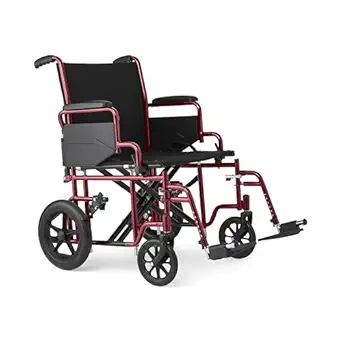 | Best Overall Transport Chair | Weight Capacity: 450 lbs | Seat Width: 22 inches | Seat Depth: 18 inches | VIEW ON AMAZON | See Our Full Breakdown |
| Vive Mobility Bariatric Transport Wheelchair – 450 lb Capacity |  | Best for Caregiver Control | Weight Capacity: 450 lbs | Seat Size: 22″ x 18″ | Frame Width: 27 inches | VIEW ON AMAZON | See Our Full Breakdown |
| Medline Excel Extra-Wide Bariatric Wheelchair, 24″ Seat, 500 lb Capacity |  | Best High-Capacity Self-Propel Option | Weight Capacity: 500 lbs | Seat Dimensions: 24″W x 18″D | Chair Weight: 60 lbs | VIEW ON AMAZON | See Our Full Breakdown |
| 22-inch Bariatric Wheelchair with Removable Desk-Length Armrests |  | Best for Low-Maintenance Daily Use | Seat Width: 22 inches | Frame Finish: Hammertone | Armrests: Removable desk-length | VIEW ON AMAZON | See Our Full Breakdown |
| Vive Bariatric Wheelchair for Adults, 400 lb Capacity, 20″ Seat |  | Best for Lighter Bariatric Needs | Weight Capacity: 400 lbs | Seat Width: 20 inches | Overall Width: 27 inches | VIEW ON AMAZON | See Our Full Breakdown |
| Medline Heavy Duty Bariatric Transport Chair, 22 x 18 in Seat, Blue Frame |  | Best Lightweight Bariatric Transport | Weight capacity: 450 lbs | Seat dimensions: 22 x 18 in | Frame material: Steel | VIEW ON AMAZON | See Our Full Breakdown |
| Medline Extra-Wide Bariatric Wheelchair with 22-Inch Seat | 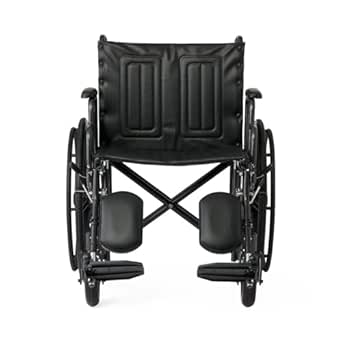 | Best for Elevated Legs | Weight capacity: 500 lbs | Seat width: 22 inches | Seat depth: 18 inches | VIEW ON AMAZON | See Our Full Breakdown |
| Vive Extra-Wide Bariatric Wheelchair for Adults (600 lb Capacity, 28″ Seat) |  | Best for Highest Weight Capacity | Weight capacity: 600 lbs (26″-30″ seats); 700 lbs (32″ seat) | Seat width options: 26″, 28″, 30″, 32″ | Frame: Powder-coated steel with dual crossbars | VIEW ON AMAZON | See Our Full Breakdown |
| Invacare Adult Folding Manual Wheelchair with Flip-Back & Removable Arms, 300lb Capacity |  | Best for Self-Propulsion | Weight capacity: 300 lbs | Frame: Steel, dual-fold | Folded dimensions: 30.5 in H x 12 in W | VIEW ON AMAZON | See Our Full Breakdown |
| SOFTFISH Transport Wheelchair with Ergonomic Design & Adjustable Features |  | Best for Travel Comfort | Weight capacity: 300 lbs | Frame material: Carbon fiber-style aluminum alloy | Wheel size: 12 in all-terrain rear | VIEW ON AMAZON | See Our Full Breakdown |
| wheelchairs for heavy people | Weight Capacity | Armrests | Footrests | Frame |
|---|---|---|---|---|
| Medline Bariatric Transport Ch | 450 lbs | Swing-away desk-length | Swing-away | — |
| Vive Mobility Bariatric Transp | 450 lbs | — | — | — |
| Medline Excel Extra-Wide Baria | 500 lbs | Removable desk-length | Swing-away, adjustable, folding | Chrome |
| 22-inch Bariatric Wheelchair w | — | Removable desk-length | Swing-away | — |
| Vive Bariatric Wheelchair for | 400 lbs | Padded | Adjustable, swing-away | Steel |
| Medline Heavy Duty Bariatric T | 450 lbs | Removable, desk-length | Detachable, swing-away | — |
| Medline Extra-Wide Bariatric W | 500 lbs | Removable desk-length | — | Chrome, folding |
| Vive Extra-Wide Bariatric Whee | 600 lbs (26"-30" seats); 700 lbs (32" seat) | Padded, removable | XL swing-away, height-adjustable | Powder-coated steel with dual crossbars |
| Invacare Adult Folding Manual | 300 lbs | Flip-back and removable desk-length | — | Steel, dual-fold |
| SOFTFISH Transport Wheelchair | 300 lbs | Flip-back | — | — |
More Details on Our Top Picks
Medline Bariatric Transport Chair for Adults and Seniors, 450 lb Capacity, 22″ Seat
This Medline transport chair hits the sweet spot between capacity, seat width, and everyday usability that most bariatric buyers need. The 450 lb weight limit paired with a 22-inch seat handles the majority of heavier users without stepping up to the bulk of the Medline Excel, which trades 3 more inches of seat width for 15 extra pounds of frame weight. Compared with the Vive Mobility chair, the swing-away desk-length arms here make side transfers noticeably easier, which matters more than almost any other feature for caregivers. The folding frame keeps it manageable for car transport despite the 45 lb heft.
The tradeoff is real, though: this is still a two-handed lift into a trunk, and the footprint fights you in older homes with narrow doorways.
Pros:- 450 lb capacity with a sturdy steel frame for dependable daily use
- 22-inch extra-wide seat gives generous room without the bulk of a 24-inch model
- Swing-away desk-length arms and footrests make transfers far easier than fixed arms
- Folds down for trunk storage and travel
Cons:- At 45 lbs, lifting it into a vehicle usually requires two people or a ramp
- Bulky footprint struggles in narrow hallways and tight bathrooms
Best for: Caregivers who regularly transport a heavier adult by car and need easy side transfers
Not ideal for: Buyers in older homes with doorways under 26 inches — the width will not clear them
- Weight Capacity:450 lbs
- Seat Width:22 inches
- Seat Depth:18 inches
- Chair Weight:45 lbs
- Frame Material:Steel
- Armrests:Swing-away desk-length
- Footrests:Swing-away
- Foldable:Yes
Our verdict“The most balanced choice for heavier adults who need a dependable, transfer-friendly transport chair at a moderate weight.”
Vive Mobility Bariatric Transport Wheelchair – 450 lb Capacity
What separates this Vive Mobility chair from the Medline Bariatric Transport Chair is its focus on the person pushing, not just the person riding. The dual handbrakes and ergonomic grips give caregivers real speed control on slopes — something the Medline and the 22-inch hammertone model simply don’t offer — and the 12-inch smooth-rolling wheels absorb pavement imperfections better than standard small casters. The breathable, moisture-wicking seat is a genuine comfort advantage on longer outings, and arriving pre-assembled means it works out of the box.
The catch: at 48 lbs with a 27-inch frame, it’s heavier and wider than the Medline, so it demands more lifting strength and fails the doorway test in tighter homes.
Pros:- Dual handbrakes give caregivers confident control on inclines
- Breathable, moisture-wicking seat keeps longer outings comfortable
- Arrives pre-assembled — only the footrests need attaching
- 12-inch smooth-rolling wheels handle uneven pavement better than standard casters
Cons:- 27-inch frame width won’t clear many standard 26- to 28-inch doorways
- One of the heavier transport options at 48 lbs
Best for: Caregivers who push a heavier adult outdoors or on hills and need reliable braking control
Not ideal for: Anyone who needs to lift the chair alone — 48 lbs with a wide folded profile is a struggle
- Weight Capacity:450 lbs
- Seat Size:22″ x 18″
- Frame Width:27 inches
- Wheel Size:12 inches
- Chair Weight:48 lbs
- Frame Material:Steel
- Brakes:Dual handbrakes
- Assembly:Pre-assembled (footrests only)
- Foldable:Yes
Our verdict“The pick when braking control and outdoor handling matter more than saving weight.”
Medline Excel Extra-Wide Bariatric Wheelchair, 24″ Seat, 500 lb Capacity
When 450 lbs isn’t enough, this is the chair that answers. The 500 lb weight capacity and 24-inch seat put the Medline Excel in a different class from the Medline Transport Chair — more room, more headroom on the weight rating, and a chrome frame built for years of daily use rather than occasional outings. The removable desk-length arms go beyond swing-away designs for transfers, letting users slide sideways from a bed or toilet with minimal assistance. Folding to 13 inches wide helps with storage even if lifting it is another matter.
Be honest with yourself about the 60 lb frame: this is a chair for the home and vehicle lifts or ramps, not one person hoisting into a sedan. The 32.5-inch footprint also rules out tight bathrooms.
Pros:- 500 lb capacity with the widest seat in this batch at 24 inches
- Removable arms allow true lateral transfers, not just easier entry
- Durable chrome frame suited to constant daily use rather than occasional transport
- Folds to just 13 inches wide for compact storage
Cons:- 60 lb weight makes vehicle loading impractical without a lift or helper
- 32.5-inch overall width blocks many bathroom doorways and tight hallways
Best for: Users near or above the 450 lb mark who need maximum seat space and all-day seating comfort
Not ideal for: Anyone without a vehicle lift or a second helper — 60 lbs is a genuine two-person load
- Weight Capacity:500 lbs
- Seat Dimensions:24″W x 18″D
- Chair Weight:60 lbs
- Frame:Chrome
- Armrests:Removable desk-length
- Footrests:Swing-away, adjustable, folding
- Folded Width:13 inches
Our verdict“The strongest choice here for users who need more than 450 lbs of capacity and primarily stay in one home environment.”
22-inch Bariatric Wheelchair with Removable Desk-Length Armrests
This hammertone-frame wheelchair wins on practicality over polish. Unlike the Vive Mobility chair’s fabric-style seat, the easy-clean vinyl upholstery here shrugs off spills and incontinence accidents with a wipe — a small feature that changes daily life for many caregivers. The solid tires follow the same logic: no flats, no pressure checks, ever. Compared with the Medline Excel, the 22-inch seat is slightly narrower, which actually helps in tighter homes while still serving most bariatric users, and the removable armrests keep transfers manageable.
The honest problem is transparency: the listing doesn’t state a weight capacity or chair weight, so heavier users should confirm the rating with the seller before buying rather than assuming it matches the 450 lb class of its rivals.
Pros:- Vinyl upholstery wipes clean after spills or accidents in seconds
- Solid tires eliminate flats and pressure maintenance entirely
- Removable desk-length armrests make side transfers straightforward
- Heavy-duty hammertone frame finish resists visible wear
Cons:- No published weight capacity — a real risk for heavier buyers who need certainty
- Missing weight and dimension details make fit and transport planning difficult
Best for: Caregivers who prioritize wipe-clean upkeep and puncture-proof tires over detailed specifications
Not ideal for: Users above roughly 400 lbs — the unstated weight capacity makes it a gamble at higher weights
- Seat Width:22 inches
- Frame Finish:Hammertone
- Armrests:Removable desk-length
- Footrests:Swing-away
- Upholstery:Vinyl, easy-clean
- Tires:Solid, smooth-rolling
- Construction:Heavy-duty
Our verdict“A sensible wipe-clean workhorse if you verify the weight rating first; skip it if you need guaranteed capacity numbers.”
Vive Bariatric Wheelchair for Adults, 400 lb Capacity, 20″ Seat
Not everyone needing a wide seat needs a 450 lb rating, and this Vive chair is built exactly for that user. The 20-inch seat is trimmer than the 22-inch Medline or Vive Mobility options, which translates to a lighter 45 lb frame that’s easier to fold, lift, and store — the difference between manageable and impossible for many caregivers. The padded armrests and hand brakes add day-to-day comfort and control the bare-bones hammertone model lacks, and the one-year guarantee gives buyers a safety net the generic options don’t offer.
The limits are clear: at 400 lbs capacity it’s the lowest-rated chair in this lineup, and the 27-inch overall width still betrays its wider seat when navigating doorways.
Pros:- Lightest feel in the batch at 45 lbs with a trimmer 20-inch seat
- Padded armrests and hand brakes add comfort and control rivals skip
- One-year guarantee offers recourse if issues arise
- Folds for storage and adjusts easily with swing-away footrests
Cons:- 400 lb capacity is the lowest here — fine for moderate needs, not true bariatric weights
- 27-inch overall width still won’t clear many interior doorways
Best for: Users between 300 and 400 lbs who want a wider seat without a full bariatric-weight frame
Not ideal for: Users above 400 lbs — this is the lowest capacity chair in the lineup and shouldn’t be pushed past its rating
- Weight Capacity:400 lbs
- Seat Width:20 inches
- Overall Width:27 inches
- Chair Weight:45 lbs
- Frame:Steel
- Armrests:Padded
- Brakes:Hand brakes
- Footrests:Adjustable, swing-away
- Guarantee:1 year
Our verdict“The right-sized pick for lighter bariatric users who don’t want to carry the weight penalty of higher-capacity chairs.”
Medline Heavy Duty Bariatric Transport Chair, 22 x 18 in Seat, Blue Frame
Among transport-style chairs in this roundup, this Medline stands out for striking a balance between 450 lb capacity and a frame that stays manageable for a caregiver to lift into a trunk. Compared with the Invacare Adult Folding Wheelchair, it trades self-propulsion for a simpler, lighter build — there are no large rear push-rims, so the rider depends entirely on someone pushing. The breathable nylon upholstery helps on longer outings where vinyl seats get clammy, and the removable desk-length arms plus swing-away footrests make side transfers to a bed or toilet far less awkward. The tradeoff is the small 12-inch rear wheels: fine indoors and on pavement, rough on gravel or thick carpet.
Pros:- 450 lb capacity in a lighter transport-style frame
- Breathable nylon seat back for longer sitting periods
- Seat belt and wheel locks included for slope safety
- Removable arms and swing-away footrests simplify transfers
Cons:- Companion-propelled only — no push rims for the user
- 12-inch rear wheels struggle on grass, gravel or carpet
Best for: Caregivers who need a 450 lb-capable chair for outings and clinic visits that still folds and lifts easily
Not ideal for: Users who want any independence — the small wheels and companion-only design mean no self-propelling
- Weight capacity:450 lbs
- Seat dimensions:22 x 18 in
- Frame material:Steel
- Upholstery:Breathable nylon
- Rear wheel size:12 in
- Armrests:Removable, desk-length
- Footrests:Detachable, swing-away
- Foldable:Yes
Our verdict“This is the pick when a caregiver needs serious capacity in a chair that still fits a car trunk without a fight.”
Medline Extra-Wide Bariatric Wheelchair with 22-Inch Seat
Where most chairs in this guide — like the SOFTFISH Transport Wheelchair — cap out near 300 lbs, this Medline offers a 500 lb capacity with a seat that genuinely accommodates broader hips rather than squeezing them. Its defining feature is the adjustable elevating leg rests, which matter if swelling, poor circulation, or post-surgery recovery means the user needs their legs raised during the day. The removable desk-length armrests open the chair up for lateral transfers, and the chrome frame folds narrower for storage. The honest tradeoff is weight: at roughly 65 pounds, loading it into a vehicle is a two-person job, and buyers should note the listing itself lists conflicting weight figures.
Pros:- 500 lb capacity with a roomy 22-inch seat
- Elevating leg rests support circulation and positioning needs
- Removable armrests enable easier side transfers
- Folds from 32.5 inches wide down to 13 inches for storage
Cons:- At 65 pounds it is one of the heaviest chairs here to lift and load
- Listing shows conflicting weight figures (58 vs 65 lbs), which creates uncertainty
Best for: Users up to 500 lbs who need elevating leg rests for circulation or swelling and have help lifting the chair
Not ideal for: Solo caregivers who frequently load the chair into a car — the 65 lb frame makes that impractical
- Weight capacity:500 lbs
- Seat width:22 inches
- Seat depth:18 inches
- Seat height:22 inches
- Frame:Chrome, folding
- Armrests:Removable desk-length
- Leg rests:Elevating
- Brakes:Push-to-lock
Our verdict“Choose this when leg elevation and 500 lb support are non-negotiable, and accept the lifting burden that comes with it.”
Vive Extra-Wide Bariatric Wheelchair for Adults (600 lb Capacity, 28″ Seat)
For buyers whose needs exceed what the Medline Extra-Wide Bariatric Wheelchair (500 lbs) can handle, this Vive is the serious option in the lineup: 600 lbs of capacity, rising to 700 lbs on the 32-inch seat version. The reinforced powder-coated steel frame with dual crossbars is the real story — flex and wobble are what eventually fail heavy users, and this construction directly addresses that. Four seat widths from 26 to 32 inches mean the chair can actually be sized to the person rather than forcing a compromise. The cost is bulk: a 28- or 32-inch frame may not clear a standard 30-inch doorway, and moving it folded will demand strength or a ramp. Locking hand brakes and PU tires make it usable outdoors where cheaper chairs falter.
Pros:- 600-700 lb capacity tops everything else in this roundup
- Dual-crossbar reinforced frame resists the flex that fails cheaper chairs
- Four seat widths allow proper fit instead of a one-size compromise
- Locking hand brakes and durable PU tires handle outdoor use
Cons:- 28-inch-plus frames may not pass through standard 30-inch doorways
- Very heavy and bulky to transport or store compared with standard chairs
Best for: Users in the 500-700 lb range who need a properly sized, reinforced chair for daily home use
Not ideal for: Homes with narrow doorways or anyone who frequently travels by car — the extra-wide frame is genuinely hard to move and maneuver
- Weight capacity:600 lbs (26″-30″ seats); 700 lbs (32″ seat)
- Seat width options:26″, 28″, 30″, 32″
- Frame:Powder-coated steel with dual crossbars
- Tires:Durable PU
- Armrests:Padded, removable
- Footrests:XL swing-away, height-adjustable
- Upholstery:Durable, easy-clean nylon
- Brakes:Responsive locking hand brakes
Our verdict“This is the choice when capacity is the primary constraint and the chair will live mostly in one home.”
Invacare Adult Folding Manual Wheelchair with Flip-Back & Removable Arms, 300lb Capacity
Unlike the transport-style chairs here — the Medline Heavy Duty Transport Chair or SOFTFISH — this Invacare has 24-inch rear wheels with push rims, which means the user can actually propel themselves instead of waiting on a caregiver. That single difference redefines independence, and the dual-fold design collapses it to just 12 inches wide for storage — tighter than the Medline Extra-Wide when folded. The flip-back arms are a clever touch: they swing out of the way for transfers without needing to be removed and set aside. The limitation is capacity. At 300 lbs, it sits at the bottom of this roundup, so heavier users should look to the Vive 600 lb model instead. Some assembly on arrival adds friction too.
Pros:- 24-inch rear wheels with push rims allow genuine self-propulsion
- Dual-fold design collapses to 12 inches wide for storage
- Flip-back arms move aside for transfers without full removal
- Tool-free adjustable elevating leg rests aid circulation
Cons:- 300 lb capacity is the lowest in this roundup
- Requires some assembly on delivery
Best for: Users under 300 lbs who want to wheel themselves and need a chair that folds compactly for a car
Not ideal for: Bariatric users above 300 lbs — the capacity is the lowest in this lineup by a wide margin
- Weight capacity:300 lbs
- Frame:Steel, dual-fold
- Folded dimensions:30.5 in H x 12 in W
- Rear wheels:24 in with push rims
- Front casters:8 in
- Armrests:Flip-back and removable desk-length
- Upholstery:Breathable nylon
- Warranty:3 years on frame
Our verdict“Pick this for independent riders under 300 lbs who would rather push themselves than be pushed.”
SOFTFISH Transport Wheelchair with Ergonomic Design & Adjustable Features
While other chairs in this guide treat the seat as an afterthought, the SOFTFISH makes comfort the headline: an ergonomic seat and backrest with removable, washable cushions — a real advantage over the fixed nylon slings on the Medline transport chairs when spills or incontinence are a factor. The telescoping pull handle is unique in this lineup and turns the folded chair into something closer to rolling luggage, which travelers will appreciate more than any other single feature here. The aluminum frame keeps weight down, though it isn’t the featherweight some buyers expect from a 300 lb-capacity chair. Like the Invacare, it caps at 300 lbs — this is a comfort-and-travel pick, not a bariatric-capacity one. The 12-inch all-terrain rear wheels handle pavement better than typical 8-inch transport casters.
Pros:- Ergonomic seat and backrest with removable, washable cushions
- Telescoping pull handle lets the folded chair roll like luggage
- 12-inch all-terrain rear wheels outperform typical transport casters
- Adjustable push handles and 3-level footrests fit different caregivers and riders
Cons:- 300 lb capacity limits it to lighter users despite the bariatric-adjacent styling
- Not as light as true ultra-lightweight travel chairs
Best for: Travelers under 300 lbs who want washable cushions, a pull handle, and a chair that moves through airports easily
Not ideal for: Heavier users needing 400+ lb support — capacity is well below the Medline and Vive bariatric models here
- Weight capacity:300 lbs
- Frame material:Carbon fiber-style aluminum alloy
- Wheel size:12 in all-terrain rear
- Handle height range:34.6″ to 36.6″
- Footrest adjustment:3 levels
- Safety features:Seat belt, brakes, safety locking buckle
- Armrests:Flip-back
Our verdict“This makes the most sense for lighter users who travel often and value a washable, cushioned seat over raw capacity.”

How We Picked
I evaluated each chair against four buyer-facing criteria. Capacity and build came first: a chair is only bariatric if its frame, crossbrace, and upholstery genuinely hold their rated weight over years of daily use, so I favored reinforced steel frames and gave higher scores to models with capacity headroom above the user’s weight. Fit and comfort came second, weighing seat width, seat depth, armrest height, and whether the design supports longer sitting sessions without pressure points. Usability covered the practical realities: folding width, overall weight for caregivers lifting it into a trunk, door clearance, and transfer-friendly features like swing-away footrests and removable arms.
Finally, I scored versatility and value — whether the chair justifies its cost across likely use scenarios, or whether it is a one-trick option. That is why the ranking splits into distinct roles: the Vive Extra-Wide leads as best overall for capacity, the Medline Excel is the strongest self-propelled pick, the transport chairs fill the value and portability slots, and the Invacare 300 lb model appears as a lightweight option with an honest caveat about its lower capacity ceiling.
| wheelchairs for heavy people | Footrests | Frame |
|---|---|---|
| Medline Bariatric Transport Ch | Swing-away | — |
| Vive Mobility Bariatric Transp | — | — |
| Medline Excel Extra-Wide Baria | Swing-away, adjustable, folding | Chrome |
| 22-inch Bariatric Wheelchair w | Swing-away | — |
| Vive Bariatric Wheelchair for | Adjustable, swing-away | Steel |
| Medline Heavy Duty Bariatric T | Detachable, swing-away | — |
| Medline Extra-Wide Bariatric W | — | Chrome, folding |
| Vive Extra-Wide Bariatric Whee | XL swing-away, height-adjustable | Powder-coated steel with dual crossbars |
| Invacare Adult Folding Manual | — | Steel, dual-fold |
| SOFTFISH Transport Wheelchair | — | — |
Factors to Consider When Choosing Wheelchairs For Heavy People
Before choosing a specific model, it helps to understand the structural differences and common mistakes that separate a good bariatric wheelchair purchase from an expensive disappointment.Capacity Margin: Why the Stated Limit Isn’t Your Real Limit
Buyers routinely choose a chair rated exactly at or barely above their weight, and that is the most common mistake in this category. A chair operated consistently near its maximum load experiences accelerated frame fatigue, wheel bearing wear, and upholstery sag within the first year. I recommend a buffer of at least 50 to 100 lbs between the user’s weight and the rated capacity — this is exactly why the Vive 600 lb and Medline Excel 500 lb models rank highly even for users in the 350-400 lb range. Also remember that the rated capacity assumes even weight distribution; users who shift weight sharply during transfers put momentary loads above their static weight. If there is any chance of weight fluctuation, buying to your current exact weight guarantees a chair that may become unsafe or unusable later.
Seat Width vs. Doorway Width: The Measurement Conflict
Seat width drives everything else: overall chair width, doorway clearance, and whether the chair fits in a bathroom or hallway. A 22″ seat typically produces an overall width around 30-32″, which clears a standard 32″ interior door but only just — with hands on the push rims or frame, you can easily add inches. The 28″ seat on the Vive Extra-Wide can exceed 36″ overall, which fits through few residential doorways without home modifications. Before buying, measure your narrowest doorway, hallway turn, and bathroom entry, then compare against the manufacturer’s overall width spec, not the seat spec. A chair that is comfortable but cannot reach the bathroom defeats its purpose, and this single measurement eliminates more options than weight capacity does.
Transport Chair or Self-Propelled: Pick the Type Before the Brand
This decision shapes every other one. Transport chairs have small wheels all around, weigh less, fold more compactly, and cost less — but the user cannot push themselves, so they suit users with a consistent companion caregiver. Self-propelled wheelchairs have large rear wheels with push rims, giving the user independence, but they weigh more, cost more, and fold bulkier, which matters if the chair goes in and out of a car trunk regularly. Some buyers buy a transport chair hoping to use it independently and end up stranded; others buy a heavy self-propelled chair for occasional outings and the caregiver stops taking it anywhere because it is exhausting to load. Match the type to who will actually move the chair, day to day.
Weight of the Chair Itself: The Caregiver Factor
Bariatric chairs are heavy by necessity — reinforced steel frames add mass — but the range here runs from roughly 25 lbs for a transport chair to 50+ lbs for a wide self-propelled model. If a caregiver must lift the folded chair into a vehicle several times a week, chair weight becomes the deciding factor regardless of any other feature. This is where models like the Invacare folding wheelchair and the lighter transport chairs earn their place despite lower capacity. Consider who lifts the chair, how often, and into what vehicle. A hatchback and an older caregiver may effectively rule out the heaviest self-propelled options, pushing the decision toward a transport chair for travel plus a sturdier chair kept at home.
Transfer Features: Armrests and Footrests Done Right
For heavier users, transfers are the highest-risk moment of any chair use, and armrest design determines how safe they are. Desk-length removable armrests let users slide sideways from a bed or lift the arm away entirely for lateral transfers; fixed full-length arms block that movement and force riskier standing pivots. Swing-away or detachable footrests clear the foot zone so the user can plant their feet firmly during a stand-up transfer instead of stepping around the rig. Nearly every strong performer in this roundup has both features, and models missing them ranked down regardless of capacity. If the user transfers with assistance or uses a Hoyer-style lift, verify the armrests fully remove rather than just flip back.
When to Pay More: Frame Material and Longevity
The price gap between a basic transport chair and a premium bariatric wheelchair reflects frame material, wheel quality, and upholstery durability rather than comfort extras. Cheaper chairs often use lighter-gauge steel that holds its rating when new but develops frame flex and crossbrace wear under daily heavy use, while higher-end models use reinforced or carbon steel frames with sealed bearings and heavier upholstery that survive years of daily loading. My guidance: pay more when the chair will be used every day indoors and out, and save when it is for occasional outings, travel, or as a backup. Also check whether tires, bearings, and upholstery are user-replaceable — a mid-priced chair with replaceable wear parts can outlast a premium chair that must be discarded when its tires wear out.
Frequently Asked Questions
Can I use a regular wheelchair if I’m only slightly over its weight limit?
It is not advisable, even by a small margin. Weight ratings account for the frame, crossbrace, wheels, and upholstery together, and exceeding the limit stresses all of them simultaneously rather than one at a time. A chair used slightly over capacity may hold up for months before a weld, bearing, or seat sling fails, and failures under load cause falls, which is the exact scenario a wheelchair is supposed to prevent. There is also a liability dimension: damage from overloading typically voids the warranty, leaving you with the full cost of replacement. If budget is tight, a well-priced bariatric transport chair like the Medline or Vive models in this roundup is a safer route than stretching a standard chair beyond its rating.
Is a transport chair enough, or do I need a self-propelled wheelchair?
The deciding factor is who pushes the chair. A transport chair works if a caregiver is always present and the chair is used for outings, appointments, and errands — it is lighter, cheaper, and easier to load into a car. A self-propelled wheelchair with large rear wheels is the right call if the user wants to move independently, even part of the time, or if the chair will serve as the primary seating at home all day. Some households solve this with both: a heavy-duty self-propelled model like the Medline Excel kept at home, and a folding transport chair reserved for travel. If you can only buy one and independence matters at all, buy self-propelled — a caregiver can still push it, but a transport chair user can never push themselves.
How wide of a seat do I need, and how do I measure for it?
Measure across the user’s hips at the widest point while seated, then add roughly two inches — one inch of clearance per side — to get the target seat width. A 20″ seat suits users around 18″ hip width, a 22″ seat is the most common bariatric size and fits most users in this category, and the 28″ Vive Extra-Wide exists for users who find 22″ restrictive. Going too wide causes its own problems: the user slides side to side, armrests sit too far out for comfortable arm support, and the overall chair width may stop fitting through doorways. Too narrow creates pressure on the hips and raises the risk of skin breakdown during long sitting sessions. Measure in a seated position, not standing, since hips spread when seated.
Will a bariatric wheelchair fit through standard doorways and in my car?
Most bariatric wheelchairs with 20-22″ seats have an overall width of roughly 30-32″, which clears a standard 32″ interior door with very little spare room — measure your narrowest doorway, including bathroom entries, before ordering. The 28″ seat models can exceed 36″ overall and often require removing a door from its hinges or wider accessibility modifications at home. For vehicles, check the folded dimensions and folded weight against your trunk or hatch opening and who will do the lifting: a 50 lb folded self-propelled chair is manageable for some caregivers and impossible for others, while transport chairs fold narrower and lighter. Many families keep the heavy chair at home and use a folding transport chair for car trips for exactly this reason.
Does insurance or Medicare cover bariatric wheelchairs?
Medicare Part B covers wheelchairs as durable medical equipment when a doctor documents medical necessity, and bariatric models are covered when the user’s weight exceeds what a standard chair safely supports — typically meaning a documented need for a heavy-duty or extra-wide chair. Coverage usually requires a face-to-face evaluation, a written prescription, and rental or purchase through an approved supplier, and the specific chair must match the documented weight and width requirements, which is one more reason to measure seat width carefully before committing. Private insurers follow similar processes but vary in which suppliers and models they allow. Even with approval, expect copays of around 20% under Medicare, and note that purely convenience-oriented purchases, like a second transport chair for travel, are generally not covered. Checking with the supplier before buying out of pocket can save a substantial amount.
Conclusion
Matching the right chair to the right buyer comes down to three questions: how much capacity margin you need, who pushes the chair, and where it has to fit. For best overall, the Vive Extra-Wide Bariatric Wheelchair stands apart with its 600 lb capacity and 28″ seat — the largest margins in this lineup — provided your doorways can accommodate its width. For best value, the Medline Bariatric Transport Chair delivers a genuine 450 lb rating with practical transfer features at a price well below self-propelled alternatives. The best premium pick is the Medline Excel Extra-Wide Wheelchair, whose 500 lb capacity and full-size rear wheels make it the strongest choice for daily independent use.
For beginners and occasional users — anyone unsure whether they need a chair long-term or mainly wanting one for outings — the Vive Mobility Bariatric Transport Wheelchair is the low-commitment starting point that still respects the weight rating. For specific needs: choose the Invacare folding model only if the user is comfortably under 300 lbs and prioritizes light weight; choose the Vive 20″ seat model for users who find 22″ seats too roomy; and pick any of the desk-length-armrest models over fixed-arm chairs if lateral transfers are part of the routine. Whatever you choose, verify the capacity buffer and measure your doorways first — those two checks prevent nearly every regrettable purchase in this category.
Columbus Day / Indigenous Peoples' Day Picks
long weekend sales
As an affiliate, we earn on qualifying purchases.