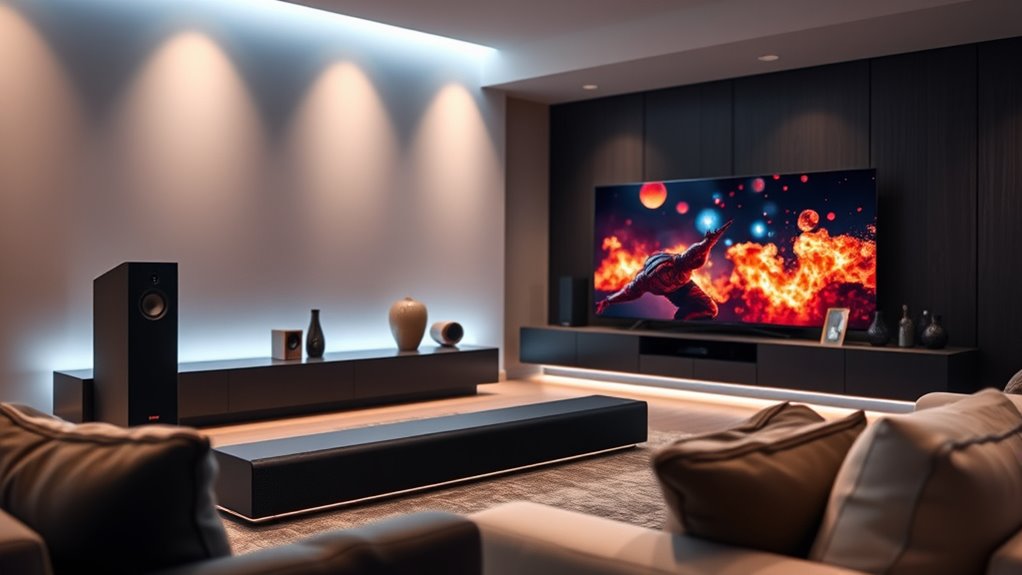

The best soundbar with Dolby Atmos for most buyers is the Sonos Arc Ultra, which pairs an expansive feature set with a premium, room-filling presentation. The ULTIMEA 5.1.2 system stands out for buyers seeking dedicated height channels, while the Amazon Fire TV Soundbar Plus is a simpler all-in-one choice with a built-in subwoofer. The main tradeoff is between compact convenience and more convincing surround effects from larger systems with separate speakers. Room size, TV connections, and whether you want a wireless subwoofer can matter as much as the Atmos label. Read on for the full breakdown and help matching each option to your setup.

Get your wardrobe favorites delivered free with Prime
- Fast, free delivery on millions of items
- Prime Video, Amazon Music and more included
- Member-only deals all year
Key Takeaways
- Sonos Arc Ultra is the premium-leaning overall pick: it is the most compelling fit for buyers who want an advanced Atmos soundbar without piecing together a conventional speaker system.
- Dedicated height channels change the comparison: the ULTIMEA 5.1.2 gives Atmos effects a more direct hardware foundation than compact bars relying chiefly on virtualization.
- Subwoofer design defines the bass tradeoff: the JBL Bar 500MK2 and several TCL systems include a separate wireless subwoofer, while the amazon.com/dp/B0CCCZS73P?tag=aluxurylifestyle-20&ascsubtag=dc-605198″ target=”_blank” rel=”nofollow sponsored noopener”>Yamaha SR-B30A and Amazon Fire TV Soundbar Plus keep bass hardware built into the bar.
- Not every Atmos-labeled bar has the same surround setup: the TCL S45H and S55H are simpler two-channel options, while the TCL S65K adds wireless surround speakers for a more speaker-based presentation.
- Compact living rooms have credible choices: the Sonos Beam Gen 2 and Samsung HW-S60D offer a less sprawling route than a multi-speaker setup, though small form factors can limit bass impact and physical height effects.
| Yamaha SR-B30A Dolby Atmos Soundbar with Built-In Subwoofers |  | Best All-in-One for Clear Dialogue | Audio formats: Dolby Atmos, Dolby TrueHD 7.1, DD, DD 7.1 Plus | Audio output mode: Surround | Subwoofers: Two built-in 3-inch subwoofers | VIEW ON AMAZON | See Our Full Breakdown |
| Amazon Fire TV Soundbar Plus 3.1-Channel Soundbar with Built-In Subwoofer, Dolby Atmos, and DTS:X |  | Best for Dialogue and Simple Setup | Channels: 3.1 | Surround formats: Dolby Atmos, DTS:X | Subwoofer: Built-in | VIEW ON AMAZON | See Our Full Breakdown |
| JBL Bar 500MK2 5.1-Channel Soundbar System with Dolby Atmos and 10-Inch Wireless Subwoofer |  | Best for Big, Bass-Forward Rooms | Audio channels: 5.1 | Maximum output power: 750 watts | Subwoofer: 10-inch wireless | VIEW ON AMAZON | See Our Full Breakdown |
| ULTIMEA 5.1.2-Channel Dolby Atmos Soundbar System |  | Best for Physical Surround and Height Effects | Channels: 5.1.2 | Audio format: Dolby Atmos | Surround technology: SurroundX | VIEW ON AMAZON | See Our Full Breakdown |
| TCL S55H 2.1 Soundbar with Wireless Subwoofer |  | Best Compact Setup with a Separate Subwoofer | Configuration: 2.1-channel soundbar with wireless subwoofer | Audio modes: Dolby Atmos, DTS Virtual:X, Surround Sound | Total output: Up to 220 W | VIEW ON AMAZON | See Our Full Breakdown |
| Sonos Arc Ultra Soundbar with Dolby Atmos, Black |  | Best Premium Atmos Soundbar | Audio channels: 9.1.4 | Speaker size: 46.18 inches | Audio output mode: Surround | VIEW ON AMAZON | See Our Full Breakdown |
| TCL S45H 2.0 Soundbar with Dolby Atmos, DTS Virtual:X, and Bluetooth |  | Best Simple Setup | Channel configuration: 2.0 | Maximum output power: Up to 100 W | Audio formats: Dolby Atmos, DTS Virtual:X | VIEW ON AMAZON | See Our Full Breakdown |
| Ultimea Poseidon M60 5.1CH Surround Sound Bar System with Dolby Atmos |  | Best for Dialogue and Bass | Audio channels: 5.1 | Audio format: Dolby Atmos | Peak power: 300 W | VIEW ON AMAZON | See Our Full Breakdown |
| Sonos Beam Gen 2 Soundbar with Dolby Atmos, Black |  | Best Compact Smart Soundbar | Audio channels: 2 | Audio output mode: Surround | Maximum output power: 200 watts | VIEW ON AMAZON | See Our Full Breakdown |
| TCL S65K 5.1-Channel Soundbar System with Dolby Atmos and Wireless Surround Speakers |  | Best Complete Surround Package | Audio channels: 5.1 | Maximum output power: 630 watts | Subwoofer driver: 6.5 inches | VIEW ON AMAZON | See Our Full Breakdown |
| TCL S60K 3.1-Channel Soundbar with Dolby Atmos, DTS:X, Wireless Subwoofer, Bluetooth, and AI Room Calibration |  | Best for Dialogue and Format Flexibility | Channels: 3.1 | Maximum output power: 340 watts | Subwoofer driver: 6.5 inches | VIEW ON AMAZON | See Our Full Breakdown |
| Samsung HW-S60D 5.0-Channel All-in-One Soundbar with Wireless Dolby Atmos |  | Best Compact All-in-One | Model: HW-S60D/ZA | Channels: 5.0 | Audio features: Wireless Dolby Atmos, Q-Symphony, SpaceFit Sound Pro, Adaptive Sound, Game Mode Pro | VIEW ON AMAZON | See Our Full Breakdown |
| soundbars with dolby atmo | Connectivity |
|---|---|
| Yamaha SR-B30A Dolby Atmos Sou | HDMI eARC/ARC, Bluetooth |
| Amazon Fire TV Soundbar Plus 3 | — |
| JBL Bar 500MK2 5.1-Channel Sou | HDMI eARC, AirPlay, Google Cast, Spotify Connect, Tidal Connect, Roon Ready |
| ULTIMEA 5.1.2-Channel Dolby At | HDMI eARC, Bluetooth 5.4 |
| TCL S55H 2.1 Soundbar with Wir | HDMI eARC/ARC, optical, Bluetooth 5.2, AUX |
| Sonos Arc Ultra Soundbar with | Bluetooth, HDMI, Wi-Fi |
| TCL S45H 2.0 Soundbar with Dol | HDMI eARC/ARC, optical, Bluetooth, AUX |
| Ultimea Poseidon M60 5.1CH Sur | HDMI eARC, Bluetooth 5.4 |
| Sonos Beam Gen 2 Soundbar with | HDMI, Wi-Fi, Ethernet, AirPlay 2 |
| TCL S65K 5.1-Channel Soundbar | Bluetooth, USB, Wi-Fi, HDMI, wireless |
| TCL S60K 3.1-Channel Soundbar | Bluetooth, USB, Wi-Fi, HDMI, wireless |
| Samsung HW-S60D 5.0-Channel Al | Chromecast, AirPlay 2, Bluetooth |
More Details on Our Top Picks
Yamaha SR-B30A Dolby Atmos Soundbar with Built-In Subwoofers
The Yamaha SR-B30A is a good fit when I want Dolby Atmos support without adding a separate subwoofer to the room. Its two built-in subwoofers add low-end weight while keeping setup simple, and Clear Voice targets a common TV-watching annoyance: dialogue that gets buried under music and effects. Compared with the Amazon Fire TV Soundbar Plus, it lacks a dedicated center channel, so the Fire TV model has a clearer hardware focus for voices. Yamaha counters with Bluetooth multipoint, which lets two devices connect for easier switching between TV-adjacent listening and personal streaming. The tradeoff is physical: built-in bass cannot be placed independently, and it is less suited to buyers seeking the stronger room-filling impact of a separate subwoofer. I’d choose it for a tidy, dialogue-focused setup, not maximum cinema-scale bass.
Pros:- Two built-in subwoofers add bass without requiring a separate box
- Clear Voice mode is designed to make dialogue easier to follow
- Bluetooth multipoint supports two connected devices
- HDMI eARC/ARC and wall-mounting keyholes offer flexible setup
Cons:- Built-in subwoofers cannot be positioned separately for room-specific bass
- No dedicated center channel, unlike the Amazon Fire TV Soundbar Plus
- The supplied details do not list a separate wireless subwoofer or DTS:X support
Best for: TV viewers who want Atmos support, easier-to-hear dialogue, and bass without placing a separate subwoofer.
Not ideal for: Buyers seeking powerful, independently positioned bass or a dedicated center channel for dialogue.
- Audio formats:Dolby Atmos, Dolby TrueHD 7.1, DD, DD 7.1 Plus
- Audio output mode:Surround
- Subwoofers:Two built-in 3-inch subwoofers
- Connectivity:HDMI eARC/ARC, Bluetooth
- Bluetooth range:10 meters
- Sound modes:Movie, Stereo, Standard, Game
- Dimensions:5.25 × 35.88 × 2.63 inches
- Weight:8.6 pounds
Our verdict“Choose the Yamaha SR-B30A if you want a compact Atmos setup with dialogue-focused features and built-in bass rather than a separate subwoofer.”
Amazon Fire TV Soundbar Plus 3.1-Channel Soundbar with Built-In Subwoofer, Dolby Atmos, and DTS:X
The Amazon Fire TV Soundbar Plus puts a dedicated center channel at the heart of its 3.1 design, making it a sensible choice for viewers who often strain to hear speech over action scenes. Its built-in subwoofer keeps the setup less cluttered than the JBL Bar 500MK2, which uses a separate 10-inch wireless subwoofer for more flexible, substantial bass. The Amazon model also supports both Dolby Atmos and DTS:X, giving it format coverage beyond some all-in-one options such as the Yamaha SR-B30A. Movie, Music, Sports, and Night modes make it easy to adjust the presentation without fine-tuning an equalizer. The compromise is that its bass remains tied to the bar, and buyers who want rear speakers or a more expandable surround layout should look elsewhere. I’d shortlist it for straightforward TV use and voice clarity, not a full theater setup.
Pros:- Dedicated center channel is designed to keep dialogue distinct
- Supports both Dolby Atmos and DTS:X
- Built-in subwoofer avoids a separate subwoofer unit
- Movie, Music, Sports, and Night modes suit different listening situations
Cons:- Built-in subwoofer offers less placement flexibility than the JBL Bar 500MK2’s wireless unit
- No rear surround speakers are listed
- Extended warranty options are sold separately
Best for: Viewers who prioritize clearer dialogue, want Atmos and DTS:X support, and prefer one streamlined soundbar unit.
Not ideal for: Home theater buyers who want rear speakers, a separately placed subwoofer, or room to build a more extensive surround system.
- Channels:3.1
- Surround formats:Dolby Atmos, DTS:X
- Subwoofer:Built-in
- EQ modes:Movie, Music, Sports, Night
- Connections:HDMI, optical, AC, USB-A
- Bluetooth:Supported
- Dimensions:37 × 5.2 × 2.5 inches
- Weight:8.8 pounds
- Warranty:1-year limited warranty
Our verdict“Pick the Fire TV Soundbar Plus for an easy all-in-one setup where clear speech and support for both Atmos and DTS:X matter most.”
JBL Bar 500MK2 5.1-Channel Soundbar System with Dolby Atmos and 10-Inch Wireless Subwoofer
For buyers who want Atmos to feel like a room-filling upgrade, the JBL Bar 500MK2 brings a more substantial setup than the all-in-one Yamaha SR-B30A or Amazon Fire TV Soundbar Plus. Its 5.1-channel system, MultiBeam 3.0, and room calibration are aimed at spreading effects beyond the soundbar, while the separate 10-inch wireless subwoofer can be placed where bass works best in the room. PureVoice 2.0 addresses dialogue clarity, so the emphasis on impact does not mean voices are ignored. Streaming support is unusually broad, with AirPlay, Google Cast, Spotify Connect, Tidal Connect, and Roon Ready listed. This extra capability comes with more equipment to accommodate, and the available product details do not give physical dimensions. I’d favor JBL for a larger living room and flexible streaming; for a simpler, less component-heavy setup, the Fire TV bar is easier to live with.
Pros:- 5.1-channel system with Dolby Atmos and MultiBeam 3.0 for a wider surround presentation
- Separate 10-inch wireless subwoofer offers flexible placement and deeper bass potential
- PureVoice 2.0 is designed to improve dialogue clarity
- Room calibration and multiple music streaming services support adaptable listening
Cons:- Separate subwoofer takes up room and adds another component to place
- Detailed physical dimensions are not provided in the product data
- Some 4K Dolby Vision passthrough features require a compatible TV or device
Best for: Buyers furnishing a larger TV room who want a separate subwoofer, broad streaming support, and a more immersive surround presentation.
Not ideal for: People with limited floor space or those who prefer a single compact unit and do not need extensive streaming options.
- Audio channels:5.1
- Maximum output power:750 watts
- Subwoofer:10-inch wireless
- Video passthrough:4K Dolby Vision
- Connectivity:HDMI eARC, AirPlay, Google Cast, Spotify Connect, Tidal Connect, Roon Ready
- Audio output mode:Surround
- Color:Black
- Mounting:Wall mount
Our verdict“Choose the JBL Bar 500MK2 when stronger bass, a wider surround field, and broad streaming support outweigh the appeal of an all-in-one bar.”
ULTIMEA 5.1.2-Channel Dolby Atmos Soundbar System
The ULTIMEA 5.1.2 makes the strongest case here for buyers who want a multi-part Atmos system rather than simulated width from a single bar. Up-firing drivers handle height effects, while two rear speakers create a more distinct surround field; that is a different approach from the JBL Bar 500MK2, which emphasizes a wireless 10-inch subwoofer and streaming flexibility. ULTIMEA also offers HDMI eARC for lossless audio transmission and unusually detailed app controls, including a 10-band EQ and extensive presets. That control can help tailor sound to a room, but it also means more adjustment than a basic all-in-one setup. There are practical limits: the subwoofer is wired, and the system does not support DTS. Compared with the Amazon Fire TV Soundbar Plus, it asks for more placement and setup effort in return for rear-channel and height hardware.
Pros:- 5.1.2 layout combines up-firing drivers with two rear surround speakers
- HDMI eARC supports lossless audio transmission
- App includes a 10-band graphic EQ and extensive sound preset choices
- CEC can synchronize TV power, volume, and input control
Cons:- Not compatible with DTS
- Subwoofer requires a wired connection
- Rear speakers add placement and setup demands compared with the all-in-one Yamaha SR-B30A
Best for: Home theater buyers who can place rear speakers and want dedicated up-firing Atmos drivers plus app-based sound customization.
Not ideal for: Listeners who need DTS compatibility, want a wireless subwoofer, or have no room for rear speakers and extra setup.
- Channels:5.1.2
- Audio format:Dolby Atmos
- Surround technology:SurroundX
- Subwoofer:5.25-inch wired
- Connectivity:HDMI eARC, Bluetooth 5.4
- HDMI eARC bandwidth:Up to 37 Mbps
- Equalizer:10-band graphic EQ
- Sound presets:121
- Dimensions:31.5 × 1.81 × 3.54 inches (D × W × H)
Our verdict“Choose ULTIMEA if you can accommodate rear speakers and want physical height and surround hardware more than wireless convenience or broad format support.”
TCL S55H 2.1 Soundbar with Wireless Subwoofer
The TCL S55H suits smaller TV rooms where buyers want a separate bass unit without moving up to a multi-speaker system. Its 2.1-channel design supports Dolby Atmos and DTS Virtual:X, and the wireless subwoofer can sit away from the bar—unlike the built-in bass in the Yamaha SR-B30A and Amazon Fire TV Soundbar Plus. AI Sonic room calibration is meant to adapt the sound to the listening space, while HDMI eARC/ARC, optical, Bluetooth, and AUX provide several ways to connect. The tradeoff is scale: this is described for small-to-medium rooms, not as a substitute for the JBL Bar 500MK2’s 5.1 layout or the ULTIMEA system’s rear speakers and up-firing drivers. I’d pick TCL for a modest room and flexible connections, but skip it if physical surround channels are the priority.
Pros:- Wireless subwoofer adds bass without a wired connection to the soundbar
- Supports Dolby Atmos and DTS Virtual:X
- AI Sonic room calibration adjusts sound to the listening space
- HDMI eARC/ARC, optical, Bluetooth 5.2, and AUX cover varied source needs
Cons:- 2.1-channel configuration does not include rear surround speakers
- Designed for small-to-medium rooms rather than large spaces
- Wireless subwoofer still requires its own placement and power
Best for: People with small-to-medium TV rooms who want Atmos support, wireless bass, room calibration, and several connection choices.
Not ideal for: Buyers seeking rear speakers, a 5.1 or 5.1.2 channel layout, or a system intended for a large room.
- Configuration:2.1-channel soundbar with wireless subwoofer
- Audio modes:Dolby Atmos, DTS Virtual:X, Surround Sound
- Total output:Up to 220 W
- Connectivity:HDMI eARC/ARC, optical, Bluetooth 5.2, AUX
- Bluetooth range:10 meters
- Soundbar dimensions:31.89 × 2.36 × 3.86 inches (W × H × D)
- Subwoofer dimensions:7.68 × 12.60 × 7.68 inches (W × H × D)
- Included accessories:HDMI cable, power cord, remote with batteries, wall-mount kit
Our verdict“Pick the TCL S55H for a compact room where a wireless subwoofer and flexible connections matter more than true rear-channel surround.”
Sonos Arc Ultra Soundbar with Dolby Atmos, Black
For buyers prioritizing a wide, height-focused Dolby Atmos presentation, the Sonos Arc Ultra is the premium pick here. Its 9.1.4 spatial audio configuration gives it a more ambitious channel layout than the two-channel Sonos Beam Gen 2, while AI-powered Speech Enhancement can make dialogue easier to follow without turning up the whole soundtrack. Wi-Fi, Bluetooth, AirPlay 2, and Spotify Connect also make it a more capable music hub than a TV-only bar. The tradeoff is that this 46.18-inch unit needs room to fit, and its surround system can grow costly in components and complexity: the subwoofer and Era 300 rear speakers are add-ons. I’d choose it for an expansive standalone soundbar experience, but buyers wanting included bass and rear speakers should compare it with the TCL S65K.
Pros:- 9.1.4 audio configuration is designed for an expansive Dolby Atmos presentation.
- AI-powered Speech Enhancement helps clarify dialogue.
- Wi-Fi, Bluetooth, AirPlay 2, and Spotify Connect support varied listening sources.
- App, voice, TV remote, and touch controls offer flexible operation.
Cons:- Subwoofer and Era 300 rear speakers are add-ons for a fuller surround setup.
- At 46.18 inches wide, it may not suit compact TV stands.
- No water resistance is listed.
Best for: Viewers with a larger TV area who want a premium Dolby Atmos soundbar, strong dialogue tools, and flexible music streaming.
Not ideal for: Buyers seeking a complete surround package with a subwoofer and rear speakers included, or those with limited shelf width.
- Audio channels:9.1.4
- Speaker size:46.18 inches
- Audio output mode:Surround
- Connectivity:Bluetooth, HDMI, Wi-Fi
- Streaming support:Apple AirPlay 2, Spotify Connect
- Audio enhancement:AI-powered Speech Enhancement
- Mounting type:Tabletop mount
- Warranty:1 year
Our verdict“Choose the Arc Ultra for premium, spacious Dolby Atmos and flexible streaming; pick the TCL S65K instead if included surround speakers and a subwoofer matter more.”
TCL S45H 2.0 Soundbar with Dolby Atmos, DTS Virtual:X, and Bluetooth
The TCL S45H is a straightforward way to add Dolby Atmos processing without committing to a multi-speaker system. Its slim 31.89-inch body and included wall-mount kit make placement easier than with the wider Sonos Arc Ultra, while HDMI eARC/ARC, optical, Bluetooth, and AUX cover older TVs and everyday wireless listening. AI Sonic room calibration is intended to adapt playback to the room, though setup requires the TCL app. This is still a 2.0-channel bar, not a system with a separate subwoofer or physical rear speakers, so its Atmos effect is more limited than the 5.1-channel TCL S65K. I’d shortlist it for a small room or a basic TV upgrade where simple connections matter more than deep bass or enveloping surround.
Pros:- Compact, low-profile design with a wall-mount kit included.
- Supports Dolby Atmos and DTS Virtual:X processing.
- HDMI eARC/ARC, optical, Bluetooth, and AUX allow flexible connections.
- AI Sonic room calibration can tailor sound to the room and listening position.
Cons:- 2.0-channel design has no separate subwoofer listed.
- Room calibration requires setup through the TCL app.
- Virtual surround cannot provide the same physical speaker placement as the TCL S65K.
Best for: Apartment dwellers and first-time soundbar buyers who want Dolby Atmos support, broad connection options, and a compact bar.
Not ideal for: Movie fans who want a dedicated subwoofer, physical rear speakers, or a more enveloping 5.1-channel Atmos setup.
- Channel configuration:2.0
- Maximum output power:Up to 100 W
- Audio formats:Dolby Atmos, DTS Virtual:X
- Room calibration:AI Sonic auto room calibration
- Connectivity:HDMI eARC/ARC, optical, Bluetooth, AUX
- Dimensions:31.89 in W × 2.36 in H × 3.86 in D
- Included accessories:HDMI cable, power cord, remote with batteries, wall-mount kit
Our verdict“Pick the S45H for a compact, connection-friendly Atmos entry point, but choose the TCL S65K if you want included subwoofer and surround speakers.”
Ultimea Poseidon M60 5.1CH Surround Sound Bar System with Dolby Atmos
The Ultimea Poseidon M60 pairs Dolby Atmos support with a 5.1-channel layout and wired wooden subwoofer, making it a stronger fit for bass-forward films than the two-channel TCL S45H. Its VoiceMX dialogue enhancement is aimed at keeping speech clearer at low listening levels, a useful distinction for late-night viewing. HDMI eARC supports lossless audio transmission, and the Ultimea app offers a 10-band EQ and a large selection of presets for hands-on tuning. The catch is the system’s physical arrangement: the subwoofer needs a cable, and no rear speakers are included, so the 5.1 label does not mean a set of separate rear channels is supplied. Compared with the TCL S65K, it asks buyers to accept less placement flexibility for a configurable setup focused on bass and dialogue.
Pros:- Dolby Atmos support with HDMI eARC for lossless audio transmission.
- Wired wooden subwoofer provides a dedicated source of bass.
- VoiceMX is designed to make dialogue clearer at low volume.
- Ultimea app includes a 10-band EQ and 121 presets.
Cons:- The wired subwoofer limits placement flexibility.
- No rear speakers are included, so surround effects rely on side-firing drivers.
- Its stated frequency response ends at 18 kHz.
Best for: Film and TV viewers who want a dedicated subwoofer, dialogue enhancement, and app-based sound tuning in a 5.1-channel Atmos system.
Not ideal for: Buyers who need wireless subwoofer placement or want included rear speakers for physical surround sound.
- Audio channels:5.1
- Audio format:Dolby Atmos
- Peak power:300 W
- Frequency response:45 Hz–18 kHz
- Maximum SPL:99 dB
- Connectivity:HDMI eARC, Bluetooth 5.4
- Subwoofer:Wired wooden subwoofer with 18 mm high-excursion driver
- App control:Ultimea app with 10-band EQ and 121 presets
Our verdict“Choose the Poseidon M60 for wired-subwoofer bass, dialogue tools, and app tuning; favor the TCL S65K if included wireless surround speakers are a priority.”
Sonos Beam Gen 2 Soundbar with Dolby Atmos, Black
The Sonos Beam Gen 2 suits listeners who want Dolby Atmos and connected music features in a smaller shelf-friendly bar. It offers clear dialogue, vibrant bass, and Trueplay tuning, with control through the Sonos app, TV remote, AirPlay 2, or voice. Compared with the much larger Arc Ultra, the Beam is easier to place and costs less space, but its listed two-channel configuration is a clear limit for buyers seeking a wide, physically separated surround stage. It also has no separate subwoofer listed, so buyers after stronger dedicated low-end may prefer the Ultimea Poseidon M60 or TCL S65K. The Beam makes the most sense as a compact all-in-one upgrade that can also stream music and podcasts when the TV is off, rather than as a substitute for a full multi-speaker Atmos system.
Pros:- Compact shelf-mount format is easier to fit than the Sonos Arc Ultra.
- Dolby Atmos support adds a spatial audio option for TV and movie playback.
- Trueplay tuning is included.
- Supports app, TV remote, AirPlay 2, and voice control, plus music streaming with the TV off.
Cons:- Only two audio channels are listed.
- No separate subwoofer is included in the listed system.
- No water resistance is listed.
Best for: Owners of smaller living rooms who want a compact Dolby Atmos bar that also streams music and podcasts from a connected ecosystem.
Not ideal for: Buyers seeking discrete rear speakers, a dedicated subwoofer, or a larger-channel-count Atmos setup.
- Audio channels:2
- Audio output mode:Surround
- Maximum output power:200 watts
- Frequency response:50.4 hertz
- Connectivity:HDMI, Wi-Fi, Ethernet, AirPlay 2
- Mounting type:Shelf mount
- Tuning:Trueplay
- Warranty:1 year
Our verdict“Choose the Beam Gen 2 for compact placement and Sonos streaming features, but step up to the Arc Ultra or a 5.1 system for a broader Atmos presentation.”
TCL S65K 5.1-Channel Soundbar System with Dolby Atmos and Wireless Surround Speakers
Among these five, the TCL S65K is the clearest choice for buyers who want a multi-part home-theater system in one package: it includes a wireless subwoofer and surround speakers, alongside 5.1-channel audio and Dolby Atmos support. That gives it a more physical surround setup than the Sonos Beam Gen 2 or the Ultimea Poseidon M60, which lacks included rear speakers. DTS:X and RAY DANZ III are also listed, while AI Sonic room calibration can adapt playback to the space. The built-in center channel targets dialogue clarity; ChoruSound adds fuller audio only with a compatible TCL TV. The tradeoff is that this is not a single-bar solution: its components need room and corded power, and the ChoruSound benefit depends on owning the right TV. I’d favor it over the compact TCL S45H when surround immersion is the priority.
Pros:- Includes a wireless subwoofer and surround speakers for a fuller physical surround setup.
- Supports Dolby Atmos, DTS:X, and DTS Virtual:X.
- Built-in center channel is intended to improve dialogue clarity.
- AI Sonic room calibration adapts sound to the space.
Cons:- Separate speakers and subwoofer require more room than a single soundbar.
- The system requires corded electric power.
- ChoruSound requires a compatible TCL TV.
Best for: Movie and sports viewers who want a ready-made 5.1-channel setup with wireless surround speakers and a subwoofer.
Not ideal for: Minimalist setups with little room for separate speakers, or buyers expecting ChoruSound benefits without a compatible TCL TV.
- Audio channels:5.1
- Maximum output power:630 watts
- Subwoofer driver:6.5 inches
- Connectivity:Bluetooth, USB, Wi-Fi, HDMI, wireless
- Power source:Corded electric
- Mounting type:Wall mount
- Audio technologies:Dolby Atmos, DTS:X, DTS Virtual:X, RAY DANZ III
- Included components:Wireless subwoofer and surround speakers
Our verdict“Choose the S65K for an included 5.1 surround package with Dolby Atmos support; skip it if you want a compact single-bar setup or lack space for its components.”
TCL S60K 3.1-Channel Soundbar with Dolby Atmos, DTS:X, Wireless Subwoofer, Bluetooth, and AI Room Calibration
The TCL S60K stands out for buyers who want more than virtual Atmos processing from a compact system: its 3.1-channel layout adds a dedicated center channel, while the wireless 6.5-inch subwoofer brings weight to action scenes and music. Support for Dolby Atmos, DTS:X, and DTS Virtual:X gives it broader format coverage than a simpler Atmos bar such as the TCL S45H. AI Sonic room calibration is intended to adapt playback to the space, though it cannot substitute for separate surround speakers. Compared with the Samsung HW-S60D, the TCL includes a separate subwoofer rather than relying on built-in bass drivers, but the Samsung offers a compact all-in-one design and a broader stated streaming-platform mix. ChoruSound is a bonus only for compatible TCL TV owners, and this system is less tidy than a single-bar setup.
Pros:- Dedicated center channel supports clearer dialogue than a basic 2.0 setup.
- Wireless subwoofer adds low-frequency impact without a subwoofer cable.
- Dolby Atmos, DTS:X, and DTS Virtual:X cover multiple immersive-audio formats.
- AI Sonic calibration adapts playback to the room.
Cons:- A separate subwoofer takes up floor space even though it connects wirelessly.
- ChoruSound depends on a compatible TCL TV.
- Virtualized surround formats do not provide the same speaker placement as a system with separate rear speakers.
Best for: Viewers who want clearer dialogue and stronger standalone bass, especially those with a compatible TCL TV who can use ChoruSound.
Not ideal for: Buyers who want a single compact bar with no separate subwoofer, or owners of non-TCL TVs counting on ChoruSound.
- Channels:3.1
- Maximum output power:340 watts
- Subwoofer driver:6.5 inches
- Connectivity:Bluetooth, USB, Wi-Fi, HDMI, wireless
- Audio technologies:Dolby Atmos, DTS:X, DTS Virtual:X, RAY DANZ III
- Audio output mode:Surround
- Mounting type:Wall mount
Our verdict“Choose the S60K if dialogue clarity, a separate bass module, and broad format support matter more than an all-in-one footprint.”
Samsung HW-S60D 5.0-Channel All-in-One Soundbar with Wireless Dolby Atmos
The Samsung HW-S60D is the tidy choice for a room where a separate subwoofer would be awkward: its 5.0-channel all-in-one design includes built-in subwoofers and supports Wireless Dolby Atmos, avoiding HDMI cable clutter for compatible setups. SpaceFit Sound Pro and Adaptive Sound offer room and content adjustments, while Alexa, Chromecast, and AirPlay 2 make it versatile as a music bar. Compared with the TCL S60K, it trades that model’s separate 6.5-inch subwoofer and dedicated 3.1 layout for a smaller, simpler installation; buyers seeking more physical bass may prefer the TCL. Q-Symphony and some other functions depend on compatible Samsung equipment, so the feature set is less universal than the headline list suggests. It also lacks the separate rear speakers that can create a more convincing surround field.
Pros:- All-in-one design avoids placing a separate subwoofer in the room.
- Wireless Dolby Atmos can reduce cable clutter with compatible equipment.
- Chromecast, AirPlay 2, Bluetooth, and built-in Alexa support flexible playback.
- SpaceFit Sound Pro and Adaptive Sound provide room and content adjustment options.
Cons:- Built-in subwoofers may not deliver the low-frequency impact of the TCL S60K’s separate subwoofer.
- Q-Symphony and some functions require compatible Samsung TVs or devices.
- No separate rear speakers are included for physical surround placement.
Best for: Apartment dwellers and buyers with limited floor space who want Atmos support, built-in streaming options, and no separate subwoofer.
Not ideal for: Viewers prioritizing powerful bass or a more convincing surround setup, and owners who cannot use Samsung-dependent features.
- Model:HW-S60D/ZA
- Channels:5.0
- Audio features:Wireless Dolby Atmos, Q-Symphony, SpaceFit Sound Pro, Adaptive Sound, Game Mode Pro
- Voice assistant:Amazon Alexa built-in
- Connectivity:Chromecast, AirPlay 2, Bluetooth
- Dimensions:4.1 x 26.3 x 2.4 inches
- Weight:6 pounds
- Mounting type:Wall mount
Our verdict“Pick the HW-S60D for a compact, cable-conscious Atmos setup, but choose the TCL S60K if a separate subwoofer and stronger bass are higher priorities.”

How We Picked
I ranked these soundbars by how well their design supports the promise of Dolby Atmos, not by the format label alone. I weighed channel configuration and the presence of dedicated height or surround speakers alongside bass hardware, dialogue-focused features, connectivity, and how much equipment a buyer must place around the room. A system with separate speakers can create a more physical surround presentation, but it asks more of the room and setup; a compact bar earns its place through convenience and flexible placement.
I also considered how each option fits a distinct buyer. The ranking gives more weight to a strong balance of immersion, usability, and system flexibility than to channel count by itself, since room layout and speaker placement affect results. Premium models rank well when their expanded capabilities justify the extra system commitment, while simpler models remain useful for smaller spaces or straightforward TV upgrades. Since the products span different configurations, the best choice depends on whether the buyer values cinematic scale, easy setup, a dedicated subwoofer, or a smaller footprint.
Factors to Consider When Choosing Soundbars With Dolby Atmos
Atmos performance depends on the whole setup, not just the badge on the box. I would start with your room, TV connections, and willingness to place extra speakers, then weigh the system’s soundbar and subwoofer design against those practical limits.
Separate Real Height Channels From Virtual Atmos
Dolby Atmos can be delivered through different speaker arrangements, so two bars carrying the same format badge may create noticeably different kinds of immersion. Dedicated upward-firing or height channels have a physical role in reproducing overhead effects; virtual processing instead uses the bar’s drivers and signal processing to suggest height and surround. Virtual Atmos can suit renters and small rooms because it avoids extra speakers, but the effect depends more on room shape, placement, and reflective surfaces. A system with more channels is not automatically better if its additional speakers cannot be positioned well. Check the actual channel layout and speaker count rather than treating the Atmos logo as a performance guarantee.
Match the System to Your Room and Seating
Room dimensions and seating position shape how useful a surround system can be. A wide room or seats spread far from the TV may benefit from separate surround speakers, while a compact room can make a single bar easier to place and less intrusive. Ceiling height and surface materials also affect upward-firing effects; very high, angled, or absorbent ceilings may weaken the sense of sound overhead. Keep the main seat reasonably centered if you want the most consistent spatial effect. Before choosing a multi-piece setup, check that rear speakers can reach suitable locations without creating cable or furniture problems.
Choose a Subwoofer Setup You Can Live With
A separate subwoofer can add more physical weight to explosions and music, but it takes floor space and can make bass harder to manage in an apartment or shared home. Built-in subwoofers keep the system tidier and reduce placement decisions, though a slim bar has less room for bass-producing hardware. Wireless connection usually removes the long audio cable, but the sub still needs power and a sensible spot in the room. Deep bass can sound uneven when the sub is tucked into a corner or placed far from the seating area. Decide whether bass impact or a cleaner footprint matters more before treating a separate sub as an automatic upgrade.
Check TV Connections and Format Support
HDMI eARC is often the most direct way to send high-quality audio formats from a compatible TV to a soundbar, while older ARC connections may have more limitations. Check your television’s audio passthrough support as well as the bar’s inputs; a capable soundbar cannot recover formats the TV does not pass through. If you connect a game console or streaming device directly to the bar, confirm that its ports support the video features you use. Wireless Atmos support can simplify compatible setups, but it is not a substitute for checking device compatibility. Matching the connection path before purchase can prevent a new bar from becoming a basic TV speaker upgrade rather than an Atmos system.
Prioritize Dialogue and Everyday Listening
Atmos effects get attention, but clear dialogue may matter more during everyday TV viewing. Look for dialogue enhancement, center-channel design, and independent level controls if you often watch dramas, news, or quiet scenes at low volume. A dedicated center channel can give voices a more anchored position, though processing modes and the source mix still affect results. Night modes can reduce sudden loud effects, which is useful in shared homes but may also reduce the impact of a movie soundtrack. Think about your typical listening habits rather than choosing a system solely for its most dramatic demonstration.
Pay for the Setup You Will Actually Use
Moving to a premium or multi-speaker system makes the most sense when you have space, compatible connections, and a real interest in surround sound. If you mainly watch streaming shows in a small room, a compact bar may be a better fit than a larger system whose rear speakers stay boxed up. Extra speakers and room calibration can improve flexibility, but they also add setup steps and more components to manage. Check whether the soundbar can be expanded later if your needs might change; that can be more useful than buying capacity you do not need today. Put the budget toward the limitation you notice most, whether that is weak bass, unclear voices, or a lack of surround presence.
Frequently Asked Questions
Does a Dolby Atmos soundbar need a Dolby Atmos TV?
No, the TV does not need to carry the Atmos brand, but the full signal path must support Atmos playback. The streaming device or TV app needs to provide an Atmos soundtrack, and the TV must pass that audio to the soundbar through a compatible connection such as eARC. Some systems can also take a source directly, which may avoid limits in the TV’s passthrough. Check the soundbar, TV, and playback device specifications together before buying. If one part of the chain lacks support, the bar may play the audio in another format instead.
Will a soundbar with virtual Dolby Atmos sound like a system with dedicated height speakers?
Not usually in the same way: virtual processing attempts to create a sense of height and space using the soundbar’s available drivers. Dedicated height speakers provide physical channels for overhead effects, which can make those cues more distinct when the room and placement suit them. Virtual Atmos may still be the more practical choice when extra speakers are unwelcome or there is little room to position them. Ceiling shape, seating position, and the content mix all affect the difference. Treat virtual Atmos as a convenience-focused approach, not a guaranteed substitute for additional channels.
Should I choose a soundbar with a separate wireless subwoofer for an apartment?
A separate subwoofer can deliver stronger low-frequency impact, but that may be less welcome through shared walls or floors. Wireless means the sub connects to the bar without a long audio cable; it still needs a power outlet and careful placement. Some soundbars include bass drivers in the bar itself, which can keep a small room tidier and make setup simpler. If you choose a separate sub, look for bass or night-mode controls and avoid placing it against a shared wall when possible. The better fit depends on whether you value stronger movie bass more than a compact, easier-to-manage setup.
Can I add rear speakers later if I start with a compact Dolby Atmos soundbar?
Only if the specific soundbar supports compatible expansion speakers, so check the manufacturer’s upgrade path before choosing a compact model. Some bars are designed as closed systems, while others can pair with optional surrounds or additional components. Expansion may improve surround placement, but it cannot change every limit of the original bar, such as its channel design or connectivity. Consider the cost and availability of the matching speakers as part of the initial decision. If you already know you want physical rear-channel sound, a system that includes those speakers may be simpler than upgrading in stages.
Is a 5.1.2 soundbar system always a better choice than a 3.1 or 2.0 bar?
No. A 5.1.2 system adds more speaker channels on paper, but its benefits depend on correct placement, room layout, and whether you want the extra hardware. A smaller 3.1 bar may make dialogue easier to follow while keeping the setup simple, and a 2.0 bar may suit a compact room or casual listening. More channels can be wasted if surround speakers cannot be placed near the listening area or height effects are blocked by the room. Compare what each channel does and how it fits your space rather than choosing by the largest number alone.
Conclusion
For the broadest premium feature set, I would start with the Sonos Arc Ultra as the best overall pick. Buyers prioritizing dedicated height channels should look at the ULTIMEA 5.1.2, while the JBL Bar 500MK2 is a strong match for those who want a separate wireless subwoofer and a more substantial system. For a simpler first upgrade, the Amazon Fire TV Soundbar Plus keeps the setup centered on one bar, and the Sonos Beam Gen 2 or Samsung HW-S60D makes more sense when space is limited. If physical surround speakers are the priority, compare the TCL S65K with the other multi-speaker systems; if a low-clutter setup matters more, consider the Yamaha SR-B30A. My recommendation is to choose by room fit and speaker layout first, then use the Atmos format and feature set to break ties.
Halloween Picks
halloween
As an affiliate, we earn on qualifying purchases.