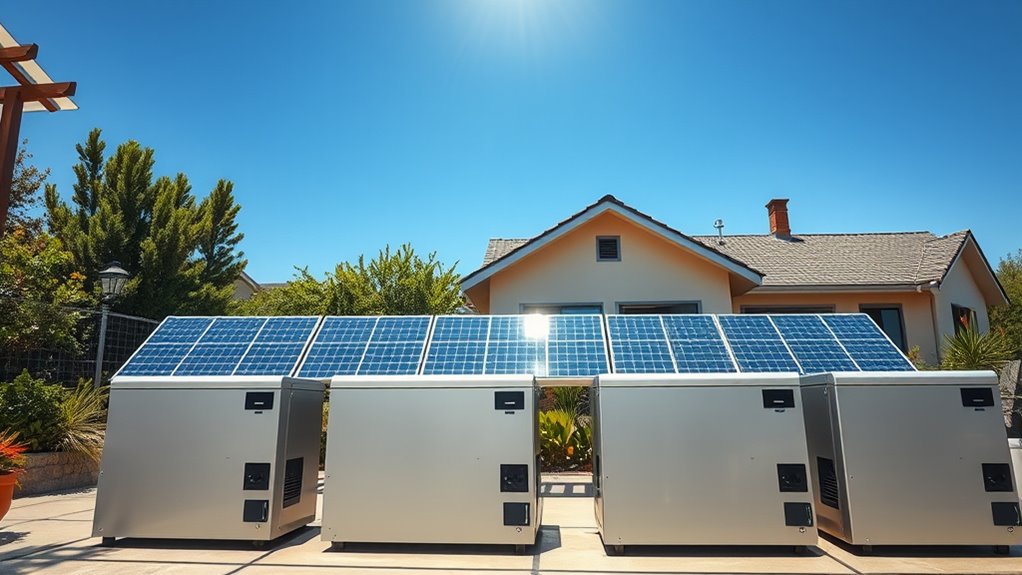

For most households, I’d start with the Jackery HomePower 3600 Plus as the best overall option in this roundup: its 3,584Wh capacity and 3,600W output offer more backup headroom than the compact 1,000Wh class. The Jackery HomePower 3000 with two 200W panels is a strong solar-ready alternative, while the Jackery Explorer 5000 Plus suits buyers who need substantially more stored energy and output. The main tradeoff is portability versus runtime: smaller units are easier to move but may need frequent recharging, while larger systems take more space and planning. Solar panel bundles can simplify setup, but their included panel capacity still affects how quickly a station can recharge. Read on for the full breakdown, including who should choose each model and what to check before relying on one during an outage.

Get your wardrobe favorites delivered free — and shop member deals
- Fast, free delivery on millions of items
- Access to Prime Big Deal Days deals on October 6–7
- Prime Video, Amazon Music and more included
Complete the kit


Key Takeaways
- Capacity separates short outages from longer backup plans: the 1,024Wh-class models suit a limited set of essentials, while the 3,584Wh HomePower 3600 Plus and 5,040Wh Explorer 5000 Plus offer more stored energy for extended use.
- Output and capacity solve different problems: a station’s wattage rating concerns the load it can support at once; its watt-hours indicate how long it can run that load.
- Solar bundles are not interchangeable: the HomePower 3000 and ABOK Ark3600 bundles include two and three 200W panels respectively, but buyers should still check compatibility, input limits, and expected sun conditions.
- Several products target similar portable backup needs: the Anker SOLIX C1000 Gen 2, Jackery Explorer 1000 v2, Jackery Solar Generator 1000 V2, EF ECOFLOW DELTA 3 Classic, and BLUETTI Elite 100 V2 call for close comparison of output, charging, included panels, and portability.
- The largest station is not automatically the best home choice: the Explorer 5000 Plus offers the most listed capacity here, but its footprint, setup needs, and cost of building a complete solar system may outweigh that headroom for households backing up only a few devices.
| Anker SOLIX C1000 Gen 2 Portable Power Station |  | Best Overall for Fast, Compact Backup | Battery capacity: 1,024Wh | Battery type: LiFePO4 | Continuous output: 2,000W | VIEW ON AMAZON | See Our Full Breakdown |
| Jackery Solar Generator 1000 V2 with 200W Solar Panel |  | Best Ready-to-Solar Kit | Battery capacity: 1,070Wh | Battery type: LFP | AC output: 1,500W | VIEW ON AMAZON | See Our Full Breakdown |
| EF ECOFLOW DELTA 3 Classic Portable Power Station |  | Best for Sensitive Electronics | Capacity: 1,024Wh | Battery chemistry: LiFePO4 | AC output: 1,800W | VIEW ON AMAZON | See Our Full Breakdown |
| Jackery HomePower 3600 Plus Portable Power Station, 3584Wh, 3600W |  | Best for Extended Home Backup | Battery capacity: 3,584Wh | Output wattage: 3,600W | Voltage: 120V; 240V in parallel | VIEW ON AMAZON | See Our Full Breakdown |
| ZeroKor 300W Portable Power Station with 60W Solar Panel | 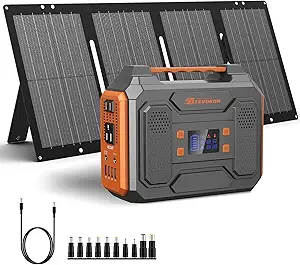 | Best Compact Backup for Small Loads | Maximum power station output: 300W | Included solar panel: 60W monocrystalline, 20.5% conversion efficiency | AC outlets: 2 | VIEW ON AMAZON | See Our Full Breakdown |
| Jackery HomePower 3600 Plus Portable Power Station with Two 200W Solar Panels |  | Best Expandable Mid-Size Backup | Battery capacity: 3,584Wh | Battery type: LFP | AC output: 3,600W | VIEW ON AMAZON | See Our Full Breakdown |
| Jackery Explorer 1000 v2 Portable Power Station |  | Best Compact Essentials Backup | Battery capacity: 1,070Wh | Battery type: LFP | AC output: 1,500W | VIEW ON AMAZON | See Our Full Breakdown |
| Jackery Explorer 5000 Plus Portable Power Station, 5040Wh, 7200W |  | Best for Large-Load and 240V Backup | Battery capacity: 5,040Wh | Battery type: LiFePO₄ | Surge output: 14,400W | VIEW ON AMAZON | See Our Full Breakdown |
| Jackery HomePower 3000 Portable Power Station with Two 200W Solar Panels |  | Best for UPS-Style Essentials Backup | Battery capacity: 3,072Wh | Battery type: LiFePO₄ | AC output: 3,600W | VIEW ON AMAZON | See Our Full Breakdown |
| ABOK Ark3600 Portable Power Station with 3 × 200W Solar Panels |  | Best Port-Rich Solar Bundle | Battery capacity: 3,840Wh | Expandable capacity: Up to 11,520Wh | Battery chemistry: LiFePO₄ | VIEW ON AMAZON | See Our Full Breakdown |
| BLUETTI Elite 100 V2 Portable Power Station, 1024Wh, 1800W |  | Best Compact Backup with Fast Recharging | Battery capacity: 1024Wh | Battery type: LiFePO₄ | Surge output: 3600W listed; product description gives conflicting surge figures | VIEW ON AMAZON | See Our Full Breakdown |
| Jackery Explorer 2000 v2 Solar Generator with Two 200W Solar Panels |  | Best Solar-Ready Capacity for Longer Outages | Battery capacity: 2042Wh | Battery type: LiFePO₄ | AC output: 2200W | VIEW ON AMAZON | See Our Full Breakdown |
| solar generators for home backup | Battery capacity | Battery type | Weight | AC output |
|---|---|---|---|---|
| Anker SOLIX C1000 Gen 2 Portab | 1,024Wh | LiFePO4 | 11.3kg | — |
| Jackery Solar Generator 1000 V | 1,070Wh | LFP | 23.8lb | 1,500W |
| EF ECOFLOW DELTA 3 Classic Por | — | — | — | 1,800W |
| Jackery HomePower 3600 Plus Po | 3,584Wh | — | 77.2lb | — |
| ZeroKor 300W Portable Power St | — | — | — | — |
| Jackery HomePower 3600 Plus Po | 3,584Wh | LFP | 77.2 lb | 3,600W |
| Jackery Explorer 1000 v2 Porta | 1,070Wh | LFP | 23.8 lb | 1,500W |
| Jackery Explorer 5000 Plus Por | 5,040Wh | LiFePO₄ | 134.5 lb | — |
| Jackery HomePower 3000 Portabl | 3,072Wh | LiFePO₄ | 59.5 lb | 3,600W |
| ABOK Ark3600 Portable Power St | 3,840Wh | — | — | — |
| BLUETTI Elite 100 V2 Portable | 1024Wh | LiFePO₄ | 25 lbs | — |
| Jackery Explorer 2000 v2 Solar | 2042Wh | LiFePO₄ | — | 2200W |
More Details on Our Top Picks
Anker SOLIX C1000 Gen 2 Portable Power Station
The Anker SOLIX C1000 Gen 2 balances a useful 1,024Wh capacity with 2,000W of output, making it a strong fit for keeping several household essentials or electronics running during a short outage. Its under-10ms UPS switchover can keep connected equipment powered through a brief interruption, while fast AC charging helps restore the battery between outages. Compared with the Jackery Solar Generator 1000 V2, Anker offers more continuous output and faster listed AC recharge, but its solar input tops out at 600W. That matters if you want to refill quickly from panels during a prolonged outage. The 11.3 kg weight and app controls help with portability and monitoring, though this remains a one-kilowatt-hour class battery, not a whole-home solution. Outlet counts also vary in the supplied listing, so check the configuration before planning multiple connections.
Pros:- 1,024Wh LiFePO4 battery paired with 2,000W output
- AC recharge listed at 49 minutes with a 1,600W input
- Under-10ms UPS switchover for connected equipment
- App-based power management and 600W solar input
Cons:- 600W maximum solar input can limit recharge speed during a long outage
- Capacity is modest for extended household backup
- Specifications list nine outlets while the description refers to support for up to 10 devices
Best for: Households seeking a portable backup for routers, lights, laptops, and selected lower-draw appliances, with fast charging and UPS support.
Not ideal for: Buyers who need extended whole-home runtime, high solar intake, or backup for several power-hungry appliances at once.
- Battery capacity:1,024Wh
- Battery type:LiFePO4
- Continuous output:2,000W
- Peak output:3,000W
- AC recharge time:49 minutes at 1,600W
- Solar input:600W, 60V maximum
- UPS switchover:Under 10ms
- Weight:11.3kg
Our verdict“Choose the Anker if you want fast-charging, UPS-capable backup for essential devices in a portable package rather than long-duration whole-home power.”
Jackery Solar Generator 1000 V2 with 200W Solar Panel
The Jackery Solar Generator 1000 V2 bundle pairs a 1,070Wh LFP power station with a 200W solar panel, so buyers can start with a matching panel rather than sourcing one separately. Its 1,500W AC output and 3,000W surge rating suit common electronics and some household appliances, though the lower continuous output trails the Anker SOLIX C1000 Gen 2’s 2,000W. Three AC outlets, USB-C ports, USB-A, and a car port make it practical for spreading power across smaller loads. The battery is rated for over 4,000 charge cycles, and app-based emergency charging offers a fast AC option when enabled. That feature depends on using the app, and the station and panel ship separately, so this is not necessarily a single-box arrival. Its included panel also provides less solar capacity than the Anker’s maximum supported input.
Pros:- Includes a 200W solar panel with the power station
- 1,070Wh LFP battery rated for over 4,000 charge cycles
- Three pure sine wave AC outlets plus USB-C, USB-A, and car output
- App offers an emergency AC charging mode
Cons:- 1,500W AC output is lower than the Anker SOLIX C1000 Gen 2
- One-hour emergency charging requires enabling the mode in the app
- Power station and panel ship separately
Best for: New solar-backup buyers who want a station and compatible 200W panel together for charging devices and running modest loads.
Not ideal for: Households whose backup plan depends on higher continuous appliance loads or faster solar recharging from a larger panel array.
- Battery capacity:1,070Wh
- Battery type:LFP
- AC output:1,500W
- Surge peak:3,000W
- Included solar panel:200W
- AC outlets:3 pure sine wave
- USB-C ports:2, up to 100W PD
- Weight:23.8lb
Our verdict“Pick this bundle if you want a straightforward entry into solar backup with a panel included and your essential loads fit within 1,500W.”
EF ECOFLOW DELTA 3 Classic Portable Power Station
The EF ECOFLOW DELTA 3 Classic is a useful middle ground for buyers who want home-backup features in a roughly one-kilowatt-hour unit. It pairs 1,800W AC output with 3,600W surge capacity, and its under-10ms UPS switching suits connected electronics that should remain powered through a brief outage. AC charging reaches 80% in 45 minutes, while solar charging is listed at 2.5 hours with an optional 500W panel. Compared with the Anker SOLIX C1000 Gen 2, EcoFlow has a higher stated surge capacity but slightly lower continuous output; the Anker also lists a faster full AC recharge time. The LiFePO4 battery is rated for over 10 years of daily use, but expansion options are unusually restricted: it is not compatible with the named DELTA 2 or DELTA 3 series smart batteries. Since the panel is optional, solar readiness adds a separate purchase and planning step.
Pros:- Under-10ms UPS switching for connected electronics
- 1,800W output with 3,600W surge capacity
- AC charging reaches 80% in 45 minutes
- LiFePO4 battery rated for over 10 years of daily use
Cons:- Optional solar panel is not included
- Not compatible with DELTA 2 Smart Extra Battery or Delta 3 Series Smart Extra Battery
- Continuous output is lower than the Anker SOLIX C1000 Gen 2
Best for: People backing up routers, computers, and other sensitive electronics who want rapid charging and UPS switching in a portable station.
Not ideal for: Buyers planning to expand capacity with the specified DELTA 2 or DELTA 3 smart batteries, or those who want a solar panel included.
- Capacity:1,024Wh
- Battery chemistry:LiFePO4
- AC output:1,800W
- Surge capacity:3,600W
- X-Boost output:Up to 2,600W
- AC charging:0–80% in 45 minutes
- Solar charging:2.5 hours with an optional 500W panel
- UPS switching:Under 10ms
Our verdict“Choose the DELTA 3 Classic if UPS switching and fast AC charging matter more than broad battery expansion or an included solar panel.”
Jackery HomePower 3600 Plus Portable Power Station, 3584Wh, 3600W
For buyers who need more than short-term device backup, the Jackery HomePower 3600 Plus offers a larger starting point: 3,584Wh capacity and 3,600W output. That makes it better suited than the Anker SOLIX C1000 Gen 2 or Jackery Solar Generator 1000 V2 to supporting multiple household essentials for longer, though runtime still depends on the connected loads. Capacity can expand to 21kWh per unit, and paired units can support 240V operation, giving this model a path toward a broader backup setup. It also accepts AC, solar, gas-generator, and hybrid charging, a flexibility the smaller stations do not match. The tradeoff is substantial: it weighs 77.2lb, and the supplied specification lists only two outlets. Buyers should also note that 240V requires parallel units, so the base station alone is not a 240V backup source.
Pros:- 3,584Wh capacity and 3,600W output provide a larger backup base
- Expandable to 21kWh per unit or 43kWh with multiple units
- Supports hybrid AC and DC, AC, solar, and gas-generator charging
- Wheels and telescopic handle help move the 77.2lb unit
Cons:- 77.2lb weight makes lifting and repositioning difficult
- 240V operation requires parallel units
- Specifications list only two outlets
Best for: Households that need longer backup for several essential circuits or appliances and may expand the system over time.
Not ideal for: Buyers prioritizing easy lifting, frequent portable use, a ready-made solar bundle, or 240V backup from a single unit.
- Battery capacity:3,584Wh
- Output wattage:3,600W
- Voltage:120V; 240V in parallel
- Expandable capacity:Up to 21kWh per unit or 43kWh with multiple units
- Charging options:Hybrid AC+DC, AC, solar, and gas generator
- Charging time:2 hours hybrid AC+DC; 2.5 hours AC or gas generator; 4 hours solar
- Battery cycle life:6,000 cycles
- Weight:77.2lb
Our verdict“Choose the HomePower 3600 Plus for longer, expandable household backup if you can accommodate its weight and understand that 240V requires a second unit.”
ZeroKor 300W Portable Power Station with 60W Solar Panel
The ZeroKor 300W is the small-load choice in this group, not a substitute for the larger stations intended to keep household appliances running. Its included 60W monocrystalline panel and AC, car, and compatible-solar charging options suit basic device charging or a light-and-phone setup during a short interruption. Three USB-A ports, a quick-charge USB port, DC output, and two AC outlets offer several connection types. But its 300W maximum output rules out devices that draw more, and the battery capacity is not specified, making runtime hard to estimate before purchase. Compared with the Jackery Solar Generator 1000 V2, ZeroKor is oriented toward simpler, lower-draw needs, while Jackery provides over three times the stated capacity and far higher AC output. The panel’s junction box is not waterproof, so it needs protection from wet conditions.
Pros:- Includes a 60W monocrystalline solar panel
- Can recharge from AC, a 12V car outlet, or a compatible solar panel
- Provides AC, DC, USB-A, and quick-charge USB outputs
- Flashlight includes reading and SOS modes
Cons:- 300W maximum output excludes many household appliances
- Battery capacity is not specified, making runtime difficult to estimate
- Solar panel junction box is not waterproof
Best for: Buyers wanting a basic, compact kit for phones, small electronics, and modest lighting rather than appliance or extended home backup.
Not ideal for: Households needing a known battery capacity, dependable runtime estimates, or power for refrigerators and other loads above 300W.
- Maximum power station output:300W
- Included solar panel:60W monocrystalline, 20.5% conversion efficiency
- AC outlets:2
- DC output:9–12.6V, 10A maximum
- USB-A ports:3, up to 5V/3A each
- Quick-charge USB port:5V/3A, 9V/2A maximum
- Recharge methods:AC outlet, 12V car outlet, or compatible 13–23V solar panel
- Battery protection:Short circuit, over-current, over-voltage, overload, and overheating protection
Our verdict“Choose the ZeroKor only for small electronics and light-duty backup; buyers who need appliance support should step up to a higher-capacity station such as the Jackery 1000 V2.”
Jackery HomePower 3600 Plus Portable Power Station with Two 200W Solar Panels
For households that want substantial backup capacity without starting with a whole-home-scale system, the 3,584Wh LFP battery and 3,600W output make this a flexible middle ground. It can expand to 21kWh per unit, giving buyers a route to longer outages without replacing the base station. Unlike the Jackery Explorer 1000 v2, it can handle a broader mix of home loads; compared with the Jackery Explorer 5000 Plus, it starts with less capacity and a lower maximum expansion ceiling.
Four charging methods, including hybrid AC and solar, give you options when grid power is unavailable. The included two 200W panels help build a solar setup, though the bundle may arrive in separate shipments. At 77.2 pounds, wheels and a telescopic handle help with movement, but this is not a lightweight station to carry between floors.
Pros:- 3,600W output and 3,584Wh capacity suit more home loads than compact stations
- Expandable to 21kWh per unit for longer backup periods
- AC, solar, gas generator, and hybrid charging provide several recharge paths
- Wheels and telescopic handle make its 77.2-pound body easier to reposition
Cons:- The 77.2-pound weight still makes lifting and stair use difficult
- The power station and included solar panels may ship separately
- 240V output requires parallel operation rather than a single unit
Best for: Households seeking high-output outage backup with the option to add battery capacity over time.
Not ideal for: Buyers who need 240V support from a single unit or a power station light enough to carry upstairs.
- Battery capacity:3,584Wh
- Battery type:LFP
- AC output:3,600W
- Expandable capacity:Up to 21kWh per unit
- Charging options:Hybrid AC+DC, AC, solar, and gas generator
- Hybrid charging time:2 hours from 0–100%
- Weight:77.2 lb
- Included solar panels:Two 200W panels
Our verdict“Choose this Jackery if you want a substantial 120V backup station that can grow in capacity, and skip it if single-unit 240V power is a requirement.”
Jackery Explorer 1000 v2 Portable Power Station
The 23.8-pound Explorer 1000 v2 is the portable pick here for keeping essential devices and selected small appliances running, rather than backing up a large portion of a home. Its 1,070Wh battery and 1,500W AC output offer more headroom than tiny emergency power banks, while remaining much easier to move than the Jackery HomePower 3000 or HomePower 3600 Plus. That portability comes with a clear limit: it has far less stored energy and output than either larger station.
Three pure sine wave AC outlets, USB ports, and app-enabled emergency charging give it useful flexibility. The one-hour AC recharge depends on enabling that mode in the Jackery App; standard charging takes 1.7 hours. Solar panels are not included, and this model accepts only Jackery solar panels, so its solar setup is less open-ended than the range of charging options on the HomePower 3600 Plus.
Pros:- 23.8-pound weight and foldable handle make it easier to move than the larger home-backup models
- 1,500W AC output with 3,000W surge capacity supports a range of smaller loads
- LFP battery is rated to retain over 70% capacity after 4,000 cycles
- Three AC outlets plus USB and DC ports support several devices at once
Cons:- 1,070Wh capacity is limited for multi-day household backup
- Solar panel is not included and compatibility is limited to Jackery panels
- One-hour charging requires emergency charging to be enabled in the app
Best for: Apartment residents or homeowners who need portable backup for communications, lights, laptops, and a few modest loads.
Not ideal for: Households aiming to run multiple high-draw appliances or extend backup through a long outage without frequent recharging.
- Battery capacity:1,070Wh
- Battery type:LFP
- AC output:1,500W
- Surge peak:3,000W
- Weight:23.8 lb
- AC outlets:3 pure sine wave
- USB ports:2 USB-C and 1 USB-A
- Standard AC charging time:1.7 hours
Our verdict“Pick the Explorer 1000 v2 for movable backup of essential smaller loads, not as a substitute for the larger-capacity HomePower stations.”
Jackery Explorer 5000 Plus Portable Power Station, 5040Wh, 7200W
The Explorer 5000 Plus is the strongest fit in this group for buyers who need 120V and 240V output and want to build toward much longer backup. Its 7,200W rated output, 5,040Wh starting capacity, and expansion ceiling of 60kWh place it above the Jackery HomePower 3600 Plus in both output and maximum storage. That extra capacity is more relevant for larger loads and extended outages than for someone who only needs to keep phones, lights, and a router running.
It also accepts up to 4,000W of solar input, which can support faster solar replenishment when the panel array and conditions allow. The tradeoff is a 134.5-pound unit, and the solar panels are optional. Compared with the Jackery HomePower 3000, this model offers higher output and a much larger expansion path, but it demands more space and a more deliberate setup.
Pros:- 7,200W rated output and 120V/240V support accommodate a broader range of home loads
- 5,040Wh base capacity can expand up to 60kWh
- Accepts up to 4,000W solar input for a high-input solar setup
- LiFePO₄ battery chemistry and a five-year warranty are specified
Cons:- At 134.5 pounds, it is difficult to move without planning
- Solar panels are optional, adding a separate requirement for solar recharging
- Its high output and expansion potential may be unnecessary for essential-device backup
Best for: Homeowners planning substantial backup with 240V loads, a large solar array, or room to expand storage for longer outages.
Not ideal for: Buyers who need a lightweight, ready-to-carry station or only want backup for a few small electronics.
- Battery capacity:5,040Wh
- Battery type:LiFePO₄
- Surge output:14,400W
- Voltage:120V/240V
- Expandable capacity:Up to 60kWh
- Maximum solar input:4,000W
- Weight:134.5 lb
Our verdict“Choose the Explorer 5000 Plus when 240V capability and a large expandable reserve matter more than portability or a simple setup.”
Jackery HomePower 3000 Portable Power Station with Two 200W Solar Panels
The HomePower 3000 suits buyers who want a substantial portable station with a fast handoff for connected essentials. Its UL-certified UPS switches in 20ms or less, a useful feature for equipment that may restart during a power interruption. With 3,072Wh of storage and 3,600W AC output, it has more capacity than the Explorer 1000 v2 and a much higher output rating, while falling below the HomePower 3600 Plus in battery capacity and below the Explorer 5000 Plus in expansion scale and 240V capability.
It supports AC, hybrid AC/DC, car, solar, and gas-generator charging, and the bundle includes two 200W panels. Those panels may arrive separately, and the stated solar recharge time to 80% is about nine hours, so they are better for replenishing over time than quickly restoring the full reserve. At 59.5 pounds, it is still a heavy unit to carry.
Pros:- UPS switch time of 20ms or less helps keep connected essentials from losing power during an outage
- 3,072Wh capacity and 3,600W AC output support more than basic device charging
- Multiple charging options include AC, hybrid, solar, car, and gas generator
- Bundle includes two 200W solar panels
Cons:- Included panels take about nine hours to reach 80% charge under the stated solar conditions
- The station and solar panels may ship in separate packages
- Its 59.5-pound weight makes frequent carrying inconvenient
Best for: Households prioritizing UPS-style backup for connected essentials, with enough capacity for additional 120V loads.
Not ideal for: Buyers who need 240V output, very rapid solar replenishment from the included panels, or easy one-person lifting.
- Battery capacity:3,072Wh
- Battery type:LiFePO₄
- AC output:3,600W
- Surge output:7,200W
- UPS switch time:≤20ms
- AC recharge time:2.2 hours
- Weight:59.5 lb
- Included solar panels:Two 200W panels
Our verdict“Choose the HomePower 3000 if fast UPS handoff and broad 120V backup matter more than 240V support or rapid solar charging.”
ABOK Ark3600 Portable Power Station with 3 × 200W Solar Panels
The Ark3600 is a strong fit for buyers who value connection options and included solar hardware alongside substantial storage. Its 3,840Wh LiFePO₄ battery and 3,600W rated output put it in the same broad backup class as the Jackery HomePower 3600 Plus, while its 15 output ports offer more ways to connect different devices. The listed expansion ceiling is 11,520Wh, lower than the HomePower 3600 Plus’s 21kWh per unit, so the Jackery offers more room for a longer-term capacity buildout.
Three 200W panels are included, and combined AC and solar input is listed at up to 3,500W. That can make this bundle appealing to households planning to recharge from more than one source, though actual charging speed depends on conditions. At 92 pounds, the station is heavy, and its expansion limit is less generous than some alternatives. App control adds remote monitoring and scheduled charging.
Pros:- 3,840Wh LiFePO₄ battery offers substantial stored energy
- 15 output ports support multiple devices and connection types
- Includes three 200W solar panels
- App control supports remote monitoring and scheduled charging
Cons:- The 92-pound station is difficult to reposition or carry
- Expansion tops out at 11,520Wh, below the HomePower 3600 Plus’s stated ceiling
- Fast charging depends on favorable conditions and available input power
Best for: Households wanting a high-capacity station with many connection points and a three-panel solar bundle.
Not ideal for: Buyers who need the lightest movable backup unit or a system expandable beyond 11,520Wh.
- Battery capacity:3,840Wh
- Expandable capacity:Up to 11,520Wh
- Battery chemistry:LiFePO₄
- Peak output:7,200W
- Combined AC and solar input:Up to 3,500W
- Output ports:15
- Included solar panels:Three 200W panels
Our verdict“Pick the Ark3600 if its 15 ports and included three-panel bundle suit your setup, but choose a more expandable alternative for a larger future reserve.”
BLUETTI Elite 100 V2 Portable Power Station, 1024Wh, 1800W
The BLUETTI Elite 100 V2 suits households that want a portable, roughly 1kWh backup for essential devices rather than a long-running whole-home setup. Its 1800W AC output can handle many everyday appliances, while the 10ms UPS switchover helps keep connected electronics running through a brief outage. Compared with the Jackery Explorer 2000 v2, it stores about half as much energy, but its 25-pound weight is easier to move and its listed AC charging reaches 80% in about 45 minutes.
That faster recharge and 30dB silent mode make it a practical choice for short outages and indoor use. The tradeoff is limited runtime for larger household loads, and vehicle fast charging requires a separate accessory. The product description also gives conflicting surge-output figures, so I would not choose it based on a specific surge claim alone.
Pros:- 25-pound weight makes it easier to relocate than higher-capacity options such as the Jackery Explorer 2000 v2.
- Reaches 80% charge in about 45 minutes using the listed 1200W AC charging mode.
- 10ms UPS switchover supports backup for connected electronics.
- LiFePO₄ battery is rated for 4,000+ cycles to 80% capacity.
Cons:- 1024Wh capacity provides less outage runtime than the 2042Wh Jackery Explorer 2000 v2.
- Vehicle fast charging requires a separate BLUETTI Charger 1.
- Product information lists conflicting surge-output figures.
Best for: People who want a light, fast-recharging backup for a router, phones, lights, and selected appliances, with UPS support for connected electronics.
Not ideal for: Households that need extended outage runtime for several high-draw appliances, or buyers who need a clearly specified surge rating before choosing equipment.
- Battery capacity:1024Wh
- Battery type:LiFePO₄
- Surge output:3600W listed; product description gives conflicting surge figures
- AC charging:About 45 minutes to 80% with 1200W TurboBoost charging
- UPS switchover:10ms
- Weight:25 lbs
- Connectivity:Wi-Fi and Bluetooth
Our verdict“Choose the Elite 100 V2 for portable, quickly replenished backup for essential devices, but look to a higher-capacity model for longer household outages.”
Jackery Explorer 2000 v2 Solar Generator with Two 200W Solar Panels
For a household prioritizing more stored energy and a ready-made solar bundle, the Jackery Explorer 2000 v2 offers a stronger starting point than the 1024Wh BLUETTI Elite 100 V2. Its 2042Wh battery and 2200W AC output give essential devices more headroom and potentially longer runtime, while the included pair of 200W panels lets buyers plan for solar replenishment without sourcing panels separately. The listed AC charge time to 80% is 66 minutes, slower than the BLUETTI’s roughly 45-minute figure but still useful when grid power returns briefly.
The extra capacity comes with a 39.5-pound power station, and the listing also gives a different 66.8-pound figure in product measurements, so moving the full setup may take more effort than the compact BLUETTI. Its 20ms UPS switching is also slower than the BLUETTI’s 10ms, and solar charging is listed at six hours with 400W of panels. I’d choose it for longer backup and included solar equipment, not for the lightest or fastest-switching setup.
Pros:- 2042Wh capacity provides about twice the stored energy of the BLUETTI Elite 100 V2.
- Includes two 200W solar panels for a bundled solar-recharging setup.
- 2200W AC output and three AC ports support several compatible devices.
- 100W USB-C PD output can power or recharge higher-demand USB-C devices.
Cons:- 20ms UPS switching is slower than the BLUETTI Elite 100 V2’s listed 10ms.
- The power station weighs 39.5 pounds, and product measurements also list 66.8 pounds.
- Solar charging requires the specified straight-plug connection, and the station and panels may ship separately.
Best for: Households seeking a larger portable battery and included solar panels to support essential loads during multi-hour outages.
Not ideal for: Buyers who need the lightest station, faster UPS switching, or a clearly consistent total weight and straightforward panel connection details.
- Battery capacity:2042Wh
- Battery type:LiFePO₄
- AC output:2200W
- AC ports:3
- Solar panels included:2 × 200W
- AC charging time:66 minutes to 80%
- Solar charging time:6 hours with 400W panels
- UPS switching:20ms
- Power station weight:39.5 lbs; product measurements also list 66.8 pounds
Our verdict“Pick the Explorer 2000 v2 bundle if longer essential-device runtime and included solar panels matter more than low weight or faster UPS switching.”
How We Picked
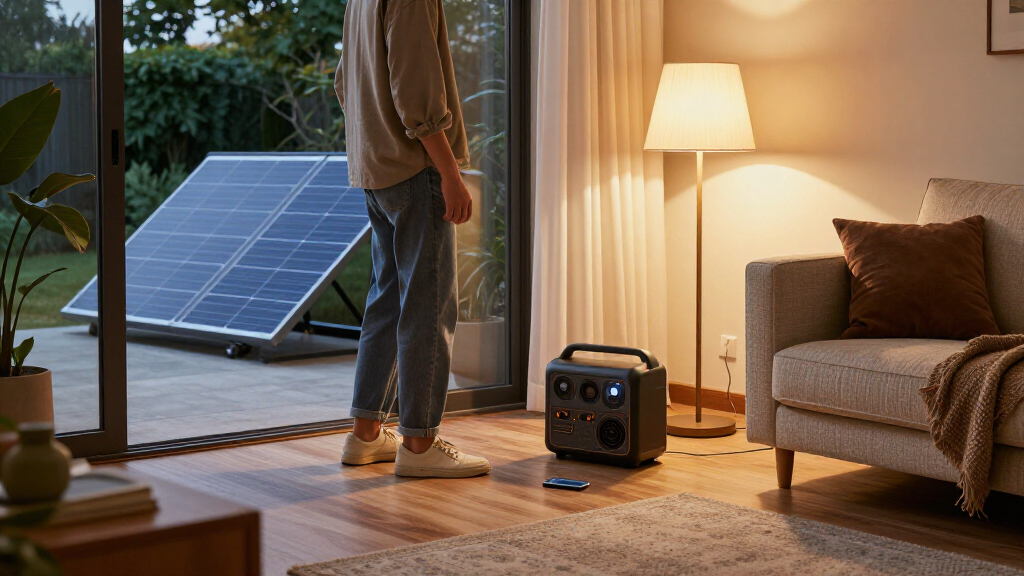
I ranked these solar generators for home backup usefulness, not for camping convenience alone. The main factors were listed battery capacity and output, whether solar panels are included, how each product’s configuration fits an outage plan, and the practical balance between stored energy and ease of placement. I gave more weight to models that can support a broader range of household essentials or arrive with panels than to small stations whose role is limited to phones, lights, and other modest loads.
The ranking also reflects meaningful differences within the lineup. The Jackery HomePower 3600 Plus leads as a capacity-and-output middle ground; the bundled HomePower 3000 and ABOK Ark3600 offer a clearer path to solar charging, while the Explorer 5000 Plus is aimed at buyers who need more scale. Compact and roughly 1,000Wh models remain useful for targeted backup, but they rank lower for whole-home resilience because a single battery cannot run heavy loads or household circuits indefinitely. I treat product names and listed specifications as starting points: buyers should confirm current model details, panel compatibility, surge ratings, and any home-integration requirements before purchase.
| solar generators for home backup | Battery type |
|---|---|
| Anker SOLIX C1000 Gen 2 Portab | LiFePO4 |
| Jackery Solar Generator 1000 V | LFP |
| EF ECOFLOW DELTA 3 Classic Por | — |
| Jackery HomePower 3600 Plus Po | — |
| ZeroKor 300W Portable Power St | — |
| Jackery HomePower 3600 Plus Po | LFP |
| Jackery Explorer 1000 v2 Porta | LFP |
| Jackery Explorer 5000 Plus Por | LiFePO₄ |
| Jackery HomePower 3000 Portabl | LiFePO₄ |
| ABOK Ark3600 Portable Power St | — |
| BLUETTI Elite 100 V2 Portable | LiFePO₄ |
| Jackery Explorer 2000 v2 Solar | LiFePO₄ |
Factors to Consider When Choosing Solar Generators For Home Backup
Choosing a backup station starts with your outage plan, not the largest capacity number on a product page. I’d list the devices you need, how long you want them running, and whether you can recharge from sunlight or another source during an outage. The following factors help prevent buying a system that is either too limited for the job or unnecessarily large for your needs.
Match Battery Capacity to Outage Duration
Capacity, measured in watt-hours, is a rough guide to how much energy a station stores, not a promise of exact runtime. Add up the wattage of the devices you plan to run and estimate their daily use; a refrigerator cycling on and off, for example, does not draw its rated power continuously. Allow for conversion losses and changing conditions rather than assuming every listed watt-hour reaches your appliances. A common mistake is sizing only for a short outage, then discovering the battery cannot cover overnight use or a second day without recharging. If you need lights, networking, and phone charging, a compact unit may fit; if you expect to support more essentials for longer, compare larger capacities such as the 3,584Wh and 5,040Wh models here. I’d keep a written load list so you can spend capacity on the devices that matter most.
Check Running and Surge Power for Your Appliances
Output in watts describes how much load a station can support at a given time, while surge capability addresses brief startup demands from some appliances. A high-capacity battery can still be unsuitable if its inverter cannot start the equipment you want to use. Refrigerators, pumps, and tools may have startup needs above their normal running draw, so check appliance labels or manufacturer specifications rather than relying on a rough category estimate. Avoid planning to run every household device simultaneously; stagger use to keep the combined load within the station’s limits. Also check whether a product lists continuous output separately from surge output, since the larger number may apply only briefly. For home backup, this distinction can matter as much as battery size.
Decide Whether You Need Solar Panels in the Box
A bundled panel makes it easier to begin solar charging, but it does not mean the station can recharge quickly in every setting. Panel wattage is a rated maximum under favorable conditions; shade, cloud cover, season, roof angle, and limited daylight can lower real-world input. Compare the included panel capacity with the battery size, and check the station’s solar input limits so you know whether additional panels could help later. A common misstep is focusing on the number of panels without checking their combined rated wattage, connectors, and compatibility. Bundles such as the HomePower 3000 and ABOK Ark3600 include multiple 200W panels, while several listed power stations are sold without panels or in a separate bundle. If you already own compatible panels, confirm voltage and connector requirements before treating them as part of your backup plan.
Plan for Safe, Practical Home Use
A portable power station can power selected appliances through its outlets, but that is different from backing up a home’s electrical panel. Connecting a station to household wiring usually requires compatible equipment and installation by a qualified professional; never feed power into a wall outlet with an improvised connection. Decide where the unit will sit, how cables will reach essential devices, and whether it can be moved safely when fully loaded. Larger-capacity systems may be less convenient to reposition, even when their added storage is useful during longer outages. Check the manufacturer’s guidance for indoor use, ventilation, temperature limits, and charging during operation. For a few plug-in devices, direct connection may be enough; for selected circuits, ask an electrician about supported transfer equipment before buying.
Compare Recharge Options and Outage Conditions
Solar is one way to refill a station, but outage readiness depends on how you can recharge when sunlight is poor or the interruption lasts several days. Check the product’s supported AC and solar charging methods, recharge limits, and whether it can accept input while powering loads. Do not assume a panel bundle will restore a large battery in a single day; the result depends on sunlight, panel placement, and the station’s input ceiling. If outages in your area often come with storms or winter weather, think through a backup charging option and how much energy you can conserve. A smaller battery used selectively may last longer than a larger one used without a plan. Your best match is the system whose charging options fit local conditions, not simply the one with the largest panel count.
Leave Room for Expansion Without Overbuying
Some buyers may add compatible batteries or panels later, while others prefer a self-contained station that meets their needs from day one. Before paying for expansion potential, confirm which accessories are supported by the exact model and whether added batteries increase capacity, output, or both. Those terms are not interchangeable: more stored energy can extend runtime without raising the maximum power available to run appliances at once. Oversizing can bring extra weight, storage demands, and setup complexity that provide little benefit if your plan covers only a few small devices. Undersizing can also cost time and money if you later need another system to cover a load you already knew was essential. I’d buy for a specific outage plan, then pay for flexibility only when a realistic future need justifies it.
Frequently Asked Questions
Can a portable solar generator power my whole house during an outage?
These products can supply selected appliances and devices, but a portable power station is not automatically a whole-house backup system. The largest unit listed here, the Jackery Explorer 5000 Plus, has 5,040Wh capacity and 7,200W output, yet household demand and outage length determine what it can support. A refrigerator, lights, and communications equipment are a different load from heating, central air, or an electric range. To power household circuits, check whether the model supports a compatible transfer setup and consult a qualified electrician. For many buyers, a prioritized set of plug-in essentials is a more realistic plan than expecting every circuit to stay on.
How do I estimate how long a generator will run my refrigerator?
Start with the refrigerator’s energy-use information or measure its consumption over a normal day; its startup wattage alone does not reveal daily energy use. Compare that daily figure with the station’s usable capacity, allowing for conversion losses and other devices sharing the battery. A refrigerator cycles, so its actual consumption changes with room temperature, door openings, and settings. If the outage may last more than a day, work out how you would recharge the station and whether solar input is available during the same period. I’d test your plan with the intended load before relying on it, rather than treating a capacity-to-wattage division as a guaranteed runtime.
Should I choose a solar bundle or buy the panels separately?
A bundle can simplify matching panels to a station, but it is not automatically the best fit if you already own panels or want a different array size. Check panel wattage, connector type, voltage range, and the station’s maximum solar input before comparing bundles. More rated panel wattage can shorten charging in favorable sun only up to the station’s input limit, and actual output varies with conditions. Bundled panels also do not remove the need to plan placement, cables, storage, and safe setup during bad weather. I’d choose a bundle for straightforward compatibility and a separate setup when it better matches existing equipment or a carefully planned charging target.
Is a 1,000Wh-class station enough for home backup?
It can be enough for a narrow backup plan, such as keeping phones, a router, lights, and a few other low-draw devices running for a limited period. It is less suited to running several high-demand appliances or covering a long outage without a recharge source. The Anker SOLIX C1000 Gen 2, Jackery Explorer 1000 v2, Jackery Solar Generator 1000 V2, and BLUETTI Elite 100 V2 sit around this general capacity class, but their output and included equipment differ. Make a device list and estimate how many hours each item must run before deciding. If you need more runtime, compare a larger station rather than assuming a higher wattage rating means a larger energy reserve.
What should I prioritize if outages last several days?
For multi-day outages, plan around energy use and recharge opportunities together. A larger battery, such as the 3,584Wh HomePower 3600 Plus or 5,040Wh Explorer 5000 Plus, stores more energy than the compact models, but even substantial capacity can run down if you power too many loads. Identify which devices are essential, reduce unnecessary use, and check whether your available solar panels can contribute meaningful energy in your local weather and season. Consider a non-solar charging option if sunlight may be limited, and keep a way to monitor remaining capacity. The strongest plan combines enough stored energy for overnight use with realistic daytime recharging and a strict priority list.
Conclusion
For most households seeking a balance of capacity and output, I’d choose the Jackery HomePower 3600 Plus as the best overall pick. For a solar-ready setup, the Jackery HomePower 3000 with two 200W panels is a practical best-value direction; buyers who want a larger reserve and can accommodate a bigger system should look at the Jackery Explorer 5000 Plus as the premium choice. Beginners with modest backup needs may prefer a roughly 1,000Wh option such as the Jackery Solar Generator 1000 V2 with its 200W panel, while shoppers prioritizing a bundled panel array can compare the ABOK Ark3600 with three 200W panels. For targeted needs, choose the ZeroKor 300W for small loads or a compact station when portability matters more than long runtime. Before deciding, match capacity to your outage plan, verify appliance startup requirements, and confirm solar compatibility and any home-wiring requirements.
Fall Picks
fall essentials
As an affiliate, we earn on qualifying purchases.