Choosing a smoke detector for a hearing-impaired senior means looking beyond a loud audible alarm: a clear visual alert, dependable power, and compatibility with the home’s existing alarms can shape how useful the system is. My two picks serve different needs. The First Alert 7030BSL combines smoke and carbon monoxide detection with an integrated strobe and battery backup, while the First Alert SLED177 is a dedicated, high-intensity visual signal that can synchronize with compatible alarms already installed.

Get your wardrobe favorites delivered free with Prime
- Fast, free delivery on millions of items
- Prime Video, Amazon Music and more included
- Member-only deals all year
The main tradeoff is whether you need a complete combination alarm or an additional visual alert. The 7030BSL is the more self-contained choice for a hardwired location that needs both smoke and CO coverage. The SLED177 makes more sense when compatible detectors are already in place and the priority is adding a conspicuous strobe. Both require hardwired installation, so neither is a straightforward fit for a battery-only home.
Key Takeaways
- The 7030BSL is the more complete single-device option because it detects both smoke and carbon monoxide and includes an LED strobe.
- The SLED177 is a dedicated visual alert, best paired with compatible First Alert or BRK interconnected alarms rather than treated as a detector on its own.
- Both picks require a 120V hardwired connection; the 7030BSL also lists a 10-year battery backup.
- The SLED177 specifies 177-candela brightness, while the 7030BSL listing has conflicting 177- and 77-candela figures, so confirm the current product details before buying.
- For either model, placement, interconnection compatibility, and whether the strobe is visible from the senior’s sleeping and living areas matter as much as the device itself.
| First Alert 7030BSL Hardwired Smoke and Carbon Monoxide Alarm with LED Strobe | 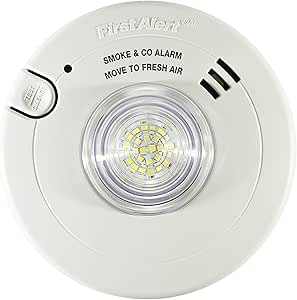 | Best Overall: integrated smoke, CO, and visual alert | Alarm type: Smoke and carbon monoxide combination alarm | Sensor: Photoelectric | Power: Hardwired / corded electric | VIEW ON AMAZON | See Our Full Breakdown |
| First Alert SLED177 Hardwired Hearing Impaired LED Strobe Light |  | Best Dedicated Strobe: add a visible warning to compatible alarms | Device type: Hardwired LED strobe light | Brightness: 177 candela | Power: 120V AC hardwired | VIEW ON AMAZON | See Our Full Breakdown |
| smoke detectors for hearing impaired senior | Power | Alarm type | Sensor | Backup |
|---|---|---|---|---|
| First Alert 7030BSL Hardwired | Hardwired / corded electric | Smoke and carbon monoxide combination alarm | Photoelectric | 10-year battery backup listed |
| First Alert SLED177 Hardwired | 120V AC hardwired | — | — | — |
More Details on Our Top Picks
First Alert 7030BSL Hardwired Smoke and Carbon Monoxide Alarm with LED Strobe
I rank the First Alert 7030BSL first because it brings smoke detection, carbon monoxide detection, and a visual strobe into one hardwired alarm. That makes it the more direct answer for a household choosing a replacement or adding coverage at a location that needs both hazard types. Its separate flash patterns are intended to distinguish smoke from CO, giving a resident and caregivers a visual clue about which alarm is sounding rather than a single undifferentiated flash.
Compared with the SLED177, this model does more by itself: the SLED177 is a dedicated strobe and relies on compatible interconnected detectors to supply the hazard detection. The 7030BSL also lists a 10-year battery backup, a meaningful distinction for a senior’s home because its alarm and visual warning have backup power when household electricity is interrupted. It can synchronize strobes with other installed units, which may help carry the alert through a home, though the setup still depends on compatible devices and correct installation.
There is an information gap to resolve before purchase: the supplied details describe the strobe as both 177 candela and 77 candela. I would verify the current manufacturer specification and installation documentation rather than choose based on the higher figure. The unit is also hardwired, so the battery backup does not make it a battery-only alarm; electrical installation and appropriate wiring remain part of the decision. For seniors who need a self-contained combination alarm, those tradeoffs are usually more manageable than buying a separate strobe and detector, but households without a suitable wired location may prefer another type of system.
Pros:- Combines smoke and carbon monoxide detection in one alarm.
- Separate strobe patterns distinguish smoke alerts from CO alerts.
- Includes a listed 10-year battery backup.
- Can synchronize strobes with multiple compatible installed units.
Cons:- Requires hardwired power, so it is not a battery-only solution.
- Supplied brightness details conflict between 177 and 77 candela and should be verified.
- A combination alarm may not suit homes that only need an additional visual signaling device.
Best for: A hearing-impaired senior who needs a hardwired smoke-and-CO alarm with an integrated visual alert and backup power.
Not ideal for: Someone seeking a battery-only installation, or a buyer who cannot confirm the model’s strobe output and hardwired compatibility.
- Alarm type:Smoke and carbon monoxide combination alarm
- Sensor:Photoelectric
- Power:Hardwired / corded electric
- Backup:10-year battery backup listed
- Strobe:LED; supplied details conflict between 177 and 77 candela
- Alert differentiation:Separate flash patterns for smoke and carbon monoxide
- Dimensions:2.5 × 5.4 × 6.8 inches (D × W × H)
- Warranty:10-year limited warranty
Our verdict“I’d choose the 7030BSL when a senior needs one hardwired device to cover smoke, CO, and visual signaling, provided its current strobe specification checks out.”
First Alert SLED177 Hardwired Hearing Impaired LED Strobe Light
The First Alert SLED177 is the better fit when the home already has compatible First Alert or BRK smoke, CO, or heat alarms and needs a dedicated visual signal. Its listed 177-candela LED strobe is the clearest stated brightness figure in this pair, and smart strobe patterns are designed to distinguish smoke, heat, and carbon monoxide events. That makes this unit useful as part of a broader interconnected warning setup, rather than as a replacement for a detector.
Its role is different from the 7030BSL. The combination alarm can detect smoke and CO on its own and includes battery backup; the SLED177 supplies a visual alert in response to a compatible interconnected device. It can synchronize flashing with up to 18 First Alert or BRK devices, a useful feature when a senior spends time in more than one room. The low-profile round housing can be mounted on a ceiling or wall, giving an installer some choice about placement and visibility.
The central limitation is the need for a compatible alarm network and 120V hardwired power. If the existing detectors are another brand, are not interconnected, or cannot connect as the instructions require, this strobe may not deliver the intended warning. It also has no standalone smoke or CO detection described in the supplied details, and no manufacturer warranty is listed there. I would choose it as an add-on for a planned compatible system, not as the only safety device for a senior’s home.
Pros:- Listed 177-candela LED strobe provides a dedicated visual warning.
- Smart flash patterns distinguish smoke, heat, and carbon monoxide alerts.
- Synchronizes with up to 18 compatible First Alert or BRK devices.
- Can be mounted on a ceiling or wall in a low-profile round form.
Cons:- Requires 120V hardwired power.
- Depends on compatible interconnected alarms and does not replace a smoke or CO detector.
- No manufacturer warranty is listed in the supplied product information.
Best for: A household with compatible interconnected First Alert or BRK alarms that wants a dedicated, high-brightness visual alert for a hearing-impaired resident.
Not ideal for: A buyer who needs a standalone smoke or CO detector, has only battery-powered alarms, or cannot install a hardwired device.
- Device type:Hardwired LED strobe light
- Brightness:177 candela
- Power:120V AC hardwired
- Light source:LED
- Alert patterns:Smart strobe technology distinguishes smoke, heat, and CO alerts
- Interconnection:Synchronizes with up to 18 compatible First Alert or BRK devices
- Mounting:Ceiling or wall
- Weight:8.16 ounces
Our verdict“I’d select the SLED177 when compatible alarms already cover detection and the missing piece is a dedicated synchronized visual signal.”

How We Picked
I ranked these products by how directly they address the needs behind the search: giving a hearing-impaired senior a visible warning while providing useful household detection. I gave weight to whether a product detects hazards itself or depends on other alarms, whether it can communicate across interconnected devices, and what happens during a power interruption. Those distinctions put the 7030BSL first as the more complete alarm and the SLED177 second as a strong add-on strobe.
I also considered practical fit. Hardwired power narrows the audience for both picks, while the 7030BSL’s listed backup battery offers an advantage during an outage. The SLED177’s role depends on compatible First Alert or BRK devices being installed and properly interconnected. I have not treated either model as a substitute for checking local fire-safety requirements, installation instructions, or the needs of the individual resident. The stated strobe brightness for the 7030BSL is inconsistent across the supplied product details, so I flag that instead of assuming one figure is correct.
Factors to Consider When Choosing Smoke Detectors For Hearing Impaired Seniors
For a senior with hearing loss, the right choice depends on whether the home needs a detector, a visual signal, or both. I would start by mapping existing alarms and power connections, then match a product to that setup instead of treating every strobe as a standalone smoke detector.
Decide whether you need detection or an added visual alert
The 7030BSL detects smoke and carbon monoxide and has an integrated strobe, so it can serve as a combination alarm at a suitable wired location. The SLED177 is a signaling device: it is meant to flash in response to compatible interconnected alarms. If the senior’s existing detectors do not cover every required hazard, adding the SLED177 alone will not fill that gap. Check which rooms need smoke coverage and whether CO detection is already present before choosing.
Match the alarm to the home’s wiring
Both products require hardwired installation, which can limit placement and may call for an electrician or a qualified installer. The 7030BSL’s listed battery backup gives it an advantage during a power interruption, but it still requires its hardwired connection for normal installation. The SLED177 is also specified for 120V AC power and is not described as a battery-powered option. If the home uses only battery alarms or lacks suitable wiring, these two models may not be the right match.
Check compatibility before building an interconnected setup
The SLED177 is designed to synchronize with up to 18 compatible First Alert or BRK devices. That capacity can help make a warning visible across a larger home, but it does not mean the strobe works with every detector brand or wiring arrangement. Confirm that the exact alarms are compatible and that the interconnection method follows the manufacturer’s instructions. The 7030BSL also supports synchronized strobes across multiple installed units, but households should verify the approved combination of devices before planning a system.
Think about where the resident will actually see the flash
A bright strobe only helps when it is visible from the places where the senior spends time. Consider bedrooms, bathrooms, living areas, and any location where doors or furniture could block the signal. Placement should follow the product instructions and applicable local requirements; do not move an alarm to an unsuitable spot solely for a clearer view. If a resident may not see a ceiling-mounted flash while sleeping or facing away, ask a qualified fire-safety professional whether additional approved alerting equipment is needed.
Treat visual alarms as one part of a safety plan
A strobe can add an important signal for someone who may not hear a standard alarm, but it does not guarantee that the resident will wake, recognize the alert, or evacuate safely. I would review the resident’s hearing, eyesight, mobility, and sleeping arrangements with family or a care professional. Follow manufacturer installation guidance, test the system as directed, and maintain a clear escape plan. A person with both hearing and vision limitations may need a different or additional approved notification method.
Frequently Asked Questions
Which of these two products is a complete smoke detector?
The First Alert 7030BSL is the more complete detector because it combines smoke and carbon monoxide detection with an integrated LED strobe. The SLED177 is a dedicated strobe that depends on compatible interconnected alarms to provide the hazard detection. I would not use the SLED177 as the household’s only smoke or CO protection.
Can either model work without hardwired power?
Both products are described as hardwired, so neither is presented as a battery-only installation. The 7030BSL lists a 10-year battery backup, but that is backup power rather than a replacement for its hardwired connection. The SLED177 specifies 120V AC. Check the installation instructions and the home’s wiring before selecting either device.
How do the visual alerts distinguish different hazards?
The 7030BSL is described as using separate strobe patterns for smoke and carbon monoxide. The SLED177’s smart strobe technology is described as distinguishing smoke, heat, and CO alerts when used with compatible interconnected devices. These patterns are most useful when the resident can see them and knows what each signal means, so explain the alert meanings as part of the household safety plan.
Will the SLED177 connect to any smoke alarm?
No. The supplied product details specify synchronization with up to 18 compatible First Alert or BRK smoke, CO, and heat devices. I would check the exact model numbers and manufacturer compatibility guidance before buying, since brand, wiring, and interconnection details can affect whether the strobe receives the alarm signal.
What should I verify about the 7030BSL before purchase?
Verify hardwired compatibility, the installation requirements, and the current manufacturer specifications. The supplied information lists the 7030BSL’s strobe as both 177 candela and 77 candela, so I would confirm which figure applies to the exact product version rather than relying on an inconsistent listing. Also check that its mounting location gives the resident a useful view of the flash.
Conclusion
For a hearing-impaired senior who needs a single hardwired smoke-and-CO alarm with a visual signal, I would start with the First Alert 7030BSL, after confirming its current strobe specification and wiring fit. For a home that already has compatible interconnected First Alert or BRK alarms and needs a dedicated synchronized strobe, the SLED177 is the more targeted add-on. If the home lacks hardwiring or compatible alarms, neither pick is a simple fit; choose a suitable system designed for that setup and follow local safety guidance.
Halloween Picks

MGparty 14.5FT Halloween Inflatable Walk-in Pumpkin House with LED Lights

11.2-Foot Halloween Inflatable Pumpkin with LED Lights

Halloween Inflatable Haunted House Maze – 20×20 ft with Removable Roof and Blower
As an affiliate, we earn on qualifying purchases.