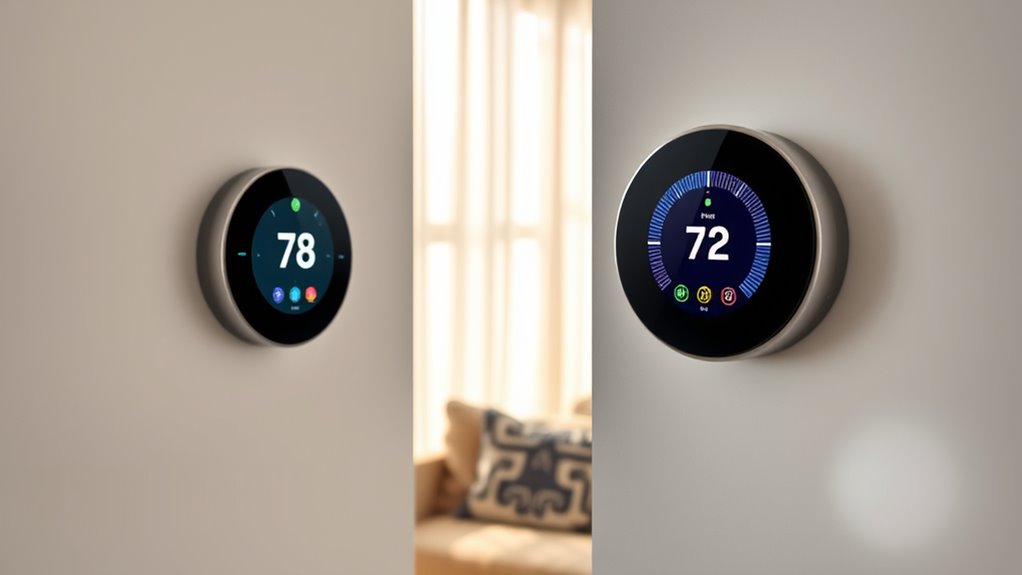

If you’re looking to cut energy costs and stay comfortable in 2025, I recommend exploring smart thermostats like Honeywell’s Wi-Fi Color Model, meross, and ecobee, which support voice control and energy-saving features. These devices are compatible with most HVAC systems and offer remote management, scheduling, and energy monitoring. Choosing the right one depends on your system and preferences, so continue exploring to find the best fit for your home and budget.
Key Takeaways
- Look for ENERGY STAR certified models like Nest and ecobee for proven energy efficiency and cost savings.
- Prioritize thermostats with remote control, scheduling, and occupancy sensors to optimize home comfort and reduce energy waste.
- Ensure compatibility with your HVAC system and wiring requirements, especially for single-stage or low-voltage setups.
- Choose models with voice assistant integration and smart home connectivity for seamless automation and convenience.
- Consider features like energy monitoring, open window detection, and adaptive algorithms to maximize savings in 2025.
Honeywell Wi-Fi Smart Color Thermostat
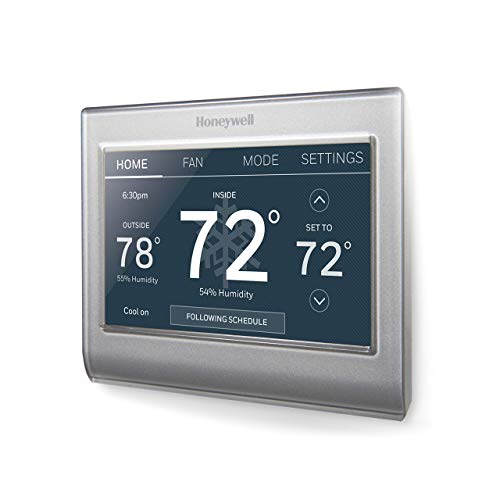

If you’re looking for a smart thermostat that combines customization with user-friendly control, the Honeywell Wi-Fi Smart Color Thermostat is an excellent choice. It offers customizable color options to match your décor and features an easy-to-read touchscreen for simple operation. Compatible with most heat/cool systems, it supports flexible scheduling and remote control via app or voice assistants like Alexa and Google Home. Certified ENERGY STAR, it helps reduce energy use and costs. Before installing, verify your system is compatible, especially if you don’t have a C-wire. Overall, it’s a stylish, efficient, and convenient device to manage your home’s climate.
Best For: homeowners seeking a customizable, easy-to-use smart thermostat that integrates seamlessly with voice assistants and helps save energy.
Pros:
- Customizable color options to match home décor
- Compatible with most heating and cooling systems, with app and voice control features
- ENERGY STAR certified for energy efficiency and cost savings
Cons:
- Not compatible with electric baseboard heat (120-240V)
- Requires a C-wire for installation in some systems
- Not suitable for heating-only oil systems without additional wiring or adapters
meross Smart Thermostat for Home with WiFi and Voice Control
The meross Smart Thermostat with WiFi and Voice Control is an excellent choice for homeowners seeking an easy-to-install, versatile device compatible with most HVAC systems. It works with 95% of setups, including heat pumps and conventional systems, but not electric baseboard heaters. Installation is straightforward, typically taking about 30 minutes with the Meross app. It supports 2.4GHz Wi-Fi and integrates with Apple Home, Alexa, Google, and SmartThings through Matter technology. You can control it remotely via your smartphone, set personalized schedules, and monitor energy use, helping you save money while staying comfortable all year round.
Best For: homeowners seeking an easy-to-install, compatible smart thermostat that integrates seamlessly with popular voice assistants and supports energy monitoring.
Pros:
- Compatible with 95% of HVAC systems, including heat pumps and conventional setups
- Supports Matter technology for easy integration with Apple Home, Alexa, Google, and SmartThings
- Allows remote control, scheduling, energy monitoring, and system health alerts via the Meross app
Cons:
- Not compatible with electric baseboard heaters
- Requires a C-wire for installation; a separate adapter may be needed if absent
- Limited support hours, available only from 10:30 AM to 7:30 PM EST on select days
Amazon Smart Thermostat

The Amazon Smart Thermostat stands out as an ideal choice for homeowners seeking easy integration with their existing Alexa and Ring devices. It’s straightforward to upgrade from traditional thermostats, requiring a C-wire for installation and syncing seamlessly with your smart home system. Certified by ENERGY STAR, it helps save about $50 annually on energy bills. You can control it remotely via the Alexa app or let Alexa automatically adjust temperatures based on your preferred modes. Plus, you can create routines with voice commands and integrate with other Echo devices or sensors for smarter comfort management. Built with Honeywell technology, it’s reliable and supported by Amazon’s helpful customer service.
Best For: homeowners looking for an easy-to-install, energy-efficient smart thermostat that integrates seamlessly with Alexa and Ring devices.
Pros:
- Simple upgrade from traditional thermostats with professional or DIY installation using a C-wire.
- Saves an average of $50 annually on energy bills and is ENERGY STAR certified.
- Allows remote control via the Alexa app and supports automation routines with voice commands and sensors.
Cons:
- Requires a C-wire for installation, which may not be present in all homes.
- Limited compatibility with non-Alexa or Ring smart home systems.
- Dependence on Wi-Fi and Alexa app for full functionality, which could be impacted by connectivity issues.
Honeywell Home RTH7600D 7-Day Programmable Touchscreen Thermostat, White
Designed for homeowners seeking reliable energy savings and easy control, the Honeywell Home RTH7600D stands out with its 7-day programmable touchscreen interface. Its large, backlit display makes it simple to view current and set temperatures at a glance. You can program weekly schedules with four periods per day, automatically adjusting heating and cooling to match your routines. It supports auto changeover between heat and cool and includes features like temporary holds, a real-time clock, and alerts for filter changes or low batteries. Easy to install and compatible with various systems, it’s a dependable choice for consistent comfort and energy efficiency.
Best For: homeowners seeking a user-friendly, energy-efficient thermostat with customizable weekly scheduling and easy touchscreen control.
Pros:
- Large, backlit touchscreen display for easy viewing and programming
- Supports 7-day, four-period scheduling for tailored comfort routines
- Auto changeover between heat and cool with smart response learning technology
Cons:
- Compatible primarily with single-stage heating and cooling systems, limiting multi-stage system support
- Does not support heating-only or central air conditioning systems
- Requires batteries for operation, which need replacement over time
Sensi Lite Smart Thermostat

If you’re looking for an affordable, easy-to-install smart thermostat that helps save on energy costs, the Sensi Lite Smart Thermostat is an excellent choice. It offers Wi-Fi connectivity, programmable scheduling, and works with Alexa, making it simple to manage your home’s comfort remotely. Certified by ENERGY STAR, it helps you cut HVAC energy bills by about 23%. Installation is straightforward, often without needing a C-wire, except for heat pump systems. Plus, it prioritizes your privacy by not selling data or using activity info for ads. With a user-friendly app on Android and iOS, controlling your thermostat from anywhere has never been easier.
Best For: homeowners seeking an affordable, easy-to-install smart thermostat that offers energy savings and remote control capabilities.
Pros:
- Easy DIY installation with step-by-step instructions and built-in level
- Compatible with most HVAC systems and works with Alexa for voice control
- ENERGY STAR certified, helping reduce HVAC energy costs by approximately 23%
Cons:
- May require a C-wire for heat pump and heat/cool only systems
- Limited advanced features compared to higher-end smart thermostats
- Does not support some specialized HVAC systems or multi-zone setups
Non-Programmable Thermostat for Home with Room Temperature Monitor
Aowel AW701 stands out as an ideal choice for homeowners seeking a straightforward, non-programmable thermostat with reliable room temperature monitoring. It supports 24V single-stage heating and cooling systems, making installation simple without needing a common wire. The LCD backlit screen shows accurate temperature readings, and features like humidity monitoring, calibration, and units conversion enhance usability. Its compact, modern design fits well on any wall. With a 2-year warranty and positive reviews, the AW701 offers reliable control for maintaining consistent comfort without complex programming. It’s perfect for those who want an easy-to-use device that guarantees accurate temperature regulation and energy efficiency.
Best For: homeowners seeking an easy-to-use, reliable non-programmable thermostat with accurate temperature and humidity monitoring for simple 24V single-stage systems.
Pros:
- Supports 24V single-stage heating and cooling systems without needing a common wire (c-wire).
- Features a clear, blue backlit LCD display with room temperature and humidity monitoring.
- Includes calibration, temperature units conversion, and compressor delay protection for reliable operation.
Cons:
- Not compatible with multistage, heat pump, line voltage, or mini split systems.
- Limited to non-programmable operation, lacking scheduling features for energy savings.
- Requires verification of existing wiring and size to ensure proper installation.
Honeywell Smart Room Sensor (RCHTSENSOR-1PK)
The Honeywell Smart Room Sensor (RCHTSENSOR-1PK) is an excellent choice for homeowners wanting precise room-level temperature control, especially in multi-room setups. It detects temperature, humidity, and motion, helping to differentiate between passing movement and actual occupancy. This enables focused monitoring and better comfort management. Installation is straightforward—no tools needed—and setup is done via the Resideo app. The sensor connects to compatible T9/T10 Wi-Fi smart thermostats, allowing remote control and integration with voice assistants like Alexa and Google Assistant. Its compact design, LCD display, and reliable battery power make it a versatile, energy-efficient addition to any smart home.
Best For: homeowners seeking precise, room-specific temperature, humidity, and motion monitoring to optimize comfort and energy efficiency in multi-room smart home setups.
Pros:
- Easy DIY installation with no tools required, making setup quick and straightforward.
- Supports remote control and monitoring via the Resideo app and voice assistants like Alexa and Google Assistant.
- Differentiates between passing movement and occupancy for more accurate room-focused temperature management.
Cons:
- Only compatible with T9/T10 Wi-Fi Smart Thermostats (Series 3 & 4), limiting broader device integration.
- Requires Wi-Fi connectivity for full functionality, which may be a concern in unstable network areas.
- Battery-powered with 2 AAA batteries, which need periodic replacement to maintain operation.
Non-Programmable Home Thermostat
Looking for a straightforward thermostat that simplifies temperature control without the complexity of programming? The Riseem STN601-White is a great choice. It’s compatible with single-stage heating and cooling systems like gas, electric, and heat pumps (without auxiliary heat). Installation is simple—most DIYers can set it up in just 30 minutes. The large backlit LCD makes adjustments easy, and it offers features like temperature calibration, units conversion, and compressor delay protection. Powered by 24V AC or batteries, it doesn’t require a C-wire for most setups. With a solid 4.5-star rating, it’s a reliable, budget-friendly option for basic climate control.
Best For: homeowners seeking a simple, easy-to-install non-programmable thermostat for basic heating and cooling needs without advanced features.
Pros:
- Easy DIY installation within 30 minutes with large terminal blocks and universal mount.
- Supports dual power options (24VAC or 2 AAA batteries) without requiring a C-wire for most systems.
- User-friendly LCD with backlight, temperature calibration, and units conversion for convenient control.
Cons:
- Not compatible with heat pumps with auxiliary/emergency heat or multi-stage systems.
- Lacks programmable scheduling features for energy savings and custom routines.
- Limited to single-stage heating/cooling systems, restricting use with more advanced HVAC setups.
Honeywell WiFi Smart Thermostat (RTH8800WF2022)
If you want a smart thermostat that combines ease of use with energy-saving features, the Honeywell WiFi Smart Thermostat (RTH8800WF2022) is an excellent choice. Its 7-day programmable touchscreen and Alexa compatibility make it simple to control and customize your schedule. With geofencing technology, it adjusts temperatures based on your location, saving energy when you’re away. ENERGY STAR certification helps monitor your usage and offers potential rebates. Keep in mind, it works with most heat/cool oil systems but needs a C-wire for installation. Overall, it’s a versatile, efficient option for modern homes seeking comfort and savings.
Best For: homeowners seeking an easy-to-use, energy-efficient smart thermostat with flexible scheduling and compatibility with most heat/cool oil systems.
Pros:
- User-friendly 7-day programmable touchscreen and Alexa compatibility for easy control
- Geofencing technology that automatically adjusts temperatures based on your location to save energy
- ENERGY STAR certification with energy monitoring and potential rebates
Cons:
- Requires a C-wire for installation; incompatible with heating-only oil systems unless a C-wire is added
- Limited to heat/cool oil systems, not suitable for other heating types without modifications
- May involve additional costs for professional installation if a C-wire is needed
Honeywell Home RTH6580WF Wi-Fi 7-Day Programmable Thermostat, White

Homeowners seeking an easy-to-install, Wi-Fi-enabled thermostat that offers flexible scheduling and smart control will find the Honeywell Home RTH6580WF an excellent choice. This model connects effortlessly via the Total Connect Comfort or Honeywell Home app, letting you adjust settings from anywhere. It’s compatible with voice assistants like Alexa, Google Assistant, and Cortana, making control even more convenient. Designed for DIY installation, it features a clear, backlit display and simple controls. Certified by Energy Star, it promotes energy savings without sacrificing comfort. Before buying, check if your heating system supports it and if a C-wire is needed for power.
Best For: homeowners seeking an easy-to-install, Wi-Fi-enabled thermostat with flexible scheduling and smart control options.
Pros:
- User-friendly DIY installation with a clear, backlit digital display
- Compatible with popular voice assistants like Alexa, Google Assistant, and Cortana
- Energy Star certified, promoting energy savings and efficiency
Cons:
- Requires a C-wire for power in some installations, which may not be available in all homes
- Not compatible with electric baseboard heat (120-240V)
- Limited to heating and cooling systems supported by its compatibility, so check system compatibility before purchase
Google Nest Thermostat, Programmable Wi-Fi Thermostat

The Google Nest Thermostat is an ideal choice for those seeking an easy-to-use, energy-efficient smart thermostat that integrates seamlessly with their smart home ecosystem. It’s ENERGY STAR certified and compatible with most systems, even without a C wire in many homes. You can control it remotely via the Google Home app on your phone or tablet, and it works with voice commands through Google Assistant, Alexa, and other Matter-certified devices. The thermostat automatically adjusts when your home is empty to save energy, offers helpful monitoring alerts, and supports sustainable energy practices through Nest Renew. It’s a smart, convenient way to boost comfort and cut energy costs.
Best For: homeowners seeking an easy-to-use, energy-efficient smart thermostat that seamlessly integrates with their existing smart home ecosystem and supports remote control and voice commands.
Pros:
- ENERGY STAR certified, promoting energy savings and efficiency
- Compatible with most systems and works without a C wire in many homes
- Supports remote control via the Google Home app and voice commands through Google Assistant, Alexa, and Matter devices
Cons:
- Some heating-only, cooling-only, zone-controlled, or heat pump systems may require additional wiring or accessories
- Limited compatibility with older or less common HVAC systems
- Requires Wi-Fi connectivity for full features and remote access
ecobee Smart Sensor 2 Pack for Smart Home Compatibility
The ecobee Smart Sensor 2 Pack stands out for its seamless compatibility with ecobee smart thermostats, making it an ideal choice for those looking to optimize home comfort and energy efficiency. These sensors detect occupancy and measure temperature in different rooms, wirelessly communicating data up to 60 feet through walls. Battery-powered with a 5-year lifespan, they’re easy to install using magnetic stands or wall mounts. By adjusting the thermostat based on occupancy, they prevent energy waste in unoccupied spaces. Perfect for bedrooms or other key areas, they help maintain consistent comfort while reducing heating and cooling costs.
Best For: homeowners seeking to enhance energy efficiency and comfort through easy-to-install, room-specific occupancy and temperature monitoring compatible exclusively with ecobee thermostats.
Pros:
- Seamless integration with ecobee smart thermostats for automated comfort adjustments
- Wireless communication up to 60 feet through walls, ensuring flexible placement
- Long-lasting lithium batteries with a 5-year lifespan simplify maintenance
Cons:
- Compatible only with ecobee thermostats, limiting versatility with other systems
- Slightly larger size (8 x 5 x 2 inches) may be less discreet in some rooms
- Requires an ecobee Smart Security subscription for security motion alerts
ecobee Smart Thermostat Essential with Wi-Fi and Voice Assistant Compatibility

If you want a smart thermostat that combines energy savings with easy compatibility, the ecobee Smart Thermostat Essential is a top choice. It can save you up to 23% annually by adjusting schedules, reducing energy use when you’re away, and optimizing comfort when you’re home. It works with most HVAC systems—over 85%—and is easy to install, even without a C-wire, thanks to the Power Extender Kit. Plus, it integrates seamlessly with Apple HomeKit, Google Assistant, and Alexa, allowing voice control and automation. The color touchscreen makes adjustments simple, and the ecobee app lets you monitor energy use remotely for smarter, more efficient home climate control.
Best For: homeowners seeking an easy-to-install, energy-efficient smart thermostat that offers seamless compatibility with major smart home ecosystems and remote control capabilities.
Pros:
- Compatible with over 85% of HVAC systems, including various types like gas, electric, and heat pumps
- Easy DIY installation, even without a C-wire, using the ecobee Power Extender Kit (PEK)
- Integrates effortlessly with Apple HomeKit, Google Assistant, and Alexa for voice control and automation
Cons:
- Requires additional purchase of SmartSensors for room-specific temperature and occupancy monitoring
- The color touchscreen, while user-friendly, may be small for some users or less preferred compared to larger displays
- Limited to certain smart home ecosystems; not compatible with all platforms outside those listed
Honeywell Home RTH9600WF Smart Wi-Fi Color Thermostat
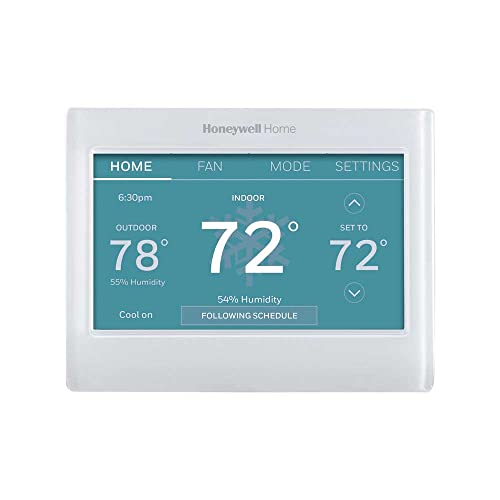
For homeowners seeking a stylish and energy-efficient thermostat, the Honeywell Home RTH9600WF Smart Wi-Fi Color Thermostat stands out with its customizable high-definition color touchscreen and compatibility with most heat/cool systems. It’s ENERGY STAR certified, helping you save energy and providing personalized tips. You can control it remotely via smartphone or integrate it with smart home platforms like Alexa and Google Assistant. The display shows indoor and outdoor temperatures, humidity, and weather forecasts. Designed for forced air systems, it requires a C-wire for installation. Overall, it’s a sleek, flexible option to enhance comfort and efficiency in your home.
Best For: homeowners seeking a stylish, energy-efficient, and customizable smart thermostat compatible with most heat/cool systems.
Pros:
- Customizable high-definition color touchscreen for personalized display options
- ENERGY STAR certified to promote energy savings and potential rebates
- Compatible with popular smart home platforms like Alexa, Google Assistant, and Microsoft Cortana
Cons:
- Requires a C-wire for installation, which may not be available in all homes
- Not compatible with electric baseboard heating (120-240V) or heating-only oil systems
- Installation may be complex for some users without professional assistance
meross Smart Thermostat for Electric Baseboard and In-Wall Heaters

Designed specifically for electric baseboard and in-wall heaters, the meross Smart Thermostat offers a reliable solution for homeowners seeking precise control and energy savings. It supports high-voltage systems up to 16A (1920W at 120V, 3840W at 240V) and integrates seamlessly with Wi-Fi, Apple HomeKit, Alexa, Google Home, and SmartThings. Easy to install within 30 minutes, it features a sleek LCD display, adjustable temperature from 41℉ to 95℉, and a backlight for visibility. Its programmable schedule, open window detection, and energy monitoring help optimize comfort while reducing energy costs. Plus, voice control and automation make managing your heating effortless.
Best For: homeowners with electric baseboard or in-wall heaters seeking precise, energy-efficient temperature control and smart home integration.
Pros:
- Supports high-voltage systems up to 16A, accommodating various electric heating setups
- Easy installation within 30 minutes with minimal wiring requirements
- Integrates seamlessly with voice assistants like Apple HomeKit, Alexa, and Google Home for convenient control
Cons:
- Does not include electric baseboard heaters in the package, requiring separate purchase
- Requires at least 4 wires in the electrical box, which may not be available in all installations
- No mention of a rechargeable or battery-powered backup for the thermostat itself
Factors to Consider When Choosing Smart Thermostats for Home Energy Saving
When selecting a smart thermostat, I look at how well it works with my existing HVAC system, including wiring and power needs. I also consider features like scheduling flexibility, energy monitoring, and voice assistant compatibility to make sure it fits my lifestyle. These factors help me choose a device that maximizes energy savings and ease of use.
Compatibility With HVAC Systems
Choosing a smart thermostat that works seamlessly with your HVAC system requires careful consideration of compatibility factors. First, verify that it supports your system’s type—whether it’s forced air, a heat pump, or hot water heating. Next, check if your system needs a C-wire for power; some thermostats require this connection, while others don’t. If you have high-voltage electric baseboard heaters, ensure the thermostat is compatible with higher voltages. For systems with multiple heating or cooling stages, confirm the thermostat can handle multi-stage configurations to optimize performance. In the end, review the manufacturer’s specifications to make sure it supports your specific system model. Addressing these compatibility details upfront helps prevent installation issues and guarantees your smart thermostat functions reliably.
Wiring and Power Needs
Understanding your home’s wiring setup is crucial when selecting a smart thermostat, as the power source directly impacts compatibility and functionality. Many models rely on a C-wire (common wire) to supply continuous power, especially those with touchscreens and advanced features. If you don’t have a C-wire, some thermostats can operate using power-saving modes or power extender kits, but these may limit functionality. High-voltage systems, like electric baseboard heaters, require specialized thermostats designed for line voltage, which often need different wiring configurations. Before installation, it’s essential to verify your existing wiring to avoid compatibility issues. Some smart thermostats are designed to adapt to systems with fewer wires through innovative power management, but full features depend on proper wiring infrastructure.
Scheduling Flexibility
Flexible scheduling is a key feature to look for in a smart thermostat because it directly impacts both comfort and energy efficiency. With this feature, I can set different temperatures for various times of the day and days of the week, ensuring the home stays comfortable without wasting energy. Many models support 7-day programming, giving me detailed control over heating and cooling routines. Some thermostats even learn my habits over time and automatically adjust schedules, saving me effort and reducing unnecessary energy use. I also appreciate the ability to modify schedules remotely via smartphone apps, making it easy to adapt settings on the go. This flexibility helps me optimize comfort while maximizing energy savings, which is especially valuable for busy routines and changing seasons.
Energy Monitoring Features
Energy monitoring features give me a clear picture of how much electricity and fuel my home uses in real-time, making it easier to spot high-usage periods and adjust my habits accordingly. Many smart thermostats offer detailed energy reports and usage history, helping me analyze trends and optimize my heating and cooling schedules for maximum savings. Some models can detect inefficiencies or system malfunctions through monitoring, alerting me to potential repairs that could improve energy efficiency. Integration with energy management systems or utility programs allows automatic adjustments based on energy demand or time-of-use pricing, further cutting costs. Accurate energy monitoring depends on sensors that consider external factors like outdoor temperature and occupancy, providing a thorough view of my home’s energy consumption and enabling smarter, more efficient decisions.
Voice Assistant Integration
When choosing a smart thermostat, considering voice assistant integration is essential because it allows for hands-free control and seamless automation. Compatibility with Alexa, Google Assistant, or Siri means I can adjust the temperature with simple voice commands like “Set the temperature to 72 degrees,” which makes managing my home more convenient. These thermostats can respond naturally, improving the user experience and making adjustments quick and easy. Integration also enables scheduling and routine-based changes, helping optimize energy use without manual input. To use voice control effectively, my thermostat needs Wi-Fi connectivity and should be linked to my smart home ecosystem through dedicated apps or skills. Overall, voice assistant integration enhances convenience, efficiency, and energy savings in my smart home setup.
User Interface Design
A user-friendly interface is essential when selecting a smart thermostat, as it directly impacts how easily I can operate and customize the device. Clear icons and large text make navigation straightforward, reducing setup errors and frustration. Touchscreens with high-resolution displays offer better visibility of settings and real-time temperature data, which helps me stay informed. Intuitive menus and simple controls enable quick adjustments to schedules and preferences without confusion. Visual feedback, like color-coded indicators and progress bars, simplifies understanding system status and energy consumption at a glance. Additionally, customizable display options, such as adjustable brightness and color themes, enhance readability and allow me to personalize the interface to match my preferences, making the device both functional and pleasant to use.
Installation Ease
Choosing a smart thermostat with easy installation features can make setting up your system much less stressful. Look for models that come with clear, step-by-step instructions to help you handle the DIY process confidently. It’s also essential to verify that your home’s wiring matches the thermostat’s requirements, such as needing a C-wire or a compatible power adapter, to prevent compatibility issues. Opt for thermostats with universal mounting plates and simple wiring terminals; these can considerably speed up installation. Features like built-in level indicators or color-coded wiring guides further streamline the process. Finally, verify the thermostat supports your specific HVAC system type and voltage to avoid additional wiring or adapters, making setup straightforward and hassle-free.
Cost and Rebate Opportunities
Considering the upfront costs of smart thermostats, it’s worth exploring the potential savings and financial incentives available. Many ENERGY STAR certified models qualify for rebates and incentives from local energy providers, which can considerably reduce initial expenses. On average, a smart thermostat can save you between $50 and over $150 annually, helping offset the purchase price over time. Utility companies often offer rebates or discounts for installing compatible models, but you’ll need to verify eligibility and registration requirements beforehand. Additionally, participating in demand response programs through your thermostat can earn you extra rewards during peak energy periods. By taking advantage of these incentives, you can make smart thermostat investment more affordable while maximizing your home’s energy efficiency and savings.
Frequently Asked Questions
How Do Smart Thermostats Impact Overall Home Energy Efficiency?
Smart thermostats boost my home’s energy efficiency by learning my schedule and adjusting temperatures automatically. They help me avoid wasting energy when I’m away or asleep, and I can control them remotely. With features like occupancy sensors and weather adaptation, they optimize heating and cooling, reducing my energy bills and environmental impact. Overall, they make my home more comfortable and eco-friendly while saving me money.
Are Smart Thermostats Compatible With All HVAC Systems?
Think of your HVAC system as a musical instrument; not all are tuned the same way. I’ve found that most smart thermostats are compatible with a wide range of systems, including common central AC and heat pump setups. However, some older or specialized systems might need extra wiring or adapters. It’s best to verify your HVAC’s specifications or consult a professional to ensure a perfect fit.
What Security Features Protect Smart Thermostat Data?
Smart thermostats use encryption, like SSL/TLS, to protect your data during transmission. They also feature secure login protocols and regular firmware updates to fix vulnerabilities. Many devices have multi-factor authentication and device-specific encryption keys, adding extra layers of security. I always recommend choosing thermostats from reputable brands that prioritize privacy and keep their software up-to-date, ensuring your data stays safe from unauthorized access.
Can Smart Thermostats Learn and Adapt to Occupant Habits Automatically?
Yes, smart thermostats can learn and adapt to your habits automatically. I’ve seen how they track when I’m home or away, adjusting the temperature accordingly without me having to do a thing. They use sensors and algorithms to optimize comfort and energy efficiency, making my life easier. It’s pretty impressive how quickly they adapt, saving me money while keeping my home comfortable all year round.
What Is the Typical Installation Process for a Smart Thermostat?
Installing a smart thermostat usually starts with turning off your HVAC system and removing your old thermostat. I then connect the new device’s wires to the corresponding terminals, making sure everything’s secure. Once connected, I turn the power back on and follow the setup instructions, which often involve connecting to Wi-Fi and downloading the app. The process is straightforward, and most models include detailed guides to help you along.
Conclusion
Switching to a smart thermostat really can make a difference. Imagine John, who installed an ecobee and cut his energy bills by 20% within just a few months. Whether you’re saving money like John or simply wanting more control over your comfort, choosing the right smart thermostat is a smart move. With so many options available, you’re bound to find one that fits your needs and helps you save in 2025.