The best simple phones for seniors make calling straightforward, whether that means a big-button cell phone or an easy-to-hear home phone. My best overall pick is the VTech SN5147, which pairs a corded handset with a cordless one and adds amplification and call screening. The Easyfone Prime-T6 is a simpler mobile choice with picture buttons, while the Lively Jitterbug Flip2 suits buyers who want a basic flip phone rather than a smartphone. The main tradeoff is between dependable home-phone features and the freedom of a cellular phone; amplified sound, emergency buttons, and answering machines can also add complexity. Read on for the full breakdown and help matching a phone to the way it will actually be used.

Get your wardrobe favorites delivered free with Prime
- Fast, free delivery on millions of items
- Prime Video, Amazon Music and more included
- Member-only deals all year
Key Takeaways
- A hybrid setup can reduce compromises: The VTech SN5147 combines a corded base with a cordless handset, so a user can keep a familiar home-phone option while taking calls around the house.
- Cell phones differ most in how they handle calls: The Easyfone Prime-T6 uses picture buttons for familiar contacts, while the artfone models emphasize large physical keys and the Jitterbug Flip2 offers a flip-phone format.
- Smartphone simplicity still means smartphone tasks: The Lively Jitterbug Smart5 provides a touchscreen experience, but it asks more of users than a dedicated-button phone.
- Hearing support and call control separate senior-focused landlines: Models such as the VTech SN5147 and SN1117 add features that can matter more than extra handsets or a compact base.
- Not every big-button phone is interchangeable: Corded models such as the AT&T Trimline 213 and Uvital Big Button prioritize direct, simple calling, while answering-system models add convenience at the cost of more setup.
| artfone A400 4G LTE Big Button Cell Phone for Seniors, Silver |  | Best Overall Basic Cell Phone | Display: 2.4-inch LCD | Network: 2G/3G/4G LTE | Carrier compatibility: T-Mobile and listed T-Mobile-based carriers; not AT&T or CDMA carriers | VIEW ON AMAZON | See Our Full Breakdown |
| artfone C1+ 4G Senior Cell Phone with Large Buttons and SOS Button, Black |  | Best for Voice Prompts and Simple Charging | Display: 1.8-inch color LCD | Buttons: 21 raised, backlit buttons | Network and carriers: 2G/3G/4G LTE; T-Mobile and listed T-Mobile-based carriers; not Verizon, Boost, PagePlus, or AT&T | VIEW ON AMAZON | See Our Full Breakdown |
| Lively Jitterbug Smart5 Smartphone for Seniors |  | Best for Seniors Ready for a Smartphone | Display: 6.75-inch IPS touchscreen, 1600 × 720, 90 Hz | Network: 5G | Service requirement: Lively phone service required; not compatible with other carriers | VIEW ON AMAZON | See Our Full Breakdown |
| AT&T BL102-2 DECT 6.0 2-Handset Cordless Phone for Home with Answering Machine, Call Blocking, Caller ID Announcer, Audio Assist, Intercom, and Unsurpassed Range, Silver/Black |  | Best Home Landline System | Phone type: DECT 6.0 cordless system with two handsets | Compatible service: Standard PSTN landline | Display and keypad: 2-inch backlit display and oversized lighted keypad | VIEW ON AMAZON | See Our Full Breakdown |
| Easyfone Prime-T6 4G Picture Button Cell Phone for Seniors |  | Best for Picture-Button Dialing | Display: 1.8-inch LCD, 320 × 240 | Network: 4G LTE | Compatible carriers: T-Mobile, SpeedTalk, and Tello Mobile | VIEW ON AMAZON | See Our Full Breakdown |
| Uvital Big Button Corded Landline Phone for Seniors |  | Best for Photo-Based Calling | Telephone line: RJ11 PSTN landline | Speed dial: 8 one-touch photo buttons | Emergency button: 1 SOS button | VIEW ON AMAZON | See Our Full Breakdown |
| VTech VG231 DECT 6.0 Cordless Phone | 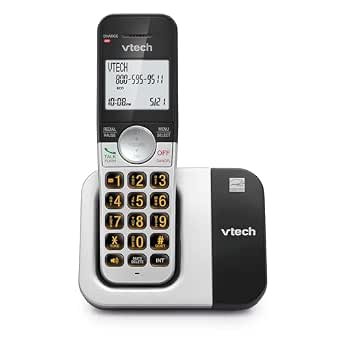 | Best Cordless Pick | Technology: DECT 6.0, 1.9 GHz | Range: Up to 1,000 ft | Display: 2-inch white backlit display | VIEW ON AMAZON | See Our Full Breakdown |
| AT&T Trimline 213 Corded Phone with Large Buttons |  | Best Simple Wall Phone | Power source: Telephone line powered; no batteries or AC adapter | Line operation: Single-line | Speed dial: Up to 10 numbers | VIEW ON AMAZON | See Our Full Breakdown |
| AT&T CL4940 Corded Phone with Digital Answering System and Caller ID | 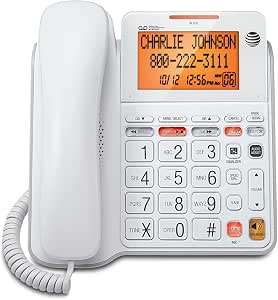 | Best for Callbacks and Messages | Type: Corded landline phone | Answering system: Digital; records up to 25 minutes | Call log: 50 names and numbers | VIEW ON AMAZON | See Our Full Breakdown |
| VTech SN1117 Corded Senior Phone |  | Best for Independent Dialing | Compatible network: Standard landline | Line operation: Single-line | Speed dial: 8 photo keys | VIEW ON AMAZON | See Our Full Breakdown |
| VTech SN5147 Amplified Corded/Cordless Senior Phone |  | Best for Hearing Support | Phone system: Corded base with 1 cordless handset | Maximum ringer volume: 90 dB | Audio assist: Up to 50 dB | VIEW ON AMAZON | See Our Full Breakdown |
| Uvital Corded and Cordless Phone with Answering Machine for Seniors |  | Best for Long Message Storage | Phone type: Corded phone with 1 cordless handset | Answering system: Digital; up to 60 minutes total and 2 minutes per message | Speed dial: M1–M3 on handset; 4 one-touch buttons on base | VIEW ON AMAZON | See Our Full Breakdown |
| Swissvoice Xtra TMAX10 Big Button Corded Landline Phone with Photo Speed Dial, White |  | Best for Simple Photo Dialing | Phone type: Corded landline | Photo speed-dial keys: 6 | Handset and speakerphone volume: 4 levels | VIEW ON AMAZON | See Our Full Breakdown |
| Lively Jitterbug Flip2 Cell Phone for Seniors, Red |  | Best for Cellular Help and Support | Operating system: Lively Proprietary | Display: 3.2-inch LCD, 480 × 320 | Cellular technology: 3G | VIEW ON AMAZON | See Our Full Breakdown |
| Excelltel Big Button Corded Landline Phone for Seniors with One-Touch Dialing |  | Best for Emergency-Ready Basics | Model: EX-LD-858HF | Phone type: Corded landline | One-touch speed dials: 9 | VIEW ON AMAZON | See Our Full Breakdown |
More Details on Our Top Picks
artfone A400 4G LTE Big Button Cell Phone for Seniors, Silver
The A400 is the strongest fit here for someone who wants a straightforward mobile phone without internet browsing. Its 2.4-inch display is larger than the C1+’s 1.8-inch screen, while raised backlit keys, hearing enhancement, and loud speakers help make everyday calling easier. The SOS button calls and texts up to five contacts, and the included dock offers a simple place to charge it. Compared with the Easyfone Prime-T6, the A400 favors a conventional keypad over picture-button dialing, so it suits people comfortable entering numbers and using a contact list. The tradeoff is limited carrier support: it works with T-Mobile and listed T-Mobile-based carriers, not AT&T or CDMA carriers. It is a basic call-and-text device, not a choice for apps, web access, or media-heavy use.
Pros:- 2.4-inch display, large fonts, and raised backlit keypad support easier reading and dialing.
- SOS button can call and text up to five preset contacts.
- Loud speaker and hearing enhancement mode support clearer conversations.
- Charging dock, speed dial, and capacity for up to 1,000 contacts add practical convenience.
Cons:- No internet browsing or smartphone apps.
- Carrier compatibility excludes AT&T and CDMA carriers.
- The 2 MP camera is limited for users who want more capable photography.
Best for: Seniors who want a keypad-based mobile phone with a larger screen, emergency calling, and a charging dock, and who use a compatible T-Mobile-based carrier.
Not ideal for: People who need internet access, prefer photo buttons for calling, or rely on AT&T, Verizon, or another unsupported carrier.
- Display:2.4-inch LCD
- Network:2G/3G/4G LTE
- Carrier compatibility:T-Mobile and listed T-Mobile-based carriers; not AT&T or CDMA carriers
- Battery:1800 mAh; 8–10 hours talk time; nearly one week standby
- Camera:2 MP
- SIM slots:3
- Safety and accessibility:SOS calling and texting, hearing enhancement, large backlit keypad
- Charging:Charging dock
Our verdict“Choose the A400 for simple calls and texts with larger controls and an SOS feature, provided its carrier restrictions suit you.”
artfone C1+ 4G Senior Cell Phone with Large Buttons and SOS Button, Black
The C1+ keeps the experience focused on calling, texting, and a few useful extras, with 21 raised, backlit buttons and a voice announcement for the time. That spoken cue can help someone who has difficulty reading a small display, though its 1.8-inch screen is smaller than the A400’s 2.4-inch display. Both artfone models have an SOS feature and a dock; the C1+ adds USB-C charging as another option, which gives caregivers flexibility if the dock is misplaced. It also supports hearing aid use, speed dial, and a flashlight. This is still a basic phone rather than a smartphone, and it cannot browse the internet. Its biggest buying constraint is service: it supports T-Mobile and listed T-Mobile-based carriers but excludes AT&T and several other networks.
Pros:- Raised, backlit buttons make dialing easier in low light and by touch.
- Voice time announcement offers an alternative to reading the display.
- Charging dock and USB-C provide two ways to recharge.
- SOS button can call up to five emergency contacts, with hearing aid support and speed dial also included.
Cons:- The 1.8-inch display is smaller than the A400’s screen.
- No internet browsing or smartphone apps.
- Carrier support is limited, and the phone is not water resistant.
Best for: Seniors who benefit from spoken time announcements, tactile keys, and a choice of dock or USB-C charging on a compatible carrier.
Not ideal for: People who need a larger screen than 1.8 inches, internet access, water resistance, or service from AT&T, Verizon, or another unsupported carrier.
- Display:1.8-inch color LCD
- Buttons:21 raised, backlit buttons
- Network and carriers:2G/3G/4G LTE; T-Mobile and listed T-Mobile-based carriers; not Verizon, Boost, PagePlus, or AT&T
- Battery:1800 mAh; 7–8 hours talk time
- Charging:USB-C and charging dock
- SIM:Single Nano SIM
- Contacts:Up to 1,000
- Accessibility and safety:SOS button, voice time announcement, hearing aid support, speed dial
Our verdict“Pick the C1+ over the A400 if voice time announcements and USB-C charging matter more than a larger display.”
Lively Jitterbug Smart5 Smartphone for Seniors
The Jitterbug Smart5 serves a different need from the A400 and C1+: it is a full smartphone with a 6.75-inch touchscreen, not a keypad-only phone. A large display and an easy-to-navigate menu can make it a more approachable way to use smartphone features, while real-time call captioning may help people who have trouble hearing calls. The Urgent Response button and access to Lively support add a service layer absent from the simpler artfone handsets. Its 5G connection, cameras, and 128 GB of storage also make it more capable for photos and apps. That added flexibility brings more complexity than a basic call-and-text phone, and it requires activation with Lively service. Unlike the A400, it cannot be used with another carrier, so the service requirement should guide the decision as much as the hardware.
Pros:- Large 6.75-inch touchscreen and simplified menu offer a smartphone experience with more screen space.
- Real-time call captioning can support people who have difficulty following spoken calls.
- Urgent Response button and Lively support provide services beyond the phone itself.
- 5G, 128 GB storage, and multiple cameras support apps, photos, and broader smartphone use.
Cons:- Requires activation with Lively phone service and is incompatible with other carriers.
- Touchscreen controls and smartphone features may feel less simple than the A400 or C1+ keypad.
- It is a more involved choice than a basic phone for buyers who only need calls and texts.
Best for: Seniors who want a large-screen smartphone, call captioning, and Lively support, and are willing to use Lively phone service.
Not ideal for: People who want only calls and texts, prefer physical number keys, or need to keep an existing non-Lively carrier.
- Display:6.75-inch IPS touchscreen, 1600 × 720, 90 Hz
- Network:5G
- Service requirement:Lively phone service required; not compatible with other carriers
- Processor:MediaTek Dimensity 6100 Plus, 2.2 GHz
- Memory and storage:8 GB RAM; 128 GB storage
- Cameras:50 MP + 5 MP rear; 8 MP front
- Battery:5010 mAh
- Weight:6.88 ounces
Our verdict“Choose the Smart5 when a senior wants a large-screen smartphone and Lively services, rather than the simpler keypad experience of the artfone phones.”
AT&T BL102-2 DECT 6.0 2-Handset Cordless Phone for Home with Answering Machine, Call Blocking, Caller ID Announcer, Audio Assist, Intercom, and Unsurpassed Range, Silver/Black
For a senior who mainly needs a dependable phone at home, the BL102-2 offers two cordless handsets and a digital answering machine rather than mobile service. Its large backlit display, oversized keypad, caller ID announcement, and audio assist are geared toward easier calling; an intercom also lets someone reach the other handset around the home. The call blocker stores up to 1,000 numbers, a useful distinction from the mobile artfone A400, which offers portability and SOS calling but not this landline call-management setup. The BL102-2 is a better match for household use than for errands or travel, and it requires a standard PSTN landline. It does not support VoIP or multiple lines, and its handsets need regular charging, with listed talk time of 10 hours.
Pros:- Two handsets and an intercom support calling between rooms.
- Large backlit display, oversized keypad, caller ID announcer, and audio assist target common accessibility needs.
- Smart call blocker can store up to 1,000 blocked numbers.
- Digital answering machine records up to 22 minutes of messages.
Cons:- Works with a standard PSTN landline and does not support VoIP or multiple lines.
- Unlike the A400, it is a home phone rather than a portable cellular handset.
- Handset batteries need regular charging; listed talk time is 10 hours and standby time is six days.
Best for: Older adults with a standard home landline who want two handsets, call blocking, and accessible dialing and listening features.
Not ideal for: People who need a mobile phone, use VoIP instead of a standard PSTN landline, or want smartphone and Wi-Fi features.
- Phone type:DECT 6.0 cordless system with two handsets
- Compatible service:Standard PSTN landline
- Display and keypad:2-inch backlit display and oversized lighted keypad
- Answering machine:Digital; up to 22 minutes recording
- Call management:Smart call blocker stores up to 1,000 numbers
- Accessibility features:Audio assist and caller ID announcer
- Calling features:Full-duplex speakerphone and intercom
- Battery performance:Up to 10 hours talk time and six days standby
Our verdict“Choose the BL102-2 for accessible calling and call management around a landline-equipped home, not for mobile use.”
Easyfone Prime-T6 4G Picture Button Cell Phone for Seniors
The Prime-T6 stands out for four large picture memory buttons, which let a user call familiar people without searching a contact list or entering a full number. That makes it a more direct fit for someone who relies on a small set of regular contacts than the A400, whose large keypad and speed dial suit users comfortable with conventional dialing. The Prime-T6 also includes HAC-compatible sound, an SOS button, a charging dock, and a lanyard. Its 1.8-inch display and simple interface keep the phone focused on essential use, but the 1050 mAh battery is smaller than the 1800 mAh batteries listed for both artfone models. The included SpeedTalk SIM and listed T-Mobile, SpeedTalk, and Tello compatibility make it a ready-to-set-up option for some buyers, but not a broadly compatible unlocked phone.
Pros:- Four picture memory buttons make frequent contacts easier to call directly.
- HAC-compatible sound supports use with hearing aids.
- SOS button, charging dock, and included lanyard add practical accessibility and carrying options.
- Included SpeedTalk SIM and listed support for T-Mobile, SpeedTalk, and Tello offer a clear setup path for compatible users.
Cons:- Carrier support is limited to T-Mobile, SpeedTalk, and Tello Mobile.
- The 1050 mAh battery is smaller than the 1800 mAh batteries in the artfone A400 and C1+.
- The 1.8-inch display is small, and the phone is not water resistant.
Best for: Seniors who call a few familiar people often and would benefit from assigning their photos to one-touch memory buttons.
Not ideal for: People who need broad carrier choice, a larger display, or a bigger listed battery than the artfone A400 and C1+ provide.
- Display:1.8-inch LCD, 320 × 240
- Network:4G LTE
- Compatible carriers:T-Mobile, SpeedTalk, and Tello Mobile
- Battery:1050 mAh
- Memory buttons:Four picture memory buttons
- SIM:Single Nano SIM; SpeedTalk SIM included
- Size and weight:4.53 × 2.05 × 0.63 inches; 2.08 ounces
- Included accessories:Charging dock, lanyard, picture button adapter, SIM card, user manual, and power adapter
Our verdict“Choose the Prime-T6 if photo-labeled one-touch calls matter more than a larger screen or wider carrier compatibility.”
Uvital Big Button Corded Landline Phone for Seniors
I’d choose the Uvital when remembering names is easier than remembering numbers: its eight photo speed-dial buttons give familiar faces a direct place on the phone, and a separate SOS button adds an emergency shortcut. The flashing red call alert, hands-free calling, and independently adjustable ringer and earpiece volume address several everyday barriers without adding a screen or setup menu. Compared with the VTech SN1117, it offers a specified ringer volume up to 120 dB, while the VTech adds spoken number announcements and explicitly includes a wall-mount bracket. The Uvital’s simpler feature set is also its limit: it has no caller ID, display, voicemail, or answering machine, and it works only with a PSTN landline. I’d skip it for anyone who needs messages or call history.
Pros:- Eight photo speed-dial buttons make familiar contacts easier to call.
- A dedicated SOS button provides a direct emergency shortcut.
- Independent adjustable ringer and earpiece volume, with specified maximums of 120 dB and 90 dB.
- Flashing LED alert and hands-free calling; no batteries or external power required.
Cons:- Requires a PSTN landline and does not support internet phone service.
- No caller ID, display, voicemail, or answering machine.
- Wall mounting is not recommended.
Best for: A senior with a PSTN landline who recognizes callers by photo and wants loud alerts, one-touch contacts, and an SOS button.
Not ideal for: Households that rely on caller ID, voicemail, an answering machine, internet-based phone service, or wall mounting.
- Telephone line:RJ11 PSTN landline
- Speed dial:8 one-touch photo buttons
- Emergency button:1 SOS button
- Maximum ringer volume:120 dB
- Maximum earpiece volume:90 dB
- Call alert:Flashing red LED
- Calling features:Hands-free calling; single line
- Power:Line-powered; no batteries or external power required
- Unsupported features:Caller ID, display, voicemail, answering machine, and internet service
Our verdict“Choose the Uvital if photo-based one-touch dialing and loud alerts matter more than caller ID or message recording.”
VTech VG231 DECT 6.0 Cordless Phone
For someone who wants to answer calls away from the phone base, I’d favor the VTech VG231 over corded choices such as the AT&T Trimline 213. Its cordless handset, backlit 2-inch display, large keypad, and caller ID for up to 50 calls make routine call handling less dependent on standing beside a fixed phone. DECT 6.0 technology and a stated range of up to 1,000 feet also suit a home where the handset needs to travel between rooms, though actual range depends on the layout. The tradeoff is more upkeep: it uses rechargeable AAA batteries, and talk time is limited to up to 10 hours between charges. Unlike the AT&T CL4940, it has no answering machine, and it lacks call blocking. I’d pick it for cordless convenience, not for a fully featured message system.
Pros:- Cordless handset with DECT 6.0 technology and a stated range of up to 1,000 feet.
- Large keypad and backlit 2-inch display support easier dialing and viewing.
- Caller ID stores up to 50 calls.
- Full-duplex speakerphone and compatibility with landline, cable, and compatible VoIP services.
Cons:- No built-in answering machine for recording missed calls.
- No call-blocking feature.
- Rechargeable AAA batteries require charging; talk time is up to 10 hours.
Best for: A senior who wants a cordless handset, visible caller ID, and the freedom to take calls around a home with landline, cable, or compatible VoIP service.
Not ideal for: People who want an answering machine, call blocking, or a phone that needs no battery charging.
- Technology:DECT 6.0, 1.9 GHz
- Range:Up to 1,000 ft
- Display:2-inch white backlit display
- Caller ID storage:Up to 50 calls
- Talk and standby time:Up to 10 hours talk; up to 7 days standby
- Batteries:2 AAA batteries included
- Phone line:Single-line; landline, cable phone, and compatible VoIP
- Calling features:Full-duplex speakerphone and 3-way conference calling
- Answering machine:None
Our verdict“Choose the VG231 if cordless freedom and caller ID matter more than an answering machine or call blocking.”
The AT&T Trimline 213 is a practical pick for someone who wants a basic phone that can sit on a desk or mount on a wall. Its large buttons and lighted keypad make dialing easier in dim rooms, while the flashing visual ringer can alert someone who keeps the audible ringer low. It also stores up to 10 speed-dial numbers and is hearing aid compatible. Compared with the Uvital Big Button Corded Landline Phone, the Trimline has more speed-dial slots and supports wall mounting; the Uvital instead adds photo buttons and an SOS key. Line power means no batteries, adapter, or outlet is needed, but this remains a single-line landline phone with no answering system or caller ID. I’d choose it for straightforward calling, not for emergency-focused or message-recording features.
Pros:- Large buttons and a lighted keypad support dialing in low light.
- Runs on telephone line power without batteries, an AC adapter, or an outlet.
- Flashing visual ringer helps signal incoming calls when sound is low or off.
- Stores up to 10 speed-dial numbers and is hearing aid compatible.
Cons:- Requires a landline and operates on a single line.
- No answering system or caller ID is listed.
- No photo speed-dial buttons or dedicated SOS button.
Best for: A senior who wants a wall-mountable, line-powered phone with large buttons, visual call alerts, and speed dial for up to 10 contacts.
Not ideal for: Anyone who needs photo-dial buttons, an SOS key, caller ID, an answering machine, or cordless use.
- Power source:Telephone line powered; no batteries or AC adapter
- Line operation:Single-line
- Speed dial:Up to 10 numbers
- Keypad:Large buttons with lighted keypad
- Call alert:Flashing visual ringer
- Volume and controls:Adjustable receiver and ringer volume; mute
- Hearing aid compatibility:HAC and T-coil rated
- Mounting:Wall mountable on a standard wall phone bracket
- Answering system:None
Our verdict“Pick the Trimline 213 for uncomplicated, wall-mountable landline calling rather than photo dialing or emergency shortcuts.”
AT&T CL4940 Corded Phone with Digital Answering System and Caller ID
I’d put the AT&T CL4940 ahead of simpler corded options when the main challenge is keeping track of missed calls. Its answering system records up to 25 minutes of messages, announcements, and memos, while the adjustable backlit display and 50-name-and-number call log give a clearer path to returning calls. The speakerphone and remote message access add convenience for people who do not want to hold the handset or be at home to check recordings. Compared with the AT&T Trimline 213, this model offers caller ID and message storage, but it is less power-independent: basic calls can work during an outage, while the display and answering features require four AA batteries that are not included. I’d choose it for call history and messages, but not for someone seeking the fewest parts or simplest setup.
Pros:- Digital answering system records up to 25 minutes of messages, announcements, and memos.
- Adjustable backlit display shows caller ID and call history.
- 50-name-and-number call log supports callbacks.
- Speakerphone and remote message access offer alternatives to holding the handset or checking messages at home.
Cons:- Four AA batteries, not included, are required for the display and answering features.
- Only basic calling is specified to work during power outages.
- More features and setup than a basic model such as the AT&T Trimline 213.
Best for: A senior or caregiver who needs recorded messages, caller ID, and a call log for returning missed calls.
Not ideal for: Someone who wants a battery-free setup for every feature, photo-based dialing, or the simplest possible corded phone.
- Type:Corded landline phone
- Answering system:Digital; records up to 25 minutes
- Call log:50 names and numbers
- Display:Adjustable backlit LCD with caller ID and call history
- Power outage operation:Basic calling is line-powered
- Batteries:4 AA batteries required for display and answering features; not included
- Additional features:Speakerphone and remote message access
- Dimensions:7.9 × 8.8 × 3.7 inches
- Weight:1.5 pounds
Our verdict“Choose the CL4940 if recorded messages and caller history are worth keeping four AA batteries on hand.”
VTech SN1117 Corded Senior Phone
The VTech SN1117 is the most dialing-focused choice here for someone who benefits from both visual and spoken cues. Its eight photo speed-dial keys provide direct access to familiar contacts, while spoken number announcements can help confirm keypad entries. Large high-contrast buttons, a visual ringer, adjustable volume, and a full-duplex speakerphone round out a useful set of accessibility features. Compared with the Uvital Big Button Corded Landline Phone, the VTech adds spoken number announcements and includes a wall-mount bracket; the Uvital specifies higher maximum ringer and earpiece volumes and has a dedicated SOS button. The SN1117 also supports basic calls without AC power, but the product details do not say that every feature works during an outage. I’d pick it for assisted dialing, not for confirmed outage use of all features.
Pros:- Eight photo speed-dial keys make calling familiar contacts more direct.
- Spoken number announcements can help confirm keypad entries.
- Large high-contrast buttons, visual ringer, and adjustable volume support easier phone use.
- Full-duplex speakerphone and basic line-powered calling without AC power.
Cons:- Requires a standard landline connection.
- No SOS button, caller ID, or answering-machine features are specified.
- Outage support is specified for basic calls, not for every feature.
Best for: A senior who uses a standard landline and benefits from photo contacts, spoken keypad feedback, and hands-free calls.
Not ideal for: Anyone who needs a confirmed SOS button, caller ID, an answering machine, or assurance that all features operate during a power outage.
- Compatible network:Standard landline
- Line operation:Single-line
- Speed dial:8 photo keys
- Dialing support:Large high-contrast buttons and spoken number announcements
- Call alert:Visual ringer
- Calling features:Adjustable volume and full-duplex speakerphone
- Power:Basic calls do not require AC power
- Package includes:Telephone base and handset, coiled cord, line cord, wall-mount bracket, guide, and photo inserts
- Warranty:1-year limited
Our verdict“Choose the SN1117 for photo contacts and spoken dialing cues, while treating outage operation as a basic-calling feature only.”
VTech SN5147 Amplified Corded/Cordless Senior Phone
The VTech SN5147 suits households that want a traditional landline setup with extra help for hearing and unwanted calls. Its corded base stays available even if the cordless handset needs charging, while the 50 dB audio boost and ringer up to 90 dB make calls and incoming alerts easier to notice. Four photo speed-dial keys simplify calling familiar people, and call blocking stores up to 1,000 numbers. Compared with the Uvital Corded and Cordless Phone, the VTech offers a stronger stated ringer and far greater call-blocking capacity; Uvital counters with a longer answering-machine recording time. The main compromise here is the single cordless handset, with extra handsets sold separately. Choose it for hearing assistance and call screening, not for a multi-room handset setup out of the box.
Pros:- Audio boost reaches up to 50 dB, with a ringer rated up to 90 dB.
- Corded base provides a handset option that does not rely on cordless charging.
- Four photo speed-dial keys make familiar contacts easier to call.
- Blocks up to 1,000 numbers and announces Caller ID aloud.
Cons:- Includes only one cordless handset; additional handsets are sold separately.
- The 22-minute answering machine holds less total recording time than the Uvital model’s 60 minutes.
Best for: Landline users with hearing difficulties who want a loud ringer, amplified audio, and extensive unwanted-call blocking.
Not ideal for: Households needing cordless coverage in several rooms immediately, since only one cordless handset is included and expansions cost extra.
- Phone system:Corded base with 1 cordless handset
- Maximum ringer volume:90 dB
- Audio assist:Up to 50 dB
- Call-blocking capacity:Up to 1,000 numbers
- Photo speed-dial keys:4
- Answering machine:22 minutes
- Standby time:5 days
- Conference calling:3-way
Our verdict“Choose the SN5147 if amplified calling and strong call blocking matter more than having multiple cordless handsets included.”
Uvital Corded and Cordless Phone with Answering Machine for Seniors
The Uvital corded-and-cordless system is a good fit for someone who relies on voicemail-style messages and wants accessible dialing on both the base and handset. It records up to 60 minutes total, more than the VTech SN5147’s 22-minute capacity, though each Uvital message is capped at two minutes. Photo buttons on the base, M1–M3 speed dial on the handset, and Braille-marked keys offer several ways to make calling less fiddly. Its ringer reaches 85 dB, a little below the VTech’s stated 90 dB, and speaker volume is adjustable. The system also needs a standard RJ11 PSTN phone line; it is not for internet-only calling. I’d pick it over the Swissvoice Xtra TMAX10 for answering messages and a cordless handset, but the Swissvoice has six photo keys on its corded base, compared with Uvital’s four.
Pros:- Records up to 60 minutes of messages, with remote checking from the cordless handset.
- Braille-marked keys and photo speed dial support different dialing needs.
- Corded base and cordless handset can call each other.
- Five independent volume settings allow adjustments for ringer and speaker use.
Cons:- Requires an RJ11 PSTN phone line and does not support internet connections.
- Includes only one cordless handset.
- Each recorded message is limited to two minutes.
Best for: Landline users who want a cordless handset, accessible dialing cues, and room to keep more incoming messages.
Not ideal for: People using internet-based phone service without an RJ11 PSTN line, or anyone who needs several cordless handsets included.
- Phone type:Corded phone with 1 cordless handset
- Answering system:Digital; up to 60 minutes total and 2 minutes per message
- Speed dial:M1–M3 on handset; 4 one-touch buttons on base
- Maximum ringer volume:85 dB
- Maximum speakerphone volume:70 dB
- Contact storage:50 contacts
- Call history:30 incoming and 10 outgoing calls
- Phone line:RJ11 PSTN; does not support internet connections
Our verdict“Pick the Uvital if message capacity and accessible dialing matter more than a higher ringer rating or broader phone-line compatibility.”
Swissvoice Xtra TMAX10 Big Button Corded Landline Phone with Photo Speed Dial, White
The Swissvoice Xtra TMAX10 keeps the task focused: make a landline call using large, separated keys or one of six photo memory buttons. That six-contact layout gives it an advantage over the VTech SN5147’s four photo keys and the Uvital’s four base buttons, if a caller wants their most-used people visible at a glance. Separate handset and speakerphone volume controls have four levels, and a visual incoming-call indicator can help when an audible ring is easy to miss. Unlike those two systems, however, this is a corded-only, single-line phone; there is no cordless handset for carrying calls around the home. It also provides fewer advanced call-management details than the VTech’s large blocking capacity. I’d choose it for straightforward dialing rather than message handling or flexible room-to-room use.
Pros:- Six customizable photo memory keys provide one-touch access to familiar contacts.
- Large, separated number keys support easier visual targeting.
- Handset, speakerphone, and ringer volumes can be adjusted.
- Visual indicator alerts users to incoming calls.
Cons:- Corded, single-line design does not provide a portable handset.
- Photo speed dial is limited to six contacts.
- The product data does not specify answering-machine recording capacity.
Best for: People who mainly call a small circle of contacts and want their photos beside one-touch keys on a corded phone.
Not ideal for: People who need a cordless handset, extensive call blocking, or a clearly specified long-duration answering machine.
- Phone type:Corded landline
- Photo speed-dial keys:6
- Handset and speakerphone volume:4 levels
- Line operation:Single-line
- Answering system:Digital
- Power source:Corded electric
- Batteries:3 AAA included
- Warranty:1 year
Our verdict“Choose the TMAX10 for uncomplicated, photo-based dialing at a fixed location, not for cordless convenience or advanced call management.”
Lively Jitterbug Flip2 Cell Phone for Seniors, Red
The Jitterbug Flip2 is the cellular choice in this group for someone who wants a familiar flip-phone shape, large keys, and help close at hand. Its high-contrast 3.2-inch display and simple menus make it less complex than a smartphone such as the Lively Jitterbug Smart5, while the keypad help button connects users to support through Lively service. Voice control and speed dial can reduce the need to work through menus for routine calls. The tradeoff is substantial: the phone requires an activated Lively plan and cannot be used with another carrier, so it is not a flexible unlocked alternative to the artfone A400 4G. It also lacks water resistance. This is the pick for buyers who value Lively’s support ecosystem over carrier choice and the broader app experience of a smartphone.
Pros:- Large buttons, high-contrast display, and simple menus suit callers who want fewer interface layers.
- Keypad help button and Lively support access add a direct route to assistance.
- Speed dial and voice control can simplify routine calls.
- Front and rear cameras are included in a basic flip-phone design.
Cons:- Requires an activated Lively plan and is not compatible with other carriers.
- Not water resistant.
- Runs a proprietary operating system rather than a full smartphone platform.
Best for: Cellular users who prefer a flip phone and want a keypad help button and access to Lively support services.
Not ideal for: People who want to keep their current carrier, avoid a required service plan, or need a water-resistant handset.
- Operating system:Lively Proprietary
- Display:3.2-inch LCD, 480 × 320
- Cellular technology:3G
- Connectivity:Wi-Fi, GSM
- SIM:eSIM
- Storage:16 GB
- Battery capacity:1780 mAh
- Water resistance:Not water resistant
Our verdict“Choose the Flip2 if a simple cellular flip phone and Lively support are priorities, and its required service plan fits your needs.”
Excelltel Big Button Corded Landline Phone for Seniors with One-Touch Dialing
The Excelltel EX-LD-858HF is the most focused pick here for someone who wants large-button landline calling without keeping a cordless handset charged. Its nine one-touch speed dials give it more direct-memory slots than the Swissvoice Xtra TMAX10’s six photo keys, while an emergency SOS button and flashing LED call indicator add useful accessibility cues. Hands-free calling and adjustable handset volume help accommodate different calling preferences. Compared with the VTech SN5147, it gives up cordless use, amplified audio figures, and extensive call blocking; in return, it needs no batteries and keeps its operation simple. Its answering system records up to 18 minutes, less than either the VTech or Uvital systems. I’d choose it for a fixed phone location where easy dialing and a direct SOS feature matter more than advanced call controls.
Pros:- Nine one-touch speed-dial slots offer more stored direct-dial contacts than the Swissvoice TMAX10.
- Emergency SOS button and flashing LED provide added accessibility cues.
- No batteries are required for operation.
- Hands-free calling and adjustable handset volume support flexible use.
Cons:- Corded landline design does not provide a portable handset.
- Single-line operation lacks multi-line flexibility.
- The 18-minute recording capacity is shorter than those of the VTech and Uvital systems.
Best for: People who want a low-maintenance corded phone with many one-touch memories, visual call alerts, and an emergency SOS button.
Not ideal for: Households needing a cordless handset, extensive call blocking, or longer answering-machine capacity.
- Model:EX-LD-858HF
- Phone type:Corded landline
- One-touch speed dials:9
- Two-button memories:10 groups
- Answering recording capacity:18 minutes
- Power source:Corded electric; no batteries required
- Features:Hands-free calling, emergency SOS, LED call indicator, adjustable volume
- Weight:600 g
Our verdict“Pick the Excelltel for accessible, battery-free calling with an SOS button, but choose another option if you need cordless use or more call-management features.”

How We Picked
I ranked these phones around the everyday tasks that tend to matter most: making and answering calls, reading and pressing controls, hearing conversations, and reaching familiar people quickly. I gave more weight to clear, physical controls and useful accessibility features than to a long feature list. I also separated home landlines from cellular phones, since portability, service requirements, and what happens during a power outage differ between them.
The order reflects how well each model balances ease of use with practical support, not how many functions it offers. Hybrid designs, amplified sound, picture dialing, and straightforward call handling earned credit when they addressed a clear need. Phones that add smartphone functions, answering systems, or extra setup can be a better fit for some households, but they rank lower for readers seeking the simplest calling experience. Before choosing any cellular phone, check carrier compatibility and service availability; before choosing a landline, confirm the home has the required phone connection.
Factors to Consider When Choosing Simple Phones For Seniors
Start with the person’s calling habits, not the label “senior phone.” A familiar handset with large keys may be easier than a feature-packed device, while another person may benefit from contact photos, louder audio, or a cordless handset. These broader tradeoffs can help narrow the choices before comparing individual models.
Choose cellular or landline based on where calls happen
A cellular phone is the more flexible choice for someone who needs to make calls away from home, but it depends on compatible service and usable coverage. A landline can feel more familiar and can stay in a fixed, easy-to-find place, though it will not provide the same mobility. Do not assume that a cordless landline handset works like a cell phone outside its base’s range. Also check what power the phone needs: some corded sets can still place calls during a home power loss if the phone line supports it, while cordless bases generally need power. If the person needs both a dependable home setup and freedom to move indoors, a corded-and-cordless combination may be a useful compromise.
Match controls to dexterity, vision, and memory
Large buttons help only when they are easy to distinguish and press. Look at spacing, contrast, label size, and whether commonly used functions have dedicated controls rather than nested menus. A picture-dial button can reduce the effort of remembering names or numbers, but it takes initial setup and may not suit someone who prefers numeric dialing. For limited dexterity, a handset’s weight and shape can matter as much as its keypad. A simple phone should make the common action—calling a few familiar people—easier without requiring the user to learn features they will never use.
Treat louder sound and amplification as separate needs
“Loud” can describe the ringer, the handset audio, or both, and those solve different problems. Someone who misses incoming calls may need a more noticeable ring; someone who struggles during conversations may need amplified listening or adjustable volume. Ask whether the user can hear the phone comfortably at the intended setting, rather than assuming the loudest option is best. If hearing aids are involved, check the phone’s compatibility information and seek a fit that works with the specific device. Strong amplification can help one person and feel uncomfortable to another, so straightforward volume controls are useful.
Decide whether answering and call-blocking features earn their complexity
An answering machine is helpful when calls are missed, but it introduces messages, playback controls, and setup that someone may not want to manage. Caller ID and call blocking can reduce unwanted interruptions, yet they depend on service availability and may need configuration. A caller-announcement feature can help identify a call without reaching for the handset, but spoken prompts may be confusing for users who prefer a quiet, direct interface. Avoid paying attention only to the number of features listed; prioritize the few that solve an actual recurring problem. When another family member will handle setup and message checks, more call-management tools may be practical.
Check setup and support before choosing a cellular model
Big buttons do not remove the need to activate a cellular plan, confirm network compatibility, and understand how contacts or emergency functions are configured. Ask who will handle those steps and who can help if the phone stops connecting. Service requirements vary, so verify current carrier support directly instead of assuming a phone will work because it is labeled 4G. A flip phone can keep the interface focused on calls, while a smartphone brings a touchscreen and a broader set of tasks. Choose the form the user is most likely to keep charged, carry, and answer consistently.
Pay for useful access, not a longer feature list
Spending more can make sense when it adds a feature the user will rely on, such as a second handset, amplified audio, or simpler access to favorite contacts. It is less useful when extra functions create more menus and maintenance without changing daily calling. Consider how many rooms need a handset, whether messages must be saved, and whether family members will maintain the device. A basic corded phone can be a strong fit for a fixed location, while a more capable model is justified when it solves a specific hearing, mobility, or call-screening problem. The right choice is the one the person can use independently most of the time.
Frequently Asked Questions
Should I choose a cell phone or a landline for an older adult?
Choose a cell phone if the person needs to call or receive calls while away from home, and confirm that the model works with an available carrier. A landline may be easier to keep in a familiar spot and avoids carrying and charging a mobile handset throughout the day. A cordless landline adds movement around the home, but it remains tied to its base. Think about the calls the person makes most often and whether someone can help with service activation or troubleshooting. If both home familiarity and indoor mobility matter, compare a hybrid landline setup with a simple cellular phone.
Are big-button phones always easier for someone with poor eyesight?
No. Button size is only one part of usability; contrast, spacing, backlighting, printed labels, and screen readability also affect whether a phone is easy to use. A large keypad with crowded controls can still lead to mistakes, while picture-dial buttons may help someone who recognizes faces more readily than names or numbers. Consider whether the person mainly needs to dial familiar contacts or enter numbers that change often. If possible, check the layout and labeling before purchase rather than relying on the product name. A simple set of distinct controls can be more helpful than a large number of buttons.
Do senior cell phones work with any carrier?
No. Compatibility depends on the specific phone, the carrier’s network, and current service support in the user’s area. Check directly with the carrier before buying, and ask whether the phone can be activated on a new line or used with an existing plan. Confirm that the phone’s emergency and calling functions will work under that service, rather than assuming a 4G label guarantees compatibility. For a less technical buyer, arrange activation and contact setup with a trusted helper. A phone that cannot connect reliably is not a useful simple phone, regardless of its keypad.
Is a corded phone a better choice during a power outage?
Sometimes, but it depends on the phone and the phone service. A basic corded handset may draw power from a compatible landline, while cordless bases and answering systems commonly need household power to operate. Internet-based phone service may also stop working when the router or modem loses power unless backup power is available. Check the exact phone and service setup before relying on it for outages. If emergency calling during a power failure is a priority, ask the service provider how the line behaves and keep a charged mobile phone available as a backup.
Is a senior-focused smartphone a good choice for someone who only makes calls?
It can work, but a smartphone may introduce touchscreen gestures, menus, charging routines, and service features that a call-focused user does not need. A flip phone or dedicated-button model is often a more direct fit when the main tasks are answering and placing calls. A smartphone makes more sense when the person also wants messaging, internet access, or other apps and is comfortable learning them. Consider who will provide ongoing help, since setup and troubleshooting can matter as much as the interface. Let the user’s preferred way of interacting with a phone guide the choice.
Conclusion
For most households seeking one adaptable home phone, I recommend the VTech SN5147 as the best overall because its corded and cordless handsets, amplification, and call-management features address several common needs. The AT&T Trimline 213 is a straightforward value-minded pick for someone who wants a basic corded phone, while the Lively Jitterbug Smart5 is the premium-style choice for a user who wants a senior-oriented smartphone experience and will use its broader functions. For beginners who mainly need mobile calling, I would compare the Lively Jitterbug Flip2 with the simpler button-focused cellular options and choose the form the user can operate most comfortably. For specific needs, look to the Easyfone Prime-T6 for picture dialing, the VTech SN1117 for senior-focused corded controls, and the AT&T BL102-2 when two cordless handsets and call features matter. Check cellular compatibility or landline requirements before buying, then prioritize the features the person will use every day.
Fall Picks
fall essentials
As an affiliate, we earn on qualifying purchases.