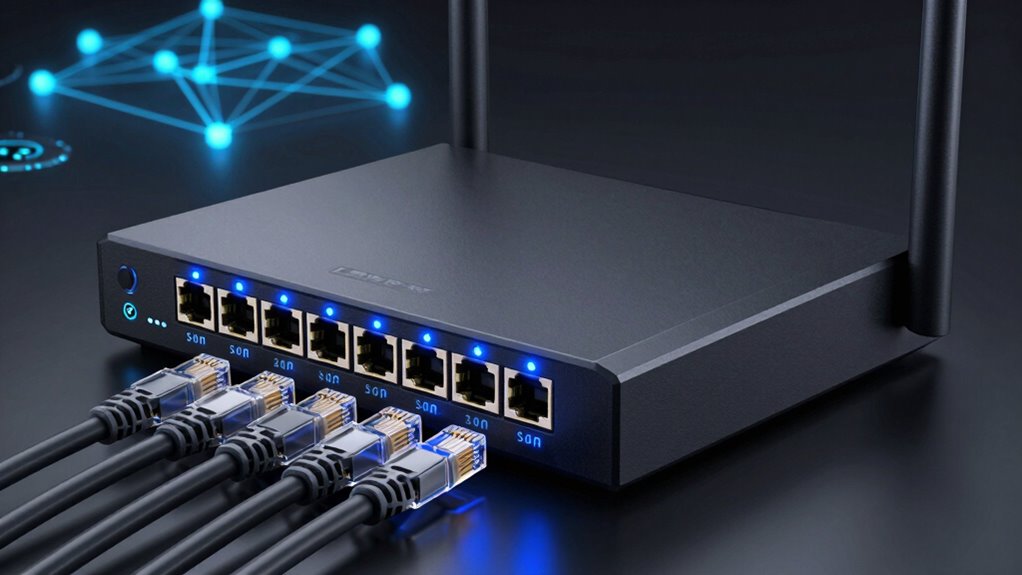

If you are shopping for a router with an SFP port, you probably have a specific reason: a fiber internet line, a long-run link between buildings, or a network that has outgrown copper. The good news is that fiber-capable routers have become genuinely affordable. The challenge is that the two big players here — MikroTik and Ubiquiti — take very different approaches, and picking wrong means either paying for ports you will never use or fighting an operating system you did not bargain for.

Get your wardrobe favorites delivered free with Prime
- Fast, free delivery on millions of items
- Prime Video, Amazon Music and more included
- Member-only deals all year
My top pick is the MikroTik hEX S (2025) E60iUGS, because its 2.5G-capable SFP port makes it the only option in this lineup that will not bottleneck a modern fiber connection. For buyers who want raw routing speed with a familiar, polished interface, the Ubiquiti EdgeRouter 4 is the stronger performer at 3.4 million packets per second. And for anyone whose real goal is fiber aggregation rather than routing, the MikroTik CRS106-1C-5S with its five SFP cages plays a different game entirely.
The main tradeoffs you will be weighing throughout this comparison: routing performance versus configuration complexity, one SFP port versus five, and 1.25 Gbps versus 2.5 Gbps fiber speeds. Let me walk you through who each of these belongs to.
Key Takeaways
- Only one router in this lineup, the MikroTik hEX S (2025) E60iUGS, supports 2.5G SFP speeds — the rest cap at 1.25 Gbps, which matters on fiber plans above 1 Gbps.
- The Ubiquiti EdgeRouter 4 variants win on raw routing throughput (3.4 million packets per second) but lack Wi-Fi and require learning EdgeOS.
- The MikroTik CRS106-1C-5S is the only option with multiple SFP cages (five), making it a fiber aggregation device rather than a pure WAN router.
- All five routers are wired-only — none include built-in Wi-Fi, so every one of them assumes you already have or will add a separate access point.
- MikroTik RouterOS is far more configurable than EdgeOS but demands more technical patience, which should shape your choice as much as any hardware spec.
| MikroTik hEX S (2025) E60iUGS Wired Router |  | Best Overall | Product code: E60iUGS | CPU: EN7562CT, dual-core, 950 MHz | RAM: 512 MB | VIEW ON AMAZON | See Our Full Breakdown |
| Ubiquiti EdgeRouter 4 (ER-4) Gigabit Wired Router |  | Best for Performance | Model: ER-4 | Ports: 4 Gigabit Ethernet + 1 SFP | Routing performance: 3.4 million packets per second | VIEW ON AMAZON | See Our Full Breakdown |
| MikroTik hEX S Gigabit Ethernet Router with SFP Port (RB760iGS) |  | Best Value | Model: RB760iGS | Ethernet ports: 5 x Gigabit | SFP port: 1 x 1.25 Gbps | VIEW ON AMAZON | See Our Full Breakdown |
| Ubiquiti EdgeRouter 4 (Fanless) Wired Router |  | Best for Quiet Installations | Ethernet ports: 3 x 10/100/1000 Mbps | SFP ports: 1 | Packet throughput: 3.4 million packets per second | VIEW ON AMAZON | See Our Full Breakdown |
| MikroTik Cloud Router Switch CRS106-1C-5S with SFP Cages |  | Best for Fiber Aggregation | Model: CRS106-1C-5S | Ports: 1 Gigabit Ethernet/SFP combo port + 5 SFP cages | SFP speed: 1.25 Gbps | VIEW ON AMAZON | See Our Full Breakdown |
| routers with sfp port | CPU | RAM | Ethernet ports | Cooling |
|---|---|---|---|---|
| MikroTik hEX S | EN7562CT, dual-core, 950 MHz | 512 MB | 5 x Gigabit | Passive |
| Ubiquiti EdgeRouter 4 | — | — | — | Active (fan) |
| MikroTik hEX S Gigabit Etherne | Dual-core 880 MHz | 256 MB | 5 x Gigabit | — |
| Ubiquiti EdgeRouter 4 | — | 1 GB | 3 x 10/100/1000 Mbps | Fanless, internal PSU |
| MikroTik Cloud Router Switch C | QCA8511, 400 MHz | — | — | — |
More Details on Our Top Picks
MikroTik hEX S (2025) E60iUGS Wired Router
This is the router I would point most fiber-connected homes and small offices toward in 2026, and the reason comes down to one number: 2.5G. Every other router in this roundup tops out at a 1.25 Gbps SFP port, which is fine for a gigabit line but becomes a ceiling the moment your ISP hands you anything faster. The E60iUGS removes that ceiling while keeping the compact hEX form factor that made this line popular.
The hardware underneath justifies the top slot. A dual-core 950 MHz CPU with 512 MB of RAM is double the memory of the older RB760iGS hEX S, which translates directly into headroom for RouterOS v7 features like containers, queues, and VPN tunnels running simultaneously. Compared with the CRS106’s 400 MHz single core, this unit will not fall over the moment you ask it to do actual routing work alongside fiber WAN.
Practical touches stand out too. USB 3.0 (up from USB 2.0 on the older hEX S), an industrial temperature range of -40 to 70 °C, and flexible power — DC input or 802.3af/at PoE-in — mean it can live in a garage, a cabinet, or a dusty network closet without complaint. The tradeoffs are familiar: no Wi-Fi, so you will need a separate access point, and the PoE-out on Ether5 is passive only, which rules out powering standards-compliant devices like cameras that expect 802.3af.
Pros:- 2.5G-capable SFP port — the only one in this lineup
- Dual-core 950 MHz CPU and 512 MB RAM for serious RouterOS work
- Flexible power: DC input or 802.3af/at PoE-in
- USB 3.0 and wide -40 to 70 °C operating range
Cons:- No built-in Wi-Fi
- Passive PoE-out limited to a single Ethernet port
- RouterOS has a steeper learning curve than consumer firmware
Best for: Homes and small offices with fiber internet at or above gigabit speeds who want a future-proofed wired router.
Not ideal for: Anyone wanting a single-box solution with Wi-Fi, or those intimidated by RouterOS configuration.
- Product code:E60iUGS
- CPU:EN7562CT, dual-core, 950 MHz
- RAM:512 MB
- Ethernet ports:5 x Gigabit
- SFP port:1, supports 2.5G
- PoE:Passive PoE-out on Ether5 (up to 57 V); 802.3af/at PoE-in
- USB:1 x USB 3.0 Type-A
- Cooling:Passive
- Operating temperature:-40°C to 70°C
Our verdict“The most future-ready wired router here, thanks to 2.5G SFP support and genuinely capable hardware.”
Ubiquiti EdgeRouter 4 (ER-4) Gigabit Wired Router
The EdgeRouter 4 remains the benchmark for raw routing muscle in this price class. Its 3.4 million packets per second throughput and 4 Gbps line rate mean it can push full gigabit traffic through complex firewall rule sets without breaking a sweat — something the 400 MHz CRS106 simply cannot match. If your network is busy rather than fast, with many simultaneous flows, VLANs, and inter-VLAN routing, this is the machine built for that job.
With four Gigabit Ethernet ports plus the SFP, it also offers the most copper flexibility among the Ubiquiti options here, letting you dedicate the fiber port to WAN while keeping Ethernet free for LAN segments. Management through UNMS gives it a friendlier face than MikroTik’s RouterOS, which matters if you plan to hand administration off to someone less technical down the road.
The frustrations are minor but real. Rack mounting requires a separately sold rack mount kit, which feels stingy on an otherwise complete package, and like everything in this roundup it is wired-only. Note that the other EdgeRouter 4 listing below is the same platform with three Ethernet ports and a fanless design — this variant trades the fanless quiet and the fourth copper port for the standard configuration. Compared with the MikroTik hEX S units, you give up RouterOS’s deeper configuration options and PoE output in exchange for cleaner software and stronger packet-forwarding performance.
Pros:- 3.4 million packets per second routing performance
- Four Gigabit Ethernet ports plus SFP for flexible WAN/LAN layouts
- Managed via UNMS with an intuitive interface
- Compact, cost-effective form factor
Cons:- Rack mounting requires a separately sold kit
- No built-in Wi-Fi
- SFP port limited to 1.25 Gbps
Best for: Users who prioritize routing throughput and prefer Ubiquiti’s polished EdgeOS/UNMS ecosystem over MikroTik’s flexibility.
Not ideal for: Buyers who need PoE output, 2.5G SFP speeds, or an all-in-one box with wireless.
- Model:ER-4
- Ports:4 Gigabit Ethernet + 1 SFP
- Routing performance:3.4 million packets per second
- Line rate:Up to 4 Gbps
- Rack mountable:Yes (with separately sold EdgeRouter Rack Mount)
- Management:UNMS (Ubiquiti Network Management System)
- Cooling:Active (fan)
Our verdict“The strongest pure router of the group, ideal when packet-forwarding muscle matters more than SFP speed or extra features.”
MikroTik hEX S Gigabit Ethernet Router with SFP Port (RB760iGS)
The original hEX S occupies a smart middle ground in this lineup: it carries most of what makes the 2025 refresh appealing at a friendlier price. You still get five Gigabit Ethernet ports, a 1.25 Gbps SFP port, and a dual-core 880 MHz CPU — a clear step up in capability from the CRS106, and enough muscle for typical home and small-office routing plus a few extras.
What separates it from its newer sibling is restraint: 256 MB instead of 512 MB of RAM, USB 2.0 instead of 3.0, and an SFP port capped at 1.25 Gbps. For a gigabit fiber line, none of that matters day to day. Where it earns its keep is in features the EdgeRouter 4 lacks entirely — PoE output on port 5 (handy for powering an access point or a MikroTik device up the mast), a microSD slot, hardware IPsec encryption up to roughly 470 Mbps, and The Dude server package for monitoring your network from the router itself.
The tradeoff compared with the Ubiquiti options is software: RouterOS L4 is powerful but expects you to know what you are doing. And unlike the E60iUGS, its SFP port will cap you at gigabit fiber speeds permanently. If your internet plan is 1 Gbps or less and you want the most capability per dollar, this model makes the most sense.
Pros:- Five Gigabit Ethernet ports plus SFP in a compact design
- Dual-core 880 MHz CPU with 256 MB RAM
- PoE output on port 5 plus microSD storage
- Hardware IPsec encryption and The Dude server package included
Cons:- SFP port limited to 1.25 Gbps
- No built-in wireless
- Advanced RouterOS configuration may frustrate casual users
Best for: Value-conscious buyers on gigabit-or-slower fiber who want PoE output and advanced features without paying for 2.5G.
Not ideal for: Anyone on multi-gigabit fiber, or users who want a set-and-forget consumer-style interface.
- Model:RB760iGS
- Ethernet ports:5 x Gigabit
- SFP port:1 x 1.25 Gbps
- CPU:Dual-core 880 MHz
- RAM:256 MB
- USB:1 x USB 2.0
- PoE output:PoE out on Ethernet port 5
- IPsec encryption:Hardware accelerated, up to ~470 Mbps
- Operating system:RouterOS L4
Our verdict“The best capability-per-dollar pick, provided your fiber line never needs to exceed a gigabit.”
Ubiquiti EdgeRouter 4 (Fanless) Wired Router
This listing represents the EdgeRouter 4 platform in its fanless configuration: three Gigabit Ethernet ports, one SFP, an internal PSU, and completely silent operation. The headline numbers match its sibling — 3.4 million packets per second and a 4 Gbps line rate — carried by 1 GB of RAM, which is more memory than any MikroTik in this comparison and shows in how calmly it handles large routing tables and heavy rule sets.
Why choose this over the four-port ER-4 variant? Silence and mounting freedom. A fanless design with desk, wall, and rack mounting options means it can sit on a shelf in a quiet office or media room without a whisper, where the fanned version might be audible. You sacrifice one Ethernet port for that quiet, so count your copper needs before committing.
Against the MikroTik hEX S models, the comparison flips: here you get superior raw throughput and a gentler learning curve via EdgeOS, but you lose the SFP-based extras — no 2.5G support, no PoE output, no USB or storage expansion. The EdgeOS learning curve is real but gentler than RouterOS, and for many buyers that alone justifies the choice. Just plan on a separate access point, because there is no wireless here either.
Pros:- Completely fanless, silent operation with internal PSU
- 3.4 million packets per second with 1 GB of RAM
- Desk, wall, and rack mounting options
- Enterprise-level EdgeOS features at an accessible price
Cons:- Only three Ethernet ports, one fewer than the ER-4 variant
- EdgeOS still has a learning curve for non-technical users
- No wireless and no PoE output
Best for: Buyers who want silent, high-throughput routing in an office, lab, or living space where fan noise would be noticed.
Not ideal for: Networks needing more than three copper ports, PoE output, or multi-gigabit SFP speeds.
- Ethernet ports:3 x 10/100/1000 Mbps
- SFP ports:1
- Packet throughput:3.4 million packets per second
- Line rate:4 Gbps
- RAM:1 GB
- Cooling:Fanless, internal PSU
- Mounting:Desk, wall, or rack
- Max power consumption:13 Watts
- Operating system:EdgeOS
Our verdict“The same routing muscle as the ER-4 in a silent, mount-anywhere package — pick it when noise and placement flexibility matter.”
MikroTik Cloud Router Switch CRS106-1C-5S with SFP Cages
The CRS106-1C-5S plays a different sport than everything else here. Where the other four routers give you a single SFP port for your fiber WAN, this unit flips the ratio entirely: five SFP cages plus one Gigabit Ethernet/SFP combo port. If your goal is collecting multiple fiber runs — inter-floor links, building-to-building connections, or aggregating several fiber-fed segments — nothing else in this comparison comes close.
It runs RouterOS with a Level 5 license, which is a higher tier than the hEX S models ship with and unlocks more capable routing configuration. But be clear-eyed about the hardware: a 400 MHz single-core CPU and 128 MB of RAM means this is a switch-first device. Ask it to route heavy traffic with complex rules and it will lag well behind the EdgeRouter 4 or either hEX S. Its strength is moving light-touch traffic across many fiber links, not firewalling a busy network.
The passive PoE input and 24 V US-plug adapter are practical irritations — international buyers will want a different power source, and passive PoE is not compatible with standard 802.3af equipment. Compared with the hEX S (2025), you trade routing muscle and 2.5G capability for sheer fiber port count; whether that trade is right depends entirely on whether you need one fiber link or five.
Pros:- Five SFP cages plus a Gigabit Ethernet/SFP combo port
- RouterOS Level 5 license included
- Compact desktop design with passive PoE input
- Wide -20 to 70 °C operating range
Cons:- 400 MHz single-core CPU limits routing performance
- Only one Gigabit Ethernet/SFP combo port for copper access
- Included power adapter has a US plug
Best for: Users aggregating multiple fiber links — labs, multi-unit buildings, or networks bridging several fiber segments.
Not ideal for: Anyone needing a single fast WAN router, serious routing throughput, or plug-compatible power outside the US.
- Model:CRS106-1C-5S
- Ports:1 Gigabit Ethernet/SFP combo port + 5 SFP cages
- SFP speed:1.25 Gbps
- CPU:QCA8511, 400 MHz
- Memory:128 MB RAM
- Operating system:RouterOS, Level 5 license
- PoE:Passive PoE input
- Power input:11–30 V (24 V, 0.8 A US adapter included)
- Dimensions:114 × 137 × 29 mm
Our verdict“A fiber aggregation specialist, not a general-purpose router — buy it for its five SFP cages, not its CPU.”

How We Picked
Since every router here has an SFP port by definition, I judged them on what separates a good fiber router from a frustrating one. The first criterion was SFP capability itself: an SFP cage rated at 1.25 Gbps and one rated for 2.5 Gbps serve very different networks in 2026, and I weighted that distinction heavily.
The second criterion was routing performance relative to price class. A router with a 400 MHz single-core CPU behaves very differently under load than a dual-core unit with 512 MB of RAM, especially if you plan to run VPN tunnels, queues, or firewall rules.
Third, I evaluated manageability and learning curve. RouterOS and EdgeOS appeal to opposite temperaments, and pretending otherwise would set buyers up for disappointment. Finally, I considered practical details that only matter after purchase: power options, PoE support, mounting flexibility, and how many Ethernet ports you get alongside the SFP connectivity, since most setups still need copper ports for local devices.
| routers with sfp port | CPU | Cooling | Model | Operating system |
|---|---|---|---|---|
| MikroTik hEX S | EN7562CT, dual-core, 950 MHz | Passive | — | — |
| Ubiquiti EdgeRouter 4 | — | Active (fan) | ER-4 | — |
| MikroTik hEX S Gigabit Etherne | Dual-core 880 MHz | — | RB760iGS | RouterOS L4 |
| Ubiquiti EdgeRouter 4 | — | Fanless, internal PSU | — | EdgeOS |
| MikroTik Cloud Router Switch C | QCA8511, 400 MHz | — | CRS106-1C-5S | RouterOS, Level 5 license |
Factors to Consider When Choosing Routers With Sfp Ports
Before committing to any of these five routers, a handful of decisions will narrow the field quickly. Here is what I would work through in order.SFP Speed: 1.25G vs 2.5G
This is the single most consequential spec in this lineup. A 1.25 Gbps SFP port comfortably handles a gigabit fiber connection, but if your ISP offers 2 Gbps or you plan to upgrade within the router’s lifespan, only the MikroTik hEX S (2025) E60iUGS with its 2.5G-capable SFP port will keep up. Buying a 1.25 Gbps router for a multi-gigabit line means paying for internet speed your hardware silently discards.
RouterOS vs EdgeOS
MikroTik’s RouterOS is astonishingly configurable — QoS, tunnels, scripting, containers — but it assumes willingness to learn a dense interface. Ubiquiti’s EdgeOS and UNMS are friendlier and more approachable for someone configuring their first prosumer router. If you enjoy tinkering, RouterOS rewards you; if you want to configure once and forget, lean Ubiquiti. This choice shapes your daily experience more than any port count.
How Many SFP Ports Do You Actually Need?
Most buyers need exactly one — for the fiber WAN. If that describes you, any hEX S or EdgeRouter model works. But if you are linking multiple fiber segments, the CRS106-1C-5S with five SFP cages is the only sensible option here, and its weaker CPU becomes irrelevant because you are switching, not heavily routing, across those links.
Power and PoE Considerations
PoE output lets a router power an access point or outdoor device, reducing clutter — the hEX S models offer this, the Ubiquiti units do not. Check whether the PoE output is passive or standards-based: passive PoE will not power 802.3af-compliant cameras or phones. On the input side, the E60iUGS’s support for 802.3af/at PoE-in gives it the most flexible deployment options of the group.
Planning for Wi-Fi
Every router in this roundup is wired-only. That is standard for this class, since fiber routers are usually paired with dedicated access points for better coverage anyway. Budget for a separate access point if you do not already have one, and consider whether your chosen router’s PoE output can power it — a common and tidy pairing with the hEX S models.
Frequently Asked Questions
What is an SFP port on a router, and why would I want one?
An SFP (Small Form-factor Pluggable) port is a modular socket that accepts a fiber or copper transceiver, letting you choose the exact connection type and distance you need. The main reason to want one is fiber internet: if your ISP delivers service over fiber, an SFP port lets your router accept the fiber directly or via a media converter, often with cleaner speeds and lower latency. Fiber also runs far longer distances than Ethernet without signal degradation, which matters for links between buildings or floors. Finally, an SFP port is future-flexible — swapping a 1G transceiver for a faster one is cheaper than replacing a router, assuming the port itself supports the higher speed.
Is a 1.25 Gbps SFP port enough, or do I need 2.5G?
It depends entirely on your internet plan. A 1.25 Gbps SFP port handles a gigabit connection with room to spare, and for most households that is plenty for years to come. But multi-gigabit fiber plans are spreading quickly, and if yours exceeds 1 Gbps — or you expect to upgrade during the router’s lifespan — a 1.25 Gbps port becomes a permanent bottleneck no configuration can fix. In this lineup, only the MikroTik hEX S (2025) E60iUGS supports 2.5G SFP speeds; every other option caps at 1.25 Gbps. My rule of thumb: match the SFP rating to the fastest plan your ISP offers or plausibly will offer, not the one you have today.
Can these routers provide Wi-Fi, or do I need a separate access point?
None of the five routers in this comparison include built-in Wi-Fi — they are all wired devices. This is deliberate rather than a limitation: routers positioned for fiber WAN and serious routing are typically paired with dedicated access points, which almost always deliver better coverage and performance than the antennas squeezed into an all-in-one box. If you need wireless, plan on adding an access point. Note that the two MikroTik hEX S models can power an access point through their PoE output on port 5, which makes for a tidy two-box setup, whereas the Ubiquiti EdgeRouter models would require the access point to have its own power source.
Which is better for beginners: MikroTik RouterOS or Ubiquiti EdgeOS?
For most beginners, Ubiquiti’s EdgeOS is the gentler introduction. Its web interface is more approachable, the setup wizard covers common scenarios, and UNMS management adds a cleaner overlay for ongoing administration. RouterOS is deeper — it can do nearly anything a small network requires, from complex QoS to container hosting — but its interface is dense and its documentation assumes technical fluency. If you enjoy learning networking as a hobby, RouterOS’s depth becomes an advantage rather than a burden. If you want to configure the router once and rarely think about it again, the EdgeRouter 4 variants will cause far less friction.
Do I need to buy an SFP transceiver separately?
Usually, yes. An SFP port is just an empty cage — the transceiver module that actually converts electrical signals to fiber (or copper) is almost always sold separately, along with the fiber cable itself. You will need to match the transceiver to your situation: single-mode versus multimode fiber, the correct wavelength and reach, and a speed rating your router’s port supports. One practical tip from this lineup’s perspective: if you buy the 2.5G-capable hEX S (2025), make sure your transceiver is also rated for 2.5G, or you will pay for capability your module cannot deliver. Check what your ISP requires as well, since some providers specify approved modules for direct fiber handoff.
Conclusion
After comparing all five, the right choice comes down to what your fiber connection is actually doing. For most homes and small offices on modern fiber, the MikroTik hEX S (2025) E60iUGS is my top recommendation — its 2.5G SFP port, 512 MB of RAM, and flexible power options make it the only pick here that will not need replacing as internet speeds climb.
If you are a performance-focused user or small business running a busy network with VLANs and heavy traffic, the Ubiquiti EdgeRouter 4 is the stronger router — choose the four-port standard variant for maximum copper flexibility, or the fanless version when silence and mounting options matter more than an extra port.
Value hunters on gigabit-or-slower fiber should look at the original hEX S (RB760iGS): it keeps the five Ethernet ports, SFP connectivity, and PoE output while costing less, and its gigabit SFP limitation only bites if your plan grows. Finally, the CRS106-1C-5S belongs to a specific buyer — someone aggregating multiple fiber links rather than routing one. Its five SFP cages are unmatched here, but its weak CPU means everyone else should pass. Whatever you pick, remember that all five are wired-only, so budget a separate access point if you need Wi-Fi.
Columbus Day / Indigenous Peoples' Day Picks
long weekend sales
As an affiliate, we earn on qualifying purchases.