For buyers searching for intelligent metered rack PDUs, my best overall pick is the CyberPower PDU24001, which adds automatic transfer switching alongside metering for equipment that needs power continuity. The Tecmojo 20A 20-Outlet PDU stands out for RS485 Modbus RTU monitoring, while the APC NetShelter AP8641 suits teams that need outlet-level metering and remote switching. The main tradeoffs are monitoring detail versus outlet count, 120V versus 208–240V compatibility, and basic metering versus networked control. Rack depth, plug type, circuit capacity, and mounting style can rule out a model before its feature list matters. Read on for my full comparison and recommendations by rack setup.

Get your wardrobe favorites delivered free with Prime
- Fast, free delivery on millions of items
- Prime Video, Amazon Music and more included
- Member-only deals all year
Key Takeaways
- Monitoring capabilities vary sharply: the Tecmojo offers RS485 Modbus RTU, while the APC AP8641 adds metering by outlet and switched control; many other listed models are primarily described as metered PDUs.
- High outlet counts favor vertical models: the Tripp Lite PDUMV30HV lists 30 outlets and the PDUMV20-72 lists 36, while compact 1U options such as the ZHANGONG and BTU models have seven outlets each.
- Voltage and plug compatibility narrow the field: several APC and Tripp Lite models target 200–240V or 208V systems, while the BTU model is listed for 125V/15A and the PDUMV20-72 for 120V.
- Power continuity is a distinct priority: the CyberPower PDU24001’s ATS feature separates it from standard metered distribution units, but buyers still need to confirm input and transfer requirements for their installation.
- Dual-circuit distribution is a specific use case: the Tripp Lite PDUMV40 is listed as a 120V dual-circuit unit, so its value depends on having a compatible rack power design rather than simply needing more outlets.
| CyberPower PDU24001 Metered ATS Power Distribution Unit |  | Best for Redundant Power on a Compact Rack | Input voltage: 100–120 V | Amperage: 15 A, derated to 12 A | Maximum power: 1800 W | VIEW ON AMAZON | See Our Full Breakdown |
| Tecmojo 20A 20-Outlet 0U Metered PDU with RS485 Modbus RTU |  | Best for Modbus-Connected High-Density Racks | Outlets: 20 | Outlet types: 5-15R/5-20R | Communication: RS485 Modbus RTU | VIEW ON AMAZON | See Our Full Breakdown |
| Tripp Lite PDUMV30HV Metered 30A Vertical Rack PDU, 30 Outlets |  | Best for High-Voltage Server Density | Voltage: 208/240V | Maximum capacity: 30A, agency derated to 24A | Outlets: 30 total: 24 C13 and 6 C19 | VIEW ON AMAZON | See Our Full Breakdown |
| APC NetShelter Metered Rack PDU AP7811B, 30A, 208–230V, 16 Outlets |  | Best for a Straightforward Horizontal 2U Installation | Voltage: 208–230 V AC | Maximum current: 30 A | Power capacity: 5 kW | VIEW ON AMAZON | See Our Full Breakdown |
| TRENDnet TPI-06 6-Outlet Managed Rackmount PDU | 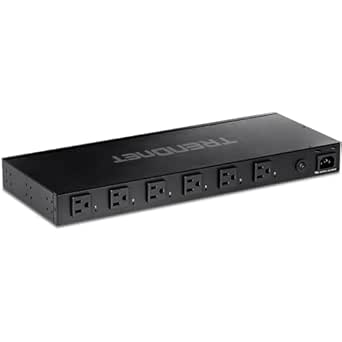 | Best for Remote Per-Outlet Management | Managed outlets: 6 × NEMA 5-15R | Bypass outlet: 1 × NEMA 5-15R | Network port: 1 × Gigabit | VIEW ON AMAZON | See Our Full Breakdown |
| Faryuan 2U Front/Rear Metered Rack PDU, 24 Outlets, 30A, 208V/240V |  | Best for Split-Load Visibility | Form factor: 2U | Outlets: 24 total: 4 front C19 auto-locking and 20 rear C13 | Voltage: 208V/240V | VIEW ON AMAZON | See Our Full Breakdown |
| APC NetShelter AP8841 Metered Rack PDU, 30A, 200–240V, 42 Outlets |  | Best for High-Density Outlet Count | Model: AP8841 | Mounting: 0U vertical rackmount | Input voltage and current: 200–240V, up to 30A | VIEW ON AMAZON | See Our Full Breakdown |
| StarTech 12-Outlet 1U Metered Rackmount PDU with Surge Protection |  | Best for 120V Measurement and Surge Protection | Mounting: 1U horizontal; EIA-310 19-inch racks, at least 4 in deep | Outlets: 12 NEMA 5-15R: 10 rear and 2 front | Voltage and current: 125V maximum; 15A maximum | VIEW ON AMAZON | See Our Full Breakdown |
| Tripp Lite PDUMV20-72 Metered Vertical PDU, 20A, 36 Outlets, 120V, Black |  | Best for 120V Vertical Outlet Density | Model: PDUMV20-72 | Voltage and current: 120V; 20A maximum, 16A continuous | Outlets: 36 NEMA 5-15/20R | VIEW ON AMAZON | See Our Full Breakdown |
| ZHANGONG 1U Rackmount Metered PDU Power Strip, 7 Outlets |  | Best Compact Entry-Level Metered PDU | Mounting: 1U, 19-inch rackmount with 360-degree rotating brackets | Outlets: 7 | Voltage: 125V | VIEW ON AMAZON | See Our Full Breakdown |
| BTU 1U Metered Rack-Mount PDU, 7 Outlets, 125V/15A |  | Best for Compact, Local Monitoring | Outlets: 7 | Voltage: 125V | Maximum current: 15A | VIEW ON AMAZON | See Our Full Breakdown |
| 30A Metered Rack PDU with 8 Outlets (6 C13, 2 C19), L6-30P Plug, 120–240V, 7.2kW, Aluminum Housing, 6 ft Cord |  | Best for Mixed C13/C19 Equipment | Outlets: 8 (6 C13, 2 C19) | Input voltage: 120–240V | Maximum current: 30A | VIEW ON AMAZON | See Our Full Breakdown |
| APC NetShelter AP8641 Metered-by-Outlet Switched Rack PDU, 30A, 208V |  | Best for Outlet-Level Control | Model: AP8641 | Input voltage: 200–240V | Maximum current: 30A | VIEW ON AMAZON | See Our Full Breakdown |
| Tripp Lite PDUMV40 Metered Dual-Circuit PDU, 32 Outlets, 120V, 0U Vertical Rack Mount |  | Best for High Outlet Count on Dual 120V Circuits | Model: PDUMV40 | Outlets: 32 | Circuits: 2 independent 20A circuits | VIEW ON AMAZON | See Our Full Breakdown |
| rack pdus intelligent metered | Outlets | Mounting | Maximum current |
|---|---|---|---|
| CyberPower PDU24001 Metered AT | 10 rear NEMA 5-15R | — | — |
| Tecmojo 20A 20-Outlet 0U Meter | 20 | 0U vertical rack mount | — |
| Tripp Lite PDUMV30HV Metered 3 | 30 total: 24 C13 and 6 C19 | 0U vertical rack mount | — |
| APC NetShelter Metered Rack PD | 16 total: 12 C13 and 4 C19 | 2U horizontal rack mount | 30 A |
| TRENDnet TPI-06 6-Outlet Manag | — | — | 15 A |
| Faryuan 2U Front/Rear Metered | 24 total: 4 front C19 auto-locking and 20 rear C13 | — | 24A |
| APC NetShelter AP8841 Metered | 42 total: 36 C13 and 6 C19 | 0U vertical rackmount | — |
| StarTech 12-Outlet 1U Metered | 12 NEMA 5-15R: 10 rear and 2 front | 1U horizontal; EIA-310 19-inch racks, at least 4 in deep | — |
| Tripp Lite PDUMV20-72 Metered | 36 NEMA 5-15/20R | — | — |
| ZHANGONG 1U Rackmount Metered | 7 | 1U, 19-inch rackmount with 360-degree rotating brackets | 15A |
| BTU 1U Metered Rack-Mount PDU | 7 | — | 15A |
| 30A Metered Rack PDU with 8 Ou | 8 (6 C13, 2 C19) | — | 30A |
| APC NetShelter AP8641 Metered- | 24 (21 C13, 3 C19) | 0U vertical rackmount | 30A |
| Tripp Lite PDUMV40 Metered Dua | 32 | 0U vertical rack mount | — |
More Details on Our Top Picks
CyberPower PDU24001 Metered ATS Power Distribution Unit
Automatic source switching is the reason I rank this ahead of a basic metered strip for single-corded equipment: the PDU24001 can move its load to a second AC source if the primary fails or becomes unstable. Its LCD reports voltage, amperage, power, and IP address, giving operators useful local status without relying on a separate display. Compared with the Tecmojo 20A 20-Outlet PDU, this CyberPower trades outlet count and Modbus integration for redundant input support in a 1U chassis. That makes it a better fit for a small rack where continuity matters more than monitoring many devices. The limits are meaningful: its 15A circuit is derated to 12A, and it is not compatible with simulated sine wave sources. Buyers seeking per-outlet control should look at the TRENDnet TPI-06 instead.
Pros:- Automatically transfers connected equipment between two AC inputs when the primary source fails or becomes unstable
- LCD shows amperage, voltage, power, and IP address
- Ten rear outlets fit within a 1U rackmount design
- Upgradeable firmware and a 3-year limited warranty
Cons:- 15A rating is derated to 12A
- Not compatible with simulated sine wave AC power sources
- Does not offer the per-outlet control provided by the TRENDnet TPI-06
Best for: Small server-room operators protecting single-corded network or compute equipment with two suitable AC sources and needing local metering in 1U.
Not ideal for: Buyers needing per-outlet switching, high outlet density, or operation from simulated sine wave power sources; the usable current is also limited to 12A.
- Input voltage:100–120 V
- Amperage:15 A, derated to 12 A
- Maximum power:1800 W
- Output wattage:1440 W
- Outlets:10 rear NEMA 5-15R
- Inputs:Two NEMA 5-15P plugs
- Form factor:1U rackmount
- Cord length:10 ft
- Warranty:3-year limited
Our verdict“Choose the CyberPower when dual-source failover for a compact, single-corded load matters more than outlet-level control or higher usable current.”
Tecmojo 20A 20-Outlet 0U Metered PDU with RS485 Modbus RTU
The Tecmojo earns its place for buyers who want basic live load readings plus a path into an RS485 Modbus RTU monitoring setup. Its built-in LED shows input voltage and total current, while programmable voltage and current alarms can flag conditions without requiring an outlet-by-outlet management system. Compared with the Tripp Lite PDUMV30HV, it offers 20 outlets and Modbus integration rather than 30 high-voltage C13/C19 outlets and two separately metered banks; the right choice depends on the rack’s power standard and monitoring needs. Vertical 0U mounting preserves horizontal rack space, a practical advantage when server positions are scarce. The supplied information does not establish per-outlet metering, so buyers needing that granularity should look elsewhere. It also lacks water resistance, and audible alerts are specified for overcurrent conditions rather than every alarm type.
Pros:- 20 outlets with 5-15R/5-20R outlet types
- RS485 Modbus RTU support for monitoring integration
- Built-in LED displays real-time input voltage and total current
- Vertical 0U mounting preserves horizontal rack space
Cons:- Water resistance is not specified
- Audible alerts are specified for overcurrent conditions, not all alarm conditions
- Product data does not specify per-outlet metering
Best for: IT teams with a 20A-compatible rack that already uses RS485 Modbus RTU and want a vertical PDU with local readings and programmable alarms.
Not ideal for: Buyers who need per-outlet energy data, water-resistant equipment, or a PDU designed for 208/240V C13/C19 server loads like the Tripp Lite PDUMV30HV.
- Outlets:20
- Outlet types:5-15R/5-20R
- Communication:RS485 Modbus RTU
- Mounting:0U vertical rack mount
- Weight:5.5 lb
- Length:48.4 in
- Water resistance:Not water resistant
- Warranty:3 years
Our verdict“Pick the Tecmojo for a Modbus-ready rack that needs 20 outlets and whole-PDU readings without using horizontal rack units.”
Tripp Lite PDUMV30HV Metered 30A Vertical Rack PDU, 30 Outlets
When the rack is built around 208/240V equipment, the PDUMV30HV makes a stronger case than the CyberPower PDU24001: it has 30 C13 and C19 outlets and two digital meters for separate load banks. Those meters help operators see how current is divided between circuits, while separate breakers provide a clearer boundary for each bank. Its 0U vertical format keeps server mounting positions free, unlike the APC AP7811B, which occupies 2U horizontally and has 16 outlets. The tradeoff is that its headline 30A capacity is agency derated to 24A, and it needs a compatible 208/240V L6-30P connection. This is a rack-distribution tool, not a per-outlet monitoring or switching system; buyers who need individual outlet control should compare it with the TRENDnet TPI-06, while recognizing that model serves a different voltage and outlet profile.
Pros:- 30 total outlets, including 24 C13 and 6 C19 connectors
- Two digital meters monitor separately breakered load banks
- 0U vertical mounting leaves horizontal rack space available
- Includes rack-mount hardware and plug-retention brackets
Cons:- Agency derating limits capacity to 24A
- Requires a compatible 208/240V L6-30P connection
- Does not provide per-outlet monitoring or control
Best for: Data-center teams with a 208/240V L6-30P supply who need many C13/C19 connections and separate metering for two load banks.
Not ideal for: Buyers with 120V-only infrastructure, loads requiring more than 24A usable capacity, or a need for per-outlet metering and remote switching.
- Voltage:208/240V
- Maximum capacity:30A, agency derated to 24A
- Outlets:30 total: 24 C13 and 6 C19
- Load banks:2 separately metered and breakered 15A banks
- Input plug:NEMA L6-30P
- Cord length:10 ft
- Mounting:0U vertical rack mount
- Height:63.75 in
- Warranty:2-year limited
Our verdict“Choose this Tripp Lite for dense 208/240V server racks that benefit from separate load-bank readings and can work within its 24A derated capacity.”
APC NetShelter Metered Rack PDU AP7811B, 30A, 208–230V, 16 Outlets
The AP7811B suits buyers who want metered 208–230V distribution in a horizontal rack format, rather than using a vertical strip that runs along the cabinet. Its 16 outlets mix 12 C13 and 4 C19 connectors, which accommodates a range of server and higher-capacity device plugs, and its listed capacity is 5kW. Compared with the Tripp Lite PDUMV30HV, the APC uses 2U of horizontal rack space and provides fewer outlets, but it may fit installations planned around a horizontal PDU. The listing identifies it as metered without specifying per-outlet readings or remote control, so I would not choose it for fine-grained outlet management. Its L6-30P input also rules it out for racks lacking a compatible 208–230V supply. The product data gives no meter detail beyond metered distribution, so verify the monitoring behavior needed for your setup before buying.
Pros:- 16 outlets include 12 C13 and 4 C19 connectors
- Supports 208–230V AC and up to 30A
- Listed power capacity is 5kW
- 2U horizontal rackmount design suits layouts planned for front-facing distribution
Cons:- Requires a compatible 208–230V NEMA L6-30P connection
- Uses 2U of horizontal rack space
- Product data does not specify per-outlet metering or remote control
Best for: Rack planners with a compatible 208–230V L6-30P feed who specifically need a 2U horizontal PDU with both C13 and C19 outlets.
Not ideal for: Operators short on horizontal rack units, needing 0U vertical distribution, or requiring explicitly specified per-outlet metering and remote switching.
- Voltage:208–230 V AC
- Maximum current:30 A
- Power capacity:5 kW
- Input plug:NEMA L6-30P
- Outlets:16 total: 12 C13 and 4 C19
- Mounting:2U horizontal rack mount
- Weight:7.4 lb
- Warranty:2-year limited
Our verdict“Select the AP7811B when a horizontal 2U layout and mixed C13/C19 outlets suit your rack better than the Tripp Lite’s 0U, 30-outlet format.”
TRENDnet TPI-06 6-Outlet Managed Rackmount PDU
The TPI-06 is the clearest choice here when the job calls for remote outlet control rather than just a total-load meter. It provides six individually managed outlets, per-outlet energy monitoring, scheduling, and a separate bypass outlet. That is a different use case from the Tecmojo’s 20-outlet Modbus design, which focuses on whole-PDU voltage and current readings, and from the CyberPower PDU24001, which prioritizes automatic transfer between two sources. A Gigabit network port and fanless construction suit a quiet, connected 1U rack, while overload and surge protection add a layer for connected equipment. The compromise is limited outlet count and a listed wattage of 480W, so it is not the pick for a dense server rack. Cloud management through TRENDnet Hive may also involve an additional fee; factor that into a plan built around cloud access.
Pros:- Six individually controllable outlets support remote management and scheduling
- Per-outlet energy monitoring provides more detail than whole-PDU readings
- Includes a separate bypass outlet, overload protection, and 2160 J surge protection
- Fanless 1U design avoids operating noise
Cons:- Only six managed outlets, plus one bypass outlet
- Listed wattage is 480W
- TRENDnet Hive cloud management may require an additional fee
Best for: Small-office and edge-rack administrators who need scheduled remote control and per-outlet energy monitoring for a handful of 120V devices.
Not ideal for: High-density server operators needing many outlets, 208/240V C13/C19 distribution, or a solution without possible ongoing cloud-service costs.
- Managed outlets:6 × NEMA 5-15R
- Bypass outlet:1 × NEMA 5-15R
- Network port:1 × Gigabit
- Maximum current:15 A
- Maximum voltage:120 V AC
- Wattage:480 W
- Surge protection:2160 J
- Rack mount:1U, 19-inch
- Certification:UL 62368-1
Our verdict“Choose the TPI-06 for a small 120V rack where per-outlet monitoring and remote scheduling matter more than outlet count or high-voltage distribution.”
Faryuan 2U Front/Rear Metered Rack PDU, 24 Outlets, 30A, 208V/240V
The Faryuan earns this role through its two LCD ammeters and an outlet layout that separates four front-facing C19 connections from 20 rear-facing C13 outlets. That split can make load checks and cable routing easier in GPU or ASIC racks than with the APC NetShelter AP8841, which offers more outlets but uses a 0U vertical format and does not list separate load-bank displays. Auto-locking C19 outlets help keep standard C20 power cords seated, while dual UL 489 breakers provide independent protection for the two load banks. The tradeoff is its 2U footprint and a stated 24A maximum current, which may constrain sustained demand. Buyers also need a compatible L6-30P supply; this is a specialized high-density option, not a general-purpose 120V strip.
Pros:- Two LCD ammeters show separate load readings.
- Front C19 and rear C13 layout supports distinct cable paths.
- Auto-locking C19 outlets help retain C20 power cords.
- Dual UL 489 breakers provide independent load-bank protection.
Cons:- Uses 2U of rack space rather than a 0U vertical position.
- The stated 24A maximum current may limit continuous load capacity.
- Requires a compatible 208V/240V L6-30P power connection.
Best for: GPU cluster, AI server, or ASIC operators who want separate visual load readings and a mix of C13 and locking C19 outlets.
Not ideal for: Teams seeking maximum outlet count per rack space or those without a 208V/240V L6-30P connection; its 2U size and 24A stated limit may not suit their setup.
- Form factor:2U
- Outlets:24 total: 4 front C19 auto-locking and 20 rear C13
- Voltage:208V/240V
- Maximum current:24A
- Circuit breakers:Two UL 489 listed 20A breakers
- Monitoring:Two LCD ammeters
- Input and cord:15 ft, #10 AWG, NEMA L6-30P
- Dimensions and weight:19 in L × 6 in W; 4.65 kg
Our verdict“Choose the Faryuan when separate load readings and a front/rear C13-C19 layout matter more than saving rack units or maximizing total outlets.”
APC NetShelter AP8841 Metered Rack PDU, 30A, 200–240V, 42 Outlets
The AP8841 is the clearest pick here for a rack that needs many 200–240V connections without using horizontal rack units. Its 0U vertical mounting leaves the front or rear 1U spaces free, and the combination of 36 C13 plus six C19 outlets accommodates a broader device mix than the Faryuan 2U Front/Rear PDU. The listed 30A input and 5.0 kW capacity also give it a higher stated ceiling than Faryuan’s 24A maximum. Its metering suits operators who want a visible account of rack power, but the supplied data does not specify separate load-bank displays or remote monitoring. The main constraint is electrical compatibility: it needs a 200–240V, 30A circuit with an L6-30P receptacle, so it is not a plug-in choice for ordinary 120V racks.
Pros:- 42 outlets combine 36 C13 and six C19 connections.
- 0U vertical mounting preserves horizontal rack space.
- 30A input and listed 5.0 kW capacity suit higher-demand racks.
- Metal enclosure and 9.8-foot cord support rack installation.
Cons:- Requires a 200–240V, 30A circuit with an L6-30P receptacle.
- Metering details provided do not specify per-outlet or remote monitoring.
- Its vertical format needs suitable rack-side mounting space.
Best for: Data-center teams with a 200–240V, 30A L6-30P feed that need a high outlet count while preserving horizontal rack space.
Not ideal for: Small offices or 120V installations without an L6-30P supply, and buyers who need specified remote or per-outlet monitoring.
- Model:AP8841
- Mounting:0U vertical rackmount
- Input voltage and current:200–240V, up to 30A
- Power capacity:5.0 kW
- Outlets:42 total: 36 C13 and 6 C19
- Input plug:NEMA L6-30P
- Cord length:9.8 ft
- Weight and enclosure:6.84 kg; metal
Our verdict“Pick the AP8841 for a compatible 200–240V rack where outlet density and saved rack units outweigh the need for detailed monitoring features.”
StarTech 12-Outlet 1U Metered Rackmount PDU with Surge Protection
Among these five, the StarTech is the most useful fit for a 120V rack that needs more than a basic current readout: its display reports voltage, current, wattage, and power factor. That gives a small server room more context for checking load than the Tripp Lite PDUMV20-72, whose digital meter displays total current only. StarTech also adds MOV surge protection with an LED status indicator and a resettable 15A breaker in a steel 1U chassis. Its limits are just as clear: 12 NEMA 5-15R outlets and a 15A maximum make it a modest-load option, not a substitute for the 208–240V high-density APC AP8841. The 8-foot NEMA 5-15P cord and minimum rack depth of four inches also shape where it can be installed.
Pros:- Display reports voltage, current, wattage, and power factor.
- MOV surge protection includes an LED status indicator.
- Resettable 15A breaker and steel construction suit rack use.
- Twelve outlets fit a horizontal 1U rack position.
Cons:- Limited to 15A and 125V maximum.
- NEMA 5-15R outlets do not provide C13 or C19 connections.
- Requires a 19-inch rack with at least four inches of depth.
Best for: Small server-room and network-rack operators on 125V circuits who want visible voltage, current, wattage, and power-factor readings plus surge protection.
Not ideal for: High-density compute racks or installations requiring 208–240V, C13/C19 outlets, or loads beyond a 15A circuit.
- Mounting:1U horizontal; EIA-310 19-inch racks, at least 4 in deep
- Outlets:12 NEMA 5-15R: 10 rear and 2 front
- Voltage and current:125V maximum; 15A maximum
- Display readings:Voltage, current, wattage, and power factor
- Surge protection:MOV design with LED status indicator
- Circuit protection:Resettable 15A circuit breaker
- Power cord:8 ft, NEMA 5-15P
- Dimensions and weight:3.8 in deep × 19 in wide; 4.4 lb
Our verdict“Choose the StarTech for a compact 120V rack where richer local readings and surge protection matter more than high-current capacity.”
Tripp Lite PDUMV20-72 Metered Vertical PDU, 20A, 36 Outlets, 120V, Black
The PDUMV20-72 makes sense when a rack needs 36 outlets across a 120V installation and horizontal rack space is already at a premium. Its 72-inch 0U form keeps all outlets out of the 1U positions, while the digital meter shows total output current. Compared with the StarTech 12-Outlet 1U Metered PDU, it supplies three times as many outlets and a longer cord, but StarTech provides more kinds of electrical readings and surge protection. The Tripp Lite’s headline 20A rating also needs context: agency de-rating sets continuous current at 16A. It includes a breaker, mounting hardware, and a 5-20P adapter, though the L5-20P input and tall vertical body still require a suitable supply and mounting location.
Pros:- Offers 36 outlets in a 0U vertical format.
- Digital meter displays total output current.
- Includes a 15-foot cord, 5-20P adapter, and mounting hardware.
- Circuit breaker and covered lighted power switch are included.
Cons:- Continuous current is limited to 16A despite the 20A maximum rating.
- Meter displays total current rather than voltage, wattage, or power factor.
- The 72-inch body needs a compatible rack or mounting surface.
Best for: Operators of 120V racks who need many NEMA 5-15/20R outlets, current-only metering, and a 0U installation.
Not ideal for: Buyers needing wattage or power-factor readings, surge protection, or a continuous load above 16A.
- Model:PDUMV20-72
- Voltage and current:120V; 20A maximum, 16A continuous
- Outlets:36 NEMA 5-15/20R
- Mounting and height:0U vertical rack-mount; 72 in
- Input plug:NEMA L5-20P
- Cord and adapter:15 ft cord; 5-20P adapter
- Meter:Digital display of total output current
- Weight:6.8 lb
Our verdict“Choose this Tripp Lite when 120V outlet density and saved rack units take priority over broader electrical readings or a higher continuous-current limit.”
ZHANGONG 1U Rackmount Metered PDU Power Strip, 7 Outlets
The ZHANGONG is the compact choice for a small network cabinet where basic live voltage and current readings matter more than outlet count or advanced monitoring. Its seven outlets, 1U format, overload protection, and rotating brackets provide a straightforward way to place a metered strip in a standard 19-inch rack. Compared with the StarTech 12-Outlet 1U Metered PDU, ZHANGONG offers fewer connections and lists only voltage and current on its display; StarTech adds wattage, power factor, and surge protection. The rotating brackets are its distinctive advantage for flexible mounting, but the 15A, 125V, 1875W limits keep it in light-duty territory. Buyers should also confirm that seven outlets are enough before committing rack space to this unit.
Pros:- Digital display provides real-time voltage and current readings.
- Rotating brackets allow flexible mounting orientation.
- Metal housing and overload protection support rack installation.
- 1U size fits standard 19-inch server racks.
Cons:- Seven outlets offer less capacity than the StarTech or vertical 36-outlet options.
- Display specifications list voltage and current only.
- Limited to 15A, 125V, and 1875W.
Best for: Small network-cabinet owners who need a simple 1U PDU with local voltage and current readings and flexible bracket positioning.
Not ideal for: Server racks with many devices, loads above 15A, or operators who need wattage, power-factor, or surge-protection features.
- Mounting:1U, 19-inch rackmount with 360-degree rotating brackets
- Outlets:7
- Voltage:125V
- Maximum current:15A
- Power capacity:1875W
- Display readings:Voltage and current
- Power cord:6.5 ft; Type A plug
- Housing:Metal
Our verdict“Pick the ZHANGONG for a small 19-inch cabinet that needs basic metering and flexible mounting, but choose a higher-outlet model for a growing rack.”
BTU 1U Metered Rack-Mount PDU, 7 Outlets, 125V/15A
For a small rack or workstation, this BTU keeps monitoring simple: its OLED screen shows voltage and amperage at the unit, so I can check the electrical load without needing a network interface. Seven widely spaced outlets make it easier to fit larger adapters than on a tightly packed strip, while the 1U format suits a standard 19-inch rack. Compared with the StarTech 12-Outlet 1U Metered Rackmount PDU, it gives up outlet capacity but adds the stated voltage-and-amperage display and surge protection. That makes it a better fit when local visibility matters more than serving many devices. Its main limits are the 15A, 125V capacity and lack of described remote monitoring or outlet-level control; this is a basic metered PDU, not a managed power platform.
Pros:- OLED display provides real-time voltage and amperage readings.
- Seven widely spaced outlets accommodate larger plugs.
- Can be mounted horizontally or vertically.
- Steel casing, surge protection, and a circuit breaker are included.
Cons:- 15A and 125V limits its use with higher-capacity rack equipment.
- No remote monitoring or outlet-level switching is specified.
Best for: Owners of small 19-inch racks who need a local voltage-and-current readout and room for bulky plugs on a 15A circuit.
Not ideal for: Data-center operators who need 30A power, remote monitoring, or per-outlet switching.
- Outlets:7
- Voltage:125V
- Maximum current:15A
- Rack format:19-inch, 1U
- Display:OLED; voltage and amperage
- Measurement tolerance:Less than 1%
- Cord length:6 ft
- Protection:Surge protection and circuit breaker
Our verdict“Choose this BTU for a compact rack where clear local load readings and widely spaced outlets matter more than high current or network management.”
30A Metered Rack PDU with 8 Outlets (6 C13, 2 C19), L6-30P Plug, 120–240V, 7.2kW, Aluminum Housing, 6 ft Cord
This PDU suits a rack that needs 30A input and both C13 and C19 outlets without a long outlet bank: six C13 receptacles handle common server connections, while two C19s accommodate compatible higher-capacity devices. Its stated 120–240V input range and 7.2kW maximum give it a different job from the BTU 1U Metered Rack-Mount PDU, which is limited to 15A at 125V and is aimed at smaller setups. The aluminum housing and air circuit breaker add practical protection, but the product details do not specify the metering display’s measurements, accuracy, or remote features. I would verify those details if load visibility is central to the purchase. The L6-30P plug is another real constraint: it needs a matching power source or compatible UPS, so it is not a drop-in replacement for a standard outlet strip.
Pros:- Supports up to 30A and a stated maximum of 7.2kW.
- Combines six C13 outlets with two C19 outlets.
- 120–240V input range supports compatible rack power configurations.
- Aluminum housing and air circuit breaker are specified.
Cons:- L6-30P plug requires a compatible outlet or UPS.
- Only eight outlets, fewer than the APC AP8641 or Tripp Lite PDUMV40.
- Metering details beyond the product’s metered designation are not specified.
Best for: Rack owners with a compatible L6-30P supply who need 30A distribution across a mix of C13 and C19 equipment.
Not ideal for: Buyers using standard household outlets, or anyone requiring confirmed remote monitoring or outlet-level switching.
- Outlets:8 (6 C13, 2 C19)
- Input voltage:120–240V
- Maximum current:30A
- Maximum power:7.2kW
- Input plug:L6-30P
- Cord length:6 ft
- Housing:Aluminum alloy
- Overload protection:Air circuit breaker
Our verdict“Pick this model when your rack has an L6-30P supply and needs 30A service with both C13 and C19 connections.”
APC NetShelter AP8641 Metered-by-Outlet Switched Rack PDU, 30A, 208V
The AP8641 is the clearest choice here when monitoring and switching individual outlets matter more than a simple circuit readout. Its 24 receptacles—21 C13 and three C19—serve a larger mix of rack equipment than the eight-outlet gelongtu 30A PDU, while its 0U vertical mounting keeps horizontal rack space available for other gear. Outlet switching can help operators manage connected devices individually, but this model requires a 30A, 200–240V supply with an NEMA L6-30P connection; it is not suited to a standard 120V rack. The listed 5.0kW capacity is also lower than the gelongtu unit’s stated 7.2kW, so I would compare the power budget as well as outlet count before choosing. This is the more control-oriented option, not automatically the higher-capacity one.
Pros:- Meters and switches power by outlet.
- Offers 24 outlets: 21 C13 and three C19.
- 0U vertical format preserves horizontal rack space.
- Designed for 30A operation at 200–240V.
Cons:- Requires a compatible 30A, 200–240V input.
- Listed power capacity is 5.0kW, below the gelongtu unit’s stated 7.2kW.
- Outlet mix is weighted toward C13 connections, with only three C19 outlets.
Best for: IT teams with a compatible 30A, 200–240V rack supply that need per-outlet metering and switching across many C13/C19 devices.
Not ideal for: Small offices or racks on 120V circuits, and buyers who need a stated capacity above 5.0kW.
- Model:AP8641
- Input voltage:200–240V
- Maximum current:30A
- Power capacity:5.0kW
- Input plug:NEMA L6-30P
- Outlets:24 (21 C13, 3 C19)
- Mounting:0U vertical rackmount
- Weight:8.23 kg
Our verdict“Choose the AP8641 if per-outlet metering and switching are priorities and your rack already has compatible 30A, 200–240V power.”
Tripp Lite PDUMV40 Metered Dual-Circuit PDU, 32 Outlets, 120V, 0U Vertical Rack Mount
For a 120V rack with many devices, the PDUMV40’s 32 outlets across two independent 20A circuits are its defining advantage. Separate current displays let me track each circuit’s load rather than relying on a single combined reading, and color-coded components make it easier to keep circuit assignments legible as cabling grows. Unlike the APC NetShelter AP8641, this Tripp Lite does not offer per-outlet switching; its switchless design instead avoids an exposed switch that could shut equipment down accidentally. It is also a different electrical fit from the APC’s 200–240V, 30A configuration. The tradeoff is that all connected gear and the supply must suit its 120V NEMA 5-15/20R outlets, and the product details do not describe remote monitoring or individual outlet measurements. Buyers needing those controls should look elsewhere.
Pros:- 32 outlets are divided across two independent 20A circuits.
- Separate displays show current for each circuit.
- Color-coded components support clearer circuit and cable organization.
- Switchless design reduces the chance of accidental shutdowns.
Cons:- Does not provide outlet-level switching.
- Limited to compatible 120V equipment and rack power.
- Circuit-level displays do not provide the per-outlet control offered by the APC AP8641.
Best for: Operators of 120V racks who need many receptacles, two independently monitored circuits, and a switchless design.
Not ideal for: Teams that need outlet-level switching, remote monitoring, or a 200–240V high-capacity PDU.
- Model:PDUMV40
- Outlets:32
- Circuits:2 independent 20A circuits
- Voltage:120V
- Outlet type:NEMA 5-15/20R
- Mounting:0U vertical rack mount
- Cord length:10 ft
- Enclosure material:Aluminum
- Certification:UL60950-1; CAN/CSA C22.2 No. 60950-1-03
Our verdict“Choose the PDUMV40 for dense 120V racks that need two monitored circuits and high outlet count, but not individual outlet control.”

How We Picked
I compared the 14 listed models by how well their stated features serve real rack decisions: monitoring depth, outlet count and format, voltage and amperage, mounting style, and specialized functions such as ATS, outlet switching, or dual-circuit distribution. I treated explicit capabilities as meaningful differentiators, while avoiding assumptions about network interfaces or management features that were not specified. Fit matters as much as feature count: a 30A, 208–240V unit is not a practical substitute for a 120V/15A PDU if the rack’s supply cannot support it.
The ranking logic favors products that combine useful monitoring with a clear role and broad practical value, then places more specialized, compact, or simpler models according to the buyers they serve. The CyberPower leads for its ATS function, while the Tecmojo and APC AP8641 stand apart for their stated communications or outlet-level capabilities. High-outlet vertical models rank well for dense racks, but do not outrank a better-fit compact or specialized unit when the buyer’s power, space, or management needs differ.
Factors to Consider When Choosing Rack Pdus Intelligent Metered
Before choosing by outlet count or brand, I would confirm the rack’s electrical supply and what “metered” needs to mean for the team operating it. The right PDU can make power usage easier to track, but monitoring features, circuit design, and physical fit differ enough that a short compatibility check can prevent a costly mismatch.
Match Voltage, Amperage, and Plug Before Comparing Features
Start with the branch circuit and receptacle available at the rack, then compare those details with the PDU’s input rating and plug. A 30A model designed for 208–240V cannot be treated as interchangeable with a 120V/15A unit, even if both distribute power and display metering. Check the equipment’s power supplies as well, since some devices accept multiple voltages while others do not. A frequent mistake is to focus on the PDU’s maximum rating without checking the circuit, connector, and facility supply together. When the installation details are uncertain, verify them with the site electrician before selecting a unit.
Decide How Much Metering and Control You Actually Need
“Metered” can describe different levels of visibility, so decide whether you need a general load reading, remote communications, or measurements for individual outlets. Outlet-level data can help identify which devices drive consumption, while a communications protocol such as Modbus can fit an existing building or monitoring system. Switched outlets add remote power control, which is a separate capability from metering and should not be assumed from the word “intelligent.” More detailed monitoring can add setup work and dependencies on management software or network access. If you only need a local load check, simpler metering may be easier to operate; if you need device-level reporting, confirm the exact measurement and interface features in the product documentation.
Choose 0U or Rackmount Based on Space and Access
A vertical 0U PDU preserves rack units for servers and switches, which is useful in densely populated cabinets. A 1U or 2U horizontal model uses rack space but can put outlets and controls where technicians can reach them from the front or rear. Check cabinet height, mounting points, cable routes, door clearance, and where the PDU’s display will be visible. A high outlet count is of little use if plugs obstruct neighboring outlets or cables block airflow and service access. Plan the layout with actual cord lengths and device positions, not just the PDU’s listed dimensions.
Treat Outlet Count and Outlet Type as Separate Requirements
Count the devices that will connect today, then leave practical room for planned additions without overloading the circuit. The number alone does not tell you whether the outlets match your equipment: C13 and C19 connectors serve different power-cord needs, and some products combine outlet formats. Check plug orientation and spacing for bulky adapters or locking power cords. A model with fewer, better-matched outlets can be a cleaner fit than a high-count strip that forces extra adapters. Also confirm whether any outlet groups share a circuit limit before distributing high-draw equipment.
Understand ATS and Dual-Circuit Needs Before Paying for Them
An automatic transfer switch can support equipment that needs a secondary power source, but it only helps when the source feeds and transfer behavior match the site design. Dual-circuit PDUs serve a different purpose: they distribute loads across two circuits, which calls for careful planning around capacity and redundancy. Neither feature replaces redundant power supplies in connected equipment or a properly designed upstream electrical system. Before selecting these functions, map which devices have one or two power inputs and how each input will be fed. Buyers with ordinary single-feed devices may gain more from suitable metering and outlet placement than from specialized power architecture.
Check Rack Capacity and Serviceability, Not Just the PDU Chassis
The PDU’s weight, mounting position, cable bend radius, and access to breakers or controls all affect day-to-day service. Aluminum housing or a slim chassis may help with physical fit, but neither tells you how easily a unit can be maintained once cords are installed. Leave room to remove plugs and inspect indicators without disturbing neighboring equipment. For high-density racks, consider whether technicians can identify a load or outlet quickly during an incident. Reviewing the rack diagram and service workflow before purchase often reveals a better mounting style than choosing by headline outlet count alone.
Frequently Asked Questions
Does a metered rack PDU automatically provide remote monitoring?
No. Metering may refer to a local display or load reading, while remote monitoring depends on a stated communication interface and compatible management system. In this lineup, the Tecmojo explicitly lists RS485 Modbus RTU, and the APC AP8641 is described as metered by outlet with switching. Do not infer Ethernet, SNMP, or other protocols unless the model documentation names them. Confirm what data is exposed and whether your monitoring platform can read it before purchase.
Should I choose outlet-level metering or total-load metering?
Total-load metering can be enough when you mainly need to track the overall circuit load or spot a broad increase in consumption. Outlet-level readings help connect power use to individual devices, which is more useful for capacity planning, troubleshooting, and identifying high-draw equipment. That detail may require more setup and a management workflow that can collect and interpret the readings. For a small rack with few devices, a simpler readout may be easier to maintain. For a shared or dense rack, device-level visibility can justify the extra capability.
Can I use a 208–240V PDU with equipment rated for 120V?
Only if the equipment’s power supply supports the supplied voltage and the outlet and cord connections are compatible. Some server power supplies accept a wide input range, but that should be confirmed from the device label or manufacturer documentation. A PDU distributes the voltage supplied to it; it does not convert voltage for connected equipment. Check the PDU input, facility circuit, device input range, and outlet type as one system. If any rating is unclear, get the installation checked before connecting equipment.
When does a 0U vertical PDU make more sense than a 1U or 2U model?
A 0U vertical unit is a strong fit when rack units are scarce and the cabinet has usable vertical mounting space. Horizontal 1U or 2U models can be easier to reach or view in some layouts, but they consume space that could hold equipment. The choice also depends on rack depth, rear-door clearance, outlet access, and how power cords will route. Dense racks often benefit from vertical distribution, while a small cabinet or a setup needing front-facing access may suit a horizontal unit better. Check the cabinet’s mounting options rather than assuming every rack accepts every 0U design.
Do ATS or dual-circuit features provide backup power by themselves?
No. An ATS can switch between suitable power sources, but it does not create a second source or supply stored energy. A dual-circuit PDU distributes power across circuits, but its benefit depends on the upstream feeds and the way connected equipment is wired. For genuine resilience, verify the facility feeds, transfer requirements, and whether devices have redundant power supplies connected to separate sources. A UPS may be needed for ride-through during an outage, depending on the site design. Treat these PDU features as parts of a power plan, not replacements for one.
Conclusion
For the broadest mix of metering and power continuity features, I would choose the CyberPower PDU24001 as best overall, provided its ATS design matches the rack’s feeds. The Tecmojo 20A 20-Outlet is my best value for buyers who need clearly stated Modbus RTU monitoring, while the APC NetShelter AP8641 is the best premium choice for outlet-level metering and switching. Beginners with a straightforward rack should favor a unit whose voltage, plug, mounting, and metering needs are easy to verify; the BTU 1U 125V/15A is a compact option when its basic format and capacity fit. For dense cabinets, compare the Tripp Lite PDUMV30HV and PDUMV20-72 by circuit and outlet requirements; for two-circuit layouts, look at the PDUMV40. Match the PDU to the rack’s electrical design first, then choose the monitoring depth and outlet layout that solve your actual operating problem.
Fall Picks
fall essentials
As an affiliate, we earn on qualifying purchases.