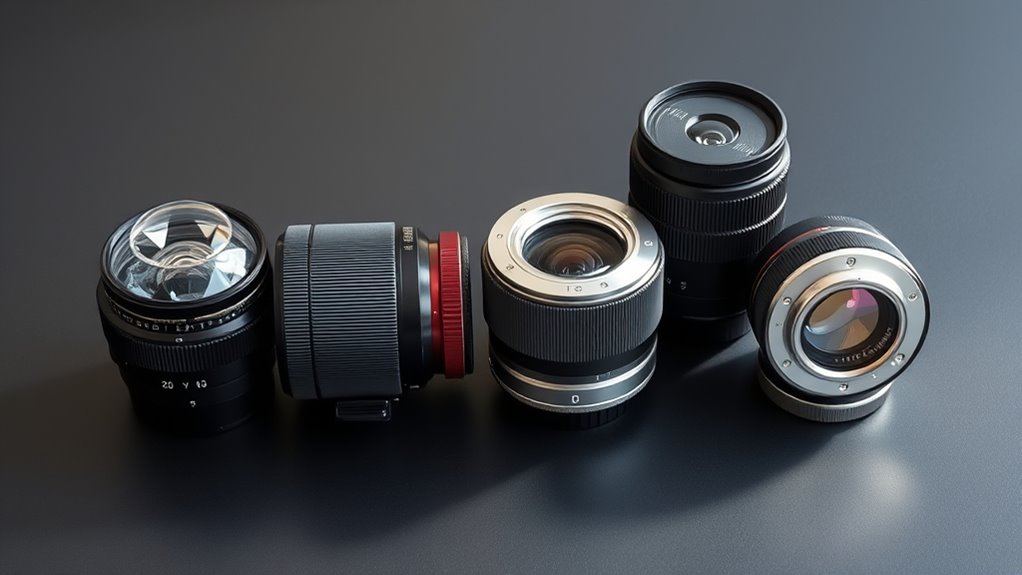

Choosing the right professional camera lens can significantly impact your photography results, whether you’re shooting portraits, landscapes, or sports. The best lenses deliver exceptional clarity, speed, and durability, but they come with tradeoffs like cost and weight. The Canon RF 24-70mm F2.8L IS USM stands out as the best overall, offering versatility and sharpness, while the Sony FE 70-200mm F2.8 GM OSS II excels for fast-paced shooting. Comparing different focal lengths, apertures, and mount types reveals the importance of prioritizing your specific needs. Keep reading for a detailed breakdown of the top picks and what to look for in a professional lens.

Get your wardrobe favorites delivered free with Prime
- Fast, free delivery on millions of items
- Prime Video, Amazon Music and more included
- Member-only deals all year
Key Takeaways
- The top lenses balance image quality, durability, and versatility, but often require a significant investment.
- Zoom lenses like the Canon RF 24-70mm offer flexibility, whereas prime lenses provide sharper images and larger apertures.
- Compatibility with camera mount and sensor size is crucial—select lenses specifically designed for your system.
- Weight and size can impact mobility; lighter lenses are easier to carry but may sacrifice some features or speed.
- Price often correlates with image quality and build; high-end models deliver better performance but at a premium.
| Rokinon 100mm F2.8 ED UMC Full Frame Telephoto Macro Lens for Nikon |  | Best Macro Lens for Nikon Enthusiasts | Focal Length: 100mm | Maximum Aperture: f/2.8 | Minimum Aperture: f/32 | VIEW ON AMAZON | See Our Full Breakdown |
| Canon RF 100-400mm F5.6-8 IS USM Telephoto Lens for EOS R Series |  | Best Versatile Telephoto Zoom for Canon R Cameras | Focal Length: 100-400mm | Maximum Aperture: F5.6-8 | Filter Size: 67mm | VIEW ON AMAZON | See Our Full Breakdown |
| Canon EF 75-300mm f/4-5.6 III Telephoto Zoom Lens |  | Best Budget Telephoto for Canon DSLR Users | Focal Length: 75-300mm | Maximum Aperture: f/4-5.6 | Lens Construction: 13 elements in 9 groups | VIEW ON AMAZON | See Our Full Breakdown |
| Sony FE 70-200mm F2.8 GM OSS II Full-Frame Zoom Lens, Sony E-Mount, 77mm Filter |  | Best Professional Telephoto Zoom for Sony E-Mount | Focal Length: 70-200mm | Maximum Aperture: F/2.8 | Lens Mount: Sony E-Mount | VIEW ON AMAZON | See Our Full Breakdown |
| Canon RF 24-70mm F2.8L IS USM Lens for Canon EOS R Series |  | Best All-Around Zoom for Canon EOS R Users | Focal Length: 24-70mm | Maximum Aperture: f/2.8 | Minimum Aperture: f/22 | VIEW ON AMAZON | See Our Full Breakdown |
| VILTROX AF 35mm F1.2 LAB Full Frame E-Mount Lens for Sony |  | Best Overall for Portraits and Cinematic Video | Aperture: F1.2 | Lens Elements: 15 elements in 10 groups | Focus Motor: Hyper VCM | VIEW ON AMAZON | See Our Full Breakdown |
| Canon EF 70-200mm f/2.8L USM Lens with Filter Kit and Accessories |  | Best for Versatile Telephoto Shooting with Accessories | Focal Length: 70-200mm | Maximum Aperture: f/2.8 | Mount: Canon EF | VIEW ON AMAZON | See Our Full Breakdown |
| Tamron 150-500mm f/5-6.7 Di III VC VXD Lens for Sony Full Frame Mirrorless Cameras |  | Best for Wildlife and Sports on a Budget | Focal Length: 150-500mm | Maximum Aperture: f/5-6.7 | Weight: 1725g | VIEW ON AMAZON | See Our Full Breakdown |
| Canon RF 70-200mm F2.8L IS USM Lens for Canon EOS R Series |  | Best for Professional Telephoto Zoom on Canon RF Mount | Focal Length: 70-200mm | Maximum Aperture: f/2.8 | Image Stabilization: Yes, up to 5 stops | VIEW ON AMAZON | See Our Full Breakdown |
| Canon RF 200-800mm F6.3-9 IS USM Super-telephoto Zoom Lens for Canon RF Mount |  | Best for Wildlife and Outdoor Extremes | Focal Length: 200-800mm | Maximum Aperture: F6.3-9 | Minimum Aperture: F54 | VIEW ON AMAZON | See Our Full Breakdown |
| professional camera lense | Focal Length | Maximum Aperture | Filter Size | Weight |
|---|---|---|---|---|
| Rokinon 100mm F2.8 ED UMC Full | 100mm | f/2.8 | — | — |
| Canon RF 100-400mm F5.6-8 IS U | 100-400mm | F5.6-8 | 67mm | 635 g |
| Canon EF 75-300mm f/4-5.6 III | 75-300mm | f/4-5.6 | — | — |
| Sony FE 70-200mm F2.8 GM OSS I | 70-200mm | F/2.8 | 77mm | 2.3 lb (1045 grams) |
| Canon RF 24-70mm F2.8L IS USM | 24-70mm | f/2.8 | 82mm | 900g |
| VILTROX AF 35mm F1.2 LAB Full | — | — | — | — |
| Canon EF 70-200mm f/2.8L USM L | 70-200mm | f/2.8 | 77mm | — |
| Tamron 150-500mm f/5-6.7 Di II | 150-500mm | f/5-6.7 | 82mm | 1725g |
| Canon RF 70-200mm F2.8L IS USM | 70-200mm | f/2.8 | 77mm | 1070 grams |
| Canon RF 200-800mm F6.3-9 IS U | 200-800mm | F6.3-9 | — | 2050g |
More Details on Our Top Picks
Rokinon 100mm F2.8 ED UMC Full Frame Telephoto Macro Lens for Nikon
The Rokinon 100mm F2.8 macro lens stands out for its exceptional 1:1 magnification, making it ideal for close-up and detailed macro photography. Compared with the Canon RF 24-70mm F2.8L, it offers superior macro capabilities but lacks autofocus, which could be a challenge for dynamic shooting. Its manual focus design provides precise control but demands skill from the photographer. The bright f/2.8 aperture ensures good low-light performance, yet the absence of image stabilization limits versatility in handheld situations. This lens excels for dedicated macro shooters who prioritize optical quality over convenience.
Pros:- High-quality macro capabilities with 1:1 magnification
- Bright f/2.8 aperture suitable for low-light conditions
- Internal focus design maintains lens length during focusing
- Non-rotating filter mount allows precise filter use
Cons:- Manual focus only, which may be challenging for some users
- Designed specifically for Nikon, limiting compatibility
- No image stabilization features
Best for: Nikon macro photographers who prefer manual focus and high-detail close-ups.
Not ideal for: Photographers needing autofocus or versatility across different subjects, as manual focus may slow workflows.
- Focal Length:100mm
- Maximum Aperture:f/2.8
- Minimum Aperture:f/32
- Magnification:1:1
- Minimum Focusing Distance:1 foot
- Mount:Nikon
Our verdict“This macro lens is best suited for Nikon users focused on detailed close-up work and manual focusing mastery.”
Canon RF 100-400mm F5.6-8 IS USM Telephoto Lens for EOS R Series
This Canon RF 100-400mm F5.6-8 IS USM offers impressive zoom flexibility in a compact, lightweight package, making it ideal for wildlife and sports photographers. Compared with the Sony FE 70-200mm F2.8 GM OSS II, it provides a broader focal range but sacrifices aperture speed, which can hamper low-light shooting. Its optical image stabilization, rated for up to 5.5 stops, helps stabilize handheld shots, though its variable aperture limits performance in dim conditions. The Nano USM autofocus is fast and quiet, suitable for capturing fleeting moments without disturbance. This lens is a strong choice for those needing reach and portability, with some tradeoffs in light-gathering power.
Pros:- Compact and lightweight design
- Versatile 100-400mm zoom range
- Effective optical image stabilization
- Fast, smooth, and quiet autofocus
Cons:- Aperture range F5.6-8 limits low-light use
- Weight of 635g could be noticeable during extended shoots
Best for: Canon EOS R users needing a lightweight, versatile telephoto zoom for outdoor and sporting events.
Not ideal for: Photographers requiring excellent low-light performance or shallow depth of field, due to its variable aperture range.
- Focal Length:100-400mm
- Maximum Aperture:F5.6-8
- Filter Size:67mm
- Weight:635 g
- Minimum Focus Distance:2.89 feet at 200mm
- Autofocus:Nano USM
Our verdict“This lens suits Canon R shooters seeking a portable telephoto zoom with decent stabilization, but not optimal in low-light conditions.”
Canon EF 75-300mm f/4-5.6 III Telephoto Zoom Lens
The Canon EF 75-300mm f/4-5.6 III offers an accessible entry point into telephoto photography, especially for beginners or those on a budget. Compared with the Canon RF 24-70mm F2.8L, it provides a longer zoom range but at the cost of a variable aperture and slower focus, which can hinder performance in low-light or fast-moving situations. Its basic build quality and front extension focusing system are less refined than higher-end models, but its compact size and affordability make it appealing for casual shooting. While it won’t deliver professional-grade sharpness or durability, it fills a vital role for users starting in telephoto photography.
Pros:- Affordable telephoto zoom lens
- Good image quality for distant subjects
- Compact and lightweight design
Cons:- Variable aperture affects low-light performance
- Focus may be slow in certain conditions
- Basic build quality compared to higher-end lenses
Best for: Casual photographers or beginners using Canon DSLRs who want a basic telephoto zoom without high costs.
Not ideal for: Advanced professionals or those needing quick autofocus and robust build quality for demanding environments.
- Focal Length:75-300mm
- Maximum Aperture:f/4-5.6
- Lens Construction:13 elements in 9 groups
- Closest Focusing Distance:1.5m / 4.9 ft
- Focus Adjustment:Front group rotating extension
- Mount:Canon EF
Our verdict“This lens is ideal for entry-level Canon DSLR users seeking an affordable telephoto option for casual use.”
Sony FE 70-200mm F2.8 GM OSS II Full-Frame Zoom Lens, Sony E-Mount, 77mm Filter
The Sony FE 70-200mm F2.8 GM OSS II exemplifies high-end optical and build quality, perfect for professional photographers and videographers seeking sharpness, fast autofocus, and reliable stabilization. Unlike the Canon RF 24-70mm F2.8L, it offers a dedicated telephoto zoom with a constant f/2.8 aperture, enabling superior low-light performance and shallow depth of field. Its lightweight magnesium alloy body and quiet XD Linear Motors make it ideal for handheld and video use. However, the high price tag and the need for separate teleconverters can be limiting factors. Compared with similar Sony G Master lenses, this model balances excellent image quality with portability, but it demands a significant investment.
Pros:- Exceptional image quality with minimal chromatic aberration
- Fast autofocus with quiet operation
- Lightweight and balanced for full-frame use
- Robust magnesium alloy construction
Cons:- High price point limits accessibility
- Teleconverters sold separately, increasing overall cost
Best for: Professional Sony E-mount shooters needing a versatile, fast-aperture telephoto lens for both stills and video.
Not ideal for: Casual or hobbyist photographers on a budget, due to its premium price and accessory costs.
- Focal Length:70-200mm
- Maximum Aperture:F/2.8
- Lens Mount:Sony E-Mount
- Filter Size:77mm
- Weight:2.3 lb (1045 grams)
- Image Stabilization:OSS
Our verdict“This lens is aimed at demanding professionals who prioritize optical excellence and build quality in Sony E-mount systems.”
Canon RF 24-70mm F2.8L IS USM Lens for Canon EOS R Series
The Canon RF 24-70mm F2.8L IS USM offers a versatile focal range combined with a bright f/2.8 aperture, making it a staple for professionals capturing everything from portraits to landscapes. Compared to the Sony FE 70-200mm F2.8 GM OSS II, it provides a broader zoom range at the expense of a slightly heavier build, but its weather-sealed construction and advanced coatings ensure durability in challenging conditions. The Nano USM autofocus is notably smooth and silent, ideal for both stills and video. The main tradeoff is its weight of around 900 grams, which can cause fatigue during extended shoots. This lens is a comprehensive choice for Canon EOS R shooters needing reliable, all-around performance.
Pros:- High image quality with bright f/2.8 aperture
- Effective optical image stabilization
- Smooth, silent autofocus with Nano USM
- Weather- and dust-resistant build
Cons:- Relatively heavy at 900 grams
- Limited to Canon RF mount cameras
Best for: Canon EOS R professionals seeking a flexible, high-quality zoom lens for diverse shooting scenarios.
Not ideal for: Travel photographers who prioritize lightweight gear, as it is relatively heavy for all-day carry.
- Focal Length:24-70mm
- Maximum Aperture:f/2.8
- Minimum Aperture:f/22
- Lens Elements/Groups:21 / 15
- Filter Size:82mm
- Weight:900g
- Image Stabilization:Up to 5 Stops
Our verdict“This lens is tailored for Canon EOS R users needing a reliable, versatile zoom with excellent optical quality for professional use.”
VILTROX AF 35mm F1.2 LAB Full Frame E-Mount Lens for Sony
The VILTROX AF 35mm F1.2 LAB stands out for its exceptional low-light capability and cinematic qualities, making it ideal for portrait photographers and videographers who want a versatile prime lens. Its bright F1.2 aperture delivers beautiful background blur and sharp subject focus, surpassing many kit lenses in artistic control. Compared with the Sony FE 35mm F1.4 GM, this lens offers faster autofocus and weather sealing, but at a higher price point. The OLED display and customizable controls enhance professional usability, though its limited compatibility—designed solely for Sony E-mount cameras—may restrict broader use. Tradeoffs include its premium cost and narrower compatibility, which might deter casual or multi-brand shooters.
Pros:- Excellent low-light performance with F1.2 aperture
- Fast, silent autofocus thanks to Hyper VCM motor
- Beautiful, cinematic bokeh and rendering
- Weather-sealed professional build
Cons:- Limited to Sony E-mount cameras, reducing flexibility
- Premium price may be prohibitive for casual users
Best for: Professional portrait and video creators using Sony E-mount full-frame cameras who prioritize optical quality and build durability
Not ideal for: Photographers seeking an affordable, versatile kit lens or users with cameras outside the Sony E-mount system
- Aperture:F1.2
- Lens Elements:15 elements in 10 groups
- Focus Motor:Hyper VCM
- Compatibility:Sony E-mount full-frame
- Build Features:Sealed against dust and moisture
- Additional Features:OLED display, customizable controls, click ON/OFF aperture ring
Our verdict“This lens is best suited for Sony shooters demanding high optical quality for portraits and video, despite its higher cost.”
Canon EF 70-200mm f/2.8L USM Lens with Filter Kit and Accessories
The Canon EF 70-200mm f/2.8L USM remains a staple for professionals needing reliable zoom performance across portraits, sports, and event photography. Its constant f/2.8 aperture ensures consistent exposure in varying lighting, offering better low-light results than slower lenses like the Tamron 150-500mm. The inclusion of a filter kit, tripod collar, and lens cap keeper adds value for serious shooters. However, compared to newer, lighter options, this lens remains heavy and somewhat cumbersome, especially for extended handheld use. Its weather sealing outperforms many non-L series lenses, but the size and weight could limit mobility for those on the move. Tradeoffs involve its weight and premium price.
Pros:- Constant f/2.8 aperture for excellent low-light capability
- Fast, quiet autofocus with full manual override
- Weather-sealed construction for durability
- Includes useful accessories like filter kit and tripod collar
Cons:- Heavy and bulky, less portable for travel
- Premium price point may be steep for some budgets
Best for: Event, portrait, and sports photographers who need a durable, high-performance lens with professional accessories
Not ideal for: Travel photographers seeking lightweight gear or casual shooters on a budget, due to size and cost
- Focal Length:70-200mm
- Maximum Aperture:f/2.8
- Mount:Canon EF
- Format:Full-Frame
- Filter Size:77mm
- Weather Sealed:Yes
Our verdict“This lens is ideal for professionals who prioritize durability and image quality over portability and cost.”
Tamron 150-500mm f/5-6.7 Di III VC VXD Lens for Sony Full Frame Mirrorless Cameras
The Tamron 150-500mm f/5-6.7 Di III VC offers impressive zoom range for wildlife and sports photography while maintaining a surprisingly portable design. Its lightweight at 1,725g makes it easier to handle than traditional super-telephotos, especially when paired with the effective vibration compensation (VC). The fast autofocus (VXD) ensures quick tracking of moving subjects, and the fluorine coating simplifies cleaning. However, the aperture range of f/5-6.7 limits low-light performance, making it less suitable for dim conditions compared to faster lenses like the Canon RF 70-200mm f/2.8L. Its compatibility is restricted to Sony full-frame mirrorless cameras, which may narrow its appeal. Tradeoffs include aperture limitations and weight for a budget-friendly super-telephoto.
Pros:- Lightweight and compact for a 500mm lens
- Effective vibration compensation for sharp images
- Moisture-resistant with fluorine coating for durability
- Good zoom range for wildlife and sports
Cons:- Limited aperture of f/5-6.7 reduces low-light capability
- Heavy at 1,725g, which may cause fatigue
- Restricted to Sony full-frame mirrorless systems
Best for: Wildlife and outdoor sports photographers using Sony full-frame mirrorless cameras who need a versatile, portable zoom
Not ideal for: Low-light photographers or those requiring a fast aperture for indoor or evening shooting
- Focal Length:150-500mm
- Maximum Aperture:f/5-6.7
- Weight:1725g
- Focus Type:VXD (Fast AF)
- Image Stabilization:VC
- Filter Size:82mm
Our verdict“This lens balances portability and zoom power for outdoor wildlife shooters willing to accept some aperture limitations.”
Canon RF 70-200mm F2.8L IS USM Lens for Canon EOS R Series
The Canon RF 70-200mm F2.8L IS USM is a flagship telephoto zoom that delivers sharp, vibrant images suitable for landscape, portrait, and sports photography on Canon’s RF mirrorless cameras. Its bright f/2.8 aperture provides excellent subject isolation and low-light flexibility, outperforming slower zooms like the Canon RF 100-400mm in aperture speed. The optical image stabilization with up to 5 stops of correction ensures crisp shots even in challenging conditions. Despite its impressive capabilities, the lens weighs over a kilogram, which might be a concern for long shoots or travel. Its higher price tag reflects its professional-grade optics and build, but it remains a top choice for serious Canon users. Tradeoffs include weight and cost for outstanding optical performance.
Pros:- Excellent image quality with bright F2.8 aperture
- Effective image stabilization for sharp handheld shots
- Fast, quiet autofocus
- Suitable for full-frame and APS-C cameras
Cons:- Heavy and bulky for portable use
- Premium price might be prohibitive for some users
Best for: Canon EOS R series users requiring a high-performance, versatile telephoto zoom for sports, portraits, and landscapes
Not ideal for: Travel photographers who prioritize lightweight gear or casual shooters on a tight budget
- Focal Length:70-200mm
- Maximum Aperture:f/2.8
- Image Stabilization:Yes, up to 5 stops
- Minimum Focus Distance:0.7 meters
- Filter Size:77mm
- Weight:1070 grams
Our verdict“This lens is perfect for professionals seeking top-tier optical performance on Canon RF mount, accepting its weight and price.”
Canon RF 200-800mm F6.3-9 IS USM Super-telephoto Zoom Lens for Canon RF Mount
The Canon RF 200-800mm F6.3-9 IS USM provides an exceptional zoom range for wildlife and outdoor photography, with a lightweight design that makes extended handheld shooting feasible. Its 200-800mm focal length covers a broad spectrum, surpassing the Sony FE 70-200mm F2.8 GM in reach, though with a narrower aperture of F6.3-9, limiting low-light performance. The lens’s optical stabilization effectively compensates for camera shake, and its compatibility with Extenders allows further focal extension. At over 2 kilograms, it’s still lighter than traditional super-telephotos but may require support for prolonged use. Its price reflects its versatility and reach, making it suitable for dedicated outdoor shooters willing to accept some aperture constraints. Tradeoffs include weight and aperture limits, but it excels in portability and reach.
Pros:- Extensive 200-800mm zoom range for wildlife and sports
- Effective stabilization for handheld shooting
- Lightweight and portable for a super-telephoto lens
- Supports Extenders for additional reach
Cons:- Aperture range of F6.3-9 limits low-light capabilities
- Heavy at 2050g, may need support for prolonged use
- Premium price for specialized outdoor use
Best for: Wildlife and sports photographers needing a portable, super-telephoto zoom with extensive reach on Canon RF cameras
Not ideal for: Indoor or low-light shooters who require fast apertures for night or studio work
- Focal Length:200-800mm
- Maximum Aperture:F6.3-9
- Minimum Aperture:F54
- Lens Mount:Canon RF
- Zoom Ratio:4.0:1
- Weight:2050g
Our verdict“This lens offers impressive reach and portability for outdoor wildlife shooters, with some limitations in low-light conditions.”

How We Picked
This selection was based on a comprehensive evaluation of performance, usability, build quality, and value. I prioritized lenses that are widely used by professional photographers across various genres, ensuring they meet high standards of sharpness, autofocus speed, and durability. The ranking also considers compatibility with popular camera systems and real-world feedback on reliability and handling. Tradeoffs such as size, weight, and cost were factored in to recommend options suited for different professional needs and budgets, ensuring a balanced and practical lineup.| professional camera lense | Maximum Aperture |
|---|---|
| Rokinon 100mm F2.8 ED UMC Full | f/2.8 |
| Canon RF 100-400mm F5.6-8 IS U | F5.6-8 |
| Canon EF 75-300mm f/4-5.6 III | f/4-5.6 |
| Sony FE 70-200mm F2.8 GM OSS I | F/2.8 |
| Canon RF 24-70mm F2.8L IS USM | f/2.8 |
| VILTROX AF 35mm F1.2 LAB Full | — |
| Canon EF 70-200mm f/2.8L USM L | f/2.8 |
| Tamron 150-500mm f/5-6.7 Di II | f/5-6.7 |
| Canon RF 70-200mm F2.8L IS USM | f/2.8 |
| Canon RF 200-800mm F6.3-9 IS U | F6.3-9 |
Factors to Consider When Choosing Professional Camera Lenses
Choosing a professional camera lens involves balancing several key factors to match your shooting style and camera system. Understanding focal length, aperture, and compatibility helps ensure you get the right lens for your needs. Beyond individual features, consider how a lens feels in hand, its weight, and how it performs in different conditions. Making the right choices can improve image quality and efficiency, but common mistakes include ignoring mount compatibility or prioritizing features that don’t suit your typical subjects.Focal Length and Zoom vs. Prime
Focal length determines your framing and subject distance. Zoom lenses like the Canon RF 24-70mm provide flexibility for varied shots without changing lenses, ideal for events or travel. Prime lenses, such as the VILTROX 35mm F1.2, often deliver sharper images and larger apertures for better low-light performance. The tradeoff is that primes lack zoom flexibility, so choosing between them depends on whether versatility or maximum image quality is more important for your work.
Aperture Size and Low-Light Performance
Large apertures (like F1.2 or F2.8) allow more light, critical for indoor, portrait, or astrophotography. They also enable a shallower depth of field, creating that beautiful background blur. However, lenses with bigger apertures tend to be more expensive and often heavier. Smaller apertures (like F5.6 or F6.3) are lighter and cheaper but may struggle in low-light conditions, requiring higher ISO settings or slower shutter speeds, which can impact image quality.
Compatibility and Camera System
Choosing a lens that matches your camera’s mount is obvious but often overlooked is ensuring the lens is optimized for your sensor size—full frame or crop sensor. Full-frame lenses like the Canon RF series tend to be more expensive but provide superior image quality and wider fields of view. Mirrorless systems often benefit from lighter, more compact lenses, but adapters may be needed for DSLR-specific models, adding complexity and potential performance issues.
Build Quality and Weather Sealing
Professional lenses must withstand demanding shooting environments. Look for weather sealing, especially if you shoot outdoors frequently. Robust construction with quality materials like metal mounts and sealed gaskets can prevent damage from dust and moisture. However, these features add weight and cost, so evaluate your typical shooting conditions and decide if the added durability justifies the premium.
Cost vs. Value
High-end lenses offer exceptional optical performance but come with steep prices. Cheaper options might save money initially but could compromise sharpness, autofocus, or durability. Consider your budget and whether investing in a premium lens will improve your workflow or output enough to justify the expense. Sometimes, a mid-range lens provides a sweet spot for quality and price, especially for dedicated professionals balancing multiple priorities.
Frequently Asked Questions
How do I decide between a zoom and a prime lens for professional work?
Choosing between zoom and prime lenses depends on your typical shooting scenarios. Zoom lenses offer versatility, allowing quick framing adjustments without changing lenses, which is beneficial for events, sports, or travel. Prime lenses, on the other hand, usually provide sharper images, larger apertures, and better low-light capability, making them ideal for portraiture or studio work. Consider your shooting environment, speed needs, and whether carrying multiple primes or a single zoom fits your workflow better.
Is it worth investing in a super-telephoto lens for professional photography?
Super-telephoto lenses like the Canon RF 200-800mm excel at capturing distant subjects, such as wildlife or sports. They offer incredible reach but are often bulky, expensive, and heavy, which can impact mobility and handling. If your work regularly demands capturing distant action or wildlife, investing in such a lens is justified. For general-purpose or studio work, a standard zoom or prime lens will usually be more practical and cost-effective.
What should I consider when choosing a lens for low-light conditions?
For low-light photography, a lens with a large maximum aperture (F1.2, F1.4, or F2.8) is essential to gather more light and keep ISO settings manageable. These lenses allow for faster shutter speeds, reducing motion blur and noise. However, they tend to be more expensive and heavier. If budget or weight is a concern, you can compensate with good camera sensors and stabilization, but investing in a fast lens generally yields the best results for challenging lighting.
How important is weather sealing in professional lenses?
Weather sealing is crucial if you often shoot outdoors in unpredictable conditions. Sealed lenses resist dust, moisture, and light rain, preventing damage and maintaining performance over time. While sealed lenses tend to be more expensive and slightly heavier, they can save you from costly repairs or compromised shots. For indoor or studio work, weather sealing may be less of a priority, but it remains a valuable feature for professionals working in the field.
Should I prioritize image sharpness or autofocus speed in a professional lens?
Both are important, but the priority depends on your primary type of photography. For fast-paced environments like sports or wildlife, autofocus speed and accuracy are critical to capturing decisive moments. For portrait or landscape work, image sharpness and optical quality might matter more, especially if you plan to make large prints or detailed edits. Many high-end lenses offer both, but if you must choose, focus on what will improve your workflow and final results most significantly.
Conclusion
For general professional use, the Canon RF 24-70mm F2.8L IS USM offers an unbeatable mix of versatility and quality, making it the best overall choice. If your work involves fast action or wildlife, the Sony FE 70-200mm F2.8 GM OSS II delivers exceptional autofocus performance. Budget-conscious professionals should consider the VILTROX 35mm F1.2 LAB for its impressive low-light capabilities at a more accessible price. Beginners or those starting with professional gear might prefer a more affordable prime lens, while specialists in wildlife or sports should look at super-telephoto options like the Canon RF 200-800mm. Ultimately, your choice depends on your specific needs, shooting style, and budget, but this list provides a solid foundation for making an informed decision.