Premium phono preamps range from straightforward MM stages to feature-rich designs with MC support, app control, tube circuits, and digital outputs. My best overall pick is the Parks Audio Waxwing for its DSP flexibility and app-based adjustments, while the iFi ZEN Phono 3 stands out for adaptable MM/MC use and the ELAC Alchemy PPA-2 for buyers seeking a more ambitious standalone component. The main tradeoff is whether you want simple setup, broader cartridge matching, or specialized features that add complexity. Not every phono stage needs to be expensive or elaborate; the right match depends on your cartridge and the rest of your system. Read on for the full breakdown and a guide to choosing the features that matter.

Get your wardrobe favorites delivered free with Prime
- Fast, free delivery on millions of items
- Prime Video, Amazon Music and more included
- Member-only deals all year
Key Takeaways
- Waxwing leads on adjustability: Its DSP, app control, and optical output set it apart for listeners who want to shape or route the signal beyond a conventional analog stage.
- ZEN Phono 3 is the flexible all-rounder: MM/MC support and a focused feature set make it a strong fit for systems that may change cartridges over time.
- Tube models serve a distinct purpose: The Douk T9, T12, and P7 add tube circuitry and, depending on the model, headphone or balanced connections, but they suit buyers who specifically want those features.
- Simple stages can be the smarter match: Fluance PA10 and U-Turn Pluto 2 favor a more direct setup, while models such as the Fosi BOX X5 and Pro-Ject Phono Box DC offer additional gain or cartridge flexibility.
- Premium is not one feature set: The comparison separates into DSP control, cartridge versatility, tube character, and clean, compact simplicity; paying for the wrong kind of flexibility can add complexity without helping your system.
| Fosi Audio BOX X5 Phono Preamp |  | Best Compact MM/MC Pick | Cartridge compatibility: MM and MC | Gain settings: 38, 48, 56, and 66 dB | Channels: 1 | VIEW ON AMAZON | See Our Full Breakdown |
| Douk Audio T9 Vacuum Tube Phono Preamp with Headphone Output |  | Best for Tube-and-Headphone Listening | Cartridge compatibility: MM and MC | Inputs: Phono and RCA | Channels: 2 | VIEW ON AMAZON | See Our Full Breakdown |
| Douk Audio T12 MM/MC Tube Phono Preamp with Headphone Amp |  | Best for Flexible Analog Connections | Cartridge compatibility: MM and MC | Inputs: Phono and RCA line input | Outputs: Dual RCA and 3.5 mm headphone output | VIEW ON AMAZON | See Our Full Breakdown |
| Pro-Ject Phono Box DC 2-Channel MM/MC Phono Preamp with Line Output, Black |  | Best for Straightforward Stereo Setups | Channels: 2 | Cartridge compatibility: MM and MC | RIAA response accuracy: 0.5 dB (20–20,000 Hz) | VIEW ON AMAZON | See Our Full Breakdown |
| Parks Audio Waxwing Phono DSP Preamp with Optical Output and App Control |  | Best for Digital Tools and Record Correction | Cartridge compatibility: MM, MI, and MC | Minimum cartridge output: 0.2 mV | Output: Optical | VIEW ON AMAZON | See Our Full Breakdown |
| ELAC Alchemy PPA-2 Phono Preamplifier |  | Best for Balanced-System Flexibility | Channels: 2 | Inputs: 2 RCA unbalanced, or 1 RCA and 1 XLR balanced | Frequency response: 10 Hz–20 kHz ±0.2 dB | VIEW ON AMAZON | See Our Full Breakdown |
| Fluance PA10 Phono Preamp with RIAA Equalization |  | Best for Straightforward MM Setups | Model: PA10UK | Channels: 2 | Voltage: 2.2 volts | VIEW ON AMAZON | See Our Full Breakdown |
| iFi Zen Air Phono 2 Phono Preamp for MM and MC Cartridges |  | Best for Low-Noise MM/MC Playback | Model: Zen Air Phono 2 | Cartridge support: MM and MC | Noise floor: -141 dBV | VIEW ON AMAZON | See Our Full Breakdown |
| U-Turn Audio Pluto 2 Phono Preamp, Black Aluminum | 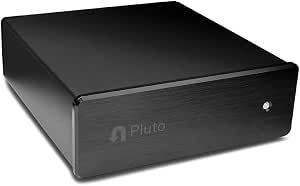 | Best Compact MM Pick | Cartridge compatibility: Moving-magnet (MM) | Number of channels: 1 | Mounting type: Freestanding | VIEW ON AMAZON | See Our Full Breakdown |
| iFi ZEN Phono 3 MM/MC Turntable Pre-Amplifier |  | Best for Cartridge-Tuning Flexibility | Cartridge support: MM/MC | Gain range: 36–72 dB | Distortion: 0.0001% | VIEW ON AMAZON | See Our Full Breakdown |
| Douk Audio P7 Vacuum Tube Phono Preamp with Balanced XLR Output |  | Best for Tone Shaping and Balanced Connections | Model: SUC-P7 | Inputs: MM phono/RCA | Outputs: RCA and balanced XLR | VIEW ON AMAZON | See Our Full Breakdown |
| premium phono preamp | Weight | Dimensions | Cartridge compatibility |
|---|---|---|---|
| Fosi Audio BOX X5 Phono Preamp | 2.4 pounds | 4.1 × 6.5 × 1.4 inches | MM and MC |
| Douk Audio T9 Vacuum Tube Phon | 0.96 kg | — | MM and MC |
| Douk Audio T12 MM/MC Tube Phon | 1.2 pounds | 5.79 × 3.58 × 3.07 inches | MM and MC |
| Pro-Ject Phono Box DC 2-Channe | 1.2 pounds | 8.46 × 7.09 × 2.95 inches | MM and MC |
| Parks Audio Waxwing Phono DSP | 1.01 pounds | — | MM, MI, and MC |
| ELAC Alchemy PPA-2 Phono Pream | 12 pounds | 2 × 17.5 × 15 inches, including jacks | — |
| Fluance PA10 Phono Preamp with | 11.52 ounces | 3.6 × 4 × 2.25 inches | — |
| iFi Zen Air Phono 2 Phono Prea | — | — | — |
| U-Turn Audio Pluto 2 Phono Pre | 10 ounces | 1.4 × 4.5 × 3.85 inches | Moving-magnet (MM) |
| iFi ZEN Phono 3 MM/MC Turntabl | — | — | — |
| Douk Audio P7 Vacuum Tube Phon | 1.56 pounds | 4.88 x 6.1 x 1.65 inches | — |
More Details on Our Top Picks
Fosi Audio BOX X5 Phono Preamp
The BOX X5 makes the most sense for a compact system that still needs room to match different cartridges. Its four gain settings, from 38 to 66 dB, offer more adjustment than the straightforward Pro-Ject Phono Box DC, which also supports MM and MC but keeps the setup simpler. That flexibility can help when changing cartridges or accommodating a quieter MC output. The aluminum chassis, grounding port, and accessible controls suit a shelf near the turntable, while the OPA1612 op-amp and precision film capacitors point to a component-focused design. The tradeoff is a 120 V-only supply specification and no digital outputs or app control; the Parks Audio Waxwing is the more capable choice for DSP and optical integration. Choose the X5 for cartridge flexibility in a small analog-focused setup, not digital features.
Pros:- Four gain settings support a broader range of cartridge outputs
- Compatible with both MM and MC cartridges
- Compact aluminum chassis with grounding port and simple controls
- OPA1612 op-amp and precision film capacitors are specified
Cons:- Supply specification is limited to 120 V
- No digital output, Bluetooth, or app-based sound processing
Best for: Vinyl listeners with MM or MC cartridges who want selectable gain and a compact, dedicated analog preamp.
Not ideal for: Buyers outside 120 V regions or anyone seeking optical output, app-based processing, or Bluetooth connectivity.
- Cartridge compatibility:MM and MC
- Gain settings:38, 48, 56, and 66 dB
- Channels:1
- Supply voltage:120 V
- Dimensions:4.1 × 6.5 × 1.4 inches
- Weight:2.4 pounds
- Chassis:Aluminum
- Warranty:24 months
Our verdict“Choose the BOX X5 if you want a small MM/MC preamp with useful gain adjustment, but skip it if digital features or wider voltage compatibility matter.”
Douk Audio T9 Vacuum Tube Phono Preamp with Headphone Output
The Douk Audio T9 is the lineup’s clearest pick for listeners who want a phono stage and a headphone station in one component. Its dedicated 3.5 mm headphone output supports headphones rated from 16 to 300 ohms, and bass and treble controls let listeners tailor playback without adding another device. Unlike the Pro-Ject Phono Box DC, which focuses on a compact route to a stereo system, the T9 is built around direct, adjustable headphone listening and a tube-based presentation. Its replaceable tubes invite experimentation, but that also means tube selection and replacement can become part of ownership. The 12 V DC supply adds another component to the setup, and buyers seeking app-based cleanup or optical output should look instead at the Parks Audio Waxwing. The T9 trades digital tools for hands-on tone shaping.
Pros:- Accepts both MM and MC cartridges
- Dedicated headphone output supports 16–300 Ω headphones
- Bass and treble controls allow direct tonal adjustment
- Replaceable tubes offer scope for sound customization
Cons:- Requires a 12 V DC power supply
- Tube swapping can involve extra selection and replacement work
- No optical output or app-based record processing is specified
Best for: Vinyl listeners who use wired headphones, want bass and treble adjustment, and enjoy the option to change tubes.
Not ideal for: Buyers who want a simple line-level-only preamp, digital processing, or a setup that avoids tube selection and replacement.
- Cartridge compatibility:MM and MC
- Inputs:Phono and RCA
- Channels:2
- Headphone output:3.5 mm; 16–300 Ω
- Headphone output power:250 mW
- Tubes:2 × 6E2 and 2 × 6A2; replaceable
- Power supply:12 V DC
- Weight:0.96 kg
Our verdict“Pick the T9 if headphone listening and adjustable tube-based sound are priorities, rather than digital features or a minimal setup.”
Douk Audio T12 MM/MC Tube Phono Preamp with Headphone Amp
The Douk Audio T12 earns a distinct place for combining phono playback with an RCA line input, so a listener can connect another analog source without relying on a separate input device. It also provides dual RCA outputs alongside a headphone jack, making it more connection-flexible than the T9’s described headphone-focused setup. The walnut housing and single 6J5B-Q tube give it a different visual and component character from the BOX X5’s aluminum, gain-selectable design. Bass and treble adjustment of up to ±10 dB adds hands-on tuning, though the supplied information gives no gain range or detailed cartridge-loading adjustments. Buyers who want digital cleanup or optical output will get more processing options from the Parks Audio Waxwing; the T12 instead suits listeners who value analog inputs, outputs, and tone controls.
Pros:- Supports both MM and MC cartridges
- RCA line input accepts another analog source
- Dual RCA outputs and a headphone output support flexible connections
- Bass and treble controls adjust up to ±10 dB
Cons:- No optical output or app-based processing is specified
- Gain range and cartridge-loading settings are not provided in the product data
- Tube-based design may not suit buyers seeking a purely solid-state signal path
Best for: Analog-system owners who want an MM/MC phono stage, a second RCA source input, and both speaker-system and headphone connections.
Not ideal for: Listeners who need app-based pop reduction, optical output, or detailed published gain settings for cartridge matching.
- Cartridge compatibility:MM and MC
- Inputs:Phono and RCA line input
- Outputs:Dual RCA and 3.5 mm headphone output
- Tone controls:Bass and treble, up to ±10 dB
- Tube:6J5B-Q
- Housing:Walnut
- Dimensions:5.79 × 3.58 × 3.07 inches
- Weight:1.2 pounds
Our verdict“Choose the T12 if analog input and output flexibility matters more than the BOX X5’s specified gain steps or the Waxwing’s digital tools.”
Pro-Ject Phono Box DC 2-Channel MM/MC Phono Preamp with Line Output, Black
The Pro-Ject Phono Box DC is the no-frills stereo option here: it supports MM and MC cartridges and keeps the signal path focused on feeding a line input. Its 0.5 dB RIAA response accuracy across 20–20,000 Hz and low-impedance output stage make it a more specification-led choice than the tube-based Douk T9 and T12, both of which add headphone outputs and tone controls. Cartridge selection is handled by a rear-panel switch, so the setup stays simple once connected, though frequent cartridge changes are less convenient than front-facing adjustment. The Parks Audio Waxwing offers gain adjustment, record-processing tools, and optical output, but also brings app-dependent complexity. The Phono Box DC suits buyers who want a compact, conventional MM/MC stereo preamp and do not need those extras.
Pros:- Supports MM and MC cartridges
- Published RIAA response accuracy of 0.5 dB from 20–20,000 Hz
- Low-impedance output stage
- Compact design can be placed near a turntable
Cons:- Rear-panel cartridge switch is less convenient for frequent changes
- No headphone output or tone controls are specified
- Lacks the Waxwing’s optical output and app-based processing
Best for: Stereo-system owners seeking a compact MM/MC phono stage with published RIAA accuracy and a conventional line output.
Not ideal for: Listeners who want headphone listening, tone controls, gain adjustment, or digital record processing built into the preamp.
- Channels:2
- Cartridge compatibility:MM and MC
- RIAA response accuracy:0.5 dB (20–20,000 Hz)
- THD:0.01% (MM), 0.05% (MC)
- Supply voltage:9.5 V
- Dimensions:8.46 × 7.09 × 2.95 inches
- Weight:1.2 pounds
- Output stage:Low impedance
Our verdict“Pick the Phono Box DC for straightforward MM/MC stereo playback, but choose a Douk model for headphones or the Waxwing for digital tools.”
Parks Audio Waxwing Phono DSP Preamp with Optical Output and App Control
The Parks Audio Waxwing is the most feature-led choice in this group, built for listeners who want to adjust playback beyond basic cartridge amplification. It supports MM, MI, and MC cartridges down to 0.2 mV, while app-controlled tools include pop and click reduction, multiple EQ settings, AIR, WARMTH, and SUPER MONO. That makes it a stronger fit for imperfect, mono, or differently equalized records than the simpler Pro-Ject Phono Box DC, which is focused on conventional MM/MC stereo playback. Optical output also opens a digital connection path, though the listed information does not identify its output format. The main compromise is interaction: some features require the companion app, and buyers seeking an uncomplicated all-analog component may prefer the BOX X5. This is the pick for processing flexibility, not minimalist operation.
Pros:- Compatible with MM, MI, and MC cartridges down to 0.2 mV
- Includes pop and click reduction and multiple EQ settings
- SUPER MONO mode targets mono-record playback
- App control and optical output add digital-system flexibility
Cons:- Some features require the companion app
- Optical output format is not specified in the supplied data
- More processing options may be unnecessary for buyers seeking a basic phono stage
Best for: Record collectors with mixed cartridge types, mono records, or noisy discs who want app-based sound adjustment and an optical connection.
Not ideal for: Listeners who prefer a simple analog-only preamp, do not want to use a companion app, or need a confirmed optical output format.
- Cartridge compatibility:MM, MI, and MC
- Minimum cartridge output:0.2 mV
- Output:Optical
- App compatibility:App Store and Google Play
- Processing features:Pop and click reduction; AIR; WARMTH; SUPER MONO; multiple EQ settings
- Gain:Adjustable
- Weight:1.01 pounds
- Package dimensions:6.69 × 5.35 × 2.24 inches
Our verdict“Choose the Waxwing if record correction, mono processing, and digital connectivity outweigh the convenience of a simpler analog preamp.”
ELAC Alchemy PPA-2 Phono Preamplifier
The ELAC Alchemy PPA-2 is the most connection-flexible choice in this group for a system built around both RCA and balanced XLR components. Its MM/MC support and adjustable MC loading give cartridge owners room to tune compatibility, while the LCD makes the selected settings easier to check. Stereo/mono switching and a rumble filter add practical control for different records and setups. Compared with the compact, MM-only U-Turn Audio Pluto 2, the PPA-2 is a more adaptable long-term hub; compared with the iFi ZEN Phono 3, its standout distinction is the listed balanced XLR connectivity. That flexibility comes with a substantial footprint: at 17.5 inches wide and 12 pounds, it needs dedicated shelf space. I’d choose it for a full-size system, not a minimalist desktop setup.
Pros:- Supports both MM and MC cartridges with adjustable MC loading from 5–999 ohms.
- RCA and XLR connectivity suits systems with different connection requirements.
- Stereo/mono operation and a switchable rumble filter provide useful playback control.
- LCD displays cartridge settings for easier setup checking.
Cons:- At 17.5 inches wide and 12 pounds, it requires considerably more shelf space than compact options such as the U-Turn Pluto 2.
- Its broad feature set may be unnecessary for listeners with a basic MM-only system.
Best for: Vinyl listeners with an MM or MC cartridge, balanced XLR equipment, and space for a full-width component.
Not ideal for: Buyers assembling a compact system or using only an MM cartridge with no need for balanced connections; its size and extra flexibility may go unused.
- Channels:2
- Inputs:2 RCA unbalanced, or 1 RCA and 1 XLR balanced
- Frequency response:10 Hz–20 kHz ±0.2 dB
- MC cartridge loading:5–999 ohms
- Dimensions:2 × 17.5 × 15 inches, including jacks
- Weight:12 pounds
- Features:Switchable MM/MC gain, stereo/mono operation, rumble filter, 12-volt trigger input
Our verdict“Choose the PPA-2 if you want adjustable MM/MC support and RCA/XLR flexibility in a full-size component; skip it if space is tight.”
Fluance PA10 Phono Preamp with RIAA Equalization
The Fluance PA10 is the uncomplicated pick here for a turntable fitted with a moving-magnet cartridge. RIAA equalization brings the phono signal up to line level, while separate left and right channel amplifiers are intended to support stereo separation. Its selectable low-frequency filter can reduce rumble below 20 Hz, and internal shielding helps limit electronic interference. Compared with the iFi ZEN Phono 3, the PA10 offers a more narrowly defined MM-only path rather than adjustable MM/MC compatibility; compared with the tiny U-Turn Audio Pluto 2, its listed dimensions make it a little larger, though still a small freestanding unit. The tradeoff is clear: there’s no stated MC support or cartridge-loading adjustment, so buyers planning to change cartridge type should choose a more versatile model.
Pros:- RIAA equalization converts an MM phono signal to line level.
- Separate left and right channel amplifiers support stereo channel separation.
- Selectable filter reduces frequencies below 20 Hz.
- Internal shielding helps block electronic interference.
Cons:- Compatibility is listed for MM turntables, with no MC support specified.
- No adjustable cartridge loading or gain settings are listed.
Best for: MM turntable owners who want a compact, freestanding phono-to-line stage with a selectable rumble filter.
Not ideal for: Listeners using an MC cartridge or planning to move between MM and MC cartridges, since the listed compatibility is MM only.
- Model:PA10UK
- Channels:2
- Voltage:2.2 volts
- Mounting type:Freestanding
- Dimensions:3.6 × 4 × 2.25 inches
- Weight:11.52 ounces
- Turntable compatibility:MM
- Warranty:2-year manufacturer warranty
Our verdict“Pick the PA10 for a simple MM-based setup with rumble filtering, but choose the iFi ZEN Phono 3 if you need MC support or cartridge adjustments.”
iFi Zen Air Phono 2 Phono Preamp for MM and MC Cartridges
The iFi Zen Air Phono 2 puts its case forward through a stated -141 dBV noise floor, precise RIAA equalization, and compatibility with both MM and MC cartridges. That combination is aimed at listeners seeking a quiet signal path without giving up the option to change cartridge type. Its symmetrical channel design and subsonic filter address stereo consistency and record rumble, while the wired layout keeps the setup straightforward. Compared with the MM-only Fluance PA10, the Zen Air accommodates more cartridge types; compared with the adjustable iFi ZEN Phono 3, the supplied details do not list gain or loading adjustments. That limits how specifically owners can tailor it to an MC cartridge. It also lacks a stated balanced connection option, so it’s better suited to a conventional wired system than a setup built around XLR links.
Pros:- Supports both MM and MC cartridges.
- Specified -141 dBV noise floor targets low-noise amplification.
- Precise RIAA equalization supports accurate phono playback.
- Subsonic filter helps reduce record rumble.
Cons:- Gain and cartridge-loading adjustments are not listed in the supplied specifications.
- Wired connectivity only, with no balanced connection specified.
- The listed warranty is one year.
Best for: Listeners who want a stated low-noise MM/MC phono stage and a subsonic filter for a conventional wired stereo system.
Not ideal for: MC owners who need documented adjustable gain or loading, or buyers seeking balanced XLR connectivity.
- Model:Zen Air Phono 2
- Cartridge support:MM and MC
- Noise floor:-141 dBV
- Audio output mode:Stereo
- Connectivity:Wired
- Color:Black
- Included items:Instruction card, quick start guide, USB-to-DC cable
- Warranty:1 year
Our verdict“Choose the Zen Air Phono 2 for stated low-noise MM/MC operation, but favor the iFi ZEN Phono 3 if adjustable gain and loading matter to your cartridge setup.”
U-Turn Audio Pluto 2 Phono Preamp, Black Aluminum
The U-Turn Audio Pluto 2 earns its place as the compact, focused option for an MM cartridge system. Its small aluminum enclosure is designed to shield the electronics from interference, and the active subsonic filter targets low-frequency noise that can otherwise distract from playback. Dual gain stages are intended to support low-distortion amplification. Compared with the full-size ELAC Alchemy PPA-2, the Pluto 2 takes up far less room but gives up MC support, balanced XLR connections, and the ELAC’s broader controls. It is also more restricted by cartridge type than the iFi ZEN Phono 3, which supports both MM and MC. A three-year warranty and lifetime product support add reassurance, but this remains a deliberately narrow choice: it makes sense for a stable MM setup, not a system built around cartridge upgrades.
Pros:- Compact 1.4 × 4.5 × 3.85-inch enclosure fits space-constrained systems.
- Aluminum enclosure is designed to shield electronics from interference.
- Active subsonic filter reduces low-frequency noise.
- Includes a three-year warranty and lifetime product support.
Cons:- Designed for MM cartridges, unlike the MM/MC-capable iFi ZEN Phono 3.
- No adjustable loading or balanced XLR connection is listed.
- Listed as a single-channel unit, unlike the two-channel Fluance PA10 and ELAC PPA-2.
Best for: MM turntable owners building a compact system who value an aluminum enclosure, active subsonic filtering, and long-term product support.
Not ideal for: MC cartridge owners or listeners who want adjustable cartridge loading, balanced XLR connections, or room to change cartridge type.
- Cartridge compatibility:Moving-magnet (MM)
- Number of channels:1
- Mounting type:Freestanding
- Dimensions:1.4 × 4.5 × 3.85 inches
- Weight:10 ounces
- Enclosure:Aluminum
- Warranty:3 years
- Product support:Lifetime
Our verdict“Choose the Pluto 2 for a compact MM-only setup with subsonic filtering and extended support, but look to the iFi ZEN Phono 3 for MC flexibility.”
iFi ZEN Phono 3 MM/MC Turntable Pre-Amplifier
The iFi ZEN Phono 3 is the most compelling fit in this batch for listeners who want to match the preamp to different MM and MC cartridges rather than stay with one fixed setup. Its 36–72 dB gain range and independent gain and loading adjustments give owners more scope to set levels and cartridge compatibility than the supplied details list for the iFi Zen Air Phono 2. The intelligent subsonic filter addresses low-frequency rumble, while the stated 0.0001% distortion and 91 dB signal-to-noise ratio provide useful performance figures for comparison. Against the larger ELAC Alchemy PPA-2, the iFi emphasizes cartridge adjustment in a metal-enclosure design rather than listing balanced XLR inputs or stereo/mono switching. Its one-year warranty is a drawback, and buyers needing XLR connectivity should look elsewhere.
Pros:- Supports both MM and MC cartridges.
- Independent gain and loading adjustments help accommodate different cartridge requirements.
- 36–72 dB gain range provides a broad stated adjustment span.
- Intelligent subsonic filter targets low-frequency rumble.
Cons:- No balanced XLR input is listed, unlike the ELAC Alchemy PPA-2.
- The stated warranty is one year.
- The supplied specifications do not list dimensions or weight for planning shelf space.
Best for: Vinyl listeners who own or expect to try multiple MM and MC cartridges and want adjustable gain and loading in a metal-enclosure preamp.
Not ideal for: Buyers who need balanced XLR inputs, stereo/mono switching, or a longer stated warranty; the ELAC PPA-2 lists more connection and operation options.
- Cartridge support:MM/MC
- Gain range:36–72 dB
- Distortion:0.0001%
- Signal-to-noise ratio:91 dB
- Features:Adjustable gain and loading, intelligent subsonic filter, RIAA equalization
- Enclosure material:Metal
- Color:Dark gray
- Included items:Quick start guide, power adapter, RCA cable
- Warranty:1 year
Our verdict“Choose the ZEN Phono 3 if adjustable gain and loading for MM/MC cartridges are your priority; opt for the ELAC PPA-2 if you need listed XLR connectivity and stereo/mono switching.”
Douk Audio P7 Vacuum Tube Phono Preamp with Balanced XLR Output
The P7 suits listeners who want more control over an MM turntable’s sound than a straightforward phono stage provides. Its adjustable bass and treble let you tune playback, while bypass mode gives you a direct comparison without those adjustments. The PSVANE ECC83 tube and stated 180 V operating voltage set it apart from the more conventional Pro-Ject Phono Box DC, which supports both MM and MC cartridges but does not offer this tone-control approach. The P7 also adds balanced XLR output, a useful connection option for compatible systems, and a phono-input high-pass filter that cuts subsonic noise below 20 Hz. The tradeoff is a narrower cartridge fit: unlike the Pro-Ject, it is designed for MM only, and the filter is available only with the phono input. Its compact size is appealing, but buyers seeking MC support or a simpler signal path should look elsewhere.
Pros:- Balanced XLR output provides a connection option for compatible systems.
- Bass and treble controls allow playback adjustments, with bypass mode for comparison.
- Phono-input high-pass filter cuts subsonic noise below 20 Hz.
- PSVANE ECC83 tubes can be swapped to tailor the sound.
Cons:- Designed for MM turntables, so it does not suit MC cartridge users.
- The high-pass filter is available only with the phono input.
- Tone controls and tube operation may not suit listeners seeking a simple, uncolored signal path.
Best for: MM turntable owners with an XLR-compatible audio system who want tube-based playback and adjustable bass and treble.
Not ideal for: Listeners using MC cartridges, or buyers who want a no-adjustment phono stage with broad cartridge compatibility.
- Model:SUC-P7
- Inputs:MM phono/RCA
- Outputs:RCA and balanced XLR
- Tubes:PSVANE ECC83
- Tube operating voltage:180 V
- High-pass filter:Cuts subsonic noise below 20 Hz; available with phono input
- Controls:Bass, treble, and bypass
- Dimensions:4.88 x 6.1 x 1.65 inches
- Weight:1.56 pounds
Our verdict“Choose the P7 if you use an MM cartridge and want tube character, tone controls, and balanced output; skip it if you need MC support.”

How We Picked
I ranked these premium phono preamps by how well their features address real system-matching needs: MM and MC compatibility, gain flexibility, useful output options, setup demands, and the level of control available to the listener. I also weighed build and design intent, separating simple, compact stages from models that add DSP, tube circuitry, headphone amplification, or balanced connectivity. A long feature list counted only when it offered a clear use case.
The order favors versatility and practical control first, then specialized capabilities and straightforward value. That puts the Waxwing and ZEN Phono 3 near the top for buyers who want room to adapt, while the PPA-2 represents the more ambitious standalone route. The Douk models rank as niche choices rather than universal picks, and simpler units such as the PA10 and Pluto 2 make the most sense when ease of use matters more than extensive adjustment. Product names alone do not establish sound quality, so I avoid treating format or circuitry as proof of superiority.
| premium phono preamp | Cartridge compatibility |
|---|---|
| Fosi Audio BOX X5 Phono Preamp | MM and MC |
| Douk Audio T9 Vacuum Tube Phon | MM and MC |
| Douk Audio T12 MM/MC Tube Phon | MM and MC |
| Pro-Ject Phono Box DC 2-Channe | MM and MC |
| Parks Audio Waxwing Phono DSP | MM, MI, and MC |
| ELAC Alchemy PPA-2 Phono Pream | — |
| Fluance PA10 Phono Preamp with | — |
| iFi Zen Air Phono 2 Phono Prea | — |
| U-Turn Audio Pluto 2 Phono Pre | Moving-magnet (MM) |
| iFi ZEN Phono 3 MM/MC Turntabl | — |
| Douk Audio P7 Vacuum Tube Phon | — |
Factors to Consider When Choosing Premium Phono Preamps
Choosing a phono stage is less about chasing the longest feature list and more about matching the device to your cartridge, connections, and listening habits. These broader checks can help you avoid paying for controls you will not use—or buying a basic unit that limits a future system change.
Match the Input to Your Cartridge
Start by confirming whether your cartridge is moving magnet (MM), moving coil (MC), or a type the preamp explicitly supports. MC cartridges often need more gain and may benefit from adjustable loading, so a preamp marked MM/MC is not automatically a perfect match for every MC model. Check the cartridge maker’s recommended load and output level, then compare those figures with the preamp’s published settings. A mismatch can leave playback too quiet or make noise more apparent when you raise the volume. If you plan to change cartridges, flexible gain and loading can extend the preamp’s usefulness. If your setup will remain MM-only, simpler support may be all you need.
Treat Gain and Loading as System-Matching Tools
More gain is not inherently better; the useful setting depends on cartridge output and the sensitivity of the amplifier or powered speakers downstream. Excess gain can make background noise and overload more noticeable, while too little can force you to run the next component at an unusually high level. Cartridge loading also affects electrical matching, particularly for MC designs, and should follow cartridge guidance rather than guesswork. Adjustable controls are valuable when you understand what they change or expect to experiment with different cartridges. Fixed settings can be easier to live with when they suit your current cartridge. Before buying, check whether adjustments are accessible from the front, underside, switches, or an app.
Choose Outputs for the System You Actually Own
Most traditional setups need a stereo RCA connection from the phono stage to a line-level input, but specialized systems may call for more. A headphone output can support private listening without adding another component, while balanced XLR connections can suit equipment built around balanced inputs. Optical output and app control point toward a digital workflow or signal processing, not simply a more direct analog connection. Confirm that the receiving amplifier, interface, or speakers accept the output type and level you intend to use. A connector that goes unused adds little value, and an adapter may not preserve the function you expect. Draw a simple signal path before choosing an unusual output option.
Decide Whether DSP or Tubes Fit Your Priorities
DSP and tube circuits represent different design choices, not a universal upgrade ladder. App-controlled DSP can offer repeatable adjustments and digital routing, which may help listeners who want to tailor playback or connect to digital equipment. Tube models appeal to buyers seeking tube circuitry and may bundle practical extras such as headphone amplification or balanced outputs. Those features can bring added setup, component, or maintenance considerations compared with a basic solid-state stage. Do not assume that tubes guarantee a preferred sound or that DSP improves every record. Choose these approaches for the control or system role they provide, not for a label alone.
Budget for the Whole Signal Chain
A phono preamp works between a cartridge and the rest of the audio system, so its usefulness depends on both. Check that the turntable has not already built in a phono stage, and confirm whether it can be bypassed when using an external unit. Compare the preamp’s output with a genuine line input rather than another phono input, which would apply equalization twice. Also check cable routing, grounding provisions, shelf space, and power requirements before choosing a compact or feature-heavy model. Spending more makes sense when the extra adjustment, connection, or circuit solves a real system need. If those additions would sit unused, a simpler stage may be the more considered purchase.
Frequently Asked Questions
Do I need an MC-compatible phono preamp if I currently use an MM cartridge?
No, not if you expect to keep the same MM cartridge and the preamp matches its output and loading needs. MM/MC support can be useful if you plan to change cartridge type later, but it does not automatically improve playback with an MM cartridge. Check whether the extra settings are straightforward to select and whether they match a plausible future upgrade. If flexibility is the main reason you are paying more, make sure the unit supports the specific MC cartridge you may buy. Otherwise, prioritize a good match for your current system.
Can I connect an external phono preamp to a turntable with a built-in preamp?
Usually, yes, if the turntable lets you switch its built-in phono stage off or provides a direct phono-level output. If the built-in stage cannot be bypassed, connecting its line-level output to another phono input can apply equalization and gain twice. In that case, use a line input on the receiving equipment, though adding another stage may not offer the improvement you expect. Check the turntable manual for its output modes before buying. The same check helps prevent confusion between a phono input and a standard line input.
Is a tube phono preamp a good choice for a first vinyl system?
It can be, especially if the chosen model has the cartridge support and connections your system needs. Tube circuitry is a design preference, not a shortcut to better sound, and tube models may involve more setup or upkeep than simpler stages. A first-time buyer may get more practical benefit from easy cartridge matching and a clear connection path. Models such as the Douk T9 or T12 also add headphone functionality, so they make more sense if that feature will be used. Choose tubes for the complete design and workflow, not the tube label by itself.
When does app-controlled DSP justify choosing a phono preamp over a simpler analog model?
DSP makes the most sense when you will use its adjustments, app control, or digital output as part of your listening setup. The Waxwing is the clearest fit in this group for buyers who want those controls rather than a basic analog signal path. If you only need RCA output into an amplifier and prefer minimal setup, a simpler model may be easier to live with. Confirm that any digital output works with the equipment receiving it, and check which adjustments are performed in the app. Buying DSP features without a specific use can add complexity without solving a problem.
Should I pay more for a preamp with balanced XLR or headphone outputs?
Pay for those connections only when they serve equipment or listening habits you already have. Balanced XLR can be useful with compatible gear and wiring, but an XLR socket alone does not make an entire system balanced. A headphone output can replace a separate headphone stage for casual or personal listening, provided it suits your headphones. In this lineup, the Douk models illustrate how extra outputs can define a product’s role rather than make it universally better. Map your connections first, then compare the added function with a simpler RCA-only option.
Conclusion
For the best overall balance of control and system flexibility, I would start with the Parks Audio Waxwing; choose the iFi ZEN Phono 3 if adaptable MM/MC support is the priority. The best value direction is a simpler, well-matched stage such as the Fluance PA10 or U-Turn Pluto 2 when you do not need DSP or specialized outputs. For a more ambitious standalone component, consider the ELAC Alchemy PPA-2, while the Pro-Ject Phono Box DC or Fosi Audio BOX X5 may suit buyers who want cartridge flexibility or selectable gain. Beginners should favor straightforward setup and compatibility over features they may not use. For specific needs, compare the Douk T9 and T12 for tube circuitry with headphone listening, the Douk P7 for balanced XLR, and the Waxwing for app-based DSP and optical output. Match the preamp to your cartridge and connections first; that is the clearest way to narrow this lineup.