If you’re shopping for premium hiking boots for rugged trails, the real question isn’t which boot is best overall — it’s how much stiffness, weight, and break-in time your feet can live with. The Asolo TPS 535 LTH V EVO earns my best overall pick for striking that balance: full-grain leather durability, a supportive midsole for load carrying, and enough flex to stay comfortable on mixed terrain. If you’re hauling a heavy pack over brutal ground, the La Sportiva Karakorum and Asolo TPS 520 GV Evo go stiffer and tougher, while the Merrell Moab 3 Mid sits at the other end — friendlier, lighter, and cheaper, but less protective on serious rock. The main tradeoff in this category is protection versus wearability: burly boots last longer but punish you on flat miles, and lightweight boots feel great out of the box but can fall apart on scree. Keep reading for the full breakdown, including which budget picks actually hold up and which trails each boot is truly built for.

Get your wardrobe favorites delivered free with Prime
- Fast, free delivery on millions of items
- Prime Video, Amazon Music and more included
- Member-only deals all year
Key Takeaways
- Full-grain leather boots dominated the top of the ranking — the Asolo TPS 535, TPS 520 GV Evo, La Sportiva Karakorum, and Kenetrek Corrie II all trade longer break-in for multi-season durability that synthetic models in this lineup can’t match.
- The budget end of the list (Queday, NORTIV 8, and the unbranded lightweight models) is genuinely viable for day hikes, but none of them carry a heavy pack well — their midsoles compress under load on multi-day rugged routes.
- The Merrell Moab 3 Mid and Columbia Transverse proved that ‘premium’ is about fit and purpose, not just price: both are softer, hiker-friendly options that outperform stiffer boots on well-maintained trails but underperform on talus and off-camber rock.
- Waterproofing quality varied more than any other feature — the Gore-Tex models (Asolo TPS 520, Columbia, Timberland) breathed better, while membrane-free leather boots like the TPS 535 rely on treatment and stay cooler in hot weather.
- The ROCKROOSTER 8-inch military boot filled an unexpected niche: rugged-trail durability with a work-boot silhouette, making it the pick for overgrown, ankle-scraping routes rather than fast alpine travel.
| Asolo Men’s TPS 535 LTH V EVO Leather Hiking Boots |  | Best Overall | Sole material: Rubber | Outsole: Vibram Triple Power | Midsole: Co-injected polyurethane | VIEW ON AMAZON | See Our Full Breakdown |
| Men’s Waterproof Hiking Boots – Lightweight Mid Ankle Lace Up, Non-Slip, Sand-Proof Trekking Shoes |  | Best for Fast-Paced Treks | Sole material: Rubber | Outer material: Thermoplastic Polyurethane (TPU) | Inner material: Soft cushioning fabric | VIEW ON AMAZON | See Our Full Breakdown |
| Queday Men’s Waterproof Lightweight Hiking Boots |  | Best Value Waterproofing | Sole material: Rubber | Outer material: Rubber | Midsole: Cushioned EVA | VIEW ON AMAZON | See Our Full Breakdown |
| NORTIV 8 Men’s Waterproof Ankle-High Hiking Boots |  | Best for Beginners | Fabric type: Fabric and synthetic | Sole material: EVA and rubber | Midsole: Lightweight EVA | VIEW ON AMAZON | See Our Full Breakdown |
| ROCKROOSTER Men’s 8 Inch Lace Up Lightweight Military Boots, Non-Slip Brown Water-Resistant Hiking Boots for Men | 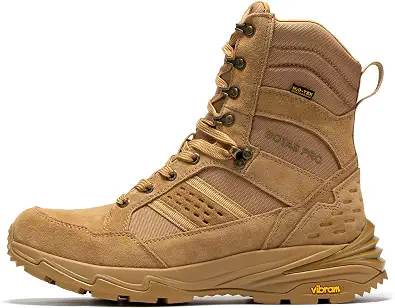 | Best for Ankle Support and All-Day Wear | Shaft height: 8 inches | Outer material: Leather | Sole material: Rubber | VIEW ON AMAZON | See Our Full Breakdown |
| Asolo Men’s TPS 520 GV Evo Waterproof Round Toe Backpacking Boots |  | Best Overall | Upper Material: Full-grain leather | Waterproofing: GORE-TEX Performance Comfort lining | Midsole: Dual-density polyurethane | VIEW ON AMAZON | See Our Full Breakdown |
| La Sportiva Karakorum Mountaineering and Hiking Boots |  | Best for Technical Terrain | Upper: 2.8mm Idro-Perwanger roughout leather with Vibram rubber rand | Lining: Dry-Best | Insole: 8mm high-density nylon with anti-torsion plate | VIEW ON AMAZON | See Our Full Breakdown |
| NORTIV 8 Men’s Waterproof Lightweight Hiking Boots |  | Best Budget Entry | Outer Material: Suede, faux leather | Sole Material: EVA, rubber | Waterproofing: Waterproof membrane | VIEW ON AMAZON | See Our Full Breakdown |
| Merrell Men’s Moab 3 Mid Waterproof Hiking Boots |  | Best All-Around Comfort | Upper Material: Pig suede leather and breathable mesh | Waterproofing: Waterproof membrane | Midsole: Super Rebound Compound | VIEW ON AMAZON | See Our Full Breakdown |
| Columbia Men’s Transverse Waterproof Hiking Boots |  | Best Lightweight Value | Upper: Leather and mesh | Waterproofing: Omni-Tech waterproof, seam-sealed construction | Cushioning: Techlite lightweight impact absorption | VIEW ON AMAZON | See Our Full Breakdown |
| Timberland Men’s White Ledge Mid Waterproof Hiking Boots | 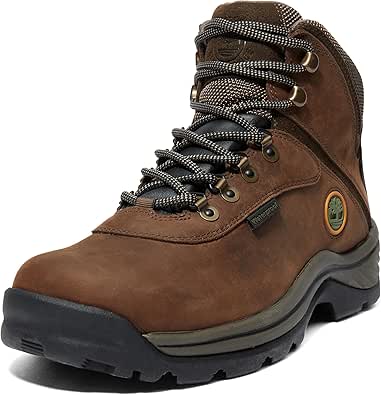 | Best Leather Classic | Upper material: Waterproof Timberland leather | Lining: ReBOTL fabric | Sole material: Rubber | VIEW ON AMAZON | See Our Full Breakdown |
| Men’s Waterproof Hiking Boots Non-Slip Lightweight Mid Top Ankle Shoes |  | Best Lightweight Comfort | Upper material: Synthetic suede and fabric | Waterproofing: SL-TEX waterproof membrane | Lining: D01 breathable lining | VIEW ON AMAZON | See Our Full Breakdown |
| Kenetrek Men’s Corrie II Hiker Hiking Boots |  | Best Premium Trail Performer | Upper material: 100% leather with nylon | Waterproofing: Windtex membrane | Sole material: Rubber (Grapon outsole) | VIEW ON AMAZON | See Our Full Breakdown |
| premium hiking boots for rugged trail | Sole material | Midsole | Shaft height | Waterproofing |
|---|---|---|---|---|
| Asolo Men’s TPS 535 LTH V EVO | Rubber | Co-injected polyurethane | 13 inches | — |
| Men’s Waterproof Hiking Boots | Rubber | — | — | — |
| Queday Men’s Waterproof Lightw | Rubber | Cushioned EVA | Ankle | — |
| NORTIV 8 Men’s Waterproof Ankl | EVA and rubber | Lightweight EVA | Ankle | Waterproof construction |
| ROCKROOSTER Men’s 8 Inch Lace | Rubber | EVA | 8 inches | — |
| Asolo Men’s TPS 520 GV Evo Wat | — | Dual-density polyurethane | Ankle | GORE-TEX Performance Comfort lining |
| La Sportiva Karakorum Mountain | — | SBR Aircushion | — | — |
| NORTIV 8 Men’s Waterproof Ligh | EVA, rubber | — | Ankle | Waterproof membrane |
| Merrell Men’s Moab 3 Mid Water | Rubber | Super Rebound Compound | 4 inches | Waterproof membrane |
| Columbia Men’s Transverse Wate | Rubber | — | Ankle | Omni-Tech waterproof, seam-sealed construction |
| Timberland Men’s White Ledge M | Rubber | EVA | Mid | — |
| Men’s Waterproof Hiking Boots | Synthetic rubber | EVA | — | SL-TEX waterproof membrane |
| Kenetrek Men’s Corrie II Hiker | Rubber (Grapon outsole) | 5mm nylon | 7 inches | Windtex membrane |
More Details on Our Top Picks
Asolo Men’s TPS 535 LTH V EVO Leather Hiking Boots
When a trail turns technical, most boots reveal their limits — this one doesn’t. The TPS 535 LTH V EVO pairs a water-resistant full-grain leather upper with a co-injected polyurethane midsole, which translates to a boot that holds its shape under a heavy pack instead of collapsing like softer options. Compared with the NORTIV 8 ankle-high boots later in this list, the Asolo’s taller 13-inch shaft and Vibram Triple Power outsole make it the clear choice for scree, wet rock, and multi-day loads. The tradeoff is honest: it is heavy, it demands a break-in period, and it will feel like overkill on a casual day hike. But for the buyer whose definition of “trail” includes talus fields and river crossings, this is the benchmark the rest of the roundup is measured against.
Pros:- Full-grain leather upper resists abrasion and water on rugged terrain
- Co-injected polyurethane midsole keeps its support under heavy pack loads
- Vibram Triple Power outsole grips wet rock and scree reliably
- Precise lacing hardware lets you dial in a secure, customizable fit
Cons:- Noticeably heavier than lightweight options like the Queday boots
- Requires a substantial break-in period before long trips
- Limited color options
Best for: Backpackers and thru-hikers carrying heavy loads over technical, rocky terrain for multiple days
Not ideal for: Day hikers and casual walkers — the weight and long break-in period punish anyone who doesn’t need this level of support
- Sole material:Rubber
- Outsole:Vibram Triple Power
- Midsole:Co-injected polyurethane
- Upper:Water-resistant full-grain leather
- Lining:Cambrelle
- Shaft height:13 inches
- Hardware:Durable precision lacing system
Our verdict“If you need one boot that can handle multi-day backpacking on genuinely rugged trails, this is the one to buy — provided you’re willing to break it in first.”
Men’s Waterproof Hiking Boots – Lightweight Mid Ankle Lace Up, Non-Slip, Sand-Proof Trekking Shoes
Not every rugged trail demands a stiff mountaineering boot — sometimes it demands speed. This mid-ankle option stands out for its lightweight build, which makes it a natural companion for fastpacking and trail-running-adjacent hikes where every ounce matters. Compared with the Asolo TPS 535, it sacrifices long-term structure and load-carrying stiffness, but for hikers moving light and fast, that stiffness is dead weight anyway. The reinforced toe box and mid-cut heel offer real protection against rock strikes and loose debris, and the deep lug tread grips muddy ground well for a boot this light. The tradeoff is breathability: the waterproof sealing traps heat on warm days, and the TPU-heavy construction won’t age as gracefully as full-grain leather. This model is better suited to day missions than week-long expeditions.
Pros:- Genuinely lightweight for a waterproof mid-cut boot
- Reinforced toe and mid-cut heel protect against rock strikes and debris
- Deep lug tread grips mud and loose ground confidently
- Waterproof and stain-resistant construction handles wet conditions
Cons:- Waterproof sealing reduces breathability in warm weather
- Needs a break-in period before it feels fully comfortable
- Less structural support than leather boots when carrying heavy loads
Best for: Fast hikers and trail runners who want waterproofing and toe protection without boot weight
Not ideal for: Heavy-load backpackers — the flexible midsole won’t support a 40-liter-plus pack on rocky descents
- Sole material:Rubber
- Outer material:Thermoplastic Polyurethane (TPU)
- Inner material:Soft cushioning fabric
- Closure type:Lace-up
- Cut:Mid ankle
- Protection:Reinforced toe, sand-proof design
Our verdict“A smart pick for hikers who value speed and agility on rugged trails over maximum support and durability.”
Queday Men’s Waterproof Lightweight Hiking Boots
The Queday earns its place by doing one thing unusually well at its price point: keeping water out. Its documented waterproof performance — rated for up to four hours of submersion resistance — outperforms what most budget waterproof boots actually deliver in practice, and the gusseted tongue is a detail often missing at this tier, blocking grit and water from entering through the laces. Compared with the NORTIV 8 ankle-high boots, the Queday trades a removable insole for a more robust EVA-cushioned build with a taller effective barrier against mud and stream crossings. The catch is familiar for sealed boots: breathability suffers, so feet get clammy on hot, dry days. This pick makes the most sense for hikers whose trails are defined by wet conditions — bogs, rain, and shallow crossings — rather than dry alpine rock.
Pros:- Strong waterproof performance rated for up to four hours of exposure
- Gusseted tongue blocks water, grit, and trail debris
- Cushioned EVA midsole keeps long days comfortable
- Lightweight enough for extended wear without fatigue
Cons:- Waterproof construction limits breathability
- Rubber-heavy outer material is less premium than leather alternatives like the Asolo
- Limited color options
Best for: Wet-climate hikers and budget-conscious buyers who prioritize reliable waterproofing over premium materials
Not ideal for: Hot, dry-trail hikers — the waterproof membrane traps heat and causes clammy feet on warm days
- Sole material:Rubber
- Outer material:Rubber
- Midsole:Cushioned EVA
- Waterproof:Yes
- Waterproof duration:Up to 4 hours
- Shaft height:Ankle
- Tongue:Gusseted
Our verdict“For hikers who regularly face mud, rain, and stream crossings on a budget, this delivers waterproofing that punches above its price class.”
NORTIV 8 Men’s Waterproof Ankle-High Hiking Boots
Beginners don’t need a boot that can summit a peak — they need one that makes the first twenty hikes pleasant enough to keep going. That’s where the NORTIV 8 wins. The removable, shock-absorbent insole means new hikers can swap in their own aftermarket support as their feet and mileage change, something neither the Queday nor the fast-paced mid-ankle trekking boot offers. The EVA midsole is tuned to reduce fatigue rather than to carry expedition loads, which is exactly right for someone building up from weekend trails. Compared with the Asolo TPS 535, it feels soft and forgiving out of the box — no punishing break-in — but that comfort comes with a ceiling: on genuinely technical terrain or under a heavy pack, it lacks the rigidity and lateral support serious trails demand. Treat it as a launch pad, not a summit boot.
Pros:- Removable insole accepts custom or aftermarket footbeds
- Shock-absorbent cushioning reduces foot fatigue on early hikes
- Slip-resistant rubber outsole handles wet and muddy ground
- Comfortable out of the box with no break-in required
Cons:- Lacks the rigidity for technical terrain and heavy pack loads
- Fabric-and-synthetic upper is less durable than full-grain leather options
- Ankle-high cut offers less support than mid or tall boots
Best for: New hikers building up from short weekend trails who want comfort without a break-in period
Not ideal for: Experienced backpackers on technical terrain — the flexible build lacks the support for heavy loads and rocky ground
- Fabric type:Fabric and synthetic
- Sole material:EVA and rubber
- Midsole:Lightweight EVA
- Insole:Removable, shock-absorbent cushioned
- Shaft height:Ankle
- Waterproofing:Waterproof construction
Our verdict“The right first boot for new hikers who value immediate comfort — just plan to upgrade when trails get serious.”
ROCKROOSTER Men’s 8 Inch Lace Up Lightweight Military Boots, Non-Slip Brown Water-Resistant Hiking Boots for Men
Borrowing from military boot design pays off on terrain that punishes ankles. The ROCKROOSTER’s 8-inch shaft wraps the ankle in a way no ankle-high option in this roundup — not the NORTIV 8, not the Queday — can match, which matters on side-hilling traverses and loose scree where a rolled ankle ends the day. The combination of an OrthoLite insole and EVA midsole absorbs repeated impact, making this the pick for long hours on foot, whether that’s a trail shift or actual work wear. Unlike the Asolo’s stiff leather build, this boot stays lightweight thanks to breathable mesh panels, but that same water-resistant H2O-TEX lining means it can run warm, and the break-in period is real. It sits in a useful middle ground: more support than a hiker, less burden than a backpacking boot.
Pros:- 8-inch shaft delivers superior ankle support on uneven, side-hilling terrain
- OrthoLite insole and EVA midsole absorb impact for all-day wear
- Breathable mesh panels keep weight down despite the tall build
- Slip-resistant rubber outsole performs on wet and loose surfaces
Cons:- Water-resistant H2O-TEX lining reduces ventilation in hot conditions
- Requires a break-in period before extended use
- Military styling may not appeal to hikers wanting a traditional look
Best for: Hikers and outdoor workers with weak ankles or long days on feet who need tall-shaft support without heavy boot weight
Not ideal for: Warm-weather speed hikers — the tall water-resistant lining runs hot and the military styling isn’t for everyone
- Shaft height:8 inches
- Outer material:Leather
- Sole material:Rubber
- Midsole:EVA
- Insole:OrthoLite
- Lining:H2O-Tex water-resistant
- Closure:Lace-up
Our verdict“The strongest choice in this lineup for ankle stability over long days — ideal if twisted ankles are your biggest trail risk.”
Asolo Men’s TPS 520 GV Evo Waterproof Round Toe Backpacking Boots
For buyers who judge premium by what survives a multi-day load, this is the boot the rest of the lineup is chasing. The full-grain leather upper over a dual-density polyurethane midsole means the TPS 520 GV Evo carries a heavy pack without packing out the way the EVA-cushioned Merrell Moab 3 Mid will after a few hard seasons. Its micro pulley lacing system is the real differentiator here — you get dialed, repeatable tension across the forefoot that standard eyelets on the Columbia Transverse simply can’t match, which matters on long descents where foot slippage causes blisters. The tradeoffs are real, though: it is one of the heaviest options in this roundup, it commands a premium price, and that thick leather demands a proper break-in period before it stops feeling like a brick.
Pros:- Full-grain leather construction built for years of heavy use
- Micro pulley lacing delivers precise, repeatable fit tension
- GORE-TEX lining balances waterproofing with breathability
- Self-cleaning Vibram tread sheds mud and grips rugged terrain
Cons:- One of the heavier boots in this lineup
- Premium materials push it to the top of the price range
- Requires a substantial break-in period before long trips
Best for: Backpackers hauling 40+ liter loads over rocky, multi-day routes who prioritize support and longevity over weight savings
Not ideal for: Day hikers and fast-and-light trekkers — the weight and stiffness are overkill and will feel punishing on short trips
- Upper Material:Full-grain leather
- Waterproofing:GORE-TEX Performance Comfort lining
- Midsole:Dual-density polyurethane
- Outsole:Vibram with self-cleaning tread
- Lacing System:Micro pulley system
- Shaft Height:Ankle
- Shaft Circumference:13 inches
Our verdict“If you need one boot for serious backpacking and can accept the weight, cost, and break-in commitment, this is the pick that outlasts everything else here.”
La Sportiva Karakorum Mountaineering and Hiking Boots
This is the only boot in the batch that speaks alpine. Where the Asolo TPS 520 GV Evo is built for backpacking loads, the Karakorum adds an anti-torsion nylon plate and crampon compatibility, making it the choice when your route crosses snowfields or steep scree. The 2.8mm Idro-Perwanger roughout leather with a Vibram rubber rand shrugs off rock abrasion that would shred the mesh panels on the Merrell Moab 3 Mid. Its resole compatibility is a quiet advantage over every other boot here — you are buying a platform, not a disposable product. The catch: at nearly 878 grams per boot it is heavy even by this roundup’s standards, and La Sportiva notes crampon compatibility requires inspection before you rely on it. It is also overkill for trail walking; this boot rewards technical objectives and punishes casual use.
Pros:- Crampon compatible for snow and glacier travel
- Anti-torsion plate keeps the foot stable on rocky, uneven ground
- Thick roughout leather with rubber rand resists abrasion
- Resoleable design extends usable lifespan
Cons:- Nearly 878 g per boot — among the heaviest here
- Crampon compatibility is not guaranteed and needs verification
- Stiffness and weight are excessive for casual day hikes
Best for: Hikers and light mountaineers crossing snow, scree, and off-trail terrain who want a stiff, resoleable platform
Not ideal for: Established-trail hikers — the stiff sole and weight add fatigue without benefit on maintained paths
- Upper:2.8mm Idro-Perwanger roughout leather with Vibram rubber rand
- Lining:Dry-Best
- Insole:8mm high-density nylon with anti-torsion plate
- Midsole:SBR Aircushion
- Outsole:Vibram
- Crampon Compatibility:Non-automatic and semi-automatic (inspection required)
- Weight:30.97 oz / 878 g
Our verdict“Buy this if your routes involve snow, scree, or off-trail scrambling; skip it if your trails stay on dirt.”
NORTIV 8 Men’s Waterproof Lightweight Hiking Boots
Not every rugged trail demands a boot with a mountaineering pedigree, and the NORTIV 8 makes that case. Compared with the Columbia Transverse, it offers similar waterproofing and a comparable slip-resistant rubber outsole at a friendlier price, with protective toe caps and a reinforced heel that give it a slightly burlier feel for rocky ground. The cushioned insole makes it comfortable straight out of the box — no break-in saga like the Asolo TPS 520 GV Evo demands. The compromise is material honesty: the suede and faux leather upper will not age like full-grain leather, and the ankle shaft can feel restrictive if you like agility on scrambles. Think of it as the boot that gets you onto rugged trails now, with the understanding that you may replace it sooner than the premium picks.
Pros:- Waterproof membrane keeps feet dry through stream crossings and rain
- Slip-resistant rubber outsole grips varied terrain
- Reinforced heel and toe cap add protection on rocky ground
- Comfortable cushioned insole with no break-in needed
Cons:- Faux leather and suede construction is less durable than full-grain alternatives
- Ankle shaft can limit mobility on technical scrambles
Best for: New hikers and occasional trail users who want waterproofing and decent traction without a premium investment
Not ideal for: Frequent backpackers — the synthetic upper lacks the durability for sustained heavy loads and harsh terrain
- Outer Material:Suede, faux leather
- Sole Material:EVA, rubber
- Waterproofing:Waterproof membrane
- Shaft Height:Ankle
- Shaft Circumference:30.8 cm
- Protection:Toe cap and reinforced heel
Our verdict“A sensible first serious boot for weekend hikers who want rugged-trail features at an accessible price.”
Merrell Men’s Moab 3 Mid Waterproof Hiking Boots
The Moab 3 Mid occupies the middle ground this roundup needs: more protective than the NORTIV 8, far more comfortable out of the box than the La Sportiva Karakorum. Its pig suede and mesh upper breathes noticeably better than any full-leather boot here, which matters on long summer days when GORE-TEX leather boots turn into saunas. The Merrell Air Cushion heel paired with the Super Rebound Compound midsole absorbs impact that would otherwise beat up your knees on long descents, and the Vibram TC5+ outsole is genuinely grippy for a hiking-class boot. The honest tradeoff is longevity versus comfort — that mesh paneling is a weak point under sustained abrasion, and the cushioning will compress faster than the polyurethane midsole in the Asolo TPS 520 GV Evo. It also runs sturdy enough that some feet want a short break-in before big mileage.
Pros:- Vibram TC5+ outsole delivers reliable traction across mixed surfaces
- Air Cushion heel and Super Rebound midsole soften descents and long miles
- Suede-mesh upper breathes far better than full-leather boots
- Waterproof membrane balances protection with moisture escape
Cons:- Mesh paneling is vulnerable to abrasion compared with full-grain leather
- Cushioning packs out faster than polyurethane midsoles
- Sturdy build may need a short break-in period
Best for: Regular day hikers and moderate backpackers who value breathability and cushioned comfort across mixed terrain
Not ideal for: Off-trail bushwhackers and heavy-load expedition hikers — the mesh panels and cushioning won’t survive that abuse
- Upper Material:Pig suede leather and breathable mesh
- Waterproofing:Waterproof membrane
- Midsole:Super Rebound Compound
- Outsole:Vibram TC5+
- Cushioning:Merrell Air Cushion heel
- Shaft Height:4 inches
- Sole Material:Rubber
Our verdict“The most comfortable do-everything boot in this lineup for hikers whose trails stay mostly on-trail and mostly dry-footed.”
Columbia Men’s Transverse Waterproof Hiking Boots
If the Asolo TPS 520 GV Evo is the tank of this lineup, the Transverse is the lightweight scout. Its Techlite cushioning keeps weight and fatigue low on fast-paced day hikes, where the Omni-Grip multi-terrain outsole holds its own on rock, dirt, and gravel without the heft of a mountaineering sole. The Omni-Tech seam-sealed construction is rated for moderate rain and snow — enough for spring slush and showers, though it is not the sustained-immersion defense of the full GORE-TEX leather builds. Compared with the Merrell Moab 3 Mid, the Transverse leans lighter and quicker, but its leather-and-mesh upper gives up some structure under a loaded pack, so it is not the boot for multi-day backpacking. Where it shines is the everyday rugged hike where comfort per ounce matters more than armor.
Pros:- Lightweight Techlite cushioning reduces fatigue on long day hikes
- Omni-Grip outsole handles wet and dry terrain reliably
- Seam-sealed waterproofing rated for moderate rain and snow
- Leather-mesh upper with cushioned collar stays comfortable all day
Cons:- Waterproofing is rated for moderate conditions, not sustained immersion
- Lighter build offers less support under heavy backpacking loads
Best for: Day hikers moving fast over mixed terrain who want waterproofing and traction without boot weight slowing them down
Not ideal for: Multi-day backpackers carrying heavy loads — the lightweight build lacks the structure for sustained weight
- Upper:Leather and mesh
- Waterproofing:Omni-Tech waterproof, seam-sealed construction
- Cushioning:Techlite lightweight impact absorption
- Outsole:Omni-Grip multi-terrain traction
- Shaft Height:Ankle
- Sole Material:Rubber
Our verdict“The lightest-feeling waterproof option here, best for quick-paced day hikes rather than loaded expeditions.”
Timberland Men’s White Ledge Mid Waterproof Hiking Boots
Among the mid-tier options in this lineup, the White Ledge stands out for its full-grain waterproof leather upper, something the synthetic suede boots like the Queday Men’s Waterproof Lightweight Hiking Boots simply can’t match for abrasion resistance on rocky terrain. The gusseted tongue keeps grit and water out on scree-filled switchbacks, and rustproof speed lace hardware makes tightening easy even with cold fingers. Compared with the NORTIV 8 Ankle-High boots, this model trades away lightweight agility for a more traditional, protective leather build. The EVA footbed and midsole deliver respectable cushioning, though hikers carrying heavy packs may want the stiffer support of the Asolo TPS 520 GV Evo instead. The break-in period is real — expect a few weekends before the leather molds to your foot.
Pros:- Full-grain waterproof leather upper resists abrasion and outlasts synthetic alternatives
- Gusseted tongue blocks debris and water on loose, rocky trails
- Rustproof speed lace hardware stands up to repeated soaking and drying cycles
- EVA footbed and midsole provide cushioning for long day hikes
Cons:- Heavier than synthetic rivals, which adds fatigue on long mileage days
- Leather requires a break-in period before all-day comfort
- Overbuilt and overpriced for casual walkers who only hit paved paths
Best for: Day hikers and weekend backpackers who want a traditional leather boot that ages well and shrugs off brush, rocks, and creek crossings
Not ideal for: Ultralight hikers or fast-packers — the leather construction makes these heavier than synthetic mid-tops like the Queday boots
- Upper material:Waterproof Timberland leather
- Lining:ReBOTL fabric
- Sole material:Rubber
- Midsole:EVA
- Insole:EVA footbed
- Shaft height:Mid
- Shaft circumference:9.75 inches
- Hardware:Rustproof speed lace
Our verdict“This is the pick if you want a classic waterproof leather boot that balances trail protection with everyday wearability at a mid-range commitment level.”
Men’s Waterproof Hiking Boots Non-Slip Lightweight Mid Top Ankle Shoes
At 1.25 lbs in a size 10, this unbranded mid-top undercuts nearly everything in this roundup on weight — including the Timberland White Ledge, which carries noticeably more heft on long climbs. The SL-TEX waterproof membrane paired with a breathable D01 lining keeps feet dry without the swampy feeling common in budget boots, and the removable memory foam insole with targeted heel cushioning makes these genuinely comfortable straight out of the box. Compared with the NORTIV 8 Lightweight boots, the rubber anti-collision toe gives it an advantage on trails with exposed rock. The tradeoff is durability: synthetic suede won’t take the sustained abuse that the Kenetrek Corrie II leather build can absorb, and the synthetic rubber sole is a step below dedicated lugged outsoles on wet slab. A short break-in is still needed for the best fit.
Pros:- Very light at 1.25 lbs per pair, reducing fatigue on long days
- Waterproof yet breathable membrane keeps feet dry in sustained wet conditions
- Removable memory foam insole and heel cushioning deliver immediate comfort
- Anti-collision rubber toe protects against rock strikes
Cons:- Synthetic suede upper is less durable than the full leather builds from Timberland or Kenetrek
- Requires a break-in period despite the soft construction
- Insufficient insulation for extreme cold or snow travel
Best for: Day hikers and casual trekkers who prioritize light weight and out-of-the-box comfort over maximum durability
Not ideal for: Backpackers hauling heavy loads or winter hikers — the insulation and structural support aren’t built for extreme cold or multi-day pack weight
- Upper material:Synthetic suede and fabric
- Waterproofing:SL-TEX waterproof membrane
- Lining:D01 breathable lining
- Insole:Removable memory foam
- Midsole:EVA
- Sole material:Synthetic rubber
- Weight:1.25 lbs (size 10)
- Design features:Lace-up, closed-cell tongue, rubber anti-collision toe
Our verdict“This model makes the most sense for comfort-first day hikers who want waterproofing and light weight without paying for a premium leather chassis.”
Kenetrek Men’s Corrie II Hiker Hiking Boots
The Corrie II is the serious hiker’s option in this trio, built more like a scaled-down mountain boot than a recreational hiker. The 5mm nylon midsole gives it a firm, stable platform that the softer Timberland White Ledge can’t match when you’re edging across talus fields, and the Grapon outsole grips wet rock and loose gravel with a tenacity closer to the La Sportiva Karakorum than to any budget boot here. The Windtex membrane handles sustained rain and shallow crossings while still venting heat. That stiff midsole is also the tradeoff: these boots demand a real break-in period and feel less forgiving on flat, casual walks than the lightweight mid-top pick above. At 7 inches of shaft height, ankle support is excellent for uneven, loaded descents. The price reflects the materials, and buyers wanting plush cushioning should look elsewhere.
Pros:- Firm 5mm nylon midsole provides stable footing on rocky, uneven surfaces
- Grapon outsole delivers excellent grip on wet rock and loose gravel
- Durable leather-and-nylon upper with Windtex waterproofing handles sustained wet conditions
- 7-inch shaft gives strong ankle support for loaded descents
Cons:- Longer break-in period than softer options like the White Ledge
- Premium materials push the price well above budget boots
- Stiff build is overkill and uncomfortable for flat, casual walking
Best for: Serious trail hikers and light backpackers who need firm underfoot stability and confident traction on rocky, uneven terrain
Not ideal for: Casual walkers and anyone seeking a soft, cushioned ride — the stiff nylon midsole feels harsh on pavement and easy paths
- Upper material:100% leather with nylon
- Waterproofing:Windtex membrane
- Sole material:Rubber (Grapon outsole)
- Midsole:5mm nylon
- Shaft height:7 inches
- Origin:Imported
Our verdict“The Corrie II is the pick for hikers whose trails are genuinely rugged and who will trade plush comfort for structural support and grip.”

How We Picked
Since rugged trails was the lens for every product here, I weighted outsole grip, underfoot protection, lateral support, and upper durability far more heavily than comfort out of the box or day-pack versatility. Each boot was judged on how it handles the terrain that destroys cheap footwear: loose scree, wet root, off-camber slabs, and extended descents with weight on your back. Boots that could take a full leather-nuuk re-treatment and resoling scored higher on long-term value; glued, disposable constructions ranked lower even when comfortable.
The ranking order also reflects load-carrying intent. Full-shank and near-full-shank boots (Karakorum, TPS 520) sit near the top because rugged terrain usually means backpacking, while lighter mid-cut models cluster in the middle as day-hike specialists. Budget options earned their spots only where they legitimately compete on grip and water resistance — and I’ve flagged exactly where each one stops being a good idea. No boot was ranked on brand reputation or popularity alone; a few big names landed lower than expected because their fit or protection didn’t justify the premium on this specific terrain type.
| premium hiking boots for rugged trail | Sole material | Waterproofing |
|---|---|---|
| Asolo Men’s TPS 535 LTH V EVO | Rubber | — |
| Men’s Waterproof Hiking Boots | Rubber | — |
| Queday Men’s Waterproof Lightw | Rubber | — |
| NORTIV 8 Men’s Waterproof Ankl | EVA and rubber | Waterproof construction |
| ROCKROOSTER Men’s 8 Inch Lace | Rubber | — |
| Asolo Men’s TPS 520 GV Evo Wat | — | GORE-TEX Performance Comfort lining |
| La Sportiva Karakorum Mountain | — | — |
| NORTIV 8 Men’s Waterproof Ligh | EVA, rubber | Waterproof membrane |
| Merrell Men’s Moab 3 Mid Water | Rubber | Waterproof membrane |
| Columbia Men’s Transverse Wate | Rubber | Omni-Tech waterproof, seam-sealed construction |
| Timberland Men’s White Ledge M | Rubber | — |
| Men’s Waterproof Hiking Boots | Synthetic rubber | SL-TEX waterproof membrane |
| Kenetrek Men’s Corrie II Hiker | Rubber (Grapon outsole) | Windtex membrane |
Factors to Consider When Choosing Premium Hiking Boots For Rugged Trails
Before you commit to any boot in this lineup, it helps to understand what actually separates a boot that thrives on rugged trails from one that merely survives them. These are the factors I’d weigh in order, based on how the 13 models compared.Stiffness and Shank Type: Match It to Your Pack Weight
The single biggest mistake buyers make is treating stiffness as a comfort issue when it’s really a load issue. A flexible boot like the Queday or NORTIV 8 feels great with a day pack, but under a 40-pound load the midsole folds over every rock edge, and your feet absorb the punishment by mile ten. Stiffer boots — the Karakorum being the extreme here — hold their platform so your foot rotates less on uneven ground, which reduces fatigue and ankle rolls. The honest tradeoff: stiff boots are miserable on pavement, long flat approaches, and casual wear. If most of your rugged miles involve a heavy pack or off-trail travel, err stiff; if you’re a day hiker hitting rough but established trails, a mid-flex boot serves you better and costs less.
Leather vs. Synthetic Uppers: Durability Against Breathability
Full-grain leather uppers, like those on the Asolo and Kenetrek models, resist abrasion from rock, branches, and scree far better than any synthetic — they can also be re-treated and eventually resoled, stretching their life across many seasons. The cost is weight, break-in time, and heat; leather boots run hot in summer and take 30 to 80 miles to stop feeling stiff. Synthetic and split-leather uppers, common on the budget end of this list, are comfortable immediately and dry faster after a soak, but scree and repeated flex points shred them within a season or two of hard use. A common mistake is buying leather for looks and then quitting during break-in — if you won’t commit to the process, buy synthetic and accept the shorter lifespan. On rugged trails specifically, abrasion resistance matters more than most buyers expect, since one off-trail section can gut a soft upper.
Waterproofing: What the Membrane Actually Does (and Doesn’t Do)
A waterproof membrane keeps external moisture out — stream splashes, wet brush, rain — but it also slows sweat from escaping, which is why some hikers end up with wet boots on a dry day. Memane-free leather boots like the Asolo TPS 535 rely on periodic wax treatment; they breathe better in heat but need maintenance discipline, or they’ll wet out. Gore-Tex models (the TPS 520 GV Evo, Columbia Transverse, Timberland White Ledge) offer the most consistent barrier, though the membrane is usually the first component to fail — often years before the sole wears out, and it can’t be replaced. The budget boots in this lineup claim waterproofing that holds up for puddles and drizzle but not sustained submersion. Match your choice to your real conditions: cold, wet climates favor membranes; hot, dry rugged terrain favors breathable leather or mesh.
Outsole Rubber and Lug Pattern: Grip Is Brand-Specific
Not all rubber is equal, and this is where premium boots genuinely earn their price. Vibram outsoles — standard on the Asolo, La Sportiva, and Kenetrek models here — use stickier compounds and deeper, self-cleaning lug patterns that bite on wet slab and loose gravel, where generic molded soles skate. Depth matters as much as compound: shallow lugs clog with mud and lose traction on soft ground, while aggressive lugs (5mm+) grip but feel clumsy on rock and pavement. Look at the brake zone under the heel and the edge of the sole too — on steep descents, a squared heel edge is what stops you, not the tread center. If your trails are rocky and wet, I’d pay up for a recognized outsole brand every time; on dry, sandy routes the difference shrinks and budget soles become defensible.
Fit and Sizing: The Expensive Mistake Nobody Warns You About
Even a perfect boot fails if the fit is wrong, and rugged terrain punishes poor fit worse than any sidewalk. On descents, your foot slides forward — if you don’t have a thumb’s width of toe room, you’ll lose toenails, which is the most common injury among backpackers in stiff boots. Foot volume matters as much as length: the La Sportiva and Asolo lasts run narrow to neutral, the Merrell Moab famously runs wide, and half of the fit complaints in this category come from buying the wrong volume, not the wrong size. Try boots in the afternoon when feet are swollen, with the socks you’ll actually hike in, and always walk downhill on an incline board before buying. One more trap: don’t size up to ‘fix’ a narrow heel — a locked heel prevents blisters, and excess heel slip can’t be fixed later.
Weight per Pair and Long-Term Cost of Ownership
Boot weight compounds with every step — a pound on your feet costs roughly the energy of five pounds on your back, which is why thru-hikers accept durability losses for lighter builds. But on rugged trails, the calculus shifts: a heavier boot’s protection prevents the injuries and fatigue that force you off the trail entirely, so ultra-light isn’t automatically the premium choice here. Look at total cost of ownership instead of sticker price. A resoleable leather boot that lasts eight years often beats three consecutive pairs of budget boots, while a glued-sole waterproof model typically dies at the membrane and becomes a wet shoe. My rule of thumb from this comparison: buy cheap once if you hike rarely, buy resolable leather if you hike monthly, and never buy mid-priced boots you’ll baby — use them hard or step down in price.
Frequently Asked Questions
Is it worth paying premium prices for rugged trails, or are budget boots like the NORTIV 8 good enough?
It depends entirely on how often you’re out there and what’s on your feet during the descent. For occasional day hikes on rocky but established trails, the budget options in this lineup hold up fine — their grip and cushioning are genuinely serviceable, and paying triple for an Asolo would be wasted money. The gap opens on repeated hard use and heavy loads: budget midsoles compress and lose support within a season of weekly hiking, and their uppers aren’t built to survive off-trail abrasion. Premium leather boots also hold their shape under a loaded pack, which protects your ankles on terrain where a roll can mean a rescue. My honest line: if rugged trips are monthly or multi-day, the premium boot pays for itself; if they’re twice a year, buy the budget pair and replace them when they’re done.
How long does break-in actually take for the stiff leather boots like the Asolo TPS 535 or La Sportiva Karakorum?
Plan on 30 to 80 miles of gradual wear before a full-grain leather boot stops fighting you, and the stiffer the shank, the longer that window runs — the Karakorum sits at the far end of that range. The right method is short sessions: two-hour walks, then half-day hikes, then a full day with your actual pack weight before the first real trip. Wearing them all day at work is fine for the upper but won’t break in the midsole, which needs repeated flex cycles under your body weight. The mistake that ruins the experience is taking new stiff boots straight onto a 12-mile rugged descent — that’s how people conclude the boots are bad when their feet just weren’t ready. One encouraging note: leather boots that are stiff at week one are usually the same ones that feel custom-molded at month three, which is part of why they last so long.
Mid-cut versus 8-inch boots for ankle protection — does the taller collar on something like the ROCKROOSTER actually help?
A taller collar does add ankle protection, but it works differently than most buyers assume. It won’t stop a true ankle roll on uneven ground — that’s the sole’s stiffness and the shank’s job — but it does protect against lateral scrapes, branch strikes, and scree intrusion, which matters on overgrown or off-trail routes. The ROCKROOSTER’s 8-inch design is really a work-boot trait: it locks the ankle firmly, shields it from brush, and suits people carrying loads through nasty vegetation. On open rocky alpine terrain, a mid-cut with a stiff sole (like the TPS 520) protects you better than a tall boot with a soft sole, because the stiffness keeps your foot from torqueing in the first place. The cost of height is weight, heat, and reduced agility on scrambles where you need ankle articulation. Choose tall for brush and work-type abuse; choose mid-and-stiff for rock.
Can I use rugged trail boots like these for everyday or winter wear, or should I buy something more versatile?
You can, but you’ll pay for it in comfort, and some models handle the double duty far better than others. The Merrell Moab 3 Mid and Timberland White Ledge are the crossover stars of this list — casual enough for daily wear, decent on trails, though neither is truly premium for rugged ground. The stiff backpacking boots are a different story: the Karakorum or TPS 520 on pavement is hard on your knees, chews the outsole, and the stiffness that protects you on rock feels clumsy on flat ground. Winter use is more forgiving — the insulated gap in most of these boots means you’ll need thick wool socks, but leather-and-membrane boots handle snow reasonably well if you treat the leather. My advice is to match the boot to the majority use: buying a mountaineering-grade boot for walking the dog wastes money in both directions, and a casual boot on a talus field wastes your ankles.
Which boot in this roundup should I choose if I have wide feet or persistent blisters?
Fit problems trump every other spec, so start with the lasts, not the features. The Merrell Moab 3 Mid is the safest wide-foot option here — it comes in dedicated wide sizing and has a roomy toe box, though that same roominess makes it a poor choice for narrow feet that will slosh around inside. Among the European brands, La Sportiva runs noticeably narrow, so wide-footed hikers should approach the Karakorum with caution, while Asolo’s lasts sit closer to neutral and break in with more give since the leather molds to your foot over time. For chronic blisters, look at heel hold before anything else: lock the laces around the ankle with the upper eyelets, and use a liner sock under wool to cut friction. And if you get pressure points across the top of the foot, avoid boots with rigid rubber toe caps that extend too far back — several stiff models in this list have that trait.
Conclusion
After comparing all 13 side by side, the right choice comes down to how you actually use rugged trails. For the best overall, the Asolo TPS 535 LTH V EVO is the pick — it carries loads, grips wet rock, and will outlast nearly everything else here with basic care. The Asolo TPS 520 GV Evo takes the best premium slot for multi-day backpacking and sustained wet weather, while the La Sportiva Karakorum is the specialist choice if your routes lean alpine and off-trail. On value, the NORTIV 8 waterproof models and the Queday deliver surprisingly honest performance for day hikes, and the Merrell Moab 3 Mid is the clear best for beginners — comfortable from day one, forgiving of fit mistakes, and widely available in wide sizes. The ROCKROOSTER 8-inch fills a specific need for overgrown, brush-heavy routes, and the Kenetrek Corrie II rewards hunters and off-trail travelers who want leather toughness in a lighter package. Whatever you pick, size for downhill toe room and break in stiff boots gradually — the best premium boot is still the one that fits your foot and your mileage.
Halloween Picks
halloween
As an affiliate, we earn on qualifying purchases.