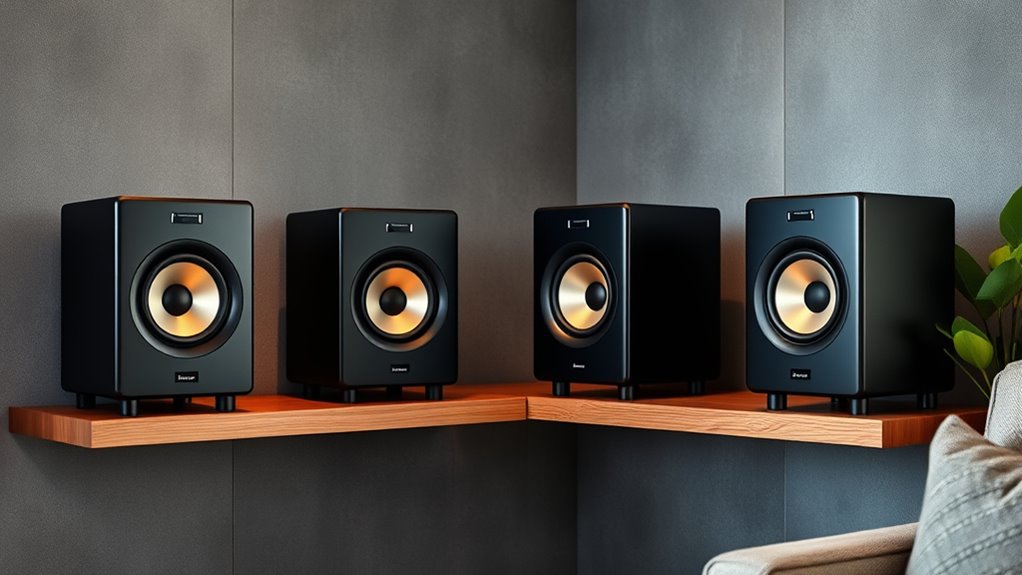

For most buyers seeking premium bookshelf speakers, I’d start with the KEF Q1 Meta: its refined presentation and flexible placement make it the strongest all-around choice in this lineup. The Polk Reserve R200 is a compelling step-up pick for listeners who want a more capable speaker for music and home theater, while the Edifier R1700BTs suits anyone who values built-in amplification and Bluetooth simplicity. The central tradeoff is between passive speakers, which call for a separate amplifier but allow more system flexibility, and powered models that simplify setup. Size, listening distance, bass expectations, and room placement matter just as much as a speaker’s premium label. Read on for the full comparison and a match for different rooms, systems, and budgets.

Get your wardrobe favorites delivered free — and shop member deals
- Fast, free delivery on millions of items
- Access to Prime Big Deal Days deals on October 6–7
- Prime Video, Amazon Music and more included
Key Takeaways
- KEF Q1 Meta is the most balanced all-rounder: it leads the passive-speaker picks for buyers who want a refined stereo pair without choosing a narrowly specialized sound.
- Polk Reserve R200 is the more ambitious home-theater option: its larger design makes it a better fit than compact models for listeners building a substantial stereo or surround system.
- Powered speakers change the setup equation: Edifier R1700BTs and R1280T include amplification, while the passive picks need a compatible receiver or amplifier.
- Klipsch models favor a livelier presentation: RP-600M II and RP-600M offer larger, more assertive alternatives to smaller R-41M and R-51M models, with greater demands on space and placement.
- Value does not require choosing the newest model: ELAC Debut 2.0 B6.2 and Polk Monitor XT15 offer practical entry points, while Debut 3.0 DB63 and Q1 Meta are stronger candidates for buyers prioritizing newer designs.
| KEF Q1 Meta Bookshelf Speakers, Pair, Walnut |  | Best Overall | Speaker type: Passive two-way bass-reflex bookshelf speakers | Quantity: Pair | Driver array: 12th-generation Uni-Q; 25 mm aluminum dome tweeter and 5.25-inch midbass cone | VIEW ON AMAZON | See Our Full Breakdown |
| Polk Audio T15 100 Watt Home Theater Bookshelf Speakers (Pair, Black) |  | Best for Entry-Level Home Theater | Speaker type: Passive bookshelf speakers | Quantity: Pair | Power handling: 100 W | VIEW ON AMAZON | See Our Full Breakdown |
| Polk Monitor XT15 Bookshelf and Surround Sound Speakers, Pair, Midnight Black |  | Best for Flexible Surround Systems | Speaker type: Passive bookshelf speakers | Quantity: Pair | Tweeter: 1-inch Terylene | VIEW ON AMAZON | See Our Full Breakdown |
| Klipsch RP-600M Reference Premiere Bookshelf Speakers, Pair, Ebony |  | Best for Dynamic, High-Output Sound | Speaker type: Bookshelf speakers | Quantity: Pair | Tweeter: 1-inch titanium LTS vented tweeter with hybrid Tractrix horn | VIEW ON AMAZON | See Our Full Breakdown |
| Sony SS-CS5M2 3-Way Hi-Res Bookshelf Speakers (Pair) | 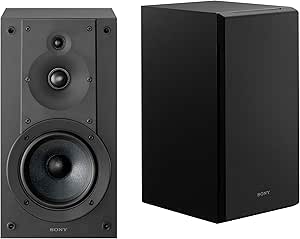 | Best Three-Way Design | Speaker type: Bookshelf speakers | Configuration: 3-way, 3-driver pair | Woofer: 5.12 inches | VIEW ON AMAZON | See Our Full Breakdown |
| Klipsch R-41M Reference Bookshelf Speakers, Pair, Black |  | Best Compact Klipsch Pick | Configuration: Two-way bookshelf speakers; pair | Woofer: 4-inch spun-copper IMG | Tweeter: 1-inch aluminum LTS with Tractrix horn | VIEW ON AMAZON | See Our Full Breakdown |
| ELAC Debut 3.0 DB63-WN Bookshelf Speakers, Walnut (Pair) |  | Best for Fuller Bass | Configuration: Two-way bookshelf speakers; pair | Woofer: 6.5-inch woven aramid fiber | Tweeter: 1-inch aluminum dome | VIEW ON AMAZON | See Our Full Breakdown |
| SVS Prime Bookshelf Speakers (Pair), Premium Black Ash |  | Best for Stereo and Home Theater | Configuration: Two-way bookshelf speakers; pair | Woofer: 6.5 inches | Tweeter: 1-inch aluminum dome | VIEW ON AMAZON | See Our Full Breakdown |
| Polk Audio Reserve R200 Bookshelf Speakers, Pair, Black |  | Best for Flexible Placement | Configuration: Passive bookshelf speakers; pair | Tweeter: 1-inch Pinnacle Ring Radiator | Woofer: 6.5-inch Turbine Cone | VIEW ON AMAZON | See Our Full Breakdown |
| Klipsch R-51M Bookshelf Speakers (Pair), Black |  | Best for Lively, High-Output Listening | Configuration: Bookshelf speakers; pair | Woofers: Dual 5.25-inch spun-copper IMG | Tweeter: 1-inch aluminum LTS | VIEW ON AMAZON | See Our Full Breakdown |
| Edifier R1700BTs Bluetooth Bookshelf Speakers |  | Best Powered Pick for Wireless Listening | Power output: 66W RMS | Woofer: 4 inches | Tweeter: 19 mm silk dome | VIEW ON AMAZON | See Our Full Breakdown |
| Klipsch Reference Premiere RP-600M II Ebony Bookshelf Speakers |  | Best for High-Energy Home Theater | Speaker type: Passive bookshelf | Tweeter: 1-inch vented titanium | Woofer: 6.5-inch Cerametallic | VIEW ON AMAZON | See Our Full Breakdown |
| Edifier R1280T Powered Bookshelf Speakers |  | Best Simple Starter System | Maximum output power: 42 watts | Audio output: Stereo, 2 channels | Woofer: 4 inches | VIEW ON AMAZON | See Our Full Breakdown |
| ELAC Debut 2.0 B6.2 Bookshelf Speakers (Pair, Black) | 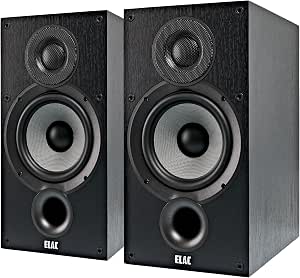 | Best for Flexible Shelf Placement | Configuration: 2-way bass reflex | Tweeter: 1-inch cloth dome | Woofer: 6.5-inch aramid fiber | VIEW ON AMAZON | See Our Full Breakdown |
| premium bookshelf speaker | Tweeter | Woofer | Dimensions | Impedance |
|---|---|---|---|---|
| KEF Q1 Meta Bookshelf Speakers | — | — | 10.9 × 7.1 × 11.9 inches | — |
| Polk Audio T15 100 Watt Home T | 0.75 inches | 5.25 inches | — | 8 ohms |
| Polk Monitor XT15 Bookshelf an | 1-inch Terylene | 5.25-inch polypropylene | — | 4 and 8 ohms |
| Klipsch RP-600M Reference Prem | 1-inch titanium LTS vented tweeter with hybrid Tractrix horn | 6.5-inch spun copper Cerametallic | 11.85 × 7.95 × 15.69 inches (D × W × H) | 8 ohms |
| Sony SS-CS5M2 3-Way Hi-Res Boo | 0.98 inches | 5.12 inches | 8.7 × 7 × 13.2 inches | 6 ohms |
| Klipsch R-41M Reference Booksh | 1-inch aluminum LTS with Tractrix horn | 4-inch spun-copper IMG | 11.3 × 5.75 × 7.9 inches | 8 ohms |
| ELAC Debut 3.0 DB63-WN Bookshe | 1-inch aluminum dome | 6.5-inch woven aramid fiber | 11.7 × 7.7 × 13.3 inches (D × W × H) | 6 ohms |
| SVS Prime Bookshelf Speakers | 1-inch aluminum dome | 6.5 inches | 9.4 × 8 × 13.2 inches | — |
| Polk Audio Reserve R200 Booksh | 1-inch Pinnacle Ring Radiator | 6.5-inch Turbine Cone | — | — |
| Klipsch R-51M Bookshelf Speake | 1-inch aluminum LTS | — | 13.3 × 7 × 8.5 inches | 8 ohms |
| Edifier R1700BTs Bluetooth Boo | 19 mm silk dome | 4 inches | 6.06 × 8.43 × 10 inches | — |
| Klipsch Reference Premiere RP- | 1-inch vented titanium | 6.5-inch Cerametallic | 13 × 7.95 × 15.75 inches | — |
| Edifier R1280T Powered Bookshe | 13 mm silk dome | 4 inches | — | 4 ohms |
| ELAC Debut 2.0 B6.2 Bookshelf | 1-inch cloth dome | 6.5-inch aramid fiber | — | 6 ohms |
More Details on Our Top Picks
KEF Q1 Meta Bookshelf Speakers, Pair, Walnut
The KEF Q1 Meta is my strongest all-around pick for listeners who want a refined passive speaker that can work in both stereo and a home theater. Its Uni-Q driver array places the tweeter within the midbass driver, a design intended to spread sound more evenly across seats than a narrowly focused presentation. Metamaterial Absorption Technology targets unwanted sound behind the tweeter, while the included port bungs give you a way to manage bass near a wall or on a shelf. Compared with the Klipsch RP-600M, the KEF is the more placement-flexible, compact choice; the Klipsch has a larger woofer and a more overt horn-based design. The KEF still needs a separate amplifier or receiver, and its 5.25-inch driver cannot match larger speakers for deep, forceful bass.
Pros:- Uni-Q array is designed to spread sound evenly across listening positions.
- Metamaterial Absorption Technology targets unwanted rear tweeter sound.
- Included port bungs help adapt bass response to shelf or near-wall placement.
- Wide stated amplifier range supports pairing with many compatible amplifiers and receivers.
Cons:- Passive design requires a separate amplifier or AV receiver.
- The 5.25-inch midbass driver offers less potential for deep, high-output bass than the Klipsch RP-600M’s 6.5-inch woofer.
Best for: Listeners building a quality stereo or home-theater system who want even coverage across more than one seat and need shelf-placement flexibility.
Not ideal for: Buyers seeking an all-in-one wireless speaker or strong room-filling bass without a subwoofer and separate amplifier.
- Speaker type:Passive two-way bass-reflex bookshelf speakers
- Quantity:Pair
- Driver array:12th-generation Uni-Q; 25 mm aluminum dome tweeter and 5.25-inch midbass cone
- Bass extension:47 Hz (-6 dB)
- Recommended amplifier power:10–150 W
- Dimensions:10.9 × 7.1 × 11.9 inches
- Weight:13.4 pounds
- Finish:Walnut
- Warranty:5-year manufacturer warranty
Our verdict“Choose the KEF Q1 Meta for a polished, versatile passive system with broad listening coverage, and add a subwoofer if deep bass is a priority.”
Polk Audio T15 100 Watt Home Theater Bookshelf Speakers (Pair, Black)
The Polk Audio T15 makes the most sense as a straightforward starting point for a receiver-based surround system, not as the most refined choice in this premium bookshelf roundup. Its 5.25-inch Dynamic Balance driver and compact, wall-mountable cabinet suit basic front, rear, or surround-channel duties, while Dolby and DTS support helps it fit into familiar home-theater setups. Compared with the Polk Monitor XT15, the T15 is the simpler, more entry-level option; the XT15 adds a Terylene tweeter and Hi-Res Audio certification. The T15’s 0.75-inch tweeter and limited listed frequency information offer less evidence of high-frequency extension than the Sony SS-CS5M2. It also lacks wireless connectivity and requires speaker wire plus a compatible receiver, so buyers seeking a polished, self-contained music system should look elsewhere.
Pros:- Can serve as front, rear, or surround speakers in a Dolby and DTS system.
- Key-hole slot supports wall mounting as an alternative to shelf placement.
- 5.25-inch driver is suited to compact home-theater setups.
- Wood cabinet and wired receiver connection keep system integration straightforward.
Cons:- Passive speakers require a separate amplifier or AV receiver.
- No Bluetooth or wireless connectivity.
- The listed specifications provide less detail about bass extension than the KEF Q1 Meta and Sony SS-CS5M2.
Best for: First-time home-theater builders who already have, or plan to buy, an AV receiver and need compact wired speakers for surround channels.
Not ideal for: Music-focused buyers seeking premium detail, extended high frequencies, or wireless playback without a receiver.
- Speaker type:Passive bookshelf speakers
- Quantity:Pair
- Power handling:100 W
- Woofer:5.25 inches
- Tweeter:0.75 inches
- Impedance:8 ohms
- Frequency response:Up to 24,000 Hz
- Mounting:Bookshelf or wall mount with key-hole slot
- Surround formats:Dolby and DTS
Our verdict“Pick the Polk T15 for a basic receiver-powered surround setup, but choose a more capable speaker if music detail and high-frequency extension matter most.”
Polk Monitor XT15 Bookshelf and Surround Sound Speakers, Pair, Midnight Black
The Polk Monitor XT15 is a practical pick when the same speaker pair may need to move between stereo listening and surround duty. Its 1-inch Terylene tweeter, 5.25-inch polypropylene woofer, and compatibility with Dolby Atmos and DTS:X systems give it a more current surround-system brief than the Polk T15. It can sit on a shelf or stand, or be wall mounted, which helps when room layout changes. Compared with the KEF Q1 Meta, the XT15 emphasizes installation flexibility and home-theater compatibility rather than a specialized driver array and tweeter-absorption technology. Hi-Res Audio certification is a useful signal of intended bandwidth, but the supplied specifications do not state a frequency range or power handling. You will also need a compatible amplifier or receiver, and stands are not included.
Pros:- Compatible with Dolby Atmos and DTS:X systems.
- Can be placed on a bookshelf, stand, or wall.
- Terylene tweeter and polypropylene woofer suit both movie and music playback.
- Hi-Res Audio certified.
Cons:- Passive design requires a compatible amplifier or receiver.
- Speaker stands are sold separately.
- The supplied product data does not specify frequency response or power handling.
Best for: Home-theater owners who want a compact pair that can serve as front, rear, or surround speakers and may need several placement options.
Not ideal for: Buyers who need specified amplifier-power guidance, included stands, or detailed frequency-response figures before choosing a speaker.
- Speaker type:Passive bookshelf speakers
- Quantity:Pair
- Tweeter:1-inch Terylene
- Woofer:5.25-inch polypropylene
- Impedance:4 and 8 ohms
- Connectivity:Wired
- Mounting:Bookshelf, stand, or wall mount
- Audio formats:Dolby Atmos and DTS:X compatible
- Finish:Midnight black
Our verdict“Choose the Monitor XT15 if flexible placement and modern surround-system compatibility matter more than detailed published performance specifications.”
Klipsch RP-600M Reference Premiere Bookshelf Speakers, Pair, Ebony
The Klipsch RP-600M is the lineup’s choice for listeners who want a larger passive bookshelf speaker with a clear emphasis on output and punch. Its 6.5-inch Cerametallic woofer is larger than the 5.25-inch drivers in the KEF Q1 Meta and Polk Monitor XT15, giving this model more scope for robust bass from a bookshelf-sized cabinet. The titanium tweeter and hybrid Tractrix horn set it apart from the KEF’s Uni-Q approach: the Klipsch is the more overtly horn-loaded design, while the KEF focuses on an integrated driver array and placement adaptability. That larger cabinet needs room, and the rear-firing port can complicate close-to-wall placement. It is passive, has no wireless connection, and buyers wanting an easy near-wall fit may prefer the KEF’s included port bungs.
Pros:- 6.5-inch woofer is larger than the drivers in the KEF Q1 Meta and Polk Monitor XT15.
- Hybrid Tractrix horn and titanium tweeter distinguish its high-frequency design.
- Supports bi-wiring or bi-amping.
- Magnetic grille can be removed without exposed grille fasteners.
Cons:- Rear-firing port can limit placement close to a wall.
- No wireless connectivity.
- Larger cabinet takes up more space than the KEF Q1 Meta or Polk Monitor XT15.
Best for: Listeners with space for larger bookshelf speakers who want a dynamic stereo or home-theater pair and already own a compatible amplifier or receiver.
Not ideal for: Small-room buyers placing speakers close to a wall, or anyone looking for wireless playback or a compact cabinet.
- Speaker type:Bookshelf speakers
- Quantity:Pair
- Tweeter:1-inch titanium LTS vented tweeter with hybrid Tractrix horn
- Woofer:6.5-inch spun copper Cerametallic
- Frequency response:45 Hz
- Impedance:8 ohms
- Dimensions:11.85 × 7.95 × 15.69 inches (D × W × H)
- Weight:16.1 pounds
- Warranty:5 years
Our verdict“Pick the RP-600M for a bigger, more output-oriented passive speaker, provided you have room behind it and a suitable amplifier.”
Sony SS-CS5M2 3-Way Hi-Res Bookshelf Speakers (Pair)
The Sony SS-CS5M2 stands out for using a three-way, three-driver layout in a relatively compact bookshelf format. A 5.12-inch woofer, soft dome tweeter, and wide-dispersion super tweeter divide the work across drivers, and the listed 53–50,000 Hz response gives buyers a clearer bandwidth specification than the Polk T15 provides. That makes the Sony a distinct alternative to the KEF Q1 Meta, whose Uni-Q array and metamaterial treatment prioritize a different approach to driver integration and rear-tweeter sound. The Sony is wired and passive, so it still needs an amplifier or compatible Sony AV receiver; it is not a powered or wireless shortcut. Its stated 100-watt maximum output and 6-ohm impedance also deserve attention when matching equipment. The one-year warranty is shorter than the five-year coverage listed for the KEF and Klipsch.
Pros:- Three-way, three-driver configuration separates woofer, tweeter, and super-tweeter duties.
- Listed frequency response extends from 53 to 50,000 Hz.
- Compact tabletop dimensions suit bookshelf or desk placement.
- Compatible with Sony AV receivers.
Cons:- Wired passive design requires an amplifier or receiver.
- One-year warranty is shorter than the five-year coverage listed for the KEF Q1 Meta and Klipsch RP-600M.
- Not waterproof or water resistant.
Best for: Listeners who want a compact, receiver-powered speaker with a three-way design and published high-frequency extension for music or TV listening.
Not ideal for: Buyers seeking wireless or powered speakers, a long listed warranty, or a speaker that can be paired without checking amplifier compatibility.
- Speaker type:Bookshelf speakers
- Configuration:3-way, 3-driver pair
- Woofer:5.12 inches
- Tweeter:0.98 inches
- Frequency response:53–50,000 Hz
- Impedance:6 ohms
- Maximum output power:100 W
- Dimensions:8.7 × 7 × 13.2 inches
- Warranty:1 year
Our verdict“Choose the Sony SS-CS5M2 for a compact three-way passive setup with a stated wide frequency range, but skip it if you need wireless convenience or longer warranty coverage.”
Klipsch R-41M Reference Bookshelf Speakers, Pair, Black
The R-41M is the space-conscious choice here: its 4-inch woofer and compact cabinet suit a shelf or smaller listening room better than the larger Klipsch R-51M. A 1-inch LTS tweeter paired with a Tractrix horn is designed to deliver clear, forward detail, while the 90 dB sensitivity can make it a practical match for modest amplification. Reinforced MDF helps limit cabinet vibration, and the pair can serve in stereo or surround setups.
The tradeoff is scale. Its stated bass response begins at 68 Hz, so it is less suited to weighty low end than the larger-woofer options, including the SVS Prime Bookshelf. I’d choose it for a tight space and clear dialogue or vocals, but skip it if you want room-filling bass without a subwoofer.
Pros:- Compact dimensions fit more easily on shelves than the Klipsch R-51M.
- Tractrix horn and LTS tweeter are designed for detailed, direct-sounding highs.
- 90 dB sensitivity offers a relatively easy amplifier match.
- Reinforced MDF cabinet is designed to reduce vibration.
Cons:- The 4-inch woofer and 68 Hz lower response limit bass weight compared with larger-woofer models.
- A subwoofer may be needed for convincing low-frequency impact in music and movies.
Best for: Listeners furnishing a small room or compact surround system who want a matched pair with horn-loaded treble and flexible placement.
Not ideal for: Buyers seeking deep, full-range bass from the speakers alone or a larger, more substantial sound for a spacious room.
- Configuration:Two-way bookshelf speakers; pair
- Woofer:4-inch spun-copper IMG
- Tweeter:1-inch aluminum LTS with Tractrix horn
- Frequency response:68 Hz–21 kHz ±3 dB
- Impedance:8 ohms
- Sensitivity:90 dB at 2.83 V/1 m
- Power handling:50 W continuous / 200 W peak
- Dimensions:11.3 × 5.75 × 7.9 inches
- Cabinet and finish:Reinforced MDF; black textured wood-grain vinyl
Our verdict“Choose the R-41M for a compact room and lively detail; pick the larger Klipsch R-51M if stronger bass presence matters more than saving space.”
ELAC Debut 3.0 DB63-WN Bookshelf Speakers, Walnut (Pair)
The ELAC Debut 3.0 DB63-WN makes the strongest case here for buyers who want a larger woofer without moving to a floorstanding speaker. Its 6.5-inch woven aramid-fiber woofer is designed to extend low-frequency response, while the aluminum dome tweeter covers detailed highs. Compared with the smaller Klipsch R-41M, this pair has more potential for a weightier presentation, and the walnut cabinets with magnetic grilles give it a more furniture-like finish.
Internal bracing helps control cabinet vibration, but this remains a wired, passive pair, not an all-in-one system: you’ll need suitable amplification. The supplied information gives conflicting upper-frequency figures, so I’d rely on the stated woofer and tweeter design rather than make a buying decision around that range. Choose the ELAC for larger-room scale; consider the more placement-flexible Polk Reserve R200 if mounting options matter more.
Pros:- 6.5-inch aramid-fiber woofer is designed for extended low-frequency response.
- Internal bracing helps reduce cabinet vibration.
- Magnetic grilles and walnut finish create a tidy, furniture-friendly appearance.
- Pair format suits a conventional two-channel stereo system.
Cons:- Wired passive design requires a separate amplifier or receiver.
- At 13.3 inches tall and 11.7 inches deep, it needs more space than the Klipsch R-41M.
- Provided frequency-response information is inconsistent.
Best for: Music listeners with an amplifier who want a 6.5-inch woofer, a walnut cabinet, and a fuller sound for a dedicated stereo setup.
Not ideal for: Buyers who need wireless or powered speakers, have limited shelf depth, or want verified performance details before choosing.
- Configuration:Two-way bookshelf speakers; pair
- Woofer:6.5-inch woven aramid fiber
- Tweeter:1-inch aluminum dome
- Frequency response:Listed as 42 Hz–38 kHz in title data; product information also states 20 kHz
- Impedance:6 ohms
- Maximum output power:120 watts
- Dimensions:11.7 × 7.7 × 13.3 inches (D × W × H)
- Cabinet and finish:MDF; walnut
- Connectivity:Wired
Our verdict“Pick the ELAC DB63-WN if you want a substantial wired stereo pair with a large woofer and walnut styling, and can accommodate its size and amplification needs.”
SVS Prime Bookshelf Speakers (Pair), Premium Black Ash
The SVS Prime Bookshelf is the versatile pick for someone building either a two-channel system or a compact home theater. A 6.5-inch woofer, 1-inch aluminum dome tweeter, and two-way crossover are designed to balance bass, treble, and imaging rather than focus on a single standout feature. That makes it a broader-use choice than the compact Klipsch R-41M, whose smaller woofer points toward smaller spaces and less bass reach.
SVS describes the Prime as delivering deep bass for its cabinet size, but the supplied data doesn’t include a frequency-response figure to compare directly with the Polk Reserve R200. Its 13.2-inch height also calls for a stable shelf or stand, and the listed 16-pound weight is unclear as to whether it applies to one speaker or the pair. I’d favor it for a flexible system build, not a buyer seeking wireless simplicity or fully specified measurements.
Pros:- 6.5-inch woofer supports a fuller presentation than the Klipsch R-41M’s 4-inch driver.
- Two-way crossover is designed for smooth integration between woofer and tweeter.
- Suitable for both stereo listening and home-theater use.
- Compact bookshelf format offers a flexible alternative to larger speakers.
Cons:- Passive speakers require an amplifier or receiver.
- The supplied specifications omit frequency response, limiting direct performance comparisons.
- The listed 16-pound weight does not clarify whether it refers to one speaker or the pair.
Best for: Listeners assembling a passive stereo or home-theater system who want a 6.5-inch woofer and a speaker suited to either role.
Not ideal for: Buyers who need powered or wireless speakers, have shallow shelves, or require clearly stated frequency and per-speaker weight data.
- Configuration:Two-way bookshelf speakers; pair
- Woofer:6.5 inches
- Tweeter:1-inch aluminum dome
- Crossover:Two-way
- Dimensions:9.4 × 8 × 13.2 inches
- Listed weight:16 pounds; whether per speaker or per pair is not specified
- Finish:Premium Black Ash
- Mounting:Shelf mount
- Enclosure materials:Polypropylene, ABS-fiberglass composite, and acoustically transparent material
Our verdict“Choose the SVS Prime if you want one passive bookshelf pair for both music and home theater, and can accept gaps in the supplied specification details.”
Polk Audio Reserve R200 Bookshelf Speakers, Pair, Black
The Polk Reserve R200 stands apart for placement flexibility and a more elaborate driver design. Its Pinnacle Ring Radiator tweeter and 6.5-inch Turbine Cone woofer are intended to serve clear highs, detailed midrange, and bass in music or home theater. Compared with the SVS Prime Bookshelf, which is presented as a broadly adaptable stereo and surround option, the R200’s listed stand, shelf, tabletop, and wall-mount choices give buyers more ways to fit it into a room.
The bass-reflex cabinet’s X-Port technology is designed to keep bass controlled, but the R200 is still a passive speaker: you’ll need an amplifier or receiver, and stands or other surround speakers are separate purchases. Its extensive supported-format information does not replace a source device capable of playing those formats. I’d choose it for a room with awkward placement needs, not for someone seeking a self-contained wireless setup like the Edifier R1700BTs.
Pros:- Listed mounting options include stands, shelves, tabletops, and wall mounting.
- Pinnacle Ring Radiator tweeter and Turbine Cone woofer target detailed highs and midrange.
- X-Port bass-reflex design is intended to support controlled bass.
- Designed for both stereo music and multichannel home theater.
Cons:- Passive design requires a separate amplifier or receiver.
- Stands and additional home-theater speakers are not included.
- Supported audio formats depend on the connected source equipment.
Best for: Home-theater and stereo builders who need flexible placement choices and want a passive speaker with a dedicated tweeter and 6.5-inch woofer.
Not ideal for: Buyers who want an all-in-one wireless system, or who expect stands and additional surround speakers to be included.
- Configuration:Passive bookshelf speakers; pair
- Tweeter:1-inch Pinnacle Ring Radiator
- Woofer:6.5-inch Turbine Cone
- Connectivity:Wired
- Mounting options:Stand, shelf, tabletop, or wall mount
- Audio certifications:Hi-Res Audio; IMAX Enhanced
- Supported formats:DSD, FLAC, WAV, ALAC, MQA
- Color:Black
Our verdict“Choose the R200 when placement flexibility and a passive stereo or theater setup are priorities, but skip it if you need a complete wireless system.”
Klipsch R-51M Bookshelf Speakers (Pair), Black
The Klipsch R-51M is the more assertive choice between the two Klipsch models in this group. Its dual 5.25-inch spun-copper IMG woofers give it more driver area than the R-41M’s single 4-inch woofer, while the 90° × 90° Tractrix horn and LTS tweeter are designed to project detail across a listening area. That makes it a stronger fit for home entertainment and larger-scale playback than the compact Klipsch R-41M.
The price of that extra scale is space and setup care. Its rear-firing bass-reflex port needs room behind the cabinet, so it is less forgiving on a tight shelf than the front-facing placement options listed for the Polk Reserve R200. The product data also describes RCA connectivity, which should be checked against the intended system before purchase; it does not specify a full frequency-response range. I’d shortlist it for energetic stereo or TV sound, not for cramped placement or a buyer seeking complete measurements.
Pros:- Dual 5.25-inch woofers offer more driver area than the Klipsch R-41M’s 4-inch woofer.
- 90° × 90° Tractrix horn and LTS tweeter are designed for projected, detailed highs.
- Pair format suits stereo home entertainment.
- MDF enclosure provides a solid cabinet platform.
Cons:- Rear-firing port needs clearance behind the speakers, restricting shelf placement.
- Larger dimensions take up more room than the Klipsch R-41M.
- The supplied data lists a 62 Hz frequency figure without specifying a complete response range.
Best for: Listeners building a stereo or home-entertainment setup who want larger woofers and horn-loaded treble in a bookshelf-sized pair.
Not ideal for: Buyers with little clearance behind their speakers, compact shelves, or a need for a clearly specified full frequency-response range.
- Configuration:Bookshelf speakers; pair
- Woofers:Dual 5.25-inch spun-copper IMG
- Tweeter:1-inch aluminum LTS
- Horn:90° × 90° Tractrix
- Enclosure:MDF with rear-firing bass-reflex port
- Dimensions:13.3 × 7 × 8.5 inches
- Impedance:8 ohms
- Frequency figure:62 Hz; full response range not specified
- Warranty:5-year limited
Our verdict“Pick the R-51M over the R-41M if you want larger woofers and can leave space behind the cabinets; choose the smaller model for tight shelves.”
Edifier R1700BTs Bluetooth Bookshelf Speakers
I’d choose the R1700BTs for a compact stereo setup that needs Bluetooth and wired connections without a separate amplifier. Its 66W RMS powered design keeps the system simple, while aptX HD Bluetooth, dual RCA inputs, and a subwoofer output give it more flexibility than the wired-only Edifier R1280T. The subwoofer connection has a built-in crossover and auto detection, which makes adding low-end support more straightforward. Remote operation and side-panel EQ knobs also suit listeners who want quick adjustments from a desk or sofa. The tradeoff is that its 4-inch woofers are smaller than the 6.5-inch drivers in the Klipsch RP-600M II and ELAC Debut 2.0 B6.2, so buyers prioritizing larger-scale, amplifier-driven sound should look there instead. Bluetooth range is limited to 10 meters.
Pros:- Powered 66W RMS design works without a separate amplifier
- Bluetooth 5.0 with aptX HD plus two RCA inputs supports varied sources
- Subwoofer output includes a built-in crossover and auto detection
- Remote and side-panel EQ controls offer convenient adjustments
Cons:- 4-inch woofers have less scale than the larger drivers in the Klipsch RP-600M II and ELAC B6.2
- Bluetooth range is limited to 10 meters
- Requires AC power and is not suitable for wet environments
Best for: Desk and living-room listeners who want powered speakers with Bluetooth, two wired sources, and an easy path to add a subwoofer.
Not ideal for: Buyers seeking passive speakers for a separate amplifier, larger 6.5-inch drivers, or dependable wireless listening beyond 10 meters.
- Power output:66W RMS
- Woofer:4 inches
- Tweeter:19 mm silk dome
- Bluetooth:Bluetooth 5.0 with aptX HD
- Inputs:Dual RCA
- Subwoofer output:Yes, with built-in crossover and auto detection
- Controls:Remote and side-panel EQ knobs
- Dimensions:6.06 × 8.43 × 10 inches
Our verdict“Choose the R1700BTs if you want a flexible powered speaker pair with Bluetooth and subwoofer support, rather than larger passive speakers that need an amplifier.”
Klipsch Reference Premiere RP-600M II Ebony Bookshelf Speakers
The RP-600M II makes the most sense for a home theater or stereo system built around a capable external amplifier. Its 6.5-inch Cerametallic woofers, vented titanium tweeter, and larger Tractrix horn are designed to deliver clear, detailed sound, while the Tractrix ports target cleaner bass. Compared with the powered Edifier R1700BTs, this Klipsch pair offers larger drivers and bi-amping capability, but it does not include amplification or wireless connectivity. The dual input terminals give system builders more wiring options, and the removable magnetic grilles allow a cleaner look when desired. Its substantial cabinet—15.75 inches tall and 18 pounds per speaker—takes more shelf space than the smaller Edifier models. I’d skip it if compact placement or an all-in-one powered system is the priority.
Pros:- 6.5-inch Cerametallic woofers provide more driver area than the Edifier bookshelf models
- Tractrix horn and vented titanium tweeter are designed for detailed, clear sound
- Tractrix ports support cleaner bass reproduction
- Dual terminals support bi-wiring or bi-amping, with removable magnetic grilles included
Cons:- Requires a compatible external amplifier or receiver
- Large, heavy cabinets need more placement space than the powered Edifier options
- No wireless connectivity and not water resistant
Best for: Home theater owners and stereo listeners who already have a compatible amplifier or receiver and want larger-driver passive speakers.
Not ideal for: Apartment desk listeners or buyers wanting Bluetooth and built-in amplification, since this pair needs a separate amplifier and substantial shelf space.
- Speaker type:Passive bookshelf
- Tweeter:1-inch vented titanium
- Woofer:6.5-inch Cerametallic
- Port design:Tractrix ports
- Bi-amping:Supported
- Dimensions:13 × 7.95 × 15.75 inches
- Weight:18 pounds
- Enclosure:MDF with vinyl finish
Our verdict“Pick the RP-600M II for an amplifier-based home theater or stereo system where larger drivers matter more than compact size or built-in wireless features.”
Edifier R1280T Powered Bookshelf Speakers
For a first stereo setup with straightforward controls, I’d put the Edifier R1280T ahead of more complex passive options such as the ELAC Debut 2.0 B6.2. Its 42-watt powered design avoids the need to select a separate amplifier, and RCA plus 3.5 mm AUX inputs let two wired sources stay connected. The remote and onboard bass and treble controls make everyday changes accessible without adding equipment. Its 4-inch drivers and wood-effect MDF finish suit a desk, shelf, or modest living-room setup, though the cabinet dimensions listed are comparatively large for a small desktop. Unlike the R1700BTs, it has no specified Bluetooth support, and its wired connections limit phone or tablet use unless those devices have a compatible output. I’d choose it for simple wired listening, not for wireless convenience or a high-output theater system.
Pros:- Built-in amplification avoids a separate receiver or amplifier
- RCA and 3.5 mm AUX inputs allow two wired devices to connect
- Remote and side-panel bass and treble controls support quick tuning
- MDF cabinets with a wood-effect finish suit shelf or tabletop placement
Cons:- No wireless connectivity is specified, unlike the R1700BTs
- 4-inch woofers offer less driver area than the Klipsch RP-600M II and ELAC B6.2
- Requires AC power and the supplied dimensions may be bulky for a compact desk
Best for: First-time buyers setting up a desk or small-room stereo with wired computer, television, or audio-player sources and no separate amplifier.
Not ideal for: Listeners who want Bluetooth, larger drivers for a bigger room, or passive speakers to integrate with an existing amplifier.
- Maximum output power:42 watts
- Audio output:Stereo, 2 channels
- Woofer:4 inches
- Tweeter:13 mm silk dome
- Inputs:RCA and 3.5 mm AUX
- Frequency response:80 hertz
- Impedance:4 ohms
- Enclosure:MDF with wood-effect vinyl finish
Our verdict“Choose the R1280T for a straightforward wired starter stereo with built-in amplification, but select the R1700BTs if Bluetooth is a requirement.”
ELAC Debut 2.0 B6.2 Bookshelf Speakers (Pair, Black)
The ELAC Debut 2.0 B6.2 stands out for buyers who need passive speakers with larger drivers and some freedom to place them near a wall or inside shelving. Its front-firing ports avoid directing port airflow toward the rear wall, while the internally braced MDF cabinets are designed to reduce vibration. A 6.5-inch aramid fiber woofer gives it more driver area than either Edifier model, but it needs a separate amplifier and offers only wired connectivity. Compared with the Klipsch RP-600M II, the ELAC emphasizes placement flexibility and a cloth-dome tweeter rather than Tractrix horn and port features. Its stated frequency response reaches 35,000 Hz, although that figure alone does not describe how the speaker will sound in a particular room. I’d skip it if you want Bluetooth or built-in amplification.
Pros:- Front-firing ports allow more flexible placement near walls and in bookshelves
- 6.5-inch aramid fiber woofer provides more driver area than the Edifier models
- Internally braced MDF cabinet is designed to reduce vibration
- Specified frequency response extends to 35,000 Hz
Cons:- Requires a separate compatible amplifier
- Wired connectivity only, with no specified Bluetooth option
- Not water resistant
Best for: Stereo and home theater buyers with an amplifier who need passive 6.5-inch speakers that can sit closer to a wall or within shelving.
Not ideal for: Listeners seeking an all-in-one powered system, Bluetooth streaming, or speakers for outdoor or bathroom use.
- Configuration:2-way bass reflex
- Tweeter:1-inch cloth dome
- Woofer:6.5-inch aramid fiber
- Frequency response:44 Hz–35,000 Hz
- Impedance:6 ohms
- Cabinet material:MDF
- Connectivity:Wired
- Warranty:3 years parts and labor
Our verdict“Choose the B6.2 if you want larger passive speakers with front ports for shelf or near-wall placement and already have an amplifier.”
How We Picked
I compared the 14 models by the factors that shape a real bookshelf-speaker purchase: sound character, scale, system requirements, connection options, room fit, and flexibility for music or home theater. I gave extra weight to whether a speaker’s design makes sense for its intended buyer—for example, whether powered speakers reduce setup friction or whether a larger passive model has the amplification and space to perform as intended. Build and finish also matter in a premium roundup, but a polished cabinet alone does not earn a higher place.
The ranking favors speakers that serve a broad range of listeners with fewer compromises, which puts the KEF Q1 Meta near the top. The Polk Reserve R200 and higher-tier Klipsch models rank well for buyers seeking more scale or a distinct presentation, while more compact, older-generation, and powered options place according to their narrower strengths. The T15, R1280T, and similar accessible picks remain useful for specific needs, but they are not treated as direct substitutes for the more capable premium passive models.
Factors to Consider When Choosing Premium Bookshelf Speakers
Before choosing a pair, I’d match the speakers to the system and room rather than chase a premium badge. These decisions can prevent common mismatches: buying passive speakers without an amplifier, expecting compact cabinets to fill a large room, or choosing powered speakers that cannot connect to the sources you use.
Passive or Powered: Choose the System Before the Speaker
Passive speakers need an amplifier or receiver, while powered models such as the Edifier R1700BTs and R1280T have amplification built in. That distinction affects more than setup convenience: an existing receiver may make passive options like the KEF, Polk, ELAC, SVS, and Klipsch models the straightforward choice. If you do not own audio components, a powered pair can reduce cables and decisions, though you have fewer upgrade paths if you later want a different amplifier. Check that the powered speaker has inputs for your actual sources, not just the connection you use most often. A common mistake is to compare speaker features before checking the full system cost and connection needs. Pick the signal path first, then narrow the speaker shortlist.
Match Cabinet Size and Listening Distance to the Room
Bookshelf speakers vary enough in physical scale that “bookshelf” should not be read as a placement instruction. Larger models may need sturdy stands and breathing room, while compact speakers can be easier to fit on a desk or in a crowded living space. In a large room or at a longer listening distance, a small cabinet may struggle to deliver the fullness you expect, especially without a subwoofer. For near-field listening, oversized speakers can dominate both the desk and the soundstage if they sit too close. Measure the available shelf or stand depth, and leave space around rear-facing ports rather than pushing every speaker against a wall. The right size is the one that suits both the listening distance and the placement the room allows.
Decide How Much Bass You Expect Without a Subwoofer
Compact bookshelf speakers cannot reproduce the same low-frequency weight as larger speakers or a separate subwoofer. If you listen to bass-heavy music, watch action films, or want a system to fill a broad area, plan for a subwoofer or choose a larger cabinet where your room permits. A subwoofer also lets you place the low-frequency source separately, which can help when speaker placement is constrained. On the other hand, adding one brings extra setup, space, and integration work; it is not automatically an improvement for every small room. Think about your preferred listening level and content before paying for extra bass capability. Match expectations to the whole system, not just the speaker’s model name.
Choose a Sound Presentation You Can Live With
Speaker character is personal, and a lively, forward presentation may suit one listener better than a more even or restrained balance. The Klipsch options stand apart from more neutral-leaning contenders such as the KEF and ELAC models, so compare them with your usual music and listening habits in mind. Room acoustics can shift the balance: reflective surfaces may make an already energetic setup feel sharper, while soft furnishings can reduce some reflected energy. Placement and toe-in—the angle of the speakers toward the listening position—can also change perceived focus and brightness. Avoid assuming that “more detail” means better for every recording or longer listening session. If possible, use a return window to compare speakers at home with familiar tracks.
Account for Amplifier Matching and Future Upgrades
With passive speakers, check that your amplifier can drive the selected pair comfortably and has the inputs and features you need. A receiver that already handles a television and surround channels may be a better fit than a simple stereo amp, even if both can power the speakers. Buyers who plan to add a center channel, subwoofer, or additional sources should check system compatibility before committing to a pair. Powered speakers simplify the initial purchase but often tie the amplifier and speaker into one package, limiting separate upgrades. Do not buy an amplifier solely on a large power figure; speaker compatibility, listening distance, and intended volume matter too. Leave room in the plan for stands, cables, and any source components required to complete the system.
Spend More for a Clear Need, Not Just a Premium Finish
Moving up the range can make sense when it brings a useful change: a larger sound, a more refined presentation, better fit for a demanding room, or closer integration with a home-theater system. It makes less sense when your current setup is limited by poor placement, an unsuitable amplifier, or a room too small to benefit from a larger speaker. Older models such as the ELAC Debut 2.0 B6.2 and Klipsch R-51M can still suit buyers who value their particular format or sound, even when newer options are available. Compare the actual improvements you need rather than treating generation alone as proof of superiority. For a desk or simple secondary system, spending on convenience may matter more than stepping up to a larger passive pair. Put the upgrade money where it changes your listening experience.
Frequently Asked Questions
Do I need an amplifier for every speaker in this roundup?
No. The Edifier R1700BTs and R1280T are powered speakers with amplification built in, while the KEF, Polk, Klipsch, ELAC, and SVS models are passive and need an amplifier or receiver. Check the sources you plan to connect as well as the speaker type: an amplifier does not automatically provide every input or feature you need. If you already own a suitable receiver, passive speakers may fit your setup more naturally. If you are starting from scratch, factor the amplifier and other system components into the decision.
Which of these speakers makes the most sense for a small room or desk?
For a compact setup, consider how much room the cabinets need and how close you will sit before choosing by sound alone. The smaller Klipsch R-41M and Polk Monitor XT15 are easier to accommodate than larger options such as the Polk Reserve R200 or Klipsch RP-600M models. The powered Edifier options can also suit a desk where a separate amplifier would add clutter. Even compact speakers need stable placement and sensible spacing from walls. Measure the available surface and check the input connections before deciding.
Should I choose a Klipsch model or the KEF Q1 Meta?
I’d choose between them by presentation, room, and intended use rather than by brand alone. The Klipsch models offer a more energetic alternative, with larger RP-series options suited to buyers seeking a forceful listening experience. The KEF Q1 Meta is the stronger general-purpose pick in this lineup for listeners who want a more balanced all-around option. A reflective room or a preference for long, relaxed listening may favor a less assertive presentation. If possible, compare familiar music at home, since room placement can change the result.
Can bookshelf speakers replace a subwoofer for movies and bass-heavy music?
They can work without one, but no bookshelf speaker should be assumed to reproduce deep bass with the same impact as a well-integrated subwoofer. Larger models such as the Polk Reserve R200 may suit buyers who want more scale from a pair, but room size and listening level still affect the result. A subwoofer can add low-frequency weight for films and bass-driven music, and it can be placed separately from the main speakers. That addition also takes space and requires setup, so it may not suit a small room or a simple stereo system. Decide based on the kind of content you play and how much bass impact you expect.
Is it worth choosing a newer model over an older speaker in this list?
Not automatically. A newer generation may bring design changes, but the better choice depends on the speaker’s role, your system, and the sound you prefer. The ELAC Debut 2.0 B6.2, for instance, remains a distinct option alongside the Debut 3.0 DB63, while the Klipsch RP-600M and RP-600M II give buyers two generations to compare. Look for a change that solves a real need, such as a better room fit, preferred presentation, or system compatibility. Avoid paying for a newer label if the older model already matches your listening space and equipment.
Conclusion
For the best overall fit, I recommend the KEF Q1 Meta for its broad appeal among the passive models. Choose the ELAC Debut 2.0 B6.2 as a value-minded route into a traditional stereo setup, or the Edifier R1700BTs if simplicity and built-in Bluetooth matter more than amplifier upgrades. The Polk Reserve R200 is my best premium choice for listeners who want a larger, more ambitious speaker for music and home theater. Beginners without separate components should look first at the powered Edifiers, while buyers building around a receiver can start with KEF, ELAC, or Polk. For a lively presentation, compare the Klipsch RP-600M II and RP-600M; for tight spaces, favor the smaller R-41M or Monitor XT15. Match the pair to your room and system, and the choice becomes much clearer.
Halloween Picks
halloween
As an affiliate, we earn on qualifying purchases.