
Choosing the right portable wifi hotspot can mean the difference between seamless remote work and frustrating dead zones. For most travelers, the TP-Link Roam 6 AX1500 stands out as the best overall pick due to its reliable Wi-Fi 6 performance and versatile travel router capabilities. If you need immediate connectivity without hunting for a local SIM card, the RoamWiFi 4G LTE Mobile Hotspot offers a compelling bundled data solution, while the Statelinker S2 appeals to tech enthusiasts seeking next-generation speed. The primary tradeoff in this category lies between devices that require you to supply your own SIM card versus those that include prepaid data plans, alongside the balance between raw speed and battery longevity. Continue reading to see which device aligns with your specific connectivity habits and travel destinations.

Get your wardrobe favorites delivered free with Prime
- Fast, free delivery on millions of items
- Prime Video, Amazon Music and more included
- Member-only deals all year
Key Takeaways
- Devices with built-in cloud SIMs or prepaid data plans offer superior convenience for international travelers but often come with higher long-term costs compared to BYO-SIM models.
- Wi-Fi 6 support is no longer a luxury but a baseline expectation for handling multiple devices efficiently, with older 802.11ac models showing significant congestion issues in crowded spaces.
- Battery capacity varies widely, with most reliable travel routers providing 10-15 hours of active use, while smaller stick-style hotspots often fail to sustain a full workday.
- Travel routers that function as both hotspots and Ethernet-to-Wi-Fi bridges provide greater utility in hotels with wired-only internet access than dedicated cellular-only devices.
- Signal strength and upload speeds are often prioritized over download speeds by remote workers, making chipset quality more important than peak theoretical bandwidth specs.
| RoamWiFi 4G LTE Mobile Hotspot with 10GB US Data and 1GB Global Data |  | Best for International Travelers | Connectivity: 4G LTE, UMTS, Wi-Fi | Included Data: 10GB US/CA/MX, 1GB Global | Max Devices: 10 | VIEW ON AMAZON | See Our Full Breakdown |
| ECOVOX E1 Portable 4G LTE Wi-Fi Hotspot with Cloud SIM |  | Best Compact Travel Companion | Connectivity: 4G LTE, Wi-Fi 6 | Battery Life: Up to 13 Hours | Max Devices: 9 | VIEW ON AMAZON | See Our Full Breakdown |
| Statelinker S2 Portable 4G LTE Wi-Fi 6 Hotspot |  | Best for Data Monitoring | Cellular Connectivity: 4G LTE | Wi-Fi Generation: Wi-Fi 6 (2.4 GHz) | Battery Life: Up to 15 Hours | VIEW ON AMAZON | See Our Full Breakdown |
| TP-Link Roam 6 AX1500 Portable Wi-Fi 6 Travel Router |  | Best Advanced Travel Router | Wi-Fi Standard: Wi-Fi 6 (AX1500) | Max Devices: 60 | Ports: 2x 1 Gbps Ethernet | VIEW ON AMAZON | See Our Full Breakdown |
| LICAEVEY Portable 4G Wi-Fi Hotspot with SIM Card Slot |  | Best Budget SIM-Free Entry | Connectivity: 4G LTE, Wi-Fi 4 | Max Speed: 300 Mbps | Battery Capacity: 2,100 mAh | VIEW ON AMAZON | See Our Full Breakdown |
| 4G LTE Mobile WiFi Hotspot Unlocked |  | Best for Multi-Device Connectivity | Connectivity: 4G LTE | Max WiFi Speed: 300 Mbps | Battery Capacity: 3000mAh | VIEW ON AMAZON | See Our Full Breakdown |
| TP-Link Roam 7 BE3600 Wi-Fi 7 Portable Travel Router |  | Best Premium Performance | Wi-Fi Standard: Wi-Fi 7 | Dual-Band: Yes | 2.5G Port: Yes | VIEW ON AMAZON | See Our Full Breakdown |
| FOSA 4G Portable WiFi Hotspot Mobile Router |  | Best Budget Entry-Level | Brand: FOSA | Network Type: 4G LTE | Wi-Fi Standard: 802.11 b/g/n | VIEW ON AMAZON | See Our Full Breakdown |
| RoamWiFi 4G LTE Mobile Hotspot, 100GB US Data + 1GB Global Data |  | Best for High-Volume US Travelers | Network coverage: 170+ countries | Connectivity: 4G LTE, Wi-Fi | Maximum connected devices: 10 | VIEW ON AMAZON | See Our Full Breakdown |
| RoamWiFi Portable Mobile Hotspot |  | Best for Short-Term Trips | Connectivity: Cellular Wi-Fi | Coverage: 170+ countries | Maximum connected devices: 10 | VIEW ON AMAZON | See Our Full Breakdown |
| TP-Link Roam 6 AX1500 Portable Wi-Fi 6 Travel Router (TL-WR1502X) |  | Best for Secure Work on Public Networks | Model: TL-WR1502X | Wi-Fi Standard: Wi-Fi 6 (802.11ax) | Speed: AX1500 (1201 Mbps on 5 GHz, 300 Mbps on 2.4 GHz) | VIEW ON AMAZON | See Our Full Breakdown |
| 4G LTE Mobile Hotspot Router, Portable WiFi Hotspot for Travel, WiFi 6 Router, 3000mAh, 300Mbps, Supports 12 Users, Pearl White | 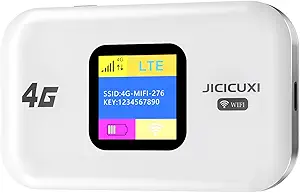 | Best Value for Multi-Device Connectivity | Network Technology: 4G LTE | WiFi Standard: WiFi 6 | Battery Capacity: 3000mAh | VIEW ON AMAZON | See Our Full Breakdown |
| RoamWiFi Portable 4G LTE Mobile Hotspot | | Best for Hassle-Free International Travel | Connectivity: LTE, Wi-Fi | Wi-Fi generation: Wi-Fi 5 | Wireless standards: 802.11ac, 802.11b, 802.11g, 802.11n | VIEW ON AMAZON | See Our Full Breakdown |
| portable wifi hotspot | Connectivity |
|---|---|
| RoamWiFi 4G LTE Mobile Hotspot | 4G LTE, UMTS, Wi-Fi |
| ECOVOX E1 Portable 4G LTE Wi-F | 4G LTE, Wi-Fi 6 |
| Statelinker S2 Portable 4G LTE | — |
| TP-Link Roam 6 AX1500 Portable | — |
| LICAEVEY Portable 4G Wi-Fi Hot | 4G LTE, Wi-Fi 4 |
| 4G LTE Mobile WiFi Hotspot Unl | 4G LTE |
| TP-Link Roam 7 BE3600 Wi-Fi 7 | — |
| FOSA 4G Portable WiFi Hotspot | — |
| RoamWiFi 4G LTE Mobile Hotspot | 4G LTE, Wi-Fi |
| RoamWiFi Portable Mobile Hotsp | Cellular Wi-Fi |
| TP-Link Roam 6 AX1500 Portable | — |
| 4G LTE Mobile Hotspot Router | — |
| RoamWiFi Portable 4G LTE Mobil | LTE, Wi-Fi |
More Details on Our Top Picks
RoamWiFi 4G LTE Mobile Hotspot with 10GB US Data and 1GB Global Data
This hotspot stands out for travelers who want to avoid carrier contracts while crossing borders. Unlike the LICAEVEY, which requires you to source a local SIM card, this device comes with pre-loaded data for the US, Canada, Mexico, and 170+ countries. It automatically connects to the strongest local network, removing the hassle of manual carrier selection. However, the included data is modest; 10GB locally and 1GB globally may vanish quickly if you stream video. It is a convenient plug-and-play solution for light users, but heavy data consumers might find the 30-day expiration limiting compared to monthly plans.
Pros:- Includes pre-paid data for US and 170+ countries
- No SIM card purchase or carrier contract required
- Automatically selects the strongest available 4G network
- Supports up to 10 simultaneous device connections
Cons:- Included global data is only 1GB, which is very low
- Battery life and capacity specifications are missing
- Data expires after 30 days, regardless of usage
Best for: Frequent international travelers who prioritize convenience over high data volume and want a device that works immediately upon landing.
Not ideal for: Heavy data users or streamers, as 1GB of global data is insufficient for video calls or HD streaming.
- Connectivity:4G LTE, UMTS, Wi-Fi
- Included Data:10GB US/CA/MX, 1GB Global
- Max Devices:10
- Wi-Fi Standard:802.11ac
- Security:WPA3
- Data Validity:30 Days
Our verdict“This is the ideal choice for short-term international trips where buying local SIMs is too much hassle.”
ECOVOX E1 Portable 4G LTE Wi-Fi Hotspot with Cloud SIM
The ECOVOX E1 appeals to those who value portability and simplicity. Its Cloud SIM technology eliminates the need for physical cards, similar to the RoamWiFi, but it offers a more consistent battery life estimate of up to 13 hours. Compared to the Statelinker S2, the ECOVOX lacks a physical display for data tracking, relying instead on an app. While it supports Wi-Fi 6, the listed connectivity range of 98 square feet suggests it is best for small spaces like a hotel room or a car. It is a solid pick for solo travelers who want a compact device without worrying about SIM compatibility.
Pros:- Cloud SIM technology removes the need for physical SIM swapping
- Compact size is ideal for pockets and small bags
- USB-C charging ensures modern cable compatibility
- Up to 13 hours of battery life supports full-day use
Cons:- Discrepancy in battery capacity specs (3000mAh vs 3500mAh)
- Limited Wi-Fi range of 98 square feet
- No physical screen for quick status checks
Best for: Solo business travelers or digital nomads who need a reliable, small hotspot for hotel rooms and coffee shops.
Not ideal for: Groups needing to connect many devices in large spaces, as the range is limited to roughly 98 square feet.
- Connectivity:4G LTE, Wi-Fi 6
- Battery Life:Up to 13 Hours
- Max Devices:9
- Security:WPA2-PSK
- Charging:USB-C
- Connectivity Range:98 Square Feet
Our verdict“Choose this if you want a tiny, SIM-free hotspot for personal use in confined spaces.”
Statelinker S2 Portable 4G LTE Wi-Fi 6 Hotspot
The Statelinker S2 differentiates itself with a built-in display for real-time data usage, a feature absent in both the ECOVOX E1 and the LICAEVEY. This transparency is valuable for users on tight data budgets who need to monitor consumption instantly. It offers up to 15 hours of battery life, slightly edging out the competition. However, its Wi-Fi is restricted to the 2.4 GHz band, unlike the dual-band TP-Link Roam 6, which may result in slower speeds in congested urban areas. It is best suited for North American users who want monthly rollover data and clear visibility into their usage patterns.
Pros:- Integrated display allows instant data usage monitoring
- Up to 15 hours of battery life per charge
- Unused monthly data rolls over to the next month
- Lightweight at approximately 3.5 ounces
Cons:- Wi-Fi operates only on the 2.4 GHz band
- Monthly data plans require initial activation steps
- Coverage is limited to North America
Best for: Budget-conscious users in North America who want to track data usage precisely and benefit from monthly rollover.
Not ideal for: Users in crowded Wi-Fi environments or those needing high-speed 5 GHz connections for gaming.
- Cellular Connectivity:4G LTE
- Wi-Fi Generation:Wi-Fi 6 (2.4 GHz)
- Battery Life:Up to 15 Hours
- Max Devices:8
- Included Data:10GB (30 days)
- Weight:3.5 Ounces
Our verdict“This is the best pick for users who need to keep a close eye on their data limits without checking an app.”
TP-Link Roam 6 AX1500 Portable Wi-Fi 6 Travel Router
The TP-Link Roam 6 is not just a hotspot; it is a versatile travel router. Unlike the cellular-dependent RoamWiFi or ECOVOX, this device focuses on creating secure private networks from public Wi-Fi sources. It supports OpenVPN and WireGuard, offering superior security for business travelers. While it does not include cellular data, its ability to connect up to 60 devices and provide wired Ethernet ports makes it far more powerful than standard hotspots. It requires a separate internet source, such as a hotel Wi-Fi or a phone hotspot, but rewards users with dual-band Wi-Fi 6 speeds and robust configuration options via the Tether app.
Pros:- Dual-band Wi-Fi 6 with speeds up to 1,201 Mbps
- Supports OpenVPN and WireGuard for secure browsing
- Includes two 1 Gbps Ethernet ports for wired devices
- Connects up to 60 devices simultaneously
Cons:- No built-in cellular modem; requires external internet source
- Does not support OpenWrt firmware
- Actual speeds vary significantly with environment
Best for: Business travelers and tech-savvy users who need to secure public Wi-Fi connections and require wired ports.
Not ideal for: Users who need cellular internet access on the go, as this device does not have a SIM slot.
- Wi-Fi Standard:Wi-Fi 6 (AX1500)
- Max Devices:60
- Ports:2x 1 Gbps Ethernet
- Security:OpenVPN, WireGuard
- Power Input:USB-C (5V/3A)
- Bands:Dual-Band (2.4/5 GHz)
Our verdict“This is the ultimate tool for securing hotel Wi-Fi, though you must bring your own internet source.”
LICAEVEY Portable 4G Wi-Fi Hotspot with SIM Card Slot
The LICAEVEY offers a straightforward entry into mobile hotspots for those who already have a 4G SIM card. Unlike the RoamWiFi or ECOVOX, it does not bundle data or use cloud SIMs, giving you full control over your carrier choice. It supports LTE Cat 4 speeds up to 300 Mbps, which is respectable for browsing and video calls. However, it relies on older Wi-Fi 4 (802.11n) technology, making it slower than the Wi-Fi 6 options like the Statelinker S2. It is a functional, no-frills device for users who want to leverage existing SIM plans without paying for proprietary data bundles.
Pros:- Compatible with existing 4G LTE SIM cards
- USB-C charging for modern convenience
- Connects up to 10 devices simultaneously
- LED indicators provide clear battery status
Cons:- Requires a separate SIM card and data plan
- Uses older Wi-Fi 4 (802.11n) technology
- Limited LTE band support (B1, B3, B5, B40)
Best for: Users who already possess a compatible 4G SIM card and want a low-cost, basic hotspot for occasional use.
Not ideal for: Travelers who want a plug-and-play experience, as you must purchase and install a SIM card separately.
- Connectivity:4G LTE, Wi-Fi 4
- Max Speed:300 Mbps
- Battery Capacity:2,100 mAh
- Max Devices:10
- LTE Bands:B1, B3, B5, B40
- Charging:USB-C
Our verdict“Buy this if you have a spare SIM card and don’t mind older Wi-Fi standards for basic connectivity.”
4G LTE Mobile WiFi Hotspot Unlocked
This unlocked hotspot stands out for its ability to connect 15 devices, a capacity that exceeds the 10-device limit found in most competitors like the FOSA 4G Portable WiFi Hotspot. It relies on a Qualcomm chipset to deliver stable 4G LTE speeds, making it a solid choice for groups who need to share a single data plan. However, the tradeoff is its single-band WiFi limitation, which can lead to congestion in crowded environments compared to dual-band options like the TP-Link Roam 7. While the 3000mAh battery offers decent endurance, you will need to source your own SIM card from a compatible carrier, adding a layer of setup complexity that contract-free devices avoid.
Pros:- Supports up to 15 simultaneous device connections
- Unlocked design allows freedom to choose carriers
- Qualcomm chipset ensures reliable signal processing
- WPA3 security protocol offers modern encryption
Cons:- Single-band WiFi limits performance in dense areas
- Requires separate SIM card purchase and activation
- No rugged or waterproof rating for outdoor abuse
Best for: Travel groups or families who need to connect more than 10 devices simultaneously and already have a compatible SIM plan.
Not ideal for: Solo travelers who want a plug-and-play experience without worrying about carrier compatibility or SIM card activation.
- Connectivity:4G LTE
- Max WiFi Speed:300 Mbps
- Battery Capacity:3000mAh
- Device Capacity:15 devices
- Security:WPA3
- Frequency Band:Single-Band
- Chipset:Qualcomm
Our verdict“Choose this if you need high device capacity and already have a flexible data plan, but be prepared for potential network congestion.”
TP-Link Roam 7 BE3600 Wi-Fi 7 Portable Travel Router
The TP-Link Roam 7 is not just a hotspot; it is a Wi-Fi 7 travel router that transforms public networks into private, secure connections. Unlike the basic 4G LTE hotspots like the FOSA model, this device does not use a SIM card for cellular data, instead relying on existing internet sources. Its 2.5G Ethernet port and support for up to 90 devices make it far superior for heavy users or small teams sharing a hotel connection. The inclusion of VPN protocols like WireGuard adds a security layer that most portable hotspots lack. However, it requires a power source and does not support the 6 GHz band, which might limit its future-proofing compared to full-spec Wi-Fi 7 home routers.
Pros:- Wi-Fi 7 technology for future-proof speeds
- Supports up to 90 connected devices
- Built-in VPN support for secure browsing
- 2.5G Ethernet port for wired high-speed connections
Cons:- Does not support 6 GHz Wi-Fi band
- Requires USB-C or PD power source to operate
- Not a cellular hotspot; relies on existing internet
Best for: Frequent business travelers and digital nomads who need secure, high-speed private networks from public WiFi sources.
Not ideal for: Users looking for standalone cellular connectivity without a separate internet source or power outlet nearby.
- Wi-Fi Standard:Wi-Fi 7
- Dual-Band:Yes
- 2.5G Port:Yes
- USB Port:USB 3.0
- Maximum Devices Supported:90
- Ethernet Ports:1x 2.5 Gbps WAN, 1x 1 Gbps LAN
- Supported VPN Protocols:OpenVPN, WireGuard, PPTP, L2TP
- Power Supply:USB-C or 5V PD power source
Our verdict“This is the right pick if you prioritize security and speed over cellular independence, turning any public WiFi into a private office.”
FOSA 4G Portable WiFi Hotspot Mobile Router
This FOSA model offers a straightforward, plug-and-play experience for those who want basic 4G connectivity without breaking the bank. It connects up to 10 devices, matching the capacity of the RoamWiFi options, but relies on a SIM card slot rather than a built-in eSIM or contract. The 2100mAh battery provides over 10 hours of use, which is adequate for a workday but falls short of the 3000mAh capacity found in the Unlocked 4G LTE Mobile WiFi Hotspot. Its reliance on 802.11n (Wi-Fi 3) means speeds are capped at 300Mbps, significantly slower than the Wi-Fi 7 capabilities of the TP-Link Roam 7. It is a functional tool for basic browsing, but lacks modern speed and security standards.
Pros:- Affordable entry point into mobile internet
- Simple SIM card insertion and setup
- Decent 10-hour battery life for daily use
- Compact size fits easily in a pocket
Cons:- Limited to older 802.11n Wi-Fi standard
- Smaller 2100mAh battery limits heavy usage
- WPA2 security is less robust than WPA3
Best for: Budget-conscious users who need a simple SIM-based hotspot for occasional travel or backup internet.
Not ideal for: Power users who need high-speed downloads, modern WiFi standards, or advanced security features.
- Brand:FOSA
- Network Type:4G LTE
- Wi-Fi Standard:802.11 b/g/n
- Max Data Rate:300 Mbps
- Battery Capacity:2100 mAh
- Battery Life:Over 10 hours
- Max Connected Devices:10
- Supported Bands:B1/B3/B5/B40
- Security Protocol:WPA2-PSK
Our verdict“A sensible choice for light users who need basic connectivity on a budget, provided you don’t mind older WiFi tech.”
RoamWiFi 4G LTE Mobile Hotspot, 100GB US Data + 1GB Global Data
This RoamWiFi unit eliminates the hassle of SIM cards by including 100GB of data for the US, Canada, and Mexico, a significantly larger allowance than the 50GB offered in the standard RoamWiFi Portable Mobile Hotspot. It works in 170+ countries without contracts, making it ideal for international trips where local SIMs are inconvenient. The dual-band 802.11ac WiFi ensures better performance than single-band options like the Unlocked 4G LTE Mobile WiFi Hotspot. However, the 90-day expiration on the data plan means you must use it soon or lose the value. Unlike the FOSA model, you are locked into their specific data ecosystem, which offers convenience but less carrier flexibility.
Pros:- Includes 100GB of high-volume regional data
- No SIM card or contract required
- Dual-band WiFi for better congestion handling
- Automatic network selection simplifies setup
Cons:- Data plans expire after 90 days
- Battery runtime is not explicitly specified
- Limited to RoamWiFi’s data ecosystem
Best for: Travelers who visit the US, Canada, or Mexico frequently and need a large data pool without managing SIM cards.
Not ideal for: Users who travel infrequently and might not use up the 100GB allowance within the 90-day window.
- Network coverage:170+ countries
- Connectivity:4G LTE, Wi-Fi
- Maximum connected devices:10
- Included local data:100GB for the US, Canada, and Mexico
- Included global data:1GB
- Data plan validity:90 days after activation
- Wi-Fi standard:802.11ac
- Frequency band:Dual-band
- Security protocol:WPA3
Our verdict“Perfect for frequent North American travelers who value large data allowances and contract-free simplicity.”
RoamWiFi Portable Mobile Hotspot
This model is a scaled-down version of its sibling, offering 50GB of regional data instead of 100GB, which makes it a more cost-effective option for shorter vacations. It still provides dual-band WiFi and access to 170+ countries, maintaining the convenience of no SIM cards or contracts. Compared to the FOSA 4G Portable WiFi Hotspot, this device offers superior connectivity options and modern WPA3 security, though it lacks the long-term data flexibility of unlocked SIM devices. The 60-day data validity is shorter than the 90-day window of the 100GB model, requiring faster usage. It is a compact, lightweight solution best suited for those who want reliable, pre-paid data for a specific trip without long-term commitments.
Pros:- 50GB regional data suits short-term needs
- Compact and lightweight for travel
- Dual-band 5 GHz WiFi support
- No contracts or SIM card management
Cons:- Data expires after 60 days
- Battery life specifications are vague
- Less data volume than the 100GB variant
Best for: Occasional travelers who need a reliable, pre-paid data solution for short trips in North America.
Not ideal for: Heavy data users or long-term travelers who will exceed the 50GB limit or 60-day expiration period.
- Connectivity:Cellular Wi-Fi
- Coverage:170+ countries
- Maximum connected devices:10
- Included local data:50 GB for the United States, Canada, and Mexico
- Included global data:1 GB
- Included data validity:60 days after activation
- Wi-Fi generation:802.11ac
- Frequency band:Dual-band, 5 GHz
- Security protocol:WPA3
Our verdict“An ideal choice for short, occasional trips where you want hassle-free data without overpaying for unused capacity.”
TP-Link Roam 6 AX1500 Portable Wi-Fi 6 Travel Router (TL-WR1502X)
This device stands out as a versatile networking hub rather than a standalone cellular modem. Unlike the RoamWiFi Portable 4G LTE Mobile Hotspot, which relies on cellular towers, the TP-Link Roam 6 requires an existing internet source—such as hotel Wi-Fi or an Ethernet cable—to function. This makes it the superior choice for digital nomads and business travelers who need to create a private, secure network from potentially untrusted public connections. Its support for WPA3 and OpenVPN allows users to tunnel traffic securely, a critical feature for handling sensitive work data. However, this dependency on external internet means it is useless in remote areas without a separate cellular hotspot. It is heavier than simple USB dongles but offers Gigabit Ethernet ports for connecting wired devices, bridging the gap between travel convenience and office-grade connectivity.
Pros:- Supports multiple modes including Router, Hotspot, and Access Point
- Includes two Gigabit Ethernet ports for wired device connectivity
- Offers robust security features like WPA3 and VPN support
- Compact design fits easily in a laptop bag or pocket
Cons:- Requires an external internet source (Wi-Fi or Ethernet) to work
- Does not support SIM cards or eSIM for standalone cellular access
- Proprietary operating system limits advanced customization options
Best for: Business travelers and remote workers who need to secure public hotel or cafe Wi-Fi with a private, encrypted network.
Not ideal for: Campers or travelers in remote areas without existing Wi-Fi, as this device cannot generate its own cellular connection.
- Model:TL-WR1502X
- Wi-Fi Standard:Wi-Fi 6 (802.11ax)
- Speed:AX1500 (1201 Mbps on 5 GHz, 300 Mbps on 2.4 GHz)
- Dimensions:4.09 in. × 3.54 in. × 1.10 in.
- Ports:2 Gigabit Ethernet Ports, 1 USB 2.0 Port
- Power Source:USB-C (5V/3A PD compatible)
- Security Protocols:WPA-PSK, WPA2-Enterprise, WPA3
Our verdict“Choose this if you primarily connect to existing Wi-Fi networks and need to secure that connection for work.”
4G LTE Mobile Hotspot Router, Portable WiFi Hotspot for Travel, WiFi 6 Router, 3000mAh, 300Mbps, Supports 12 Users, Pearl White
This unit targets users who need to share cellular data with a small group without breaking the bank. Compared to the TP-Link Roam 6, which requires an external Wi-Fi source, this device generates its own connection via a SIM card, making it truly mobile. It supports up to 12 simultaneous users, a higher capacity than the 10-device limit found on the RoamWiFi Portable 4G LTE Mobile Hotspot. The inclusion of a real-time display for signal strength and battery status is a practical touch that removes guesswork from connectivity management. However, the 3000mAh battery is modest for a device serving multiple high-bandwidth users, likely requiring a power bank for full-day heavy use. It is a straightforward, no-frills solution for families or small teams traveling together who want shared access rather than individual device tethering.
Pros:- Supports up to 12 connected devices simultaneously
- Built-in display shows real-time signal strength and battery level
- Compatible with most standard US SIM cards for flexible carrier choice
- Compact form factor suitable for pockets or small bags
Cons:- SIM card is not included, requiring separate purchase or carrier activation
- Modest 3000mAh battery may not last a full day under heavy multi-device load
- Maximum speed capped at 300Mbps, which may bottleneck high-definition streaming
Best for: Small groups or families traveling together who need to share a single data plan across multiple devices.
Not ideal for: Solo travelers who prioritize maximum battery life or ultra-high speeds over device connection limits.
- Network Technology:4G LTE
- WiFi Standard:WiFi 6
- Battery Capacity:3000mAh
- Max Speed:300Mbps
- Supported Users:12
- Color:Pearl White
Our verdict“A practical choice for sharing one data plan with a small group, provided you bring your own SIM card.”
RoamWiFi Portable 4G LTE Mobile Hotspot
This hotspot simplifies global connectivity by eliminating the need for SIM cards or contracts, a significant advantage over the 4G LTE Mobile Hotspot Router which requires users to source and install their own SIM. It automatically selects the best available network in over 170 countries, removing the friction of researching local carriers. While it includes a starter plan of 1 GB of data for North America, this allocation is extremely limited for modern usage, requiring immediate top-ups for serious use. Compared to the TP-Link Roam 6, this device offers true independence from Wi-Fi sources but relies on a subscription model for sustained access. It is ideal for occasional travelers who value convenience over data volume or cost efficiency, offering a plug-and-play experience that just works upon landing.
Pros:- No SIM card or contract required for activation
- Automatically connects to available networks in 170+ countries
- Includes a starter data plan for the US, Canada, and Mexico
- Lightweight and compact design optimized for carry-on travel
Cons:- Included 1 GB data allowance is very limited for modern usage
- Battery capacity and runtime specifications are not clearly disclosed
- Wi-Fi 5 standard may be slower than newer Wi-Fi 6 competitors
Best for: Frequent international travelers who want a contract-free, SIM-free solution with minimal setup.
Not ideal for: Data-heavy users or long-term travelers, as the included 1 GB data cap is insufficient for most needs.
- Connectivity:LTE, Wi-Fi
- Wi-Fi generation:Wi-Fi 5
- Wireless standards:802.11ac, 802.11b, 802.11g, 802.11n
- Frequency bands:Dual-band, 2.4 GHz
- Maximum data transfer rate:150 Mbps
- Maximum connected devices:10
- Coverage:170+ countries
- Included data:1 GB local data for the United States, Canada, and Mexico
Our verdict“The go-to option for travelers who prioritize immediate connectivity and ease of use over data volume.”

How We Picked
I evaluated these thirteen portable wifi hotspots based on three primary pillars: connectivity reliability, network versatility, and travel practicality. Connectivity reliability focused on real-world throughput stability and the ability to maintain a strong signal in challenging environments like rural areas or dense urban centers. Network versatility examined whether the device could handle multiple concurrent connections without throttling and if it supported modern standards like Wi-Fi 6 or Wi-Fi 7. Travel practicality considered physical size, battery life under load, and the ease of setting up local data plans versus using included global data options.
The ranking logic prioritizes devices that offer a balanced ecosystem over those that excel in only one narrow area. For instance, a device with blazing-fast download speeds but poor battery life ranks lower than a slightly slower model that lasts a full workday. I also gave preference to units with clear, accessible app interfaces for managing data usage and network settings, as these features significantly impact the user experience for frequent travelers who need to monitor bandwidth consumption closely.
Factors to Consider When Choosing Portable Wifi Hotspots
Selecting a portable wifi hotspot requires looking beyond the box specs to understand how the device fits into your actual travel and work routine. Here are the critical factors that should drive your decision.SIM Compatibility and Data Plan Flexibility
The single biggest decision you will make is whether to buy a device that requires you to insert a local SIM card or one that provides its own data service. BYO-SIM devices offer maximum flexibility and often lower long-term costs if you know how to navigate local carrier markets, but they require you to research and purchase plans at every destination. In contrast, cloud SIM or prepaid devices provide instant connectivity upon arrival, eliminating the hassle of finding a store, but they frequently charge premium rates for data and may throttle speeds after certain thresholds. If you travel to the same few countries repeatedly, a BYO-SIM model is usually more economical; if you visit new places constantly, the convenience of a built-in plan outweighs the extra cost.
Wi-Fi Standards and Device Congestion
Not all portable hotspots handle multiple devices equally well. Older models using the Wi-Fi 5 (802.11ac) standard can struggle when connected to three or more devices, leading to lag during video calls or file uploads. Wi-Fi 6 (802.11ax) and the emerging Wi-Fi 7 standards use orthogonal frequency-division multiple access (OFDMA) to communicate with multiple devices simultaneously, which drastically reduces latency and improves efficiency. For anyone connecting a laptop, phone, and tablet simultaneously, investing in a Wi-Fi 6 or newer device is not just about speed; it is about maintaining a stable connection for everyone in your party.
Battery Life and Power Management
Manufacturer battery claims are often measured under idle conditions, which rarely reflect real-world usage. A 3000mAh battery might sound robust, but under heavy load with 5G or LTE active, it may only last six to eight hours. Look for devices with USB-C Power Delivery (PD) support, which allows you to recharge quickly using standard laptop chargers or large power banks. If you plan to work a full eight-hour day away from an outlet, prioritize models with larger capacities or those that support pass-through charging, allowing the device to remain powered while connected to a laptop.
Form Factor and Portability Tradeoffs
There is a direct correlation between size and performance. Stick-style hotspots that plug directly into a USB port are incredibly compact but often suffer from poor heat dissipation and limited antenna placement, resulting in weaker signals. Router-style devices are larger and heavier but typically house better antennas and cooling systems, leading to more consistent connections. If you carry a dedicated bag for tech gear, the larger form factor is worth the bulk. However, if you need something that fits in a pocket for a weekend trip, accept the tradeoff of slightly lower performance for the sake of portability.
Global Band Support and Carrier Locks
A device that works perfectly in the United States might be useless in Europe or Asia if it lacks support for specific LTE or 5G bands. Always verify that the hotspot supports the low-band frequencies (like Band 12, 17, or 20) used for rural coverage in your target destinations. Additionally, check if the device is truly carrier-unlocked; some devices sold with specific carrier branding may have software restrictions that prevent them from working with foreign SIM cards. Buying an unlocked, multi-band device ensures you can switch providers as needed without technical headaches.
Frequently Asked Questions
Can I use my home carrier’s international roaming plan with any portable hotspot?
Most unlocked portable hotspots will accept a SIM card from your home carrier, but compatibility depends on whether the device supports the specific frequency bands your carrier uses abroad. It is vital to check the hotspot’s technical specifications against your carrier’s international roaming network details. While the hardware may physically fit the SIM, some carriers restrict hotspot usage on certain roaming plans or charge significantly higher rates for data sharing compared to phone tethering. Always confirm with your provider that hotspot tethering is permitted on your specific international plan before relying on this method.
Is Wi-Fi 7 worth the extra cost over Wi-Fi 6 for a travel hotspot?
For most travelers in 2027, Wi-Fi 7 offers diminishing returns unless you are connecting multiple high-bandwidth devices like 4K streaming laptops or gaming consoles simultaneously. Wi-Fi 7 provides higher theoretical speeds and lower latency, but these benefits are only realized if the connected devices also support Wi-Fi 7 and if the cellular network backhaul (4G LTE or 5G) can deliver sufficient throughput. Since cellular networks are often the bottleneck, the advanced features of Wi-Fi 7 may not significantly improve your daily browsing or video conferencing experience compared to a solid Wi-Fi 6 model, making it a niche choice for tech enthusiasts rather than a general necessity.
How do I prevent my portable hotspot from overheating during heavy use?
Overheating is common in compact devices because they lack active cooling fans. To mitigate this, avoid placing the hotspot in direct sunlight or inside a closed bag while it is actively transmitting data. Using a device with a larger surface area helps dissipate heat more effectively than slim stick models. If you need to run high-bandwidth tasks for extended periods, consider using a device with a larger battery, as the increased volume allows for better thermal management. Some users also find that keeping the device connected to a power source helps maintain stable temperatures compared to running on battery alone.
What is the difference between a travel router and a dedicated mobile hotspot?
A dedicated mobile hotspot is designed primarily to convert cellular data into a Wi-Fi signal for your devices. A travel router, like the TP-Link Roam series, performs this function but also adds the ability to connect to existing Wi-Fi networks (to extend range or bypass captive portals) and convert wired Ethernet connections into Wi-Fi. If you only need internet from a cellular SIM, a dedicated hotspot is sufficient. However, if you frequently stay in hotels with wired-only internet or need to share a single hotel Wi-Fi connection among multiple devices without paying for extra connections, a travel router is the more versatile and valuable tool.
Do portable hotspots work on airplanes, cruise ships, or in remote areas?
Cellular coverage dictates functionality, so a portable hotspot will only work where there is a compatible cellular signal. On airplanes and cruise ships, standard cellular networks are typically unavailable or prohibitively expensive, requiring specific maritime or air-to-ground networks that most consumer hotspots do not support. In remote areas, signal strength varies wildly; devices with external antenna ports are advantageous here as they can connect to high-gain directional antennas to pull in weak signals. For remote work, always research coverage maps for your specific carrier and destination before relying solely on a portable hotspot.
Conclusion
Selecting the right portable wifi hotspot depends entirely on your travel style and technical needs. For the majority of users seeking a balance of performance and ease of use, the TP-Link Roam 6 AX1500 remains the best overall choice due to its robust Wi-Fi 6 capabilities and versatility as a travel router. If you prioritize instant connectivity without the hassle of SIM cards, the RoamWiFi 4G LTE Mobile Hotspot is the best value option for its bundled data plans. Tech-savvy users who want the latest speeds and don’t mind a higher price point should look at the TP-Link Roam 7 BE3600 as the best premium pick. Beginners or those with light data needs will find the ECOVOX E1 to be the best entry-level device for its simplicity and low barrier to entry. Finally, for those who need to bypass hotel captive portals or extend wired connections, any of the TP-Link Roam models will serve you better than a standard cellular-only hotspot.