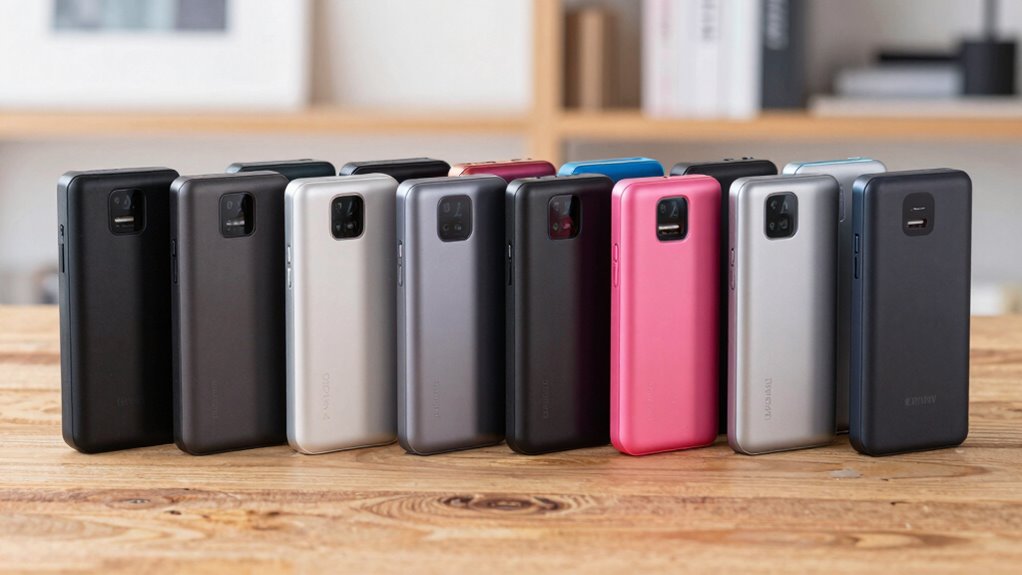

High-capacity portable power banks offer more backup energy, but their size, charging speed, and convenience vary widely. My best overall pick is the Anker 25,000mAh Power Bank with 165W Output and Built-In Cables, which pairs a practical capacity with unusually fast, flexible charging. For longer stretches away from an outlet, the Liahomco 80,000mAh stands out for its large reserve, while the Anker 20,000mAh 87W is a more portable choice for fast-charging everyday devices. The central tradeoff is straightforward: very large capacity can mean more weight and slower charging, while smaller models are easier to carry but store less energy. Read on for the full breakdown and guidance on matching capacity to your devices and travel habits.

Get your wardrobe favorites delivered free with Prime
- Fast, free delivery on millions of items
- Prime Video, Amazon Music and more included
- Member-only deals all year
Key Takeaways
Capacity and portability pull in opposite directions: the 56,800–80,000mAh options suit extended power needs better than daily carry, while the 20,000–25,000mAh Anker models are more practical for regular transport.
Output can matter more than raw capacity: the Anker 25,000mAh model’s 165W output and the Anker 20,000mAh model’s 87W output are better suited to demanding devices than the many 22.5W picks.
Built-in cables reduce packing clutter: both Anker models and the Moihosso include cable convenience, but buyers should still check connector compatibility and whether a fixed cable suits their setup.
Several large-capacity models share a similar charging-speed ceiling: the 50,000–60,000mAh options commonly list 22.5W charging, so their appeal is stored energy rather than especially rapid device charging.
Feature claims need practical context: wireless charging, solar capability, displays, flashlights, and multiple ports can add flexibility, but they do not replace checking output, recharge time, size, and travel rules.
| 80,000 mAh Power Bank with 35W Fast Charging, Wireless and Solar Capability – 7-Port PD/USB-C, LED Flashlight (Black) |  | Best for Outdoor Emergencies | Battery capacity: 80,000 mAh | Maximum output: 35 W | Ports and charging options: 9 total: 4 USB-A, 1 USB-C, Lightning, Micro-USB, and wireless | VIEW ON AMAZON | See Our Full Breakdown |
| Anker 25,000mAh Power Bank with 165W Output and Built-In Cables |  | Best for Air Travel and High-Wattage Devices | Battery capacity: 25,000 mAh | Maximum total output: 165 W | USB-C ports: 3, each rated up to 100 W | VIEW ON AMAZON | See Our Full Breakdown |
| MaiVoz 56,800mAh Portable Charger with 22.5W Fast Charging and LED Display |  | Best for Simple, High-Capacity Backup | Battery capacity: 56,800 mAh | Fast-charging output: 22.5 W | Ports: 2 USB-A outputs and 1 two-way USB-C port | VIEW ON AMAZON | See Our Full Breakdown |
| OHOVIV Portable Charger Power Bank 50000mAh PD 22.5W |  | Best for a Balanced High-Capacity Pick | Battery capacity: 50,000 mAh | Fast charging: PD 22.5W; QC 4.0/3.0 | Ports: 4 total: 2 USB-A, 1 USB-C output, and 1 additional port | VIEW ON AMAZON | See Our Full Breakdown |
| ZZI Portable Charger Power Bank 60000mAh, 22.5W PD Fast-Charge Battery Pack |  | Best for Charging a Group | Battery capacity: 60,000 mAh | Output power: 22.5 W PD | Simultaneous device charging: Up to 5 devices | VIEW ON AMAZON | See Our Full Breakdown |
| Moihosso 50000mAh Portable Charger with Built-In Cables |  | Best for Cable-Free Convenience | Battery capacity: 50,000mAh | Maximum charging output: 22.5W | Ports: 3 | VIEW ON AMAZON | See Our Full Breakdown |
| Easesolo 60,000mAh Portable Power Bank with 22.5W Fast Charging |  | Best for Charging a Group | Battery capacity: 60,000mAh | Maximum output: 22.5W | Charging technologies: PD 4.0 and QC 4.0 | VIEW ON AMAZON | See Our Full Breakdown |
| Liahomco 80,000mAh Portable Charger with 30W Fast Charging |  | Best for Maximum Stated Capacity | Battery capacity: 80,000mAh | Maximum output: 30W | Outputs: 5 | VIEW ON AMAZON | See Our Full Breakdown |
| Anker 20,000mAh Power Bank with Built-In USB-C Cable, 87W, Black |  | Best for High-Power Portable Charging | Battery capacity: 20,000mAh | Maximum output: 87W | Single-device output: Up to 65W | VIEW ON AMAZON | See Our Full Breakdown |
| IAPOS 60000mAh 22.5W Fast Charge Portable Charger for 5 Devices |  | Best for Built-In Cable Versatility | Battery capacity: 60,000mAh | Maximum output: 22.5W | Ports and integrated cable: 2 USB-A, 1 USB-C, and 3-in-1 cable | VIEW ON AMAZON | See Our Full Breakdown |
| 50000mAh 22.5W USB-C Portable Power Bank with Digital Display |  | Best for Tracking Remaining Charge | Battery capacity: 50,000 mAh | Maximum output: 22.5 W | USB-C output: 20 W | VIEW ON AMAZON | See Our Full Breakdown |
| portable power banks high capacity | Battery capacity | Maximum output | Weight | Dimensions |
|---|---|---|---|---|
| 80,000 mAh Power Bank with 35W | 80,000 mAh | 35 W | — | — |
| Anker 25,000mAh Power Bank wit | 25,000 mAh | — | — | — |
| MaiVoz 56,800mAh Portable Char | 56,800 mAh | — | — | — |
| OHOVIV Portable Charger Power | 50,000 mAh | — | 613 g | 5.38 × 2.75 × 1.6 inches |
| ZZI Portable Charger Power Ban | 60,000 mAh | — | — | 5.8 × 2.9 × 1.1 inches |
| Moihosso 50000mAh Portable Cha | 50,000mAh | — | — | 6.5 × 3.5 × 1 inches |
| Easesolo 60,000mAh Portable Po | 60,000mAh | 22.5W | 700g | 7 × 4 × 2 inches |
| Liahomco 80,000mAh Portable Ch | 80,000mAh | 30W | 1kg | — |
| Anker 20,000mAh Power Bank wit | 20,000mAh | 87W | 15.2 ounces | — |
| IAPOS 60000mAh 22.5W Fast Char | 60,000mAh | 22.5W | 15.5 ounces | 15 × 7.5 × 2.8cm |
| 50000mAh 22.5W USB-C Portable | 50,000 mAh | 22.5 W | 1.17 lb | 6.17 x 2.98 x 1.3 inches |
More Details on Our Top Picks
80,000 mAh Power Bank with 35W Fast Charging, Wireless and Solar Capability – 7-Port PD/USB-C, LED Flashlight (Black)
The Feidyns stands apart for buyers who want a large reserve alongside outdoor emergency features: its listed capacity is 80,000 mAh, and it adds a flashlight with SOS mode, wireless charging, and a solar input. Its 35W USB-C output is stronger than the 22.5W output on the MaiVoz, while the many connector types can reduce cable juggling across a group’s devices. The tradeoff is portability: the product information describes it as weighing about 2.25 lb and unsuitable for airline carry, despite a conflicting listed weight of 11.2 ounces. I would treat it as a campsite or vehicle backup rather than an everyday pack. The 5W solar panel is an emergency trickle option, not a practical way to replenish this large battery quickly.
Pros:- 80,000 mAh listed capacity suits extended off-grid backup.
- 35W USB-C output exceeds the 22.5W output listed for the MaiVoz and OHOVIV.
- USB-A, USB-C, Lightning, Micro-USB, and wireless charging support a wide mix of devices.
- 300-lumen flashlight with SOS mode adds an emergency-use feature.
Cons:- Not suitable for airline carry according to the product description.
- Solar input is only 5W, so it is a slow emergency supplement.
- Weight details conflict: the description says about 2.25 lb, while the spec lists 11.2 ounces.
Best for: Campers and vehicle-kit owners who want a high-capacity shared backup with a flashlight and multiple charging methods.
Not ideal for: Air travelers and daily commuters who need a lightweight power bank; the listed capacity is not airline-friendly, and the weight information is inconsistent.
- Battery capacity:80,000 mAh
- Maximum output:35 W
- Ports and charging options:9 total: 4 USB-A, 1 USB-C, Lightning, Micro-USB, and wireless
- Wireless charging:Qi, up to 15 W
- Solar input:5 W
- Flashlight:300 lumens with SOS strobe
- Listed item weight:11.2 ounces; product description separately states about 2.25 lb
Our verdict“Choose the Feidyns for campsite or vehicle backup and emergency lighting, not for air travel or a light everyday carry.”
Anker 25,000mAh Power Bank with 165W Output and Built-In Cables
The Anker trades the extreme capacity of the OHOVIV and ZZI for a more travel-friendly balance: its 25,000 mAh capacity is lower, but the product is stated to meet the 100Wh airline limit. Its standout is 165W total output, with three USB-C ports rated up to 100W each, making it better suited to laptops and several fast-charging devices than the 22.5W MaiVoz. Two built-in USB-C cables, including a retractable one, also cut down on loose accessories. That convenience comes with a ceiling: this is not the pick for multi-day off-grid use where maximum stored energy matters most. A wall charger is not included, and the provided details omit weight and dimensions, so I can’t compare its carry bulk precisely with the smaller-looking alternatives.
Pros:- Stated to fit under the 100Wh airline carry-on limit.
- 165W total output and three USB-C ports rated up to 100W each suit higher-demand devices.
- Two built-in USB-C cables reduce the need to pack separate leads.
- Can charge up to four devices at once.
Cons:- Lower capacity than every other reviewed option in this batch.
- Wall charger is not included.
- Weight and dimensions are not provided, making carry-size comparison difficult.
Best for: Frequent flyers and laptop users who want substantial phone backup, high USB-C output, and fewer cables to pack.
Not ideal for: Campers needing several days of shared power; its 25,000 mAh capacity is far below the 50,000–80,000 mAh options in this group.
- Battery capacity:25,000 mAh
- Maximum total output:165 W
- USB-C ports:3, each rated up to 100 W
- USB-A ports:1
- Total ports:4
- Built-in cables:2 USB-C cables, one retractable up to 2.3 ft
- Airline suitability:Stated to be under the 100Wh airline limit
- Recharge time:About 2 hours
Our verdict“Pick the Anker for airline-friendly charging of laptops and several devices, but choose a larger-capacity model for extended trips away from outlets.”
MaiVoz 56,800mAh Portable Charger with 22.5W Fast Charging and LED Display
The MaiVoz is a straightforward capacity-first option: 56,800 mAh gives it more reserve than the travel-oriented Anker, while its two USB-A outputs and two-way USB-C port cover up to three devices. A percentage display makes remaining charge easier to judge than on a basic indicator, which helps when rationing power during a long outage or outdoor trip. Its 22.5W output is useful for faster phone top-ups, but it cannot match the Anker’s much higher 165W total output for laptop-focused charging. It also falls short of the Feidyns on charging variety and emergency features: there is no listed wireless charging or flashlight. Most importantly, the product is explicitly not allowed on airplanes, so this is a ground-trip or home-backup choice rather than a flight companion.
Pros:- 56,800 mAh capacity offers substantial backup beyond the Anker’s 25,000 mAh.
- Digital percentage display shows remaining battery level.
- Three outputs can charge up to three devices at once.
- Listed safety protections cover overvoltage, overheating, short circuits, and overcurrent.
Cons:- Not allowed on airplanes due to battery capacity.
- 22.5W output is far below the Anker’s 165W total output.
- Only three device outputs are listed, with no wireless charging or flashlight.
Best for: Road-trippers and households seeking a high-capacity phone-and-tablet backup with a clear battery readout.
Not ideal for: Air travelers or laptop users who need airline-compatible capacity or output beyond the listed 22.5W.
- Battery capacity:56,800 mAh
- Fast-charging output:22.5 W
- Ports:2 USB-A outputs and 1 two-way USB-C port
- Simultaneous devices:Up to 3
- Display:Digital battery percentage
- Battery cell type:Lithium-ion
- Airline suitability:Not allowed on airplanes due to capacity
- Warranty:3 years
Our verdict“Choose the MaiVoz for ground-based phone and tablet backup with a readable charge level, not for flights or high-wattage laptop charging.”
OHOVIV Portable Charger Power Bank 50000mAh PD 22.5W
The OHOVIV sits between the smaller Anker and the larger-capacity ZZI: 50,000 mAh offers a substantial reserve, without reaching the 60,000 mAh ZZI or 80,000 mAh Feidyns. Its 22.5W fast charging and up-to-three-device output make it a practical fit for phones and accessories, while the LED display provides a precise remaining-charge readout. Compared with the MaiVoz, it has four listed ports and a stated USB-C input for recharging the pack; the available data does not establish a clear speed advantage over the MaiVoz’s 22.5W output. The main cost of its capacity is physical: at 613 g and 1.6 inches thick, it is heavier and bulkier than an everyday pocket battery. It is also not allowed on airplanes.
Pros:- 50,000 mAh capacity provides far more reserve than the 25,000 mAh Anker.
- 22.5W fast charging supports quicker phone top-ups than basic low-output banks.
- LED display shows the remaining charge level.
- Four listed ports can charge up to three devices simultaneously.
Cons:- Not allowed on airplanes due to its high capacity.
- At 613 g and 1.6 inches thick, it is bulky for everyday carry.
- Total output is limited to 22.5W, so it is less suited to high-demand devices than the Anker.
Best for: Road-trippers and emergency-kit builders who want a large phone-focused reserve, a battery display, and several output ports.
Not ideal for: Air travelers and people who need a slim daily carry; its capacity is not airline-friendly and its listed weight is 613 g.
- Battery capacity:50,000 mAh
- Fast charging:PD 22.5W; QC 4.0/3.0
- Ports:4 total: 2 USB-A, 1 USB-C output, and 1 additional port
- Simultaneous devices:Up to 3
- USB-C input:18 W
- Weight:613 g
- Dimensions:5.38 × 2.75 × 1.6 inches
- Airline suitability:Not allowed on airplanes due to capacity
Our verdict“The OHOVIV makes sense for ground-based trips and backup kits that need substantial phone power without moving up to an 80,000 mAh pack.”
ZZI Portable Charger Power Bank 60000mAh, 22.5W PD Fast-Charge Battery Pack
The ZZI combines 60,000 mAh capacity with support for up to five devices, giving it a group-charging role that the three-device OHOVIV and MaiVoz do not match. Its included 3-in-1 braided cable covers Type-C, iOS, and Micro-USB connections, which can make a shared charging setup simpler when people bring different devices. The 22.5W output is aimed at phones and smaller electronics, not the higher-demand devices better matched to the Anker’s 165W output. Its compact-sounding 5.8 × 2.9-inch footprint does not make it pocket-sized: at 1.1 inches thick, the product information describes it as about twice the thickness of an iPhone. It is also not allowed on airplanes, so the capacity benefits road trips and campsites rather than flights.
Pros:- 60,000 mAh capacity exceeds the OHOVIV’s 50,000 mAh reserve.
- Can charge up to five devices simultaneously.
- Included 3-in-1 braided cable supports Type-C, iOS, and Micro-USB connections.
- LED display shows the remaining battery level.
Cons:- Not allowed on airplanes due to its high capacity.
- At 1.1 inches thick, it is bulky for pocket carry.
- 22.5W output is less suited to laptops and other higher-demand devices than the Anker’s 165W total output.
Best for: Groups on road trips or at campsites who want one high-capacity pack with several device connections and a shared cable.
Not ideal for: Air travelers, pocket-carry users, and laptop owners who need high-wattage output.
- Battery capacity:60,000 mAh
- Output power:22.5 W PD
- Simultaneous device charging:Up to 5 devices
- Included cable:3-in-1 braided cable: Type-C, iOS, and Micro-USB
- Dimensions:5.8 × 2.9 × 1.1 inches
- Display:LED digital battery-level indicator
- Safety protections:Overcharge, overcurrent, overdischarge, overvoltage, and short-circuit protection
- Airline suitability:Not allowed on airplanes due to capacity
Our verdict“Choose the ZZI for ground-based group charging and a large phone-device reserve, but skip it for flights, pocket carry, or laptop-focused use.”
Moihosso 50000mAh Portable Charger with Built-In Cables
The Moihosso pairs 50,000mAh capacity with built-in USB-C and iOS cables, so it suits people who want several phone charges without packing separate leads. Its extra USB-C port gives another way to connect, while the 22.5W output supports faster charging on compatible devices. Compared with the IAPOS 60,000mAh, it offers less stated capacity and fewer simultaneous device connections, but its cable setup is simpler for buyers focused on phones rather than a whole group’s gear. The display makes remaining charge easier to track, and the flashlight adds a practical emergency feature. The tradeoff is size: at 6.5 inches long and 3.5 inches wide, it is less pocket-friendly than its capacity might suggest. Fast charging also depends on device compatibility.
Pros:- 50,000mAh stated capacity supports multiple phone charges
- Built-in USB-C and iOS cables reduce the need to carry separate leads
- 22.5W output can speed up charging on compatible devices
- Battery percentage display and emergency flashlight add useful trip features
Cons:- Large 6.5 × 3.5-inch footprint is awkward for pocket carry
- Fast charging depends on the connected device supporting it
- Offers less capacity and fewer listed simultaneous connections than the IAPOS 60,000mAh
Best for: Phone users on multi-day trips who want built-in USB-C and iOS charging cables and a clear battery readout.
Not ideal for: Light-packing commuters or buyers who need to charge several devices at once; its large body and narrower connection options are less suited to those needs.
- Battery capacity:50,000mAh
- Maximum charging output:22.5W
- Ports:3
- Built-in cables:USB-C and iOS
- Additional port:USB-C
- Dimensions:6.5 × 3.5 × 1 inches
- Battery type:Lithium-ion
- Warranty:3-year replacement plan
Our verdict“Choose the Moihosso if built-in phone cables matter more to you than maximum capacity or charging a larger group.”
Easesolo 60,000mAh Portable Power Bank with 22.5W Fast Charging
The Easesolo’s clearest advantage is its mix of 60,000mAh capacity and four USB outputs, letting a group charge multiple devices from one pack. PD 4.0 and QC 4.0 support provide fast-charging options for compatible phones, while the digital display helps you judge whether the remaining charge will cover the next leg of a trip. Compared with the Moihosso 50,000mAh, the Easesolo has more stated capacity and more conventional output ports, but it does not list built-in charging cables. Its flashlight and USB-C, Micro-USB, and Lightning input options add flexibility for recharging the bank. That capacity comes at a physical cost: 700g and 7 × 4 × 2 inches make it a poor fit for light day bags, and its 22.5W ceiling is modest for power-hungry devices.
Pros:- 60,000mAh stated capacity for extended use between recharges
- Four USB output ports allow charging up to four devices simultaneously
- PD 4.0 and QC 4.0 support fast charging for compatible devices
- Digital battery display and flashlight aid trip planning and emergency use
Cons:- 700g weight and large dimensions make it cumbersome to carry
- 22.5W maximum output is limited for higher-power devices
- Unlike the Moihosso, it does not list built-in charging cables
Best for: Traveling families or small groups who need one battery pack to charge several phones and accessories at once.
Not ideal for: Backpackers and commuters trying to keep carried weight down, or buyers seeking high-wattage charging for laptops.
- Battery capacity:60,000mAh
- Maximum output:22.5W
- Charging technologies:PD 4.0 and QC 4.0
- Outputs:1 USB-C and 3 USB
- Maximum devices charged simultaneously:4
- Inputs:USB-C, Micro-USB, and Lightning
- Weight:700g
- Dimensions:7 × 4 × 2 inches
Our verdict“Pick the Easesolo when sharing a high-capacity bank matters more than keeping your travel load compact.”
Liahomco 80,000mAh Portable Charger with 30W Fast Charging
Among these five, the Liahomco has the largest stated capacity at 80,000mAh, making it the capacity-first choice for extended trips or keeping several USB devices topped up. Five outputs let it serve a group, and its display gives a more useful read on remaining charge than relying on guesswork. Compared with the Easesolo 60,000mAh, it offers more stated capacity and a 30W maximum output, but the Liahomco is also listed at 1kg and is explicitly not compatible with laptops. Its lanyard and non-slip design help with carrying and placement, though they do not offset the heft for everyday use. The advertised recharge time is 10 hours, so replenishing such a large bank still takes planning. This makes more sense for USB phones, tablets, and accessories than for laptop-dependent travel.
Pros:- 80,000mAh stated capacity is the highest among these five products
- Five outputs support charging multiple devices at once
- 30W maximum output exceeds the Moihosso and Easesolo output ratings
- Display, lanyard, and non-slip design support monitoring and handling
Cons:- Listed weight of 1kg makes it burdensome for everyday carry
- Not compatible with laptops
- 10-hour stated recharge time calls for advance planning
Best for: Outdoor travelers carrying several phones, tablets, and USB accessories who prioritize long-lasting capacity over low weight.
Not ideal for: Laptop users or daily commuters who need a lighter pack; the bank is heavy and is not listed as laptop-compatible.
- Battery capacity:80,000mAh
- Maximum output:30W
- Outputs:5
- Inputs:Micro-USB and USB-C, up to 18W
- USB-A outputs:2 × 30W and 2 × 15W
- USB-C output:20W
- Weight:1kg
- Recharge time:10 hours
- Laptop compatibility:Not compatible
Our verdict“Choose the Liahomco for long USB-device trips where its unusually high stated capacity outweighs its weight and lack of laptop support.”
Anker 20,000mAh Power Bank with Built-In USB-C Cable, 87W, Black
The Anker is the outlier here: its 20,000mAh capacity is far below the Moihosso, Easesolo, Liahomco, and IAPOS, but its output reaches 87W across three devices, with up to 65W available to one device. That makes it the strongest fit for buyers who need a portable pack for compatible high-power devices, not the most total stored charge. The built-in USB-C cable simplifies packing, and airline approval makes it a more practical flight companion than the much larger-capacity Liahomco. It can also recharge in 1.5 hours with a 65W charger. The tradeoff is clear: buyers seeking repeated phone charges over several days will get less reserve than from the 50,000–80,000mAh options. Full-speed output also depends on device compatibility.
Pros:- Up to 87W total output and up to 65W for one device
- Built-in USB-C cable reduces the need to pack a separate lead
- Approved for airline travel
- Can recharge in 1.5 hours with a 65W charger
Cons:- 20,000mAh capacity is substantially lower than every other product in this batch
- 15.2-ounce weight is still noticeable in a small bag
- Full-speed single-device charging requires a compatible device
Best for: Air travelers carrying a compatible high-power device who value fast output, a built-in USB-C cable, and airline approval.
Not ideal for: Campers or families seeking the longest possible phone-charge reserve; its 20,000mAh capacity is much lower than the other picks here.
- Battery capacity:20,000mAh
- Maximum output:87W
- Single-device output:Up to 65W
- Ports:3: built-in USB-C cable, 1 USB-C, and 1 USB-A
- Weight:15.2 ounces
- Recharge time:1.5 hours with a 65W charger
- Airline travel:Approved
- Cable durability:Designed to withstand over 10,000 bends
Our verdict“Pick the Anker if fast, airline-approved charging matters more than carrying the highest capacity.”
IAPOS 60000mAh 22.5W Fast Charge Portable Charger for 5 Devices
The IAPOS brings 60,000mAh capacity together with two USB-A ports, a USB-C port, and an integrated 3-in-1 cable, giving it the broadest listed connection mix in this group. It can charge up to five devices at once, which makes it more adaptable for mixed-device trips than the Moihosso 50,000mAh, whose built-in cables cover USB-C and iOS but whose listed device count is not specified. Its digital percentage display and support for PD, QC, SCP, FCP, and AFC help with charge monitoring and compatibility across devices. However, 22.5W maximum output is well below the Anker’s 87W, so this is not the pick for high-power charging. At 15.5 ounces, it also asks for meaningful bag space despite its compact listed dimensions.
Pros:- 60,000mAh stated capacity supports extended phone and tablet use
- Can charge up to five devices simultaneously
- Integrated 3-in-1 cable covers USB-C, iOS, and Micro-USB connections
- Digital percentage display and multiple supported charging protocols
Cons:- 22.5W maximum output is much lower than the Anker’s 87W
- 15.5-ounce weight can feel bulky in a small bag
- Multiple ports and cable options may be less straightforward for buyers seeking a simple setup
Best for: Travelers carrying a mix of USB-C, iOS, and Micro-USB devices who want one high-capacity pack with several built-in connection options.
Not ideal for: Laptop users or anyone prioritizing high-wattage output; the 22.5W limit trails the Anker considerably.
- Battery capacity:60,000mAh
- Maximum output:22.5W
- Ports and integrated cable:2 USB-A, 1 USB-C, and 3-in-1 cable
- Built-in cable connectors:USB-C, iOS, and Micro-USB
- Simultaneous device charging:Up to 5 devices
- Supported protocols:PD, QC, SCP, FCP, and AFC
- Dimensions:15 × 7.5 × 2.8cm
- Weight:15.5 ounces
- Output current:3A
Our verdict“Choose the IAPOS for shared charging across mixed phone connections, not for laptop-class output or a lightweight carry.”
50000mAh 22.5W USB-C Portable Power Bank with Digital Display
This model pairs a 50,000mAh capacity with a digital battery display, making it a practical fit for trips where several phones or tablets need repeat top-ups and you want a clear read on remaining reserve. It can charge up to three devices at once, though its 22.5W maximum output is aimed at USB devices rather than laptop charging. Compared with the MaiVoz 56,800mAh Portable Charger, it offers less stated capacity, while its display and three-device charging make it easier to monitor and share power. The tradeoff is portability: at 1.17 lb, it is a substantial carry, and the product data warns that its large capacity may make it unsuitable for air travel. Choose it for ground trips and group use, not a light everyday bag or laptop setup.
Pros:- 50,000mAh capacity provides a large reserve for repeated phone and tablet charging.
- Can charge up to three USB devices simultaneously.
- Digital display makes remaining battery easier to check than relying on indicator lights.
- Includes over-current, short-circuit, and over-temperature protection.
Cons:- Not suitable for charging laptops.
- Its large capacity may prevent airline travel, so check carrier rules before flying.
- The 1.17 lb weight makes it a bulky choice for everyday carry.
Best for: Travelers by car, campers, and families who want a clearly displayed battery reserve for charging several phones or tablets.
Not ideal for: Air travelers, laptop users, and commuters seeking a lightweight everyday charger; the large capacity may face airline restrictions, it cannot charge laptops, and it weighs 1.17 lb.
- Battery capacity:50,000 mAh
- Maximum output:22.5 W
- USB-C output:20 W
- Ports:2 USB outputs, 1 USB-C input/output, 1 Micro-USB input
- Simultaneous device charging:Up to 3 devices
- Dimensions:6.17 x 2.98 x 1.3 inches
- Weight:1.17 lb
- Battery cell type:Lithium polymer
- Safety features:Over-current, short-circuit, and over-temperature protection
Our verdict“Choose this for multi-device charging on ground trips when a visible battery readout matters more than light weight or laptop support.”

How We Picked
I compared the 11 power banks on the factors that change daily usefulness: stated capacity, charging output, port and cable options, portability cues, and added features. I gave more weight to a useful balance of capacity and speed than to the largest milliamp-hour figure alone, since a very large pack can be inconvenient to carry or slow to refill. Built-in cables and clear displays count as practical advantages when they reduce what a buyer has to pack or make charge status easier to track. I also treated solar capability and wireless charging as secondary features rather than substitutes for core charging performance.
The order reflects distinct buyer needs rather than a single capacity contest. The Anker 25,000mAh model leads for its high listed output, useful capacity, and built-in cables; the Anker 20,000mAh model ranks as a more portable high-output alternative. Larger 50,000–80,000mAh packs serve buyers who prioritize reserve energy, while the 22.5W models sit behind the faster options when charging speed matters. Product names alone do not establish real-world weight, capacity under load, or recharge time, so I recommend checking those details and current device compatibility before buying.
Factors to Consider When Choosing Portable Power Banks High Capacity
Choosing among high-capacity power banks means deciding what “high capacity” needs to do for you. A pack for an occasional phone top-up has different requirements from one meant to keep several devices running during a long trip or power interruption. These factors help separate useful reserve energy from specs that may look impressive but fit poorly into your routine.
Match Capacity to the Devices You Actually Carry
Start with the devices you plan to recharge, not the biggest number on a product page. Phones, tablets, and laptops draw different amounts of energy, and a power bank’s advertised capacity does not all reach the device because energy conversion creates losses. A 50,000mAh or larger pack can make sense for several devices or longer stretches away from an outlet, but it may be excessive for a phone-only commute. Think through how many full or partial recharges you need between opportunities to plug in. If your needs vary, a medium-capacity pack can be easier to carry and more likely to come along. Check independent specifications for usable capacity where available, rather than treating rated capacity as a guaranteed number of device charges.
Choose Output for Your Hungriest Device
Capacity tells you how much energy a bank stores; wattage helps determine how quickly it can deliver that energy. A 22.5W model can suit phones and many small devices, but it may charge a tablet or laptop slowly or fail to support that device’s charging needs. For laptops, check both the bank’s USB-C output and the laptop’s required input wattage, along with supported charging standards. A high total output rating may be shared across ports, so simultaneous charging can reduce the power available to each device. Avoid choosing by the largest wattage alone: confirm that the specific port and cable support the rate you want. When in doubt, a compatible charger and a clear port-by-port output specification matter more than a headline figure.
Account for Weight, Size, and Recharging the Bank
Very large capacity often brings a pack that is heavier and bulkier, which changes whether it works as daily carry or mostly stays in a vehicle or travel bag. Product titles rarely tell the whole story, so check listed dimensions and weight before choosing a 60,000mAh or 80,000mAh model. Also consider how long the power bank itself takes to recharge; a large reserve is less convenient if it needs a long time connected to a low-wattage wall adapter. Look for the input rating and whether a suitable charging cable or adapter is included. A smaller bank with faster input can be ready for the next outing sooner. For regular travel, compare carry comfort and recharge time alongside capacity.
Treat Built-In Cables and Extra Ports as Convenience Features
Built-in cables can cut down on loose accessories and make a bank easier to use when you need a quick charge. Their tradeoff is reduced flexibility if the cable type does not fit a device or if a fixed cable gets damaged. Before buying, check the cable connectors, the number of separate outputs, and whether the listed total output applies when several devices are connected. More ports do not automatically mean faster charging for every connected device. A USB-C cable alone also does not guarantee laptop compatibility; output wattage and charging protocol still matter. If you already carry durable cables that suit all your devices, a model with open ports may offer more freedom.
Check Airline Rules Before Traveling with a Large Pack
Airline limits for spare lithium batteries are usually stated in watt-hours, not milliamp-hours, and rules can vary by airline and route. A high-capacity power bank may exceed a limit or require airline approval, so do not assume that a product can go in carry-on luggage just because it is described as portable. Check the bank’s watt-hour marking and the current requirements for every airline on your itinerary before packing. Spare power banks are generally subject to carry-on restrictions, and checked-bag rules can differ. If a product does not clearly state its watt-hour rating, ask the manufacturer or choose a model with transparent labeling. For frequent flyers, a smaller bank with clear compliance information may be a more useful travel choice than the largest option.
Read Feature Claims as Extras, Not Power Guarantees
Wireless charging can reduce cable use, but it may be slower and less energy-efficient than a wired connection. Solar panels on compact power banks are best treated as a supplemental feature unless the manufacturer provides realistic recharge figures for the panel and battery. A digital display can make remaining charge easier to read than a row of indicator lights, while a flashlight may help during a power outage or outdoor trip. These extras can justify a particular design if they solve a real need, but they do not compensate for low output or an inconveniently heavy pack. Compare the core specifications first, then decide whether the add-ons are worth carrying. This prevents feature lists from distracting from the charging performance you need.
Frequently Asked Questions
Is a 50,000mAh or larger power bank a good choice for everyday carry?
It can be, but capacity alone does not make a bank convenient to carry. Packs in this range are better suited to buyers who need several device charges, share power with others, or spend long periods away from outlets. For a daily phone backup, a smaller model is often easier to pack and may still cover the expected need. Check the product’s listed weight and dimensions, since these can change how often you actually bring it along. If the large pack will mostly stay at home or in a vehicle, its bulk may matter less.
Can the 22.5W power banks in this roundup charge a laptop?
Do not assume they can. Laptop charging depends on the laptop’s input requirements, the bank’s USB-C output, and whether both support a compatible charging standard. A 22.5W rating is more commonly suited to phones and smaller devices, and may provide little charge or none at all for some laptops. Check the laptop maker’s recommended charger wattage and compare it with the power bank’s port-specific output. The higher-output Anker models in this lineup are more plausible candidates, but their exact compatibility still depends on the laptop.
Should I pick a high-capacity 22.5W bank or a smaller, faster one?
Choose based on whether you need more stored energy or quicker charging. A 50,000–60,000mAh bank can keep devices topped up across a longer outing, but its 22.5W ceiling may feel slow with a device that accepts higher wattage. A smaller high-output option can be a better fit for fast phone charging or compatible laptop use, while offering less total reserve. Also check whether output drops when multiple ports are in use. For buyers who need both long runtime and high charging speed, compare the exact port ratings rather than relying on capacity or total wattage alone.
Are built-in cables better than carrying separate cables?
Built-in cables make sense when you want a grab-and-go setup and the included connectors match your devices. They can reduce packing clutter, a useful advantage in the Anker and Moihosso options here. Separate cables offer more flexibility if you use different connectors, need a longer cable, or want to replace a damaged one without replacing the bank. Check whether built-in cables are the only way to use certain ports and whether the bank still supports your preferred cable. The better choice is the one that fits your devices without adding a point of failure you do not want.
Can I bring an 80,000mAh power bank on a plane?
Do not decide from the milliamp-hour label alone. Airlines and aviation authorities generally assess battery limits in watt-hours, and a bank this large may exceed ordinary carry-on allowances or require approval. Look for the watt-hour rating printed on the product and verify the current policy with each airline on your trip. Power banks are commonly required to travel in the cabin rather than checked baggage, but specific rules can differ. If the rating is missing or unclear, contact the manufacturer before travel instead of risking a problem at the airport.
Conclusion
For the strongest balance of capacity, speed, and convenience, I recommend the Anker 25,000mAh 165W as the best overall pick. The best value depends on your needs: buyers prioritizing a large reserve can compare the 50,000–60,000mAh 22.5W models, while those who want quicker charging should favor a higher-output option instead of choosing by capacity alone. My best premium choice is also the Anker 25,000mAh model, thanks to its high listed output and built-in cables. For beginners, the Anker 20,000mAh 87W is a more manageable starting point than the bulkier 60,000–80,000mAh packs. If your specific need is extended off-grid backup, look at the Liahomco 80,000mAh; for extra features such as wireless charging or solar capability, compare the 80,000mAh multi-feature model while checking its practical output and recharge details. Choose the smallest bank that meets your real charging needs, unless long stretches without an outlet make extra reserve worth the added bulk.
Halloween Picks

10-Foot Halloween Inflatable Double-Headed Dragon Archway

11.2-Foot Halloween Inflatable Pumpkin with LED Lights

Spirit Halloween 54-Inch Sitting Scarecrow Animatronic
As an affiliate, we earn on qualifying purchases.