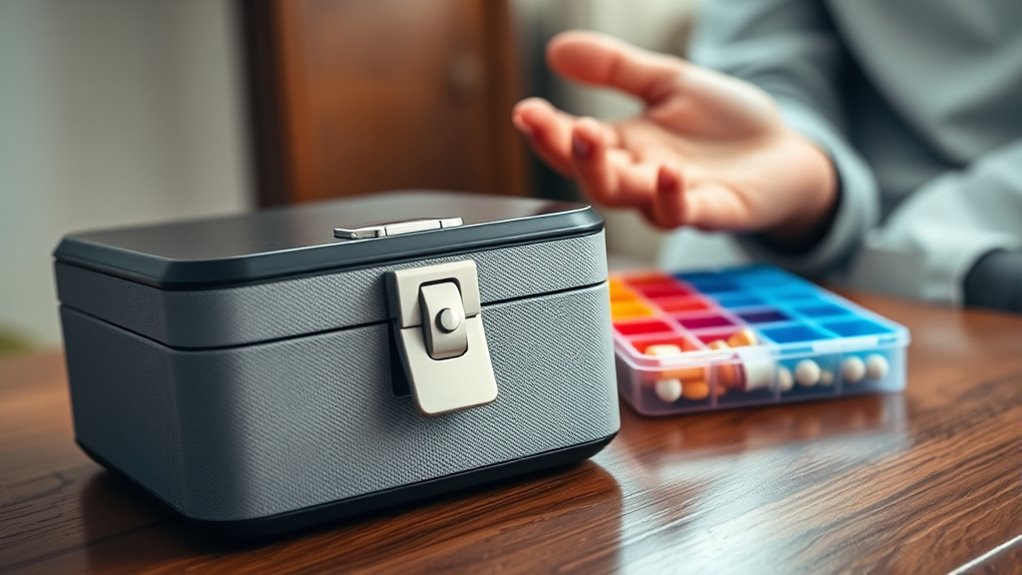
For medication reminders for dementia patients that lock, I rank the EziMedPil 28-Day Automatic Pill Dispenser with Lockable Frosted Lid as the best overall for its large capacity and secured lid. The app-connected, digital-lock dispenser stands out for caregivers who want remote alerts, while the e-pill MedSmart Voice Automatic Pill Dispenser is a strong option for people who respond better to spoken prompts. The main tradeoff is between simple, local reminders and added features that may require more setup or caregiver involvement. Capacity, access controls, and whether the person can retrieve a dose without help matter as much as the alarm itself. Read on for the full breakdown and guidance on matching a dispenser to a person’s routine and support needs.

Get your wardrobe favorites delivered free with Prime
- Fast, free delivery on millions of items
- Prime Video, Amazon Music and more included
- Member-only deals all year
Key Takeaways
- Locking matters most when access to future doses is a concern: the EziMedPil 28-Day model, the app-connected digital-lock option, and several other products foreground restricted access, but caregivers still need to confirm who can open or refill each model.
- Capacity changes the refill routine: 28-day dispensers can reduce weekly handling, while the LiveFine 21-compartment model suits a different schedule and should not be chosen by capacity alone.
- Reminder style is not interchangeable: the e-pill MedSmart adds voice prompts, while products with sound and flashing-light alerts may better suit people who notice visual cues.
- Caregiver connectivity adds setup, not just convenience: the app-connected dispenser may help with remote oversight, but local alarm models can be simpler when a caregiver is nearby.
- A locked dispenser is not a substitute for care planning: buyers should verify dose access, missed-dose response, refill responsibilities, and compatibility with the person’s actual medication schedule.
| EziMedPil 28-Day Automatic Pill Dispenser with Lockable Frosted Lid |  | Best Overall for Simple Locked Storage | Compartments: 28 | Capacity: Up to 24 aspirin-sized tablets per compartment; 672 total | Daily alarms: Up to 6 | VIEW ON AMAZON | See Our Full Breakdown |
| 28-Day Automatic Pill Dispenser with App, LCD Display, Digital Lock, and Alerts, 2-Tray, White |  | Best for Remote Caregiver Oversight | Tray layout: 2 trays with 14 slots each | Supply duration: Up to 28 days once daily or 14 days twice daily | Setup: On-device buttons with voice prompts or companion app | VIEW ON AMAZON | See Our Full Breakdown |
| e-pill MedSmart Voice Automatic Pill Dispenser |  | Best for Frequent Doses and Spoken Prompts | Daily reminders: Up to 9 | Voice alerts: English or Spanish | Compartments: 28 | VIEW ON AMAZON | See Our Full Breakdown |
| Betife 2nd Gen Automatic Pill Dispenser for Seniors with Alarm |  | Best for Large, Readable Controls | Controls: 6-button console | Display: Extra-large LCD screen | Alarm: Scheduled dose reminders | VIEW ON AMAZON | See Our Full Breakdown |
| Windtrace Automatic Pill Dispenser with Alarm |  | Best for Easier Pill Retrieval | Compartments: 28 | Daily reminders: 1 to 6 | Alerts: Audio alarm and flashing blue light | VIEW ON AMAZON | See Our Full Breakdown |
| Live Fine Automatic Locking Pill Dispenser, 28-Day |  | Best for Flexible, High-Frequency Schedules | Capacity: Up to 28 days | Doses per day: Up to 9 | Dosage rings: 9 interchangeable | VIEW ON AMAZON | See Our Full Breakdown |
| Automatic Pill Dispenser with Sound Alarm and Flashing Light |  | Best for Power-Outage Backup | Capacity: 28 doses | Dosing frequency: 1, 2, 3, or 4 times per day | Compartment capacity: Up to 9 standard-sized pills | VIEW ON AMAZON | See Our Full Breakdown |
| Med-Q Electronic Pill Dispenser with Alarm |  | Best for Reminder-Only Care | Compartments: 14 | Schedule: 7 days, morning and evening | Alarms: 1 or 2 per day | VIEW ON AMAZON | See Our Full Breakdown |
| Automatic Pill Dispenser with Safety Lock for Seniors |  | Best for Simple One-Dose-A-Day Routines | Capacity: 28 days for one daily dose | Daily alarms: Up to 6 | Audible alert: 80 dB | VIEW ON AMAZON | See Our Full Breakdown |
| LiveFine Automatic Pill Dispenser with Removable Cups, 21 Compartments, and Alarm |  | Best for Easier Medication Pickup | Compartments: 21 | Capacity: Up to 21 days | Dosage rings: 9 interchangeable; supports 1–9 doses daily | VIEW ON AMAZON | See Our Full Breakdown |
| Med-Q Digital Pill Box with Alarms |  | Best for Repeated Dose Prompts | Reminder alerts: Flashing lights and escalating beeps | Alert repeat interval: Every 30 minutes until medication is taken | Capacity: Up to 14 days for twice-daily dosing | VIEW ON AMAZON | See Our Full Breakdown |
| EziMedPil Automatic Pill Dispenser with Audio and Visual Alerts |  | Best for Flexible Home and Travel Use | Compartments: 28 | Maximum daily alarms: 6 | Capacity per compartment: Up to 24 aspirin-sized tablets | VIEW ON AMAZON | See Our Full Breakdown |
| LiveFine Automatic Pill Dispenser, 28-Day Capacity, Locking Lid |  | Best for High-Capacity Locked Storage | Capacity: Up to 28 days | Doses per day: Up to 9 | Pills per slot: Up to 18 | VIEW ON AMAZON | See Our Full Breakdown |
| Automatic Pill Dispenser with 9 Alarms and Front Key Lock |  | Best for Simple Key-Lock Controls | Daily alarms: Up to 9 customizable alarms | Alert types: Sound and flashing light | Volume levels: 3 | VIEW ON AMAZON | See Our Full Breakdown |
| medication reminders for dementia patients locking | Display | Capacity | Security |
|---|---|---|---|
| EziMedPil 28-Day Automatic Pil | High-brightness LCD | Up to 24 aspirin-sized tablets per compartment; 672 total | — |
| 28-Day Automatic Pill Dispense | LCD | — | Digital lock with app-controlled lid locking and unlocking |
| e-pill MedSmart Voice Automati | — | — | Locking lid with keys |
| Betife 2nd Gen Automatic Pill | Extra-large LCD screen | — | Built-in lock |
| Windtrace Automatic Pill Dispe | LCD | — | — |
| Live Fine Automatic Locking Pi | Jumbo LCD | Up to 28 days | — |
| Automatic Pill Dispenser with | Self-illuminating LED | 28 doses | Tamper-resistant lock and two keys |
| Med-Q Electronic Pill Dispense | — | — | — |
| Automatic Pill Dispenser with | Large-letter LCD | 28 days for one daily dose | Caregiver-controlled locking lid |
| LiveFine Automatic Pill Dispen | LCD with 12/24-hour time format | Up to 21 days | Locking key |
| Med-Q Digital Pill Box with Al | — | Up to 14 days for twice-daily dosing | — |
| EziMedPil Automatic Pill Dispe | — | — | — |
| LiveFine Automatic Pill Dispen | Jumbo LCD with 3 volume levels | Up to 28 days | Locking cover with manual key |
| Automatic Pill Dispenser with | — | — | — |
More Details on Our Top Picks
EziMedPil 28-Day Automatic Pill Dispenser with Lockable Frosted Lid
For families who want a clear reminder routine without relying on an app, the EziMedPil 28-Day is the most balanced pick here. Its lockable lid limits unsupervised access, while up to six daily audible and visual alerts give the user more than one cue to take a dose. The 28 compartments can reduce how often a caregiver needs to refill it, and interchangeable dosage rings help match the opening to a dose. Compared with the app-connected 28-Day Automatic Pill Dispenser with App, this model is simpler and does not depend on remote controls or a phone connection. That simplicity comes with tradeoffs: it runs on four AA batteries, and the user must flip the dispenser to retrieve medication. I would choose it for routine-based home care, not for hands-off remote monitoring.
Pros:- Lockable frosted lid helps restrict unsupervised access
- Up to six daily alarms provide audible and visual reminders
- 28 compartments can reduce refill frequency
- Runs on included AA batteries without a subscription
Cons:- Requires four AA batteries for operation
- Users must flip the dispenser to retrieve medication
Best for: Caregivers seeking a lockable, month-style dispenser with straightforward audible and visual reminders and no app requirement
Not ideal for: Households needing remote dose history or remote lid control, or users who have difficulty flipping a dispenser to access pills
- Compartments:28
- Capacity:Up to 24 aspirin-sized tablets per compartment; 672 total
- Daily alarms:Up to 6
- Alerts:Audible and visual
- Dosage rings:6 interchangeable
- Display:High-brightness LCD
- Volume settings:High, low, or mute
- Power and lid:4 included AA batteries; lockable frosted lid
Our verdict“Choose the EziMedPil for a dependable-feeling, lockable reminder routine when simple operation matters more than app-based caregiver monitoring.”
28-Day Automatic Pill Dispenser with App, LCD Display, Digital Lock, and Alerts, 2-Tray, White
This dispenser makes the strongest case for caregivers who need to manage a schedule from outside the home. Its free app supports remote scheduling, dose history, missed-dose alerts, and lid controls, while voice prompts also guide setup at the device. The two trays provide up to 28 days for once-daily dosing, but only 14 days for twice-daily use, so the refill interval depends on the regimen. Compared with the EziMedPil 28-Day, it offers more remote oversight but asks the household to manage an app and digital lock as well as the medication schedule. LED, voice, buzzer, and melody alerts give caregivers options for finding a cue the user notices. Its stated use is non-institutional home care, so it is not the choice for regulated facilities.
Pros:- App supports remote scheduling, dose history, missed-dose alerts, and lid controls
- Voice-guided setup is available on the device
- Four alert types offer flexibility for different hearing and attention needs
- Two trays accommodate up to 28 days of once-daily dosing
Cons:- Twice-daily dosing shortens the stated supply duration to 14 days
- App features and digital lid control add setup and technology demands
- Not intended for assisted living, nursing homes, or regulated institutions
Best for: Families coordinating medication at home who need remote scheduling, missed-dose alerts, and visibility into dose history
Not ideal for: Assisted-living, nursing-home, or other regulated settings, and households that prefer a device with no app or digital setup
- Tray layout:2 trays with 14 slots each
- Supply duration:Up to 28 days once daily or 14 days twice daily
- Setup:On-device buttons with voice prompts or companion app
- Display:LCD
- Security:Digital lock with app-controlled lid locking and unlocking
- Alerts:LED light, voice, buzzer, or melody
- Storage:Sealed lid with built-in desiccant pack
- App and intended use:Free app with no subscription; home, non-institutional use
Our verdict“Pick this model when remote caregiver oversight is the priority and the dispenser will be used in a non-institutional home.”
e-pill MedSmart Voice Automatic Pill Dispenser
When a medication plan needs frequent reminders, the e-pill MedSmart Voice has a practical advantage: it supports up to nine daily reminders, more than the six-alarm limit of the EziMedPil and Windtrace models. English or Spanish voice prompts plus flashing LEDs provide more than a silent visual cue, and the locking lid uses keys to limit access. Its AC adapter with four AA backup batteries can help keep the schedule running through a power interruption, though it adds a plug-in setup that battery-only options avoid. The removable 28-compartment tray may also make filling and handling easier for a caregiver. The tradeoff is limited product detail on compartment capacity and dimensions, making fit harder to judge before purchase. I would skip it if the user needs prompts in a language other than English or Spanish.
Pros:- Supports up to nine medication reminders per day
- English or Spanish voice alerts pair with flashing LED lights
- Locking lid with keys helps prevent accidental access
- AC adapter and four AA backup batteries are included
Cons:- Voice prompts are limited to English and Spanish
- Compartment dimensions and capacity are not specified
- AC-powered operation requires access to a suitable outlet
Best for: Caregivers managing several daily medication times who want spoken reminders and backup battery power
Not ideal for: Users who need prompts in another language, or buyers who need confirmed compartment dimensions and tablet capacity before choosing
- Daily reminders:Up to 9
- Voice alerts:English or Spanish
- Compartments:28
- Power:AC adapter or 4 AA backup batteries
- Security:Locking lid with keys
- Tray:Removable 28-compartment tray
- Warranty:1 year
- Money-back guarantee:30 days
Our verdict“Choose the MedSmart Voice for a complex daily schedule that benefits from frequent spoken prompts and backup power.”
Betife 2nd Gen Automatic Pill Dispenser for Seniors with Alarm
The Betife puts its emphasis on the physical interface: a six-button console with oversized icons and an extra-large LCD aims to make setup and daily checks easier for users with reduced vision or dexterity. A built-in lock addresses the access-control side of dementia care, and the alarm provides scheduled dose reminders. Compared with the Windtrace Automatic Pill Dispenser, which specifies 28 compartments, multiple daily reminders, and a sliding retrieval window, Betife gives less information about how much medication it holds or how doses are arranged. That missing capacity detail makes it harder to match the dispenser to a regimen before buying. The clock and schedule also need to be set up, so this is not a ready-to-use reminder system. I would favor it when readable controls matter most, but not when capacity needs are a deciding factor.
Pros:- Six-button console uses oversized icons
- Extra-large LCD is designed for easier reading
- Built-in lock helps prevent unauthorized access and pill mixing
- Scheduled alarm provides a dose-time prompt
Cons:- Number of compartments and medication capacity are not specified
- Clock and dose schedule require setup
- Alert details and reminder limits are not provided
Best for: Older adults with low vision or limited dexterity whose caregiver can set the clock and dose schedule
Not ideal for: Caregivers who need a confirmed number of dose slots, known refill intervals, or detailed capacity information
- Controls:6-button console
- Display:Extra-large LCD screen
- Alarm:Scheduled dose reminders
- Security:Built-in lock
- Tray seal:Less than 2 mm
- Tested durability:5,000+ carousel rotations
Our verdict“Choose Betife when large, readable controls outweigh the need for clearly stated capacity and alarm details.”
Windtrace Automatic Pill Dispenser with Alarm
The Windtrace Automatic Pill Dispenser stands apart for access: its sliding retrieval window is designed to make collecting a dose easier than the flip-to-retrieve layout of the EziMedPil 28-Day. It also offers 28 compartments, reminders one to six times daily, and audio plus a flashing blue light, covering the main needs for a home routine without app management. Six dosage rings and three keys are included, along with four AA batteries, so caregivers have basic setup and locking accessories in the box. The tradeoff is that the schedule must be programmed before use, and the supplied details do not describe remote caregiver alerts or dose history like the app-connected 28-Day dispenser. I would choose Windtrace when physical access matters more than remote oversight, while checking that its reminder setup suits the user.
Pros:- Sliding retrieval window is designed for easier dose access
- 28 compartments support a longer refill interval
- Audio alarm and flashing blue light provide two reminder cues
- Includes dosage rings, three keys, and four AA batteries
Cons:- Requires programming before use
- No app-based dose history or remote alerts are specified
- Reminder frequency is limited to six times daily
Best for: Home caregivers who want a 28-compartment locked dispenser with a sliding dose window and no app requirement
Not ideal for: Families seeking remote dose tracking, missed-dose notifications, or a dispenser that avoids caregiver programming
- Compartments:28
- Daily reminders:1 to 6
- Alerts:Audio alarm and flashing blue light
- Display:LCD
- Retrieval:Sliding retrieval window
- Dosage rings and keys:6 dosage rings and 3 keys
- Tray:Removable food-grade material
- Included power:4 AA batteries
Our verdict“Pick Windtrace when a sliding retrieval window and simple local reminders are more useful than app-based caregiver monitoring.”
Live Fine Automatic Locking Pill Dispenser, 28-Day
Up to nine doses a day makes this a better fit for complicated schedules than the Automatic Pill Dispenser with Safety Lock for Seniors, which holds a 28-day supply for one daily dose. Its nine interchangeable dosage rings let a caregiver match the compartments to the schedule, while the jumbo LCD and adjustable audio and visual reminders offer more than one cue at dose time. The lockable cover and sliding retrieval window are useful when limiting access matters, though the window still requires the user to collect the released medication.
The tradeoff is setup: a caregiver must program the dispenser and use the manual key to open the cover for loading or changes. I’d choose it over the removable-cup LiveFine model when longer capacity and more daily doses matter more than cups that extend for easier pickup.
Pros:- Stores up to 28 days of medication and supports as many as nine daily doses.
- Nine interchangeable dosage rings allow schedule configurations to vary.
- Audio and visual reminders can be adjusted for the user.
- Lockable cover and sliding retrieval window help limit access to the supply.
Cons:- Programming and initial setup may require caregiver involvement.
- A manual key is needed to unlock the cover for loading or schedule changes.
Best for: Caregivers organizing multiple medications across several daily doses who want a lockable dispenser with a month-long capacity.
Not ideal for: Households needing a simple setup or a retrieval cup that extends toward someone with limited dexterity.
- Capacity:Up to 28 days
- Doses per day:Up to 9
- Dosage rings:9 interchangeable
- Reminders:Adjustable audio and visual reminders, up to 30 minutes
- Display:Jumbo LCD
- Cover:Lockable, with manual key
- Retrieval:Sliding window
Our verdict“Choose this model when a complex daily schedule and 28-day capacity matter more than the easiest possible setup or medication pickup.”
Automatic Pill Dispenser with Sound Alarm and Flashing Light
Battery backup for up to 48 hours is the clearest reason to choose this dispenser over the Live Fine Automatic Locking Pill Dispenser, 28-Day, which offers a broader schedule of up to nine daily doses but has no backup listed in its specifications. Here, the schedule is limited to one to four dispensing times per day, with a sound alarm and flashing light that can be enabled independently. The lock and two keys help restrict access to one dose at a time, while the removable tray can make weekly loading more manageable.
Its limits are meaningful for dementia care: it has no remote monitoring, and the stated compartment capacity is up to nine standard-sized pills, so larger tablets or bulky combinations may not fit. I’d pick it over the 28-day LiveFine when continuity through a power interruption matters more than higher dosing frequency or a longer stated capacity.
Pros:- Battery backup supports operation for up to 48 hours during a power outage.
- Audible alarm and flashing light can be enabled or disabled independently.
- Tamper-resistant lock and two keys restrict access to the supply.
- Removable tray supports loading the compartments as a group.
Cons:- Does not include remote monitoring for caregivers.
- Supports only one to four dispensing times per day.
- Each compartment holds up to nine standard-sized pills, which may not suit larger medication combinations.
Best for: Caregivers who want a locked, one-dose-at-a-time dispenser and backup operation during short power interruptions.
Not ideal for: People whose medication plan needs more than four dispensing times daily, remote caregiver monitoring, or room for bulky pills.
- Capacity:28 doses
- Dosing frequency:1, 2, 3, or 4 times per day
- Compartment capacity:Up to 9 standard-sized pills
- Alarm:85 dB, adjustable for up to 30 minutes
- Battery backup:Up to 48 hours
- Battery type:Rechargeable NiMH
- Security:Tamper-resistant lock and two keys
- Display:Self-illuminating LED
Our verdict“Pick this dispenser if outage backup and controlled access matter more than a high-dose schedule or caregiver monitoring.”
Med-Q Electronic Pill Dispenser with Alarm
The Med-Q’s flashing light and audible cue can direct someone to the right morning or evening compartment, but this is a reminder box, not a locking dispenser. That distinction makes it less suitable for preventing extra doses than the Automatic Pill Dispenser with Safety Lock for Seniors, whose locking lid limits access. In return, Med-Q uses 14 individually labeled compartments that open by hand and lift out separately, a simpler arrangement for a person who can manage familiar lids or needs to carry a day’s medication.
The alarm repeats until the box is opened or Next Alert is pressed, which can provide a persistent prompt, and a low-battery indicator gives advance notice. Yet caregivers must set it up, batteries are not included, and the compartments remain accessible. I’d select it only when reminders and portability matter more than restricting access or dispensing a dose automatically.
Pros:- Flashing light and audible alarms indicate which compartment to open.
- Large day labels and hand-opened lids support straightforward manual access.
- Individual compartments lift out for travel.
- Low-battery indicator appears about a month before batteries run out.
Cons:- Does not lock, so users can open compartments outside the scheduled reminder.
- Requires the user to open compartments by hand rather than collecting automatically dispensed medication.
- Two AA batteries are not included, and some users may need caregiver setup.
Best for: Families seeking a portable morning-and-evening reminder box for someone who can open compartments independently and does not need access restricted.
Not ideal for: Caregivers concerned about accidental extra doses or seeking a lockable dispenser that releases medication automatically.
- Compartments:14
- Schedule:7 days, morning and evening
- Alarms:1 or 2 per day
- Alarm behavior:Beeps and gets louder for 5 minutes, then repeats every 30 minutes until the box is opened or Next Alert is pressed
- Compartment capacity:Up to about 7 large pills
- Power:2 AA batteries, not included
- Battery life:About 14 months
- Dimensions:8.75 x 4.5 x 1 inches
- Locking:Does not lock
Our verdict“Choose Med-Q for portable reminders when the user can manage manual access and a locking safeguard is not required.”
Automatic Pill Dispenser with Safety Lock for Seniors
For a routine centered on one daily medication dose, this dispenser pairs 28-day capacity with a caregiver-controlled locking lid. That makes it a more focused choice than the Live Fine Automatic Locking Pill Dispenser, 28-Day, which supports up to nine doses daily and may suit more involved schedules. This model can sound up to six alarms a day, but its stated 28-day capacity is for one daily dose; caregivers should not assume the extra alarm settings mean it holds a month of multiple-dose schedules.
The large-letter LCD and three-button programming keep controls relatively direct, and settings are saved when batteries are changed. The tradeoff is the dispensing action: the user opens the window and turns the unit upside down to retrieve medication. That motion may be awkward for someone with limited coordination, and caregivers still need to fill the ring and keep track of the two keys.
Pros:- Locking lid helps prevent accidental access and double-dosing.
- Holds up to 28 days of medication for one daily dose.
- Large-letter LCD and three-button controls support direct programming.
- Settings remain saved when batteries are changed, and two keys are included.
Cons:- The stated 28-day capacity is for one daily dose, not a month of multiple daily doses.
- The user must open the dispensing window and turn the unit upside down to retrieve medication.
- Caregivers must fill the medication ring and manage the keys.
Best for: Caregivers setting up a straightforward daily dose who want a locking lid, large display, and saved settings.
Not ideal for: People who need several medication doses stored each day, remote monitoring, or a retrieval method that requires little handling.
- Capacity:28 days for one daily dose
- Daily alarms:Up to 6
- Audible alert:80 dB
- Display:Large-letter LCD
- Controls:3 buttons
- Accessories:6-dose ring, 2 keys, user manual
- Security:Caregiver-controlled locking lid
- Settings memory:Settings saved when batteries are changed
Our verdict“Choose this model for a simple once-daily routine with restricted access, but not for a complex multi-dose schedule.”
LiveFine Automatic Pill Dispenser with Removable Cups, 21 Compartments, and Alarm
Removable cups that extend at scheduled times set this LiveFine apart: they can make dose pickup easier than the sliding retrieval window on the Live Fine Automatic Locking Pill Dispenser, 28-Day. Its light ring and audible alerts add a clear cue, with three volume levels and a programmable LCD. The tradeoff is capacity: this model holds 21 days, not 28, though interchangeable rings support schedules from one to nine doses daily.
A locking key helps restrict access to the stored medication, but the alert may repeat every seven seconds for as long as 30 minutes. That persistence can prompt someone who missed the first cue, yet it may be disruptive in a shared home. Four AA batteries are included, so setup does not require a separate battery purchase. I’d favor it over the other LiveFine when accessible pickup matters more than an extra week of capacity.
Pros:- Removable cups extend at scheduled times for easier medication pickup.
- Interchangeable dosage rings support one to nine doses daily.
- Audible alarms and a visual light ring provide more than one reminder cue.
- Locking key restricts access, and four AA batteries are included.
Cons:- Stores up to 21 days, less than the 28-day LiveFine model.
- Alarm repeats every seven seconds for up to 30 minutes, which may be disruptive.
- Still requires programming and caregiver loading of the compartments.
Best for: Caregivers prioritizing easier dose pickup for someone who may struggle with a sliding window or handling a dispenser upside down.
Not ideal for: Households needing 28-day capacity or where a persistent alarm could disturb other people nearby.
- Compartments:21
- Capacity:Up to 21 days
- Dosage rings:9 interchangeable; supports 1–9 doses daily
- Alerts:Audible alarms and visual light ring
- Alarm duration:Repeats every 7 seconds for up to 30 minutes
- Display:LCD with 12/24-hour time format
- Volume levels:3
- Power:4 AA batteries, included
- Security:Locking key
Our verdict“Choose this LiveFine when easier access to the dispensed dose matters more than 28-day capacity or quieter alerts.”
Med-Q Digital Pill Box with Alarms
The Med-Q Digital Pill Box suits someone who benefits from persistent prompts more than from a locking mechanism. Its flashing lights and escalating beeps repeat every 30 minutes until medication is taken, while a highlighted compartment points to the scheduled dose. That visual cue may reduce confusion about which section to open, and oversized lettering and easy-open compartments keep the basic interaction simple. Compared with the LiveFine Automatic Pill Dispenser, 28-Day Capacity, Locking Lid, this Med-Q offers clearer repeat-alert details but does not describe a lock to restrict access to other doses. Its stated capacity is also limited to 14 days at twice-daily dosing, and the available details do not give compartment dimensions or a total compartment count. Choose it for reminder persistence, not medication security.
Pros:- Audible and flashing alerts repeat every 30 minutes until medication is taken
- Highlights the compartment for the scheduled dose
- Holds up to 14 days at twice-daily dosing
- Easy-open compartments and oversized lettering support straightforward use
Cons:- No locking feature is specified, so it may not limit access to future doses
- Compartment dimensions and total compartment count are not provided
- Capacity is described for twice-daily use and may not suit more frequent schedules
Best for: People who need repeated audible and visual prompts and a clearly indicated dose, with a caregiver managing medication access separately.
Not ideal for: Households where the dispenser must prevent access to other doses; this model’s supplied details do not specify a locking feature.
- Reminder alerts:Flashing lights and escalating beeps
- Alert repeat interval:Every 30 minutes until medication is taken
- Capacity:Up to 14 days for twice-daily dosing
- Compartment access:Easy-open compartments
- Compartment labeling:Oversized lettering
- Scheduled-dose cue:Highlights the scheduled compartment
Our verdict“Choose the Med-Q for persistent reminders and a visible dose cue, but skip it if controlled access is the main need.”
EziMedPil Automatic Pill Dispenser with Audio and Visual Alerts
The EziMedPil Automatic Pill Dispenser is a flexible choice for households that need several daily reminders and a portable, battery-powered setup. Its 28 compartments and up to six alarms per day accommodate more varied schedules than the Med-Q Digital Pill Box, whose stated capacity is for twice-daily dosing. The large LCD, magnifying glass, adjustable volume, and removable tray may help a user or caregiver read and manage the schedule, while two keys provide a security measure. However, the product details do not describe a timed locking schedule or remote caregiver alerts, so the keys should not be mistaken for dose-by-dose access control. Unlike the LiveFine Automatic Pill Dispenser, 28-Day Capacity, Locking Lid, its listed features do not specifically describe a locking cover. Battery power supports travel, but it also means keeping four AA batteries available.
Pros:- 28 compartments reduce how often medication needs to be refilled
- Audio and visual alerts with high, low, or mute volume settings
- Large LCD includes a built-in magnifying glass
- Removable tray and included security keys add practical handling options
Cons:- Requires four AA batteries
- No locking schedule or remote caregiver notification is specified
- Each compartment holds up to 24 aspirin-sized tablets, which may not fit larger pills or higher quantities
Best for: Caregivers seeking a portable dispenser with a large display, six daily alarm options, and a removable tray for home or travel.
Not ideal for: Families who need confirmed timed access control or remote notifications; neither feature is specified for this dispenser.
- Compartments:28
- Maximum daily alarms:6
- Capacity per compartment:Up to 24 aspirin-sized tablets
- Power:4 AA batteries included
- Alert types:Audio and visual
- Volume settings:High, low, or mute
- Time formats:12-hour or 24-hour
- Included accessories:6 dosage rings, 2 security keys, instruction booklet, and 4 AA batteries
Our verdict“Pick this EziMedPil for readable reminders and portability, not for verified timed locking or remote oversight.”
LiveFine Automatic Pill Dispenser, 28-Day Capacity, Locking Lid
For buyers who put locking access and schedule capacity ahead of travel-friendly size, this LiveFine is the strongest match in this group. It holds medication for up to 28 days, supports as many as nine doses per day, and has a locking cover with a manual key to help keep pills secured. A sliding retrieval window is intended to make the scheduled dose easier to reach, while the jumbo LCD and audio-visual alerts provide more guidance than the Med-Q Digital Pill Box, which has no lock specified and is rated for twice-daily dosing. The tradeoff is that the LiveFine is battery-operated, and the supplied details do not state battery life or remote caregiver notifications. Its nine interchangeable dosage rings allow schedule configuration, but caregivers should confirm that the setup matches the prescribed routine before relying on it.
Pros:- Stores up to 28 days of medication
- Supports up to nine doses per day with audio and visual alerts
- Locking cover and manual key help secure medication
- Sliding retrieval window is designed to simplify access to the dose
Cons:- Battery-operated, with no battery-life figure specified
- No remote caregiver notifications are listed
- A manual key must be managed by the caregiver or household
Best for: Caregivers who need a high-capacity dispenser with a keyed cover and support for multiple daily doses.
Not ideal for: Buyers who need app-based caregiver monitoring, specified battery-life guidance, or a dispenser that avoids manual key management.
- Capacity:Up to 28 days
- Doses per day:Up to 9
- Pills per slot:Up to 18
- Dosage rings:9 interchangeable
- Alerts:Audio and visual
- Display:Jumbo LCD with 3 volume levels
- Scheduling:Alarms as frequently as every 30 minutes
- Security:Locking cover with manual key
- Power:Battery-operated
Our verdict“Choose this LiveFine when 28-day capacity and a keyed cover matter more than remote monitoring or battery-life detail.”
Automatic Pill Dispenser with 9 Alarms and Front Key Lock
This dispenser is a straightforward pick for caregivers who want a front-mounted key lock and up to nine daily alarms without an app or subscription. Its sound and flashing-light alerts, three volume levels, and four-button setup cover the essentials, while the front lock is easier to reach than a lock placed underneath a unit. Compared with the LiveFine Automatic Pill Dispenser, 28-Day Capacity, Locking Lid, this model gives more detail about its alarm controls and battery life, but its product data does not state capacity in days or pills per compartment. That makes it harder to judge refill frequency or fit for complex schedules. It runs on four AA batteries, with a stated two-to-three-month interval per set, so caregivers need a replacement routine. The lack of app features keeps setup simpler but limits remote oversight.
Pros:- Front-mounted key lock secures medication and is readily accessible
- Supports up to nine customizable daily alarms
- Sound and flashing light alerts include three volume levels
- Includes dosage rings, two keys, and four AA batteries
Cons:- Battery set is stated to last about two to three months and needs replacement
- Capacity and pills-per-compartment figures are not provided
- No app or remote caregiver notification is specified
Best for: Caregivers who want a simple, key-locked dispenser with several daily alarms and no app or subscription setup.
Not ideal for: Buyers who need a clearly stated multiweek capacity, remote monitoring, or a dispenser that avoids scheduled battery changes.
- Daily alarms:Up to 9 customizable alarms
- Alert types:Sound and flashing light
- Volume levels:3
- Ringtones:3
- Controls:4-button setup
- Lock:Front-mounted key lock
- Power:4 AA batteries
- Battery life:About 2–3 months per battery set
- Included:Dispenser, 9 dosage rings, 2 keys, 4 AA batteries, and manual
Our verdict“Choose this model for simple key-locked access and frequent alarms, but compare capacity carefully if refill planning matters.”

How We Picked
I compared these 14 dispensers around the needs implied by this search: reminders that can support a medication routine while limiting access to doses scheduled for later. The main criteria were locking and access-control design, capacity and refill cadence, alert types, and how clearly a caregiver can manage the device. I also weighed day-to-day usability: a reminder only helps if the person can recognize it and collect the intended dose, or if a caregiver can assist reliably.
The ranking gives priority to a useful balance of controlled access, manageable routines, and reminders suited to different support arrangements. Models with a distinct advantage, such as app-based oversight or spoken prompts, have a clear place for buyers who need that feature, but added functions do not automatically outrank a simpler device. Product details supplied here do not establish every model’s exact lock mechanism, alert escalation, or medication compatibility, so I treat those as points to verify before purchase rather than assume. Buyers should confirm the dispenser works with their prescribed schedule and ask a pharmacist or care professional about safe use.
Factors to Consider When Choosing Medication Reminders For Dementia Patients Locking
Choosing a locking dispenser is a care decision as much as a device decision. I would start with the person’s medication schedule and level of assistance, then match the lock, reminder, and refill routine to what the person and caregiver can manage consistently.
Match the lock to the access risk
A locking lid can reduce accidental access to doses, but the label alone does not tell you who can open the unit or how difficult the mechanism is to operate. Ask whether the lock is intended to deter casual access, restrict scheduled compartments, or provide caregiver-controlled access; these are different needs. If the person can become distressed when a device will not open, a caregiver should plan how to explain and manage that moment. Avoid choosing a more restrictive lock without confirming that the person can still receive a dose on time. Check the key, code, or release method and decide who will keep control of it. For any uncertainty about overdose risk or medication handling, discuss the plan with a clinician or pharmacist.
Choose capacity around the real medication schedule
A 28-day capacity may reduce how often a caregiver refills the unit, but it does not mean every medication schedule fits. Count dosing times and pills per dose, and check whether the device’s compartments accommodate the prescribed regimen. A person taking several medications at several times of day may need a different layout from someone with a single daily dose. Larger capacity can also make a refill more involved, so consider who will sort and check each compartment. Do not transfer medication into a dispenser until a pharmacist confirms that the medicines can be stored that way. A smaller or differently divided unit may be a better fit if the schedule changes often.
Select alerts the person can notice and understand
Sound, flashing lights, and voice prompts can serve different users, and more alerts do not necessarily mean a better reminder. Consider hearing, vision, language, attention, and whether the person can connect the cue with taking medication. A voice prompt may be clearer for someone who does not respond to a tone, while a light can add visibility in a noisy room. Test the volume and cue in the actual home environment before relying on it. Caregivers should also find out whether an alarm continues, repeats, or stops after a dose is missed rather than assuming all devices behave alike. A reminder is a cue, not proof that medication was taken.
Decide whether remote monitoring is worth the setup
An app-connected dispenser may help a caregiver who cannot be present at each dosing time, but it adds another layer to maintain. Confirm who will set up the app, receive notifications, respond to them, and troubleshoot connectivity or phone changes. A remote alert is useful only when someone is assigned to act on it. If a caregiver lives nearby and can check the dispenser, a local alarm may involve less ongoing administration. Also ask what information the system records and whether the household is comfortable using it. Choose connectivity for a defined oversight need, not simply because it sounds more advanced.
Plan for missed doses, schedule changes, and refills
Before buying, agree on what happens when a dose is missed, the person is away from home, or a prescription changes. Do not assume a dispenser will safely handle a late dose or automatically adjust its schedule; follow the medication’s instructions and ask a pharmacist about missed-dose guidance. Assign one person to refill and verify compartments, especially when multiple caregivers share duties. Keep a current medication list and update the dispenser promptly when instructions change. Check how the unit handles power loss, low batteries, and a jam, since a reminder device should not become a single point of failure. A written backup plan can prevent confusion when the device or caregiver routine is interrupted.
Balance independence with hands-on support
The best dispenser is not always the one with the strongest lock or the most features; it is the one that supports safe use without creating a new barrier. Consider whether the person can recognize the alert, reach the unit, open the dose compartment, and take the medicine as prescribed. If any step is difficult, involve a caregiver or care professional rather than relying on reminders alone. People whose needs or medication routines change may require reassessment over time. Compare ease of operation for both the user and the person refilling the device. A supervised routine can be safer than expecting an electronic reminder to replace needed assistance.
Frequently Asked Questions
Does a locking pill dispenser prevent a person with dementia from taking extra doses?
A locking dispenser may limit access to medication outside the scheduled dose, but the level of protection depends on the exact lock and how the device is used. Product descriptions do not always explain whether the lid, individual compartments, or both are secured. Ask the manufacturer how access works and who can open the unit, then consider whether the person could move or force it. Store medication that is not loaded in a separate, secure place. If there is a serious risk of overdose, discuss a broader medication-safety plan with the person’s clinician or pharmacist rather than relying on a device alone.
Should I choose an app-connected dispenser or one with local alarms?
Choose an app-connected model when a caregiver needs information from another location and can respond to alerts. A local alarm may be easier to manage when someone is nearby and can check whether the person took the dose. Remote features add setup and ongoing responsibilities, including maintaining the app and deciding who handles notifications. Before choosing, ask whether the system reports a missed dose or only sends a reminder, and what happens if the connection fails. The right choice depends on the household’s actual care coverage, not on connectivity by itself.
How do I know whether a 28-day dispenser will fit the prescription?
Compare the full medication schedule with the dispenser’s compartments, dosing times, and capacity for each dose. A stated 28-day capacity does not necessarily mean it can hold every combination of pills or multiple daily doses for four weeks. Have a pharmacist review whether the medicines can be stored together and whether the schedule suits the device. Also account for prescription changes and the time needed to refill and double-check the unit. If the schedule is complex, a shorter refill cycle or hands-on medication support may be more appropriate.
What should I do if the person hears the alarm but does not take the dose?
An alarm can prompt action, but it cannot confirm that medication was taken or explain why the person did not respond. Check the device’s instructions for how it signals an uncollected dose, and set a caregiver routine for following up. The person may not understand the cue, may be unable to access the dose, or may need help remembering what to do next. Avoid giving a replacement dose until you have checked the medication’s instructions or received professional guidance. Repeated missed doses are a reason to review the plan with a clinician or pharmacist.
Can I load every prescription medication into an automatic dispenser?
No; suitability depends on the medication, its storage requirements, and the dispenser’s design. Some medicines may need to remain in their original packaging or have handling instructions that make transfer unsuitable. Ask a pharmacist to review the exact medication list before loading anything, including pills taken only as needed. Keep medicines that cannot go in the dispenser in a separate system that caregivers can manage safely. Recheck the arrangement whenever a prescription, dose, or storage instruction changes.
Conclusion
For most buyers comparing these options, I would start with the EziMedPil 28-Day Automatic Pill Dispenser with Lockable Frosted Lid as the best overall, subject to confirming its lock and schedule fit. The best value is the Betife 2nd Gen Automatic Pill Dispenser for Seniors with Alarm for shoppers who want a more straightforward alarm-focused approach; verify its access-control details before relying on it for restricted access. For a best premium-style choice, the app-connected digital-lock dispenser makes the most sense when a caregiver needs remote oversight and is ready to manage the setup. The best option for beginners is a simple local-alarm model, such as the Windtrace Automatic Pill Dispenser with Alarm, where fewer connected features may mean a more direct routine. For specific needs, choose e-pill MedSmart for voice prompts, the sound-and-flashing-light model for a combination of sensory cues, or LiveFine’s 21-compartment model when its capacity and layout match the prescription. In every case, confirm medication compatibility and who will handle refills, access, and missed doses with a pharmacist or care professional.