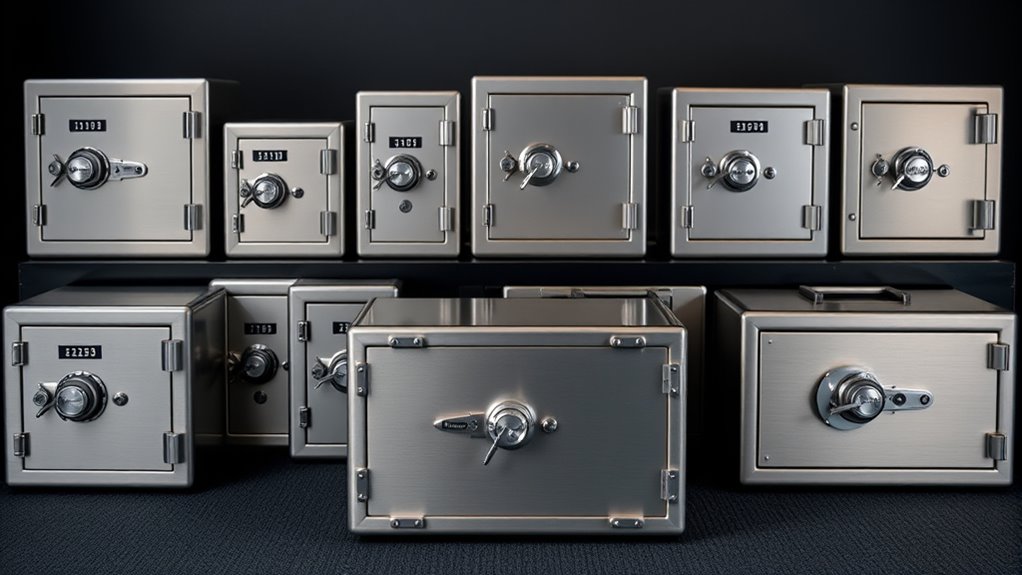

For a mechanical gun safe without batteries or electronic access, the main choice is between a sturdy, fixed-location pistol box and a lighter case built for portability. I rank the Fort Knox PB1 first for its heavy-gauge steel body and reinforced door, the Viking VS-12LSX for its two-handgun capacity and substantial deadbolt, and the compact Portable Handgun Safe for travel-friendly storage and IPX4 water resistance. Those distinctions matter more than a shared mechanical lock: the best fit depends on how many handguns you need to store, whether the safe will be anchored, and how much physical protection you want.

Get your wardrobe favorites delivered free with Prime
- Fast, free delivery on millions of items
- Prime Video, Amazon Music and more included
- Member-only deals all year
These are pistol safes, not large long-gun cabinets. I compare them by their mechanical access, listed construction, usable interior, and practical limitations. A mechanical lock avoids batteries, but it still depends on a combination you can operate reliably; portability can help with transport while making secure anchoring more important. I also distinguish stated specifications from broad claims, so buyers can make a decision without treating a product description as a guarantee of resistance to attack, fire, or water.
Key Takeaways
- Fort Knox PB1 is my pick for a fixed-location pistol box, with 10-gauge steel construction, a reinforced door, and a Simplex push-button lock.
- Viking VS-12LSX is the clearest choice when you want room for up to two handguns and value its 5 mm door and 40 mm deadbolt.
- Portable Handgun Safe is the portable option, adding a security cable, mounting option, and stated IPX4 water resistance at the cost of a different, fiberglass-reinforced construction.
- Neither the Viking nor Fort Knox is listed as water resistant, while the portable case is not described with the same heavy-steel construction as those two boxes.
- Before choosing, compare your handgun’s dimensions with the interior and decide whether you will anchor the safe; weight and a cable alone do not settle that question.
| Fort Knox Original Pistol Box PB1 with Mechanical Push-Button Lock |  | Best Overall for a Fixed Location | Lock: Simplex mechanical push-button | Body material: 10-gauge steel | Door thickness: 3/16 in | VIEW ON AMAZON | See Our Full Breakdown |
| Viking Security Safe VS-12LSX Mechanical Simplex Two-Gun Safe |  | Best for Two-Handgun Capacity | Lock: Dormakaba Simplex mechanical push-button | Possible combinations: 1,000 | Capacity: 2 handguns; 426 cu in | VIEW ON AMAZON | See Our Full Breakdown |
| Portable Handgun Safe with Mechanical Combination Lock |  | Best Portable and Water-Resistant Option | Lock: Mechanical combination lock | Combination options: 46 self-defined combinations | Exterior dimensions: 10.4 × 8.2 × 2.1 in | VIEW ON AMAZON | See Our Full Breakdown |
| mechanical gun safe | Lock | Dimensions | Weight | Water resistance |
|---|---|---|---|---|
| Fort Knox Original Pistol Box | Simplex mechanical push-button | 12.5 × 10.38 × 4.25 in | 22 lb | Not water resistant |
| Viking Security Safe VS-12LSX | Dormakaba Simplex mechanical push-button | 4.2 × 12.5 × 10.2 in | 23 lb | — |
| Portable Handgun Safe with Mec | Mechanical combination lock | — | — | IPX4 stated |
More Details on Our Top Picks
Fort Knox Original Pistol Box PB1 with Mechanical Push-Button Lock
The Fort Knox PB1 takes my top position because its specifications make it the most straightforward choice for buyers prioritizing a substantial steel pistol box. Its body uses 10-gauge steel, and its door is listed as 3/16 inch thick with a tamper-resistant reinforced design. That gives it a clearer heavy-duty profile than the portable case, whose construction is fiberglass-reinforced, and a different emphasis from the Viking, which pairs a 5 mm door with a notably large deadbolt.
Access is by a Simplex mechanical push-button lock, so there are no batteries to monitor. A gas strut assists the door as it opens, a useful touch when the box is positioned for routine access. At 22 pounds, it is still a heavy, relatively compact pistol box rather than a featherweight travel case. Its single compartment also makes the storage purpose clear: this is not the pick for organizing several firearms or gear.
The tradeoff is that the PB1 is not water resistant, and its 22-pound weight makes casual relocation less convenient than carrying the portable option. It is also listed with one compartment, while the Viking specifically states capacity for two handguns. I would choose Fort Knox over the Viking when the priority is the PB1’s stated steel-body and reinforced-door construction; I would choose the Viking when capacity and its specified deadbolt matter more. The limited lifetime warranty and USA manufacture are useful points of distinction, but neither replaces checking fit, placement, and anchoring needs.
Pros:- 10-gauge steel body and reinforced, tamper-resistant door
- Simplex mechanical push-button lock needs no batteries
- Gas-strut-assisted opening
- Made in the USA with a limited lifetime warranty
Cons:- Not water resistant
- Weighs 22 pounds, making it less convenient to move
- One compartment and no stated two-handgun capacity
Best for: Buyers seeking a heavy steel pistol box with mechanical push-button access for a fixed home or office location.
Not ideal for: People who need water resistance, frequent portability, or clearly stated two-handgun capacity.
- Lock:Simplex mechanical push-button
- Body material:10-gauge steel
- Door thickness:3/16 in
- Dimensions:12.5 × 10.38 × 4.25 in
- Weight:22 lb
- Compartments:1
- Water resistance:Not water resistant
- Warranty:Limited lifetime
Our verdict“I rank the PB1 first for buyers who want a substantial steel pistol box and can accept its weight and lack of water resistance.”
Viking Security Safe VS-12LSX Mechanical Simplex Two-Gun Safe
If a one-pistol box feels too limiting, the Viking VS-12LSX is the most clearly specified step up: its listed capacity is two handguns in a 426-cubic-inch interior. The mechanical Dormakaba Simplex lock has 1,000 possible combinations and needs no batteries or electronics. Compared with the PB1, Viking makes the capacity advantage explicit; compared with the portable case, it puts more emphasis on steel construction and a substantial locking bolt than on carry-friendly dimensions or water resistance.
Its construction details are a major part of the case for choosing it. The safe is made from alloy steel, with a 5 mm door, sledgehammer-protected hinges, and a 40 mm deadbolt. The all-sided foam, LED light, and gas-assisted strut lift address everyday handling: foam helps separate a firearm from the hard interior, while lighting can help when the safe is placed in a dim spot. These features make the Viking more appointed than the PB1, though they do not change its small-scope role as a handgun safe.
The tradeoffs are size, weight, and exposure to moisture. At 23 pounds, it is the heaviest of the three listed options, and the product is not water resistant. Its dimensions are compact for a two-handgun safe, but buyers should still verify that their firearms and any accessories fit as intended. I put it behind Fort Knox overall because the PB1’s listed 10-gauge body and reinforced door make a simpler steel-box case; Viking is the better fit when two-handgun capacity, its deadbolt specification, and included lighting are higher priorities.
Pros:- Mechanical Dormakaba Simplex lock with no batteries or electronics
- Stated capacity for two handguns
- 5 mm door, 40 mm deadbolt, and protected hinges
- Foam lining, LED lighting, and gas-assisted opening
Cons:- Limited to two handguns
- At 23 pounds, it is the heaviest option here
- Not water resistant
Best for: Buyers who want a mechanical lockbox with stated room for two handguns, a substantial deadbolt, and interior lighting.
Not ideal for: People prioritizing easy portability, water resistance, or storage for long guns and larger collections.
- Lock:Dormakaba Simplex mechanical push-button
- Possible combinations:1,000
- Capacity:2 handguns; 426 cu in
- Dimensions:4.2 × 12.5 × 10.2 in
- Weight:23 lb
- Material:Alloy steel
- Door and deadbolt:5 mm door; 40 mm deadbolt
- Interior:All-sided foam, LED light, gas-assisted lift
Our verdict“I recommend the VS-12LSX when two-handgun capacity and its specified locking hardware matter more than lower weight or moisture protection.”
Portable Handgun Safe with Mechanical Combination Lock
The Portable Handgun Safe fills a different role from the two steel boxes: it is the compact choice for buyers who want a case they can secure in more than one place. Its outside dimensions are 10.4 × 8.2 × 2.1 inches, and it has a foam-lined interior sized for handguns that fit within the stated dimensions. A mechanical combination lock avoids batteries, while the included steel cable and mounting option offer ways to attach the case rather than simply leave it loose.
Its clearest differentiator is its stated IPX4 water resistance. Neither the Fort Knox nor Viking is listed as water resistant, so this portable case has an advantage for buyers who expect occasional splashes or want that specific rating. The manufacturer also describes an impact-resistant design and says it is designed to withstand drops up to 50 feet; I treat that as a stated product claim rather than a verified test result. Its fiberglass-reinforced construction is not the same as the steel bodies of the other two, so buyers comparing physical construction should not read the water rating as proof of equivalent security.
The lock offers 46 self-defined combinations, fewer than the 1,000 possible combinations listed for the Viking, and the combination must be set and remembered. Fit is another real limitation: the listed interior dimensions are 10 × 7.5 × 1.75 inches, so a handgun that is too long, tall, or bulky will not fit just because it appears in a compatibility example. Unlike Viking, it is not specified for two handguns. I rank it third overall because it is less comparable to the heavier steel boxes for a fixed-location security role, but it becomes the sensible choice when portability and water resistance lead the decision.
Pros:- Mechanical combination lock does not need batteries
- Includes a steel security cable and TSA-approved padlock
- Compact dimensions with foam-lined interior
- Stated IPX4 water resistance and mounting option
Cons:- Interior dimensions may not fit every handgun
- Combination needs to be set and remembered
- Fiberglass-reinforced construction differs from the steel boxes
Best for: Buyers who need a compact, cable-secured handgun case and value a stated IPX4 rating for portable storage.
Not ideal for: People seeking a heavy steel box, a listed two-handgun capacity, or a combination with more stated possibilities.
- Lock:Mechanical combination lock
- Combination options:46 self-defined combinations
- Exterior dimensions:10.4 × 8.2 × 2.1 in
- Interior dimensions:10 × 7.5 × 1.75 in
- Material:Fiberglass-reinforced material
- Water resistance:IPX4 stated
- Included security:TSA-approved padlock and steel cable
- Interior:Soft foam lining
Our verdict“I would choose this case for portable storage and its stated water resistance, not as a direct substitute for the heavier steel pistol boxes.”

How We Picked
I ranked these options around what a buyer needs from a mechanical gun safe: dependable access without electronics, practical physical construction, and a format that suits the intended storage location. The lineup includes two heavier steel pistol boxes and one compact portable case, so I did not treat them as interchangeable or judge them on a single feature.
For the first two positions, I gave weight to the listed steel construction and door details. The Fort Knox PB1 leads for its 10-gauge steel body and reinforced door, while the Viking earns a close alternative position with a 5 mm door, 40 mm deadbolt, and stated capacity for two handguns. I also accounted for the gas-assisted opening on both: it can make routine access easier, but it does not add storage capacity or make either product water resistant.
The portable safe ranks third because its advantages are different: lower-profile dimensions, a cable and mounting option, foam lining, and a stated IPX4 rating. Its fiberglass-reinforced construction and fit-dependent interior make it a better portable-use candidate than a direct substitute for a heavy steel box. I treated claims such as impact resistance as manufacturer-provided descriptions, not independently verified performance. Finally, I included drawbacks that change the buying decision, including capacity, weight, water protection, and combination management.
| mechanical gun safe | Lock | Water resistance | Material | Interior |
|---|---|---|---|---|
| Fort Knox Original Pistol Box | Simplex mechanical push-button | Not water resistant | — | — |
| Viking Security Safe VS-12LSX | Dormakaba Simplex mechanical push-button | — | Alloy steel | All-sided foam, LED light, gas-assisted lift |
| Portable Handgun Safe with Mec | Mechanical combination lock | IPX4 stated | Fiberglass-reinforced material | Soft foam lining |
Factors to Consider When Choosing Mechanical Gun Safe
I would start by deciding where the safe will live and what it needs to hold. The three options differ more in purpose than in the basic fact that each uses a mechanical lock: two are heavier steel pistol boxes, while one is a compact portable case.
Choose the lock style you can operate reliably
The Viking and Fort Knox use Simplex-style push-button locks; the portable case uses a combination lock with 46 self-defined combinations. Mechanical access means there are no batteries to replace, but the button sequence or combination still needs to be familiar and remembered. I would favor the Viking if the stated 1,000 possible combinations matter, and compare the PB1 and portable case by their other features rather than assuming that all mechanical locks offer the same setup or operation.
Before relying on a safe for access, read the maker’s instructions and practice the lock sequence in a controlled setting. A lock is only useful if the authorized user can operate it as intended. Keep combination information private and follow local rules for firearm storage.
Match construction to the storage location
For a fixed location, the Fort Knox PB1 lists a 10-gauge steel body and reinforced door; the Viking lists alloy steel, a 5 mm door, and a 40 mm deadbolt. Those specifications describe different construction approaches, not a universal security rating. The portable case instead uses fiberglass-reinforced material and adds a stated IPX4 rating. If water resistance matters, that listed distinction sets it apart; if a heavy steel box is the priority, the PB1 or Viking is the closer fit.
None of these descriptions establishes fire protection, certified burglary resistance, or protection against every attack. I would check the manufacturer’s documentation for any security certifications or installation guidance needed for a particular use. Also account for moisture at the intended location: the Fort Knox and Viking are explicitly not water resistant, so buyers should not treat their steel construction as water protection.
Check handgun fit and actual capacity
Capacity claims are not interchangeable. Viking specifies two handguns and 426 cubic inches, while the PB1 is listed with one compartment and no stated two-handgun capacity. The portable case gives interior measurements of 10 × 7.5 × 1.75 inches and names several compatible examples, but real fit depends on the dimensions and profile of the firearm. A soft foam lining can cushion contact, yet it cannot create extra interior room.
Measure the handgun, including any attached accessories you plan to store, and compare those measurements with the safe’s interior. Think about whether you want room for only the firearm or also for other items. If a product description does not clearly state capacity, I would not assume that two firearms will fit comfortably or safely.
Plan for anchoring, weight, and portability
The two steel boxes weigh 22 and 23 pounds, respectively. That weight suits a more stationary setup but does not make either safe immovable. The portable case is designed for easier carrying and includes a steel cable, with mounting also listed as an option. A cable can tether a case to a suitable fixed object, but it is not the same as a bolted installation; choose attachment points and mounting methods in line with the manufacturer’s instructions.
Decide whether you need a safe that stays put or one that can travel with you. If it will be moved often, confirm that its dimensions fit your intended storage space and that you can secure it appropriately at each location. If it will remain in one place, compare the steel construction, door details, and installation options rather than treating weight alone as a security measure.
Frequently Asked Questions
What is the best mechanical gun safe in this comparison?
I rank the Fort Knox PB1 first for buyers seeking a fixed-location steel pistol box, based on its listed 10-gauge steel body and reinforced door. The Viking is a stronger fit for shoppers who specifically need stated two-handgun capacity and a 40 mm deadbolt. The portable case suits a different buyer: someone who values carrying options and a stated IPX4 rating over a heavy steel body.
Do mechanical gun safes need batteries?
No battery is listed as necessary for the mechanical locks in these three options. The Fort Knox and Viking use push-button mechanical locks, and the portable case uses a mechanical combination lock. That avoids battery replacement, but you still need to learn and remember the correct access method and follow the manufacturer’s setup instructions.
Which option can hold two handguns?
The Viking VS-12LSX is the only product here with an explicit two-handgun capacity in its supplied specifications. The Fort Knox PB1 is listed with one compartment but no stated capacity for two, and the portable case is described by its interior dimensions rather than a two-handgun capacity. I would measure the firearms and confirm the manufacturer’s fit guidance before buying.
Which mechanical gun safe is water resistant?
The portable handgun safe is listed with an IPX4 water-resistance rating. The supplied specifications say that both the Fort Knox PB1 and Viking VS-12LSX are not water resistant. An IPX4 rating is not a claim of submersion protection, so I would match the rating to the conditions the case may face and store all three according to their instructions.
Should I choose a portable case or a heavier steel box?
I would choose the portable case when compact dimensions, a steel cable, mounting flexibility, and its stated water rating align with the intended use. I would favor the Fort Knox or Viking for a more stationary setup where their listed steel construction is a higher priority. The portable option is not described with the same heavy-steel construction, while the steel boxes are heavier and not water resistant; neither category is automatically right for every location.
Conclusion
For a fixed-location pistol box, I recommend the Fort Knox PB1 to buyers who put its 10-gauge steel body and reinforced door first. Choose the Viking VS-12LSX instead if you want room for two handguns, value its 40 mm deadbolt, or want built-in lighting and foam. If portability and a stated IPX4 water-resistance rating lead your checklist, the compact case is the better match, provided your handgun fits its interior and you are comfortable setting and remembering its combination.
My ranking reflects those distinct jobs, not a claim that one safe suits every household. Check the firearm’s fit, plan how the safe will be secured, and confirm each model’s limitations before choosing. Mechanical access removes battery dependence, but the right decision still comes down to construction, capacity, water exposure, and where you intend to keep the safe.
Fall Picks
fall essentials
As an affiliate, we earn on qualifying purchases.