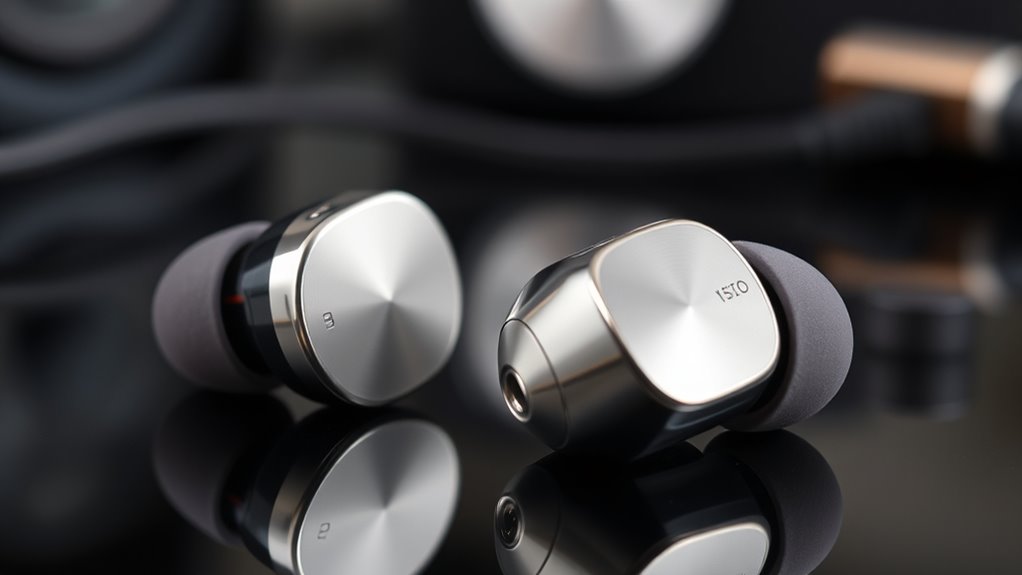

Among these luxury in-ear monitors, the 64 Audio Aspire 4 is my best overall pick for buyers seeking a dedicated multi-driver design, while the Technics EAH-TZ700 and Sennheiser IE 900 stand out for premium, high-fidelity listening. The range runs from practical stage monitors to refined audiophile earphones, so the main tradeoffs are tuning, fit, isolation, and how much you value a premium design over a simpler, more affordable one. More drivers do not automatically mean better sound, and a comfortable seal can matter more than an impressive specification sheet. Continue reading for the full breakdown, including which options make sense for different budgets and listening habits.

Get your wardrobe favorites delivered free with Prime
- Fast, free delivery on millions of items
- Prime Video, Amazon Music and more included
- Member-only deals all year
Complete the kit


Key Takeaways
- The Aspire 4 is the most balanced specialist pick: its four-driver design places it ahead of simpler stage-focused models for buyers who want a more ambitious monitor.
- The IE 900 and EAH-TZ700 serve premium listening priorities: they suit listeners focused on high-fidelity playback, but their specialist positioning may be more than casual users need.
- The SE846 Gen 2 is the Shure upgrade path: it is the more premium choice over the SE215, while the SE215 remains the straightforward option for practical isolation and monitoring.
- Two-driver designs can still make sense: the Xvive T9 keeps its proposition focused, while the KZ ZS10 Pro adds a hybrid driver setup and detachable cable without matching the premium models’ positioning.
- Fit and intended use separate this lineup: the Sennheiser IE 100 Pro and Shure SE215 lean toward practical monitoring, while Sony’s IER-M500 and the flagship-oriented models better suit personal wired listening.
| Shure SE215 PRO Sound Isolating Wired Earbuds, Clear |  | Best for Stage Isolation | Brand: Shure | Model: SE215-CL | Driver: Single dynamic MicroDriver | VIEW ON AMAZON | See Our Full Breakdown |
| 64 Audio Aspire 4 Four-Driver In-Ear Monitors |  | Best for Studio and Stage Monitoring | Brand: 64 Audio | Model: Aspire 4 | Driver configuration: Four drivers: one dynamic and three balanced armature | VIEW ON AMAZON | See Our Full Breakdown |
| Xvive T9 In-Ear Monitor Headphones with Dual Knowles Balanced Armature Drivers |  | Best Compact Dual-Armature Pick | Brand: Xvive | Model: T9 | Driver type: Dual balanced armature | VIEW ON AMAZON | See Our Full Breakdown |
| Sony IER-M500 Wired In-Ear Monitor Earphones – Clear |  | Best for a Secure Extended-Wear Fit | Brand: Sony | Model name: IER-M500 | Model number: IERM500W.UC | VIEW ON AMAZON | See Our Full Breakdown |
| Linsoul KZ ZS10 Pro Wired Hybrid In-Ear Monitors, 4BA + 1DD, Stainless Steel Faceplate, Detachable Cable, Without Microphone |  | Best for a Multi-Driver Feature Set | Brand: Linsoul | Model: KZ ZS10 Pro | Driver configuration: 4 balanced armature + 1 dynamic driver | VIEW ON AMAZON | See Our Full Breakdown |
| Shure SE846 Gen 2 Sound Isolating Wired Earphones, Clear |  | Best for Customizable Monitoring | Model: SE846G2CL | Driver configuration: Four high-definition drivers | Sound filters: Interchangeable: balanced, warm, bright, and extended | VIEW ON AMAZON | See Our Full Breakdown |
| Sennheiser IE 100 Pro Dynamic In-Ear Monitoring Headphones – Clear |  | Best for Stage-Ready Simplicity | Model number: 508941 | Driver: 10 mm dynamic broadband transducer | Frequency response: 20 Hz–18,000 Hz | VIEW ON AMAZON | See Our Full Breakdown |
| Technics Premium In-Ear Monitors (IEM) EAH-TZ700 – High-Fidelity Wired Earbuds, Black/Gold |  | Best for Cable Flexibility and Premium Finish | Model: EAH-TZ700 | Driver: Proprietary 10 mm driver with magnetic fluid technology | Sound design: Internal Air Control Chamber | VIEW ON AMAZON | See Our Full Breakdown |
| Sennheiser IE 900 Audiophile In-Ear Monitors |  | Best Premium Audiophile Pick | Model: IE 900 | Transducer: 7 mm TrueResponse | Sound technologies: X3R and triple-chamber absorber system | VIEW ON AMAZON | See Our Full Breakdown |
| luxury in ear monitor | Model | Warranty | Brand | Connectivity |
|---|---|---|---|---|
| Shure SE215 PRO Sound Isolatin | SE215-CL | 2 years | Shure | — |
| 64 Audio Aspire 4 Four-Driver | Aspire 4 | — | 64 Audio | Wired, 3.5 mm plug |
| Xvive T9 In-Ear Monitor Headph | T9 | — | Xvive | 3.5 mm headphone jack |
| Sony IER-M500 Wired In-Ear Mon | — | 1 year | Sony | Wired |
| Linsoul KZ ZS10 Pro Wired Hybr | KZ ZS10 Pro | — | Linsoul | Wired |
| Shure SE846 Gen 2 Sound Isolat | SE846G2CL | 2-year limited | — | — |
| Sennheiser IE 100 Pro Dynamic | — | 2 years | — | — |
| Technics Premium In-Ear Monito | EAH-TZ700 | 1 year | — | — |
| Sennheiser IE 900 Audiophile I | IE 900 | 2 years | — | Wired |
More Details on Our Top Picks
Shure SE215 PRO Sound Isolating Wired Earbuds, Clear
The Shure SE215 PRO earns its place for buyers who value a stable stage fit and strong passive isolation more than an elaborate driver array. Its single dynamic MicroDriver keeps the setup straightforward, while the claimed up to 37 dB of noise blocking can help reduce distractions in loud settings. That isolation figure exceeds the Aspire 4’s listed -20 dB and the Xvive T9’s up-to-25 dB, making the Shure a clear fit for noise-heavy environments. A rotating, detachable MMCX cable adds replaceability and helps the cable sit comfortably over the ear. The tradeoff is a simpler driver configuration than the multi-driver Aspire 4 or KZ ZS10 Pro, and the wired connection limits freedom of movement. I would choose it for isolation and dependable fit, not for the most elaborate luxury build.
Pros:- Up to 37 dB of stated noise isolation
- Detachable, rotating MMCX cable can be replaced and adjusted for fit
- Includes foam and flex sleeves in three sizes
- Protective carrying case is included
Cons:- Wired connection restricts movement compared with wireless earbuds
- Single-driver configuration is less elaborate than the Aspire 4 and KZ ZS10 Pro
- The listed isolation and accessories do not make it a premium-material choice
Best for: Performers and commuters who prioritize strong passive isolation, an over-ear cable fit, and replaceable cabling.
Not ideal for: Listeners seeking wireless convenience or a multi-driver design with more elaborate tuning than a single dynamic driver.
- Brand:Shure
- Model:SE215-CL
- Driver:Single dynamic MicroDriver
- Noise isolation:Up to 37 dB
- Cable:Detachable MMCX with 360-degree rotation
- Included fit sleeves:Flex and foam, sizes S, M, and L
- Included accessory:Protective carrying case
- Warranty:2 years
- Color:Clear
Our verdict“Choose the SE215 PRO if secure fit and substantial passive isolation matter more to you than wireless freedom or a complex driver setup.”
64 Audio Aspire 4 Four-Driver In-Ear Monitors
The 64 Audio Aspire 4 is the most purpose-built monitoring choice in this group: its hybrid array pairs one dynamic driver for bass with three balanced armatures for mids and highs. That division of labor is aimed at keeping vocals and instruments distinct, rather than making the bass-heavy presentation the main attraction. Compared with the single-driver Shure SE215 PRO, it offers a more complex driver arrangement; compared with the five-driver KZ ZS10 Pro, its stated tuning is more explicitly directed toward balanced monitoring. Its 11-ohm impedance and 104 dB sensitivity are useful figures for matching it with compatible sources, though they do not guarantee the best result with every device. The tradeoffs are a wired-only connection and a listed -20 dB of isolation, below the isolation figures given for several rivals. I’d shortlist it for working musicians who want clarity and included maintenance accessories.
Pros:- Hybrid four-driver configuration combines one dynamic and three balanced armature drivers
- Tuning is specified for clear monitoring of vocals and instruments
- Detachable cable and replaceable ear tips support upkeep
- Includes a cleaning tool, adapter, and carrying case
Cons:- Wired connection offers no wireless mobility
- Listed isolation of -20 dB is lower than the SE215 PRO and Xvive T9 figures
- More involved driver setup may be unnecessary for casual listening
Best for: Musicians and studio users seeking a wired hybrid monitor with a balanced, vocal-and-instrument-focused presentation.
Not ideal for: Buyers who need the strongest listed isolation, wireless listening, or a casual everyday earbud with a microphone.
- Brand:64 Audio
- Model:Aspire 4
- Driver configuration:Four drivers: one dynamic and three balanced armature
- Frequency response:20 Hz–18 kHz
- Impedance:11 Ω at 1 kHz
- Sensitivity:104 dB at 1 kHz, 1 mW
- Isolation:-20 dB
- Connectivity:Wired, 3.5 mm plug
- Cable:Detachable
Our verdict“Pick the Aspire 4 if balanced stage or studio monitoring is your priority and its wired design and stated isolation suit your setup.”
Xvive T9 In-Ear Monitor Headphones with Dual Knowles Balanced Armature Drivers
The Xvive T9 takes a simpler route to detailed monitoring than the hybrid Aspire 4: it uses two Knowles balanced armature drivers with a custom crossover, rather than combining armatures with a dynamic bass driver. That makes it a focused option for listeners who want balanced detail without stepping up to the more elaborate four-driver Aspire 4 or five-driver KZ ZS10 Pro. Its stated isolation of up to 25 dB falls between the Aspire 4’s -20 dB and the SE215 PRO’s up-to-37 dB claim, so it offers a middle ground on paper. The 48-inch cable, 1/4-inch adapter, case, and cleaning tool give it a practical monitoring kit. I would hesitate to choose it for demanding outdoor use: it is not water resistant, and its listed 59-ohm impedance may call for more attention to source matching than the Aspire 4’s 11 ohms.
Pros:- Dual Knowles balanced armature drivers with a custom crossover
- Up to 25 dB of stated passive noise isolation
- Includes small, medium, and large ear tips
- Package includes a case, cleaning tool, and 1/4-inch adapter
Cons:- Not water resistant
- Wired connection limits movement
- Listed 59-ohm impedance may require more careful source matching
Best for: Musicians and detail-focused listeners who want a two-armature wired monitor with a useful adapter and basic care accessories.
Not ideal for: Outdoor performers who need water resistance, or buyers seeking the stronger listed isolation of the SE215 PRO.
- Brand:Xvive
- Model:T9
- Driver type:Dual balanced armature
- Impedance:59 ohms
- Frequency response:16.5 kHz
- Noise isolation:Up to 25 dB
- Connectivity:3.5 mm headphone jack
- Cable length:48 inches
- Water resistance:Not water resistant
Our verdict“Choose the T9 for a balanced, dual-armature wired monitor and practical accessories, but skip it if water resistance or maximum isolation is a priority.”
Sony IER-M500 Wired In-Ear Monitor Earphones – Clear
The Sony IER-M500 stands apart from the driver-count race in this roundup by emphasizing secure, extended-wear ergonomics. Its ear hangers and multiple ear tip sizes are meant to keep the monitors settled during long sessions, a different priority from the Shure SE215 PRO’s rotating MMCX cable and sleeve-focused fit system. Sony describes the sound as accurate and balanced and the isolation as strong, which suits live performance and studio monitoring; however, the supplied data gives no driver count, response range, impedance, or isolation figure. That makes a direct technical comparison with the Aspire 4 or Xvive T9 harder. The clear finish also leaves no color choice, and the wired connection can constrain movement on stage. I’d consider it when fit security is the deciding factor, but buyers who want detailed specifications to compare should favor better-documented alternatives.
Pros:- Ergonomic ear hangers are designed to keep the fit secure
- Multiple ear tip sizes allow fit adjustment
- Described as delivering accurate, balanced full-range sound
- Strong noise isolation is listed as a feature
Cons:- Provided product data does not specify the driver configuration or isolation level
- Wired connection can restrict movement during performances
- Listed in clear only
Best for: Performers and studio users who prioritize a stable ear-hanger fit for longer monitoring sessions.
Not ideal for: Spec-focused shoppers who want published driver, impedance, frequency-response, or isolation figures before choosing.
- Brand:Sony
- Model name:IER-M500
- Model number:IERM500W.UC
- Color:Clear
- Fit:Ergonomic ear hangers with multiple ear tip sizes
- Sound description:Accurate, balanced full-range sound
- Noise isolation:Described as strong; numeric level not provided
- Connectivity:Wired
- Warranty:1 year
Our verdict“Choose the IER-M500 if a secure ear-hanger fit matters more than detailed published specifications or wireless mobility.”
Linsoul KZ ZS10 Pro Wired Hybrid In-Ear Monitors, 4BA + 1DD, Stainless Steel Faceplate, Detachable Cable, Without Microphone
The Linsoul KZ ZS10 Pro offers the broadest listed driver array here: four balanced armatures and one dynamic driver, paired with a stainless steel faceplate and resin housing. That makes it a feature-rich alternative to the two-driver Xvive T9 and a more driver-heavy option than the Aspire 4, whose tuning is more explicitly framed around balanced monitoring. The KZ combines dynamic bass with extended highs according to its description, while its stated isolation reaches up to 26 dB—just above the T9’s 25 dB figure but below the Shure SE215 PRO’s 37 dB claim. Its detachable gold-plated cable can be replaced, but the package does not include a microphone, and it remains wired. I’d choose it for buyers drawn to a hybrid design and distinctive materials, not for anyone who needs call capability or a clearly specified studio tuning target.
Pros:- Five-driver hybrid configuration combines four balanced armatures and one dynamic driver
- 304 stainless steel faceplate paired with resin housing
- Detachable gold-plated cable can be replaced
- Up to 26 dB of stated noise isolation
Cons:- No microphone is included
- Wired connection limits mobility
- Stated isolation is below the SE215 PRO’s up-to-37 dB figure
Best for: Wired listeners who want a five-driver hybrid layout, a metal faceplate, and a detachable cable without prioritizing microphone use.
Not ideal for: Buyers who need a built-in microphone, wireless listening, or the SE215 PRO’s higher stated isolation figure.
- Brand:Linsoul
- Model:KZ ZS10 Pro
- Driver configuration:4 balanced armature + 1 dynamic driver
- Connectivity:Wired
- Connector:3.5 mm jack
- Faceplate material:304 stainless steel
- Housing material:Imported resin
- Cable:Detachable, gold-plated ODC cable
- Noise isolation:Up to 26 dB
Our verdict“Pick the KZ ZS10 Pro if a multi-driver hybrid setup and stainless steel faceplate appeal more than microphone support or stronger listed isolation.”
Shure SE846 Gen 2 Sound Isolating Wired Earphones, Clear
The Shure SE846 Gen 2 earns its place for listeners who want to shape the sound rather than settle on one fixed tuning. Its four high-definition drivers are paired with interchangeable filters for balanced, warm, bright, or extended profiles, making it more adaptable than the single-driver Sennheiser IE 100 Pro. Sound-isolating sleeves also suit stage work and focused listening where reducing outside noise matters. A detachable 3.5 mm cable can be replaced if damaged, a practical advantage for regular wired use. The tradeoff is a cable-bound setup and an in-ear fit that may not work for every ear; unlike the Technics EAH-TZ700, it does not include both balanced and unbalanced cables. Choose it for tuning flexibility and isolation, not wireless convenience.
Pros:- Four-driver design supports detailed sound across highs, mids, and low frequencies.
- Interchangeable filters provide four distinct sound profiles.
- Sound-isolating sleeves help reduce ambient noise.
- Detachable 3.5 mm cable can be replaced.
Cons:- Wired connection restricts movement compared with wireless earphones.
- In-ear fit may not suit every listener.
- The included connection is 3.5 mm rather than a set of balanced cable options.
Best for: Performers and serious listeners who want multiple sound profiles, passive noise reduction, and a replaceable wired cable.
Not ideal for: Buyers who need wireless freedom, included balanced-cable options, or who find deep in-ear sleeves uncomfortable.
- Model:SE846G2CL
- Driver configuration:Four high-definition drivers
- Sound filters:Interchangeable: balanced, warm, bright, and extended
- Connection:Wired, detachable 3.5 mm cable
- Fit:In-ear with sound-isolating sleeves
- Color:Clear
- Warranty:2-year limited
Our verdict“Choose the SE846 Gen 2 if adjustable tuning and passive isolation matter more than wireless use or multiple cable connectors.”
Sennheiser IE 100 Pro Dynamic In-Ear Monitoring Headphones – Clear
The Sennheiser IE 100 Pro is the straightforward stage pick in this group: its 10 mm dynamic driver is described as warm and powerful, while the ergonomic shell and stage-proof cable are built for monitoring use. That simpler single-driver approach makes it less customizable than the four-driver Shure SE846 Gen 2, but also gives buyers fewer tuning choices to manage. Foam and silicone adapters help tailor the fit, and the included case and cleaning tool support regular transport and upkeep. Its 20 Ω impedance and 115 dB sensitivity are useful reference points when matching it to playback gear. The main compromise is limited sound isolation beyond the ear tips, so it is less suited to noisy settings than Shure’s isolating design; tip selection may also take some trial and error.
Pros:- 10 mm dynamic transducer is designed for warm, powerful sound with detailed playback.
- Ergonomic design and interchangeable foam and silicone tips support fit adjustment.
- Stage-proof cable is designed to withstand regular performance use.
- Protective case and cleaning tool are included.
Cons:- No active noise cancellation, with isolation dependent on the ear-tip seal.
- Fit may require trying multiple tip sizes.
- Single-driver design offers less tuning flexibility than the Shure SE846 Gen 2.
Best for: Performers and developing monitor users who want a durable, comfortable wired IEM with a simple dynamic-driver setup and practical accessories.
Not ideal for: Listeners seeking adjustable sound filters, stronger specified isolation, or a premium multi-driver configuration.
- Model number:508941
- Driver:10 mm dynamic broadband transducer
- Frequency response:20 Hz–18,000 Hz
- Impedance:20 Ω
- Sensitivity:115 dB
- Included fit accessories:Foam and silicone ear adapters
- Included accessories:Protective case and cleaning tool
- Warranty:2 years
Our verdict“Pick the IE 100 Pro for a practical stage monitor with a simple setup, but choose the Shure SE846 Gen 2 if tuning options and sound isolation take priority.”
Technics Premium In-Ear Monitors (IEM) EAH-TZ700 – High-Fidelity Wired Earbuds, Black/Gold
The Technics EAH-TZ700 stands apart for combining a premium finish with a useful choice of connections. It comes with balanced and unbalanced MMCX cables, so buyers can match the IEM to different compatible listening equipment without sourcing another cable at the outset. Its proprietary 10 mm driver, magnetic fluid technology, and Air Control Chamber are designed to limit distortion and balance the response; the light 7 g earpieces and round or oval tips in four sizes address fit in a different way from the more filter-focused Shure SE846 Gen 2. Graphite black, gold-plated terminals, and a one-year warranty complete the package. This remains a wired, delicate premium component rather than a rugged stage-first option like the Sennheiser IE 100 Pro, and it is not the pick for wireless listening.
Pros:- Includes both balanced and unbalanced MMCX cables.
- 10 mm driver system is designed for low-distortion playback.
- Round and oval earpieces in four sizes offer fit choices.
- Lightweight earpieces feature a graphite black finish and gold-plated terminals.
Cons:- Wired-only design offers no Bluetooth option.
- Premium components call for careful handling.
- One-year warranty is shorter than the two-year coverage listed for the Shure SE846 Gen 2 and Sennheiser IE 100 Pro.
Best for: Audiophile listeners with compatible wired sources who want both balanced and unbalanced cable options and a premium, lightweight design.
Not ideal for: Wireless-first buyers, rough-use performers who need a more explicitly rugged design, or listeners who prefer adjustable tuning filters.
- Model:EAH-TZ700
- Driver:Proprietary 10 mm driver with magnetic fluid technology
- Sound design:Internal Air Control Chamber
- Weight:7 g
- Included cables:Balanced and unbalanced MMCX cables
- Connector:Gold-plated MMCX
- Earpiece options:Round and oval, each in four sizes
- Warranty:1 year
Our verdict“Choose the EAH-TZ700 if cable compatibility, light weight, and refined materials matter more than wireless use or rugged stage construction.”
Sennheiser IE 900 Audiophile In-Ear Monitors
The Sennheiser IE 900 is the most connector-flexible audiophile option here, supplied with 3.5 mm, 2.5 mm, and 4.4 mm connections alongside a 7 mm TrueResponse transducer. Its X3R technology and triple-chamber absorber system are designed to support detailed, low-distortion sound, while the reinforced detachable cables add a practical layer of durability. That package makes it a more source-ready choice than the Technics EAH-TZ700, which includes balanced and unbalanced cables but not the same three connector formats. The IE 900 also includes silicone and memory foam tips, a carry case, and cleaning accessories. The tradeoff is a wired, fit-dependent setup with no stated sound-filter adjustment like the Shure SE846 Gen 2; buyers who want a simpler stage monitor may find the IE 100 Pro more direct.
Pros:- 7 mm TrueResponse transducer and absorber technologies are designed for detailed, low-distortion sound.
- Includes 2.5 mm, 3.5 mm, and 4.4 mm connector options.
- Detachable para-aramid reinforced cables have gold-plated MMCX connectors.
- Silicone and memory foam tips, carry case, and cleaning tool are included.
Cons:- Wired-only design does not support wireless listening.
- Fit and sound isolation depend on finding a suitable ear-tip seal.
- No interchangeable sound filters are listed, unlike the Shure SE846 Gen 2.
Best for: Experienced wired listeners with varied audio sources who want a detailed IEM and included single-ended and balanced connector options.
Not ideal for: Wireless listeners, buyers seeking adjustable sound profiles, or anyone wanting a simpler, stage-oriented monitor with a less involved setup.
- Model:IE 900
- Transducer:7 mm TrueResponse
- Sound technologies:X3R and triple-chamber absorber system
- Connectivity:Wired
- Connectors:2.5 mm, 3.5 mm, and 4.4 mm
- Cable:Detachable, para-aramid reinforced, with gold-plated MMCX connectors
- Ear tips:Silicone and memory foam, sizes S/M/L
- Warranty:2 years
Our verdict“The IE 900 suits experienced listeners who value detailed wired playback and broad connector compatibility over wireless convenience or adjustable tuning.”

How We Picked
I compared the nine models through the lens of luxury in-ear monitors: sound design, driver configuration, build, fit and isolation, cable practicality, and suitability for stage monitoring or personal listening. I gave more weight to the complete buyer experience than to driver count alone, since comfort, a reliable seal, and a useful tuning often matter more than a spec sheet.
The ranking gives preference to models that combine a compelling listening proposition with clear use cases. The 64 Audio Aspire 4 leads as a versatile specialist pick; the Technics EAH-TZ700, Sennheiser IE 900, and Shure SE846 Gen 2 earn their place through premium-focused designs. More practical or lower-cost options remain valuable, but sit lower because they offer a narrower feature or performance proposition compared with the premium contenders.
Factors to Consider When Choosing Luxury In Ear Monitors
Luxury IEMs can differ more by fit, tuning, and intended use than by price tier or driver count. These broader checks can help you avoid paying for a feature that does not improve your own listening or stage setup.
Match the tuning to what you listen to
Before comparing driver counts, decide what you want your music to sound like. A monitor designed for clear stage cues may emphasize different details than an earphone chosen for relaxed home listening. If you listen across many genres, a balanced presentation may prove more useful than a model tailored to one sound signature. Try to find reliable descriptions of tonal balance rather than treating words such as “detailed” as a guarantee of preference. A common mistake is choosing the most analytical-sounding option when long listening sessions call for a less demanding presentation.
Treat fit and seal as part of sound quality
An IEM cannot perform consistently if its eartips do not seal your ear canal. A weak seal can reduce bass and make the sound seem thinner, which may lead buyers to blame the tuning or source equipment. Ear shapes vary, so the included tip selection and the ability to find a stable fit deserve attention before any purchase. Consider whether the shell shape is likely to stay comfortable during movement or extended listening. If you are between sizes, a properly seated smaller tip can work better than forcing a larger one. Prioritize fit before assuming that a higher driver count will solve a sound issue.
Choose for stage use or personal listening
Stage monitoring and everyday audiophile listening place different demands on an IEM. Performers may prioritize isolation, secure fit, cable stability, and a sound that makes important cues easy to hear. At home, buyers may care more about tonal character, source pairing, and comfort over long sessions. A model suited to one setting can still work in the other, but the compromises may become obvious over time. Do not pay for a specialist monitor if you mainly want casual listening, or choose a personal-listening model without checking whether it suits your live setup. Make your main use case the first filter, not an afterthought.
Look beyond driver count and type
Driver numbers and configurations can explain how a manufacturer approaches sound reproduction, but they do not predict whether you will enjoy the result. A well-executed single dynamic driver can be a better match than a more complex hybrid design for a listener’s preferred tuning. More drivers can also mean a larger or more complex design, so check comfort and shell fit rather than assuming added hardware is a free benefit. Listen for the qualities you care about, such as vocal balance, bass presence, or separation, when comparisons are available. A frequent buying error is treating a higher component count as a direct measure of luxury or sound quality.
Plan for cables, connectors, and source gear
Wired monitors depend on practical details that are easy to overlook in a sound-focused comparison. Check whether the cable is detachable, what connector it uses, and whether replacements or compatible cables suit your setup. A detachable cable can extend service life if the original wears out, but it does not automatically make an IEM more comfortable or better sounding. Also confirm that your playback device has a suitable output and that you will not need adapters that add clutter. Avoid upgrading a source before you know what limitation you are trying to solve; fit and recording quality can have a greater effect on what you hear.
Set a ceiling before paying for refinement
Premium IEMs can offer a more specialized design, but the benefits may matter only to listeners who notice and value those differences. Think about how often you will use the earphones, where you will use them, and whether you need one pair for several roles. A more practical model can be the smarter purchase if you travel often or use monitors in demanding settings. Conversely, a dedicated home listener may value refined playback enough to choose a flagship model. The mistake is paying for a prestige tier without matching it to listening habits. Set your priorities first, then spend more only when a specific improvement matters to you.
Frequently Asked Questions
Are luxury in-ear monitors worth choosing over regular wired earbuds?
They can be worthwhile if you care about a more deliberate sound presentation, a secure fit, or monitoring features that ordinary earbuds may not prioritize. The difference is not guaranteed to feel dramatic for every listener, especially if your music files or playback device are the main limitation. Fit and eartip seal can change the result substantially, so a premium model that does not suit your ears may disappoint. Think about whether you want stage monitoring, detailed personal listening, or simply a reliable wired pair. If you do not need a specialist design, a practical model may make more sense than a flagship.
Does a four-driver or hybrid IEM necessarily sound better than a simpler design?
No: driver configuration describes the hardware approach, not whether the tuning will suit you. A multi-driver or hybrid monitor may appeal to listeners looking for a particular presentation, but a simpler design can sound more natural or comfortable to someone else. Fit, seal, recording quality, and personal preference all affect what you hear. Compare models using familiar music and focus on the qualities you value instead of counting drivers. If you cannot audition them, treat driver specifications as context rather than a quality ranking.
Should I choose a stage monitor if I mainly listen at home?
A stage-focused IEM can still work well at home, especially if its fit and tuning suit your preferences. Its isolation and secure design may be useful, but some of its strengths may matter less in a quiet listening room. Home listeners may prefer to focus on tonal character, comfort over long sessions, and compatibility with their playback setup. Check whether the model’s sound is intended to make performance cues clear or to support relaxed music listening. Choosing based on your main use is a better guide than the “monitor” label alone.
What should I check before replacing the cable on a luxury IEM?
Start by confirming the exact connector type and cable compatibility for your model; visually similar connectors are not always interchangeable. Check whether the existing cable is actually the problem before buying an upgrade, since a replacement may improve convenience or durability without changing sound. Consider cable weight, flexibility, and connection security, especially if you wear the IEM while moving. For stage use, a cable that stays put may matter more than a premium finish. Keep the original cable until you know the replacement works reliably.
How can I tell whether a flagship IEM is worth the extra spend for me?
Identify the specific improvement you expect, such as a sound presentation you prefer, a more suitable build, or better fit for your listening routine. Compare that benefit against how frequently you will use the earphones and whether your source and recordings can show the difference. A flagship is a stronger fit for dedicated listeners who value refinement, while occasional users may get more from a practical monitor. If possible, audition the flagship alongside a less expensive option using familiar tracks. Choose the premium model only when its distinction matters to your own use, not just because it sits higher in a lineup.
Conclusion
For most buyers seeking a specialist luxury monitor, I recommend the 64 Audio Aspire 4 as best overall. The KZ ZS10 Pro is my best value-oriented pick for shoppers drawn to a hybrid setup and detachable cable without entering the flagship tier, while the Sennheiser IE 100 Pro is my best beginner choice for practical monitoring. For premium personal listening, compare the Sennheiser IE 900 with the Technics EAH-TZ700; the Shure SE846 Gen 2 suits buyers specifically drawn to Shure’s higher-end monitor range. Choose the Shure SE215 or Sennheiser IE 100 Pro for more straightforward monitoring needs, and the Xvive T9 or Sony IER-M500 if their simpler, more focused propositions fit your priorities. My final advice: choose by fit and intended use first, then spend more only for a sound or feature difference you genuinely want.
Halloween Picks

JOYIN 5-Foot Halloween Animatronic Drinking Skeleton

MGparty 14.5FT Halloween Inflatable Walk-in Pumpkin House with LED Lights

Spirit Halloween 4 ft 7 in Sitting Scarecrow Animatronic
As an affiliate, we earn on qualifying purchases.