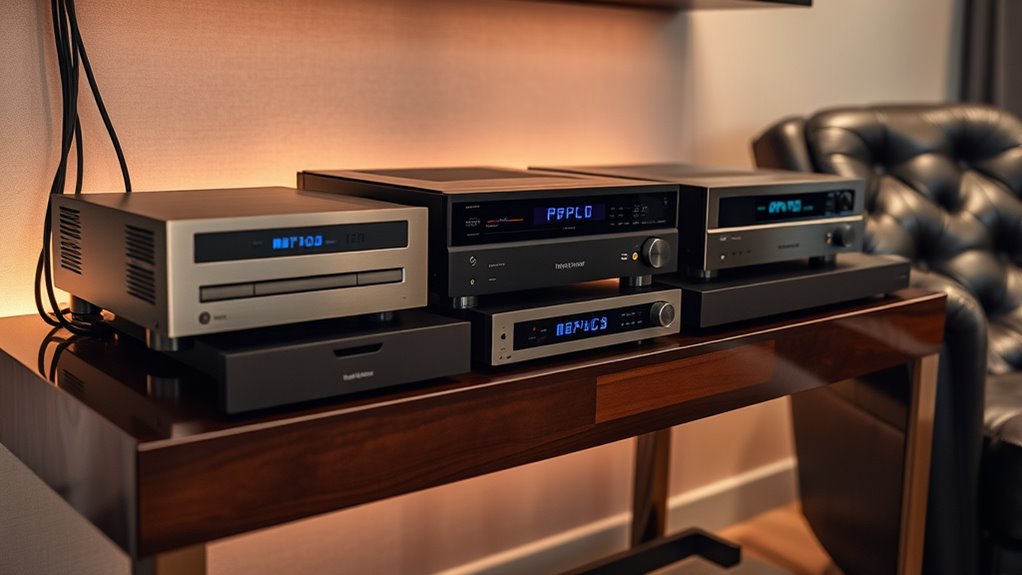

For most audiophiles seeking a luxury CD player, I would start with the Marantz CD 60: it combines a built-in DAC, broad disc support, and a more upscale feature set than the simpler players here. The Audiolab 6000CDT is a standout if you already own a DAC and want a dedicated transport, while the Cambridge Audio AXC35 offers a straightforward route into a separate-component system. The main tradeoff is whether to pay for a refined all-in-one player or put that budget toward transport quality and a DAC you can upgrade independently. The Yamaha CD-S303 and Onkyo C-30 favor practical playback, while the Marantz CD6007 delivers a distinct slimline alternative. Read on for the full breakdown and help matching each player to your system.

Get your wardrobe favorites delivered free with Prime
- Fast, free delivery on millions of items
- Prime Video, Amazon Music and more included
- Member-only deals all year
Key Takeaways
- The Marantz CD 60 is the strongest all-in-one choice: its built-in conversion and wider playback support suit buyers who want a polished standalone source rather than a transport-only component.
- The Audiolab 6000CDT is a system-specific pick: its transport design makes the most sense with an external DAC, but it is less self-contained than the Marantz players.
- The two CD 60 finishes are the same model choice, not different feature tiers: pick Silver/Gold or Black based on your components and room, not expected sound differences.
- The Marantz CD6007 trades some of the CD 60’s newer flagship positioning for a slimline format: it suits buyers who value its compact profile and custom HDAM circuitry.
- Yamaha CD-S303, Cambridge AXC35, and Onkyo C-30 emphasize practical playback: choose among them by system connections and desired simplicity rather than assuming every audiophile needs a premium transport.
| Yamaha CD-S303 Single CD Player, Black |  | Best Value for Flexible Playback | Brand: Yamaha | Model: CD-S303 | Disc capacity: 1 | VIEW ON AMAZON | See Our Full Breakdown |
| Cambridge Audio AXC35 CD Player (Lunar Grey) | 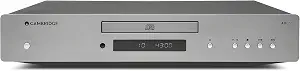 | Best Compact Disc-Focused Pick | Frequency response: 20 Hz–20 kHz | Signal-to-noise ratio: >93 dB | Output impedance: <50 ohms | VIEW ON AMAZON | See Our Full Breakdown |
| Marantz CD 60 CD Player (Silver/Gold) |  | Best Premium Format Support | Design: Architectural, modern | Materials: High-quality materials | Amplifier compatibility: Marantz Model 40n, Model 30, and other Marantz amplifiers | VIEW ON AMAZON | See Our Full Breakdown |
| Audiolab 6000CDT Dedicated CD Transport with Remote, Black |  | Best for a Separate DAC System | Brand: Audiolab | Model: 6000CDT | Type: Dedicated CD transport | VIEW ON AMAZON | See Our Full Breakdown |
| Marantz CD6007 Slimline CD Player with Custom HDAM |  | Best for Headphone Listening | DAC: AK4490 | Digital filters: Two selectable | Supported formats: CD, CD-R, CD-RW, FLAC HD, ALAC, AIFF, WAV, DSD | VIEW ON AMAZON | See Our Full Breakdown |
| Marantz CD 60 CD Player, Black |  | Best for USB Playback and Headphone Listening | Brand: Marantz | Model: CD 60 (CD60) | Disc capacity: 1 disc | VIEW ON AMAZON | See Our Full Breakdown |
| Onkyo Icon Series C-30 CD Player – Black |  | Best for Digital System Integration | Series: Onkyo Icon Series | Model: C-30 | Color: Black | VIEW ON AMAZON | See Our Full Breakdown |
| luxury cd players for audiophile | Model | Color |
|---|---|---|
| Yamaha CD-S303 Single CD Playe | CD-S303 | — |
| Cambridge Audio AXC35 CD Playe | — | Lunar Grey |
| Marantz CD 60 CD Player | — | Silver/Gold |
| Audiolab 6000CDT Dedicated CD | 6000CDT | — |
| Marantz CD6007 Slimline CD Pla | — | — |
| Marantz CD 60 CD Player | CD 60 (CD60) | Black |
| Onkyo Icon Series C-30 CD Play | C-30 | Black |
More Details on Our Top Picks
Yamaha CD-S303 Single CD Player, Black
The Yamaha CD-S303 is my practical pick for listeners who want a straightforward CD player that also handles files from a USB drive. Its support for FLAC, AAC, MP3, WMA, and LPCM gives it broader everyday playback options than the disc-focused Cambridge Audio AXC35, while Pure Direct offers a way to reduce signal processing when listening through a compatible system. The front USB port is handy if you keep some music on a memory device rather than a computer or streamer. This is not the most expansive option here: unlike the Marantz CD6007, it has no listed high-resolution DSD playback or headphone amplifier, and it holds only one disc. I’d choose it for accessible versatility, not for a feature-rich luxury setup.
Pros:- Plays CD-R/RW discs and several common digital audio formats
- Front-panel USB port makes stored music files easy to access
- Pure Direct and a high-performance DAC support a focused stereo setup
- Remote control is included
Cons:- No headphone jack is listed
- Single-disc capacity means discs must be changed manually
- Its format and feature set is less extensive than the Marantz CD6007
Best for: CD listeners who also keep MP3, FLAC, or other supported files on USB drives and want a simple player with a remote.
Not ideal for: Audiophiles seeking a dedicated headphone stage, high-resolution DSD playback, or multiple-disc capacity.
- Brand:Yamaha
- Model:CD-S303
- Disc capacity:1
- Supported audio formats:MP3, WMA, LPCM, AAC, FLAC
- Media compatibility:CD-R/RW, USB memory devices
- Connectivity:USB
- Dimensions:17.12 × 10.25 × 3.38 in
- Weight:7.7 lb
- Remote control:Included
Our verdict“Choose the Yamaha CD-S303 if you want an uncomplicated CD player with useful USB file playback rather than premium headphone or high-resolution features.”
Cambridge Audio AXC35 CD Player (Lunar Grey)
The Cambridge Audio AXC35 suits a listener who wants a compact, conventional CD player and does not need USB file playback or wireless features. Its published figures—less than 0.01% THD at the specified test point and a signal-to-noise ratio above 93 dB—describe a design focused on clean disc playback, while its 3-inch height can help it fit into a crowded rack. That makes it a simpler alternative to the format-flexible Yamaha CD-S303, which adds USB playback, and the Marantz CD6007, which offers high-resolution files and a headphone amplifier. The tradeoff is a narrow feature set: the supplied details list no Bluetooth, streaming, or broad connectivity. I’d shortlist it when compact dimensions and straightforward CD use matter more than system expansion.
Pros:- Compact 3-inch height can fit into tighter equipment spaces
- Specified total harmonic distortion is below 0.01% at the stated test point
- Signal-to-noise ratio is greater than 93 dB
- Straightforward focus on CD playback avoids paying for unneeded playback features
Cons:- Connectivity options are limited in the supplied specifications
- No built-in Bluetooth or streaming features are listed
- Lacks the USB file playback offered by the Yamaha CD-S303
Best for: Stereo-system owners with limited shelf height who mainly play CDs and want a compact, no-frills component.
Not ideal for: Listeners who want USB playback, Bluetooth, streaming, or the Marantz CD6007’s headphone and high-resolution features.
- Frequency response:20 Hz–20 kHz
- Signal-to-noise ratio:>93 dB
- Output impedance:<50 ohms
- THD at 1 kHz, -10 dBFs:<0.01%
- Dimensions:3.0 × 16.9 × 12.2 in
- Color:Lunar Grey
Our verdict“Pick the AXC35 if a compact, CD-focused component matters more to you than USB playback or broader digital features.”
Marantz CD 60 CD Player (Silver/Gold)
The Marantz CD 60 is the format-rich choice for listeners with a varied digital music library as well as a cherished CD collection. Its stated support for FLAC HD, ALAC, AIFF, and DSD up to 5.6 MHz reaches beyond the conventional disc focus of the Cambridge Audio AXC35 and the Yamaha CD-S303’s listed USB formats. That makes it a stronger fit for someone who wants one component to handle several file types, particularly in a system built around compatible Marantz amplifiers such as the Model 40n or Model 30. The supplied product information does not spell out connectivity details, though, so I would verify how it connects to your existing equipment before choosing it. It also offers no stated streaming or built-in storage; the Marantz CD6007 is the clearer alternative if a headphone amplifier and specified outputs are priorities.
Pros:- Supports a broad selection of formats, including FLAC HD, ALAC, AIFF, and DSD
- DSD playback is specified up to 5.6 MHz
- Designed for compatibility with Marantz Model 40n, Model 30, and other Marantz amplifiers
- Modern architectural design and intuitive operation
Cons:- The supplied specifications do not detail its connectivity options
- No built-in storage or streaming capability is listed
- The Marantz CD6007 provides more explicit details about its DAC, outputs, and headphone amplifier
Best for: Marantz-system owners with CD collections and varied high-resolution files, including DSD, who want a matching premium component.
Not ideal for: Buyers who need clearly specified connections, built-in streaming, or a headphone amplifier documented in the product details.
- Design:Architectural, modern
- Materials:High-quality materials
- Amplifier compatibility:Marantz Model 40n, Model 30, and other Marantz amplifiers
- Supported formats:MP3, WMA, AAC, WAV, FLAC HD, ALAC, AIFF, DSD
- Maximum PCM playback:192 kHz/24-bit
- Maximum DSD playback:5.6 MHz
- Color:Silver/Gold
Our verdict“Choose the CD 60 if broad file-format support and a coordinated Marantz system are more important than documented streaming or headphone features.”
Audiolab 6000CDT Dedicated CD Transport with Remote, Black
The Audiolab 6000CDT is the specialist choice here: it is a CD transport, so its role is to send a digital signal to a separate DAC or compatible amplifier rather than serve as a conventional player with a built-in DAC. Its optical and coaxial outputs give system builders two connection paths, and the read-ahead buffer is designed to reduce disc-reading failures, including with scratched or damaged CDs. That makes it more purpose-built than the Yamaha CD-S303, which adds USB playback and a DAC, but less self-contained than the Marantz CD6007 with its specified analog outputs and headphone amplifier. Bluetooth is listed, though the supplied details do not clarify its function, and the format listing is unusually narrow at MP3. I’d confirm system compatibility before buying.
Pros:- Dedicated transport design pairs with a separate DAC
- Optical and coaxial digital outputs support different system connections
- Read-ahead buffer is designed to reduce disc-reading failures
- Remote control is included
Cons:- Requires a separate DAC or compatible digital-input system for playback
- The supplied supported-format listing is limited to MP3
- Bluetooth functionality is listed without further detail in the supplied specifications
Best for: Audiophiles who already own a capable external DAC or digital-input amplifier and want a transport with optical and coaxial outputs.
Not ideal for: Buyers seeking a standalone player with specified analog outputs, broad documented format support, or a headphone amplifier.
- Brand:Audiolab
- Model:6000CDT
- Type:Dedicated CD transport
- Number of discs:1
- Digital connectors:Optical, coaxial
- Supported audio format:MP3
- Bluetooth:Yes
- Dimensions:20.15 × 17.5 × 3.15 in
- Warranty:3 years
Our verdict“Choose the 6000CDT if you already have a DAC and want a transport-focused source with optical and coaxial outputs.”
Marantz CD6007 Slimline CD Player with Custom HDAM
The Marantz CD6007 earns its place for audiophiles who want a full-featured player that can serve both a stereo system and a headphone setup. Its HDAM-SA2 headphone amplifier has three gain settings, giving listeners a way to match the output to different headphones, while support for FLAC HD, ALAC, AIFF, WAV, and DSD reaches well beyond standard CD playback. Compared with the Yamaha CD-S303, it has a more detailed high-resolution specification and a dedicated headphone stage; compared with the Marantz CD 60, its supplied data makes the DAC and outputs more explicit. The tradeoff is that it remains a disc-and-digital-file player, not a Bluetooth or streaming hub, and its advanced features may be unnecessary for someone who only plays CDs through speakers.
Pros:- HDAM-SA2 headphone amplifier includes three gain settings
- Supports CD, CD-R/RW, and a broad range of high-resolution audio formats
- Playback support reaches 192 kHz/24-bit PCM and DSD 5.6 MHz
- Double-layered bottom plate and rigid feet are designed to reduce vibration and interference
Cons:- No Bluetooth or streaming capability is listed
- Its high-resolution and headphone features may be unnecessary for basic CD listening
- The supplied data lists analog and coaxial outputs but does not specify additional digital connections
Best for: Audiophiles who listen through demanding headphones as well as speakers and want CD and high-resolution file playback in one component.
Not ideal for: Listeners who want built-in Bluetooth or streaming, or who only need a basic player for standard CDs.
- DAC:AK4490
- Digital filters:Two selectable
- Supported formats:CD, CD-R, CD-RW, FLAC HD, ALAC, AIFF, WAV, DSD
- Maximum PCM playback:192 kHz/24-bit
- Maximum DSD playback:5.6 MHz
- Headphone amplifier:HDAM-SA2 with three gain settings
- Outputs:Gold-plated analog and coaxial
- Build features:Double-layered bottom plate, rigid feet
Our verdict“Choose the CD6007 if headphone listening and high-resolution file support matter as much as playing CDs.”
Marantz CD 60 CD Player, Black
The Marantz CD 60 is the most flexible listening-focused choice here: alongside single-disc CD playback, it reads DSD and PCM audio from USB and gives you a dedicated headphone output for listening without a separate headphone amplifier. Its selectable digital filter adds a way to tailor playback, while the high-current, low-noise power supply is aimed at stable operation. Compared with the Onkyo Icon Series C-30, the Marantz makes a stronger case for personal listening and USB-file playback; the Onkyo instead specifies optical and coaxial outputs for system integration. The tradeoff is that the CD 60’s supplied data lists USB formats only as DSD and PCM, leaving compatibility details unclear, and its dimensions are not labeled by axis. Choose it for its range of listening options, not for a compact footprint.
Pros:- Plays DSD and PCM audio from a USB drive in addition to CDs.
- Dedicated 3.5 mm headphone output supports direct personal listening.
- Selectable digital filter allows a choice of playback character.
- High-current, low-noise power supply is designed to support stable playback.
Cons:- USB audio format information specifies DSD and PCM but gives no further compatibility details.
- Listed dimensions do not identify which measurement is length, width, or height.
- Single-disc playback does not suit listeners seeking a multi-disc changer.
Best for: CD listeners who also keep DSD or PCM files on a USB drive and want a built-in headphone output for private listening.
Not ideal for: Buyers prioritizing a compact component or needing clearly documented USB format compatibility and fully labeled dimensions.
- Brand:Marantz
- Model:CD 60 (CD60)
- Disc capacity:1 disc
- USB audio:DSD, PCM
- Headphone output:3.5 mm
- Channels:2
- Color:Black
- Listed dimensions:17.4 × 15.59 × 15.59 in
Our verdict“Choose the CD 60 if you want a premium CD player that also handles USB audio and headphone listening, rather than a player focused mainly on digital system outputs.”
Onkyo Icon Series C-30 CD Player – Black
The Onkyo Icon Series C-30 suits an audiophile system built around an external DAC or amplifier: its rear panel provides RCA, optical, and coaxial outputs, giving you several connection paths rather than the CD 60’s highlighted USB-file and headphone features. Onkyo also specifies a ±10 PPM clock and its VLSC circuit, which it describes as reducing pulse noise in the signal path. A vibration-resistant aluminum front panel rounds out the construction story. That focus makes the C-30 a better fit for listeners who want to route disc playback into existing components; it is less self-contained for someone who wants direct headphone listening or USB audio playback. The listed disc formats include CD, CD-R/RW, MP3, and WMA, but the supplied product data omits dimensions and other detailed specifications, making system-fit checks harder.
Pros:- RCA, optical, and coaxial outputs offer flexible connections to audio components.
- VLSC is designed to reduce pulse noise in the signal path.
- A stated ±10 PPM clock emphasizes timing precision.
- Supports CD, CD-R/RW, MP3, and WMA playback.
Cons:- No USB audio playback or dedicated headphone output is specified.
- The supplied product data omits dimensions and several other system-planning details.
- Its digital-output emphasis may be unnecessary for buyers who want a straightforward standalone player.
Best for: Audiophiles with an external DAC or integrated amplifier who want multiple digital and analog output options from a CD player.
Not ideal for: Listeners seeking built-in headphone playback, USB-file support, or a product listing with complete physical and technical specifications.
- Series:Onkyo Icon Series
- Model:C-30
- Color:Black
- Analog output:RCA
- Digital outputs:Optical, coaxial
- Clock precision:±10 PPM
- Circuit technology:VLSC (Vector Linear Shaping Circuit)
- Supported disc and file formats:CD, CD-R/RW, MP3, WMA
Our verdict“Pick the C-30 if flexible connections to an external DAC or amplifier matter more than USB playback and built-in headphone listening.”

How We Picked
I compared these players by how well they serve distinct audiophile systems: as a complete CD source with built-in conversion, as a transport feeding an external DAC, or as a simpler component for routine disc playback. I gave weight to supported playback formats, digital and analog connection options, operational convenience, chassis and design fit, and the likely value of each feature in a real setup. A feature only counted as an advantage when it matched a clear buyer need.
The ranking puts versatility and system fit first, which is why the Marantz CD 60 leads as the most complete option and the Audiolab 6000CDT earns a distinct place for DAC-based systems. The Cambridge AXC35 and Marantz CD6007 follow for buyers with more specific priorities, while the Yamaha and Onkyo suit people who want capable, uncomplicated playback. The Silver/Gold and Black CD 60 entries are the same player in different finishes, so they are not treated as separate performance levels.
| luxury cd players for audiophile | Color |
|---|---|
| Yamaha CD-S303 Single CD Playe | — |
| Cambridge Audio AXC35 CD Playe | Lunar Grey |
| Marantz CD 60 CD Player | Silver/Gold |
| Audiolab 6000CDT Dedicated CD | — |
| Marantz CD6007 Slimline CD Pla | — |
| Marantz CD 60 CD Player | Black |
| Onkyo Icon Series C-30 CD Play | Black |
Factors to Consider When Choosing Luxury Cd Players For Audiophiles
Before choosing a player, I would match its role to the rest of the system. A premium-looking component can be a poor fit if it duplicates a DAC you already own or lacks the output you need. These factors help separate genuine system benefits from features that may go unused.
Choose a Player or a Transport
A CD player with analog outputs converts the disc signal inside the unit and can connect directly to an amplifier. A transport sends digital audio to an external DAC, leaving conversion to another component. I would favor a transport when a capable DAC is already central to the system or when you want to change DACs independently. If you do not own a DAC, remember that a transport-only purchase adds another component and connection to your setup. Avoid paying for a transport just because it sounds more specialized; its value depends on the equipment you will pair with it.
Check Connections Before Comparing Features
Start with the amplifier or DAC inputs you actually have, then verify the player provides the matching outputs. Analog connections make a self-contained player easy to use, while digital outputs can let an external DAC handle conversion. Check whether your system needs coaxial or optical digital input rather than assuming every component shares the same connection. Also account for cable routing and available shelf space, especially if adding an external DAC. A short compatibility check can prevent buying a player whose most appealing feature cannot be used in your setup.
Pay for Format Support You Will Use
Some players handle more than standard audio CDs, but that matters only if your collection includes those disc types or you expect to use them. List the formats you own before choosing a model, and confirm support for each one in the manufacturer’s specifications. Do not infer compatibility from a premium position or familiar brand name. If your library is almost entirely standard CDs, prioritize reliable operation, outputs, and ease of use instead. Format flexibility is useful when it solves a real library need, not simply because it appears on a feature list.
Think About Upgrade Paths and Total System Complexity
An external DAC can be upgraded without replacing a transport, but it also adds cost, cables, space, and another component to manage. A player with built-in conversion offers a cleaner starting point and may be the better choice if you want to connect directly to an amplifier. I would compare the cost and complexity of the whole signal chain, not just the CD unit. Buyers who enjoy gradual component changes may value the transport approach; listeners who prefer a settled system may favor an all-in-one player. The most flexible design is not always the easiest one to live with.
Fit, Finish, and Day-to-Day Usability Matter
Luxury is partly about how a component works in the room: its dimensions, finish, controls, display, and how easily it fits into a rack. A slimline player can solve a space problem, while a larger chassis may better match full-size components. Check the finish against your existing equipment, but do not mistake a color variant for a change in sound or capability. Consider how often you use the front-panel controls and whether the remote covers the functions you need. These practical details shape daily satisfaction more than decorative claims alone.
Frequently Asked Questions
Should I choose the Audiolab 6000CDT or a player with a built-in DAC?
Choose the Audiolab 6000CDT if you already have a DAC you like, or if you plan to select one separately and want a dedicated disc transport. Its appeal is reduced if you need a complete source that connects directly to an amplifier through analog outputs. In that case, the Marantz CD 60 or another full CD player is the simpler path. Compare the inputs on your DAC with the transport’s digital outputs before buying. The decision is less about which design is universally better and more about whether you want conversion inside or outside the CD component.
Are the Silver/Gold and Black Marantz CD 60 versions different beyond finish?
These listings identify the same Marantz CD 60 model in different finishes, so the choice is mainly about visual fit with your system. I would not pay extra or choose one expecting a different feature set unless the seller’s listing clearly states a distinct package or revision. Check the exact model details and included accessories before ordering, since retailer listings can vary. If your components are mixed finishes, decide whether you want the CD player to match or stand out. The finish does not change the central question of whether the CD 60’s all-in-one approach suits your setup.
Is the Marantz CD6007 a sensible choice if I can also buy the CD 60?
Yes, if its slimline format and feature set better match your rack and listening setup. The CD 60 is positioned as the more complete premium all-in-one option in this lineup, while the CD6007 offers a different balance centered on a compact chassis and custom HDAM circuitry. Compare the connections and supported formats you need rather than choosing by model number alone. If you want the strongest emphasis on a newer premium feature set, the CD 60 is the clearer fit. If space or the CD6007’s specific design matters more, it remains a reasonable alternative.
Do I need high-resolution disc support if I mostly listen to standard CDs?
Not necessarily. If standard audio CDs make up nearly all your collection, a player with broader format support may provide little practical benefit. You may get more from choosing the right outputs, a convenient interface, and a component that fits your amplifier and rack. If you own compatible high-resolution discs or want one machine to cover a mixed disc library, support becomes more relevant. Check each model’s documented formats instead of assuming that every premium player reads the same discs. Your actual collection should guide this choice.
Can the Yamaha CD-S303, Cambridge AXC35, or Onkyo C-30 work in an audiophile system?
Yes. An audiophile system does not require every source component to be the most feature-rich model; system compatibility and the listening chain matter more. These players can suit buyers who want straightforward CD playback and do not need the Audiolab’s dedicated-transport approach or the Marantz CD 60’s broader premium positioning. Compare their available outputs with your DAC or amplifier, then focus on the controls and features you will use. If you want an external DAC, confirm that the chosen player can feed it appropriately. If you want direct analog connection, verify that its outputs suit your system.
Conclusion
For the best overall, I recommend the Marantz CD 60 for listeners who want a refined, self-contained player with a broad feature set. The best premium transport-focused choice is the Audiolab 6000CDT, but only for buyers with an external DAC or a clear plan to add one. For the best value-oriented, simple setup, compare the Yamaha CD-S303 and Cambridge AXC35 against the connections and playback features you actually need; neither requires a transport-first system. The best for beginners is a full player such as the CD 60 or AXC35, since it avoids making a separate DAC part of the initial decision. For specific needs, choose the Marantz CD6007 for its slimline profile, or select the Onkyo C-30 if its particular system fit and feature set suit your setup. The right pick is the one that complements your existing components without making you pay for a role you do not need.