Choosing a lateral rotation therapy mattress for home means weighing how much active turning a patient needs against the room, bed, and caregiver setup available. My leading mattress-system pick is the Invacare microAIR MA900, which combines rotation with alternating pressure and low air loss. The Drive Medical LS9500N stands out for its adjustable turning cycles and angles, while the HopeFULL HC-9 is my choice when the buyer needs a complete electric bed rather than a mattress alone.

Get your wardrobe favorites delivered free with Prime
- Fast, free delivery on millions of items
- Prime Video, Amazon Music and more included
- Member-only deals all year
These options are not interchangeable. The Drive and Invacare systems rotate an air-cell mattress on a compatible bed; the HopeFULL is a heavy, full-electric bed with a foam mattress and lateral tilt; and the OBBO MED offers a gentler 15-degree self-rotation design with ventilation. I rank them by how directly they support home lateral repositioning, how much pressure-care functionality they add, and the practical demands they place on caregivers. A clinician should help determine whether rotation is appropriate and set its schedule for the person using it.
Complete the kit


Key Takeaways
- The Invacare MA900 is my strongest all-around mattress system pick because it combines lateral rotation, alternating pressure, and low air loss, but its specialized care focus may be more than some households need.
- The Drive LS9500N provides the widest stated turning range here—up to 40 degrees—with selectable 10-, 20-, 30-, or 60-minute cycles and a foam base for added support.
- The HopeFULL HC-9 is the only complete bed in this lineup; its up-to-30-degree lateral tilt, adjustable positions, and integrated scale come with substantial weight and handling demands.
- The OBBO MED OB-1600 rotates to 15 degrees and combines alternating pressure with 15 LPM low-air-loss ventilation, making it a gentler option than the 40-degree systems.
- Before choosing any system, confirm bed and mattress compatibility, caregiver capacity, power-failure plans, and the turning plan with a qualified clinician.
| Invacare microAIR MA900 Lateral Rotation Low Air Loss Mattress System |  | Best Overall Mattress System | Dimensions: 80 × 36 × 10 inches | Weight capacity: 600 lb | Lateral rotation: 20° or 40° | VIEW ON AMAZON | See Our Full Breakdown |
| Drive Medical LS9500N PreserveTech Lateral Rotation System with On-Demand Low Air Loss | 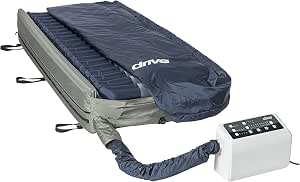 | Best for Adjustable Turning Cycles | Dimensions: 36 × 80 × 10 inches | Air cells: 20 split cells | Maximum rotation: 40° | VIEW ON AMAZON | See Our Full Breakdown |
| HopeFULL HC-9 EZ-Turn ICU Hospital Bed with Lateral Tilt and Built-In Scale |  | Best Complete Electric Bed | Model: HC-9 | Bed functions: Full electric; head, knee, foot, and height adjustment | Lateral tilt: Up to 30° | VIEW ON AMAZON | See Our Full Breakdown |
| OBBO MED OB-1600 UtilityAir Alternating Pressure Mattress with Low Air Loss and Self-Lateral Rotation |  | Best for Gentler Self-Rotation | Model: OB-1600 UtilityAir | Size: 80 × 36 × 7 inches listed | Thickness: 6 inches in description; confirm | VIEW ON AMAZON | See Our Full Breakdown |
| lateral rotation therapy mattresses for home | Weight capacity | Dimensions | Model |
|---|---|---|---|
| Invacare microAIR MA900 Latera | 600 lb | 80 × 36 × 10 inches | — |
| Drive Medical LS9500N Preserve | 500 lb | 36 × 80 × 10 inches | — |
| HopeFULL HC-9 EZ-Turn ICU Hosp | 550 lb | — | HC-9 |
| OBBO MED OB-1600 UtilityAir Al | — | — | OB-1600 UtilityAir |
More Details on Our Top Picks
Invacare microAIR MA900 Lateral Rotation Low Air Loss Mattress System
For a home that needs more than turning alone, I rank the Invacare microAIR MA900 first. It combines lateral rotation, alternating pressure, and low air loss, so its role is broader than the Drive LS9500N’s rotation-focused setup. That combination is aimed at pressure redistribution and moisture management for people at medium-to-high risk of pressure sores—not at replacing a clinician’s skin-care plan.
The choice of 20- or 40-degree rotation gives a caregiver two stated angle options, and its 10 comfort settings provide room to adjust the support. A cell-in-cell construction is described as helping prevent bottoming out during power failure; that is a reassuring design feature, though households should still ask the supplier what support remains during an outage and what manual steps are needed. Its vapor-permeable, quilted cover is intended to reduce friction, shear, and trapped moisture.
Compared with the Drive, the Invacare adds alternating pressure and a more explicitly specialized pressure-care package, while the Drive spells out cycle intervals from 10 to 60 minutes and includes a foam base. The MA900’s 600-pound capacity is the highest listed here for a mattress system. One listing detail needs verification: the stated item weight of 0.01 ounces is not credible for a full mattress system, so I would confirm shipping and handling weight before delivery. I would also skip this system if the person only needs occasional repositioning or if a simpler, gentler setup is preferred.
Pros:- Combines lateral rotation, alternating pressure, and low air loss.
- Offers 20- or 40-degree rotation choices and 10 comfort settings.
- Cell-in-cell design is described as helping prevent bottoming out during power failure.
- Listed 600-pound capacity is the highest among these mattress systems.
Cons:- Its specialized pressure-care features may be unnecessary for people without elevated skin-risk needs.
- The listed item weight of 0.01 ounces appears inaccurate and should be confirmed.
- A more involved system can require careful setup and caregiver familiarity.
Best for: Home-care households seeking rotation plus alternating pressure and low-air-loss moisture management for someone at medium-to-high pressure-injury risk, with clinical guidance.
Not ideal for: Buyers wanting a simple general-purpose mattress, a clearly documented lightweight system, or a lower-complexity option without multiple pressure-care functions.
- Dimensions:80 × 36 × 10 inches
- Weight capacity:600 lb
- Lateral rotation:20° or 40°
- Comfort settings:10
- Therapies:Alternating pressure and low air loss
- Design:Cell-in-cell air-cell construction
- Cover:Quilted, vapor-permeable cover
Our verdict“I would start with the MA900 when a clinician recommends a combined rotation and pressure-care system, provided the supplier confirms the unit’s practical handling details.”
Drive Medical LS9500N PreserveTech Lateral Rotation System with On-Demand Low Air Loss
I put the Drive Medical LS9500N just behind the Invacare because it offers especially clear control over rotation timing and angle. Its 20 split air cells can turn to up to 40 degrees, with cycle choices of 10, 20, 30, or 60 minutes. For a caregiver who needs a defined schedule to discuss with a clinician, those choices make the system’s routine easier to understand than a listing that gives settings without describing cycle intervals.
The 2-inch foam base is a practical distinction from the OBBO MED’s thinner integrated mattress format: it provides an additional support layer if the air system loses power, though caregivers should confirm what support is available during a fault. The 10-inch side bolsters help define the sleep surface and may help reduce the chance of rolling off; they are not a substitute for an appropriate bed setup or supervision. Low-pressure and power-failure alarms also give caregivers a signal to investigate rather than relying only on visual checks.
Compared with the MA900, the Drive has a lower listed capacity—500 pounds versus 600—and its description does not include alternating pressure. It does include on-demand low air loss and a removable quilted cover, but that cover requires hand washing, which can add work to routine care. There is no dedicated heel section, so anyone needing targeted heel offloading should ask a clinician about a separate plan. I see this as a strong option when adjustable rotation timing and clear alarms matter more than having the broadest therapy package.
Pros:- Four stated turning-cycle choices: 10, 20, 30, or 60 minutes.
- Rotation angle adjusts up to 40 degrees.
- Foam base and high side bolsters add support and help define the surface.
- Low-pressure and power-failure alarms alert caregivers to system issues.
Cons:- Removable cover requires hand washing.
- No dedicated heel section is listed.
- Its 500-pound capacity is lower than the Invacare MA900’s stated capacity.
Best for: Caregivers who want selectable turning intervals, an adjustable rotation angle, low-pressure and power-failure alarms, and a foam base beneath the air cells.
Not ideal for: People who need a dedicated heel section, a stated alternating-pressure function, or a capacity above 500 pounds.
- Dimensions:36 × 80 × 10 inches
- Air cells:20 split cells
- Maximum rotation:40°
- Turning cycles:10, 20, 30, or 60 minutes
- Weight capacity:500 lb
- Foam base:2 inches
- Side bolsters:10 inches high
- Alarms:Low pressure and power failure
Our verdict“I would choose the LS9500N over the MA900 when cycle scheduling and alarm features are the priority, and choose the MA900 when broader pressure-care functions matter more.”
HopeFULL HC-9 EZ-Turn ICU Hospital Bed with Lateral Tilt and Built-In Scale
The HopeFULL HC-9 is the only pick here that supplies a complete electric bed rather than a mattress system. That makes it a different kind of home purchase: the bed itself tilts laterally up to 30 degrees, while full-electric adjustments cover head, knee, foot, and height. Trendelenburg and chair positioning add options for care routines, and the built-in scale can make weight checks more convenient than arranging separate equipment.
For someone who needs a compatible bed and repositioning functions in one package, the HC-9 may be more useful than pairing an air mattress such as the Drive or Invacare with an existing frame. It comes with a 12-piece, 4.7-inch foam mattress, but that does not make it equivalent to the two air-cell systems’ stated lateral rotation therapy and pressure-care features. I would ask whether the included mattress suits the person’s clinical needs and whether a separate pressure-redistribution surface is recommended.
The biggest tradeoff is the physical footprint and handling. The bed weighs approximately 287 pounds in the supplied specifications, and its overall dimensions are 86 by 41.8 inches; delivery and placement need planning. Details also give differing bed-weight figures, so I would confirm the shipped and assembled weights before ordering. Its 550-pound capacity exceeds the Drive’s but is below the MA900’s listed capacity. This makes most sense when bed positioning, integrated scale, and a full electric frame are central needs—not when the buyer wants only a mattress replacement.
Pros:- Full-electric bed offers lateral tilt up to 30 degrees and multiple positioning functions.
- Built-in scale supports convenient weight monitoring.
- LINAK actuators and both side-rail and pendant controls are specified.
- Listed 550-pound capacity and patient-lift compatibility broaden its care setup.
Cons:- Heavy unit and crate can complicate delivery, placement, and handling.
- Supplied weight details differ and should be checked with the seller.
- Included foam mattress is not the same therapy format as the air-cell rotation systems.
Best for: Households that need a full-electric hospital bed with lateral tilt, several bed positions, patient-lift compatibility, and an integrated scale.
Not ideal for: Buyers who already have a suitable bed frame and want only an air-cell lateral-rotation mattress, or households unable to manage a heavy delivery and installation.
- Model:HC-9
- Bed functions:Full electric; head, knee, foot, and height adjustment
- Lateral tilt:Up to 30°
- Height range:23–32.3 inches
- Sleep surface:78.7 × 35.4 inches
- Overall dimensions:86 × 41.8 inches
- Weight capacity:550 lb
- Mattress:12-piece, 4.7-inch foam
- Warranty:2-year limited parts and labor
Our verdict“I recommend the HC-9 when the bed frame itself needs replacing; for a compatible existing frame, the Drive or Invacare is the more direct mattress-system choice.”
OBBO MED OB-1600 UtilityAir Alternating Pressure Mattress with Low Air Loss and Self-Lateral Rotation
The OBBO MED OB-1600 UtilityAir takes a more modest approach to lateral movement: its self-rotation is listed at 15 degrees, below the 20- or 40-degree options on the Invacare and the Drive’s maximum of 40 degrees. That smaller stated angle may suit a household seeking a gentler turning feature, but it should not be treated as a substitute for a clinician’s advice about how much movement is appropriate.
Its combination of alternating pressure and 15 LPM low-air-loss ventilation adds pressure redistribution and airflow for moisture management. A sinking feature lowers the surface by up to 4 inches during rotation, which is intended to help keep the person centered. That design differs from the Drive’s prominent side bolsters and foam base: the OBBO focuses instead on containment during its rotation movement. Its listed weight of 26 pounds may be easier to handle than the full HopeFULL bed, although the bed frame is not included.
I rank it fourth because its 15-degree rotation is the least expansive stated range among these choices, and the listing does not provide the same cycle schedule or alarm details as the Drive. The stated mattress size is 80 by 36 by 7 inches, while the description calls it 6 inches thick; buyers should confirm the actual height and bed fit before purchase. Compared with the MA900, it is a simpler, less specialized choice on paper, but the supplied details are less complete for matching a particular care routine. I would verify setup and operation with the supplier before relying on it for prescribed repositioning.
Pros:- Combines alternating pressure, low-air-loss ventilation, and self-lateral rotation.
- 15 LPM airflow supports moisture management beneath the body.
- Sinking feature is designed to help keep the patient centered during rotation.
- Listed unit weight is 26 pounds, lighter to handle than a complete electric bed.
Cons:- 15-degree rotation is more limited than the angle options listed for the Drive and Invacare.
- Bed frame is not included.
- Description and specifications differ on mattress thickness, so dimensions need confirmation.
Best for: Households seeking a lower-angle self-rotation mattress that combines alternating pressure and low-air-loss ventilation, with a compatible bed frame already available.
Not ideal for: People who need a larger stated turning angle, published cycle intervals, or a supplied bed frame and clearly specified alarm package.
- Model:OB-1600 UtilityAir
- Size:80 × 36 × 7 inches listed
- Thickness:6 inches in description; confirm
- Weight:26 lb
- Low air loss:15 LPM
- Self-lateral rotation:15°
- Maximum sinking depth:4 inches
- Bed frame:Not included
Our verdict“I would consider the OB-1600 for a gentler 15-degree rotation approach, but choose the Drive or Invacare when a wider turning range is needed.”

How We Picked
I ranked these options for the specific job of supporting lateral rotation therapy at home, not as general mattresses or hospital-bed substitutes. I gave the most weight to the stated rotation method and range, then looked at whether each option adds pressure redistribution or moisture management that could matter in a home-care routine. I also compared controls and alarms, support during power interruption, capacity limits, and the practical work of placing, cleaning, and moving the equipment.
The order reflects different strengths rather than a claim that one system suits every patient. The Invacare MA900 ranks first among mattress systems because it combines three pressure-care functions and has a stated 600-pound capacity. The Drive LS9500N follows for its clear cycle choices, higher maximum rotation angle, and foam base. I place the HopeFULL HC-9 third because it is a capable integrated bed, but it is a large, heavy commitment and its supplied mattress is foam rather than an air-cell lateral-rotation system. The OBBO MED is fourth: its integrated therapies are useful, but its 15-degree rotation is more limited than the angle ranges listed for the two leading systems.
I use the supplied product information and do not treat it as a substitute for a clinician’s recommendation. Equipment setup, turning angle, cycle frequency, and pressure-care needs should be matched to the individual. I also flag details that may need confirmation, including the HopeFULL bed-weight discrepancy and the Invacare listing’s implausible item weight. Ratings and popularity do not determine my rankings.
| lateral rotation therapy mattresses for home | Model |
|---|---|
| Invacare microAIR MA900 Latera | — |
| Drive Medical LS9500N Preserve | — |
| HopeFULL HC-9 EZ-Turn ICU Hosp | HC-9 |
| OBBO MED OB-1600 UtilityAir Al | OB-1600 UtilityAir |
Factors to Consider When Choosing Lateral Rotation Therapy Mattresses For Home
I would choose a home lateral rotation system by starting with the care plan, then checking whether the equipment actually fits the bed and the household routine. The biggest distinctions in this lineup are mattress-only versus complete bed, turning range, added pressure-care functions, and how much setup and maintenance the system asks of caregivers.
Start with the prescribed turning plan
Lateral rotation moves the person from side to side according to a system’s programmed pattern. A larger maximum angle does not automatically make a mattress the right choice: comfort, medical condition, skin status, tolerance, and the caregiver’s ability to monitor the person all matter. Ask the treating clinician what angle and schedule are appropriate, whether rotation should run continuously, and what signs require stopping or changing the setup. The Drive lists selectable 10-, 20-, 30-, and 60-minute cycles; the Invacare lists 20- or 40-degree rotation; the OBBO states 15-degree self-rotation. Those specifications describe different controls and should not be read as a treatment instruction.
Decide whether you need a mattress or an entire bed
The Drive, Invacare, and OBBO are mattress systems intended to work with an appropriate bed, so check surface dimensions, rails, frame compatibility, power access, and how the air unit will be positioned. The HopeFULL HC-9 is a full-electric bed with its own foam mattress. It may suit a household replacing the frame as well as adding lateral tilt, but its size and weight call for careful delivery and placement planning. Do not assume a mattress will fit every home hospital bed just because both use a nominal 36-inch width.
Match pressure-care features to the person’s needs
Among the mattress systems, the MA900 has the broadest stated combination: rotation, alternating pressure, and low air loss. The Drive combines rotation with on-demand low air loss and provides a foam base. The OBBO pairs alternating pressure with ventilation and a smaller rotation angle. These functions address related but distinct needs; no feature list can determine whether the person requires a particular pressure surface. If pressure injury prevention or moisture management is part of the care plan, ask the clinician to compare the full system—not only the mattress name—and check whether other measures, such as heel protection, are needed.
Check capacity, support, and outage planning
Match the stated capacity to the user and the whole support setup, not just the mattress surface. The listed capacities are 600 pounds for the Invacare MA900, 500 for the Drive LS9500N, and 550 for the HopeFULL bed; no capacity was supplied for the OBBO in the provided specifications. Ask the supplier to confirm the relevant limit and any frame requirements. Also ask what happens if power fails, how alarms behave, and what caregivers should do. The Drive lists low-pressure and power-failure alarms, while the Invacare describes cell-in-cell construction intended to help prevent bottoming out. Neither detail removes the need for an outage plan.
Plan for care, cleaning, and delivery
A therapy mattress becomes part of the daily care routine. The Drive’s removable cover requires hand washing, which could be burdensome if frequent cleaning is expected. Confirm cleaning instructions, replacement-cover availability, pump placement, noise information, and who can service the unit. Delivery matters too: the HopeFULL bed is heavy and its listing gives differing weight figures, while the Invacare’s listed item weight appears inaccurate. The OBBO’s description and specification differ on mattress thickness. I would confirm these details with the supplier before scheduling a delivery or relying on a particular bed height.
Frequently Asked Questions
What is a lateral rotation therapy mattress?
It is a mattress or mattress system designed to move a person side to side using a powered turning pattern. Some systems also add alternating pressure or low-air-loss airflow. In this lineup, the Drive and Invacare use air-cell rotation, the OBBO lists 15-degree self-rotation, and the HopeFULL bed tilts laterally as part of its electric bed functions. A clinician should determine whether this type of movement fits the individual’s care needs.
Can I use one of these systems on a regular home bed?
The three mattress systems require a compatible bed frame and appropriate sleep surface, and the product information does not establish that they fit every household bed. Check mattress dimensions, frame support, rails, controls, and power needs with the supplier before purchase. The HopeFULL is a complete hospital bed rather than a mattress-only system, so it is the relevant option if the frame itself also needs replacing.
Which option offers the greatest stated rotation angle?
The Drive LS9500N lists rotation up to 40 degrees, and the Invacare MA900 offers 20- or 40-degree options. The HopeFULL HC-9 lists lateral tilt up to 30 degrees, while the OBBO MED OB-1600 lists 15-degree self-lateral rotation. These are product specifications, not a recommendation to use the largest angle; the appropriate setting and schedule should come from a qualified clinician.
Do these mattresses replace regular repositioning and skin checks?
No product description here establishes that an automated system replaces caregiver observation, skin checks, or other prescribed care. A powered mattress may support a repositioning plan, but people and settings differ, and equipment can alarm, lose power, or require adjustment. Follow the clinician’s instructions for manual repositioning, monitoring, and responding to discomfort or skin changes.
What should I confirm before ordering for home use?
Confirm the user’s clinical suitability, weight capacity, bed and mattress dimensions, caregiver ability to set up and clean the system, power-failure procedures, alarm response, and delivery access. Ask about warranty and service support, too. For these particular listings, I would clarify the HopeFULL weight figures, the Invacare item weight, and the OBBO mattress thickness before arranging delivery.
Conclusion
My recommendation depends on what the household needs beyond turning. For combined pressure-care functions, I would begin with the Invacare MA900 and verify its weight and setup details with the supplier. For adjustable cycle choices and alarms, the Drive LS9500N is the clearest fit, with hand-wash cover care and no dedicated heel section as tradeoffs. If the home needs a complete electric bed with lateral tilt, the HopeFULL HC-9 is the distinct choice, provided its weight and delivery demands are manageable. For buyers seeking gentler 15-degree self-rotation with alternating pressure and low-air-loss ventilation, the OBBO MED may fit, but confirm its thickness and frame compatibility. I would make the final choice with the clinician and supplier, matching the system to the care plan rather than choosing by maximum angle alone.
Halloween Picks
halloween
As an affiliate, we earn on qualifying purchases.