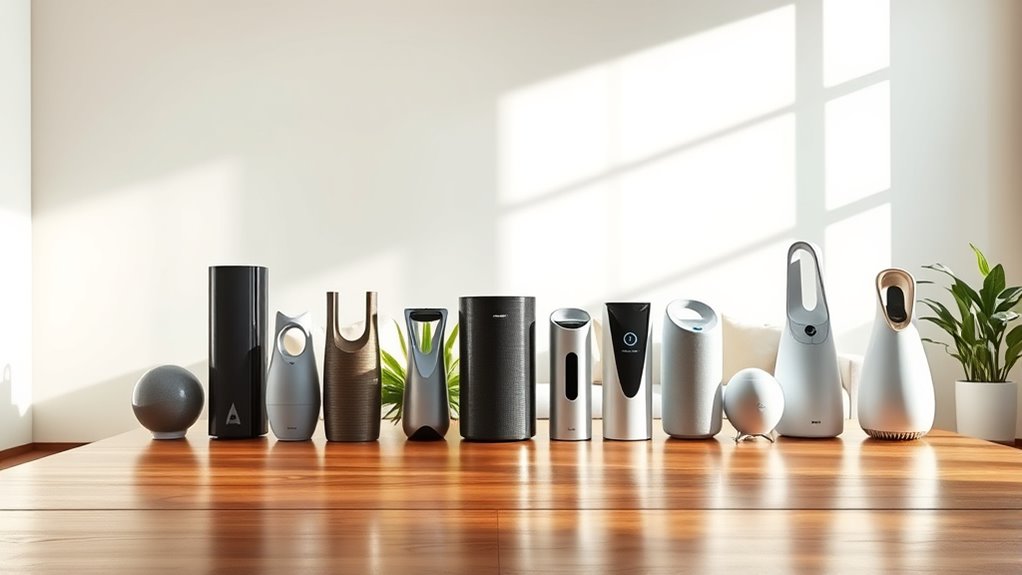

High-end air purifiers for allergies differ most in room coverage, particle filtration, odor control, and the effort required to maintain them. I rank the Coway Airmega 400 as the best overall pick for its large-room focus, while the IQAir HealthPro Plus XE stands out for buyers prioritizing fine-particle filtration and the Coway Mighty for a more approachable, smaller-room option. The main tradeoff is between broad coverage and a compact footprint, alongside filter upkeep, noise, and added features. A purifier can help reduce airborne particles, but it cannot remove allergens already settled on surfaces or replace source control. Read on for the full comparison and guidance on choosing for your room and routine.

Get your wardrobe favorites delivered free with Prime
- Fast, free delivery on millions of items
- Prime Video, Amazon Music and more included
- Member-only deals all year
Complete the kit

Key Takeaways
- The Coway Airmega 400 leads for broad-room use: it offers a more balanced starting point for shoppers who want substantial coverage without choosing a specialist model.
- IQAir separates filtration priority from convenience: the HealthPro Plus XE and Atem X suit buyers focused on advanced particle filtration, though their premium positioning makes room fit and ongoing filter needs especially important.
- Austin Air’s lineup emphasizes different household needs: the HealthMate Plus and Bedroom Machine add distinctions around filtration focus and bedroom use, while the standard HealthMate is a more straightforward choice.
- The Coway Mighty and Winix 5510 are more accessible entry points: their smaller-room orientation and user-friendly features make them less demanding first choices than larger, specialized machines.
- Compactness and low-maintenance claims do not replace room planning: Dyson’s HushJet and Shark’s NeverChange Max appeal for distinct convenience or footprint reasons, but buyers should still match rated coverage and filter design to their actual space.
| Coway Airmega 400 Air Purifier, White (AP-2015F) |  | Best Overall for Large Rooms | Model: AP-2015F | Coverage: Up to 3,120 sq. ft. in 60 minutes | Filtration: Washable pre-filter, activated carbon filter, and HEPA filter | VIEW ON AMAZON | See Our Full Breakdown |
| Austin Air HealthMate Standard Air Purifier, White (Model B400) |  | Best for Long Filter Life | Model: B400 | Coverage area: Up to 1,500 square feet | Filtration: 4-stage | VIEW ON AMAZON | See Our Full Breakdown |
| Coway Mighty AP-1512HH(W) Air Purifier, White |  | Best for Smaller Homes and Simple Automation | Model: AP-1512HH(W) | Coverage: Up to 1,748 sq. ft. in 60 minutes | Filtration: Washable pre-filter, deodorization filter, bipolar device, and HEPA filter | VIEW ON AMAZON | See Our Full Breakdown |
| Austin Air HealthMate Plus Air Purifier, Model B450, Sandstone |  | Best for Allergy Homes with Odor and VOC Concerns | Model: B450 | Color: Sandstone | Coverage area: Up to 1,500 sq. ft. | VIEW ON AMAZON | See Our Full Breakdown |
| AirDoctor AD3500 Air Purifier |  | Best for Fine-Particle Capture | Model: AD3500 | Coverage: 630 sq. ft. in 15 minutes; up to 2,520 sq. ft. in 1 hour | Filtration: 3-stage: pre-filter, activated carbon filter, and UltraHEPA filter | VIEW ON AMAZON | See Our Full Breakdown |
| Dyson HushJet Compact Air Purifier, Black/Teal |  | Best Compact Pick | Coverage area: Up to 203 sq ft | Air changes per hour: 4.8 | Particle capture: 99.97% of particles as small as 0.3 microns | VIEW ON AMAZON | See Our Full Breakdown |
| Shark NeverChange Air Purifier Max HP301, Grey |  | Best for Lower-Maintenance Filtration | Model: HP301 | Coverage: Up to 1,300 sq ft in one hour | Particle capture: 99.98% of particles 0.1–0.2 microns, based on stated testing | VIEW ON AMAZON | See Our Full Breakdown |
| Winix 5510 Air Purifier with App Support |  | Best Large-Room Smart Pick | Room coverage: Up to 1,882 sq ft per hour | True HEPA filtration: Captures 99.99% of airborne allergens as small as 0.01 microns | Carbon filter: Reduces VOCs and household odors | VIEW ON AMAZON | See Our Full Breakdown |
| IQAir Atem X Air Purifier with HyperHEPA Filtration and WiFi, for Rooms up to 1,650 sq. ft. | 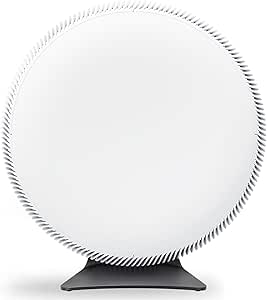 | Best Premium Fine-Particle Pick | Coverage area: Up to 1,650 sq ft | Filtration: HyperHEPA | Particle capture: 99.995% down to 0.003 microns | VIEW ON AMAZON | See Our Full Breakdown |
| IQAir HealthPro Plus XE Air Purifier with HyperHEPA Filtration and Wi-Fi |  | Best for Large-Space Allergy Filtration | Coverage area: Up to 1,125 sq ft | Filtration: HyperHEPA | Particle capture: 99.995% down to 0.003 microns | VIEW ON AMAZON | See Our Full Breakdown |
| Austin Air Bedroom Machine Air Purifier, White (Model B402) |  | Best for Bedroom Particle and Odor Filtration | Brand: Austin Air | Model: B402C1 | Filter: Advanced five-stage HEPA with activated carbon and zeolite | VIEW ON AMAZON | See Our Full Breakdown |
| highend air purifiers for allergie | Model | Filtration |
|---|---|---|
| Coway Airmega 400 Air Purifier | AP-2015F | Washable pre-filter, activated carbon filter, and HEPA filter |
| Austin Air HealthMate Standard | B400 | 4-stage |
| Coway Mighty AP-1512HH(W) Air | AP-1512HH(W) | Washable pre-filter, deodorization filter, bipolar device, and HEPA filter |
| Austin Air HealthMate Plus Air | B450 | 4-stage |
| AirDoctor AD3500 Air Purifier | AD3500 | 3-stage: pre-filter, activated carbon filter, and UltraHEPA filter |
| Dyson HushJet Compact Air Puri | — | — |
| Shark NeverChange Air Purifier | HP301 | — |
| Winix 5510 Air Purifier with A | — | — |
| IQAir Atem X Air Purifier with | — | HyperHEPA |
| IQAir HealthPro Plus XE Air Pu | — | HyperHEPA |
| Austin Air Bedroom Machine Air | B402C1 | — |
More Details on Our Top Picks
Coway Airmega 400 Air Purifier, White (AP-2015F)
The Coway Airmega 400 is my strongest all-around pick for allergy-prone households with a large, open area to treat. Its stated coverage reaches 3,120 square feet in an hour, and the washable pre-filter, activated carbon, and HEPA stages address larger debris, odors, and fine particles. Smart mode adjusts operation to detected air quality, while Sleep and Eco modes give buyers options when quiet or lower energy use matters.
Compared with the AirDoctor AD3500, the Airmega 400 emphasizes broad stated coverage and flexible operating modes rather than an ultra-fine particle-capture claim and specified filter-replacement schedule. Its tradeoff is that actual results depend on room conditions, and the available details do not clarify replacement-filter costs. I would choose it for whole-room coverage, not as a compact bedroom unit.
Pros:- Stated coverage of up to 3,120 square feet in 60 minutes
- Washable pre-filter plus activated carbon and HEPA filtration
- Smart mode adjusts fan operation based on air quality
- Eco and Sleep modes support quieter or lower-energy operation
Cons:- Actual performance can vary with room size and environmental conditions
- Replacement-filter costs and intervals are not specified in the provided details
Best for: Households with a large open-plan living area that want automatic operation and multi-stage filtration for everyday airborne allergens.
Not ideal for: Buyers with a small bedroom, a tight placement area, or a need to compare ongoing filter costs before choosing.
- Model:AP-2015F
- Coverage:Up to 3,120 sq. ft. in 60 minutes
- Filtration:Washable pre-filter, activated carbon filter, and HEPA filter
- Particle reduction:99.97% of 0.3-micron particles
- Modes:Smart, Eco, and Sleep
- Power source:Corded
- Color:White
- Warranty:5 years
Our verdict“Choose the Airmega 400 for a large shared space where broad stated coverage and automatic modes matter more than compact size or clearly documented filter upkeep.”
Austin Air HealthMate Standard Air Purifier, White (Model B400)
The Austin Air HealthMate Standard suits allergy households that want particle filtration paired with help for smoke, gases, and household odors. Its four-stage system uses activated carbon and zeolite, and the stated coverage extends to 1,500 square feet. The standout practical difference is a filter life of up to five years, which may reduce how often owners need to plan a replacement compared with the AirDoctor AD3500, whose supplied details call for carbon-filter changes every six months and UltraHEPA-filter changes every 12 months.
That long interval is appealing, but the listing does not provide replacement-filter costs or a specific noise level, so I would not choose it without checking those details for my home. Unlike the Coway Airmega 400, it also has no listed Smart, Eco, or Sleep modes. This is a less feature-led option for buyers who value extended filter life and gas-and-odor filtration.
Pros:- Four-stage filtration includes activated carbon and zeolite
- Helps capture pollen, dust, pet dander, mold, and smoke
- Designed to help reduce odors, gases, and VOCs
- Filter life is stated as up to five years
Cons:- Specific noise levels are not provided
- Replacement-filter costs are not provided
- No automatic air-quality mode is listed in the supplied details
Best for: Allergy sufferers in homes or offices who want particle, odor, and gas filtration with fewer scheduled filter changes.
Not ideal for: Buyers who want air-quality-driven automatic controls, specified operating noise, or clear replacement-filter cost information.
- Model:B400
- Coverage area:Up to 1,500 square feet
- Filtration:4-stage
- Filter materials:Activated carbon and zeolite
- Filter life:Up to 5 years
- Color:White
Our verdict“Pick the HealthMate Standard if long stated filter life and odor-and-gas filtration outweigh the lack of documented smart controls and upkeep costs.”
Coway Mighty AP-1512HH(W) Air Purifier, White
The Coway Mighty AP-1512HH(W) is the approachable choice in this group for buyers who want automatic air-quality response without the Airmega 400’s larger stated coverage. It combines a washable pre-filter, deodorization filter, bipolar device, and HEPA filter, with a sensor that can adjust operation in Auto mode. A dimmable air-quality light, timer, and filter alerts make routine use easier, while Eco mode and the option to turn off the indicator help accommodate sleeping spaces.
Its stated coverage is 1,748 square feet in 60 minutes, so it sits between the 1,500-square-foot Austin Air HealthMate Standard and the Airmega 400 on paper. Its three-year warranty is shorter than the Airmega 400’s five years, and the coverage claim can vary by conditions. I’d pick the Mighty for useful controls and a washable pre-filter, not for the longest warranty or the broadest stated coverage.
Pros:- Four-part filtration includes a washable pre-filter and HEPA filter
- Air-quality monitoring supports automatic fan adjustment
- Filter alerts and a timer help with routine operation
- Dimmable air-quality indicator can be turned off for sleep
Cons:- Coverage claims may vary with room and environmental conditions
- Three-year warranty is shorter than the Airmega 400’s five-year warranty
- Particle-filtration claims are based on laboratory testing
Best for: People in a small-to-medium home who want automatic fan adjustment, filter alerts, and a light they can dim or switch off.
Not ideal for: Buyers who prioritize the longest stated warranty, very large-room coverage, or detailed proof of performance outside laboratory conditions.
- Model:AP-1512HH(W)
- Coverage:Up to 1,748 sq. ft. in 60 minutes
- Filtration:Washable pre-filter, deodorization filter, bipolar device, and HEPA filter
- Particle filtration:99.97% of 0.3-micron particles
- Modes:Auto and Eco
- Features:Air-quality monitor, timer, filter indicator, and dimmable air-quality light
- Warranty:3 years
Our verdict“Choose the Coway Mighty for practical automatic controls and sleep-friendly indicators in a space that does not need the Airmega 400’s larger stated coverage.”
Austin Air HealthMate Plus Air Purifier, Model B450, Sandstone
The Austin Air HealthMate Plus makes the most sense when allergies are only part of the air-quality concern. Its four-stage system uses activated carbon and zeolite to capture common particles such as pollen, pet dander, and mold while helping reduce smoke, odors, and VOCs. That combination gives it a more gas-and-odor-focused role than the Coway Mighty AP-1512HH(W), whose listed strengths lean more toward automatic air-quality response and convenient alerts.
The HealthMate Plus shares the Standard HealthMate’s stated coverage of up to 1,500 square feet and filter life of up to five years. Compared with the AirDoctor AD3500, it has no supplied particle-size capture claim, sensor details, or replacement schedule. The long filter interval may appeal to buyers who want less frequent changes, but the absent noise and replacement-cost details make ownership planning less transparent. I’d choose it for mixed particle and odor concerns, not for sensor-led control.
Pros:- Four-stage filtration uses activated carbon and zeolite
- Helps capture dust, pollen, pet dander, and mold
- Designed to help reduce smoke, odors, and VOCs
- Filter life is stated as up to five years
Cons:- No specific noise level is provided
- Replacement-filter cost is not provided
- No air-quality sensor or automatic mode is listed in the supplied details
Best for: People with allergies who also want help addressing smoke, household odors, and VOCs across a room or larger home area.
Not ideal for: Buyers who need real-time air-quality sensing, specified fan controls, or published noise and replacement-filter cost details.
- Model:B450
- Color:Sandstone
- Coverage area:Up to 1,500 sq. ft.
- Filtration:4-stage
- Filter media:Activated carbon and zeolite
- Filter life:Up to 5 years
Our verdict“The HealthMate Plus is a fit for allergy-prone homes with smoke or VOC concerns, provided sensor controls and clear ownership costs are not priorities.”
AirDoctor AD3500 Air Purifier
The AirDoctor AD3500 is the most specification-led pick here for buyers focused on very small airborne particles. Its three-stage system includes an UltraHEPA filter, with a stated capture claim of 99.99% of particles as small as 0.003 microns; it also uses activated carbon to help reduce odors, gases, and VOCs. PM2.5 sensors and Auto mode can change fan speed as air quality shifts, making it a more sensor-focused option than the Austin Air HealthMate Plus.
Coverage is listed as 630 square feet in 15 minutes or up to 2,520 square feet in an hour, placing it below the Coway Airmega 400 on the largest stated coverage figure. The tradeoff is ongoing filter upkeep: the carbon filter is scheduled every six months and the UltraHEPA filter every 12 months, with genuine AirDoctor replacements recommended. I’d choose it for its specified fine-particle capture, not for minimal maintenance.
Pros:- UltraHEPA filtration has a stated 99.99% capture claim for particles as small as 0.003 microns
- Activated carbon helps reduce odors, gases, and VOCs
- PM2.5 sensors and Auto mode respond to changing air quality
- Four fan speeds and a timer provide operating flexibility
Cons:- Carbon filter replacement is specified every six months
- UltraHEPA filter replacement is specified every 12 months
- The description recommends genuine AirDoctor replacement filters
Best for: Allergy sufferers who prioritize a detailed fine-particle capture claim, PM2.5 monitoring, and automatic fan adjustment.
Not ideal for: Buyers seeking long intervals between filter changes or who do not want to rely on the recommended genuine replacement filters.
- Model:AD3500
- Coverage:630 sq. ft. in 15 minutes; up to 2,520 sq. ft. in 1 hour
- Filtration:3-stage: pre-filter, activated carbon filter, and UltraHEPA filter
- Particle capture:99.99% of airborne particles as small as 0.003 microns
- Sensors:PM2.5 air-quality sensors
- Fan speeds:4
- Filter replacement:Carbon filter every 6 months; UltraHEPA filter every 12 months
- Eligibility:FSA and HSA eligible
Our verdict“Choose the AD3500 if its fine-particle capture claim and PM2.5 automation matter more to you than fewer filter replacements.”
Dyson HushJet Compact Air Purifier, Black/Teal
The Dyson HushJet is the space-saving choice here for allergy sufferers who want filtration in a bedroom or home office rather than whole-home coverage. Its sealed design and 360° electrostatic filter are listed to capture 99.97% of particles down to 0.3 microns, while activated carbon helps with odors and gases. At 24 dB in Sleep mode, it is better suited to quiet overnight use than a large-room unit such as the Winix 5510, whose listed coverage is far greater but whose quietest-speed noise is not specified.
The tradeoff is its 203-square-foot limit: it cannot match the room reach of the Winix or either IQAir model. App scheduling and air-quality reports add convenience, but depend on a compatible device and connectivity. Filter life is listed as up to five years, though actual life varies with pollution and use.
Pros:- Sealed 360° filtration captures fine particles and includes activated carbon for odors and gases.
- Sleep mode is listed at 24 dB for quieter overnight use.
- Compact footprint and 6.9-pound weight make placement easier in smaller rooms.
- MyDyson app supports scheduling and air-quality reports.
Cons:- Coverage is limited to rooms up to 203 square feet, far below the Winix 5510 and IQAir models in this group.
- App functions require a compatible device and internet or mobile data.
- The up-to-five-year filter life varies with pollution levels and usage.
Best for: Allergy sufferers furnishing a bedroom or compact office who value quiet nighttime operation and app scheduling.
Not ideal for: People seeking one purifier for a large open-plan room or several connected spaces; its stated coverage is limited to 203 square feet.
- Coverage area:Up to 203 sq ft
- Air changes per hour:4.8
- Particle capture:99.97% of particles as small as 0.3 microns
- Filter type:Electrostatic and activated carbon
- Filter life:Up to 5 years
- Sleep mode noise level:24 dB
- Dimensions:9.06 × 9.06 × 18.5 in
- Weight:6.9 lbs
- Control method:MyDyson app; compatible voice services
Our verdict“Choose the Dyson HushJet for quiet, app-connected allergy filtration in a small room, not for broad-area coverage.”
Shark NeverChange Air Purifier Max HP301, Grey
The Shark NeverChange HP301 suits allergy households that want large-area particle filtration without frequent filter changes. Its NeverChange HEPA filter is listed for up to five years, and washable debris screens give owners a way to clear hair, dust, and dander before they build up. That upkeep approach is distinct from the Dyson HushJet, which is the more natural fit for a small, quiet bedroom; Shark instead claims coverage up to 1,300 square feet per hour.
Real-time air-quality readings and dimmable lights can make daily use easier, but the display needs careful interpretation: “Clean Air 100%” means readings are at or below the sensor’s detection limit, not that every pollutant is gone. The included Odor Neutralizer cartridge releases a scent, which may be unwelcome to scent-sensitive users. Its coverage figure is also stated per hour, so it should not be treated as equivalent to a multi-air-change room rating.
Pros:- NeverChange HEPA filter is listed for up to five years.
- Washable debris screens help clear hair, dust, and dander buildup.
- Real-time air-quality display and Eco mode support convenient operation.
- Dimmable lights and quiet-operation design suit nighttime use.
Cons:- The Odor Neutralizer cartridge releases a scent that may bother scent-sensitive users.
- The “Clean Air 100%” display reflects the sensor detection limit, not the removal of every pollutant.
- Coverage is given as up to 1,300 square feet per hour, without a stated air-change rate for that figure.
Best for: Pet owners and allergy households with a large room who want washable debris screens and a long-lasting main filter.
Not ideal for: Scent-sensitive users or buyers who need a clearly stated multi-air-change coverage figure and detailed noise measurements.
- Model:HP301
- Coverage:Up to 1,300 sq ft in one hour
- Particle capture:99.98% of particles 0.1–0.2 microns, based on stated testing
- Filter life:Up to 5 years
- Included filtration:Washable Debris Defense filter and NeverChange HEPA filter
- Odor feature:Odor Neutralizer cartridge
- Monitoring:Real-time air-quality display
- Additional features:Eco mode, dimmable lights, ultra-quiet operation
- Color:Grey
Our verdict“Pick the Shark HP301 for large-room allergy care with washable screens and less frequent filter replacement, provided its scented cartridge suits your household.”
Winix 5510 Air Purifier with App Support
For buyers who want large-room reach with app control, the Winix 5510 offers a more accessible feature mix than the specialist IQAir models. Its True HEPA filter targets pollen, dust, smoke, and pet dander, while a carbon filter addresses household odors and VOCs. A washable mesh pre-filter catches larger debris, and the sensor can adjust fan speed automatically as air quality changes. The IQAir Atem X lists finer particle capture, down to 0.003 microns, but the Winix pairs broad stated coverage with familiar automatic controls.
Read its coverage figure carefully: 1,882 square feet per hour is based on one air change per hour, so it does not mean the same thing as a smaller room served with more frequent air cleaning. The quietest listed setting is 23.5 dB, but noise at higher fan speeds is not specified. Its automated sleep mode and app make routine operation simpler, though buyers prioritizing the most documented fine-particle performance may prefer IQAir.
Pros:- True HEPA filtration targets common allergens including pollen, dust, smoke, and pet dander.
- Automatic fan adjustment responds to air-quality readings.
- Washable fine-mesh pre-filter helps capture larger debris.
- App support and sleep mode that activates in darkness simplify routine use.
Cons:- The 1,882-square-foot coverage figure is stated at one air change per hour.
- Noise performance above the lowest fan speed is not specified.
- Its stated particle-capture detail is less fine-grained than the IQAir Atem X’s down-to-0.003-micron claim.
Best for: Owners of large rooms who want app monitoring, automatic fan adjustment, and a washable pre-filter for everyday allergen maintenance.
Not ideal for: Buyers who need a stated higher air-change rate across the full listed coverage area or specified noise levels beyond the lowest speed.
- Room coverage:Up to 1,882 sq ft per hour
- True HEPA filtration:Captures 99.99% of airborne allergens as small as 0.01 microns
- Carbon filter:Reduces VOCs and household odors
- Pre-filter:Washable fine mesh
- Lowest-speed noise:23.5 dB
- Fan control:Automatic adjustment based on air quality
- App compatibility:Winix Smart App
- Sleep mode:Automatically activates in darkness
- Certifications:AHAM Verified and UL Certified
Our verdict“Choose the Winix 5510 for app-connected allergen control in a large room, while treating its coverage as a one-air-change-per-hour figure.”
IQAir Atem X Air Purifier with HyperHEPA Filtration and WiFi, for Rooms up to 1,650 sq. ft.
The IQAir Atem X is the specialist choice for buyers who put very fine particle capture ahead of simpler controls or compact-room value. Its HyperHEPA filtration is listed to capture 99.995% of airborne particles down to 0.003 microns, and its sensor can adjust filtration across three smart modes. That stated particle size is finer than the Winix 5510’s listed 0.01-micron figure, making the Atem X the more targeted option for shoppers focused on the smallest airborne particles.
Its 1,650-square-foot coverage and AirVisual app support use in larger homes or commercial settings, while the energy-efficient fan is designed to use up to three times less energy than its predecessors. The tradeoff is limited product detail: filter replacement information is not provided, so ongoing maintenance is harder to plan from the supplied specifications. Delivery requires a signature, which also calls for someone to be available.
Pros:- HyperHEPA filtration is listed to capture 99.995% of particles down to 0.003 microns.
- AirVisual app supports remote monitoring and control.
- Three smart modes adjust filtration based on air-quality readings.
- Fan system is designed to use up to three times less energy than its predecessors.
Cons:- Filter replacement details are not provided, making maintenance planning difficult.
- Delivery requires a signature.
- The stated 1,650-square-foot coverage is not accompanied by an air-change rate in the supplied specifications.
Best for: Allergy-conscious buyers seeking very fine particle filtration for a large home or commercial space, with app monitoring and automatic modes.
Not ideal for: People who need clear filter replacement guidance before purchase, or households unable to arrange signature-required delivery.
- Coverage area:Up to 1,650 sq ft
- Filtration:HyperHEPA
- Particle capture:99.995% down to 0.003 microns
- Connectivity:WiFi; IQAir AirVisual app
- Automatic modes:3
- Energy efficiency:Fan system designed to use up to three times less energy than its predecessors
- Manufacturing origin:Switzerland
Our verdict“Choose the Atem X if very fine particle capture and smart control lead your priorities, and confirm filter details before committing.”
IQAir HealthPro Plus XE Air Purifier with HyperHEPA Filtration and Wi-Fi
The IQAir HealthPro Plus XE brings the same headline HyperHEPA claim as the Atem X—99.995% capture down to 0.003 microns—to spaces listed up to 1,125 square feet. That makes it a strong match for buyers who want fine-particle filtration across a large area, but do not need the Atem X’s larger 1,650-square-foot coverage. Both IQAir models offer app monitoring and three automatic modes, so this choice rests more on room size and available product details than on a difference in the stated capture performance.
The AirVisual app provides remote monitoring, and the sensor-driven modes can adapt operation as air quality changes. Its fan system is designed to use up to three times less energy than its predecessors. A possible 10-year limited warranty is mentioned, but the supplied details say to confirm terms with the manufacturer. Compared with the Winix 5510, the HealthPro Plus XE claims capture of smaller particles, though the Winix includes a washable pre-filter and has a higher stated per-hour coverage figure.
Pros:- HyperHEPA filtration is listed to capture 99.995% of airborne particles down to 0.003 microns.
- Designed for spaces up to 1,125 square feet.
- AirVisual app provides remote monitoring and control.
- Three automatic modes and an energy-efficient fan system support adaptive operation.
Cons:- Warranty terms require confirmation with the manufacturer.
- Its listed coverage is lower than the IQAir Atem X’s 1,650 square feet.
- The supplied specifications do not list filter-life or replacement details.
Best for: Households with a large allergy-affected living area that prioritize very fine particle filtration, automatic modes, and remote monitoring.
Not ideal for: Buyers who need confirmed warranty terms or a coverage area above 1,125 square feet; the Atem X lists broader coverage.
- Coverage area:Up to 1,125 sq ft
- Filtration:HyperHEPA
- Particle capture:99.995% down to 0.003 microns
- Connectivity:IQAir AirVisual app
- Automatic modes:3
- Energy efficiency:Fan system uses up to three times less energy than its predecessors
- Country of manufacture:Switzerland
- Warranty:May be backed by a 10-year limited warranty; contact manufacturer for details
Our verdict“Choose the HealthPro Plus XE for fine-particle filtration across a large room, and verify warranty and filter details before purchase.”
Austin Air Bedroom Machine Air Purifier, White (Model B402)
The Austin Air Bedroom Machine pairs a five-stage filter with activated carbon and zeolite, giving allergy-focused bedrooms support for pollen, dust, and pet dander alongside some smoke, VOCs, and odors. Its stated 250 CFM airflow and coverage of up to 500 square feet suit a larger bedroom, though the listed specifications also claim 1,500 square feet; I would not choose a room size based on the higher figure without clarification. Compared with the Austin Air HealthMate Standard, this model’s stated design is more specifically positioned for bedroom use, while the Coway Airmega 400 offers another route for buyers prioritizing broad room coverage. The tradeoff is a substantial 47-pound body and a filter life claim of up to five years, which may reduce replacement frequency but does not make moving or servicing the unit effortless.
Pros:- Five-stage HEPA filtration targets airborne particles such as pollen, dust, and pet dander.
- Activated carbon and zeolite add support for some odors, smoke, and VOCs.
- Stated 250 CFM airflow is suited to a dedicated bedroom-sized space.
- Filter life is listed as up to five years, potentially limiting replacement frequency.
Cons:- At 47 pounds, it is cumbersome to relocate or carry between floors.
- Coverage information conflicts: the description states up to 500 square feet, while specifications list 1,500 square feet.
- The five-year filter-life claim does not specify conditions or guarantee that replacement will only be needed at that interval.
Best for: Allergy sufferers setting up a mostly stationary bedroom purifier who also want filtration for household odors and some VOCs.
Not ideal for: People who need a lightweight purifier to move between rooms, or buyers who need confirmed coverage beyond 500 square feet.
- Brand:Austin Air
- Model:B402C1
- Filter:Advanced five-stage HEPA with activated carbon and zeolite
- Stated room coverage:Up to 500 sq ft in the description; specifications also list 1,500 sq ft
- Airflow:250 CFM
- Dimensions:14.5 x 14.5 x 23 in
- Weight:47 lb
- Filter life:Up to 5 years
Our verdict“Choose the Bedroom Machine for a fixed bedroom where particle and odor filtration matter more than portability, but verify room-coverage guidance before buying.”

How We Picked
I compared these 11 models around the needs that matter most to allergy-focused buyers: ability to handle airborne particles, stated room coverage, filtration approach, everyday noise and controls, maintenance demands, and how each unit fits different household layouts. I also considered whether a product’s design and features solve a real buying problem, such as serving a bedroom, covering a large shared space, or offering app control.
The ranking favors models with a clear, useful role rather than treating every premium feature as an advantage. The Airmega 400 ranks first as the most balanced large-room option; specialized IQAir and Austin Air picks rank highly for buyers with narrower priorities, while compact and entry-oriented models suit smaller spaces or simpler setups. A high-end label alone does not make a purifier right for a room, so coverage, upkeep, and the buyer’s tolerance for size and operating noise all shaped the order.
Factors to Consider When Choosing Highend Air Purifiers For Allergies
Before choosing a model, I would start with the room and the allergy problem you want to address. A premium unit can still disappoint if it is undersized, placed poorly, or too noisy to run consistently. These broader checks help separate useful upgrades from features that may not change your day-to-day results.
Match Clean-Air Capacity to the Room You Actually Use
Room-coverage figures are useful only when they describe a cleaning rate that suits your needs. A large open-plan room, a bedroom with the door closed, and a connected living area place different demands on one machine. Check the manufacturer’s stated coverage and the air-change assumptions behind it rather than comparing square footage alone. If you have high ceilings or an open layout, a unit sized exactly to the floor area may not provide the headroom you want. One common mistake is buying a powerful machine for the entire home and expecting it to clean several closed rooms at once. For most households, placing a well-sized purifier where symptoms are worst is a more practical starting point.
Separate Particle Filtration From Odor and Gas Control
Allergy concerns usually center on airborne particles, while cooking smells, smoke odors, and some gases call for different filter materials. A purifier’s particle filter and its carbon or other gas-control media do not do the same job. More filtration layers can broaden a unit’s intended use, but they may add bulk, cost, or replacement complexity. Check what the manufacturer says each layer captures, and avoid assuming that a label such as “allergy” means every trigger is addressed. If pollen or dust is your main concern, particle performance and room fit should lead your decision. If odors or smoke are also a priority, look closely at the amount and type of gas-adsorbing media.
Plan for Filter Replacement Before You Buy
Filter maintenance is part of ownership, not an occasional detail. Compare replacement intervals, the number of separate filters, cleaning instructions, and whether the maker clearly identifies compatible replacements. A washable pre-filter may reduce how often the main filter needs attention, but it does not remove the need to check or replace the filtration stages behind it. Long-life or “never change” wording should be read as a maintenance claim to verify, not a promise that every component lasts indefinitely. Buyers who want fewer chores may prefer simpler filter arrangements, while shoppers with specific filtration priorities may accept more involved upkeep. Include filter access and the process for changing it in your decision, especially if the unit will sit in a bedroom or shared area.
Treat Noise as a Performance and Placement Question
Purifiers often move more air at higher fan settings, but those settings may be too loud for sleep, calls, or quiet reading. A low-noise setting is useful only if it still suits the room and the level of filtration you need. Look for sound information across fan speeds rather than relying on a single quiet-mode claim. Decide where the unit can sit without blocking airflow or creating a nuisance, and check whether its shape or outlet direction limits placement. For a bedroom, controls that dim or shut off lights can matter as much as a compact body. A unit that is easy to leave running is more useful than one whose strongest mode you avoid.
Pay More for a Clear Fit, Not a Longer Feature List
Premium models can justify their higher tier through larger-room capacity, more specialized filtration, stronger build choices, or controls that suit a particular household. They are a weaker match when the room is modest and the extra capability will go unused. App support can make scheduling and monitoring easier, but it cannot compensate for a poorly sized purifier or neglected filters. Likewise, a distinctive filtration system matters most when its stated purpose matches your concern. Compare the feature you would use every week against the added maintenance, space, and setup it brings. If there is no clear benefit for your room or routine, a simpler model may be the smarter buy.
Use a Purifier Alongside Source Control
An air purifier works on airborne particles that reach its intake; it does not remove settled dust, pollen on clothing, or allergens held in bedding and upholstery. For seasonal pollen, keeping windows closed during high-pollen periods and changing clothes after outdoor exposure can reduce what enters the room. Regular cleaning and laundering can address particles that a purifier cannot draw in. A purifier is also not a substitute for fixing moisture problems or removing a persistent source of contamination. Place it where air can circulate freely, rather than tucking it behind furniture or curtains. Pairing sensible source control with steady operation gives the machine a more realistic job to do.
Frequently Asked Questions
Should I choose one large purifier or several smaller ones for my home?
I would base that choice on how rooms connect and where symptoms are strongest. One large unit can suit an open living area, but it will not clean effectively through closed doors into distant bedrooms. Several smaller units offer room-by-room control, though they add filter upkeep and take up space. If you spend most of your time in one room, start there rather than trying to treat the whole home with one oversized machine. For multiple occupied rooms, compare the total upkeep and placement needs of separate units against a single central purifier.
Is a more specialized filter worth choosing if my main problem is seasonal pollen?
Not automatically: first check whether the purifier’s particle filtration and room capacity match the space where you experience symptoms. Specialized designs may appeal when you have additional concerns, such as smoke or odors, but those features may add cost and maintenance without helping much with pollen alone. Also think about pollen entering through open windows, clothing, and pets, since a purifier cannot address those sources by itself. A well-sized unit run consistently in the room you use most may be a more practical choice than a more complex model. Verify the maker’s claims and replacement requirements before paying for added filtration stages.
Can I leave an air purifier running in my bedroom overnight?
Many buyers do, but the right setting depends on the unit’s sound, light controls, and your room size. Check noise information for the settings you would actually use overnight; the quietest setting may move less air than a higher speed. Place the purifier with clear space around its intake and outlet, and avoid positioning it where airflow will be blocked by bedding or furniture. If indicator lights disturb sleep, confirm that they can be dimmed or switched off. For an allergy-prone bedroom, consistent operation and routine cleaning of the room still matter alongside the purifier.
How should I compare filter-life claims between different brands?
Do not compare the advertised interval alone, because brands may define use conditions and filter stages differently. Look for the replacement guidance for each filter, whether the unit tracks usage, and whether washable components require regular attention. A long interval may be attractive, but it is useful only if replacement parts remain available and the maintenance instructions are clear. Check how many filters a model uses and whether changing them requires tools or awkward handling. I would treat filter-life claims as an estimate and plan around the manufacturer’s instructions and your household’s operating conditions.
Does app control make a meaningful difference for allergy use?
App support can help if you want to change settings remotely, review status, or build a routine around your schedule. It is less valuable if you are comfortable using on-device controls and plan to leave the purifier at one setting. Before choosing an app-enabled model, check which functions remain available without a connection and whether the app is needed for basic operation. Smart features do not improve filtration by themselves, so room fit and filter design should come first. Choose app control for convenience, not as a substitute for comparing the machine’s core performance and upkeep.
Conclusion
I would choose the Coway Airmega 400 as the best overall for shoppers seeking a balanced purifier for a larger shared space. For best value and best for beginners, the Coway Mighty is the more straightforward route when its room fit is sufficient. The IQAir HealthPro Plus XE is my best premium pick for buyers who place specialized particle filtration ahead of compactness and simple upkeep; the Austin Air Bedroom Machine is the more targeted option for a bedroom-focused setup. Choose the Dyson HushJet if a compact design is your leading need, or the Shark NeverChange Max if its low-maintenance approach is what you value most. Match the model to the room you occupy, then weigh noise and filter care before deciding.
Halloween Picks

27FT Giant Inflatable Pumpkin Lighted Outdoor Halloween Decor

Vexalify 11-Inch Halloween Pumpkin Fog Machine with 12-Color Lights

JOYIN 5-Foot Halloween Animatronic Drinking Skeleton
As an affiliate, we earn on qualifying purchases.