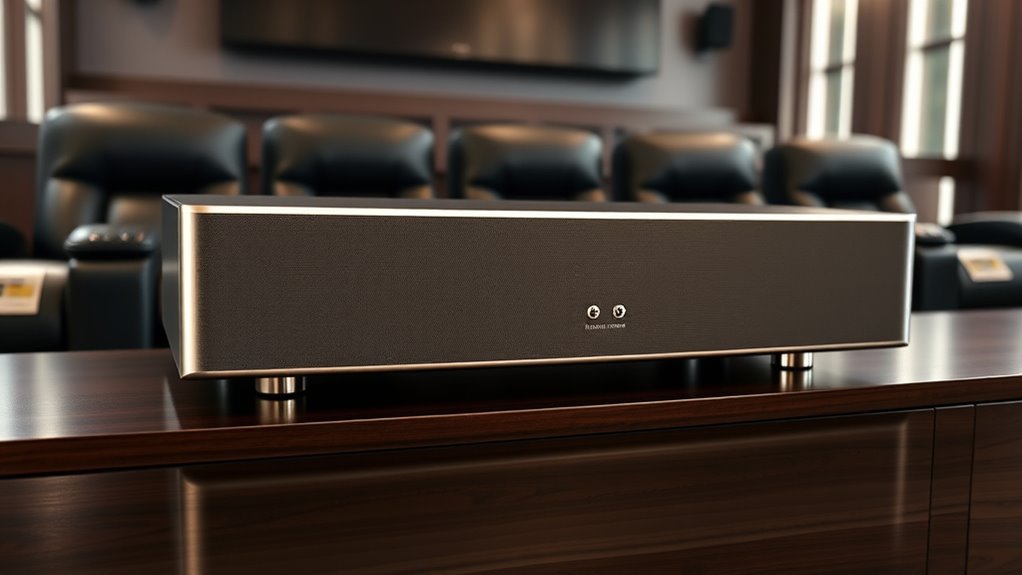

For high-end center channel speakers, my best overall pick is the SVS Ultra Evolution 3-Way Center, whose dedicated midrange design makes it a strong choice for clear dialogue across a wider seating area. The Klipsch RP-504C II stands out for buyers building a lively Reference Premiere system, while the Polk Audio Signature Elite ES35 suits tight spaces where a slim cabinet matters. The main tradeoffs are cabinet size, how evenly voices carry across seats, tonal match with your left and right speakers, and how much output your room needs. A larger, more capable speaker is not automatically a better fit if it blocks a screen or overwhelms a small room. Continue reading for my full breakdown of all 12 options and guidance on choosing the right center for your setup.

Get your wardrobe favorites delivered free with Prime
- Fast, free delivery on millions of items
- Prime Video, Amazon Music and more included
- Member-only deals all year
Key Takeaways
- The SVS Ultra Evolution 3-Way Center leads for broad-seat dialogue clarity: its three-way layout sets it apart from conventional designs, though its cabinet needs room.
- The Klipsch RP-504C II is a natural match for Reference Premiere systems: prioritize it when consistent voicing and strong output matter more than a low-profile cabinet.
- Slim models solve a real placement problem, not every performance problem: the Polk ES35 and Monitor XT35 are easier to fit beneath a screen, but their form factor asks buyers to weigh output and room scale.
- Several lineup choices are close relatives rather than entirely different categories: compare the RP-404C with the RP-404C II, and the RP-504C with the RP-504C II, based on system fit, dimensions, and the specific generation you can accommodate.
- Room and speaker matching matter as much as premium positioning: an appropriately sized SVS Prime Center or Klipsch RP-500C may make more sense than a larger flagship-style model in a modest room.
| Polk Audio Signature Elite ES35 Slim Center Channel Speaker, Black |  | Best Slim Center for Wall-Mounted TVs | Tweeter: 1-inch Terylene | Woofers: Six 3-inch | Impedance compatibility: 4 and 8 ohms | VIEW ON AMAZON | See Our Full Breakdown |
| SVS Ultra Evolution Center Channel Speaker, Piano Gloss Black |  | Best Premium for a Wide Listening Sweet Spot | Speaker type: Center channel | Driver configuration: 3-way | Tweeter: Diamond-coated aluminum dome | VIEW ON AMAZON | See Our Full Breakdown |
| Klipsch RP-504C Reference Premiere Center Channel Speaker, Ebony |  | Best for High-Output Dialogue | Speaker type: Center channel | Woofer configuration: Four 5.25-inch Cerametallic woofers | Tweeter: Titanium diaphragm with Tractrix horn | VIEW ON AMAZON | See Our Full Breakdown |
| SVS Ultra Evolution 3-Way Center Channel Speaker, Black Oak |  | Best for Consistent Vocals Across Seats | Speaker configuration: 3-way | Finish: Black Oak veneer | Mounting type: Tabletop | VIEW ON AMAZON | See Our Full Breakdown |
| Klipsch RP-404C Reference Premiere Center Channel Speaker, Ebony |  | Best Compact Horn-Loaded Center | Speaker type: Center channel | Mounting type: Tabletop | Tweeter: 1-inch titanium LTS vented tweeter with hybrid Tractrix horn | VIEW ON AMAZON | See Our Full Breakdown |
| SVS Prime Center Channel Speaker, Black Ash |  | Best for Balanced Dialogue | Speaker type: Center channel | Crossover design: 3-way | Tweeter: 1-inch aluminum dome | VIEW ON AMAZON | See Our Full Breakdown |
| Klipsch R-52C Center Channel Home Speaker, Black | 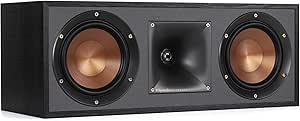 | Best for High-Sensitivity Systems | Design: Two-way | Woofers: Dual 5.25-inch spun-copper IMG | Tweeter: 1-inch aluminum LTS | VIEW ON AMAZON | See Our Full Breakdown |
| Klipsch Reference Premiere RP-404C II Ebony Center Channel Speaker |  | Best Compact Premium Pick | Speaker type: Center channel monitor | Tweeter: 1-inch LTS titanium diaphragm | Woofers: Four 4-inch Cerametallic | VIEW ON AMAZON | See Our Full Breakdown |
| Klipsch RP-500C Reference Premiere Center Channel Speaker, Ebony |  | Best for Traditional Two-Way Reference Premiere Systems | Speaker type: Center channel | Tweeter: 1-inch titanium LTS vented tweeter | Horn: Hybrid Tractrix | VIEW ON AMAZON | See Our Full Breakdown |
| Klipsch Reference Premiere RP-504C II Ebony Center Channel Speaker |  | Best for Large, High-Output Systems | Speaker type: Center channel | Woofers: Four 5.25-inch Cerametallic | Tweeter: Vented titanium | VIEW ON AMAZON | See Our Full Breakdown |
| Klipsch RC-64 III Walnut Center Channel Speaker |  | Best for High-Output Home Theaters | Speaker type: Center channel | Woofer configuration: Four 6.5-inch Cerametallic woofers | Tweeter: 1.75-inch titanium compression driver | VIEW ON AMAZON | See Our Full Breakdown |
| Polk Monitor XT35 Slim Center Channel Speaker |  | Best Slim, Flexible Placement | Speaker type: Center channel | Tweeter: 1-inch Terylene | Woofers: Four 3-inch dynamically balanced woofers | VIEW ON AMAZON | See Our Full Breakdown |
| high end center channel speaker | Tweeter | Speaker type | Woofers | Impedance |
|---|---|---|---|---|
| Polk Audio Signature Elite ES3 | 1-inch Terylene | — | Six 3-inch | — |
| SVS Ultra Evolution Center Cha | Diamond-coated aluminum dome | Center channel | — | — |
| Klipsch RP-504C Reference Prem | Titanium diaphragm with Tractrix horn | Center channel | — | 8 ohms |
| SVS Ultra Evolution 3-Way Cent | — | — | — | 8 ohms |
| Klipsch RP-404C Reference Prem | 1-inch titanium LTS vented tweeter with hybrid Tractrix horn | Center channel | Four 4-inch spun-copper woofers | 8 ohms |
| SVS Prime Center Channel Speak | 1-inch aluminum dome | Center channel | Dual 5.25-inch | 8 ohms |
| Klipsch R-52C Center Channel H | 1-inch aluminum LTS | — | Dual 5.25-inch spun-copper IMG | — |
| Klipsch Reference Premiere RP- | 1-inch LTS titanium diaphragm | Center channel monitor | Four 4-inch Cerametallic | 8 ohms |
| Klipsch RP-500C Reference Prem | 1-inch titanium LTS vented tweeter | Center channel | Dual 5.25-inch spun-copper Cerametallic | 8 ohms |
| Klipsch Reference Premiere RP- | Vented titanium | Center channel | Four 5.25-inch Cerametallic | — |
| Klipsch RC-64 III Walnut Cente | 1.75-inch titanium compression driver | Center channel | — | 8 ohms |
| Polk Monitor XT35 Slim Center | 1-inch Terylene | Center channel | Four 3-inch dynamically balanced woofers | 8 ohms |
More Details on Our Top Picks
Polk Audio Signature Elite ES35 Slim Center Channel Speaker, Black
The Polk Audio Signature Elite ES35 is the space-saving choice here: its slim cabinet can sit on a shelf or be wall-mounted below a TV, where larger options such as the Klipsch RP-504C may be harder to fit. Six 3-inch woofers and Polk’s Power Port are intended to give dialogue and bass more presence than the narrow profile suggests. It also works with 4- and 8-ohm AV receivers, making it a flexible match for many systems. The tradeoff is that its small drivers are not the same proposition as the larger woofers in the Klipsch models or the three-way design of the SVS Ultra Evolution Center. Choose it for placement flexibility, not for the largest-scale output; a shelf or stand must be supplied separately.
Pros:- Slim cabinet supports shelf placement or wall mounting below a TV.
- Six 3-inch woofers and Power Port technology are designed to add bass presence.
- Compatible with 4- and 8-ohm AV receivers.
- Can also serve as a left or right surround speaker.
Cons:- Smaller woofers are a less direct fit for buyers seeking the scale of the larger Klipsch center speakers.
- A shelf or stand is not included.
Best for: Home theater owners mounting a TV close to the wall who need a slim center speaker that can also work with a range of AV receivers.
Not ideal for: Buyers prioritizing large-driver scale or a three-way center design, or anyone who needs a shelf or stand included.
- Tweeter:1-inch Terylene
- Woofers:Six 3-inch
- Impedance compatibility:4 and 8 ohms
- Placement:Shelf, stand, or wall-mounted
- Audio compatibility:Dolby Atmos and DTS:X AV receivers
- Bass technology:Power Port
Our verdict“Choose the ES35 when a low-profile, wall-mountable center matters more than the larger-driver presentation of the Klipsch RP-504C.”
SVS Ultra Evolution Center Channel Speaker, Piano Gloss Black
The SVS Ultra Evolution Center earns its premium role through a three-way layout and imaging-focused cabinet design, rather than through the slimmer footprint of the Polk ES35. Its diamond-coated aluminum dome tweeter, time-aligned cabinet, and tweeter diffuser are designed to keep dialogue detailed and listening more consistent across seats. That wider sweet spot can matter in a home theater where viewers do not sit directly in front of the speaker. At 22.05 inches wide and 33.2 pounds, however, it needs a sturdy, generously sized tabletop; it is not the discreet fit the Polk is. This is also a wired speaker, so it suits a conventional receiver-based setup rather than anyone seeking wireless convenience. Compared with the Klipsch RP-504C, its appeal is its three-way architecture and imaging emphasis, not a horn-loaded presentation.
Pros:- Three-way driver configuration with a diamond-coated aluminum dome tweeter.
- Time-aligned cabinet and tweeter diffuser are designed to support precise imaging and a wider listening sweet spot.
- 5-year warranty.
- Tabletop design suits a stable center-speaker platform.
Cons:- Its 22.05-inch width and 33.2-pound weight call for substantial furniture.
- Wired connectivity does not suit buyers seeking a wireless setup.
- Tabletop mounting limits placement flexibility compared with the wall-mountable Polk ES35.
Best for: Dedicated home theater owners who want a three-way center with design features aimed at keeping dialogue clear across several seating positions.
Not ideal for: Buyers with narrow media furniture, a need for wall mounting, or a preference for wireless speaker connectivity.
- Speaker type:Center channel
- Driver configuration:3-way
- Tweeter:Diamond-coated aluminum dome
- Woofer diameter:6.5 inches
- Dimensions:11.39 × 22.05 × 7.68 inches
- Weight:33.2 pounds
- Maximum output power:100 watts
- Frequency response:Up to 40,000 Hz
- Warranty:5 years
Our verdict“Pick the SVS Ultra Evolution if clear, consistent dialogue across multiple seats matters more than a compact or wall-mounted installation.”
Klipsch RP-504C Reference Premiere Center Channel Speaker, Ebony
The Klipsch RP-504C is the lineup’s large-driver choice for buyers who want a center built around four 5.25-inch Cerametallic woofers and a titanium tweeter with a Tractrix horn. Those components are designed to keep dialogue and music lyrics distinct, while the rear Tractrix port is intended to reduce airflow turbulence. Compared with the smaller-driver Klipsch RP-404C, the RP-504C uses larger woofers; that makes it the more natural fit when cabinet space allows and a substantial center is a priority. It is less suited to installations constrained by a slim shelf, where the Polk ES35 is easier to accommodate. Its wired connection and 8-ohm impedance also mean buyers should plan around a conventional AV receiver, not a wireless system.
Pros:- Four 5.25-inch Cerametallic woofers.
- Titanium tweeter paired with a Tractrix horn.
- Rear Tractrix port is designed to reduce airflow turbulence and distortion.
- Wood enclosure.
Cons:- Its larger woofer array is a poor fit for tight installations where the Polk ES35’s slim profile is more practical.
- Wired-only connectivity requires a receiver-based setup.
- 8-ohm impedance may not suit buyers specifically seeking a center rated for 4-ohm compatibility.
Best for: Home theater owners with room for a substantial center speaker who prioritize a large woofer array for dialogue and music reproduction.
Not ideal for: Buyers with limited shelf depth or width, or those who want a slim wall-mounted speaker like the Polk ES35.
- Speaker type:Center channel
- Woofer configuration:Four 5.25-inch Cerametallic woofers
- Tweeter:Titanium diaphragm with Tractrix horn
- Frequency response:Up to 25 kHz
- Impedance:8 ohms
- Enclosure material:Wood
- Mounting type:Wall mount
- Connectivity:Wired coaxial
Our verdict“Choose the RP-504C if you have room for a larger center and want its four 5.25-inch woofers rather than the RP-404C’s smaller drivers.”
SVS Ultra Evolution 3-Way Center Channel Speaker, Black Oak
This SVS Ultra Evolution variant is the choice for buyers drawn to a vertically aligned tweeter and midrange array, a layout designed to keep vocals consistent as listeners move away from the center seat. Its three-way configuration, diamond carbon coated aluminum dome, and reinforced cabinet focus on detail and controlled resonance. It shares the Ultra Evolution name and 6.5-inch woofer size with the Piano Gloss Black SVS Ultra Evolution Center, but this listing specifies a 225-watt maximum output and a Black Oak veneer finish. Against the Klipsch RP-504C, the SVS puts its emphasis on vertical driver alignment and off-axis consistency rather than a Tractrix horn. The tradeoff is a large, wired tabletop cabinet with no stated wall-mount option, so placement and furniture strength matter.
Pros:- Vertically aligned tweeter and midrange array is designed for consistent off-axis response.
- Diamond carbon coated aluminum dome tweeter.
- Reinforced cabinet is designed to reduce acoustic and structural resonances.
- 225-watt maximum output power.
Cons:- Large tabletop cabinet is less placement-flexible than the wall-mountable Polk ES35.
- Wired connectivity only.
- Not water resistant, so it is intended for indoor use.
Best for: Home theater listeners who regularly use seats off the center axis and want a three-way center designed for consistent vocal presentation.
Not ideal for: Buyers needing a slim, wall-mounted speaker or a compact option for shallow media furniture.
- Speaker configuration:3-way
- Finish:Black Oak veneer
- Mounting type:Tabletop
- Woofer diameter:6.5 inches
- Tweeter diameter:1 inch
- Maximum output power:225 watts
- Impedance:8 ohms
- Dimensions:10.9 × 22 × 8.2 inches (D × W × H)
- Audio channels:5.1 and 7.1
Our verdict“Choose this SVS when off-center listeners and its vertically aligned three-way design are a higher priority than compact placement.”
Klipsch RP-404C Reference Premiere Center Channel Speaker, Ebony
The Klipsch RP-404C keeps a recognizable Reference Premiere approach in a cabinet that is shorter than the larger RP-504C: it pairs a vented titanium tweeter and hybrid Tractrix horn with four 4-inch spun-copper woofers. That combination makes it a useful middle ground for buyers who want Klipsch’s horn-and-woofer design but cannot fit the RP-504C’s larger drivers. Its tabletop form is still 26 inches wide, so “compact” here means lower-profile and smaller-driver, not narrow. The rear-firing bass-reflex port also calls for sensible placement rather than pressing the cabinet tightly against a wall. Compared with the slim Polk ES35, this model is a more conventional, substantial tabletop speaker and does not offer the same wall-mount flexibility.
Pros:- Hybrid Tractrix horn with a 1-inch vented titanium LTS tweeter.
- Four 4-inch spun-copper woofers.
- Magnetic removable grille.
- Accepts banana plugs or bare wire up to 12 gauge.
Cons:- At 26 inches wide, it may not fit narrow shelves despite its lower-profile design.
- Rear-firing bass-reflex port can limit placement close to a wall.
- Wired connectivity only, unlike a wireless speaker setup.
Best for: Klipsch fans seeking a lower-profile tabletop center with a horn-loaded tweeter and four woofers, but who cannot accommodate the RP-504C’s larger drivers.
Not ideal for: Buyers who need a truly narrow or wall-mountable center, or who cannot leave placement space around a rear-firing port.
- Speaker type:Center channel
- Mounting type:Tabletop
- Tweeter:1-inch titanium LTS vented tweeter with hybrid Tractrix horn
- Woofers:Four 4-inch spun-copper woofers
- Maximum output power:500 watts
- Impedance:8 ohms
- Dimensions:13 × 26 × 5.7 inches
- Weight:28.7 pounds
- Connectivity:Wired
Our verdict“Pick the RP-404C for a lower-profile Klipsch tabletop center when the RP-504C’s larger drivers are not a practical fit.”
SVS Prime Center Channel Speaker, Black Ash
The SVS Prime Center is a strong fit for buyers who want a conventional three-way design rather than the horn-loaded presentation of the Klipsch models here. Its dual 5.25-inch woofers handle vocal and midrange weight, while the dedicated aluminum tweeter and SoundMatch crossover are designed to keep the handoff between drivers smooth. That makes it a useful middle ground between the more compact, sealed Klipsch RP-404C II and the larger four-woofer RP-504C II. The rear port can help support bass output, but it needs room behind the cabinet, so it is less flexible in a tight media console. This is also a straightforward wired tabletop speaker, not a wireless or weather-resistant option. I would choose it for a balanced theater system, not for a placement-constrained setup.
Pros:- Three-way crossover design separates driver duties for dialogue and vocals.
- Dual 5.25-inch woofers provide more midrange area than the RP-404C II’s four smaller woofers.
- SoundMatch crossover is designed for smooth driver integration and precise imaging.
Cons:- Rear-ported cabinet needs clearance behind it, unlike the sealed RP-404C II.
- Wired-only connection offers no wireless playback option.
- Tabletop mounting and lack of water resistance limit placement flexibility.
Best for: Home theater builders seeking a three-way center with dual mid-sized woofers for dialogue and vocals.
Not ideal for: Buyers fitting a center into a shallow cabinet or placing it close to a wall, where the rear port may limit positioning.
- Speaker type:Center channel
- Crossover design:3-way
- Tweeter:1-inch aluminum dome
- Woofers:Dual 5.25-inch
- Enclosure:Rear-ported
- Impedance:8 ohms
- Connectivity:Wired
- Finish:Black Ash
Our verdict“Choose the SVS Prime if you want a balanced three-way center and have space to accommodate its rear port.”
Klipsch R-52C Center Channel Home Speaker, Black
The Klipsch R-52C suits systems where high sensitivity and lively output matter more than a premium, multi-driver layout. Its stated 95 dB sensitivity means it is designed to play loudly with less amplifier power than a less-sensitive speaker, while the Tractrix horn directs the tweeter’s output toward listeners. That contrasts with the SVS Prime Center, whose three-way design emphasizes driver integration, and the Reference Premiere models, which use more advanced driver configurations. The R-52C’s two-way arrangement and 89 Hz lower response limit make it a less ambitious choice for full-range impact; a subwoofer will be important for movie effects. Its dimensions are also substantial for a basic two-way center. I see it as a practical match for efficient Klipsch-based systems, rather than a step-up pick for buyers prioritizing refinement.
Pros:- Stated 95 dB sensitivity supports high output with modest amplifier power.
- Tractrix horn pairs with the tweeter for directed, clear presentation.
- Dual 5.25-inch woofers give it more cone area than compact center designs.
- 400-watt stated power handling suits high-output theater setups.
Cons:- Two-way design is less elaborate than the SVS Prime Center’s three-way layout.
- 89 Hz lower frequency limit makes a subwoofer important for movie bass.
- Its nearly 19-inch width can be awkward for smaller consoles.
Best for: Owners of efficient home theater systems who want a horn-loaded center that can produce strong output without demanding high amplifier power.
Not ideal for: Buyers seeking a premium three-way design, compact placement, or deep bass from the center speaker alone.
- Design:Two-way
- Woofers:Dual 5.25-inch spun-copper IMG
- Tweeter:1-inch aluminum LTS
- Horn:90° × 90° Tractrix
- Frequency response:89 Hz–21 kHz (±3 dB)
- Sensitivity:95 dB at 2.83 V/1 m
- Power handling:400 watts
- Dimensions:7.62 × 18.75 × 7.3 inches
Our verdict“Pick the R-52C for an efficient, high-output Klipsch system, but look to the Reference Premiere models for a more premium design.”
Klipsch Reference Premiere RP-404C II Ebony Center Channel Speaker
The Klipsch RP-404C II is the lineup’s clearest choice for a premium center that must fit a shallow space. Its sealed, shallow-depth cabinet avoids the rear-port clearance concern of the SVS Prime Center and RP-500C, making it more accommodating on a tight console or near a wall. Four 4-inch Cerametallic woofers spread the workload across smaller drivers, while the titanium tweeter and larger Tractrix horn are intended to keep dialogue crisp. Compared with the bigger RP-504C II, it gives up woofer size and likely low-frequency authority in exchange for easier placement. The sealed design also means buyers should not expect it to supply the same bass support as a larger vented center. I would favor it when cabinet depth is the deciding constraint, not when maximum scale is the priority.
Pros:- Shallow sealed enclosure suits tight-depth installations and avoids rear-port clearance needs.
- Four 4-inch woofers distribute midrange duties across multiple drivers.
- Larger Tractrix horn and titanium tweeter are designed for clear dialogue.
- Supports bi-wiring and bi-amping for compatible system configurations.
Cons:- Four 4-inch woofers give up the driver size and potential scale of the RP-504C II.
- Sealed design offers less bass reinforcement than a vented alternative.
- Wired-only connectivity provides no wireless option.
Best for: Home theater owners who want a Reference Premiere center but have a shallow console or need a sealed cabinet near a wall.
Not ideal for: Buyers seeking the fuller output of larger woofers or a center that can contribute substantial bass on its own.
- Speaker type:Center channel monitor
- Tweeter:1-inch LTS titanium diaphragm
- Woofers:Four 4-inch Cerametallic
- Horn:90° × 90° Tractrix
- Enclosure:Shallow-depth sealed
- Impedance:8 ohms
- Connectivity:Wired coaxial
- Bi-wiring / bi-amping:Supported
Our verdict“Choose the RP-404C II when shallow placement matters more than the larger-driver scale of the RP-504C II.”
Klipsch RP-500C Reference Premiere Center Channel Speaker, Ebony
The Klipsch RP-500C is a traditional two-way Reference Premiere center for buyers who want horn-loaded clarity and a pair of larger woofers rather than the four-driver arrangement of the RP-404C II or RP-504C II. Its dual 5.25-inch Cerametallic woofers give it a straightforward route to vocal weight, while the vented titanium tweeter and Hybrid Tractrix horn handle higher frequencies. Compared with the entry-level R-52C, this model uses Reference Premiere components; compared with the newer RP-504C II, it has fewer woofers and a less expansive cabinet format. The rear-firing port can support output, but it complicates placement close to a wall or inside a restrictive cabinet. The listing also gives a 60 Hz frequency figure without a range, so I would not treat it as a complete bass specification.
Pros:- Dual 5.25-inch Cerametallic woofers provide larger drivers than the RP-404C II.
- Hybrid Tractrix horn and titanium LTS tweeter are designed for clear dialogue.
- Rear-firing Tractrix port supports the vented cabinet design.
- Removable magnetic grille and scratch-resistant finish suit a visible living-room setup.
Cons:- Rear port needs placement clearance and can be inconvenient in an enclosed console.
- Two woofers offer less driver coverage than the RP-504C II’s four-woofer layout.
- The listed 60 Hz frequency figure does not specify a full response range.
Best for: Buyers building a Reference Premiere system who prefer a conventional center with dual 5.25-inch woofers and can leave space behind it.
Not ideal for: Owners with shallow, enclosed media furniture or listeners seeking the wider driver array of the RP-504C II.
- Speaker type:Center channel
- Tweeter:1-inch titanium LTS vented tweeter
- Horn:Hybrid Tractrix
- Woofers:Dual 5.25-inch spun-copper Cerametallic
- Impedance:8 ohms
- Maximum output power:100 watts
- Frequency response:60 Hz (as listed)
- Dimensions:9.06 × 18.9 × 7.09 inches
Our verdict“Choose the RP-500C for a two-woofer Reference Premiere center if your setup allows breathing room behind the cabinet.”
Klipsch Reference Premiere RP-504C II Ebony Center Channel Speaker
The Klipsch RP-504C II is the lineup’s large-format choice for buyers who want four full-size 5.25-inch woofers working beneath a vented titanium tweeter. That array sets it apart from the dual-woofer RP-500C and the shallow RP-404C II, giving this model the most substantial driver complement among the Klipsch options in this batch. Its braced wood cabinet is designed to reduce unwanted vibration, supporting a solid platform for demanding movie dialogue and music. The tradeoff is physical scale: this is not the answer for a shallow shelf or a small console, and its wired tabletop format calls for a sturdy, appropriately sized surface. Compared with the three-way SVS Prime Center, the RP-504C II emphasizes a large multi-woofer Reference Premiere arrangement rather than a stated three-way crossover. Choose it when cabinet space and system scale take priority.
Pros:- Four 5.25-inch Cerametallic woofers provide a larger driver array than the RP-500C.
- Vented titanium tweeter and 90° × 90° horn are designed for detailed dialogue and broad coverage.
- Braced wood cabinet helps control cabinet vibration.
- Magnetic removable grille allows a clean appearance when protection is not needed.
Cons:- Large cabinet demands more shelf space than the RP-404C II or RP-500C.
- Wired tabletop placement offers less installation flexibility than a compact sealed design.
- No water resistance or wireless connectivity is specified.
Best for: Owners of larger home theater rooms seeking a substantial Reference Premiere center with four 5.25-inch woofers and a braced cabinet.
Not ideal for: Buyers with limited console space, shallow furniture, or a preference for a compact center such as the RP-404C II.
- Speaker type:Center channel
- Woofers:Four 5.25-inch Cerametallic
- Tweeter:Vented titanium
- Horn coverage:90° × 90°
- Connectivity:Wired
- Mounting type:Tabletop
- Cabinet material:Wood
- Warranty:5-year manufacturer warranty
Our verdict“Pick the RP-504C II for a spacious theater setup that can accommodate its four-woofer cabinet and wired tabletop placement.”
Klipsch RC-64 III Walnut Center Channel Speaker
The RC-64 III is the lineup’s high-output choice, pairing four 6.5-inch Cerametallic woofers with a titanium compression driver and Tractrix horn. That substantial driver array is suited to filling a large listening area with dialogue and front-stage effects, while the horn design sets it apart from the slimmer Polk Monitor XT35, which prioritizes flexible placement over a cabinet of this scale. Its walnut wood veneer also gives it a more furniture-like presence than the black-finished alternatives. The tradeoff is physical: at 55 pounds, it needs a sturdy, generously sized shelf or stand, and it is less suited to discreet TV installations. Choose it for a spacious theater and a system built around a commanding center; skip it if compact dimensions matter more than output.
Pros:- Four 6.5-inch Cerametallic woofers support substantial output for a large room.
- Titanium compression driver and 90° x 90° Tractrix horn provide a distinct horn-loaded design.
- Walnut wood veneer offers a refined alternative to common black finishes.
- Rated for up to 800 watts maximum output power.
Cons:- 55-pound weight calls for a sturdy, appropriately sized support.
- Large cabinet is less convenient for compact TV stands and discreet installations.
- Wired-only connection limits placement to locations with a speaker cable.
Best for: Home theater owners with a large room, a sturdy speaker platform, and a preference for a powerful center channel with a walnut finish.
Not ideal for: Buyers fitting a center beneath a low-mounted TV or seeking a lightweight, easy-to-place speaker; its 55-pound cabinet is large and heavy.
- Speaker type:Center channel
- Woofer configuration:Four 6.5-inch Cerametallic woofers
- Tweeter:1.75-inch titanium compression driver
- Horn:90° x 90° Tractrix horn
- Crossover:2.5-way
- Impedance:8 ohms
- Maximum output power:800 watts
- Weight:55 pounds
- Finish:Walnut wood veneer
Our verdict“Choose the RC-64 III for a spacious theater where high output and walnut styling matter more than compact placement.”
Polk Monitor XT35 Slim Center Channel Speaker
The Polk Monitor XT35 is the placement-first pick here: its slim cabinet can sit on a flat surface or mount on a wall, making it a more practical fit below a TV than the much larger, 55-pound Klipsch RC-64 III. Four 3-inch woofers and a 1-inch Terylene tweeter are aimed at clear dialogue and detailed sound without demanding a deep shelf. It also offers more role flexibility than a dedicated center, since Polk lists it for left, right, or surround use, and it supports Dolby Atmos and DTS:X systems. The tradeoff is that its compact drivers and form factor are not the same proposition as the RC-64 III’s large-driver, high-output design. Pick the XT35 when a slim profile and mounting options lead; look elsewhere if your priority is a commanding center in a large theater.
Pros:- Slim profile can fit below a TV without blocking the screen.
- Can be wall-mounted or placed on a flat surface.
- Four 3-inch woofers and a 1-inch Terylene tweeter are specified for dialogue and detailed sound.
- Compatible with Dolby Atmos and DTS:X systems and usable as a left, right, or surround speaker.
Cons:- Compact 3-inch woofers are a less suitable match for buyers seeking the large-driver approach of the Klipsch RC-64 III.
- Requires a wired speaker connection.
- Not water resistant.
Best for: TV owners who need a slim center that can sit on a shallow surface or mount on a wall, with the option to reuse it in other speaker positions.
Not ideal for: Buyers prioritizing a large-room, high-output center channel or seeking a wireless speaker; the XT35 requires a wired connection.
- Speaker type:Center channel
- Tweeter:1-inch Terylene
- Woofers:Four 3-inch dynamically balanced woofers
- Mounting:Wall mount or flat surface
- Impedance:8 ohms
- Recommended amplifier power:25–200 watts per channel
- Audio compatibility:Dolby Atmos and DTS:X
- Finish:Matte black
- Audio certification:Hi-Res Audio certified
Our verdict“Choose the XT35 if a slim, mountable profile and flexible channel use matter more than the scale of a large-format center.”

How We Picked
I ranked these high-end center channel speakers by the job a center has to do: keep dialogue intelligible, maintain a consistent tonal character with the front speakers, and cover the intended seating area without demanding an impractical installation. I weighed design choices such as three-way layouts, driver arrangements, cabinet size, and slim profiles against the likely room and placement tradeoffs. I also considered build and finish options as practical factors, not substitutes for performance.
The ranking favors models that balance dialogue presentation, room flexibility, and system-matching potential. That puts the SVS Ultra Evolution 3-Way first for its distinct design and broad-use case, while the RP-504C II earns a strong position for Klipsch Reference Premiere owners. Compact and entry-level models rank lower for buyers seeking maximum output, but can be better picks when cabinet height, room size, or system budget sets the limits. Closely related generations are judged by fit and role rather than treated as automatic upgrades.
| high end center channel speaker | Speaker type |
|---|---|
| Polk Audio Signature Elite ES3 | — |
| SVS Ultra Evolution Center Cha | Center channel |
| Klipsch RP-504C Reference Prem | Center channel |
| SVS Ultra Evolution 3-Way Cent | — |
| Klipsch RP-404C Reference Prem | Center channel |
| SVS Prime Center Channel Speak | Center channel |
| Klipsch R-52C Center Channel H | — |
| Klipsch Reference Premiere RP- | Center channel monitor |
| Klipsch RP-500C Reference Prem | Center channel |
| Klipsch Reference Premiere RP- | Center channel |
| Klipsch RC-64 III Walnut Cente | Center channel |
| Polk Monitor XT35 Slim Center | Center channel |
Factors to Consider When Choosing High End Center Channel Speakers
A center speaker is the anchor for dialogue and much of the on-screen action, so I would choose it around the room and the rest of the front stage—not just its model tier. These broader checks can prevent an expensive mismatch.
Match the Center to Your Left and Right Speakers
Voice timbre can shift as a sound moves across the screen if the center and front speakers have very different tonal character. Matching within a speaker family is a sensible starting point, especially when dialogue pans between channels are common in films and games. Brand matching alone does not guarantee a seamless front stage; series, generation, and driver design also matter. If your left and right speakers are from a different line, auditioning or checking system-specific recommendations can be more useful than choosing the largest center available. A center that blends well may sound more convincing than a more expensive model that calls attention to itself.
Measure Cabinet Height and Screen Clearance
Measure the available space, including any stand, shelf lip, and the speaker’s feet, before choosing a cabinet. A center tucked into a tight compartment can have its sound obstructed, while placing it too low can make dialogue seem detached from the screen. Slim choices such as the Polk ES35 and Monitor XT35 address limited height, but a thin cabinet is not a universal replacement for a larger speaker. Leave room for connections and ventilation around the cabinet, and check whether the screen stand allows the center to sit close to ear level. A simple fit check can narrow the field before you weigh acoustic differences.
Choose for the Whole Seating Area
Think about how many seats need clear dialogue, not only the main listening position. Some center designs can keep voices more consistent across a broad couch, while a narrowly placed speaker may sound best from one favored seat. When possible, listen from the side seats as well as the center; off-axis changes can reveal issues that a single-seat demo hides. Room reflections, speaker height, and aiming also affect clarity, so a costly model cannot fix every placement problem. If your household mostly listens from one seat, prioritize that listening position rather than paying for coverage you will rarely use.
Scale Output to the Room and Listening Level
A large living room, distant seating, or high playback levels can call for more output capability than a compact room used at moderate volume. Bigger cabinets and drivers can help a system play with authority, but they also take up space and may be harder to integrate cleanly. Avoid choosing by driver count alone: layout, crossover integration, placement, and the receiver or processor all shape the result. A well-matched speaker that plays cleanly at your usual level is a better fit than an oversized model chosen for specifications you will not use. Keep room size and listening habits in the same decision, rather than treating either as a separate afterthought.
Check Amplifier, Placement, and Calibration Needs
Confirm that your receiver can support the speaker’s impedance and that its available power suits your listening level and room. Correct crossover settings and level calibration can help a center blend with the other channels; relying on factory defaults may leave dialogue too quiet or bass uneven. The center’s position also affects results: a shelf cavity can add coloration, and an off-center placement may shift voices away from the picture. If the speaker must sit below a screen, aim it toward the listening area when the design allows. Plan for calibration and placement before assuming a more capable model will deliver its full potential.
Treat Generations and Finish as Fit Decisions
When comparing names such as RP-404C and RP-404C II or RP-504C and RP-504C II, verify the exact model, dimensions, finish, and system compatibility instead of assuming a newer number automatically means a meaningful upgrade for your setup. A generation change may matter most to owners matching other speakers from that same generation. Finish can also affect whether a speaker fits visibly into a living room, though it should come after acoustic fit and placement. Check the cabinet width and depth against furniture and screen supports, not just its listed height. This approach keeps close model comparisons grounded in how the speaker will actually be used.
Frequently Asked Questions
Is a three-way center speaker worth choosing over a two-way design?
A three-way layout can separate midrange duties from other frequency ranges, which may help dialogue remain composed across seats, but the label alone does not promise better sound. Room size, speaker placement, crossover integration, and tonal match all affect the result. In this lineup, the SVS Ultra Evolution 3-Way is the clearest choice for buyers specifically seeking that design approach. If your room is small or you listen from one main seat, a well-matched two-way model may be a more practical choice. Compare performance and fit rather than using driver layout as the only deciding factor.
Can I use a slim center speaker in a large home theater?
You can, but the key question is whether it can play cleanly at your usual listening level from your seating distance. Slim cabinets are useful when a screen stand or furniture limits height, yet they may not suit every large room or high-output setup as well as a larger cabinet. The Polk ES35 and Monitor XT35 are the lineup’s space-conscious options, not automatic choices for every theater. Check their placement options and compare them with your front speakers’ capability. If the room is large, listen at realistic levels before committing to a low-profile model.
Should I buy a newer Klipsch RP center if I already own an older Reference Premiere system?
Not automatically. A center from the same series and generation is a sensible starting point for consistent voicing, but a newer model may still differ in cabinet dimensions or design. Compare the exact models you own with the RP-404C, RP-404C II, RP-504C, and RP-504C II rather than relying on the generation number alone. Check your receiver’s channel setup and the center’s physical fit as well. If possible, audition dialogue and moving sounds across the front channels to judge whether the match is convincing.
Will upgrading the center speaker fix unclear dialogue?
It can help when the current center is poorly matched to the room or cannot play cleanly at your preferred level, but dialogue clarity has several causes. A speaker hidden in a cabinet, pointed away from listeners, or set too low can remain hard to hear after an upgrade. Check center-channel level, crossover, and placement before replacing equipment. If voices are clear only from one seat, seating angle and room reflections may be part of the problem. Upgrade when the current speaker is a real limitation, not as a substitute for basic setup adjustments.
How do I choose between the SVS Ultra Evolution models and the SVS Prime Center?
Start with room scale, front-speaker matching, and cabinet clearance. The Ultra Evolution 3-Way is the lineup’s standout when you want its distinct three-way design and can accommodate a larger center, while the Prime Center offers a more restrained route for buyers building around the Prime series or a more modest room. The Ultra Evolution Center is another premium family option, but its fit still needs to work with your system and furniture. Do not treat the series name as a guarantee that a larger model will improve your setup. Matching the rest of the front stage and meeting your placement limits should guide the choice.
Conclusion
For most buyers seeking a premium balance of dialogue presentation and design distinction, I would start with the SVS Ultra Evolution 3-Way Center as my best overall pick. The SVS Prime Center is my best value-minded choice for a more restrained system, while the SVS Ultra Evolution Center is the best premium alternative for buyers building around that speaker family. Beginners can start with the Klipsch RP-500C when it matches their front speakers and room, rather than jumping straight to the biggest cabinet. For specific needs, choose the Polk ES35 or Monitor XT35 when low height is the main constraint, and favor the Klipsch RP-504C II for a Reference Premiere front stage. Measure first, match the center to your left and right speakers, and let your room—not the model name—settle the final choice.
Halloween Picks

12.5-Foot Lighted Halloween Inflatable Archway

11.2-Foot Halloween Inflatable Pumpkin with LED Lights

8.5 Foot Halloween Inflatable Haunted House Castle with Skeleton, Ghost & Skulls
As an affiliate, we earn on qualifying purchases.