For a high-end Dolby Atmos system, my best overall pick is the Denon AVR-X4800H, whose 9.4-channel design gives many home theaters room to grow without moving to separate components. The Marantz Cinema 30 suits buyers planning a larger speaker layout, while the Marantz Cinema 50 offers a more attainable route to 9-channel processing and amplification. The main tradeoff is between channel capacity and simplicity: more speakers and expansion options can mean higher system costs, more setup work, and the need for additional amplification. I also compare lower-channel models for rooms where a simpler layout matters more than expansion. Read on for the full breakdown and a guide to matching a receiver to your speakers, room, and upgrade plans.

Get your wardrobe favorites delivered free with Prime
- Fast, free delivery on millions of items
- Prime Video, Amazon Music and more included
- Member-only deals all year
Key Takeaways
- The Denon AVR-X4800H is my strongest all-round choice: its 9.4-channel configuration serves many Atmos layouts while leaving room for meaningful system expansion.
- Channel count changes what the system can do. The Marantz Cinema 30 and Yamaha RX-A8A sit toward the large-system end, while 7.2-channel models are better matched to more modest layouts.
- A preamp processor is a different kind of purchase. The Marantz AV 10 targets theaters built around separate power amplifiers, not buyers seeking a single receiver to drive speakers.
- Feature-rich does not always mean a better fit. The Yamaha RX-A880, Sony STR-AN1000, Denon AVR-S770H, and other lower-channel options can suit simpler systems, but leave less room for speaker expansion.
- The best upgrade is often system-wide. Speaker placement, amplification needs, and room correction can matter more to the final Atmos experience than choosing the receiver with the largest specification list.
| Yamaha AVENTAGE RX-A880 7.2-Channel 4K Ultra HD AV Receiver |  | Best for Established 4K Atmos Setups | Channels: 7.2 | Surround formats: Dolby Atmos, DTS:X | Video support: 4K Ultra HD, HDR10, Dolby Vision, HLG, BT.2020 | VIEW ON AMAZON | See Our Full Breakdown |
| Denon AVR-X4800H 9.4-Channel Home Theater AV Receiver, 8K, 125W per Channel |  | Best for Flexible, Multi-Subwoofer Atmos Systems | Channels: 9.4-channel receiver; 11.4-channel processing | Power: 125 watts per channel | Surround formats: Dolby Atmos, DTS:X Pro, IMAX Enhanced, Auro-3D | VIEW ON AMAZON | See Our Full Breakdown |
| Marantz Cinema 60 7.2-Channel AV Receiver with HEOS, Dolby Atmos, 100 W per Channel, 8K, and 6 HDMI Inputs |  | Best for a Refined 7.2-Channel Atmos System | Channels: 7.2 | Output power: 100 W per channel | Surround formats: Dolby Atmos, DTS:X, Dolby Height Virtualization, DTS Virtual:X | VIEW ON AMAZON | See Our Full Breakdown |
| Yamaha RX-A6A AVENTAGE 9.2-Channel AV Receiver |  | Best Premium Yamaha for Atmos Expansion | Channels: 9.2-channel; 11.2-channel processing | Output power: 150 watts | Surround formats: Dolby Atmos, DTS:X, Auro-3D | VIEW ON AMAZON | See Our Full Breakdown |
| Sony STR-AN1000 7.2-Channel 8K A/V Receiver with Extended Protection Plan |  | Best for Sony Spatial Sound Features | Channels: 7.2 | HDMI ports: 6 | Video support: 8K support | VIEW ON AMAZON | See Our Full Breakdown |
| Yamaha RX-A8A AVENTAGE 11.2-Channel AV Receiver |  | Best for Format Flexibility | Channels: 11.2 | Output power: 150 watts | HDMI: 10 ports; 7 inputs and 3 outputs | VIEW ON AMAZON | See Our Full Breakdown |
| Marantz Cinema 30 11.4-Channel AV Receiver |  | Best Premium Multi-Subwoofer Pick | Channels: 11.4 | Power output: 140 watts per channel | HDMI inputs: 7, 8K-compatible | VIEW ON AMAZON | See Our Full Breakdown |
| Marantz CINEMA 50 9.4-Channel AV Receiver with HEOS, Dolby Atmos, 110 W per Channel, 8K, and HDMI |  | Best for Flexible Nine-Channel Atmos | Channels: 9.4 | Power output: 110 W per channel | HDMI ports: 9 total; 6 inputs and 3 outputs | VIEW ON AMAZON | See Our Full Breakdown |
| Onkyo TX-NR6100 7.2-Channel THX Certified Network AV Receiver |  | Best for Gaming-Focused Atmos | Channels: 7.2 | Output power: 100 watts per channel | Certification: THX Select | VIEW ON AMAZON | See Our Full Breakdown |
| Sony STR-AN1000 7.2-Channel 8K A/V Home Theater Receiver |  | Best for Sony Spatial Sound Processing | Channels: 7.2 | Power output: 165 W at 6 ohms, 1 kHz, one channel, 0.9% THD | HDMI: HDMI 2.1; 6 inputs and 2 outputs | VIEW ON AMAZON | See Our Full Breakdown |
| Denon AVR-S770H 7.2-Channel 8K Home Theater Receiver |  | Best for a Feature-Rich 7.2-Channel Setup | Channels: 7.2 | Output power: 75 watts per channel | HDMI ports: 8 | VIEW ON AMAZON | See Our Full Breakdown |
| Yamaha RX-A4A AVENTAGE 7.2-Channel AV Receiver |  | Best 7.2-Channel Pick for Format Flexibility | Channels: 7.2 | Output power: 110 watts | HDMI: 7 inputs / 3 outputs; HDCP 2.3 and eARC | VIEW ON AMAZON | See Our Full Breakdown |
| Yamaha RX-A2A AVENTAGE 7.2-Channel AV Receiver | 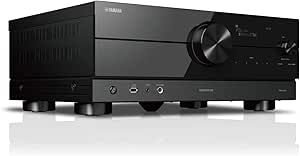 | Best for Flexible Gaming and Zone 2 | Channels: 7.2 | Zone support: Zone 2 | HDMI: 7 inputs / 1 output; HDCP 2.3; eARC | VIEW ON AMAZON | See Our Full Breakdown |
| Yamaha RX300A 5.2-Channel Home Theater AV Receiver with Dolby Atmos, 4K/120 and 8K/60 HDMI, and Bluetooth Multipoint |  | Best Compact Atmos Starter | Channel configuration: 5.2 | Output power: 70 watts | Speaker layout support: Up to 3.1.2 channels | VIEW ON AMAZON | See Our Full Breakdown |
| Marantz AV 10 Reference 15.4-Channel 8K Ultra HD Home Theater Pre-Amplifier/Processor |  | Best Premium Processor for a Large Atmos Theater | Channels: 15.4 | Product type: Home theater pre-amplifier/processor | Video resolution: 8K Ultra HD | VIEW ON AMAZON | See Our Full Breakdown |
| high end av receivers for dolby atmo | Channels | Video support | Audio formats | HDMI |
|---|---|---|---|---|
| Yamaha AVENTAGE RX-A880 7.2-Ch | 7.2 | 4K Ultra HD, HDR10, Dolby Vision, HLG, BT.2020 | — | 5 inputs, 2 outputs |
| Denon AVR-X4800H 9.4-Channel H | 9.4-channel receiver; 11.4-channel processing | 8K, 4K/120, HDR10+, HLG, Dolby Vision, Dynamic HDR | — | Listing states 9 ports; also states 7 inputs and 3 outputs |
| Marantz Cinema 60 7.2-Channel | 7.2 | — | — | 6 inputs, 2 outputs; 8 total listed in specs |
| Yamaha RX-A6A AVENTAGE 9.2-Cha | 9.2-channel; 11.2-channel processing | 8K60 and 4K/120; 40 Gbps | — | 7 inputs, 3 outputs; HDCP 2.3, eARC |
| Sony STR-AN1000 7.2-Channel 8K | 7.2 | 8K support | — | — |
| Yamaha RX-A8A AVENTAGE 11.2-Ch | 11.2 | 8K60 and 4K120 | Dolby Atmos, DTS:X, Auro-3D | 10 ports; 7 inputs and 3 outputs |
| Marantz Cinema 30 11.4-Channel | 11.4 | — | Dolby Atmos, DTS:X Pro, Auro-3D | — |
| Marantz CINEMA 50 9.4-Channel | 9.4 | 8K and 4K/120 | Dolby Atmos, DTS:X, IMAX Enhanced, Auro-3D | — |
| Onkyo TX-NR6100 7.2-Channel TH | 7.2 | 8K60 and 4K/120 pass-through; 40 Gbps | Dolby Atmos, DTS:X | 8 total ports; HDMI 2.1, three outputs |
| Sony STR-AN1000 7.2-Channel 8K | 7.2 | 8K and 4K/120 | Dolby Atmos, DTS:X | HDMI 2.1; 6 inputs and 2 outputs |
| Denon AVR-S770H 7.2-Channel 8K | 7.2 | — | Dolby Atmos, Dolby TrueHD, DTS:X, DTS Neural:X | — |
| Yamaha RX-A4A AVENTAGE 7.2-Cha | 7.2 | 8K60, 4K120, Dolby Vision, HDR10+, HLG, BT.2020 | Dolby Atmos, DTS:X, Auro-3D | 7 inputs / 3 outputs; HDCP 2.3 and eARC |
| Yamaha RX-A2A AVENTAGE 7.2-Cha | 7.2 | All inputs support 4K60; three inputs support 8K60B and 4K120AB | Dolby Atmos, DTS:X | 7 inputs / 1 output; HDCP 2.3; eARC |
| Yamaha RX300A 5.2-Channel Home | — | 4K/120 and 8K/60 | Dolby Atmos, DTS Virtual:X | — |
| Marantz AV 10 Reference 15.4-C | 15.4 | — | Dolby Atmos, DTS:X Pro | — |
More Details on Our Top Picks
Yamaha AVENTAGE RX-A880 7.2-Channel 4K Ultra HD AV Receiver
The Yamaha RX-A880 is a fit for a buyer building a conventional 7.2-channel Dolby Atmos system around a 4K display, rather than chasing the latest video connections or a larger speaker layout. It supports Dolby Atmos and DTS:X, and YPAO multipoint measurement can help tune playback to more than one listening position. Its Wi-Fi, Bluetooth, AirPlay, and MusicCast also cover everyday music use. Compared with the newer Yamaha RX-A6A, though, the A880 has fewer channels, older 4K-focused video support, and less room to expand. Its five HDMI inputs may also feel restrictive in a setup with several consoles and players. MusicCast wireless surround is limited to 5.1, so Atmos height channels require a wired speaker setup.
Pros:- Supports Dolby Atmos and DTS:X for immersive surround formats.
- YPAO multipoint measurement can account for several listening positions.
- Wi-Fi, Bluetooth, AirPlay, and MusicCast provide flexible music streaming.
- Dolby Vision, HDR10, and HLG support suit a range of 4K sources.
Cons:- Five HDMI inputs can be limiting for a system with many connected sources.
- Video support is 4K-focused, unlike the 8K and 4K/120 options in this roundup.
- MusicCast wireless surround is limited to 5.1-channel configurations.
Best for: Buyers with a 4K display who want a 7.2-channel Dolby Atmos receiver, multipoint room calibration, and Yamaha multi-room audio.
Not ideal for: Owners planning an 8K or 4K/120 system, a larger Atmos layout, or a wireless MusicCast surround configuration beyond 5.1.
- Channels:7.2
- Surround formats:Dolby Atmos, DTS:X
- Video support:4K Ultra HD, HDR10, Dolby Vision, HLG, BT.2020
- HDMI:5 inputs, 2 outputs
- Output power:115 watts
- Room calibration:YPAO sound optimization with multipoint measurement
- Connectivity:Wi-Fi, Bluetooth, AirPlay, MusicCast
Our verdict“Choose the RX-A880 for a 4K-based 7.2 Atmos system with Yamaha streaming features, but skip it if you need newer video support or expansion beyond its channel and HDMI limits.”
Denon AVR-X4800H 9.4-Channel Home Theater AV Receiver, 8K, 125W per Channel
The Denon AVR-X4800H earns its place for buyers who want more than a basic Atmos layout: it has 9.4 channels, 11.4-channel processing, and four subwoofer outputs, giving a system more room to grow than the 7.2-channel Marantz Cinema 60. Support for Dolby Atmos, DTS:X Pro, IMAX Enhanced, and Auro-3D makes it a strong match for mixed-format movie collections, while 8K and 4K/120 video serve newer displays and consoles. HEOS adds multi-room streaming, and Audyssey handles room calibration. The tradeoff is a more involved installation than a simpler receiver like the Sony STR-AN1000. The listing also conflicts on HDMI count, so I would verify the exact input and output configuration before planning a rack around it.
Pros:- 9.4-channel receiver with 11.4-channel processing supports more elaborate speaker layouts.
- Four subwoofer outputs allow flexible multi-subwoofer configurations.
- Supports Dolby Atmos, DTS:X Pro, IMAX Enhanced, and Auro-3D.
- 8K, 4K/120, eARC, and HEOS streaming cover modern video and audio needs.
Cons:- The supplied listing gives conflicting HDMI counts, so port planning needs verification.
- The broad speaker and connection options make setup more involved than a 7.2-channel receiver.
- Its larger processing and subwoofer capabilities may be unnecessary for a modest room system.
Best for: Home theater builders who want a 9.4-channel Atmos-capable system, multiple subwoofer connections, and room to expand speaker layouts.
Not ideal for: Buyers seeking a straightforward 7.2-channel setup or anyone who needs confirmed HDMI port counts before choosing connected components.
- Channels:9.4-channel receiver; 11.4-channel processing
- Power:125 watts per channel
- Surround formats:Dolby Atmos, DTS:X Pro, IMAX Enhanced, Auro-3D
- Video support:8K, 4K/120, HDR10+, HLG, Dolby Vision, Dynamic HDR
- HDMI:Listing states 9 ports; also states 7 inputs and 3 outputs
- Subwoofer outputs:4 RCA/XLR outputs
- Connectivity:Wi-Fi, Bluetooth, eARC, HEOS
- Room correction:Audyssey
Our verdict“Pick the AVR-X4800H if you want an expandable Atmos theater with multiple subwoofers; choose a simpler 7.2-channel model if that capacity would go unused.”
Marantz Cinema 60 7.2-Channel AV Receiver with HEOS, Dolby Atmos, 100 W per Channel, 8K, and 6 HDMI Inputs
The Marantz Cinema 60 makes sense for a buyer who wants Dolby Atmos in a well-connected 7.2-channel receiver, without stepping up to the more complex 9.4-channel Denon AVR-X4800H. It supplies 100 watts per channel, Dolby Atmos and DTS:X, and Audyssey MultEQ XT calibration. Its six HDMI inputs include three 8K-compatible inputs, giving multiple modern sources a place to connect; HEOS, Wi-Fi, Bluetooth, and AirPlay also make it useful beyond movie nights. The tradeoff is expansion: unlike the Denon, this is a 7.2-channel design, so it is a less natural base for a larger speaker array. Buyers should also note that the supplied title and specs differ on total HDMI count, though both identify six inputs.
Pros:- Dolby Atmos and DTS:X support immersive surround playback.
- Six HDMI inputs include three 8K-compatible connections.
- Audyssey MultEQ XT provides room calibration.
- HEOS, Wi-Fi, Bluetooth, and AirPlay support varied streaming options.
Cons:- The 7.2-channel design offers less speaker-layout expansion than the Denon AVR-X4800H.
- The supplied title and specifications give different total HDMI counts.
- Its 100-watt-per-channel rating is lower than the listed output of several larger receivers in this roundup.
Best for: Movie watchers building a 7.2-channel Dolby Atmos system who want several modern HDMI sources, room calibration, and built-in streaming.
Not ideal for: Buyers planning a larger Atmos speaker layout or seeking the expanded channel processing and multi-subwoofer flexibility of the Denon AVR-X4800H.
- Channels:7.2
- Output power:100 W per channel
- Surround formats:Dolby Atmos, DTS:X, Dolby Height Virtualization, DTS Virtual:X
- HDMI:6 inputs, 2 outputs; 8 total listed in specs
- 8K-compatible inputs:3
- Video formats:HDR10+, HDR10, Dolby Vision, HLG
- Connectivity:Wi-Fi, Bluetooth, AirPlay, HEOS
- Room calibration:Audyssey MultEQ XT
Our verdict“Choose the Cinema 60 for a feature-rich 7.2-channel Atmos setup with modern HDMI and streaming, but look to the Denon if you plan to expand beyond that layout.”
Yamaha RX-A6A AVENTAGE 9.2-Channel AV Receiver
For a buyer committed to Yamaha and ready to build beyond a basic Atmos layout, the RX-A6A combines 9.2-channel amplification with 11.2-channel processing. That gives it more expansion headroom than the 7.2-channel RX-A880, while its 8K60 and 4K/120 HDMI support suits newer displays and gaming sources. Dolby Atmos, DTS:X, and Auro-3D cover several immersive formats; YPAO R.S.C. with 3D multipoint measurement and Surround:AI add calibration and ongoing sound optimization. It is not the simplest pick here: the extra capabilities mean more setup decisions, and Sonos integration requires a separately sold Port. Compared with the Denon AVR-X4800H, the A6A offers a Yamaha-centered feature set but lists fewer channels of processing and fewer subwoofer outputs.
Pros:- 9.2-channel receiver with 11.2-channel processing supports future speaker expansion.
- 8K60 and 4K/120 HDMI video support suit newer display and gaming systems.
- Supports Dolby Atmos, DTS:X, and Auro-3D.
- YPAO R.S.C. multipoint calibration and Surround:AI add sound adjustment options.
Cons:- Advanced features and system configuration can make setup more involved.
- Sonos integration requires a separately sold Sonos Port.
- Offers less channel processing and fewer stated subwoofer outputs than the Denon AVR-X4800H.
Best for: Yamaha fans planning a 9.2-channel Atmos system, with potential expansion to 11.2-channel processing and a TV or gaming setup using 4K/120.
Not ideal for: Buyers who want simple setup, built-in Sonos integration, or the Denon AVR-X4800H’s four subwoofer outputs and 11.4-channel processing.
- Channels:9.2-channel; 11.2-channel processing
- Output power:150 watts
- Surround formats:Dolby Atmos, DTS:X, Auro-3D
- HDMI:7 inputs, 3 outputs; HDCP 2.3, eARC
- Video support:8K60 and 4K/120; 40 Gbps
- Connectivity:Wi-Fi, Ethernet, Bluetooth, AirPlay 2, MusicCast
- Room calibration:YPAO R.S.C. with 3D multipoint measurement
- Warranty:2-year manufacturer warranty
Our verdict“Choose the RX-A6A for a high-capacity Yamaha Atmos system with modern video support, but compare the Denon if extra processing channels and subwoofer connections matter more.”
Sony STR-AN1000 7.2-Channel 8K A/V Receiver with Extended Protection Plan
The Sony STR-AN1000 is the most focused choice here for buyers drawn to Sony’s 360 Spatial Sound Mapping and a straightforward 7.2-channel system. Its 8K support and Wi-Fi and Bluetooth connectivity cover key modern needs, while the bundled 26-month extended protection plan adds coverage beyond the included manufacturer protection. Compared with the Marantz Cinema 60, however, the supplied product data is much less specific about immersive format support, HDMI capabilities, and room calibration. That makes it harder to judge how well it fits a feature-heavy Atmos theater from the listing alone. The 7.2-channel layout also offers less expansion than the Denon AVR-X4800H or Yamaha RX-A6A. I would shortlist it for its spatial processing and bundle, not for buyers who need detailed connection planning.
Pros:- 360 Spatial Sound Mapping is a distinctive sound feature in this group.
- 7.2-channel configuration supports a conventional multichannel theater.
- 8K support suits a newer display system.
- Includes a 26-month extended protection plan in addition to manufacturer protection.
Cons:- The supplied product data does not specify supported surround formats.
- Only six HDMI ports are listed, with no input/output breakdown.
- 7.2 channels provide less expansion than the Denon AVR-X4800H or Yamaha RX-A6A.
Best for: Sony-focused home theater buyers seeking a 7.2-channel receiver with 8K support, 360 Spatial Sound Mapping, and bundled extended protection.
Not ideal for: Buyers who need confirmed Dolby Atmos format details, extensive HDMI specifications, or a larger expandable speaker layout before purchase.
- Channels:7.2
- HDMI ports:6
- Video support:8K support
- Connectivity:Wi-Fi, Bluetooth
- Special feature:360 Spatial Sound Mapping
- Extended protection:26 months
- Weight:20.7 pounds
Our verdict“Choose the STR-AN1000 if Sony’s spatial sound feature and the bundled protection plan appeal to you, but verify Atmos and HDMI details before building a system around it.”
Yamaha RX-A8A AVENTAGE 11.2-Channel AV Receiver
The RX-A8A earns its place among high-end Atmos receivers by pairing 11.2-channel processing with Dolby Atmos, DTS:X, and Auro-3D. That format breadth suits a dedicated theater where you want to experiment with different immersive mixes rather than commit to Atmos alone. Compared with the Marantz Cinema 30, it offers two fewer subwoofer channels, but adds Yamaha’s Surround:AI processing and broad wireless options including AirPlay 2 and MusicCast. Its 7-in/3-out HDMI layout, 8K60 and 4K120 pass-through, VRR, and ALLM also give a gaming-heavy system room to grow. The tradeoff is that its 11.2-channel design is less flexible for multi-subwoofer layouts than the Cinema 30’s 11.4 setup, and Sonos users need a separately sold Port.
Pros:- Decodes Dolby Atmos, DTS:X, and Auro-3D
- 11.2-channel processing supports an expansive immersive speaker layout
- HDMI supports 8K60, 4K120, VRR, and ALLM
- YPAO R.S.C. multipoint calibration and Surround:AI
Cons:- Two subwoofer channels provide less bass-layout flexibility than the Marantz Cinema 30’s four
- Sonos integration requires a separately sold Sonos Port
Best for: Dedicated theater owners who want 11-channel immersive sound, multiple surround formats, and Yamaha streaming features in one receiver.
Not ideal for: Buyers planning a four-subwoofer system or seeking direct Sonos integration without adding a separate Port.
- Channels:11.2
- Output power:150 watts
- HDMI:10 ports; 7 inputs and 3 outputs
- Video support:8K60 and 4K120
- Audio formats:Dolby Atmos, DTS:X, Auro-3D
- Room calibration:YPAO R.S.C. with 3D multipoint measurement
- Wireless connectivity:Wi-Fi, Bluetooth, AirPlay 2, MusicCast
- Warranty:2 years
Our verdict“Choose the RX-A8A if broad immersive-format support and Yamaha processing matter more to you than four independent subwoofer channels.”
Marantz Cinema 30 11.4-Channel AV Receiver
For a high-end Atmos room built around several subwoofers, the Marantz Cinema 30 stands apart with 11.4-channel processing and four subwoofer channels. That gives bass management more room than the Yamaha RX-A8A’s 11.2 configuration, making this the stronger fit for complex theater installations. It also decodes Dolby Atmos, DTS:X Pro, and Auro-3D, while seven 8K-compatible HDMI inputs can accommodate a large source collection. Audyssey MultEQ XT32 is included, and Dirac Live is available as an option for buyers who want another calibration path. Compared with the less expansive Marantz Cinema 50, the Cinema 30 is aimed at bigger speaker and bass systems, not compact setups. Its main tradeoff is that Dirac Live is optional rather than included.
Pros:- 11.4-channel processing supports elaborate immersive layouts
- Four subwoofer channels suit multi-subwoofer bass systems
- Decodes Dolby Atmos, DTS:X Pro, and Auro-3D
- Seven 8K-compatible HDMI inputs and Audyssey MultEQ XT32
Cons:- Dirac Live is an optional upgrade
- Its channel and subwoofer capacity may go unused in smaller systems
Best for: Home-theater builders with an 11-channel speaker plan, multiple subwoofers, and a need for several HDMI sources.
Not ideal for: Buyers with a modest speaker layout who would not use its extra channels and subwoofer outputs, or who require Dirac Live included.
- Channels:11.4
- Power output:140 watts per channel
- HDMI inputs:7, 8K-compatible
- Total HDMI ports:10
- Audio formats:Dolby Atmos, DTS:X Pro, Auro-3D
- Room calibration:Audyssey MultEQ XT32; optional Dirac Live
- Streaming:HEOS; Spotify, TIDAL, and Amazon Music HD
- Wireless technology:Bluetooth
Our verdict“Pick the Cinema 30 for a large Atmos theater where four subwoofer channels and extensive format support justify its greater system complexity.”
Marantz CINEMA 50 9.4-Channel AV Receiver with HEOS, Dolby Atmos, 110 W per Channel, 8K, and HDMI
The Marantz CINEMA 50 is a practical middle ground for an Atmos system that needs more reach than a seven-channel receiver but does not call for 11-channel processing. Its 9.4-channel design can support a more involved speaker layout and four independent subwoofer channels, while Audyssey MultEQ XT32 helps adapt the sound to the room. Compared with the Marantz Cinema 30, it gives up two processing channels and DTS:X Pro, but remains a better match for buyers who do not need the larger model’s full scale. It supports Dolby Atmos, DTS:X, IMAX Enhanced, and Auro-3D, plus 8K and 4K/120 video. The tradeoff is that Dirac Live is optional, and the feature set may be excessive for a simple living-room setup.
Pros:- 9.4-channel processing provides room for a substantial Atmos layout
- Four independent subwoofer channels offer flexible bass placement
- Supports Dolby Atmos, DTS:X, IMAX Enhanced, and Auro-3D
- Audyssey MultEQ XT32, HEOS, Wi-Fi, and AirPlay
Cons:- Two fewer processing channels than the Marantz Cinema 30
- Dirac Live requires an optional upgrade
- Its extensive features may be unnecessary for smaller systems
Best for: Atmos enthusiasts building a nine-channel system who want four independent subwoofer outputs and Marantz room correction.
Not ideal for: Buyers who need 11-channel processing, DTS:X Pro, or a straightforward receiver for a small speaker setup.
- Channels:9.4
- Power output:110 W per channel
- HDMI ports:9 total; 6 inputs and 3 outputs
- Video support:8K and 4K/120
- Audio formats:Dolby Atmos, DTS:X, IMAX Enhanced, Auro-3D
- Subwoofer channels:4 independent
- Room calibration:Audyssey MultEQ XT32
- Connectivity:Bluetooth, Wi-Fi, HEOS, AirPlay
Our verdict“Choose the CINEMA 50 if you want a flexible nine-channel Atmos system with multiple subwoofers but do not need the Cinema 30’s extra processing channels.”
Onkyo TX-NR6100 7.2-Channel THX Certified Network AV Receiver
The Onkyo TX-NR6100 is the gaming-focused choice here: its HDMI 2.1 connections pass 4K/120 and 8K video, with VRR, ALLM, and QFT aimed at responsive play. It decodes Dolby Atmos and DTS:X, and THX Select certification adds a clear identity for buyers building a movie-and-console room. Compared with the Sony STR-AN1000, the Onkyo offers three HDMI outputs and discrete Zone 2 audio and video, while Sony lists broader streaming integrations and Zone 3 output. The tradeoff is capacity: at 7.2 channels, the TX-NR6100 cannot grow into the larger speaker layouts supported by the 9.4-channel Marantz CINEMA 50 or 11-channel models. Its software update support date is also unspecified.
Pros:- HDMI 2.1 supports 8K60 and 4K/120 pass-through
- VRR, ALLM, and QFT target gaming responsiveness
- THX Select certification and Dolby Atmos/DTS:X decoding
- Three HDMI outputs and discrete Zone 2 audio and video
Cons:- 7.2 channels limit expansion to larger Atmos speaker layouts
- Software update support date is unknown
Best for: Console and PC gamers who want Atmos decoding, 4K/120 pass-through, and separate Zone 2 audio and video in a seven-channel system.
Not ideal for: Buyers planning an 11-channel Atmos layout or seeking a stated long-term software update schedule.
- Channels:7.2
- Output power:100 watts per channel
- Certification:THX Select
- HDMI:8 total ports; HDMI 2.1, three outputs
- Video support:8K60 and 4K/120 pass-through; 40 Gbps
- Audio formats:Dolby Atmos, DTS:X
- Wireless connectivity:Bluetooth, Wi-Fi
- Multi-zone:Discrete Zone 2 audio and video
Our verdict“Choose the TX-NR6100 for a gaming-led seven-channel Atmos setup, not for a theater you expect to expand to 9 or 11 channels.”
Sony STR-AN1000 7.2-Channel 8K A/V Home Theater Receiver
The Sony STR-AN1000 makes the most sense for buyers who value Sony’s 360 Spatial Sound Mapping alongside Dolby Atmos and DTS:X decoding. Its Digital Cinema Auto Calibration IX and spatial processing give it a different emphasis from the Onkyo TX-NR6100, which leans more heavily on THX certification and gaming-specific features. Sony also brings Chromecast built-in, AirPlay, Spotify Connect, Sonos integration, and Zone 2 and Zone 3 outputs, making it a flexible hub for mixed entertainment and whole-home audio. HDMI supports 8K and 4K/120, but the receiver has six inputs and two outputs, fewer outputs than the Onkyo. Its 165-watt figure is specified under particular one-channel test conditions, so it should not be read as a like-for-like power comparison.
Pros:- 360 Spatial Sound Mapping adds a distinct Sony processing option
- Supports Dolby Atmos, DTS:X, 8K, and 4K/120
- Chromecast built-in, Spotify Connect, Apple AirPlay, and Sonos integration
- Zone 2 and Zone 3 outputs support multi-room setups
Cons:- 7.2 channels cannot support the larger layouts available from the Marantz CINEMA 50 or Cinema 30
- The listed 165 W rating uses specific one-channel test conditions
- Two HDMI outputs versus three on the Onkyo TX-NR6100
Best for: Sony-leaning home theater owners who want Atmos plus spatial processing, varied streaming options, and multi-zone output.
Not ideal for: Buyers who need 9 or more processing channels, more than two HDMI outputs, or a simple apples-to-apples power rating.
- Channels:7.2
- Power output:165 W at 6 ohms, 1 kHz, one channel, 0.9% THD
- HDMI:HDMI 2.1; 6 inputs and 2 outputs
- Video support:8K and 4K/120
- Audio formats:Dolby Atmos, DTS:X
- Room processing:Digital Cinema Auto Calibration IX; 360 Spatial Sound Mapping
- Streaming:Bluetooth, Wi-Fi, Chromecast built-in, Spotify Connect, Apple AirPlay
- Multi-zone output:Zone 2 and Zone 3
Our verdict“Pick the STR-AN1000 if Sony’s spatial processing and streaming flexibility matter more than extra channels or HDMI outputs.”
Denon AVR-S770H 7.2-Channel 8K Home Theater Receiver
The Denon AVR-S770H makes sense for Atmos buyers who want current gaming and video support without stepping up to a larger speaker platform. Its 7.2-channel design can support a compact Atmos layout, while 4K/120Hz and 8K/60Hz passthrough suit newer consoles and displays. Compared with the Yamaha RX-A2A, it offers more HDMI ports on the supplied specifications and a different streaming mix, including HEOS alongside AirPlay 2 and Bluetooth. Audyssey room calibration gives buyers a guided way to account for room acoustics. The tradeoff is capacity: this is not the choice for a larger height-speaker array, and its 75 watts per channel is a more modest power specification than the RX-A2A’s listing. Choose it for a connected, straightforward system, not maximum Atmos expansion.
Pros:- Dolby Atmos and DTS:X support for immersive surround layouts
- 8K/60Hz and 4K/120Hz passthrough suits current video sources
- Eight HDMI ports provide flexible source connections
- Audyssey calibration and HEOS, AirPlay 2, Wi-Fi, and Bluetooth support
Cons:- Seven main channels limit expansion for larger Atmos speaker layouts
- Listed output is 75 watts per channel, below the Yamaha RX-A2A’s 110-watt specification
Best for: Buyers building a 7.2-channel Dolby Atmos system around a 4K/120Hz console, with HEOS or AirPlay 2 streaming in the same setup.
Not ideal for: Home theater builders planning more than seven main speaker channels or seeking a higher listed power output for demanding speakers.
- Channels:7.2
- Output power:75 watts per channel
- HDMI ports:8
- Video passthrough:8K/60Hz and 4K/120Hz
- Audio formats:Dolby Atmos, Dolby TrueHD, DTS:X, DTS Neural:X
- Connectivity:HDMI, Wi-Fi, Bluetooth, AirPlay 2, HEOS
- Room calibration:Audyssey
Our verdict“Choose the AVR-S770H for a well-connected, gaming-ready 7.2-channel Atmos setup, but look to a higher-channel receiver if you plan to expand.”
Yamaha RX-A4A AVENTAGE 7.2-Channel AV Receiver
The Yamaha RX-A4A is a strong fit for buyers who want a 7.2-channel Atmos receiver with broad format support and more elaborate room measurement. Its YPAO R.S.C. multipoint calibration takes measurements at several listening positions, which can help a shared seating area sound more consistent than a single-position setup. It also adds Auro-3D and Surround:AI to Dolby Atmos and DTS:X, giving it more processing variety than the Denon AVR-S770H. The Yamaha lists 110 watts of output and supports 8K60, 4K120, eARC, and major HDR formats. That does not change its seven-channel ceiling, though: buyers planning a larger Atmos array should compare it with the roundup’s higher-channel models. Sonos users also need a separately sold Port for integration.
Pros:- Supports Dolby Atmos, DTS:X, and Auro-3D
- YPAO R.S.C. multipoint measurement can account for several seating positions
- 8K60, 4K120, eARC, and modern HDR format support
- Wi-Fi, Bluetooth, AirPlay 2, and MusicCast provide varied streaming options
Cons:- 7.2 channels limit expansion compared with higher-channel receivers in the roundup
- Sonos integration requires a separately sold Sonos Port
Best for: Home theater owners who want a 7.2-channel Atmos system, multipoint room calibration, and support for several immersive audio formats.
Not ideal for: Buyers planning a larger-than-7.2-channel speaker layout, or Sonos users who want integration without adding a separate Port.
- Channels:7.2
- Output power:110 watts
- HDMI:7 inputs / 3 outputs; HDCP 2.3 and eARC
- Video support:8K60, 4K120, Dolby Vision, HDR10+, HLG, BT.2020
- Audio formats:Dolby Atmos, DTS:X, Auro-3D
- Room calibration:YPAO R.S.C. with 3D multipoint measurement
- Connectivity:Wi-Fi, Bluetooth, Ethernet, AirPlay 2, MusicCast
- Warranty:2-year manufacturer warranty
Our verdict“Pick the RX-A4A if format range and multipoint calibration matter more than adding channels beyond a 7.2 layout.”
Yamaha RX-A2A AVENTAGE 7.2-Channel AV Receiver
The Yamaha RX-A2A suits buyers who want Atmos in a main room while retaining Zone 2 audio for another area. It supports Dolby Atmos and DTS:X, with YPAO R.S.C. multipoint calibration and Surround:AI to adjust processing to the content. For gaming, ALLM and VRR are useful, but the 8K60 and 4K/120 signals are supported on only three of its HDMI inputs; that is a meaningful constraint if several high-refresh sources will be connected. Compared with the RX-A4A, the A2A has fewer HDMI outputs and a narrower stated format list, but it still offers MusicCast, AirPlay 2, and a phono input. Sonos support requires a separate Port. Its appeal is a flexible, connected 7.2 system, not a path to more Atmos channels.
Pros:- Dolby Atmos and DTS:X support with Surround:AI processing
- Zone 2 adds audio to a second listening area
- YPAO R.S.C. multipoint room calibration
- AirPlay 2, MusicCast, Wi-Fi, Bluetooth, and a phono input
Cons:- Only three HDMI inputs support the listed 8K60 and 4K/120 signals
- Sonos integration requires a separately sold Port
Best for: Gamers and music listeners who need a 7.2-channel Atmos receiver with Zone 2, a phono input, and multiroom streaming.
Not ideal for: Owners with several 4K/120Hz or 8K sources, or anyone planning to add more than seven main speaker channels.
- Channels:7.2
- Zone support:Zone 2
- HDMI:7 inputs / 1 output; HDCP 2.3; eARC
- Video support:All inputs support 4K60; three inputs support 8K60B and 4K120AB
- Gaming features:ALLM, VRR
- Audio formats:Dolby Atmos, DTS:X
- Room calibration:YPAO R.S.C. with multipoint measurement
- Streaming:AirPlay 2, Spotify Connect, MusicCast
- Voice control:Amazon Alexa, Siri via AirPlay 2, Google Assistant
Our verdict“Choose the RX-A2A for Zone 2 and gaming features in a 7.2-channel system, but favor the RX-A4A if you need broader HDMI output or format options.”
Yamaha RX300A 5.2-Channel Home Theater AV Receiver with Dolby Atmos, 4K/120 and 8K/60 HDMI, and Bluetooth Multipoint
The Yamaha RX300A is the compact-layout pick here: its 5.2-channel platform supports up to a 3.1.2 Atmos configuration, adding overhead effects without requiring a seven-channel receiver. That makes it a simpler fit for smaller rooms than the Denon AVR-S770H, but the channel limit also caps future speaker expansion. It handles 4K/120 and 8K/60 video, with Dolby Vision, HDR10+, eARC, ALLM, and VRR listed, so it can serve a modern console and display even in a modest system. Automatic calibration helps tailor playback to the room. Bluetooth Multipoint is handy for switching between two paired devices, though the supplied details do not list built-in music services or network streaming. Choose this Yamaha for a focused 3.1.2 setup, not a larger Atmos theater.
Pros:- Supports a 3.1.2 speaker layout for height effects in a compact system
- 4K/120 and 8K/60 video support with ALLM and VRR
- Automatic room calibration includes a setup microphone
- Bluetooth Multipoint can switch between two paired devices
Cons:- 5.2-channel configuration limits Atmos speaker layouts and future expansion
- Provided specifications do not list built-in music streaming services
Best for: Small-room buyers who want a simple 3.1.2 Dolby Atmos layout with modern gaming-video support and automatic room correction.
Not ideal for: Home theater builders who want 5.1.2 or larger speaker layouts, or network-based music streaming services built into the receiver.
- Channel configuration:5.2
- Output power:70 watts
- Speaker layout support:Up to 3.1.2 channels
- HDMI ports:5 total: 4 inputs, 1 output
- Video support:4K/120 and 8K/60
- Audio formats:Dolby Atmos, DTS Virtual:X
- HDR formats:Dolby Vision, HDR10+
- Connectivity:HDMI, optical, coaxial, analog, Bluetooth
- Room correction:Automatic calibration with included setup microphone
Our verdict“Choose the RX300A when a compact 3.1.2 Atmos system is enough; move to the AVR-S770H for a broader 7.2-channel layout.”
Marantz AV 10 Reference 15.4-Channel 8K Ultra HD Home Theater Pre-Amplifier/Processor
The Marantz AV 10 is the outlier in this group: it is a 15.4-channel pre-amplifier/processor, not a conventional receiver with amplification specified in the supplied details. That scale gives a custom theater far more scope for Dolby Atmos speaker placement than the 7.2-channel Yamaha RX-A4A, while DTS:X Pro and IMAX Enhanced add further format support. Built-in HEOS brings network music capability into the system. The tradeoff is that buyers must pair the AV 10 with suitable external amplification, so it is a more involved system choice than the all-in-one Denon or Yamaha receivers here. The provided specifications also omit detailed connectivity and room-calibration information, making system planning harder from these details alone. This is a specialist centerpiece for a large theater, not a plug-and-play upgrade.
Pros:- 15.4-channel processing supports extensive home theater layouts
- Dolby Atmos and DTS:X Pro support
- 8K Ultra HD support
- Built-in HEOS for network music
Cons:- Pre-amplifier/processor format means separate amplification is needed
- Supplied product details do not specify connectivity options or room calibration
Best for: Custom theater owners building a large Atmos speaker array who already plan to use separate power amplifiers.
Not ideal for: Buyers seeking an all-in-one receiver, a straightforward 7.2-channel setup, or detailed connectivity and calibration specifications before choosing.
- Channels:15.4
- Product type:Home theater pre-amplifier/processor
- Video resolution:8K Ultra HD
- Audio formats:Dolby Atmos, DTS:X Pro
- Certification:IMAX Enhanced
- Built-in service:HEOS
Our verdict“Choose the AV 10 for a large, externally amplified Atmos theater; for an integrated receiver in a smaller setup, the Yamaha RX-A4A is a more direct fit.”

How We Picked
I ranked these models around how well each can serve a Dolby Atmos theater, weighing processing and channel capacity, expansion paths, connectivity, and how practical the system is to set up. I also separated receivers that power speakers themselves from the Marantz AV 10 preamp processor, since that model requires external amplification and suits a different buyer.
The ordering favors useful capability for realistic home theater plans, not the longest feature list. Models with more channels rank higher when they offer a clear route to larger speaker layouts; simpler receivers remain relevant for smaller rooms and straightforward builds, but rank lower for buyers specifically seeking high-end Atmos expansion. I also account for the tradeoff between system flexibility and added cost, equipment, and configuration work, and distinguish duplicate listings such as the two Sony STR-AN1000 entries.
Factors to Consider When Choosing High End Av Receivers For Dolby Atmos
Choosing an Atmos receiver is less about buying the biggest number and more about building a system that matches your room and can handle your intended speaker layout. I would settle the speaker plan, amplification approach, and upgrade horizon before comparing the finer features.
Match Channel Capacity to Your Speaker Plan
Count the speakers you plan to use now and the layout you may reasonably add later, including ceiling or height channels. A receiver’s channel figures can refer to different capabilities, so check how many channels it can process and how many it can power at once. Buying too little capacity may limit future layouts; buying far beyond your plan can leave budget tied up in unused headroom. Sketch the layout before shopping and confirm that the receiver supports it, rather than assuming any model labeled Atmos handles every configuration. Remember that adding channels can also mean more wiring, calibration, and space for equipment.
Know When External Amplification Makes Sense
Many receivers combine processing and speaker amplification, keeping a theater relatively straightforward to install. Some larger systems can use external amplifiers for additional channels or to meet the demands of particular speakers, but this adds equipment, cables, and heat to manage. A processor such as the Marantz AV 10 is intended for a setup with separate power amps, not as a drop-in replacement for a receiver. Check whether a model’s advertised channel capacity means it can power that many speakers itself or requires added amplification. Pay for separates when your system plan calls for them, not simply because a preamp has a higher-end position in a lineup.
Check HDMI Needs Against Your Actual Sources
List the devices you will connect, the display’s supported formats, and how many inputs must carry the video features you use. An HDMI label alone does not tell you whether every input supports the same capabilities, so compare the receiver’s connection details with your console, player, and television or projector. A mismatch can force devices to connect directly to the display or limit a particular signal path. Leave room for the sources you expect to add, but avoid choosing a receiver solely for a format your current display cannot use. Check eARC needs too if television apps will send audio back to the receiver.
Treat Room Correction as Part of the System
Room correction can help manage speaker levels, timing, and tonal differences caused by the room, but it cannot make poor placement disappear. Hard surfaces, open-plan spaces, and uneven speaker distances all affect what the calibration process can accomplish. Make sure the setup tools suit your willingness to adjust speaker positions and review results; automatic calibration is a starting point, not a guarantee of the sound you want. A common mistake is to spend heavily on processing while leaving height speakers poorly placed. Plan the room and speaker positions alongside the receiver, rather than treating calibration as a substitute for them.
Budget for Speakers, Cables, and Installation
A receiver is only one part of an Atmos system, and a larger channel count can bring costs beyond the unit itself. Height speakers may need brackets, suitable cable runs, ceiling access, or professional installation, while external amplifiers add further components. If those expenses would force compromises elsewhere, a smaller layout with well-placed speakers may be a better-balanced build. Check speaker sensitivity and impedance against the receiver’s specifications, especially if the room is large or listening levels will be high. Leave some budget for setup and room improvements instead of spending it all on receiver capability.
Buy for a Real Upgrade Horizon
It helps to distinguish a planned expansion from a vague wish to add speakers someday. If you expect to install extra height channels or replace the display soon, additional processing and connection flexibility may justify a step up. If your room and speaker layout are settled, paying for capacity you will not use may offer little practical benefit. Also think about whether you want one integrated unit or are comfortable maintaining multiple components as a system grows. Choose a receiver that supports a specific next step, not an open-ended promise of future-proofing.
Frequently Asked Questions
Is a 9-channel receiver enough for a serious Dolby Atmos theater?
For many dedicated living-room theaters, a 9-channel receiver can support a substantial Atmos layout without the complexity of separates. The exact speaker configuration depends on the model’s processing and amplification limits, so check its supported layouts rather than relying on the channel label alone. If you plan to add more height or surround speakers later, compare expansion options before buying. A larger receiver is not automatically better if your room cannot accommodate the extra speakers. Start with a realistic placement plan and choose capacity around it.
Should I choose the Marantz AV 10 or an integrated receiver?
Choose the AV 10 only if you want a preamp processor and already plan to use separate power amplifiers. It offers a different system architecture from an integrated receiver, which combines processing and amplification in one chassis. Separate components can suit a large, carefully planned theater, but require more equipment, cables, rack space, and setup decisions. If you want a simpler installation or do not have amplifiers, an integrated model is the more direct route. Compare the full system you would need, not just the processor by itself.
Does more Atmos channel capacity guarantee better sound?
No. More channels can support more speakers and more elaborate layouts, but the audible result depends on placement, room conditions, speaker matching, and calibration. A poorly positioned large system can be less convincing than a smaller layout installed carefully. More channels may also require additional amplification, which changes the system’s cost and complexity. Choose extra capacity when it serves a defined layout or upgrade plan. Otherwise, prioritize speaker placement and a balanced system.
Can I use one of these receivers with my existing speakers?
Often, but check the receiver’s supported speaker impedance and power guidance against your speakers before connecting them. Also confirm that your current speaker count and layout fit the model’s Atmos configurations. Older speakers may work well in a new system, though the receiver cannot make mismatched or poorly placed speakers perform as a coordinated set. If the speakers are staying, direct more of your planning toward channel compatibility, calibration, and room layout. A full speaker replacement is not automatically required for an Atmos upgrade.
Is a 7.2-channel model a sensible choice for Dolby Atmos?
It can be a sensible fit for a smaller room or a system with a clear, limited speaker plan. The tradeoff is less flexibility for adding channels than with the 9- or 11-channel options in this roundup. Check the model’s supported Atmos layouts, since the channel count alone does not spell out which speakers it can process and power together. A 7.2-channel receiver may be the better buy when you have no realistic plans to expand. If you already expect a larger layout, compare the cost of stepping up now with replacing the receiver later.
Conclusion
For most buyers building a capable Atmos theater, I recommend the Denon AVR-X4800H as best overall for its balance of channel capacity and expansion potential. The Denon AVR-S770H or Onkyo TX-NR6100 make more sense for a simpler system and a value-minded buyer, while the Marantz Cinema 30 is my best premium integrated-receiver pick for a larger setup. Beginners should favor a manageable 7.2-channel model such as the Yamaha RX-A2A or Sony STR-AN1000 over buying capacity they may never use. For specific needs, choose the Marantz AV 10 only if you are building around external amplifiers, and look to the Yamaha RX-A8A for a receiver-led system with more channel capacity. The right choice is the one that fits your actual speaker layout and leaves enough room in the plan for placement, amplification, and installation.
Halloween Picks
halloween
As an affiliate, we earn on qualifying purchases.