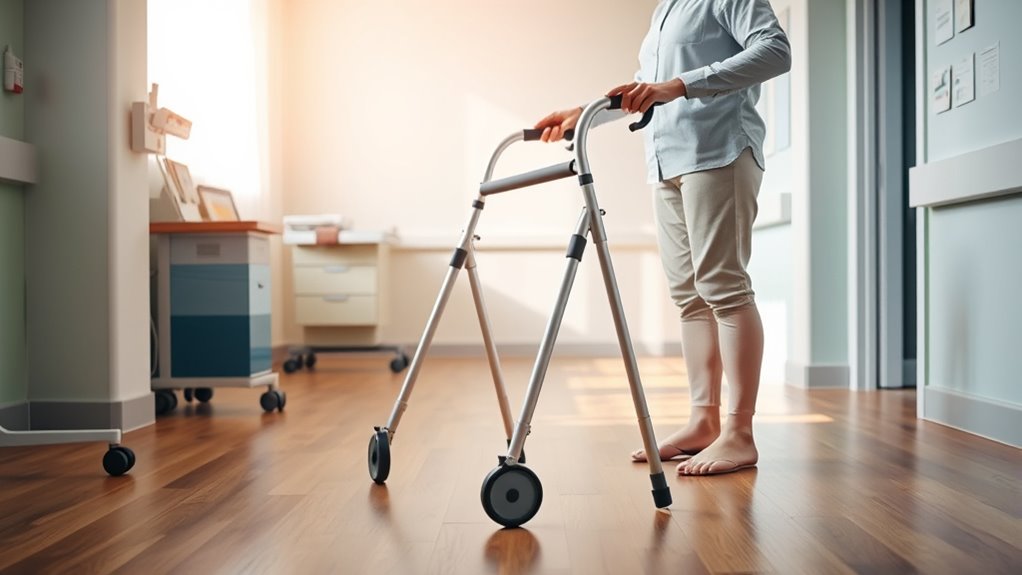

Choosing a hemi walker after a stroke means balancing one-sided support, fit, and ease of handling—not simply picking the lightest frame. I rank the Dynarex Side Style One-Arm Walker first for its low 2-pound weight and clear user-height range, while the HappyBuy Folding Hemi Walker and VEVOR Folding Hemi Walker stand out for a higher stated capacity and foldable frames. The Vive Hemi Walker adds a narrow, pre-assembled option, and the Loyoda offers a folding frame with one-inch height adjustments. The central tradeoff is straightforward: a hemi walker can offer more contact and support than a cane while leaving one hand free, but it is not a substitute for a two-sided walker when a user needs support on both sides. I’d choose by the user’s prescribed mobility aid, unaffected-hand control, fit, and walking environment.

Get your wardrobe favorites delivered free with Prime
- Fast, free delivery on millions of items
- Prime Video, Amazon Music and more included
- Member-only deals all year
Complete the kit


Key Takeaways
- The Dynarex is the lightest listed at 2 pounds and is the only option here with a stated recommended user-height range of 5 feet 1 inch to 5 feet 10 inches.
- HappyBuy and VEVOR share a 350-pound capacity and six height settings from 30.3 to 35 inches; HappyBuy also lists a 3.5-pound product weight, while VEVOR does not.
- Vive is the only model described as arriving pre-assembled and helping users rise from a seated position; it weighs 4 pounds and has an 18-by-17-inch footprint.
- Loyoda adjusts from 28.7 to 33.6 inches in one-inch increments and folds, but its stated 250-pound capacity is lower than the other listed capacities.
- All five are one-arm aids. A person who cannot safely bear weight through the intended hand, control the frame, or walk with one-sided support needs a clinician’s assessment before choosing one.
| Dynarex Side Style One-Arm Walker, Height Adjustable, Silver |  | Best Overall for a lightweight, straightforward frame | Type: Side-style hemi walker, one-arm | Recommended user height: 5 feet 1 inch to 5 feet 10 inches | Weight capacity: 300 pounds | VIEW ON AMAZON | See Our Full Breakdown |
| HappyBuy Folding Hemi Walker, One-Arm, 6-Level Adjustable Height |  | Best for a higher stated capacity with a known product weight | Model: FBL860517 | Design: Folding, one-arm hemi walker | Height adjustment: 30.3–35.0 inches | VIEW ON AMAZON | See Our Full Breakdown |
| VEVOR Folding Hemi Walker with Adjustable Height |  | Best for a folding design with a higher stated capacity | Material: Aluminum | Height adjustment: 30.3–35.0 inches | Height settings: 6 | VIEW ON AMAZON | See Our Full Breakdown |
| Vive Hemi Walker for Seniors, Narrow Folding One-Handed Walker |  | Best for pre-assembled convenience and seated-rise assistance | Design: Foldable, one-hand use | Weight: 4 pounds | Weight capacity: 300 pounds | VIEW ON AMAZON | See Our Full Breakdown |
| Loyoda Adjustable Folding Hemi Walker for Seniors |  | Best for a lower starting height and one-inch adjustment steps | Design: Folding, one-arm hemi walker | Height range: 28.7–33.6 inches | Height adjustment increments: 1 inch | VIEW ON AMAZON | See Our Full Breakdown |
| hemi walkers for stroke patient | Weight capacity | Height adjustment | Design | Feet |
|---|---|---|---|---|
| Dynarex Side Style One-Arm Wal | 300 pounds | Yes, push-button adjustment | — | — |
| HappyBuy Folding Hemi Walker | 350 pounds | 30.3–35.0 inches | Folding, one-arm hemi walker | Anti-skid |
| VEVOR Folding Hemi Walker with | 350 pounds | 30.3–35.0 inches | Folding, one-arm hemi walker | Anti-skid |
| Vive Hemi Walker for Seniors | 300 pounds | One-inch increments | Foldable, one-hand use | Non-slip rubber tips |
| Loyoda Adjustable Folding Hemi | — | — | Folding, one-arm hemi walker | Non-slip rubber tips |
More Details on Our Top Picks
Dynarex Side Style One-Arm Walker, Height Adjustable, Silver
The Dynarex earns my overall pick because it is the lightest listed model at 2 pounds and gives a specific recommended user-height range of 5 feet 1 inch to 5 feet 10 inches. That combination makes the choice easier to screen than models where the height range is the only fit information. The aluminum frame and push-button adjustment also keep the basic setup uncomplicated: the user or caregiver can set the hand grip to wrist height, then verify fit with a clinician.
Its wide base is intended to provide more support than a cane while still leaving one hand available. Compared with the folding HappyBuy and VEVOR, Dynarex emphasizes low weight and a clearly defined height range rather than compact storage or a higher 350-pound capacity. Its stated 300-pound capacity is below those two models, so I would not choose it for someone whose needs exceed that limit. The supplied information does not mention folding, which makes it a weaker pick for frequent transport.
This is a sensible starting point for a user who has been advised to use a one-arm walker and can safely manage it with the stronger or prescribed hand. I would skip it when the user needs bilateral support, falls outside the stated height range, or needs a folding frame for a small car or storage space. As with every product here, one-sided support is a meaningful limitation, not a minor feature.
Pros:- Listed weight of just 2 pounds
- Wide base intended to provide support beyond a cane
- Push-button height adjustment
- Stated recommended user-height range aids fit screening
Cons:- One-sided design may not suit users who need a two-handed walker
- 300-pound capacity is lower than the HappyBuy and VEVOR listed capacities
- Folding capability is not specified
Best for: A stroke survivor within the stated 5-foot-1-inch to 5-foot-10-inch range who needs a lightweight, height-adjustable one-arm walker and has clinician approval for one-sided support.
Not ideal for: Someone who needs support on both sides, is outside the listed height range, requires a capacity above 300 pounds, or wants a frame confirmed to fold for transport.
- Type:Side-style hemi walker, one-arm
- Recommended user height:5 feet 1 inch to 5 feet 10 inches
- Weight capacity:300 pounds
- Product weight:2 pounds
- Dimensions:16.5 × 12.75 × 29.25 inches
- Frame material:Aluminum
- Height adjustment:Yes, push-button adjustment
- Model:10164
Our verdict“I’d start with Dynarex when low weight and a stated user-height range matter more than folding convenience or a higher capacity.”
HappyBuy Folding Hemi Walker, One-Arm, 6-Level Adjustable Height
HappyBuy is my strongest choice for shoppers who want a folding frame and a stated 350-pound capacity without giving up a listed product weight. At 3.5 pounds, it is heavier than the 2-pound Dynarex, but that figure helps caregivers judge how manageable it may be to lift into a vehicle or move between rooms. Its aluminum construction, six height settings, and anti-skid feet make it a more fully specified option for someone comparing portable frames.
Its adjustment range runs from 30.3 to 35 inches, which matches VEVOR’s listed range and six settings. The difference is that HappyBuy provides a net weight, while VEVOR does not; that makes HappyBuy easier to evaluate for carrying, though it does not prove one is more stable or durable. Compared with Loyoda, HappyBuy has a higher stated capacity, but Loyoda begins at a shorter listed height and adjusts in one-inch increments.
The key limitation remains the same as with all five picks: this is a one-arm mobility aid, not a bilateral walker. I would consider it when folding storage and the listed capacity matter, after checking that its minimum and maximum height suit the user. I would skip it if the person needs more than one-sided support or cannot safely coordinate the frame with the intended hand.
Pros:- Folds for storage and travel
- Listed 350-pound capacity
- Six height settings from 30.3 to 35 inches
- Listed product weight of 3.5 pounds
Cons:- One-arm format may be unsafe for people needing support on both sides
- Heavier than the 2-pound Dynarex
- Adjustment range may not fit users who need a lower or higher grip
Best for: A user who needs a folding one-arm walker, falls within the 30.3-to-35-inch handle-height range, and values having both the stated capacity and product weight available for comparison.
Not ideal for: Someone who needs bilateral support, requires a height below 30.3 inches, or wants one-inch adjustment increments rather than six listed settings.
- Model:FBL860517
- Design:Folding, one-arm hemi walker
- Height adjustment:30.3–35.0 inches
- Height settings:6
- Weight capacity:350 pounds
- Net weight:3.5 pounds
- Dimensions:15.0 × 12.8 × 30.3–35.0 inches
- Material:Aluminum
- Feet:Anti-skid
Our verdict“I’d choose HappyBuy over VEVOR when I want their shared six-setting range and capacity but also need the product weight stated.”
VEVOR Folding Hemi Walker with Adjustable Height
VEVOR makes sense for a buyer who wants a folding aluminum hemi walker with a 350-pound stated capacity and six height settings. The adjustment range of 30.3 to 35 inches matches HappyBuy’s, as do its listed capacity and tube wall thickness. Anti-skid feet and compact folding are intended to address everyday stability and storage needs, while the description also mentions standing assistance and toilet support.
Those uses should not be read as a promise that this frame suits every transfer. A person recovering from stroke may have difficulty balancing, gripping, or shifting weight, so a therapist should assess whether using a one-arm frame to rise or move near a toilet is safe. Compared with HappyBuy, VEVOR gives much the same core height and capacity information but does not provide a product weight. That missing detail makes it harder to judge for a caregiver who will often lift or carry the frame. HappyBuy is the more transparent comparison; VEVOR can still fit a buyer whose priorities are folding, adjustment, and capacity.
I would not rank it above HappyBuy because the two products share the key listed specifications while HappyBuy also states its weight. That is a practical gap, not proof of inferior construction. Skip VEVOR if the user needs a different height range, needs two-sided support, or if knowing the lifting weight is necessary before ordering.
Pros:- Folding design for storage and transport
- Stated 350-pound capacity
- Six height settings from 30.3 to 35 inches
- Anti-skid feet and aluminum frame
Cons:- One-arm support is unsuitable for some users with significant balance or strength limits
- Product weight is not provided
- Height range is shared with HappyBuy rather than offering a distinct fit advantage
Best for: A buyer seeking a folding aluminum one-arm walker with six height settings and a stated 350-pound capacity, after confirming that the height range fits.
Not ideal for: A user who needs support on both sides or a caregiver who needs a listed product weight to assess lifting and transport.
- Material:Aluminum
- Height adjustment:30.3–35.0 inches
- Height settings:6
- Weight capacity:350 pounds
- Tube wall thickness:1.25 mm
- Design:Folding, one-arm hemi walker
- Feet:Anti-skid
- Product weight:Not provided
Our verdict“I’d shortlist VEVOR when its folding frame and stated capacity fit the need, but compare it closely with HappyBuy because VEVOR’s weight is unspecified.”
Vive Hemi Walker for Seniors, Narrow Folding One-Handed Walker
Vive has a different appeal from the two six-setting folding models: it is described as pre-assembled and may help with rising from a seated position. For a user or caregiver who wants to avoid assembly, that is a useful distinction. Its 18-by-17-inch footprint is also narrower than the 16.5-by-12.75-inch Dynarex dimensions in one direction but larger in the other, so I would compare the full footprint against doorways, furniture gaps, and the intended walking path rather than relying on the word “narrow.”
The listed 4-pound weight makes it heavier than Dynarex and HappyBuy, while its 300-pound capacity is below HappyBuy and VEVOR. It folds and adjusts in one-inch increments, a more granular adjustment description than the six settings given for those two models. Compared with Loyoda, Vive’s supplied details include a product weight and pre-assembled arrival, while Loyoda lists a lower starting height. These distinctions matter more than a broad claim of maneuverability: users still need a therapist to check the grip height, hand choice, and safety of any sit-to-stand use.
I’d choose Vive when ready-to-use convenience and its stated seated-rise function address a specific need. I would not select it solely for that function if the person cannot control the frame while standing. Like the other options, it is not suitable for everyone who has had a stroke; one-sided support can be inadequate when balance or strength limitations call for a two-handed aid.
Pros:- Arrives pre-assembled
- Folds for storage and transport
- Adjusts in one-inch increments
- Description includes assistance rising from a seated position
Cons:- One-arm design may not provide enough support for some stroke survivors
- Listed 4-pound weight exceeds Dynarex and HappyBuy
- 300-pound capacity is lower than HappyBuy and VEVOR
Best for: A user who has clinician guidance for a one-arm walker and values pre-assembled arrival, folding storage, and the described seated-rise assistance.
Not ideal for: Someone who needs a lighter frame, a capacity above 300 pounds, or a device specifically documented with a height range rather than adjustment increments alone.
- Design:Foldable, one-hand use
- Weight:4 pounds
- Weight capacity:300 pounds
- Dimensions:18 inches wide × 17 inches deep
- Height adjustment:One-inch increments
- Assembly:Arrives pre-assembled
- Frame feature:Cross-brace
- Feet:Non-slip rubber tips
Our verdict“I’d pick Vive for pre-assembled convenience and a stated seated-rise use, provided the user can safely manage a 4-pound one-arm frame.”
Loyoda Adjustable Folding Hemi Walker for Seniors
Loyoda is the best fit in this group for someone whose required grip height may fall below the ranges listed for HappyBuy and VEVOR. Its 28.7-to-33.6-inch adjustment range starts lower, and the one-inch increments let a caregiver make a more defined adjustment than a list of six settings alone. The folding frame, foam grips, reinforced construction, and non-slip rubber tips give it a practical feature set for a user who has already been cleared for one-sided support.
The tradeoff is its stated 250-pound capacity, the lowest among these five products. That makes the capacity a key screening point rather than a footnote. The supplied specifications also do not list product weight, so transport is harder to judge than with the 2-pound Dynarex, 3.5-pound HappyBuy, or 4-pound Vive. Compared with Vive, Loyoda offers a lower stated minimum height; Vive, in turn, supplies its weight and says it arrives assembled. Compared with Dynarex, Loyoda folds but does not list a recommended user-height range.
I’d place it fifth because the lower starting height and useful increments serve a narrower fit need, while capacity and unlisted weight limit its appeal as a default choice. It may still be the right option when its adjustment range matches the user and its capacity is appropriate. Skip it if the user exceeds the stated limit, needs a two-sided walker, or requires a known lightweight frame for frequent carrying.
Pros:- Folds for storage and travel
- Height range starts at 28.7 inches
- One-inch adjustment increments
- Foam grips and non-slip rubber tips
Cons:- Stated 250-pound capacity is the lowest in this comparison
- Product weight is not provided
- One-sided support may not be enough for users needing a full walker
Best for: A user who needs a folding hemi walker with a lower listed minimum height and one-inch adjustment increments, and whose needs fit the 250-pound capacity.
Not ideal for: Someone who needs a capacity above 250 pounds, needs support on both sides, or needs a product weight stated before planning frequent transport.
- Design:Folding, one-arm hemi walker
- Height range:28.7–33.6 inches
- Height adjustment increments:1 inch
- Support capacity:250 pounds
- Hand grips:Foam
- Feet:Non-slip rubber tips
- Frame:Reinforced frame
- Product weight:Not provided
Our verdict“I’d choose Loyoda when its lower starting height and one-inch adjustments solve a fit problem, not as the default for users who need a higher capacity.”

How We Picked
I ranked these options around the practical needs that make a hemi walker relevant after stroke: one-handed usability, a secure fit, manageable weight, and enough support for the user’s prescribed level of mobility. I compared each product’s supplied description and specifications, giving greater weight to details that help distinguish the choices, such as stated capacity, adjustment range, folding design, and product weight. A listed capacity or feature is not a guarantee that a device suits a particular person; fit and safe use depend on the individual and the clinician’s guidance.
The order reflects different strengths rather than a claim that one frame works for every stroke survivor. Dynarex leads for its especially low stated weight and defined height range. HappyBuy edges VEVOR because it lists its own product weight alongside the shared 350-pound capacity and six-setting adjustment range. VEVOR remains a strong alternative, but its missing weight detail makes carrying and lifting harder to judge. Vive earns a distinct place for its narrow footprint, folding design, and pre-assembled arrival. Loyoda offers useful adjustment and storage features, but its lower stated capacity and lack of a listed product weight put it behind the more fully specified alternatives.
I did not treat these products as interchangeable with a cane or a two-handed walker. Each is designed for one-sided support, and that can be unsuitable if a person has weakness on both sides, poor balance, limited grip, neglect, impaired coordination, or difficulty following a safe walking pattern. A physical or occupational therapist can help confirm which side to use, set grip height, and check whether a hemi walker is appropriate for the person’s current recovery stage.
| hemi walkers for stroke patient | Design | Feet |
|---|---|---|
| Dynarex Side Style One-Arm Wal | — | — |
| HappyBuy Folding Hemi Walker | Folding, one-arm hemi walker | Anti-skid |
| VEVOR Folding Hemi Walker with | Folding, one-arm hemi walker | Anti-skid |
| Vive Hemi Walker for Seniors | Foldable, one-hand use | Non-slip rubber tips |
| Loyoda Adjustable Folding Hemi | Folding, one-arm hemi walker | Non-slip rubber tips |
Factors to Consider When Choosing Hemi Walkers For Stroke Patients
I’d narrow the choice in this order: confirm that one-sided support is appropriate, check the handle height and stated capacity, then compare weight, folding, and handling details. A hemi walker is only a sound choice when its design matches the person’s current abilities and walking plan.Start with the prescribed level of support
A hemi walker is intended for use with one hand. That can help a person with weakness on one side who has been assessed as able to move the frame safely with the other hand. It does not automatically suit every stroke survivor. If the person needs support through both arms, has marked balance problems, cannot grip or position the frame, or is unsure which side to use, ask a physical or occupational therapist before buying. A cane, hemi walker, or two-handed walker serves a different level of support; swapping between them without guidance can create risk.
Match the grip height and frame range
Height adjustment matters because a grip that is too high or too low can make it harder to keep a controlled posture and move the frame. Dynarex lists a user-height recommendation of 5 feet 1 inch to 5 feet 10 inches; HappyBuy and VEVOR list a 30.3-to-35-inch setting range; Loyoda lists 28.7 to 33.6 inches in one-inch steps. Vive states one-inch adjustment increments but gives no full range in the supplied details. I’d compare the frame’s measured handle height with the user’s therapist-directed fit rather than treating these ranges as a substitute for a fitting.
Read capacity and weight as separate checks
Weight capacity is not the same as how heavy the walker is. HappyBuy and VEVOR list 350 pounds of capacity; Dynarex and Vive list 300 pounds; Loyoda lists 250 pounds. The product weights are 2 pounds for Dynarex, 3.5 pounds for HappyBuy, and 4 pounds for Vive, while Loyoda and VEVOR do not provide a weight in the supplied details. I’d check that the capacity suits the user and separately decide whether the user or caregiver can lift and reposition the frame.
Decide whether folding changes daily use
Folding can help with storage and car transport, but it is only useful if the user can still position the walker correctly when it is opened. HappyBuy, VEVOR, Loyoda, and Vive are described as foldable; Dynarex’s supplied description does not state that it folds. Vive is described as pre-assembled, which may appeal to someone who wants less setup, while other product details do not establish the same benefit. Check the folded size and locking or opening instructions with the seller or manufacturer before relying on a frame for travel.
Think about the path and the task
Room layout can change which frame is practical. Compare the walker’s footprint with doorways, bathroom turns, bedside space, and the route the user takes most often. Vive lists an 18-by-17-inch footprint; Dynarex lists 16.5 by 12.75 by 29.25 inches; HappyBuy lists a footprint of 15 by 12.8 inches. Those figures may be reported differently, so confirm orientation and full dimensions rather than assuming a “narrow” label means it fits. For outdoor use, inspect the route and surface with a clinician; anti-skid feet do not make every surface safe.
Treat standing assistance as a separate safety question
Vive describes its frame as helping users rise from a seated position, while VEVOR mentions standing or toilet support. Those descriptions do not establish suitability for every transfer, especially for someone with impaired balance, weakness, or difficulty controlling the affected side. I’d have a therapist demonstrate how the user should position the frame and whether it can be used for a particular transfer. If the user pulls on an unstable frame or cannot manage the movement safely, choose a transfer plan recommended by the care team instead.
Frequently Asked Questions
What is a hemi walker, and how does it differ from a standard walker?
A hemi walker is a one-arm mobility aid with a broader base than a typical cane, designed for people who need support while using one hand. A standard walker is generally used with both hands and may suit someone who needs support on both sides. Neither format is right for every stroke survivor; a clinician should assess balance, arm function, walking pattern, and which hand can safely guide the frame.
Which hand should a stroke patient use with a hemi walker?
The appropriate hand depends on the person’s affected side, strength, balance, and therapy plan. A common approach may involve holding the frame with the stronger hand, but I would not use that as a universal rule: some people need a different technique or a different aid altogether. Ask a physical or occupational therapist to identify the hand, frame position, and walking sequence before regular use.
How high should a hemi walker handle be?
Handle height should be fitted to the individual rather than selected from a general rule alone. The listed ranges differ across these models: HappyBuy and VEVOR adjust from 30.3 to 35 inches, Loyoda from 28.7 to 33.6 inches, and Dynarex gives a recommended user-height range rather than a handle range. A therapist can check the user’s posture and arm position while standing safely, then confirm the setting.
Can a hemi walker be used outside?
Some listed models are described for indoor and outdoor use, but the frame alone cannot make uneven ground, slopes, wet surfaces, or loose material safe. HappyBuy lists anti-skid feet, and VEVOR also specifies anti-skid feet, while Loyoda lists non-slip rubber tips. Check the walking surface, the condition of the tips, and the user’s ability to handle outdoor routes with a clinician; choose another plan if the route exceeds the user’s current control.
Should I choose a hemi walker or a cane after a stroke?
A hemi walker has a wider base and can provide more points of contact with the floor than a cane, while a cane is usually easier to carry and maneuver. That does not mean the hemi walker is automatically safer or that a cane is appropriate for every user. The right aid depends on the person’s balance, strength, coordination, environment, and recovery stage, so I’d ask the rehabilitation team to assess the user before replacing one device with another.
Conclusion
My recommendation depends on the buyer’s main constraint. Choose the Dynarex if the user fits its stated height range and low weight is the priority. Pick HappyBuy for a folding frame with a 350-pound stated capacity and a listed product weight; choose VEVOR if its folding design and capacity fit, while accepting that its weight is unspecified. The Vive is the better match for someone who values pre-assembled arrival and its described seated-rise assistance, while Loyoda is worth a close fit check when a lower starting height and one-inch adjustments matter. Before ordering any of them, I’d confirm with a physical or occupational therapist that one-sided support is suitable, set the handle correctly, and practice safe use in the places the user will walk.