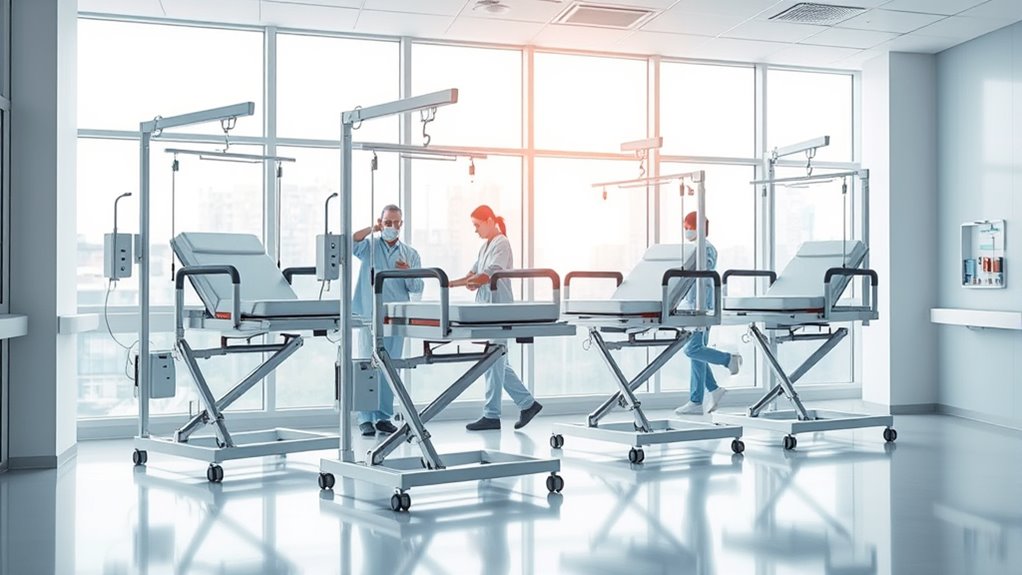

Heavy-duty patient lifts can make transfers more manageable, but the right choice depends on the person’s weight, mobility, home layout, and caregiver support. I rank the ProHeal Electric Full-Body Patient Lift as the best overall pick for its 500 lb capacity and six-point spreader bar; the RESTISLAND Electric Patient Lift stands out for its head-support sling, while the VOCIC Sit-to-Stand Lift suits people who can bear some weight. Buyers must balance lift capacity and transfer support against footprint, maneuverability, sling fit, and setup demands. Read on for the full breakdown of all 14 options and guidance on matching a lift to the transfers you actually need.

Get your wardrobe favorites delivered free with Prime
- Fast, free delivery on millions of items
- Prime Video, Amazon Music and more included
- Member-only deals all year
Key Takeaways
- Capacity alone does not determine suitability: the ProHeal and RESTISLAND models list 500 lb capacities, while the Electric Patient Lift with Sling lists 510 lb; sling fit, transfer posture, and caregiver technique still matter.
- Full-body lifts and sit-to-stand aids solve different problems: the VOCIC Sit-to-Stand model is for users with some weight-bearing ability, not a substitute for a full-body lift when a person cannot support themselves.
- Sling support is a meaningful differentiator: RESTISLAND specifies a head-support sling, while Carearise’s 3-in-1 package includes two slings, features that may shape fit and transfer options.
- Hydraulic models trade powered lifting for a different operating routine: the Vive and Protekt Onyx avoid relying on an electric lift motor, but buyers should weigh manual operation against caregiver effort and transfer frequency.
- Mobility and storage vary as much as lifting capacity: folding, wheeled, adjustable-base, and chair-style designs address different room layouts, so doorway clearance and storage space can outweigh a higher capacity figure.
| Vive Hydraulic Patient Lift with Sling for Home Use |  | Best Hydraulic Pick | Lift capacity: Up to 400 lbs | Base width: Adjustable from 24.5 to 31.4 in | Recommended doorway width: 28 in or wider | VIEW ON AMAZON | See Our Full Breakdown |
| VOCIC AX35 PRO Movable Electric Chair Lift |  | Best for Floor-to-Seat Recovery | Model: AX35-PRO-A-BK-X | Maximum weight capacity: 440 lbs | Frame material: Reinforced carbon steel | VIEW ON AMAZON | See Our Full Breakdown |
| Toptople Electric Patient Lift with Adjustable Base and Sling |  | Best for Frequent Powered Transfers | Model: TP-004 | Maximum weight capacity: 450 lbs | Base width: 23.6–41.3 in | VIEW ON AMAZON | See Our Full Breakdown |
| ProHeal Electric Full-Body Patient Lift with 6-Point Spreader Bar, 500 lb Capacity |  | Best for High-Capacity Facility Use | Type: Electric full-body patient lift | Weight capacity: 500 lbs | Spreader bar: 6-point | VIEW ON AMAZON | See Our Full Breakdown |
| VOCIC Sit-to-Stand Patient Lift and Transfer Aid |  | Best Sit-to-Stand Aid for Users with Upper-Body Support | Model: AY03 2026 Upgraded | Maximum weight capacity: 400 lbs (180 kg) | Frame material: Aluminum | VIEW ON AMAZON | See Our Full Breakdown |
| Toptople Electric Patient Lift with Sling, 450 lb Capacity and Adjustable Base |  | Best for Higher-Capacity Home Transfers | Maximum weight capacity: 450 pounds | Adjustable base width: 23.6–41.3 inches | Lifting cycles per charge: Up to 90 | VIEW ON AMAZON | See Our Full Breakdown |
| VOCIC AY05 Electric Patient Lift |  | Best for Floor-to-Bed Recovery | Maximum weight capacity: 330 pounds (150 kg) | Vertical range: 29.5–61 inches (75–155 cm) | Adjustable base width: 24.4–38 inches | VIEW ON AMAZON | See Our Full Breakdown |
| Carearise Electric Patient Lift with Sling, 350 lb Capacity |  | Best Plug-In Option for Tight Indoor Spaces | Lifting capacity: 350 pounds | Power: Plug-in | Power cord length: 10 feet | VIEW ON AMAZON | See Our Full Breakdown |
| Carearise 3-in-1 Electric Patient Lift with Two Slings |  | Best for Transfers and Walking Practice | Maximum weight recommendation: 330 pounds | Lifting force: 8000 N | Power source: Rechargeable battery | VIEW ON AMAZON | See Our Full Breakdown |
| VOCIC AX35 Wheeled Floor Lift Chair |  | Best for Short-Distance Floor Recovery | Maximum weight capacity: 350 pounds | Item weight: 32 pounds | Dimensions: 15.7 × 14 × 19.7 inches | VIEW ON AMAZON | See Our Full Breakdown |
| Proactive Medical Protekt Onyx Hydraulic Patient Body Lift |  | Best Hydraulic Pick for Home Care | Lift type: Hydraulic patient lift | Capacity: 450 lb | Base: Adjustable | VIEW ON AMAZON | See Our Full Breakdown |
| RESTISLAND Electric Patient Lift with Head-Support Sling, 500 lb Capacity |  | Best for Head-Supported Transfers | Weight capacity: 500 lb | Base width: 24–44.4 in | Boom lift range: 41.3–71.6 in | VIEW ON AMAZON | See Our Full Breakdown |
| Coisioke Folding Electric Patient Transfer Lift, 440 lb Capacity |  | Best Folding Electric Lift | Model: HBWJ02 | Maximum weight capacity: 440 lb | Product weight: 103 lb | VIEW ON AMAZON | See Our Full Breakdown |
| Electric Patient Lift with Sling, 510 lb Capacity |  | Best for High Capacity Without Battery Charging | Maximum capacity: 510 lb | Motor force: 6000 N | Lifting range: 20–79 in | VIEW ON AMAZON | See Our Full Breakdown |
| heavy duty patient lift | Maximum weight capacity | Frame material |
|---|---|---|
| Vive Hydraulic Patient Lift wi | — | — |
| VOCIC AX35 PRO Movable Electri | 440 lbs | Reinforced carbon steel |
| Toptople Electric Patient Lift | 450 lbs | Alloy steel |
| ProHeal Electric Full-Body Pat | — | — |
| VOCIC Sit-to-Stand Patient Lif | 400 lbs (180 kg) | Aluminum |
| Toptople Electric Patient Lift | 450 pounds | Alloy steel |
| VOCIC AY05 Electric Patient Li | 330 pounds (150 kg) | Q235 carbon steel |
| Carearise Electric Patient Lif | — | Alloy steel |
| Carearise 3-in-1 Electric Pati | — | Carbon steel |
| VOCIC AX35 Wheeled Floor Lift | 350 pounds | — |
| Proactive Medical Protekt Onyx | — | — |
| RESTISLAND Electric Patient Li | — | — |
| Coisioke Folding Electric Pati | 440 lb | — |
| Electric Patient Lift with Sli | — | — |
More Details on Our Top Picks
Vive Hydraulic Patient Lift with Sling for Home Use
For buyers who want a heavy-duty lift without a battery or motor, the Vive pairs a hydraulic mechanism with a stated 400-pound capacity. Controlled lifting and lowering can help caregivers manage transfers without relying on powered operation, while the included washable mesh sling has four anchor points and three handles for positioning. Its steel frame disassembles for transport, a practical advantage over the 80-pound Toptople TP-004, though the Vive still needs clear floor space to maneuver. The tradeoff is fit: the base adjusts from 24.5 to 31.4 inches, and the recommended doorway width is at least 28 inches, so narrow homes may rule it out. Choose this over an electric model when avoiding battery charging matters more than powered lifting.
Pros:- Supports users up to 400 pounds
- Hydraulic operation provides controlled lifting and lowering without battery charging
- Includes a breathable, water-resistant mesh sling with four anchor points and three handles
- Steel frame disassembles for transport
Cons:- Needs suitable doorway clearance and maneuvering room
- Hydraulic operation requires caregiver input rather than remote-controlled powered lifting
Best for: Home caregivers who want a 400-pound-capacity full-body lift with a washable sling and no battery to charge.
Not ideal for: People working in narrow hallways or doorways under 28 inches, or caregivers who prefer powered lifting over hydraulic operation.
- Lift capacity:Up to 400 lbs
- Base width:Adjustable from 24.5 to 31.4 in
- Recommended doorway width:28 in or wider
- Base length:43 in
- Lifting range:31–68 in
- Frame:Corrosion-resistant steel
- Sling:Machine-washable, breathable, water-resistant mesh; four anchor points and three handles
- Power source:Hydraulic
Our verdict“Choose the Vive if you want a portable hydraulic full-body lift with an included washable sling and can accommodate its clearance needs.”
VOCIC AX35 PRO Movable Electric Chair Lift
The AX35 PRO is a different kind of heavy-duty aid from the full-body sling lifts in this group: its cushioned seat and dual motors are intended to help an adult rise from the floor to a seated or standing position, with caster wheels for short indoor moves. The 440-pound capacity exceeds the Vive Hydraulic Patient Lift’s 400-pound limit, but capacity alone does not make this a substitute for a full-body sling transfer. Flip-up armrests and an adjustable safety belt support positioning, while the leather-covered seat offers a more chair-like surface than the Toptople Electric Patient Lift’s full-body sling setup. Its main limitation is the narrow use case: it is for short-distance mobility, and the supplied product details omit dimensions and battery information, making room fit and power planning harder.
Pros:- Rated for users up to 440 pounds
- Dual-motor lifting system
- Cushioned leather seat with flip-up armrests
- Adjustable safety belt and four caster wheels
Cons:- Designed for short-distance indoor movement rather than longer travel
- Dimensions and battery details are not provided in the product information
Best for: Caregivers seeking an indoor, wheeled aid for helping a user move from floor level to sitting or standing, with a chair-style cushioned seat.
Not ideal for: Caregivers who need full-body sling transfers between beds, wheelchairs, and commodes, or buyers who need published dimensions and battery details before choosing.
- Model:AX35-PRO-A-BK-X
- Maximum weight capacity:440 lbs
- Frame material:Reinforced carbon steel
- Seat:Leather material with sponge fill and wood base
- Motors:Dual motor
- Wheels:4 caster wheels
- Armrests:Flip-up
- Safety belt:Adjustable
- Intended use:Indoor
Our verdict“Pick the AX35 PRO for floor-to-seat assistance with a cushioned chair-style platform, not as a replacement for a full-body sling lift.”
Toptople Electric Patient Lift with Adjustable Base and Sling
The Toptople TP-004 makes a strong case for caregivers who want remote-controlled full-body transfers and a substantial 450-pound capacity. Its adjustable base spans 23.6 to 41.3 inches, giving it more width range than the Vive Hydraulic Patient Lift when positioning around furniture or a wheelchair. A removable battery is rated for up to 90 lifting cycles per charge, and emergency-stop and lockable-caster features add useful control during transfers. It also comes with a washable full-body sling, unlike the ProHeal Electric Full-Body Patient Lift, whose sling inclusion is not specified. The compromise is portability: at 80 pounds, this is a heavy unit to move or store, and high daily use may call for frequent charging despite the stated cycle count.
Pros:- Supports users up to 450 pounds
- Remote-controlled electric lifting reduces manual caregiver effort
- Adjustable base fits around different furniture and mobility equipment
- Includes a washable full-body sling, emergency stop, and lockable casters
Cons:- At 80 pounds, the lift may be difficult to move or store
- The battery’s stated cycle capacity may require frequent recharging with heavy daily use
Best for: Caregivers who need an electric full-body lift for regular transfers around beds, wheelchairs, sofas, or commodes and value an adjustable base.
Not ideal for: Buyers who need a lightweight lift to move between locations or cannot manage charging during frequent daily use.
- Model:TP-004
- Maximum weight capacity:450 lbs
- Base width:23.6–41.3 in
- Low-profile legs:4 in
- Battery capacity:Up to 90 lifting cycles per charge
- Frame material:Alloy steel
- Item weight:80 lbs
- Dimensions:35.7 × 24.2 × 46 in
- Included components:Full-body sling, caster, remote control
Our verdict“Choose the TP-004 for powered, full-body transfers and adjustable positioning if its 80-pound frame is manageable.”
ProHeal Electric Full-Body Patient Lift with 6-Point Spreader Bar, 500 lb Capacity
Among these five options, the ProHeal has the highest stated capacity at 500 pounds, making it the clearest fit for buyers whose first requirement is a higher load rating. Its electric full-body format supports floor lifts and transfers between beds, chairs, and commodes, while the 6-point spreader bar works with a variety of slings. Compared with the Toptople TP-004, the ProHeal offers a higher capacity and emergency manual lowering if power is lost; the Toptople, by contrast, lists a washable sling as included. ProHeal’s hands-free adjustable base and touch-button controls suit repeated home or facility transfers, but assembly is required and the sling is not specified as included. Buyers should confirm sling compatibility and availability before purchase.
Pros:- 500-pound stated weight capacity
- Supports floor lifts and transfers between beds, chairs, and commodes
- Emergency manual lowering provides a fallback if power is lost
- Six-point spreader bar and compatibility with ProHeal and other brand slings
Cons:- Sling inclusion is not specified
- Requires assembly
- Product details do not provide dimensions for checking fit
Best for: Home-care teams or facilities needing an electric full-body lift rated to 500 pounds, with manual lowering backup and sling flexibility.
Not ideal for: Buyers who need a confirmed included sling, want to avoid assembly, or need published dimensions to check room clearance.
- Type:Electric full-body patient lift
- Weight capacity:500 lbs
- Spreader bar:6-point
- Safety features:Clip-free sling hookups, dual rear locking casters, adjustable locking base, emergency manual lowering
- Controls:Touch-button controls
- Base adjustment:Hands-free adjustable base
- Warranty:3 years on frame
- Use:Home, nursing homes, and medical facilities
Our verdict“Choose the ProHeal when 500-pound capacity and manual lowering backup matter more than a confirmed included sling or ready-to-use setup.”
VOCIC Sit-to-Stand Patient Lift and Transfer Aid
This VOCIC is a sit-to-stand transfer aid, not a full-body patient lift, and that distinction should guide the choice. Its 400-pound capacity, padded split-seat cushions, adjustable knee pads, and foam-wrapped handgrips support transfers for people who can sit upright and use their upper body. The aluminum frame weighs 58 pounds and has a low 6 cm base, while locking casters help hold it in position. Compared with the VOCIC AX35 PRO, this model uses a split-seat transfer setup rather than a cushioned chair-style platform and dual motors. Its defining limitation is also a safety boundary: it has no safety belt and is not suited to people who cannot support themselves or are completely immobile. Choose a full-body sling lift, such as the Toptople TP-004, for those needs.
Pros:- Supports users up to 400 pounds
- Padded split-seat cushions and foam-wrapped handgrips
- Adjustable knee pads and low-profile base
- Locking casters help keep the unit in position
Cons:- Not suitable for users unable to sit upright and support their upper body
- Does not include or support a safety belt
- Weighs 58 pounds
Best for: Caregivers transferring an adult who can sit upright and support their upper body, but needs help standing and moving short distances indoors.
Not ideal for: People who are paralyzed, completely immobile, unable to sit upright or support their upper body, or who require a safety belt.
- Model:AY03 2026 Upgraded
- Maximum weight capacity:400 lbs (180 kg)
- Frame material:Aluminum
- Item weight:58 lbs
- Dimensions:31 × 17 × 43 in
- Knee pad adjustment:2 levels, 51–56 cm
- Base height:6 cm
- Casters:3-inch rear and 4-inch front, locking
- Safety belt:Not included or supported
Our verdict“Choose this VOCIC for assisted sit-to-stand transfers only when the user can actively support their upper body and does not need a safety belt.”
Toptople Electric Patient Lift with Sling, 450 lb Capacity and Adjustable Base
The 450-pound capacity gives this Toptople a wider weight range than the VOCIC AY05 and the 330-pound Carearise S1, making it a stronger fit when those limits are too low. Its adjustable 23.6–41.3-inch base can narrow for doorways and widen for positioning, so it adapts to more spaces than a fixed-width lift. The removable battery is rated for up to 90 lifting cycles per charge, more than the AY05’s 40 cycles, and the included washable sling helps with routine care. The tradeoff is mobility: at 60 pounds, it may be a challenge to reposition or store, and its listed specs do not give a vertical lifting range. I’d choose it for capacity and battery endurance, not frequent carrying between locations.
Pros:- 450-pound maximum capacity exceeds the VOCIC AY05 and Carearise S1 limits
- Base adjusts from 23.6 to 41.3 inches for varied doorway and positioning needs
- Removable battery is rated for up to 90 lifting cycles per charge
- Includes a washable sling, lockable casters, and emergency stop
Cons:- At 60 pounds, it may be difficult to move or store regularly
- No vertical lifting range is provided in the listed specifications
Best for: Home caregivers who need a powered lift rated for up to 450 pounds, an adjustable base, and multiple transfers between charges.
Not ideal for: Caregivers who need a lightweight lift they can frequently carry or buyers who need a specified vertical lifting range before checking fit.
- Maximum weight capacity:450 pounds
- Adjustable base width:23.6–41.3 inches
- Lifting cycles per charge:Up to 90
- Frame material:Alloy steel
- Item weight:60 pounds
- Base height:4 inches
- Dimensions:31 × 22.6 × 45 inches
- Included component:Sling
Our verdict“Choose this Toptople when a higher stated capacity and longer cycle count matter more than a lighter frame.”
VOCIC AY05 Electric Patient Lift
The foldable design and stated 29.5–61-inch vertical range make the VOCIC AY05 the most explicitly floor-recovery-oriented powered lift in this group. Its mesh sling includes head support and padded legs, details that matter when lifting from a low position, while the manual emergency crank offers a way to lower the user if power fails. The detachable handset can be charged separately, a practical distinction from the plug-in Carearise CPL-350, which depends on access to an outlet during use. The main compromise is capacity: at 330 pounds, it falls below the Toptople’s 450-pound rating and may not fit heavier users. Its 40-cycle battery rating is also lower than the Toptople’s stated 90 cycles. I’d check the lift’s dimensions against the room and bed before choosing it.
Pros:- Foldable frame is suited to home storage
- Specified vertical range covers 29.5 to 61 inches
- Manual emergency crank provides a non-electric lowering method
- Breathable sling includes head support and padded legs
Cons:- 330-pound capacity is lower than the Toptople’s 450-pound rating
- Rated for 40 lifting cycles per charge, fewer than the Toptople’s stated 90
- Room and bed dimensions need to be checked for fit
Best for: Home caregivers who need a foldable electric lift for floor-to-bed recovery and whose user is within its 330-pound capacity.
Not ideal for: Buyers needing a capacity above 330 pounds or a lift rated for frequent transfers beyond 40 cycles per charge.
- Maximum weight capacity:330 pounds (150 kg)
- Vertical range:29.5–61 inches (75–155 cm)
- Adjustable base width:24.4–38 inches
- Lifting cycles per charge:40
- Battery charge time:3 hours
- Frame material:Q235 carbon steel
- Design:Foldable
- Included components:Control box, breathable mesh sling, manual override crank
Our verdict“Pick the AY05 for foldable floor-recovery transfers and manual emergency lowering, provided its capacity and dimensions suit the user and room.”
Carearise Electric Patient Lift with Sling, 350 lb Capacity
The Carearise CPL-350 makes the most sense where a narrow adjustable base and an available outlet matter more than battery freedom. Its 10-foot power cord gives caregivers some working reach across a room, while the washable breathable sling has fixed head support. Compared with the battery-powered VOCIC AY05, this lift avoids charging-cycle planning but needs a plug-in power source during use. Its 350-pound limit is above the AY05 and Carearise S1 ratings, yet below the Toptople’s 450-pound capacity. Emergency manual descent and rotating safety hooks add useful safeguards, but the product is listed for indoor use only and provides just one height position. I’d favor it for routine indoor transfers in a space where the cord can reach, rather than for rooms without convenient outlets or buyers seeking multiple height settings.
Pros:- Adjustable narrow base is designed for tight spaces and household doorways
- 10-foot cord supports transfers across a room
- Includes a breathable, machine-washable sling with fixed head support
- Manual emergency descent and 360-degree rotating safety hooks are included
Cons:- Requires a plug-in power source during use
- Listed for indoor use only
- Provides one height position
Best for: Caregivers making indoor transfers in a compact home or clinical room with a reachable outlet and a user weighing no more than 350 pounds.
Not ideal for: Buyers who need battery-powered operation, outdoor use, multiple height positions, or a capacity closer to the Toptople’s 450 pounds.
- Lifting capacity:350 pounds
- Power:Plug-in
- Power cord length:10 feet
- Frame material:Alloy steel
- Sling:Breathable, machine-washable polyester with fixed head support
- Safety features:Emergency manual descent and 360° rotating safety hooks
- Base:Adjustable narrow base
- Height positions:1
Our verdict“Choose the CPL-350 for cord-powered indoor transfers where its narrow base and 350-pound limit fit the care setting.”
Carearise 3-in-1 Electric Patient Lift with Two Slings
Unlike the standard transfer focus of the Toptople or Carearise CPL-350, the Carearise S1 is designed to cover body transfers and walking-assist practice with two specialized slings. That broader use may suit a rehabilitation routine that calls for more than moving between a bed and chair. It also includes a commode sling, adjustable base, locking wheels, emergency stop, and manual emergency lowering. The tradeoff is substantial: at 90 pounds, it is heavier than the 60-pound Toptople and is less appealing for caregivers who need to reposition or store a lift often. Its maximum weight recommendation is 330 pounds, and it is intended for indoor use. I’d shortlist it for users whose care plan calls for its distinct sling options, not for buyers seeking a simple, lighter transfer lift.
Pros:- Combines body transfers with walking-assist practice
- Includes both commode and walking-assist slings
- Emergency stop and manual emergency lowering provide backup controls
- Adjustable base and locking wheels support positioning
Cons:- At 90 pounds, it is the heaviest option among the five products reviewed here
- 330-pound maximum weight recommendation is lower than the Toptople’s 450-pound capacity
- Intended for indoor use
Best for: Indoor caregivers supporting a user within the 330-pound recommendation who needs both transfer assistance and walking-practice support.
Not ideal for: Caregivers who need a lighter lift for frequent repositioning, outdoor use, or a capacity above 330 pounds.
- Maximum weight recommendation:330 pounds
- Lifting force:8000 N
- Power source:Rechargeable battery
- Included slings:Commode sling and walking-assist sling
- Frame material:Carbon steel
- Dimensions:43.31 × 23.62 × 82.68 inches
- Item weight:90 pounds
- Usage:Indoor
Our verdict“Choose the S1 when its two sling types and walking-practice function justify the added weight and 330-pound limit.”
VOCIC AX35 Wheeled Floor Lift Chair
The VOCIC AX35 is a wheeled floor lift chair, not a sling-based patient lift like the Toptople or VOCIC AY05. Its purpose is narrower: helping an adult rise from the floor and move a short distance between rooms. The 32-pound frame, folding seat, and folding armrests make it easier to store than the 60-pound Toptople or 90-pound Carearise S1, while four locking wheels and a T-shaped base support controlled positioning. Its 350-pound capacity sits between those heavier-duty sling lifts, but it does not provide their adjustable lifting base or transfer-sling setup. Basic assembly is required, and the maker limits its intended role to short-distance movement rather than general mobility. I’d choose it for floor recovery when a chair-style aid suits the task; skip it for routine bed, wheelchair, or commode transfers.
Pros:- 32-pound weight is lower than the Toptople and Carearise S1 lifts
- Folding seat and armrests help with storage
- Four wheels and a T-shaped base support short-distance positioning
- Supports users up to 350 pounds
Cons:- Designed for floor recovery and short-distance transfers, not general long-distance mobility
- Does not provide the sling-based transfer setup of the Toptople or VOCIC AY05
- Basic assembly is required
Best for: Households seeking a relatively light, storable chair-style aid for helping an adult recover from the floor and move short distances indoors.
Not ideal for: Caregivers needing a sling lift for regular bed, wheelchair, or commode transfers, or a device for longer-distance mobility.
- Maximum weight capacity:350 pounds
- Item weight:32 pounds
- Dimensions:15.7 × 14 × 19.7 inches
- Seat depth:15.7 inches
- Material:Aluminum legs
- Wheels:4
- Base shape:T-shaped
- Usage:Indoor
Our verdict“Pick the AX35 for short indoor floor-recovery moves when a chair-style aid fits better than a full patient lift.”
Proactive Medical Protekt Onyx Hydraulic Patient Body Lift
The Protekt Onyx is the simplest match here for buyers who want a hydraulic lift rather than a powered unit. Its 450-pound capacity and adjustable base suit home transfers where caregivers can provide the effort needed to operate the hydraulics. Compared with the RESTISLAND Electric Patient Lift, it avoids reliance on a rechargeable battery, but the tradeoff is that lifting requires manual effort instead of powered controls. The product details do not specify a sling, dimensions, or a lifting range, so buyers should confirm sling compatibility and room fit before choosing it. I’d place it ahead of more feature-heavy electric options only when straightforward hydraulic operation and home-care use matter more than reduced caregiver exertion.
Pros:- 450-pound stated capacity
- Hydraulic operation provides gradual movement
- Adjustable base supports different transfer positions
- Designed for home-care transfers
Cons:- Hydraulic operation can require substantial caregiver effort
- Product details do not specify an included sling
- Dimensions and lifting range are not provided
Best for: Home caregivers seeking a 450-pound-capacity hydraulic lift with an adjustable base and who can manage manual operation.
Not ideal for: Caregivers who need powered lifting to reduce physical effort, or buyers who need confirmed sling, dimension, or lifting-range details before purchase.
- Lift type:Hydraulic patient lift
- Capacity:450 lb
- Base:Adjustable
- Intended use:Home care
- Operation:Hydraulic
- Transfer purpose:Patient body transfers
Our verdict“Choose the Protekt Onyx for home transfers when a hydraulic lift and adjustable base suit your care routine better than powered operation.”
RESTISLAND Electric Patient Lift with Head-Support Sling, 500 lb Capacity
The RESTISLAND stands out for pairing a 500-pound capacity with an included six-point sling that has head support and an open bottom. That combination may suit caregivers transferring people who need upper-body support or easier access for personal care. Its base adjusts from 24 to 44.4 inches, while dual controls offer operating access from multiple angles. Compared with the Coisioke Folding Electric Patient Transfer Lift, the RESTISLAND provides a higher stated capacity and a head-support sling, but it weighs 105.8 pounds and needs a doorway wider than 25 inches. It also cannot operate while charging. The emergency stop and manual descent add useful backup options, though buyers should check route width and plan battery charging between transfers.
Pros:- 500-pound capacity
- Includes a breathable, machine-washable six-point sling with head support and open bottom
- Adjustable base and dual controls support varied transfer setups
- Emergency stop and manual emergency descent provide backup controls
Cons:- Cannot be used while charging
- Requires a doorway wider than 25 inches
- Weighs 105.8 pounds, making frequent relocation difficult
Best for: Caregivers who need a powered lift for a person requiring head support, a washable sling, and up to 500 pounds of capacity.
Not ideal for: Households with narrow doorways, caregivers who need to use the lift while it charges, or anyone who needs a lighter unit to move frequently.
- Weight capacity:500 lb
- Base width:24–44.4 in
- Boom lift range:41.3–71.6 in
- Sling:Six-point, breathable, machine-washable, with head support and open bottom
- Controls:Dual control
- Safety features:Locking rear wheels, emergency stop, and manual emergency descent
- Battery:Rechargeable; included
- Product dimensions:46.6 × 24 × 41.3 in
- Item weight:105.8 lb
Our verdict“Pick the RESTISLAND when head support, a washable included sling, and higher capacity matter more than low weight or charging flexibility.”
Coisioke Folding Electric Patient Transfer Lift, 440 lb Capacity
For buyers short on storage space, the Coisioke’s folding design gives it a distinct role among these heavy-duty lifts. Its adjustable full-range base and 360-degree rotating jib arm support transfers between the floor, bed, and wheelchair, while the rechargeable battery is rated for up to 120 lifting operations per charge. Compared with the RESTISLAND, it has a lower 440-pound capacity and its included sling is semi-wrapped rather than a head-support model; in return, it folds for storage and has an IPX6-rated motor. At 103 pounds, it is still a substantial piece of equipment, and assembly is required. I’d favor it when fold-away storage and a broad transfer range matter more than maximum capacity or a lighter frame.
Pros:- Folding design supports more compact storage
- Adjustable base and 360-degree rotating jib arm serve varied transfer positions
- Battery is rated for up to 120 lifting operations per charge
- IPX6 waterproof rating for the MOTECK motor
Cons:- 103-pound product weight makes routine relocation demanding
- Assembly is required
- 440-pound capacity is lower than the RESTISLAND and 510-pound electric lift in this group
Best for: Caregivers who need a powered lift that folds for storage and supports transfers among floor, bed, and wheelchair.
Not ideal for: Buyers needing more than 440 pounds of capacity, a head-support sling, or a lightweight lift that is easy to move between rooms.
- Model:HBWJ02
- Maximum weight capacity:440 lb
- Product weight:103 lb
- Motor:MOTECK; IPX6 waterproof rating
- Battery capacity:Up to 120 lifting operations per full charge
- Jib arm:360° rotating
- Base:Adjustable, full-range open base
- Included components:Chair and semi-wrapped sling
- Usage:Indoor and outdoor
Our verdict“Choose the Coisioke if foldable storage and flexible transfer positioning outweigh its lower capacity and heavy frame.”
Electric Patient Lift with Sling, 510 lb Capacity
This lift offers the highest stated capacity in this group at 510 pounds, with a six-point sling and a 20-to-79-inch lifting range for transfers involving beds, wheelchairs, floors, and bathrooms. Its plug-in operation avoids the battery charging routine required by the RESTISLAND and Coisioke, while manual emergency lowering provides a backup if powered lifting is unavailable. That convenience comes with a fixed power-cord constraint: caregivers need an outlet within reach, and the supplied details give no dimensions or storage information for planning room access. Compared with the Protekt Onyx, it reduces the physical work of hydraulic lifting, but it depends on mains power during normal use. I’d choose it when capacity and broad height adjustment lead the checklist, and skip it where outlet placement is unreliable.
Pros:- Highest stated capacity among these four lifts at 510 pounds
- 20-to-79-inch lifting range covers varied transfer heights
- Plug-in operation avoids rechargeable-battery downtime
- Six-point sling and manual emergency lowering are included
Cons:- Requires access to a power outlet during operation
- No product dimensions or storage details are provided
- Power cord may limit where transfers can take place
Best for: Caregivers seeking a powered lift with a 510-pound stated capacity, broad lifting range, and no rechargeable-battery charging routine.
Not ideal for: Homes or care settings without convenient outlet access, or buyers who need product dimensions and storage details before confirming fit.
- Maximum capacity:510 lb
- Motor force:6000 N
- Lifting range:20–79 in
- Power:Plug-in operation
- Power cord length:3.5 m
- Sling:Breathable, easy-to-clean six-point sling
- Emergency lowering:Manual lowering function
Our verdict“Choose this lift for its 510-pound capacity and wide lifting range if a nearby outlet and unknown storage footprint work for your space.”

How We Picked
I compared the 14 listed lifts by the factors that shape safe, workable transfers: stated weight capacity, lift type, sling or spreader-bar details, base adjustability, portability, and intended user mobility. I also considered how much setup and caregiver effort each design may call for, along with whether the listed features address specific needs such as head support, multiple sling styles, folding storage, or sit-to-stand transfers. Capacity figures are product specifications, not a substitute for checking fit or getting clinical guidance.
The ranking favors options with a clear role and a useful combination of support, capacity, and transfer flexibility. The ProHeal leads for its 500 lb capacity and six-point spreader bar; specialized choices rank higher for narrower needs, such as partial weight-bearing or head support. Hydraulic models, compact chair-style lifts, and packages with extra slings may suit particular homes, but no one design is right for every user. Where details such as dimensions, battery performance, or included sling sizing are not specified in the product names, I treat those as questions buyers should verify rather than assume.
| heavy duty patient lift | Frame material |
|---|---|
| Vive Hydraulic Patient Lift wi | — |
| VOCIC AX35 PRO Movable Electri | Reinforced carbon steel |
| Toptople Electric Patient Lift | Alloy steel |
| ProHeal Electric Full-Body Pat | — |
| VOCIC Sit-to-Stand Patient Lif | Aluminum |
| Toptople Electric Patient Lift | Alloy steel |
| VOCIC AY05 Electric Patient Li | Q235 carbon steel |
| Carearise Electric Patient Lif | Alloy steel |
| Carearise 3-in-1 Electric Pati | Carbon steel |
| VOCIC AX35 Wheeled Floor Lift | — |
| Proactive Medical Protekt Onyx | — |
| RESTISLAND Electric Patient Li | — |
| Coisioke Folding Electric Pati | — |
| Electric Patient Lift with Sli | — |
Factors to Consider When Choosing Heavy Duty Patient Lifts
Choosing a heavy-duty lift is a care-planning decision, not just a capacity comparison. I would start with the person’s transfer ability and the caregiver’s routine, then check whether the equipment can safely fit and operate in the actual home.
Match the lift type to transfer ability
A full-body lift supports users who cannot reliably bear weight or help with a transfer, while a sit-to-stand aid depends on the user being able to participate. Misreading that distinction can leave a caregiver with equipment that does not suit the person’s needs. Ask a clinician or qualified equipment professional to assess transfer ability, posture, and any changing health conditions before choosing. Consider whether the lift will be used for bed-to-chair transfers only or for several transfer points during the day. If needs may change, ask whether a full-body option is the more adaptable choice. A specialized sit-to-stand device can be useful, but its narrower role is a real tradeoff.
Treat capacity as a limit, not a fit guarantee
Compare the user’s weight with the lift’s rated capacity and follow the manufacturer’s instructions; do not treat a capacity figure as a target operating load. Allow room for clothing, accessories, and any other items the instructions say to include. A higher rating does not confirm that the sling dimensions, seat opening, or support points will fit the individual. Check the sling’s size range and compatibility with the specific lift before ordering, especially when considering replacement or alternate slings. Also ask a supplier how capacity is affected by the full setup and whether the rating applies to all included configurations. The common mistake is buying by the largest number while overlooking the person’s body shape and positioning needs.
Plan the route, turning space, and storage
Measure doorways, bed and chair access, turning areas, and the path between transfer locations before selecting a wheeled lift. A base that adjusts to straddle furniture may help at the point of transfer, but it does not make a narrow hallway wider. Check the lift’s assembled dimensions and turning requirements rather than relying on a product label such as folding or compact. Look for thresholds, rugs, tight corners, and surfaces that could complicate movement. If storage matters, confirm how the lift folds, whether disassembly is required, and where the parts will be kept. A model that works in a large care room may be impractical in a crowded bedroom.
Compare caregiver effort and power arrangements
Electric lifts reduce the need to raise a person using a hand pump, but they still require positioning, sling attachment, steering, and attention to controls. Hydraulic models avoid dependence on an electric lifting motor, yet manual pumping can add physical work for caregivers. Ask about battery charging, expected operating routine, emergency lowering, and what happens if power is unavailable. Check whether controls can be reached and understood by the intended caregiver, including during a stressful transfer. A lift used several times daily may justify prioritizing a powered system and a clear charging plan. For occasional use, buyers may weigh that convenience against upkeep, storage, and the caregiver’s ability to operate the chosen design.
Verify sling design, fit, and transfer compatibility
The sling is part of the transfer system, not an interchangeable accessory to choose later without checking. Confirm which sling styles are included, which sizes are available, and whether the lift’s spreader bar supports the attachment points required by that sling. Head support can matter for users who cannot hold their head upright, while other people may need a different cut or support arrangement. Ask a trained professional to show caregivers how to position and attach the sling, since incorrect placement can compromise comfort and security. Extra slings may help when laundering or when different transfers call for different support, but only if they are compatible and properly sized. Do not assume a bundle’s sling will fit every user.
Budget for training, upkeep, and changing needs
The lift itself is only one part of a safe setup: training, compatible slings, maintenance, and accessible storage all affect day-to-day use. Ask the seller or care team about service support, replacement parts, inspection intervals, and warranty coverage before committing. Caregiver training is especially useful when several people will operate the lift or when transfers involve more than one room. Consider whether the equipment can accommodate likely changes in mobility without forcing a new purchase. A feature-rich model may be worthwhile when it solves a real recurring need, but unused options add complexity without improving routine care. Write down the intended transfer tasks and ask a qualified professional to confirm the proposed setup.
Frequently Asked Questions
Does a 500 lb or higher capacity rating mean a lift will fit every larger-bodied user?
No. A capacity rating indicates a stated load limit, not a guarantee of fit or comfort for every body shape. Sling dimensions, attachment points, seat opening, and support needs can vary, so verify the user’s measurements against the manufacturer’s sling guidance. Check that the sling is approved for the exact lift model and configuration. A clinician or equipment professional can help assess positioning and fit before the first transfer.
Should I choose a full-body lift or a sit-to-stand lift?
Base the choice on the person’s ability to bear weight and participate safely, rather than on convenience alone. Sit-to-stand devices such as the VOCIC option are intended for users who can contribute to standing; they are not a replacement for full-body support when that ability is absent or unreliable. A full-body lift is generally the category to discuss when the person cannot support themselves through the transfer. Mobility can change, so ask a clinician to assess the user’s current function and likely care needs before selecting a type.
Can one patient lift be used for transfers between a bed, wheelchair, and toilet?
Possibly, but the answer depends on the lift’s base clearance, dimensions, sling design, and the layout around each transfer point. Measure the space under and beside the bed, the wheelchair’s frame, and the route to the bathroom. Confirm that the lift can approach each surface and that its sling is appropriate for the transfer task. Some toilet transfers call for a specific sling design and caregiver technique, so ask a qualified professional to confirm compatibility rather than assuming one setup covers every use.
What should I check before choosing an electric lift for a home with narrow rooms?
Measure doorways, corridor widths, turning areas, and clearance around the bed and chair, then compare those figures with the lift’s full dimensions. A folding frame may help with storage but does not guarantee easy steering through tight spaces. Check the base width and whether it adjusts around furniture, as well as any thresholds or floor coverings on the route. If possible, ask the supplier or care team to assess the home layout before purchase. A lift that fits the room but cannot turn between rooms may not solve the daily transfer problem.
Is a hydraulic patient lift a sensible choice if the home has unreliable power?
A hydraulic model avoids relying on an electric motor for lifting, which may appeal where charging or power access is a concern. The tradeoff is that the caregiver operates a manual pump, adding effort that can matter with frequent transfers or limited caregiver strength. Compare the expected transfer schedule and ask for a demonstration of the pump and lowering controls. Electric models may still have backup procedures, but those details vary and should be confirmed with the manufacturer. Choose based on caregiver capability and the written operating instructions, not on the power source alone.
Conclusion
For most buyers comparing this group, I would start with the ProHeal Electric Full-Body Patient Lift as the best overall choice because its listed 500 lb capacity and six-point spreader bar give it a clear full-body-support role. The Vive Hydraulic Patient Lift is my best value-style pick for buyers who prefer a manual hydraulic setup and can manage the pump; it is not the right fit if minimizing caregiver effort is the priority. For a premium-feature choice, the RESTISLAND Electric Patient Lift stands out for its head-support sling and 500 lb capacity, pending confirmation that the sling fits the user. Beginners should first seek professional setup and training, then consider a straightforward full-body electric model such as the ProHeal rather than choosing by capacity alone. For specific needs, I would match the VOCIC Sit-to-Stand Lift to users able to bear some weight, the Carearise 3-in-1 to buyers who can use its two included slings, and a folding or chair-style option to homes where storage and maneuvering dominate. Before deciding, verify measurements, sling compatibility, service support, and the transfer plan with a qualified care professional.
Columbus Day / Indigenous Peoples' Day Picks
long weekend sales
As an affiliate, we earn on qualifying purchases.