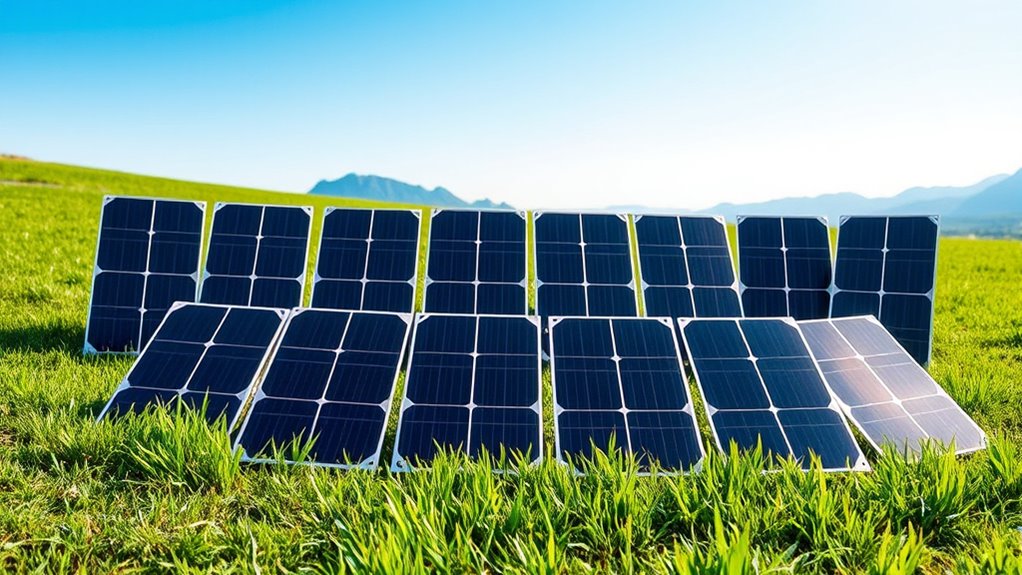

For a foldable solar panel with USB output, my best overall pick is the FlexSolar 20W: its USB-A and USB-C ports make it a versatile middle ground for everyday device charging. The BigBlue 28W with a digital ammeter stands out for monitoring output, while the FlexSolar 100W IP67 is better suited to buyers who need more panel capacity and weather protection. The main tradeoff is portability versus charging potential: compact 10W panels are easier to carry but less suited to keeping several devices topped up, while larger panels need more space and favorable sun. USB port types, real-world sunlight, and the device’s own charging limits also affect results. Read on for the full breakdown of all 14 options and help matching a panel to your needs.

Get your wardrobe favorites delivered free with Prime
- Fast, free delivery on millions of items
- Prime Video, Amazon Music and more included
- Member-only deals all year
Key Takeaways
- The FlexSolar 20W is the lineup’s most balanced pick, pairing USB-A and USB-C with a more portable format than the 40W-and-up panels.
- The two 10W choices prioritize packability; they make more sense for occasional phone top-ups than for charging several devices or replacing a power bank.
- The BigBlue 28W ammeter model adds output visibility, a useful distinction for buyers who want to see how sun and panel position affect charging.
- Higher rated wattage does not automatically mean faster USB charging; device limits, port specifications, sunlight, and cable choice still shape the result.
- The 100W and 200W options serve a different scale of use: they suit buyers who can carry and position larger panels, not those seeking the lightest everyday charger.
| FlexSolar 10W Foldable Solar Charger with USB-A Port |  | Best Compact USB-A Pick | Maximum output: 10W | Output voltage: 5V | Maximum current: 2A | VIEW ON AMAZON | See Our Full Breakdown |
| FlexSolar 60W Foldable Portable Solar Panel Charger |  | Best for Mixed USB and DC Charging | Maximum power: 60W | USB-A output: QC3.0, up to 18W | USB-C output: PD3.0, up to 40W | VIEW ON AMAZON | See Our Full Breakdown |
| FlexSolar 20W Foldable Solar Panel Charger with USB-A and USB-C |  | Best for USB-C on a Light Load | Listed maximum power: 15W in product details; title states 20W | Output: 5V USB-A and USB-C | Amperage capacity: 3A | VIEW ON AMAZON | See Our Full Breakdown |
| FlexSolar 40W Foldable Solar Panel Charger |  | Best Balanced Mid-Size Panel | Maximum power: 40W | USB-A output: QC 3.0, up to 18W | USB-C output: PD 2.0, up to 18W | VIEW ON AMAZON | See Our Full Breakdown |
| ZOUPW 100W Foldable Portable Solar Panel |  | Best for Power Stations and Direct USB | Maximum power: 100W | USB ports: 1 USB-C and 2 USB-A | Connectors: DC8020, XT60, Anderson, DC7909/8 mm, DC5521 | VIEW ON AMAZON | See Our Full Breakdown |
| BigBlue 28W Foldable Solar Panel Charger with Digital Ammeter |  | Best for Monitoring USB Output | Maximum power: 28 W | Solar conversion efficiency: 25.4% | Outputs: USB-A (5V/2.4A max); USB-C (3A max) | VIEW ON AMAZON | See Our Full Breakdown |
| FlexSolar 25W Portable Solar Panel Charger with USB-A and USB-C Ports |  | Best for Rough-Weather Portability | Maximum power: 25 W | Photovoltaic efficiency: 23.2% | Ports: USB-A and USB-C | VIEW ON AMAZON | See Our Full Breakdown |
| FlexSolar 100W Foldable Portable Solar Panel Charger, IP67 Waterproof |  | Best for Higher-Power USB-C Charging | Maximum power: 100 W | Efficiency: 23%+ | Outputs: 45W PD 3.0 USB-C; 18W USB-A; 100W DC | VIEW ON AMAZON | See Our Full Breakdown |
| Renogy 200W Portable Solar Panel |  | Best for High-Capacity USB and Power-Station Use | Power: 200 W | Efficiency: 25% | Cell type: N-type monocrystalline silicon | VIEW ON AMAZON | See Our Full Breakdown |
| BLAVOR 10W Foldable Portable Solar Charger |  | Best Compact USB Pick | Maximum power: 10 W | Maximum amperage: 2 A | Output voltage: 5 V | VIEW ON AMAZON | See Our Full Breakdown |
| SOLUPUP 30W Foldable Solar Panel Charger |  | Best for Simple Dual-Port Charging | Maximum power: 30 W | USB-A output: 5 V/3 A, up to 15 W | USB-C output: 5 V/3 A, up to 15 W | VIEW ON AMAZON | See Our Full Breakdown |
| ZeroKor 30W Foldable Portable Solar Panel Charger |  | Best for Output Versatility | Maximum power: 30 W | DC output: 18 V/1.67 A, 30 W max | USB-C output: 5 V/3 A, 9 V/3 A, 12 V/2.5 A, 15 V/2 A | VIEW ON AMAZON | See Our Full Breakdown |
| BigBlue 28W Portable Solar Panel Charger with Dual USB-C and USB-A |  | Best for Charging Multiple USB Devices | Power: 28 W | Ports: 2 USB-C and 1 USB-A | Maximum output: 5 V/3 A per port; 5 V/4.8 A combined | VIEW ON AMAZON | See Our Full Breakdown |
| FlexSolar 10W Foldable USB Solar Panel Charger |  | Best Compact, Lightweight Pick | Maximum power: 10 W | USB output: USB-A, up to 5 V/2 A | Energy conversion rate: 24% | VIEW ON AMAZON | See Our Full Breakdown |
| foldable solar panel usb output | Weight | Folded dimensions | Maximum power |
|---|---|---|---|
| FlexSolar 10W Foldable Solar C | 0.66 lbs (300 g) | 8.8 × 7.6 × 0.7 inches | — |
| FlexSolar 60W Foldable Portabl | 1.2 kg (2.6 lbs) | 12 × 9.8 × 0.7 inches | 60W |
| FlexSolar 20W Foldable Solar P | 13.92 oz (396 g) | 8.7 × 8.5 × 1.2 inches | — |
| FlexSolar 40W Foldable Solar P | 1.76 lbs (0.8 kg) | 8.0 × 11.1 × 1.8 inches | 40W |
| ZOUPW 100W Foldable Portable S | 9.5 lbs | 24.13 × 21.06 × 1.77 inches | 100W |
| BigBlue 28W Foldable Solar Pan | 1.47 lb (595 g) | 40.6 × 11 × 0.2 in | 28 W |
| FlexSolar 25W Portable Solar P | 1.2 lb | — | 25 W |
| FlexSolar 100W Foldable Portab | 4.1 lb (1.85 kg) | 12.99 × 10.43 × 2.17 in | 100 W |
| Renogy 200W Portable Solar Pan | 13.9 lb | — | — |
| BLAVOR 10W Foldable Portable S | 12.96 oz | 7.4 × 7.5 × 1 in | 10 W |
| SOLUPUP 30W Foldable Solar Pan | 2.4 lb | — | 30 W |
| ZeroKor 30W Foldable Portable | 1.53 lb | 10.3 × 8.3 × 1.18 in | 30 W |
| BigBlue 28W Portable Solar Pan | 1.5 lb | 11 × 6 × 1.4 in | — |
| FlexSolar 10W Foldable USB Sol | 0.66 lb (300 g) | 7.6 × 8.8 × 0.7 in | 10 W |
More Details on Our Top Picks
FlexSolar 10W Foldable Solar Charger with USB-A Port
For a small panel focused on basic USB-A charging, this 10W FlexSolar is the simplest carry. At 0.66 pounds and folded to 8.8 × 7.6 inches, it takes up less room than the 20W FlexSolar, making it easier to add to a day-hiking kit. Its IP67-rated panel and ETFE surface suit outdoor packing, while the included carabiners let you hang it for exposure to sunlight.
The tradeoff is capacity: its single USB-A output is a better fit for a phone or small device than for charging several gadgets or a larger power bank quickly. Unlike the FlexSolar 40W, it has no USB-C or DC output, and it stores no energy, so a cloud passing overhead can interrupt charging. Choose it for minimum bulk, not versatility or dependable charging in changing light.
Pros:- Lightweight 0.66-pound design folds down for compact packing
- USB-A output supports 5V USB devices
- IP67-rated panel with an ETFE surface is suited to outdoor use
- Two carabiners make it easier to hang in a sunny spot
Cons:- Single USB-A output limits device and connection flexibility
- 10W maximum output is modest for larger devices or faster recharging
- Does not store electricity, and output depends on direct sunlight
Best for: Day hikers and minimalist campers who want a lightweight panel for charging one 5V USB-A device in direct sunlight.
Not ideal for: Travelers who need USB-C, multiple output types, higher charging capacity, or stored power for use after sunset.
- Maximum output:10W
- Output voltage:5V
- Maximum current:2A
- Connector:USB-A
- Cell material:Monocrystalline silicon
- Water resistance:IP67
- Folded dimensions:8.8 × 7.6 × 0.7 inches
- Weight:0.66 lbs (300 g)
Our verdict“Pick this compact FlexSolar for occasional USB-A charging on lightweight outings, but choose the FlexSolar 20W if you want USB-C and more output.”
FlexSolar 60W Foldable Portable Solar Panel Charger
The FlexSolar 60W earns its place for buyers who need more than USB output: it pairs USB-A and USB-C with several DC connectors for compatible power stations and devices. Its USB-C PD3.0 output is rated up to 40W, giving it more headroom for compatible gear than the USB-C port on the FlexSolar 40W. The folded 12 × 9.8-inch format is still packable for car camping, although its 2.6-pound weight is a step up from smaller panels.
That extra flexibility comes with setup compromises. It has no kickstand, so you need another way to position it toward the sun, and the junction box is not waterproof. The product information also differs on its water-protection rating, listing IP65 in the description and IP67 in the title and specifications. It is a strong fit for varied connections, but less appealing than the 40W if straightforward positioning and a lighter load matter more.
Pros:- USB-A, USB-C, and DC outputs cover a wide range of compatible devices
- USB-C PD3.0 output is rated up to 40W
- Multiple DC connector types support compatible power stations
- Folds to a relatively compact 12 × 9.8-inch size
Cons:- At 2.6 pounds, it is heavier than the 10W and 20W FlexSolar panels
- No kickstand, so positioning the panel takes extra effort
- Junction box is not waterproof, and the stated protection rating is inconsistent
Best for: Car campers and road-trip travelers who want USB-A, USB-C, and DC connections from one foldable panel.
Not ideal for: Backpackers prioritizing low weight, or users who need an integrated kickstand or a clearly specified waterproof junction box.
- Maximum power:60W
- USB-A output:QC3.0, up to 18W
- USB-C output:PD3.0, up to 40W
- DC output:Up to 60W at 20–28V
- Connectors:Anderson, DC5521, DC7909, USB-A, USB-C, XT-60
- Weight:1.2 kg (2.6 lbs)
- Folded dimensions:12 × 9.8 × 0.7 inches
- Kickstand:None
Our verdict“Choose this 60W model when broad USB and DC compatibility matters more than low weight or built-in panel positioning.”
FlexSolar 20W Foldable Solar Panel Charger with USB-A and USB-C
This FlexSolar 20W is the more flexible small-panel choice for people whose kit includes both USB-A and USB-C devices. At 13.92 ounces, it adds two port types and charging protections without the bulk of the FlexSolar 40W, and its LED indicator helps show when a device is receiving power. Four hanging holes and two carabiners offer convenient ways to position it in direct sun.
There is a specification caveat worth weighing: the title says 20W, but the product details list 15W maximum power. I would judge its capacity by that lower listed figure rather than assume the title rating. It also supplies 5V output, so it lacks the higher-voltage and DC flexibility of the FlexSolar 60W. For lightweight phone and power-bank charging it is more versatile than the 10W USB-A-only model; for faster or power-station charging, step up to a larger panel.
Pros:- USB-A and USB-C ports serve a broader range of small devices than the 10W model
- Light 13.92-ounce weight suits portable outdoor kits
- LED indicator and device recognition help monitor charging
- Overcurrent, overheating, and short-circuit protections are listed
Cons:- Product details list 15W maximum power despite the 20W title
- Charging depends on sunlight and does not include energy storage
- 5V USB output lacks the DC options offered by larger FlexSolar panels
Best for: Hikers and travelers carrying a mix of USB-A and USB-C phones or small power banks who want a light panel with a charging indicator.
Not ideal for: Buyers who require a confirmed 20W output, DC charging, or enough capacity for larger devices and power stations.
- Listed maximum power:15W in product details; title states 20W
- Output:5V USB-A and USB-C
- Amperage capacity:3A
- Cell material:Monocrystalline silicon
- Water and dust resistance:IP67 listed
- Folded dimensions:8.7 × 8.5 × 1.2 inches
- Weight:13.92 oz (396 g)
- Features:LED charging indicator, device identification, and charging protections
Our verdict“Choose this panel for lightweight USB-A and USB-C charging if you are comfortable treating its listed maximum as 15W rather than 20W.”
FlexSolar 40W Foldable Solar Panel Charger
The FlexSolar 40W balances direct USB charging with an option to connect compatible equipment through DC. Its USB-A QC 3.0 and USB-C PD 2.0 ports are each rated up to 18W, while the DC output makes it more adaptable than the 20W FlexSolar for a compatible small power station. At 1.76 pounds, it remains easier to carry than the 60W FlexSolar, yet offers a meaningful step up from the 10W panel.
This is a middle-ground pick, not a storage solution: it does not store energy, so devices need sunlight while charging. Panel positioning also affects results, and the junction box is not fully waterproof despite the panel’s IP67 rating. Compared with the 60W model, it gives up higher USB-C output and broader listed DC capacity, but its lighter weight and simpler set of outputs may suit buyers who do not need the extra range.
Pros:- USB-A, USB-C, and DC outputs give it more range than small USB-only panels
- USB-A and USB-C outputs are each rated up to 18W
- Foldable 1.76-pound design is lighter than the FlexSolar 60W
- IP67-rated panel construction and listed charging protections suit outdoor use
Cons:- Does not store energy for charging when sunlight is unavailable
- Junction box is not fully waterproof
- Output varies with direct sunlight and panel positioning
Best for: Campers who want a mid-size panel with USB-A, USB-C, and DC options for phones, power banks, and compatible small power stations.
Not ideal for: People who need stored power, a fully waterproof junction box, or the higher USB-C output and connector range of the FlexSolar 60W.
- Maximum power:40W
- USB-A output:QC 3.0, up to 18W
- USB-C output:PD 2.0, up to 18W
- DC output:19V, up to 40W
- Maximum voltage:20V
- Folded dimensions:8.0 × 11.1 × 1.8 inches
- Weight:1.76 lbs (0.8 kg)
- Weather resistance:IP67-rated panel
Our verdict“Pick the FlexSolar 40W for a portable middle ground with direct USB and DC charging, but choose the 60W if you need more USB-C output.”
ZOUPW 100W Foldable Portable Solar Panel
The ZOUPW 100W is the lineup’s better fit for buyers who want direct USB charging alongside power-station connections. It has one USB-C and two USB-A ports, plus a five-connector cable covering several common power-station inputs. Adjustable kickstands help aim the panel toward the sun, a practical advantage over the kickstand-free FlexSolar 60W when you are setting up at camp.
Its higher capacity and positioning hardware come with a substantial carrying cost: at 9.5 pounds, it is much less suited to hiking than the 20W FlexSolar. The 24.13 × 21.06-inch folded footprint also needs room in a vehicle or storage area. IP67 water resistance and an ETFE coating support outdoor use, but charging speed still depends on sunlight and the connected power station’s input limit. Choose it for a stationary camp setup, not a lightweight USB-only kit.
Pros:- One USB-C and two USB-A ports allow direct device charging
- Five connector types support a range of compatible power stations
- Adjustable kickstands help position the panel toward sunlight
- ETFE coating and IP67 water resistance are suited to outdoor setups
Cons:- At 9.5 pounds, it is heavy for carrying on foot
- Large folded dimensions require more storage space than the smaller FlexSolar panels
- Power-station charging speed depends on sunlight and the station’s input limit
Best for: Car campers and emergency-preparedness buyers who need direct USB charging plus several connector options for a compatible power station.
Not ideal for: Backpackers or travelers with limited storage who prioritize low weight and a small folded footprint over higher panel capacity.
- Maximum power:100W
- USB ports:1 USB-C and 2 USB-A
- Connectors:DC8020, XT60, Anderson, DC7909/8 mm, DC5521
- Cell efficiency:23.5%
- Maximum voltage:24.3V
- Weight:9.5 lbs
- Folded dimensions:24.13 × 21.06 × 1.77 inches
- Water resistance:IP67
Our verdict“Choose the ZOUPW for car-based setups that need power-station compatibility and direct USB ports, but skip it for weight-sensitive trips.”
BigBlue 28W Foldable Solar Panel Charger with Digital Ammeter
The BigBlue 28W stands out for buyers who want to see how much current the panel is delivering while charging. Its digital ammeter gives a useful real-time cue when adjusting the panel toward direct sunlight, while the USB-A and USB-C ports cover a range of everyday devices. Compared with the smaller BLAVOR 10W, it has more rated power and a higher combined output, making it a better fit for charging during outdoor days when sunlight is strong. The tradeoff is that it still sends power directly to connected devices: there is no built-in battery, and it is not intended for laptops or large power stations. Its IP44 protection also offers less dust and water protection than the FlexSolar 25W’s IP67 rating.
Pros:- Digital ammeter makes current output visible while positioning the panel.
- USB-A and USB-C outputs support common small-device charging.
- 28W rating and up to 5V/4A combined output exceed the BLAVOR 10W’s stated capacity.
- Folds for transport and includes two carabiners for attachment.
Cons:- No internal battery, so devices must remain connected while sunlight is available.
- IP44 protection is less robust than the IP67 rating on the FlexSolar 25W.
- Not suitable for laptops or large power stations.
Best for: Campers and hikers who want USB-A and USB-C charging plus a visible output reading for repositioning the panel in sun.
Not ideal for: Laptop users, power-station owners seeking higher-voltage charging, or anyone who needs stored power or stronger dust and water protection.
- Maximum power:28 W
- Solar conversion efficiency:25.4%
- Outputs:USB-A (5V/2.4A max); USB-C (3A max)
- Combined output:Up to 5V/4A
- Water resistance:IP44
- Weight:1.47 lb (595 g)
- Folded dimensions:40.6 × 11 × 0.2 in
- Power storage:No internal battery; charges connected devices directly
Our verdict“Choose the BigBlue 28W if you want a foldable USB charger with a live output reading, but skip it if you need power storage or laptop charging.”
FlexSolar 25W Portable Solar Panel Charger with USB-A and USB-C Ports
For a small USB panel intended to face unpredictable outdoor conditions, the FlexSolar 25W’s defining advantage is its IP67 dust and water protection. It pairs that rating with a 1.2 lb foldable design, USB-A and USB-C ports, and MPPT technology, so it is a practical choice for hikers who value weather protection more than extra panel capacity. Compared with the BigBlue 28W, it gives up 3W of rated power and the BigBlue’s digital ammeter, but offers a higher protection rating and a stated operating range from -4°F to 149°F. The product information lists dimensions that appear inconsistent, so I would not rely on those measurements for a tight packing plan. Like the other direct-output USB panels here, its charging still depends on available sunlight.
Pros:- IP67 rating provides stronger stated dust and water protection than the BigBlue 28W’s IP44.
- USB-A and USB-C ports can charge two devices.
- Weighs 1.2 lb and includes carabiners and a fixed strap for attachment.
- MPPT technology and built-in circuit protections are specified.
Cons:- The listed dimensions are inconsistent across the product text.
- Its 25W rating is lower than the BigBlue 28W and far below the 100W FlexSolar panel.
- Charging output varies with sunlight and conditions.
Best for: Hikers and outdoor users who want a light USB-A/USB-C panel with strong dust and water protection for exposed trips.
Not ideal for: Buyers who need dependable charging without sun, a clearly documented packed size, or the higher rated output of a larger panel.
- Maximum power:25 W
- Photovoltaic efficiency:23.2%
- Ports:USB-A and USB-C
- Output:5V/3A per port
- Weather protection:IP67
- Weight:1.2 lb
- Operating temperature:-4°F to 149°F (-20°C to 65°C)
- Included accessories:2 carabiners and 1 fixed strap
Our verdict“Pick the FlexSolar 25W for a weather-protected, lightweight USB panel, provided its unclear dimensions are not a packing constraint.”
FlexSolar 100W Foldable Portable Solar Panel Charger, IP67 Waterproof
The FlexSolar 100W is the lineup’s step-up choice for people who want USB charging alongside a path to compatible power equipment. Its 45W USB-C PD output is a more capable option for higher-draw USB-C devices than the 25W FlexSolar or 10W BLAVOR, while USB-A provides another direct-charging route. A separate 100W DC output and included adapter cable broaden its use beyond phones and tablets, though compatibility depends on the connected device. At 4.1 lb, it remains more portable than the Renogy 200W, but offers less rated panel power and does not list the Renogy’s 45W USB-C PD alongside dual USB-A ports. IP67 protection suits outdoor use, but sunlight still governs actual output, and warranty details are not provided.
Pros:- 45W USB-C PD output supports higher-draw USB-C charging than the smaller USB panels here.
- USB-A and 100W DC outputs add charging options for devices and compatible equipment.
- IP67 water and dust protection is specified.
- At 4.1 lb, it weighs substantially less than the Renogy 200W.
Cons:- Its 100W rating is below the Renogy 200W’s capacity for buyers with larger power needs.
- Actual charging performance depends on sunlight and conditions.
- Warranty details are not specified in the supplied product information.
Best for: Travelers and campers who want stronger USB-C PD charging and DC connectivity without carrying a 200W panel.
Not ideal for: Buyers seeking the highest panel capacity, a fully specified warranty, or a compact lightweight panel for phone-only charging.
- Maximum power:100 W
- Efficiency:23%+
- Outputs:45W PD 3.0 USB-C; 18W USB-A; 100W DC
- Water and dust resistance:IP67
- Weight:4.1 lb (1.85 kg)
- Folded dimensions:12.99 × 10.43 × 2.17 in
- Unfolded dimensions:45.47 × 26.18 in
- Cell type:Monocrystalline silicon
Our verdict“Choose this FlexSolar if 45W USB-C PD and DC output matter more than the Renogy 200W’s greater panel capacity.”
Renogy 200W Portable Solar Panel
The Renogy 200W is the capacity-first pick: it combines USB-C PD at 45W and dual USB-A with an MC4 connection for compatible power stations. That mix gives it more room to serve both direct USB charging and broader off-grid setups than the 100W FlexSolar, though the Renogy weighs 13.9 lb versus that panel’s 4.1 lb. Four kickstands help position the larger panel toward the sun, while its 25% N-type monocrystalline cells are specified at higher efficiency than the FlexSolar 100W’s 23%+. The main catch for USB-focused buyers is scale: this is a much larger item to carry than the BigBlue 28W or BLAVOR 10W. Power-station owners should also check connector requirements, since the 4-in-1 adapter is sold separately.
Pros:- 200W rating offers substantially more panel capacity than the FlexSolar 100W.
- 45W USB-C PD and two USB-A outputs support direct device charging.
- Four kickstands help position the panel for sun exposure.
- 25% efficient N-type monocrystalline cells and MC4 output support broader power setups.
Cons:- At 13.9 lb, it is much heavier than the FlexSolar 100W and small USB-focused panels.
- The 4-in-1 adapter for power-station connections is sold separately.
- Power-station compatibility depends on meeting the panel’s requirements.
Best for: Car campers and power-station owners who need high panel capacity plus direct USB-C PD and dual USB-A charging.
Not ideal for: Backpackers or phone-only users who want a light, compact USB panel, or buyers who need the 4-in-1 adapter included.
- Power:200 W
- Efficiency:25%
- Cell type:N-type monocrystalline silicon
- USB-C output:45W PD
- USB-A outputs:2
- Maximum voltage:21.6 V
- Weight:13.9 lb
- Warranty:2 years
Our verdict“Choose the Renogy 200W for higher-capacity camp or power-station setups with useful USB outputs, not for lightweight USB-only travel.”
BLAVOR 10W Foldable Portable Solar Charger
The BLAVOR 10W makes the most sense when low carry weight matters more than charging speed. At 12.96 ounces with a compact folded form, it is easier to pack than the BigBlue 28W or either larger FlexSolar panel, and its USB-A and USB-C outputs cover common small-device cables. The two ports give it flexibility, but the 10W maximum means it is not a substitute for the BigBlue’s 28W when several devices need regular charging. Its IPX4 water resistance is suited to light splashes, not the IP67-rated protection offered by the FlexSolar 25W and 100W. Like the other panels in this roundup, it depends on sunlight and does not claim an internal battery, so it is best treated as a lightweight charger for favorable outdoor conditions.
Pros:- At 12.96 ounces, it is lighter than the BigBlue 28W and the larger FlexSolar panels.
- USB-A and USB-C outputs support common charging cables.
- Folded dimensions of 7.4 × 7.5 × 1 in suit compact packing.
- Includes two carabiners and a USB-A to USB-C cable.
Cons:- 10W maximum output is much lower than the BigBlue 28W or FlexSolar 100W.
- IPX4 protection is less extensive than the IP67 rating on the FlexSolar 25W.
- Charging depends on sunlight, and no internal battery is specified.
Best for: Day hikers and travelers who want a light, compact panel for topping up a phone or small device in direct sun.
Not ideal for: People charging several high-draw devices, needing weather protection beyond IPX4, or relying on solar power as stored backup.
- Maximum power:10 W
- Maximum amperage:2 A
- Output voltage:5 V
- Conversion efficiency:Up to 24%
- Outputs:USB-A and USB-C
- Water resistance:IPX4
- Weight:12.96 oz
- Folded dimensions:7.4 × 7.5 × 1 in
Our verdict“Pick the BLAVOR for lightweight, occasional USB charging on sunny outings, but choose a higher-wattage panel for faster or broader charging needs.”
SOLUPUP 30W Foldable Solar Panel Charger
The SOLUPUP suits campers who want straightforward USB charging without carrying a heavier panel. Its USB-A and USB-C ports can each deliver up to 15W, so you can connect two small devices at once, though actual solar output will vary with sunlight and panel angle. Compared with the ZeroKor 30W, SOLUPUP offers fewer output options: it lacks a DC port and the listed USB-C output is limited to 5V, while ZeroKor supports higher-voltage USB-C charging. The tradeoff is a simpler setup, with an adjustable stand and carabiners for positioning or hanging the panel. At 2.4 lb, it is also heavier than the ZeroKor and BigBlue 28W. Its IPX5 rating applies to water resistance, but variable sun and a 15W-per-port ceiling make it a poor substitute for dependable wall power.
Pros:- USB-A and USB-C ports allow two small devices to connect at once.
- Adjustable stand and included carabiners support different panel positions.
- Monocrystalline cells are rated at 23%+ conversion efficiency.
- Smart chip is designed to help protect connected devices.
Cons:- USB-C output is limited to 5V/3A, unlike the higher-voltage USB-C options on ZeroKor.
- At 2.4 lb, it is heavier than the ZeroKor 30W and BigBlue 28W.
- Charging speed depends on sunlight, weather, temperature, and panel angle.
Best for: Campers who need to top up a phone and another small USB device and value flexible panel positioning.
Not ideal for: Travelers seeking a lightweight kit, higher-voltage USB-C output, or dependable charging in cloudy conditions.
- Maximum power:30 W
- USB-A output:5 V/3 A, up to 15 W
- USB-C output:5 V/3 A, up to 15 W
- Energy conversion efficiency:23%+
- Water and dust resistance:IPX5
- Weight:2.4 lb
- Folded length:10.63 in
- Included components:USB-to-USB-C cable, 2 carabiners, user manual
Our verdict“Choose SOLUPUP for simple two-device USB charging and flexible setup, but choose ZeroKor if you need more output types or higher-voltage USB-C.”
ZeroKor 30W Foldable Portable Solar Panel Charger
ZeroKor earns its place for travelers whose charging needs extend beyond basic phone USB. Alongside USB-A and USB-C, it has a 30W DC output, giving compatible gear another way to connect; its USB-C port also lists several voltage options, up to 15V. That flexibility sets it apart from the SOLUPUP 30W, whose listed USB-C output is limited to 5V and which has no DC port. ZeroKor is also lighter at 1.53 lb, making it the easier carry of the two. The main caution is weather exposure: the panel surface is IP65-rated, but the connector box is not waterproof, so it needs protection from moisture. Its 30W rating is a panel maximum, not a promise of steady output, and compatible DC equipment still requires the right connector and input limits.
Pros:- DC, USB-C, and USB-A outputs serve a wider range of compatible devices than SOLUPUP.
- USB-C output supports several listed voltage and current combinations.
- At 1.53 lb, it is lighter than SOLUPUP 30W.
- IP65-rated panel surface adds protection against water and dust exposure.
Cons:- The connector box is not waterproof despite the panel’s IP65 rating.
- DC charging requires compatible equipment and the correct 5521 connector.
- Solar output varies with sunlight conditions.
Best for: Backpackers and campers carrying compatible DC-powered gear who want USB-C voltage options in a relatively light panel.
Not ideal for: People who need a fully weather-sealed charging setup or want a panel with an internal battery for storing energy.
- Maximum power:30 W
- DC output:18 V/1.67 A, 30 W max
- USB-C output:5 V/3 A, 9 V/3 A, 12 V/2.5 A, 15 V/2 A
- USB-A output:5 V/3 A, 9 V/2 A, 12 V/1.5 A
- Conversion efficiency:23%
- Panel water resistance:IP65; connector box is not waterproof
- Weight:1.53 lb
- Folded dimensions:10.3 × 8.3 × 1.18 in
- DC connector:5521 (5.5 × 2.1 mm)
Our verdict“Pick ZeroKor if you need several connection types and can shield its connector box from moisture; choose a simpler USB panel if you do not need DC output.”
BigBlue 28W Portable Solar Panel Charger with Dual USB-C and USB-A
BigBlue is the clearest match here for a small group carrying several USB devices: it provides two USB-C ports and one USB-A port, with up to 5V/4.8A combined output. That three-port layout is more useful for shared phone and GPS charging than the two-port SOLUPUP 30W, although the BigBlue has a slightly lower 28W panel rating and all three ports share a limited combined output. Its 25.4% stated conversion efficiency is the highest listed among these four, but that figure cannot remove the dependence on direct sunlight. At 1.5 lb, it stays close to the lighter ZeroKor in carry weight. It has no internal battery, so connected devices must be charged while conditions allow; the USB junction box is also not waterproof, which calls for care around rain.
Pros:- Three ports let multiple USB devices connect at the same time.
- 25.4% stated conversion efficiency is higher than the listed figures for SOLUPUP and ZeroKor.
- At 1.5 lb, it is light enough for portable outdoor use.
- Folded dimensions make it practical to pack with camping equipment.
Cons:- The 5V/4.8A combined limit is shared across ports rather than available to each device at once.
- No internal battery means it cannot store solar energy for later.
- The USB junction box is not waterproof, and the panel needs direct sunlight for useful charging.
Best for: Small groups or solo travelers carrying several phones, power banks, or GPS devices that charge over USB.
Not ideal for: Buyers who need stored energy, laptop or large power-station charging, or an exposed charging junction in wet conditions.
- Power:28 W
- Ports:2 USB-C and 1 USB-A
- Maximum output:5 V/3 A per port; 5 V/4.8 A combined
- Solar conversion efficiency:25.4%
- Water resistance:IP44; USB junction box is not waterproof
- Folded dimensions:11 × 6 × 1.4 in
- Weight:1.5 lb
- Battery:No internal battery
Our verdict“Choose BigBlue when charging several USB devices matters more than having DC output or stored energy.”
FlexSolar 10W Foldable USB Solar Panel Charger
FlexSolar is the portability-first choice of this group: at 0.66 lb, it is far lighter than the 30W SOLUPUP and 28W BigBlue, and its folded footprint suits a daypack or emergency kit. Its single USB-A port supplies up to 5V/2A, so it is aimed at topping up a phone or other modest USB load rather than charging several devices quickly. The IP67-rated ETFE panel offers stronger stated panel protection than BigBlue’s IP44 surface, but FlexSolar’s junction box is not waterproof. Compared with ZeroKor, it gives up USB-C, DC output, and higher power in exchange for a much lighter, simpler package. There is no battery to bank energy for later, and the 10W maximum depends on favorable sun and device demand.
Pros:- At 0.66 lb, it is substantially lighter than the other three panels in this selection.
- IP67-rated ETFE panel offers stronger stated surface protection than BigBlue’s IP44 panel.
- Built-in protections cover overcurrent, overheating, and short circuits.
- Foldable design and included carabiners support compact packing and attachment.
Cons:- 10W maximum and a single USB-A port limit charging capacity compared with SOLUPUP, ZeroKor, and BigBlue.
- No internal battery means it cannot store energy for later use.
- The junction box is not waterproof, and charging speed varies with sunlight and the connected device.
Best for: Hikers, cyclists, and emergency-kit planners who prioritize low weight and need basic USB-A charging for a small device.
Not ideal for: People charging multiple devices, using USB-C or DC-powered equipment, or needing stored power after sunset.
- Maximum power:10 W
- USB output:USB-A, up to 5 V/2 A
- Energy conversion rate:24%
- Water resistance:IP67 panel; junction box is not waterproof
- Material:ETFE
- Solar cell type:Monocrystalline
- Folded dimensions:7.6 × 8.8 × 0.7 in
- Weight:0.66 lb (300 g)
Our verdict“Choose FlexSolar when low weight and panel durability matter more than charging speed, USB-C, or multiple outputs.”
How We Picked
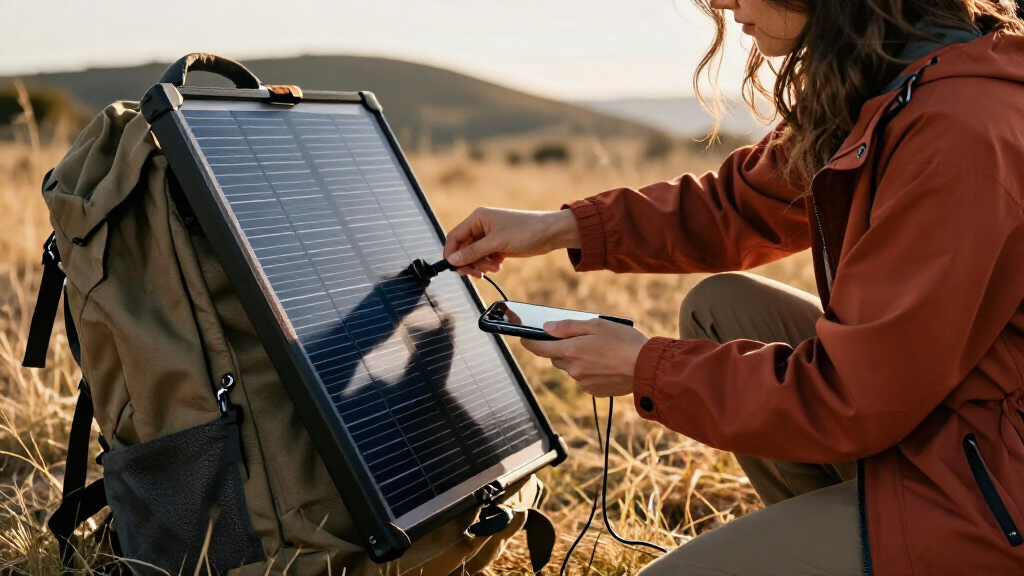
I ranked these panels around the promise in the search: foldable solar charging with USB output. I compared the listed wattage, USB-A and USB-C availability, practical portability, and features that affect use outdoors, including the FlexSolar 100W model’s stated IP67 rating and the BigBlue 28W ammeter’s output readout. I also considered how easily a buyer could match each panel to likely charging needs, from occasional phone charging to higher-capacity portable power use.
The ranking favors useful balance over the largest wattage figure. A panel can offer more rated capacity yet be a poor fit for someone who values compact carry or only needs a direct USB charge. Models with clearer use-case advantages rank above near-overlapping options; where the provided product names do not specify port details, I avoid assuming features. All panels depend on sunlight and compatible devices, so the ranking reflects stated features and likely fit rather than guaranteed charging speed.
Factors to Consider When Choosing Foldable Solar Panel Usb Output
Choosing a foldable panel starts with the device you want to charge and how you plan to carry the panel. These broader checks can prevent a common mismatch: buying a large panel for casual phone charging, or expecting a small USB panel to serve as a dependable power source in changing conditions.
Match Panel Size to Your Charging Routine
Think about how many devices you charge in a typical day, not just the panel’s headline wattage. A small panel can suit occasional phone top-ups when you can leave it in direct sun, while multiple devices or larger power needs call for more panel capacity. Higher wattage can mean a larger folded package and more setup space, so it is not a free upgrade. A panel’s rated output is not a promise that it will deliver that level to a USB device under every condition. Cloud cover, angle, shade, and the connected device can all reduce usable output. If reliable charging matters when sunlight changes, pair the panel with a compatible power bank rather than relying on direct charging alone.
Check USB Ports Against Your Devices
USB-A and USB-C describe connector types, not a guarantee of charging speed or compatibility with every charging standard. Check which port your device and cable use, then look for the panel’s detailed output specifications before buying. A USB-C port may simplify newer-device connections, but the listing needs to state its electrical output and supported charging behavior for you to know what to expect. Multiple ports can be handy, though connecting several devices may divide available power. Avoid assuming that a panel with a high total wattage sends all of that power through one USB port. For the best match, compare the panel’s port output with the input requirements of your phone, tablet, or battery pack.
Decide Whether Direct Charging Is Enough
Direct USB charging is convenient when the panel is in sun and your device can remain connected. It becomes less predictable if you move through shade, clouds, or changing panel angles, since output may fluctuate. A power bank can store energy during brighter periods and let you charge later, but it adds weight and another item to keep charged. Some devices may pause or restart charging as available power changes, so test compatibility before relying on the setup for a trip. Buyers who only need a quick daytime top-up may prefer a simpler direct connection. For overnight use or time-sensitive charging, plan around stored power rather than expecting a foldable panel to generate energy after sunset.
Balance Portability Against Setup Space
Folded dimensions and weight matter most when a panel will travel in a daypack, but unfolded size matters once you need to place it in sun. Larger panels can be harder to position on a crowded campsite or attach securely to a small pack. Small panels are easier to carry and deploy, yet they capture less area and may require longer exposure for the same charging goal. Check whether the listing gives folded size, weight, attachment points, and any included stands or cables. A panel that is easy to angle toward the sun can be more useful than a larger panel that stays flat in shade. Choose for the places you will actually set it up, not only for the storage dimensions.
Treat Weather Ratings as One Part of Durability
A stated water-resistance rating can help compare outdoor suitability, but it does not make every part of a solar charging setup weatherproof. Confirm whether the rating applies to the panel itself, its USB controller, connectors, and cables. Keep ports protected from rain and dust unless the manufacturer specifies otherwise, and avoid leaving a panel exposed to conditions beyond its stated limits. Repeated folding, abrasion, and awkward packing can also affect long-term use, even when a panel has a strong weather rating. Look for clear care instructions and a design that folds without stressing cables or connectors. If your trips involve wet conditions, protection for the whole charging chain matters more than a rating printed on the panel alone.
Compare Real Output Details, Not Just Wattage
Panel wattage is a useful starting point, but it does not tell you exactly how much power a USB-connected device will receive. Check the output voltage and current for each port, whether ports can operate at once, and what the manufacturer says about charging protocols. A built-in ammeter, like the readout on one BigBlue 28W model, can show changing output, but a display does not raise the panel’s available power. Use a quality cable and keep the panel aimed toward strong sunlight for a fair comparison. If two products have similar wattage, port specifications and ease of positioning may matter more than a small difference in the headline number. This approach helps avoid paying for panel capacity your USB devices cannot use.
Frequently Asked Questions
Can a foldable USB solar panel charge my phone directly?
Yes, a panel with a compatible USB port can charge a phone directly when sunlight provides enough usable output. Charging may slow, pause, or restart when clouds pass or the panel shifts out of direct sun. Check the panel’s port specifications against your phone and cable rather than relying on the wattage printed in the product name. For more consistent results, connect a power bank to the panel and charge your phone from the bank later. Direct charging is most practical when you can leave the phone and panel together in steady sun.
Should I choose USB-C or USB-A on a foldable solar panel?
Choose based on the devices and cables you already use, then verify the panel’s output details for the port. USB-C is convenient for many newer devices, but the connector alone does not confirm fast charging or a particular charging protocol. USB-A can suit older cables and accessories, and a panel with both types offers more connection flexibility. If you plan to charge two devices at once, confirm whether both ports can operate simultaneously and how power is shared. A port that matches your cable is helpful, but its stated output is what determines whether it meets your charging needs.
Is a 100W or 200W foldable panel better for phone charging?
Not necessarily. A larger panel can provide more available generation in suitable sunlight, but your phone still draws power through the panel’s USB output and its own charging limits. The extra size and setup space may be wasted if a phone is your only device. Higher-capacity panels make more sense when you also need to support compatible power stations or other higher-demand equipment, after checking connection and output specifications. For a phone-focused kit, a smaller panel may be easier to carry and deploy. Compare USB port capability and portability before choosing by the largest wattage figure.
Will a foldable solar panel keep charging when clouds pass?
It may continue producing some power, but output can drop when direct sunlight is reduced. That change can cause a connected device to charge slowly or stop and restart, depending on the panel and device. An ammeter can help show output changes, but it cannot prevent them. A power bank provides a buffer by storing energy gathered in brighter periods, though it adds weight and needs its own charge management. If your schedule depends on a charged phone, do not treat a small foldable panel as a guaranteed source of power in variable weather.
Can I leave a foldable solar panel outside in rain?
Only if the manufacturer’s stated rating and instructions cover the conditions you expect, and even then check which components the rating applies to. A panel rating may not protect its USB ports, controller, cables, or connected devices. Keep exposed connectors dry unless the product documentation specifically says they are protected. Rain and wind can also make a panel harder to position safely, regardless of water resistance. For wet trips, use a sheltered setup and pack the panel dry, following the care guidance supplied with that model.
Conclusion
For the broadest mix of everyday USB charging and manageable portability, I would start with the FlexSolar 20W as the best overall pick. Buyers seeking a value-focused option can compare the FlexSolar 25W and SOLUPUP or ZeroKor 30W models by their verified port details, included accessories, and folded size; the product names alone do not establish a single value winner. For a premium, higher-capacity setup, the Renogy 200W suits buyers who can handle a larger panel and need more than casual phone charging, while the FlexSolar 100W IP67 is the more targeted choice when its stated water protection matters. Beginners who mainly want simple phone top-ups may find the FlexSolar 10W USB-A or BLAVOR 10W easier to pack, though their limited capacity is a clear tradeoff. For output visibility choose the BigBlue 28W with digital ammeter; for a compact mix of USB-A and USB-C, favor the FlexSolar 20W. Match the final choice to port specifications, actual carrying space, and whether you will use a power bank to buffer changing sun.
Halloween Picks
halloween
As an affiliate, we earn on qualifying purchases.