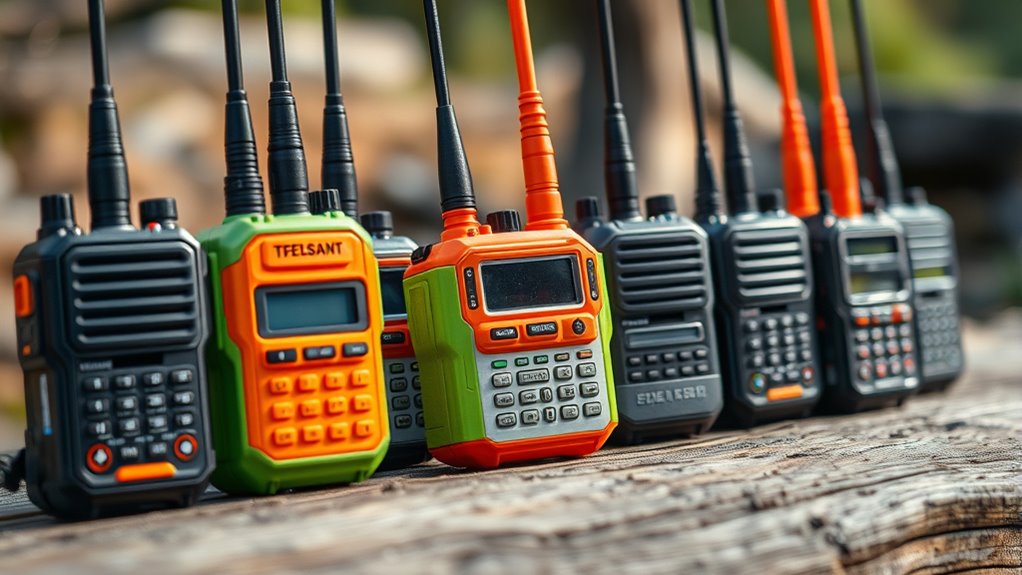

Emergency radios have quietly become survival multi-tools: most models on this list now combine NOAA weather alerts with hand crank charging, solar panels, flashlights, and power banks large enough to revive a dead phone. My top pick is the Midland ER310, because its dedicated SAME alert technology, replaceable battery, and rugged build outclass the do-everything generics when an actual storm is bearing down. For buyers who want maximum power bank capacity, the QAUYYW 20000mAh model leads the pack, while the Kaito KA500 remains the most versatile charging option with five independent power sources. The main tradeoff in this category is jack-of-all-trades convenience versus proven alert reliability — the big-battery generic radios charge phones better, but Midland and Kaito have longer track records with weather alert performance. Read on for the full breakdown of all 15 models.

Get your wardrobe favorites delivered free — and shop member deals
- Fast, free delivery on millions of items
- Access to Prime Big Deal Days deals on October 6–7
- Prime Video, Amazon Music and more included
Key Takeaways
- Midland‘s ER310 and ER310PRO were the only picks with SAME (Specific Area Message Encoding) technology, letting them filter alerts to your exact county instead of blasting every warning in a multi-state region — a genuine safety advantage over the generic models.
- Advertised battery capacity proved wildly inconsistent: several 12000mAh claims performed like mid-sized power banks, so I prioritized models where the battery capacity matched realistic charging performance rather than spec-sheet numbers.
- Hand crank and solar charging are backup features, not primary power sources — every model here takes hours of cranking for meaningful phone charge, so models with replaceable AA batteries (Midland, Kaito) offer a more dependable long-term fallback.
- The generic-brand radios clustered closely in features and performance; real separation came from reception quality on NOAA and AM/FM bands, where established brands (Midland, Kaito, FosPower) pulled ahead.
- Bluetooth connectivity on the ER310PRO is a nice-to-have that most emergency scenarios don’t require — buyers should weigh whether it justifies a premium over the standard ER310.
| Emergency Weather Radio with Hand Crank, Solar Charging, and 10,000 mAh Battery |  | Best Emergency Kit Bundle | Battery Capacity: 10,000 mAh / 37,000 mWh | Charging Methods: Hand crank, solar panel, USB | Weather Channels: 7 NOAA weather band channels | VIEW ON AMAZON | See Our Full Breakdown |
| Raynic Emergency Weather Radio, 5000mAh NOAA Solar Hand Crank Radio |  | Best Value All-Rounder | Battery Capacity: 5000mAh / 18,500 mWh | Power Sources: Hand crank, solar, AC, USB, batteries (5-way) | Radio Bands: AM/FM/SW/NOAA (7 preset weather channels) | VIEW ON AMAZON | See Our Full Breakdown |
| Leaton Hand Crank Emergency Radio with NOAA Weather Alert, AM/FM, 10000mAh Battery |  | Best for Seniors and Families | Battery Capacity: 10000mAh, 5V/1A USB output | Charging Methods: USB-C, solar panel, hand crank | Bands: AM 520–1710 kHz, FM 87–108 MHz, NOAA 162.400–162.550 MHz | VIEW ON AMAZON | See Our Full Breakdown |
| Emergency Weather Radio with Large Solar Panel and Real 12000mAh Battery |  | Best Premium Powerhouse | Battery Capacity: 12000mAh rechargeable | Solar Panel: 8500mm² monocrystalline | Charging Methods: Solar, hand crank, Type-C USB, built-in battery, 3x AAA (not included) | VIEW ON AMAZON | See Our Full Breakdown |
| Midland ER310 Emergency Crank Weather AM/FM Radio (Red/Black) |  | Best Trusted Brand for Alert Reliability | Bands: AM/FM with NOAA weather scan and alert | Power Sources: Solar, hand crank, 6 AA batteries (included), USB | Alerts: NOAA weather scan with alert | VIEW ON AMAZON | See Our Full Breakdown |
| FosPower NOAA Emergency Weather Radio with Solar and Hand Crank, Orange |  | Best Budget Starter Pick | Model: FOSPWB-2376 | Power bank capacity: 7,400 mWh (2,000 mAh) | Power sources: Hand crank, solar panel, AAA batteries | VIEW ON AMAZON | See Our Full Breakdown |
| Kaito KA500 5-Way Powered Emergency AM/FM/SW NOAA Weather Alert Radio |  | Best for Shortwave Listeners | Power sources: Hand crank, solar, 3 AA batteries, 5V USB, 5V AC/DC (adapter sold separately), rechargeable NiMH pack | Bands: AM, FM, 2-band shortwave, 7 NOAA weather channels | Weather alert: PEAS (USA and Canada only) | VIEW ON AMAZON | See Our Full Breakdown |
| Emergency Hand Crank & Solar Radio with NOAA Weather Band, 12000mAh Power Bank |  | Best Power Bank Combo | Battery capacity: 12,000mAh | Radio bands: 7 NOAA weather bands, AM/FM | Power sources: Solar, hand crank, Type-C | VIEW ON AMAZON | See Our Full Breakdown |
| Emergency Hand Crank Solar Radio with 12000mAh Battery, NOAA/AM/FM Reception |  | Best Solar Charging Performance | Battery capacity: 12,000mAh | Power sources: Solar panel, hand crank, USB Type-C (5V/2A), 3 AAA batteries | Radio bands: NOAA, FM, AM | VIEW ON AMAZON | See Our Full Breakdown |
| Midland ER310PRO Portable Emergency Bluetooth Weather AM/FM Radio |  | Best Overall | Model: Midland ER310PRO | Power bank capacity: 10,000 mAh | Battery runtime: 200 hours (radio use) | VIEW ON AMAZON | See Our Full Breakdown |
| Raynic Emergency Weather Radio with 5000mAh Battery, Solar and Hand Crank Charging |  | Best for Band Coverage | Battery capacity: 5000mAh / 18500mWh | Radio bands: AM, FM, SW, NOAA | Charging options: Rechargeable battery, AC adapter, USB, hand crank, solar panel, 3 AAA batteries | VIEW ON AMAZON | See Our Full Breakdown |
| QAUYYW Solar Hand Crank Emergency Radio, 20000mAh AM/FM NOAA Weather Radio |  | Best for Extended Outages | Battery capacity: 20000mAh | Radio playback time: Up to 35 hours (medium volume) | Reading light runtime: Up to 50 hours | VIEW ON AMAZON | See Our Full Breakdown |
| Hand Crank Emergency Radio with LED Flashlight, 2000mAh Battery, NOAA/AM/FM |  | Best Ultra-Light Backup | Battery capacity: 2000mAh | Radio bands: NOAA, AM, FM | Power sources: Hand crank, solar panel, rechargeable battery | VIEW ON AMAZON | See Our Full Breakdown |
| 12000mAh Emergency Radio with NOAA, Hand Crank and Solar Charging |  | Best All-Around Feature Set | Battery capacity: 12000mAh / 44400mWh | NOAA channels: 7 | Power sources: Rechargeable battery, solar, hand crank, USB, 3 AAA batteries | VIEW ON AMAZON | See Our Full Breakdown |
| Hand Crank Emergency Weather Radio with Solar Charging, 7400mWh Battery, and Built-In Charging Cables |  | Best for Cable-Free Phone Charging | Battery capacity: 7400mWh (2000mAh) | Power sources: USB-C, hand crank, solar panel, AAA batteries | Built-in charging cables: Lightning, USB-C, Micro USB | VIEW ON AMAZON | See Our Full Breakdown |
| emergency radio | Battery Capacity | Power Sources | Radio Bands |
|---|---|---|---|
| Emergency Weather Radio with H | 10,000 mAh / 37,000 mWh | — | — |
| Raynic Emergency Weather Radio | 5000mAh / 18,500 mWh | Hand crank, solar, AC, USB, batteries (5-way) | AM/FM/SW/NOAA (7 preset weather channels) |
| Leaton Hand Crank Emergency Ra | 10000mAh, 5V/1A USB output | — | — |
| Emergency Weather Radio with L | 12000mAh rechargeable | — | AM/FM/7 NOAA bands with alert alarms |
| Midland ER310 Emergency Crank | — | Solar, hand crank, 6 AA batteries (included), USB | — |
| FosPower NOAA Emergency Weathe | — | Hand crank, solar panel, AAA batteries | — |
| Kaito KA500 5-Way Powered Emer | — | Hand crank, solar, 3 AA batteries, 5V USB, 5V AC/DC (adapter sold separately), rechargeable NiMH pack | — |
| Emergency Hand Crank & Solar R | 12,000mAh | Solar, hand crank, Type-C | 7 NOAA weather bands, AM/FM |
| Emergency Hand Crank Solar Rad | 12,000mAh | Solar panel, hand crank, USB Type-C (5V/2A), 3 AAA batteries | NOAA, FM, AM |
| Midland ER310PRO Portable Emer | — | Solar panel, hand crank, rechargeable lithium-ion battery | AM/FM/NOAA Weather (7 WX channels) |
| Raynic Emergency Weather Radio | 5000mAh / 18500mWh | — | AM, FM, SW, NOAA |
| QAUYYW Solar Hand Crank Emerge | 20000mAh | — | — |
| Hand Crank Emergency Radio wit | 2000mAh | Hand crank, solar panel, rechargeable battery | NOAA, AM, FM |
| 12000mAh Emergency Radio with | 12000mAh / 44400mWh | Rechargeable battery, solar, hand crank, USB, 3 AAA batteries | — |
| Hand Crank Emergency Weather R | 7400mWh (2000mAh) | USB-C, hand crank, solar panel, AAA batteries | NOAA weather, AM, FM |
More Details on Our Top Picks
Emergency Weather Radio with Hand Crank, Solar Charging, and 10,000 mAh Battery
This pick stands out less for the radio itself and more for what arrives in the box: alongside the crank/solar unit with its 10,000 mAh battery, buyers get a thermal blanket and a 5-in-1 paracord bracelet with fire-starting and signaling tools. That makes it the closest thing here to a grab-and-go survival kit rather than a standalone radio. Compared with the Leaton, which has a similar battery capacity but ships with just a cable and manual, this bundle saves a separate shopping trip for a car kit or bug-out bag. The tradeoff is focus: the radio lacks the Leaton’s IPX6 water resistance rating, and the seller provides no dimensions or weight, so packability is a guess until it arrives. Treat the accessories as the headline, not the audio quality.
Pros:- Complete bundle with thermal blanket and multi-tool paracord bracelet
- Large 10,000 mAh battery doubles as a phone charger
- Triple charging via hand crank, solar, and USB
- Automatically scans all seven NOAA weather channels
Cons:- No published dimensions or weight, making it hard to judge portability
- Vague accessory descriptions suggest a budget-tier build
- No stated water-resistance rating
Best for: People building a first car or home emergency kit who want radio, warmth, and survival tools in one purchase
Not ideal for: Buyers who already own survival gear and want a rugged, spec-verified radio — the unknown dimensions and vague accessory details leave too many questions
- Battery Capacity:10,000 mAh / 37,000 mWh
- Charging Methods:Hand crank, solar panel, USB
- Weather Channels:7 NOAA weather band channels
- Extras:Flashlight, headphone jack, SOS siren, flashing red light
- Thermal Blanket Weight:55 g
- Paracord Length:10 ft (5-in-1 survival bracelet)
Our verdict“Buy this if you want a one-box starter emergency kit and already have blankets and tools — otherwise skip it for a better-specified radio.”
Raynic Emergency Weather Radio, 5000mAh NOAA Solar Hand Crank Radio
The Raynic earns its place by covering every base at a reasonable spec level: five power sources including AC and disposable batteries, AM/FM/SW shortwave reception, IPX3 splash resistance, and a full lighting suite with flashlight, reading lamp, and SOS siren. The shortwave band is something even the Midland ER310 doesn’t offer, which matters if you want international broadcasts during widespread emergencies. Its 5000mAh battery is half the capacity of the Leaton’s, though, so think of phone charging as a lifeline for a few calls rather than a full recharge. NOAA alerts also require manual tuning — it won’t wake you the way an alert-enabled radio would. Still, for buyers who want flexibility without paying premium prices, this is the most balanced configuration in the lineup.
Pros:- Five power sources including AC and replaceable batteries
- AM/FM/SW plus 7 NOAA channels for broad reception
- Compact 1.2 lb design with IPX3 water resistance
- Flashlight, reading lamp, SOS siren, and compass included
Cons:- NOAA alerts require manual tuning, not automatic activation
- Analog tuning is less precise than digital alternatives
- 5000mAh battery only supports brief phone calls, not full charges
Best for: Budget-conscious households and campers who want maximum power-source flexibility and shortwave reception in one compact unit
Not ideal for: Anyone who needs automatic NOAA alert wake-ups — you must tune to a weather station yourself, which can mean missing overnight warnings
- Battery Capacity:5000mAh / 18,500 mWh
- Power Sources:Hand crank, solar, AC, USB, batteries (5-way)
- Radio Bands:AM/FM/SW/NOAA (7 preset weather channels)
- Lighting:3W flashlight, 2.5W reading lamp, SOS siren
- Dimensions:7.5 x 3.5 x 4.7 inches, 1.2 lbs
- Water Resistance:IPX3
Our verdict“The smart pick if you want the widest feature spread per dollar and don’t need alert-triggered weather warnings.”
Leaton Hand Crank Emergency Radio with NOAA Weather Alert, AM/FM, 10000mAh Battery
Where the Raynic packs in bands, the Leaton prioritizes usability: large, simple controls and a 10000mAh battery in a compact 1.1 lb frame make it the easiest radio here for older adults or kids to operate during a blackout. The cranking math is honest and useful — one minute of cranking buys 15–20 minutes of radio — and the IPX6 rating beats the Raynic’s IPX3 for porch or campsite use. Its weaknesses are real, though. There’s no headphone jack, no automatic NOAA alert function, and no SAME technology, so it’s a tune-it-yourself device. Compared with the ER310, which offers true NOAA weather alert scanning, the Leaton trades that safety feature for a much bigger battery and friendlier ergonomics. Families who keep a radio in a known spot and check it manually will be fine; deep sleepers should look elsewhere.
Pros:- 10000mAh battery doubles as a serious emergency phone charger
- One minute of cranking yields 15–20 minutes of radio use
- Large controls are easy for seniors and children to operate
- IPX6 splash resistance with a light 1.1 lb build
Cons:- No automatic NOAA alerts or SAME technology — manual tuning only
- No headphone jack; audio plays only through the speaker
- IPX6 is splash resistance, not protection from heavy rain or immersion
Best for: Seniors and families who value big, simple controls and a large backup battery for charging phones during outages
Not ideal for: Solo users wanting private listening or automatic alert activation — no headphone jack and no SAME/alert technology
- Battery Capacity:10000mAh, 5V/1A USB output
- Charging Methods:USB-C, solar panel, hand crank
- Bands:AM 520–1710 kHz, FM 87–108 MHz, NOAA 162.400–162.550 MHz
- Flashlight Modes:High, Low, SOS, plus 1.3W reading lamp
- Crank Yield:1 minute = 15–20 minutes radio
- Water Resistance:IPX6 (splash resistant)
- Dimensions & Weight:6.3 x 3.5 x 3.1 inches, 1.1 lbs
- Warranty:1 year
Our verdict“The best choice for households that prize simplicity and battery capacity over advanced alert features.”
Emergency Weather Radio with Large Solar Panel and Real 12000mAh Battery
This model’s differentiator is honest capacity and solar scale. The 8500mm² monocrystalline panel is dramatically larger than the small strips found on the Raynic or Leaton, meaning solar charging actually works as a primary method during extended outages rather than a token gesture. Its 12000mAh battery is the largest in this batch, and the five-way charging includes AAA backups — a resilience layer the Leaton lacks. The 5W adjustable flashlight and 12-LED reading lamp outclass the smaller lights on the bundle option. The catches: the hand crank yields only short emergency bursts, so don’t plan on cranking your way through a multi-day outage, and the three AAA batteries are not included, which is an odd omission at this tier. Compared with the ER310, you give up automatic alert polish for raw power and lighting.
Pros:- Genuine 12000mAh battery with real phone-charging capability
- Large monocrystalline solar panel charges meaningfully faster than competitors
- Five charging methods including optional AAA battery backup
- Brightest lighting setup in the batch: 5W flashlight plus 12-LED reading lamp
Cons:- Hand crank provides only short bursts of emergency power
- Requires 3 AAA batteries that are not included
- Heavier, more feature-dense design than simple grab-and-go options
Best for: Hurricane-season and off-grid preparers who need maximum battery capacity and genuinely functional solar charging
Not ideal for: Casual users who want a set-it-and-forget-it radio — the missing AAA batteries and crank-only-when-desperate charging require planning ahead
- Battery Capacity:12000mAh rechargeable
- Solar Panel:8500mm² monocrystalline
- Charging Methods:Solar, hand crank, Type-C USB, built-in battery, 3x AAA (not included)
- Radio Bands:AM/FM/7 NOAA bands with alert alarms
- Lighting:5W adjustable flashlight, 12-LED reading lamp, SOS alarm
- Water Resistance:IPX6 waterproof
- Enclosure:ABS plastic, army green
Our verdict“The pick for serious preparedness kits where battery capacity and solar output matter more than simplicity.”
Midland ER310 Emergency Crank Weather AM/FM Radio (Red/Black)
Midland is a name with real pedigree in weather alerting, and the ER310 backs it up with true NOAA weather scan with alert — the only radio in this batch that actively stands watch for warnings rather than waiting for you to tune in. That single feature is why it outranks higher-capacity rivals for storm-country buyers who need to be woken at 3 a.m. The quirky extras, like an ultrasonic dog whistle for search situations and an SOS flashlight with Morse code strobe, show genuine emergency-first design. The tradeoffs sting, though: it’s not water resistant at all — a step below even the IPX3 Raynic — and its 2600mAh-class battery is far smaller than the Leaton’s 10000mAh, so phone charging is minimal. The included 6 AA batteries partially compensate. You’re buying alert intelligence, not power-bank muscle.
Pros:- True NOAA weather scan with automatic alert functionality
- Brand with an established reputation in weather alerting
- Unique SOS flashlight strobe and ultrasonic dog whistle for rescue scenarios
- 6 AA batteries included plus solar, crank, and USB charging
Cons:- No water resistance whatsoever — the weakest weather protection in the batch
- Small battery provides only minimal device charging
- Requires 6 AA batteries, adding bulk and replacement cost
Best for: Buyers in tornado and hurricane country who need automatic NOAA alert wake-ups from a brand with a long weather-radio track record
Not ideal for: Off-grid campers or anyone needing a big power bank — no water resistance and a small battery limit outdoor and charging use
- Bands:AM/FM with NOAA weather scan and alert
- Power Sources:Solar, hand crank, 6 AA batteries (included), USB
- Alerts:NOAA weather scan with alert
- Special Features:SOS flashlight strobe, ultrasonic dog whistle, USB device charging
- Dimensions:9.61 x 2.95 x 6.85 inches, 16 oz
- Water Resistance:None
Our verdict“The choice when automatic weather alerts matter more than battery size or weatherproofing.”
FosPower NOAA Emergency Weather Radio with Solar and Hand Crank, Orange
This FosPower model is the simplest entry point on the list, and that is its whole appeal. Where the Kaito KA500 layers on six power options and shortwave bands, this radio keeps things to the basics: NOAA, AM, and FM reception with three ways to stay powered. The tradeoff is capacity — its 2,000 mAh power bank is a fraction of what the Midland ER310PRO’s 10,000 mAh cell offers, so it can top off a phone but will not keep one alive through a multi-day outage. What buyers get in return is a limited lifetime warranty, which almost no competitor in this price bracket matches, plus a flashlight, reading light, and SOS alarm in a compact orange body that is easy to spot in a dark kit. This pick makes the most sense for a first emergency kit or a car glovebox rather than a household’s primary disaster tool.
Pros:- Three independent power sources including AAA backup
- Limited lifetime warranty stands out at this price point
- Flashlight, 4-LED reading light, and SOS alarm in one compact unit
- Bright orange housing is easy to locate in an emergency bag
Cons:- 2,000 mAh power bank only provides partial phone charges
- Hand crank and solar charging require sustained effort or sunlight to be useful
Best for: First-time preppers and car emergency kits where a simple, warrantied radio matters more than battery capacity
Not ideal for: Households preparing for extended outages — the 2,000 mAh bank is too small to keep phones charged for long
- Model:FOSPWB-2376
- Power bank capacity:7,400 mWh (2,000 mAh)
- Power sources:Hand crank, solar panel, AAA batteries
- Radio reception:NOAA, AM, FM
- Lighting:1W flashlight, 4-LED reading light, SOS alarm
- Warranty:Limited lifetime
Our verdict“A dependable, warranty-backed starter radio for occasional emergencies rather than prolonged grid-down scenarios.”
Kaito KA500 5-Way Powered Emergency AM/FM/SW NOAA Weather Alert Radio
The Kaito KA500 earns its slot for one thing no other radio here does: 2-band shortwave reception alongside AM, FM, and all seven NOAA channels. In a real regional disaster, shortwave can pull in international broadcasts when local infrastructure is down, which matters to anyone who wants information beyond domestic sources. Its power flexibility is also broader than most — six charging paths including a rechargeable NiMH pack and USB/AC input, compared with the FosPower’s three. The catch is that you pay for that flexibility twice: AA batteries and the wall adapter are sold separately, and there is no onboard lithium power bank, so phone charging is more limited than the ER310PRO’s 10,000 mAh cell. The impact- and water-resistant ABS shell and 14.5-inch telescopic antenna give it a more serious, outdoor-ready feel than the plastic-bodied budget competitors.
Pros:- Six power options provide more redundancy than any competitor here
- Shortwave bands plus 7 NOAA channels with USA/Canada weather alerts
- Impact- and water-resistant ABS construction suits outdoor use
- Telescopic antenna improves weak-signal reception
Cons:- AA batteries and AC/DC adapter not included, adding hidden cost
- Weather alert feature limited to USA and Canada
- No large built-in power bank for charging phones
Best for: Preppers and outdoor enthusiasts who want shortwave access and maximum redundancy in power sources
Not ideal for: Buyers who want a phone charger as a core feature — it lacks a large onboard power bank and ships without batteries
- Power sources:Hand crank, solar, 3 AA batteries, 5V USB, 5V AC/DC (adapter sold separately), rechargeable NiMH pack
- Bands:AM, FM, 2-band shortwave, 7 NOAA weather channels
- Weather alert:PEAS (USA and Canada only)
- USB output:5V DC for mobile devices
- Lighting:5-LED reading lamp, LED flashlight, red SOS beacon
- Material:Impact-resistant, water-resistant ABS
Our verdict“The pick for information redundancy — shortwave plus six power sources — for those willing to buy the accessories separately.”
Emergency Hand Crank & Solar Radio with NOAA Weather Band, 12000mAh Power Bank
For buyers whose priority is keeping devices alive during an outage, this model pairs the largest power bank class in the roundup — 12,000 mAh — with a full emergency feature set. Compared with the FosPower’s 2,000 mAh cell, that is roughly six times the phone-charging capacity, enough for several full smartphone recharges. The 5W flashlight, 12-LED reading lamp, and 120dB SOS alarm make it a capable all-rounder, and the IPX6 water resistance puts it ahead of models that are merely splash-proof. At 1.6 pounds and under seven inches, it fits a go bag without complaint. The honest tradeoff: solar charging is slow as a primary method, and cranking a battery this large takes real effort — a Type-C top-up before an emergency is the practical way to start.
Pros:- 12,000 mAh bank delivers multiple full phone charges
- IPX6 water resistance outclasses splash-proof rivals
- Powerful 5W flashlight and 120dB SOS alarm
- Compact enough for a go bag at 6.81 inches long
Cons:- Solar charging is slow as a primary power source
- Hand cranking a battery this large requires sustained effort
Best for: Households who want a serious phone-charging reserve alongside their weather radio in one device
Not ideal for: Ultra-light backpackers — at 1.6 pounds it is heavier than compact single-purpose radios
- Battery capacity:12,000mAh
- Radio bands:7 NOAA weather bands, AM/FM
- Power sources:Solar, hand crank, Type-C
- Flashlight:5W LED
- Reading lamp:12 LEDs
- SOS alarm:120dB
- Water resistance:IPX6
- Dimensions:6.81 x 2.91 x 4.76 inches
Our verdict“The strongest choice when backup phone power matters as much as weather alerts.”
Emergency Hand Crank Solar Radio with 12000mAh Battery, NOAA/AM/FM Reception
What separates this radio from the similar 12,000 mAh model above is its oversized 8,500mm² monocrystalline solar panel — noticeably larger than typical emergency radio panels, meaning faster top-ups when sunlight is all you have. Its reception is also tuned for clarity, with a high-sensitivity chip and noise reduction that helps NOAA alerts come through cleanly in fringe areas. Like its sibling it carries a 12,000 mAh battery, dual-brightness flashlight with a 260-foot beam, and a soft reading lamp. The compromises are quirks rather than dealbreakers: it ships with the battery drained and needs a full Type-C charge before first use, and the analog display means no digital tuning or frequency readout — a step down from the ER310PRO’s LCD if you want precise channel selection.
Pros:- Extra-large monocrystalline solar panel charges faster than typical models
- Noise-reduced reception improves weak-signal NOAA clarity
- 12,000 mAh battery with 5-way power redundancy
- 260-foot flashlight beam with two brightness levels
Cons:- Requires a full USB-C charge before first use — a real problem if an emergency arrives early
- Analog display with no digital tuning or frequency readout
Best for: Sun-belt residents and campers who expect solar to do real charging work, not just trickle top-ups
Not ideal for: Anyone who wants digital precision — analog tuning makes finding an exact frequency a guessing game
- Battery capacity:12,000mAh
- Power sources:Solar panel, hand crank, USB Type-C (5V/2A), 3 AAA batteries
- Radio bands:NOAA, FM, AM
- Speaker output:5 watts
- Flashlight beam:260-foot range, two brightness levels
- Display:Analog
- Dimensions:6.8 x 2.9 x 4.7 inches
Our verdict“The best solar performer here for buyers who can remember to pre-charge it and don’t mind analog tuning.”
Midland ER310PRO Portable Emergency Bluetooth Weather AM/FM Radio
The ER310PRO is the most complete package of the five, and the 200-hour radio runtime is the headline number — many budget crank radios would need constant cranking to approach that. Midland’s NOAA Weather Scan with alerts automatically locks onto the strongest local weather channel, something the Kaito KA500 and FosPower require you to tune manually. Its 10,000 mAh power bank sits between the FosPower’s token 2,000 mAh and the 12,000 mAh clones, but with a trusted brand behind the cell claims. The 130-lumen CREE LED with an SOS Morse code beacon and ultrasonic dog siren adds genuine rescue features, and Bluetooth streaming turns it into an everyday speaker so it earns its shelf space between disasters. The main drawback is familiar: hand-cranking to a meaningful charge takes real effort, so treat it as a backup, not primary, charging method.
Pros:- 200-hour battery runtime dwarfs typical emergency radios
- NOAA Weather Scan auto-locks the strongest alert channel
- 10,000 mAh bank charges phones and tablets
- Unique rescue tools: SOS Morse beacon and ultrasonic dog siren
Cons:- Hand crank charging demands significant sustained effort
- No shortwave band coverage unlike the Kaito KA500
Best for: Families who want one trusted, always-ready emergency hub that doubles as a Bluetooth speaker year-round
Not ideal for: Buyers on a tight budget or those wanting shortwave reception, which this model lacks
- Model:Midland ER310PRO
- Power bank capacity:10,000 mAh
- Battery runtime:200 hours (radio use)
- Power sources:Solar panel, hand crank, rechargeable lithium-ion battery
- Radio bands:AM/FM/NOAA Weather (7 WX channels)
- Flashlight:CREE LED, 130 lumens, SOS Morse code beacon
- Connectivity:Bluetooth streaming
- Dimensions:8.1 x 2.8 x 3.4 inches
Our verdict“If you buy one radio on this list and want brand-proven reliability plus everyday usefulness, this is it.”
Raynic Emergency Weather Radio with 5000mAh Battery, Solar and Hand Crank Charging
Most emergency radios in this roundup stop at AM, FM, and NOAA, but this Raynic model adds shortwave reception, which matters when local stations go down and you want international broadcasts. The other edge is automatic NOAA alert scanning — it finds emergency broadcasts for you, unlike the QAUYYW 20000mAh radio, where you have to manually tune to a local NOAA station. Six power options, including AAA backup, make it one of the most flexible here, and the LCD display beats the analog dials on both the QAUYYW and the 12000mAh competitor. The tradeoff: a 5000mAh battery is modest next to QAUYYW’s 20000mAh, and IPX3 water resistance only handles light splashing — the QAUYYW’s IPX6 rating is far more forgiving outdoors.
Pros:- Automatic scanning for NOAA emergency alerts
- Six power and charging options including AAA backup
- Shortwave band adds a broadcast source most rivals lack
- LCD display simplifies station finding versus analog dials
Cons:- AAA batteries are not included
- IPX3 water resistance offers limited protection
- 5000mAh battery is small compared to 12000-20000mAh rivals
Best for: Preppers and listeners who want shortwave access and automatic weather alerts without fussing with a tuning dial
Not ideal for: Anyone needing a serious power bank or true waterproofing — the battery is mid-sized and IPX3 is minimal protection
- Battery capacity:5000mAh / 18500mWh
- Radio bands:AM, FM, SW, NOAA
- Charging options:Rechargeable battery, AC adapter, USB, hand crank, solar panel, 3 AAA batteries
- Lighting:3W flashlight, 2.5W reading lamp
- Water resistance:IPX3
- Weight:1.2 lb
- Connectivity:USB Type-C, 3.5 mm headphone jack
Our verdict“This pick makes the most sense for buyers who prioritize band coverage and automatic alerts over maximum battery capacity.”
QAUYYW Solar Hand Crank Emergency Radio, 20000mAh AM/FM NOAA Weather Radio
If a multi-day power outage is your main worry, the 20000mAh battery here is the largest in this roundup — quadruple the Raynic 5000mAh model — delivering up to 35 hours of radio playback and 50 hours of reading light. The IPX6 waterproofing also outclasses nearly every competitor, including the 12000mAh emergency radio, making this the safer choice for exposure to rain at a campsite or porch. Where it falls behind: there’s no automatic NOAA alert function, so you must dial in your local weather station yourself, and the analog tuning is fussier than the Raynic’s digital display. Its USB output is also only enough for brief calls or texts, so it’s a radio-first tool rather than a true power bank.
Pros:- Largest battery in this batch with up to 35 hours of playback
- IPX6 waterproofing withstands heavy rain, not just splashes
- Three charging paths: USB-C, hand crank, and solar
- 50-hour reading lamp runtime for extended blackouts
Cons:- NOAA alerts require manually tuning to a local station
- Analog tuning is less precise than digital displays
- USB output only supports brief calls or texts
Best for: Campers and storm-country households preparing for multi-day outages where runtime and rain exposure are the priorities
Not ideal for: Buyers who want set-and-forget weather alerts or serious phone-charging capacity — this requires manual tuning and has weak USB output
- Battery capacity:20000mAh
- Radio playback time:Up to 35 hours (medium volume)
- Reading light runtime:Up to 50 hours
- Bands:AM/FM/NOAA/SW
- Water resistance:IPX6
- Charging methods:USB Type-C, hand crank, solar panel
- Warranty:12 months
Our verdict“The strongest choice when battery endurance and weatherproofing matter more than smart features or device charging.”
Hand Crank Emergency Radio with LED Flashlight, 2000mAh Battery, NOAA/AM/FM
At half a pound and roughly 5 inches long, this is the radio to toss in a go-bag, glove box, or hiking pack without noticing the weight — the Raynic runs more than double the heft, and the QAUYYW carries four times the battery bulk. Three power sources (hand crank, solar, rechargeable battery) keep it alive indefinitely, and the retractable antenna genuinely helps pull in weak signals in backcountry areas. The compromises are real, though: a 2000mAh battery won’t fully charge a modern phone, and the 1W flashlight is dim compared to the 3W units on the Raynic and QAUYYW models. Compared with the 7400mWh cable-equipped radio, it skips reading lights and SOS alarms entirely — it’s a radio and a basic light, nothing more.
Pros:- Ultra-compact at 0.5 lbs — the most portable in this roundup
- Three power sources keep it running indefinitely
- Retractable antenna improves reception in weak-signal areas
- Doubles as a basic emergency phone charger
Cons:- 2000mAh battery provides very limited phone-charging capacity
- Hand-crank charging is slow and physically demanding
- No reading lamp or SOS alarm features
Best for: Hikers, travelers, and minimalist preppers who want the lightest possible NOAA-capable radio for a go-bag
Not ideal for: Households prepping for extended blackouts — the tiny battery and dim 1W light can’t carry a long outage
- Battery capacity:2000mAh
- Radio bands:NOAA, AM, FM
- Power sources:Hand crank, solar panel, rechargeable battery
- Flashlight:1W LED
- Dimensions:5 x 1.8 x 2.4 inches
- Weight:0.5 lbs
Our verdict“A sensible backup radio for people who count ounces, as long as they accept minimal battery and lighting power.”
12000mAh Emergency Radio with NOAA, Hand Crank and Solar Charging
This model splits the difference between the QAUYYW’s massive battery and the Raynic’s smarter features — a 12000mAh cell delivering up to 60 hours of AM/FM playback, which is the longest radio runtime in this batch. Seven NOAA channels cover the full weather network, and five power options (including AAA backup, which the QAUYYW omits) give it the most redundancy here. The oversized 8500mm² solar panel is a genuine standout — it gathers more sun than the small panels on the ultra-light 2000mAh model, so solar charging is practical rather than theoretical. Drawbacks: an analog tuning knob is less precise than the Raynic’s digital display, and solar or crank charging still depends on weather and elbow grease.
Pros:- Up to 60 hours of AM/FM playback per full charge
- Five power options including AAA battery backup
- Extra-large solar panel makes solar charging genuinely useful
- Powerful 5W speaker and 57mm driver for clear audio
Cons:- Solar and hand-crank charging depend on sunlight or sustained effort
- Analog tuning knob is less precise than digital
- AAA batteries required for that backup option are an extra purchase
Best for: Households that want long runtime, full NOAA coverage, and maximum power-source redundancy in one unit
Not ideal for: Buyers who want digital station presets or automatic alert scanning — the analog dial requires patience
- Battery capacity:12000mAh / 44400mWh
- NOAA channels:7
- Power sources:Rechargeable battery, solar, hand crank, USB, 3 AAA batteries
- AM/FM playback:Up to 60 hours per full charge
- Speaker:57mm, 5W
- Solar panel area:8500mm²
- Lighting:5W flashlight and 12-LED reading lamp
Our verdict“The best-balanced pick for home emergency kits where runtime and charging flexibility outrank digital conveniences.”
Hand Crank Emergency Weather Radio with Solar Charging, 7400mWh Battery, and Built-In Charging Cables
The clever hook here is the three built-in charging cables — Lightning, USB-C, and Micro USB tucked into the housing — so when the power’s out and your regular cable is missing, you can still top up a phone without hunting for anything. No other radio in this roundup does that. Four power sources, including USB-C input and AAA backup, keep the radio itself alive, and the three-brightness flashlight plus six reading LEDs cover lighting duties better than the bare 1W light on the ultra-compact 2000mAh model. The honest problem: the battery is listed at 7400mWh (2000mAh), and the maker publishes no charging output or runtime figures — compared with the 12000mAh model’s documented 60-hour playback, that vagueness is a real limitation for planning.
Pros:- Built-in Lightning, USB-C, and Micro USB cables eliminate cable-hunting
- Four power options including USB-C and AAA backup
- Flashlight with three brightness modes plus six reading LEDs
- Compact all-in-one design with SOS alarm and lanyard
Cons:- No published charging output or runtime specifications
- AAA batteries are not specified as included
- Small effective battery capacity relative to larger rivals
Best for: Busy households and car kits where having the right cable at the right moment is the constant problem
Not ideal for: Buyers who need predictable runtime — undocumented battery output and playback figures make outage planning a guess
- Battery capacity:7400mWh (2000mAh)
- Power sources:USB-C, hand crank, solar panel, AAA batteries
- Built-in charging cables:Lightning, USB-C, Micro USB
- Radio bands:NOAA weather, AM, FM
- Lighting:Flashlight with 3 brightness modes; 6 LED reading lights
- Included items:Radio, user manual, lanyard
Our verdict“Worth it for the built-in cables alone if convenience is your priority; skip it if you need documented, long-run battery performance.”

How We Picked
My ranking logic starts with the feature that actually saves lives: alert reliability. A radio that misses a tornado warning because its NOAA reception is weak is worse than no radio at all, so models with proven receiver quality and SAME technology ranked above those with bigger batteries but unverified signal performance. From there, I weighed power flexibility — how many independent ways a radio can be charged (USB, crank, solar, replaceable batteries) — because redundancy is the entire point of an emergency device.
Second, I evaluated build quality and battery honesty. Emergency gear lives in closets, car trunks, and go-bags for years before it’s needed, so durability, shelf-drain behavior, and whether the claimed capacity is realistic all factored heavily. Finally, I considered value relative to intended use: a budget radio that covers the basics for an apartment emergency kit can be a smarter buy than a premium model loaded with features a casual user will never touch. Products are ordered by how well they balance these four factors, not by price or feature count alone.
Factors to Consider When Choosing Emergency Radios
Before choosing a model from the list above, it helps to understand what actually matters when the power is out and the weather is turning. These are the factors I weighed most heavily — and the mistakes I saw buyers make repeatedly.SAME Technology: The Alert Feature Most Buyers Skip
Most emergency radios receive NOAA weather channels, but only models with SAME (Specific Area Message Encoding) can be programmed to alert only for your county. Without it, your radio will wake you for every flash flood warning within a 50-mile radius — and owners respond by turning alerts off entirely, defeating the purpose. This is the single biggest functional difference between the premium Midland models and everything else on this list. If you live in a tornado alley, hurricane zone, or floodplain, SAME is worth paying extra for. Casual users in low-risk areas can reasonably skip it, but understand exactly what you’re giving up.
Battery Capacity Claims vs. Reality
Marketing numbers like 12000mAh and 20000mAh get thrown around loosely in this category, and not all claims are equal. Some budget models advertise capacities their circuitry can’t deliver, and lithium batteries also degrade sitting unused in a closet — a radio bought today may hold 70% of its charge after two years of storage. A more dependable approach for long-term preparedness is a model that accepts replaceable AA batteries, which you can swap for fresh ones any time. My advice: treat the built-in battery as a convenience feature, not your survival plan, and store a pack of lithium AAs alongside whatever radio you buy.
Hand Crank and Solar: Know Their Limits
Crank and solar charging are why people buy these radios, and they work — but nowhere near as well as the marketing implies. Realistic output from cranking is roughly enough to power the radio itself and add small amounts of phone charge after many minutes of effort; solar panels this size need direct sunlight for hours to meaningfully move the needle. The value of these features is redundancy, not daily use: they’re a last resort when every battery is dead. Models with multiple charging paths (like the five-way Kaito) offer more genuine insurance than a slightly larger solar panel on a cheaper unit.
Reception Quality Trumps Feature Count
An emergency radio has one non-negotiable job: pulling in a signal when you need it. Reception sensitivity and antenna design vary more between brands than any spec sheet reveals, and established manufacturers like Midland, Kaito, and FosPower have simply spent more time engineering radio receivers than the generic brands competing on battery size. Shortwave (SW) reception is worth having if you want access to international broadcasts during extended emergencies, but it’s a niche need. If you’re in a rural area with weak signal, prioritize receiver quality over every other feature on the box.
Size, Weight, and Where It Lives
Think honestly about where the radio will be stored and how it will be used. A go-bag or car kit calls for a compact, lighter model even at the cost of battery capacity; a home emergency kit can accommodate a heavier unit with a bigger battery and louder speaker. Models with built-in charging cables sound convenient until the cable you don’t need gets in the way or the one you do need breaks — standard USB ports are more durable long-term. Also check the flashlight and reading lamp brightness claims against your expectations: they’re useful supplements, not replacements for a dedicated flashlight.
Common Mistakes to Avoid
The most frequent error I see is buying an emergency radio and never testing it — then discovering during an outage that the battery drained, the NOAA band isn’t programmed, or the crank mechanism is stiff. Set a calendar reminder to charge and test your radio every three to six months. Another mistake is assuming the phone-charging feature replaces a power bank; emergency radios charge phones slowly and their primary job is receiving information, so keep them off your charging duties when possible. Finally, don’t buy two cheap radios when one reliable one serves you better — a radio that fails when needed is a false economy.
Frequently Asked Questions
Is SAME weather alert technology worth the extra cost over a standard NOAA radio?
If you live in an area with frequent severe weather, yes — SAME is arguably the most valuable feature in this entire category. Standard NOAA radios receive all alerts broadcast across a wide transmission area, which often covers multiple counties, meaning you’ll get woken by warnings that don’t affect you. Over time, that alert fatigue leads people to silence their radios, which is when the missed warning happens. SAME-equipped models like the Midland ER310 and ER310PRO let you enter your county code so you only hear alerts that genuinely apply to your location. Buyers in low-risk areas who mainly want news and weather updates during outages can skip it, but anyone in tornado, hurricane, or flood territory should treat it as a safety feature, not a luxury.
How long does hand cranking actually take to charge a phone?
Realistically, cranking for several minutes yields only a few percentage points of phone charge — the generators in these radios are designed to power the radio itself and provide trickle emergency power, not to replace a wall charger. Manufacturers rarely publish crank output numbers for this reason. If you crank consistently, you can keep a radio running and listening indefinitely, which is the real value. Solar performs somewhat better but needs direct, unobstructed sunlight for hours. If keeping your phone alive matters, choose a model with a large verified battery capacity and treat crank and solar strictly as last-resort backups.
Should I trust the advertised battery capacity on budget emergency radios?
Treat capacity claims on generic-brand radios with healthy skepticism. Several models in this roundup advertise 12000mAh, and in this price bracket those numbers don’t always reflect usable output — circuit efficiency, cell quality, and even labeling inflation all play a role. A practical approach is to read what the manufacturer says the battery will do (number of phone charges, hours of radio runtime) rather than the raw mAh figure, and to verify performance when the radio arrives, while you can still return it. For long-term preparedness, models with replaceable AA batteries sidestep the problem entirely, since lithium AAs hold their charge for a decade and can be swapped in seconds.
What’s the difference between the Midland ER310 and ER310PRO, and which should I buy?
The core emergency functionality is nearly identical: both have SAME alerts, NOAA weather reception, crank and solar charging, a flashlight, and an ultrasonic dog whistle for search-and-rescue situations. The ER310PRO adds Bluetooth connectivity, letting you use it as a wireless speaker in everyday life. That’s a genuine plus if the radio will sit on a shelf and double as a kitchen speaker — a device you use regularly is one you’ll notice when the battery dies, which has real preparedness value. But if you’re buying purely as emergency equipment that lives in a kit, the standard ER310 does everything that matters for less money. Choose the PRO only if the Bluetooth versatility will actually get used.
Do I need shortwave (SW) reception on an emergency radio?
For most buyers, no — AM/FM and NOAA cover the practical needs of a typical power outage or storm event in North America. Shortwave becomes valuable in extended, wide-area emergencies where local stations are off the air, since SW signals travel enormous distances and can reach international broadcasters. It’s also a fun hobby feature if you enjoy scanning for distant stations. Kaito models are the strongest SW performers in this lineup and a reasonable choice if that capability appeals to you. Just don’t let SW presence override reception quality on the bands you’ll actually use 99% of the time.
Conclusion
For best overall, the Midland ER310 remains my top recommendation — its SAME alert technology, replaceable battery option, and proven receiver make it the radio most likely to perform when it truly matters. The Kaito KA500 takes best for preparedness enthusiasts thanks to its five independent power sources and shortwave reception, while the FosPower wins best value by covering the essentials — NOAA, crank, solar, and a modest power bank — at a budget-friendly price without the spec inflation of some generics.
Best premium goes to the Midland ER310PRO for buyers who want their emergency gear to double as an everyday Bluetooth speaker. For maximum power bank capacity, the QAUYYW 20000mAh model is the clear pick, best suited to families who need to keep multiple phones alive during extended outages. First-time buyers building a simple home kit should start with the Raynic 5000mAh or the compact 2000mAh hand crank model — both deliver the core emergency features without paying for capability they won’t use. Whatever you choose, test it when it arrives and recharge it every few months: the best emergency radio is the one that works when the lights go out.
Halloween Picks
halloween
As an affiliate, we earn on qualifying purchases.