For most kitchens, I’d start with FORID’s 13-gallon bags as the best overall fit, while BioBag’s 64-gallon liners suit larger bins and ECOLipak’s 3-gallon bags make sense for countertop food scraps. The key choice is between a bag sized for daily household waste and one intended for a specific composting or cleanup routine. Certification details, capacity, closure style, and thickness all affect whether a bag fits your bin and intended disposal route. A larger or heavier bag can be useful, but it may be unnecessary for light food scraps. Read on for how the eight options compare and which tradeoffs matter most.

Get your wardrobe favorites delivered free with Prime
- Fast, free delivery on millions of items
- Prime Video, Amazon Music and more included
- Member-only deals all year
Key Takeaways
FORID’s 13-gallon format earns the overall role by matching a common kitchen-bin size; buyers should still confirm the bag dimensions against their own can.
BioBag’s 64-gallon liners address large containers, while the small ECOLipak bags target food scraps; capacity should follow the bin, not a guess about household size.
Certification is not interchangeable with disposal acceptance: the 3-gallon listing names BPI and ASTM D6400, but buyers need to check what their local composting service accepts.
Closure and thickness serve different needs: ECOLipak’s kitchen bags have handles, while two other listings emphasize drawstrings or extra thickness for heavier loads.
Large bags trade quantity for specialized fit: the 33-gallon and 55–60-gallon options are aimed at bigger bins, with fewer bags per pack than the 80- and 100-count kitchen formats.
| FORID Compostable Trash Bags, 13 Gallon, Unscented, 80 Count | 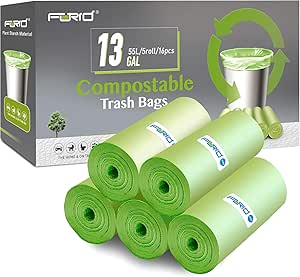 | Best Overall for Indoor Kitchens | Capacity: 13 gallons (55 liters) | Dimensions: 24.8 x 31.4 inches | Count: 80 bags | VIEW ON AMAZON | See Our Full Breakdown |
| BioBag The Original Compostable Trash Bag Liners, 64 Gallon, 60 Count |  | Best for Large, Tall Bins | Capacity: 64 gallons | Dimensions: 47 x 60 inches | Thickness: 0.80 mil | VIEW ON AMAZON | See Our Full Breakdown |
| 3 Gallon Compostable Food Scrap Bags, 100 Bags, BPI Certified, ASTM D6400 Standard |  | Best for Food Scrap Caddies | Capacity: 3 gallons | Dimensions: 16.9 x 17.7 inches | Quantity: 100 bags per roll | VIEW ON AMAZON | See Our Full Breakdown |
| Compostable Trash Bags, AYOTEE 13-15 Gallon Tall Kitchen Garbage Bags |  | Best for Thicker Kitchen Liners | Capacity: 13 gallons; described for 13-15 gallon cans | Dimensions: 23.6 x 31.5 inches | Thickness: 1.18 mil | VIEW ON AMAZON | See Our Full Breakdown |
| ECOLipak 13 Gallon Compostable Kitchen Trash Bags with Handles, 100 Count |  | Best for Easy Carrying | Capacity: 49.2 liters (13 gallons) | Dimensions: 24 x 32.28 inches | Thickness: 0.87 mil | VIEW ON AMAZON | See Our Full Breakdown |
| ECOLipak 33 Gallon Compostable Trash Bags, 25 Count |  | Best for Yard Waste | Dimensions: 33.08 x 38.98 inches | Capacity: 124.9 liters | Thickness: 1 mil | VIEW ON AMAZON | See Our Full Breakdown |
| 55-60 Gallon Compostable Trash Bags, Heavy Duty Extra Thick 1.57 Mil, 15 Bags |  | Best for Heavy-Duty Large Bins | Dimensions: 42 x 48 inches | Capacity: 55–60 gallons | Thickness: 1.57 mil | VIEW ON AMAZON | See Our Full Breakdown |
| 13 Gallon Compostable Trash Bags Drawstring Heavy Duty Extra Thick 1 Mil 35 Bags |  | Best Drawstring Kitchen Pick | Capacity: 13 gallons | Dimensions: 25.2 x 25.6 inches | Thickness: 1 mil | VIEW ON AMAZON | See Our Full Breakdown |
| compostable trash bag | Capacity | Dimensions | Material | Thickness |
|---|---|---|---|---|
| FORID Compostable Trash Bags | 13 gallons (55 liters) | 24.8 x 31.4 inches | Plant-based bioplastic (plant starch material) | — |
| BioBag The Original Compostabl | 64 gallons | 47 x 60 inches | — | 0.80 mil |
| 3 Gallon Compostable Food Scra | 3 gallons | 16.9 x 17.7 inches | Plant-based PLA and PBAT | — |
| Compostable Trash Bags | 13 gallons; described for 13-15 gallon cans | 23.6 x 31.5 inches | Plant-based compostable materials | 1.18 mil |
| ECOLipak 13 Gallon Compostable | 49.2 liters (13 gallons) | 24 x 32.28 inches | PLA (corn-based) | 0.87 mil |
| ECOLipak 33 Gallon Compostable | 124.9 liters | 33.08 x 38.98 inches | PLA, corn-based | 1 mil |
| 55-60 Gallon Compostable Trash | 55–60 gallons | 42 x 48 inches | — | 1.57 mil |
| 13 Gallon Compostable Trash Ba | 13 gallons | 25.2 x 25.6 inches | Compostable PBAT | 1 mil |
More Details on Our Top Picks
FORID Compostable Trash Bags, 13 Gallon, Unscented, 80 Count
FORID is my most balanced pick for a standard kitchen bin: its 13-gallon capacity, unscented material, and 80-count pack suit routine indoor waste without moving into oversized-liner territory. Its listed ASTM D6400 and EN 13432 standards set it apart from options whose descriptions cite only ASTM D6400, while the octagonal sealed bottom and stated tear resistance address the messes that matter in daily use. Compared with the AYOTEE 13-15 Gallon bags, FORID offers more bags per pack and a stated weight capacity, though AYOTEE lists a thicker 1.18 mil material. FORID’s tradeoff is fit: the 24.8-by-31.4-inch dimensions may not suit every bin sold as 13 gallons. Its composting claims also specify backyard or home facilities, so buyers should check local acceptance.
Pros:- 80 bags provide a larger pack than the AYOTEE 60-count option
- Unscented for kitchens and other indoor spaces
- Lists ASTM D6400 and EN 13432 compostability standards
- Octagonal sealed bottom and stated resistance to leaks and tears
Cons:- Listed dimensions may not fit every 13-gallon bin
- Composting claims specify backyard or home facilities, which may not match local collection rules
Best for: Households with a standard 13-gallon kitchen bin who want unscented liners and a larger pack for regular indoor use
Not ideal for: People with unusually wide or tall 13-gallon bins, or anyone who needs a liner confirmed for a specific local composting program
- Capacity:13 gallons (55 liters)
- Dimensions:24.8 x 31.4 inches
- Count:80 bags
- Material:Plant-based bioplastic (plant starch material)
- Color:Green
- Scent:Unscented
- Certifications:ASTM D6400 and EN 13432
- Stated load capacity:At least 83 lb (38 kg)
Our verdict“Choose FORID for a standard kitchen bin if its listed dimensions fit and its specified composting route works for you.”
BioBag The Original Compostable Trash Bag Liners, 64 Gallon, 60 Count
BioBag fills the large-bin role in this group: its 64-gallon capacity and 47-by-60-inch size suit tall, high-volume cans that the kitchen-size FORID and AYOTEE bags cannot line. The star-sealed bottom adds support where a large load puts pressure on the liner, and BPI certification to ASTM D6400 gives buyers a stated compostability standard to check against local rules. The 0.80 mil thickness is specified, so shoppers can compare it directly with AYOTEE’s thicker 1.18 mil kitchen bags, though those serve a different size class. BioBag’s main tradeoff is its narrow fit: it is too large for ordinary kitchen bins and the description says it may cost more than conventional plastic liners. I would choose it for a matching tall can, not as a general household liner.
Pros:- 64-gallon capacity and large dimensions fit tall, high-volume cans
- Star-sealed bottom is designed to add strength
- BPI certified to meet ASTM D6400 standards
- 60 liners in the pack
Cons:- Too large for standard kitchen and small bins
- At 0.80 mil, thickness is specified but no heavy-duty load rating is provided
- May cost more than conventional plastic bags
Best for: Facilities, shared kitchens, or households with a tall trash can sized for a 64-gallon liner
Not ideal for: People lining standard kitchen or small household bins, since the 47-by-60-inch liner is designed for large cans
- Capacity:64 gallons
- Dimensions:47 x 60 inches
- Thickness:0.80 mil
- Quantity:60 liners
- Certification:BPI certified to meet ASTM D6400 standards
- Bottom:Star-sealed
Our verdict“Pick BioBag when your can needs a 64-gallon liner and you can confirm the certified bag is accepted by your composting route.”
3 Gallon Compostable Food Scrap Bags, 100 Bags, BPI Certified, ASTM D6400 Standard
This 3-gallon liner is built for scraps, not household trash: the compact 16.9-by-17.7-inch size fits a countertop caddy or small compost pail, making it more practical for daily food prep than the full-size FORID kitchen bags. Its 100-bag roll and BPI certification to ASTM D6400 suit buyers who collect organics for a compatible industrial composting program. That route is the key tradeoff: the description says the bags decompose within 180 days in industrial composting conditions, so they are a poor match for shoppers who need a backyard-compostable liner. The nine-month use guidance also means I would avoid buying more rolls than I can use in time. Compared with the 13-gallon AYOTEE bags, this one is easier to handle in a small caddy, but far too small for a kitchen trash can.
Pros:- Compact 3-gallon format suits food scrap pails and small compost bins
- 100 bags per roll
- Made from plant-based PLA and PBAT
- BPI certified and meets ASTM D6400
Cons:- Requires industrial composting conditions for proper decomposition
- Recommended for use within nine months
- Too small for standard kitchen trash cans
Best for: Home cooks who collect food scraps in a 3-gallon caddy for an industrial composting program
Not ideal for: People seeking a liner for a full-size kitchen trash can or a bag that can break down in a backyard compost setup
- Capacity:3 gallons
- Dimensions:16.9 x 17.7 inches
- Quantity:100 bags per roll
- Material:Plant-based PLA and PBAT
- Certification:BPI certified
- Standard:ASTM D6400
- Decomposition conditions:Industrial composting; described as decomposing within 180 days
- Use guidance:Use within nine months for best quality
Our verdict“Choose this roll for a small food scrap caddy only if you have access to an industrial composting route.”
Compostable Trash Bags, AYOTEE 13-15 Gallon Tall Kitchen Garbage Bags
AYOTEE is the thickness-focused kitchen pick: its listed 1.18 mil material is thicker than the 0.87 mil ECOLipak bags, which may appeal to buyers who want a more substantial liner for everyday household waste. The 23.6-by-31.5-inch dimensions and 13-gallon capacity target common tall kitchen cans, while the unscented description suits indoor use. Unlike FORID, AYOTEE is described as fitting 13-to-15-gallon cans, giving it a broader stated capacity range, though shoppers should still compare the bag dimensions with their bin. The pack contains 60 bags, fewer than either FORID’s 80 or ECOLipak’s 100. Its compostability description points to industrial facilities for full breakdown, so this is not the pick for someone who specifically needs a home-composting option.
Pros:- Listed 1.18 mil thickness exceeds the 0.87 mil ECOLipak specification
- Sized for 13-15 gallon kitchen cans
- Unscented for indoor use
- Plant-based compostable material
Cons:- Full breakdown is described as requiring industrial composting
- 60-count pack is smaller than FORID’s 80 and ECOLipak’s 100
- Dimensions still need to match the buyer’s specific bin
Best for: Households with a tall kitchen bin that want a thicker, unscented liner and can use industrial composting
Not ideal for: Buyers who need backyard compostability or want the largest pack among the 13-gallon options
- Capacity:13 gallons; described for 13-15 gallon cans
- Dimensions:23.6 x 31.5 inches
- Thickness:1.18 mil
- Count:60 bags
- Material:Plant-based compostable materials
- Scent:Odorless and unscented
- Composting conditions:Industrial composting for full breakdown
Our verdict“Pick AYOTEE if you prioritize a thicker kitchen liner and have an industrial composting option.”
ECOLipak 13 Gallon Compostable Kitchen Trash Bags with Handles, 100 Count
ECOLipak’s handles make it the easiest of these kitchen liners to tie and carry, a useful difference when taking a full bag from the kitchen to an outdoor bin. Its 100-count, two-roll pack also has more bags than FORID’s 80 or AYOTEE’s 60, though the listed 0.87 mil thickness is below AYOTEE’s 1.18 mil. That tradeoff points to convenience and quantity over the thickest specified film. The sealed bottom is intended to help contain leaks, and the 13-gallon capacity targets standard kitchen cans. Its BPI and OK COMPOST INDUSTRIAL certifications make the composting route explicit: buyers need access to industrial composting, unlike FORID’s stated backyard or home facility claim. The 10-to-12-month shelf life also favors households that will use the pack steadily.
Pros:- Handles simplify tying and carrying full bags
- 100 bags across two rolls
- 13-gallon capacity fits many standard kitchen bins
- BPI and OK COMPOST INDUSTRIAL certifications are listed
Cons:- 0.87 mil thickness is lower than AYOTEE’s listed 1.18 mil
- Industrial composting route may not be available locally
- Shelf life is limited to 10-12 months
Best for: Busy households that regularly carry kitchen waste outdoors and can use an industrial composting program
Not ideal for: Buyers who need a thicker specified liner, want backyard composting, or may store bags beyond the stated shelf life
- Capacity:49.2 liters (13 gallons)
- Dimensions:24 x 32.28 inches
- Thickness:0.87 mil
- Count:100 bags (2 rolls)
- Material:PLA (corn-based)
- Certifications:BPI; OK COMPOST INDUSTRIAL
- Shelf life:10-12 months
- Features:Handles; sealed bottom
Our verdict“Choose ECOLipak for handles and a 100-bag kitchen pack if industrial composting is available and you will use the bags within a year.”
ECOLipak 33 Gallon Compostable Trash Bags, 25 Count
ECOLipak’s 33-gallon capacity suits curbside bins and larger yard-cleanup loads, giving it a useful middle ground between the 13-gallon kitchen bags and the 55–60-gallon option in this roundup. Its corn-based PLA material is listed with BPI and OK COMPOST INDUSTRIAL certifications, so it is aimed at buyers with access to an industrial composting route. At 1 mil thick, it is less substantial on paper than the 1.57-mil large bags, which may matter when collecting heavy or wet debris. The 25-bag count also means fewer spares than the 35-count kitchen pack. A noticeable corn-material scent and a 10–12 month shelf life call for attentive storage and turnover. Choose it for spacious, routine yard or outdoor waste handling; skip it if your main need is a compact kitchen liner.
Pros:- 33-gallon capacity fits larger indoor or outdoor bins
- BPI and OK COMPOST INDUSTRIAL certifications are listed
- Corn-based PLA material is designed to biodegrade
- Easy-tear construction supports quick bag changes
Cons:- At 1 mil, it is thinner than the 1.57-mil 55–60-gallon bags
- Corn-material scent may be noticeable
- 10–12 month shelf life requires proper storage and timely use
Best for: Homeowners who need a large liner for curbside bins or routine yard waste and can use an industrial composting program
Not ideal for: Small-kitchen households or buyers who need thicker bags for heavy, wet loads
- Dimensions:33.08 x 38.98 inches
- Capacity:124.9 liters
- Thickness:1 mil
- Count:25 bags
- Material:PLA, corn-based
- Certifications:BPI; OK COMPOST INDUSTRIAL
- Listed decomposition time:3–6 months
- Shelf life:10–12 months
Our verdict“Pick this for a certified, large-capacity yard or curbside liner when a 33-gallon size fits your bin and industrial composting is available.”
55-60 Gallon Compostable Trash Bags, Heavy Duty Extra Thick 1.57 Mil, 15 Bags
This 55–60-gallon bag is the lineup’s large-load choice, with a 1.57-mil multi-layer film that gives it a thickness advantage over the 1-mil ECOLipak 33 Gallon Compostable Trash Bags and the 13-gallon kitchen options. That extra material is better suited to bulky yard, kitchen, or restaurant waste where a smaller liner would need frequent changes. The tradeoff is its size: it can be excessive for ordinary household cans, and the 15-bag pack offers fewer liners than the 35-count kitchen bag. Its listed ASTM D6400, BPI, and OK Compost Home certifications distinguish it from products in this batch that list industrial composting certification only, though acceptance still depends on local facilities. Avoid excessive heat and use within a year for best performance.
Pros:- 1.57-mil thickness is higher than the 1-mil ECOLipak 33 Gallon bags
- Sized for 55–60-gallon cans and bulky waste
- Listed ASTM D6400, BPI, and OK Compost Home certifications
- Odor-reducing, leak-resistant design is suited to food scraps
Cons:- Large format may be unnecessary for typical household trash cans
- Pack contains 15 bags, fewer than the 35-count 13-gallon option
- Best performance requires use within one year and avoidance of excessive heat
Best for: Restaurants, large households, or yard-care users with 55–60-gallon bins and access to a composting service that accepts these bags
Not ideal for: People with standard kitchen cans or anyone who needs a compact liner that stores easily
- Dimensions:42 x 48 inches
- Capacity:55–60 gallons
- Thickness:1.57 mil
- Quantity:15 bags
- Film:Multi-layer
- Certifications:ASTM D6400; BPI; OK Compost Home
- Listed uses:Yard, kitchen, and restaurant waste
- Use guidance:Use within one year; avoid excessive heat
Our verdict“Choose these when your bin is genuinely 55–60 gallons and you need a thicker compostable bag for bulky or food-heavy waste.”
13 Gallon Compostable Trash Bags Drawstring Heavy Duty Extra Thick 1 Mil 35 Bags
The drawstring closure makes this the most convenient everyday kitchen pick in this batch, helping contain food scraps and carry a full bag without relying on handles. Its 13-gallon capacity matches common kitchen waste needs, while the 35-count pack provides more liners than the 15-bag large-can option. Compared with the ECOLipak 33 Gallon bags, it is easier to fit in a standard kitchen can but lacks their larger capacity for yard or curbside use. At 1 mil, its film is thinner than the 1.57-mil 55–60-gallon bags, so buyers handling very heavy or wet loads may prefer that sturdier format. It lists ASTM D6400 and BPI certifications, but local composting facilities may not accept every certified bag. Plan to use the pack within about a year.
Pros:- Drawstring closure helps carry and secure a full bag
- 13-gallon capacity suits standard kitchen bins
- 35 bags per pack
- ASTM D6400 and BPI certifications are listed
Cons:- 1-mil thickness is below the 1.57-mil large-can option
- Shelf life is approximately one year
- Local composting facilities may not accept the bags
Best for: Kitchen users with standard 13-gallon cans who want a drawstring closure for routine food-scrap disposal
Not ideal for: Buyers handling bulky yard waste, especially heavy or very wet loads, or households whose local composting facility rejects these bags
- Capacity:13 gallons
- Dimensions:25.2 x 25.6 inches
- Thickness:1 mil
- Unit count:35 bags
- Material:Compostable PBAT
- Closure:Drawstring
- Certifications:ASTM D6400; BPI
- Shelf life:Approximately 1 year
Our verdict“Pick this for a standard kitchen can when a drawstring matters more than extra capacity or the thicker film of a large-bin bag.”

How We Picked
I compared the eight listings by the details that shape a useful purchase: stated capacity, intended bin or waste type, closure style, thickness claims, pack size, and certification information. I gave priority to a clear everyday role and a size likely to match common household routines, then placed more specialized large-format and heavy-duty options where their narrower use case made sense. The ranking reflects the information provided in each product name; it does not establish that every bag will perform the same way in every bin or composting system.
FORID’s 13-gallon bags lead as a straightforward kitchen-size pick. The smaller food-scrap bags rank well for a dedicated countertop or caddy, while BioBag and ECOLipak 33-gallon serve larger containers. AYOTEE and ECOLipak’s handled kitchen bags offer alternative fits and closures, and the two explicitly heavy-duty listings are aimed at loads where thickness and capacity matter more than a compact kitchen routine. I treat certification and disposal compatibility as separate buyer checks, since a product claim alone cannot determine what a local facility accepts.
| compostable trash bag | Material | Certifications |
|---|---|---|
| FORID Compostable Trash Bags | Plant-based bioplastic (plant starch material) | ASTM D6400 and EN 13432 |
| BioBag The Original Compostabl | — | — |
| 3 Gallon Compostable Food Scra | Plant-based PLA and PBAT | — |
| Compostable Trash Bags | Plant-based compostable materials | — |
| ECOLipak 13 Gallon Compostable | PLA (corn-based) | BPI; OK COMPOST INDUSTRIAL |
| ECOLipak 33 Gallon Compostable | PLA, corn-based | BPI; OK COMPOST INDUSTRIAL |
| 55-60 Gallon Compostable Trash | — | ASTM D6400; BPI; OK Compost Home |
| 13 Gallon Compostable Trash Ba | Compostable PBAT | ASTM D6400; BPI |
Factors to Consider When Choosing Compostable Trash Bags
Before choosing a pack, match the bag to both the container and the route your waste takes. These listings span small food-scrap liners, common kitchen sizes, and large-capacity bags, so comparing count alone can lead to a poor fit. I’d check the following factors before deciding.
Match capacity and dimensions to the bin
Capacity labels are a useful starting point, but they do not tell you the bag’s width, height, or how far it will fold over a rim. Measure your bin and compare those dimensions with the product listing when available. A bag that is technically the right gallon size may still be awkward if the opening is narrow or the can is unusually tall. For compost caddies, a snug fit helps keep the liner from slipping under food scraps. For large outdoor containers, check that the bag can reach the base without stretching across the rim. Buying a larger size “just in case” can create excess material and a loose fit.
Check whether the certification fits your disposal route
Compostable claims do not automatically mean a bag belongs in every compost bin. Look for the exact certification named by the manufacturer, then check whether your municipal collection program or private facility accepts that certification. Some services accept only specific materials, and home composting conditions can differ from industrial processing. If you use a curbside program, its rules should guide your choice more than a broad label on the package. When the destination is unclear, ask the service provider before stocking up. A certified bag that your facility rejects may need to go in another waste stream.
Choose closure style for how you carry waste
Handles can make a small kitchen liner easier to tie and lift, while a drawstring gives a larger bag a convenient way to gather its opening. A flat top may work fine when the bag stays inside a caddy and is carried only a short distance. Think about whether you will lift the bag by its closure, tie it shut, or leave it open inside a bin. Closures can also reduce spills during a trip to an outdoor collection point, but they do not compensate for an overloaded bag. Match the closure to your routine instead of treating one style as universally stronger.
Treat thickness claims as one part of durability
A stated mil thickness can help compare bags, but it does not fully describe how a bag handles seams, wet scraps, or sharp edges. The 1 mil and 1.57 mil claims in this lineup point toward heavier construction, though the listing alone does not prove how the bag will perform with a particular load. For ordinary dry waste, an extra-thick bag may add more material than your routine requires. For wet food scraps or bulky yard waste, consider how weight and puncture risk change once the bag is lifted. Avoid packing compostable liners beyond their intended load, and keep sharp sticks or broken items out of them.
Compare pack count with your actual routine
A high count can be convenient if you use a liner every day, but pack size matters less when a product is reserved for occasional yard cleanup. The small 100-bag listing is tailored to frequent caddy use, while large-capacity options come in smaller counts that may better suit intermittent needs. Estimate how often you replace a liner and where you can store the pack before choosing. Also check the product’s stated shelf life and storage guidance, if provided, because compostable materials may have storage requirements. Buying multiple packs before confirming fit or local acceptance can leave you with bags that do not suit your routine.
Pay for capacity or strength only when it solves a real problem
Large-volume and heavy-duty bags make sense when a smaller liner would need frequent replacement or struggle with the load. They are less useful for a countertop caddy, where a compact bag is easier to remove and may better match the disposal volume. Consider what goes into the bag: food scraps, light household waste, and bulky garden debris create different demands. If your bin is shared or used by several people, a larger capacity may reduce change frequency. If you mainly collect light scraps, prioritize a proper fit and accepted composting claims over maximum size or thickness.
Frequently Asked Questions
Can I put any bag labeled compostable in my curbside food-scrap bin?
No; acceptance depends on the rules of your local collection program or processing facility. Check the exact certification or product requirements the service lists, since a general compostable label may not be enough. The 3-gallon listing names BPI certification and ASTM D6400, but that still does not establish acceptance by every program. If the service does not publish clear guidance, ask before buying a large pack. This check can prevent rejected loads and wasted liners.
Should I use a small caddy liner or a full-size kitchen bag for food scraps?
Choose based on how much food waste you collect between disposal trips and where the container sits. A small liner can be easier to remove from a countertop caddy and may help you empty scraps more often. A 13-gallon bag can suit a larger kitchen bin, but it may be excessive if the only contents are food scraps. Frequent emptying can reduce the time wet material sits in the bag. Check that the liner dimensions fit the caddy, since gallon capacity alone may not indicate a secure rim fit.
Does a thicker compostable bag always hold heavier waste better?
Thickness is one clue, not a guarantee of load performance. Seams, material composition, bag dimensions, and the shape of what you place inside also affect tearing and leakage. The 1 mil and 1.57 mil listings specifically emphasize extra thickness, which may suit tougher loads better than a basic liner. Still, wet scraps can add weight quickly, and sharp branches or edges may puncture even a thicker bag. Use the bag within its stated purpose and lift from the base when carrying a heavy load.
Are large-capacity compostable bags a good choice for everyday kitchen waste?
They can work if your kitchen bin is designed for that size, but a large liner may be loose in a standard household can. A poor fit can let scraps fall between the bag and bin or make the liner awkward to remove. The 33-gallon and 55–60-gallon options are aimed at much larger containers than the common 13-gallon kitchen format. Measure the can before choosing by capacity label alone. For routine kitchen use, a properly fitted smaller bag is usually easier to manage.
How should I decide between handles and a drawstring closure?
Think about how you tie and carry the liner. Handles can be convenient for gathering and lifting smaller kitchen bags, while a drawstring helps cinch a larger opening before transport. Neither style removes the need to check fit, load limits, and disposal rules. If the bag stays in a bin until collection, closure may matter less than capacity and compatibility. If you carry it outdoors, choose the closure that is easiest for you to secure without pulling on a heavily loaded top edge.
What are the best best compostable trash bags?
The best compostable trash bags depend on where you plan to use them and what you need to dispose of. For kitchen scraps, look for a size and strength that suit your bin, and check whether the bags are intended for home composting or a commercial facility. The picks above offer options to compare across those practical considerations. Before buying, review the product’s disposal guidance and your local composting rules, since accepted materials vary by program. Choosing among the best compostable trash bags means matching the bag’s intended use with the composting service available to you.
Conclusion
For the best overall kitchen fit, I’d choose FORID’s 13-gallon bags as the starting point for a common household bin. For value-oriented frequent caddy use, the 100-count ECOLipak 3-gallon pack offers the largest stated quantity in its small-bag role, provided its certification matches your disposal route. BioBag’s 64-gallon liners are the premium large-bin choice for buyers who need that specific capacity, while the small 3-gallon format is the easiest entry point for someone beginning to separate food scraps. For larger containers, compare BioBag’s 64-gallon option with ECOLipak’s 33-gallon bags; for tougher, oversized loads, look at the 55–60-gallon 1.57 mil bags. Check dimensions and local acceptance before choosing so the bag fits your bin and your composting service.
Columbus Day / Indigenous Peoples' Day Picks
long weekend sales
As an affiliate, we earn on qualifying purchases.