Closed-back audiophile headphones can bring detailed listening and useful isolation to shared rooms, recording sessions, and commutes, but no single pair suits every use. My best overall pick is the Sennheiser HD 620S for buyers who want a listening-focused closed design, while the FiiO FT1 stands out for its solid-wood cups and the beyerdynamic DT 770 PRO X for flexible studio use. The main tradeoffs are isolation versus a more open presentation, comfort versus clamp and weight, and easy driveability versus the needs of higher-impedance models. This roundup compares all 14 options by sound use, fit, build, and source demands. Read on for the full breakdown and help matching a pair to your listening habits.

Get your wardrobe favorites delivered free with Prime
- Fast, free delivery on millions of items
- Prime Video, Amazon Music and more included
- Member-only deals all year
Complete the kit


Key Takeaways
- The HD 620S is the listening-focused standout: it gives this lineup a more audiophile-oriented closed-back option than the studio-first DT 770 and MDR-7506 families.
- Impedance changes the practical choice: the 80-ohm DT 770 models are easier to pair broadly than the 250-ohm versions, which call for more attention to the source.
- The DT 770 models prioritize studio utility: their established, over-ear design makes them compelling for long sessions, but buyers should distinguish the 48-ohm Pro X from the traditional 80- and 250-ohm variants.
- The FT1 brings a different material and tuning proposition: its solid-wood cups set it apart visually and physically, but wood construction alone does not determine sound quality or comfort.
- Purpose matters more than the audiophile label: the MDR-7506, HD 280 Pro, and ATH-M20x are more naturally suited to monitoring and practical work than buyers seeking a listening-first presentation.
| beyerdynamic DT 770 PRO Studio Headphones, 80 Ohm, Black |  | Best for Long Studio Sessions | Design: Closed-back, over-ear | Impedance: 80 ohms | Cable: 3 m, straight, single-sided | VIEW ON AMAZON | See Our Full Breakdown |
| Sony MDR-7506 Professional Studio Headphones | 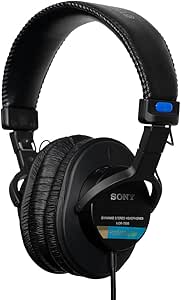 | Best for Portable Studio Monitoring | Type: Wired, over-ear studio headphones | Driver size: 40 mm | Frequency response: 10 Hz–20 kHz | VIEW ON AMAZON | See Our Full Breakdown |
| beyerdynamic DT 770 Pro X Closed-Back Studio Headphones, 48 Ohm |  | Best for Easy Device Pairing | Design: Closed-back, over-ear | Impedance: 48 ohms | Driver: 45 mm STELLAR.45 dynamic | VIEW ON AMAZON | See Our Full Breakdown |
| Sennheiser HD 569 Closed-Back Wired Audiophile Headphones |  | Best for Calls and Everyday Listening | Design: Closed-back, around-ear | Connectivity: Wired | Transducer size: 38 mm | VIEW ON AMAZON | See Our Full Breakdown |
| Sennheiser HD 620S Closed-Back Over-Ear Headphones |  | Best Premium Pick for Spacious Closed-Back Sound | Design: Closed-back, over-ear | Drivers: 42 mm dynamic drivers with 38 mm diaphragms | Impedance: 150 ohms | VIEW ON AMAZON | See Our Full Breakdown |
| beyerdynamic DT 770 Pro Closed-Back Studio Headphones, 80 Ohm, Black |  | Best for Long Studio Sessions | Type: Closed-back dynamic headphones | Impedance: 80 ohms | Frequency range: 5 Hz–35,000 Hz | VIEW ON AMAZON | See Our Full Breakdown |
| Sennheiser HD 280 Pro Wired Over-Ear Headphones |  | Best for Noise Attenuation | Design: Closed, dynamic, around-ear | Frequency response: 8–25,000 Hz | Noise attenuation: Up to 32 dB | VIEW ON AMAZON | See Our Full Breakdown |
| Sennheiser HD 480 PRO Closed-Back Studio Headphones | 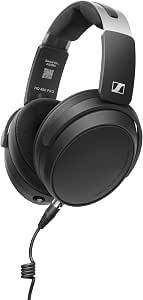 | Best for Mobile Production Comfort | Design: Closed-back, over-ear | Driver type: Dynamic | Impedance: 130 ohms | VIEW ON AMAZON | See Our Full Breakdown |
| beyerdynamic DT 770 PRO Closed-Back Studio Headphones, 250 Ohm, Black |  | Best for Dedicated Headphone Rigs | Design: Closed-back, over-ear | Impedance: 250 ohms | Connectivity: Wired | VIEW ON AMAZON | See Our Full Breakdown |
| Audio-Technica ATH-M50x Professional Studio Monitor Headphones | 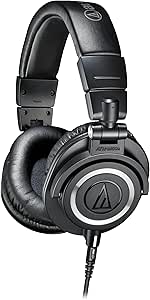 | Best for Studio-to-Everyday Flexibility | Driver size: 45 mm | Frequency response: 20 Hz–28,000 Hz | Impedance: 38 ohms | VIEW ON AMAZON | See Our Full Breakdown |
| Audio-Technica ATH-M20x Professional Studio Monitor Headphones |  | Best Entry-Level Studio Pick | Driver size: 40 mm | Driver type: Dynamic | Frequency response: 15–20,000 Hz | VIEW ON AMAZON | See Our Full Breakdown |
| FiiO FT1 Over-Ear Headphones with 32Ω Dynamic Drivers and Solid Wood Cups |  | Best for Cable Flexibility | Driver type: Dynamic | Driver size: 6 cm | Impedance: 32 ohms | VIEW ON AMAZON | See Our Full Breakdown |
| beyerdynamic DT 770 PRO 250 Ohm Closed-Back Studio Headphones |  | Best for Amp-Driven Studio Setups | Type: Closed-back dynamic over-ear headphones | Impedance: 250 ohms | Frequency range: 5–35,000 Hz | VIEW ON AMAZON | See Our Full Breakdown |
| Sony MDR-M1 Professional Reference Closed-Back Monitor Headphones | 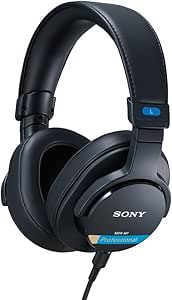 | Best Lightweight Reference Pick | Type: Wired closed-back monitor headphones | Frequency response: 5 Hz–80 kHz | Weight: 216 g | VIEW ON AMAZON | See Our Full Breakdown |
| closed back audiophile headphone | Impedance | Cable | Design | Weight |
|---|---|---|---|---|
| beyerdynamic DT 770 PRO Studio | 80 ohms | 3 m, straight, single-sided | Closed-back, over-ear | 9.5 oz |
| Sony MDR-7506 Professional Stu | — | — | — | 8 oz |
| beyerdynamic DT 770 Pro X Clos | 48 ohms | Detachable, 3 m | Closed-back, over-ear | 10.8 oz |
| Sennheiser HD 569 Closed-Back | 23 ohms | — | Closed-back, around-ear | — |
| Sennheiser HD 620S Closed-Back | 150 ohms | Detachable, 1.8 m | Closed-back, over-ear | 400 g |
| beyerdynamic DT 770 Pro Closed | 80 ohms | 3 m straight, fixed | — | 9.5 ounces |
| Sennheiser HD 280 Pro Wired Ov | — | Coiled, 1–3 m | Closed, dynamic, around-ear | 220 g (7.8 oz) |
| Sennheiser HD 480 PRO Closed-B | 130 ohms | Detachable, 3 m coiled | Closed-back, over-ear | 272 g |
| beyerdynamic DT 770 PRO Closed | 250 ohms | 3 m coiled | Closed-back, over-ear | — |
| Audio-Technica ATH-M50x Profes | 38 ohms | Detachable | Over-ear, foldable | — |
| Audio-Technica ATH-M20x Profes | 47 ohms | Single-sided, 9.8 ft (2.99 m) | Closed-back, circumaural, over-ear | — |
| FiiO FT1 Over-Ear Headphones w | 32 ohms | — | — | — |
| beyerdynamic DT 770 PRO 250 Oh | 250 ohms | Fixed, coiled, 3 meters | — | 9.5 ounces |
| Sony MDR-M1 Professional Refer | 50 ohms | — | — | 216 g |
More Details on Our Top Picks
beyerdynamic DT 770 PRO Studio Headphones, 80 Ohm, Black
The DT 770 PRO 80 Ohm is a strong fit for listeners who want closed-back isolation without giving up breathable over-ear padding. Its velour ear pads and serviceable construction make it more appealing for long monitoring sessions than the more compact, folding Sony MDR-7506, though the Sony is easier to pack away. The 80-ohm impedance suits many interfaces and home listening setups, but buyers relying on low-powered portable devices may prefer the DT 770 Pro X at 48 ohms. A 3 m fixed cable gives room to move around a desk, yet feels cumbersome for travel. The closed cups help limit leakage, but can still feel warm during extended wear. This is the more repair-friendly, comfort-focused studio choice, not the most portable one.
Pros:- Breathable velour ear pads suit extended listening sessions
- Closed-back design helps limit sound leakage
- Serviceable construction with replaceable parts
- Includes both 3.5 mm and 1/4-inch connection options
Cons:- The 3 m cable is long for portable listening and is not listed as detachable
- Closed cups may feel warm during long sessions
- At 80 ohms, it is less suited to some low-powered portable sources than the 48-ohm DT 770 Pro X
Best for: Home-studio listeners and audio editors who want comfortable velour pads, closed-back monitoring, and a headphone they can maintain over time.
Not ideal for: Commuters or phone-first listeners who need a short, detachable cable and a lightweight setup; the long fixed cable and 80-ohm load are less convenient.
- Design:Closed-back, over-ear
- Impedance:80 ohms
- Cable:3 m, straight, single-sided
- Connector:3.5 mm with 1/4-inch (6.35 mm) adapter
- Ear pads:Velour
- Weight:9.5 oz
- Warranty:2 years
- Country of manufacture:Germany
Our verdict“Choose the DT 770 PRO 80 Ohm for desk-based monitoring and long sessions, but pick the DT 770 Pro X if easier portable-device pairing matters more.”
Sony MDR-7506 Professional Studio Headphones
The Sony MDR-7506 earns its place for buyers who want a practical closed-ear monitor that folds for storage and arrives with a case and 1/4-inch adapter. Its 40 mm drivers and stated 10 Hz–20 kHz response suit monitoring and home audio, while the foldable design gives it a travel advantage over the larger-feeling beyerdynamic DT 770 PRO. That convenience has limits: the Sony’s 9.8 ft non-detachable cord is just as awkward on the move as the beyerdynamic’s long cable, and damage to it cannot be solved by swapping in a replacement. The MDR-7506 is the straightforward, packable work option in this group, rather than the pick for owners who value cable serviceability or replaceable parts.
Pros:- Folds for easier storage and travel
- Closed-ear construction helps reduce external noise
- Includes a soft case and 1/4-inch adapter
- 40 mm drivers and a stated 10 Hz–20 kHz frequency response
Cons:- The 9.8 ft cord is non-detachable and cannot be readily replaced
- Long cable can snag or feel unwieldy outside a studio
- Less serviceable than the replaceable-parts DT 770 PRO
Best for: Recording students, location editors, and home listeners who need foldable closed-back headphones with a supplied case and 1/4-inch adapter.
Not ideal for: Buyers who want a detachable cable for easy replacement or a short lead for phone listening; the fixed 9.8 ft cord can be inconvenient.
- Type:Wired, over-ear studio headphones
- Driver size:40 mm
- Frequency response:10 Hz–20 kHz
- Cord length:9.8 ft
- Cord:Non-detachable
- Plug:Gold-plated
- Included accessories:1/4-inch adapter and soft case
- Weight:8 oz
Our verdict“Pick the MDR-7506 for a foldable monitoring headphone with useful included accessories, but skip it if a detachable cable is a priority.”
beyerdynamic DT 770 Pro X Closed-Back Studio Headphones, 48 Ohm
The DT 770 Pro X keeps the closed-back, studio-oriented approach of the DT 770 PRO but lowers impedance to 48 ohms, making it a more natural match for laptops, phones, consoles, and interfaces without a dedicated headphone amp. Its detachable 3 m cable is a practical improvement over the fixed lead on the Sony MDR-7506, since cable replacement is less of a commitment. The 45 mm STELLAR.45 dynamic drivers and broad stated frequency range mark it out as a modern, flexible studio option, while replaceable velour pads support upkeep. It is still a wired, full-size headphone with a long cable, so it is not a compact travel solution. Compared with the 80-ohm DT 770 PRO, this version favors source flexibility over the simpler, lighter listed build.
Pros:- 48-ohm impedance supports use with common devices without a headphone amp
- Detachable cable is easier to replace than the MDR-7506’s fixed cord
- Replaceable velour ear pads support long-term maintenance
- Closed-back design helps isolate sound during recording
Cons:- The 3 m cable can be unwieldy for portable use
- Wired-only connection restricts movement
- Not water resistant
Best for: Creators who move between a laptop, console, phone, or audio interface and want a closed-back wired headphone that does not call for a dedicated amp.
Not ideal for: Listeners seeking a compact wireless commuter headphone or a short-cable setup; it remains full-size, wired, and supplied with a 3 m cable.
- Design:Closed-back, over-ear
- Impedance:48 ohms
- Driver:45 mm STELLAR.45 dynamic
- Frequency range:5 Hz–35,000 Hz
- Sensitivity:97 dB
- Cable:Detachable, 3 m
- Weight:10.8 oz
- Included:3 m cable and carrying bag
- Warranty:2 years
Our verdict“Choose the DT 770 Pro X if you want studio-style closed-back headphones that pair more readily with everyday devices than the 80-ohm DT 770 PRO.”
Sennheiser HD 569 Closed-Back Wired Audiophile Headphones
The Sennheiser HD 569 is the most flexible everyday pick here for someone who wants closed-back listening headphones that can also handle calls. Its two detachable cables separate desk use from mobile use: the longer lead ends in a 6.3 mm jack, while the shorter cable adds an inline microphone and remote. That gives it a practical advantage over the studio-focused beyerdynamic DT 770 PRO, which is supplied with a single long cable and no listed call controls. The 23-ohm transducers are a relatively easy match for common sources, and the soft, replaceable pads help with upkeep. The tradeoff is a less clearly specified technical profile than the DT 770 Pro X or HD 620S, so buyers prioritizing detailed driver and frequency data may prefer those models.
Pros:- Two detachable cables support desk and mobile use
- Short cable includes an inline microphone and remote
- 23-ohm impedance suits a range of everyday audio sources
- Soft, replaceable ear pads support continued use
Cons:- Wired listening only
- The longer cable is 3 m and ends in a 6.3 mm jack, which may need an adapter for common devices
- Provided specifications include less driver and frequency detail than the DT 770 Pro X
Best for: Listeners who split time between music, computer use, and calls and want one closed-back wired headphone with separate cable options.
Not ideal for: Studio buyers who need clearly specified driver performance or a dedicated monitoring-oriented feature set; the supplied data is less detailed than for the DT 770 Pro X and HD 620S.
- Design:Closed-back, around-ear
- Connectivity:Wired
- Transducer size:38 mm
- Impedance:23 ohms
- Ear pads:Soft, replaceable
- Long cable:3 m with 6.3 mm jack
- Short cable:1.2 m with 3.5 mm jack, inline microphone, and remote
Our verdict“Choose the HD 569 if call controls and cable flexibility matter more than the more detailed studio specifications offered by the DT 770 Pro X.”
Sennheiser HD 620S Closed-Back Over-Ear Headphones
The Sennheiser HD 620S is the choice for listeners who want a more spacious presentation from a sealed headphone, with angled 42 mm dynamic drivers designed to support stereo imaging. That emphasis makes it distinct from the more utilitarian Sony MDR-7506, which folds for travel and is oriented toward practical monitoring. The HD 620S instead asks for a settled listening setup: its 150-ohm impedance is best paired with a capable headphone amplifier or DAC, and the wired-only design does not suit listeners who want wireless convenience. A detachable 1.8 m cable is shorter and more manageable than the 3 m leads supplied with the DT 770 PRO models, while the included adapter adds compatibility with 6.3 mm outputs. This is the most listening-focused pick here, but also the least convenient for low-powered sources.
Pros:- Angled drivers are designed to support spacious sound and precise stereo imaging
- Closed-back construction provides isolation
- Detachable 1.8 m cable is shorter than the 3 m cables on the DT 770 models
- Includes a 3.5 mm to 6.3 mm adapter
Cons:- 150-ohm impedance makes an amplifier or DAC a better match
- Wired-only design limits movement
- At 400 g, it is heavier than the listed Sony MDR-7506
Best for: Critical listeners and gamers with a suitable amplifier or DAC who want closed-back isolation alongside more spacious imaging and a manageable detachable cable.
Not ideal for: Phone-first buyers without an amplifier or listeners who need wireless freedom; the 150-ohm load and wired connection make it less convenient than the 48-ohm DT 770 Pro X.
- Design:Closed-back, over-ear
- Drivers:42 mm dynamic drivers with 38 mm diaphragms
- Impedance:150 ohms
- Cable:Detachable, 1.8 m
- Included adapter:3.5 mm to 6.3 mm
- Weight:400 g
- Color:Black
- Warranty:2 years
Our verdict“Choose the HD 620S for spacious closed-back listening when you have suitable amplification, but favor the DT 770 Pro X for easier pairing with everyday devices.”
beyerdynamic DT 770 Pro Closed-Back Studio Headphones, 80 Ohm, Black
The 80-ohm DT 770 Pro makes the most sense for buyers who want a comfortable, isolating studio headphone without committing to the higher-impedance 250-ohm version. Its replaceable velour pads support longer listening sessions, while the closed-back design helps keep monitoring sound from spilling into a recording. Compared with the Sennheiser HD 280 Pro, this pick puts more emphasis on plush wear comfort than on a compact, collapsible build. It can run from many laptops, though an interface or headphone amp is a better match for its full performance. The tradeoffs are practical: its 3 m cable is fixed, and the long lead can be cumbersome outside a studio. Choose it for a stationary setup, not frequent cable swapping or travel.
Pros:- Closed-back construction provides passive isolation for recording and monitoring.
- Replaceable velour ear pads support extended wear and future upkeep.
- 80-ohm impedance is more approachable for common sources than the 250-ohm DT 770 Pro.
- Includes a 6.35 mm adapter for studio equipment.
Cons:- Fixed 3 m cable cannot be replaced or changed for a shorter option.
- An audio interface or headphone amp can bring better results than a basic source.
Best for: Home-studio owners and podcasters who want passive isolation and velour comfort for extended wired sessions.
Not ideal for: Travelers and listeners who need a detachable cable, compact storage, or a short everyday lead.
- Type:Closed-back dynamic headphones
- Impedance:80 ohms
- Frequency range:5 Hz–35,000 Hz
- Sensitivity:96 dB
- Cable:3 m straight, fixed
- Ear pads:Replaceable grey velour
- Connection:3.5 mm plug with 6.35 mm adapter
- Weight:9.5 ounces
Our verdict“Choose this DT 770 Pro for comfortable, isolating studio use if a fixed long cable suits your setup.”
Sennheiser HD 280 Pro Wired Over-Ear Headphones
The HD 280 Pro is the practical pick when keeping outside sound down matters more than a plush or particularly portable fit. Its stated up to 32 dB of ambient noise attenuation helps during tracking and monitoring in louder rooms, while the linear-monitoring focus suits users who want to judge a recording rather than add extra bass emphasis. Compared with the beyerdynamic DT 770 Pro 80-ohm model, the HD 280 Pro gives you rotating, collapsible earcups and a replaceable cable, but its coiled lead may feel less convenient at a desk or on the go. Replaceable pads and headband padding also help extend its working life. This is a utilitarian studio tool rather than a flexible everyday headphone: it remains wired, and the coiled cable adds weight and reach behavior some listeners dislike.
Pros:- Up to 32 dB of stated ambient noise attenuation helps limit distractions while monitoring.
- Accurate, linear tuning is suited to checking recordings.
- Cable, earpads, and headband padding are replaceable.
- Collapsible, rotating earcups make storage and transport easier.
Cons:- The coiled cable can pull or feel awkward during desk and mobile listening.
- Wired-only operation limits freedom of movement.
Best for: Recording engineers, voice talent, and home-studio users who need substantial passive noise attenuation and replaceable wear parts.
Not ideal for: Listeners seeking a light, free-moving everyday headphone or a straight, easily managed cable.
- Design:Closed, dynamic, around-ear
- Frequency response:8–25,000 Hz
- Noise attenuation:Up to 32 dB
- Nominal impedance:64 ohms
- Sound pressure level:102 dB
- Cable:Coiled, 1–3 m
- Connectors:3.5 mm and 6.3 mm stereo
- Weight:220 g (7.8 oz)
- Replaceable parts:Cable, earpads, and headband padding
Our verdict“Pick the HD 280 Pro when noise attenuation and replaceable studio parts matter more than cable convenience.”
Sennheiser HD 480 PRO Closed-Back Studio Headphones
The HD 480 PRO is aimed at producers who move between studio and mobile work but still want a closed-back, wired monitoring headphone. Its detachable 3 m coiled cable is easier to replace than the fixed lead on the beyerdynamic DT 770 Pro 80-ohm, and the included case supports carrying it between locations. Sennheiser also lists passive noise control and a vibration attenuation system, features intended to limit outside sound and unwanted resonance while monitoring. Angled earcups and pads designed with eyeglass wearers in mind make fit a central part of its pitch. The main caution is the supplied frequency-response figure: “27800 KHz” is unclear, so it does not provide a useful comparison point as written. Its 130-ohm impedance also makes source matching worth checking before purchase.
Pros:- Detachable 3 m coiled cable is easier to replace than a fixed lead.
- Includes a protective case and recording ear pads.
- Angled earcups and glasses-conscious pads address comfort during longer sessions.
- Passive noise control and vibration attenuation target focused monitoring.
Cons:- The listed frequency response, “27800 KHz,” is unclear and difficult to compare.
- 130-ohm impedance may call for careful source matching.
- Wired connectivity does not suit listeners who need wireless mobility.
Best for: Mobile producers and studio users who want a detachable cable, a protective case, and a fit designed to accommodate glasses.
Not ideal for: Buyers who need clearly stated frequency-response data or want a low-impedance headphone for direct use with modest sources.
- Design:Closed-back, over-ear
- Driver type:Dynamic
- Impedance:130 ohms
- Listed frequency response:27800 KHz
- Sensitivity:107 dB
- Cable:Detachable, 3 m coiled
- Connection:Wired, 3.5 mm jack
- Weight:272 g
- Included items:Protective case, recording ear pads, and 3 m coiled cable
Our verdict“Choose the HD 480 PRO for mobile studio work and replaceable cabling, provided its unclear frequency specification is not a deal-breaker.”
beyerdynamic DT 770 PRO Closed-Back Studio Headphones, 250 Ohm, Black
This 250-ohm DT 770 PRO suits a dedicated studio chain more than an ordinary laptop setup. It shares the closed-back design and velour-pad approach of the 80-ohm DT 770 Pro, but the higher impedance makes it a better fit for users with a capable interface or headphone amplifier already in place. That source requirement is the dividing line: compared with the Audio-Technica ATH-M50x, which has a 38-ohm impedance and a detachable cable, this beyerdynamic is less flexible for casual device switching but is designed around powered monitoring setups. Its 3 m coiled cable can stay compact when slack is not needed and stretch for studio use; it is not detachable, though. Buy it for a stable, equipment-backed workstation, not for low-powered portable listening.
Pros:- Closed-back construction supports focused monitoring in shared or recording spaces.
- Velour ear pads and a lightweight design suit extended sessions.
- The 3 m coiled cable stretches when needed and stays more contained otherwise.
- Includes a screw-on 6.35 mm adapter and drawstring storage bag.
Cons:- 250-ohm impedance is better matched to a capable interface or headphone amplifier.
- The wired cable is not detachable, limiting replacement and everyday flexibility.
Best for: Studio users with a headphone amp or strong interface who want a closed-back monitoring model for a fixed workstation.
Not ideal for: Laptop-only or portable listeners who need easy drive, a detachable cable, or less cable bulk.
- Design:Closed-back, over-ear
- Impedance:250 ohms
- Connectivity:Wired
- Cable:3 m coiled
- Ear pads:Black velour
- Included accessories:6.35 mm screw-on adapter and drawstring storage bag
- Warranty:2 years
- Country of manufacture:Germany
Our verdict“Choose this 250-ohm DT 770 PRO for a dedicated, well-powered studio setup rather than direct laptop or portable use.”
Audio-Technica ATH-M50x Professional Studio Monitor Headphones
The ATH-M50x is the most adaptable pick here for buyers who want one closed-back headphone for monitoring and regular listening. Its 38-ohm impedance is less demanding than the 250-ohm DT 770 PRO, while the detachable cable and foldable construction make it easier to pack, store, or replace a worn lead. The 45 mm drivers are described as delivering clear sound with deep, accurate bass, giving it a more bass-forward appeal than the Sennheiser HD 280 Pro’s linear-monitoring focus. Swiveling earcups also support one-ear monitoring, a useful option for DJ or recording tasks. The compromise is that it remains wired and has no water resistance, so it is not a weather-ready portable set. Its mix of utility and listening appeal comes at the cost of a more specialized studio-first fit.
Pros:- 38-ohm impedance works with a broader range of sources than the 250-ohm DT 770 PRO.
- Detachable cable simplifies replacement and makes packing easier.
- 90-degree swiveling earcups support one-ear monitoring.
- Foldable design and sound-isolating earcups suit studio and everyday use.
Cons:- Wired-only connectivity limits movement away from the source.
- Not water resistant, so it is a poor fit for wet-weather use.
- Its deep-bass presentation may not suit listeners seeking a strictly linear monitor.
Best for: Listeners and creators who want a relatively easy-to-drive closed-back headphone for studio tasks, one-ear monitoring, and everyday wired listening.
Not ideal for: Buyers who need wireless use, water resistance, or a strictly neutral monitoring presentation.
- Driver size:45 mm
- Frequency response:20 Hz–28,000 Hz
- Impedance:38 ohms
- Sensitivity:99 dB
- Connection:Wired, 3.5 mm jack
- Cable:Detachable
- Design:Over-ear, foldable
- Noise control:Sound isolation
- Warranty:2 years on parts and labor
Our verdict“Pick the ATH-M50x if you want an easy-to-drive, foldable studio headphone that can also handle everyday wired listening.”
Audio-Technica ATH-M20x Professional Studio Monitor Headphones
The ATH-M20x is the straightforward pick for buyers who want closed-back headphones for tracking without paying for extras they may not use. Its circumaural earcups help contain sound during recording, while the 40 mm drivers’ low-frequency emphasis can make bass lines and kick drums easier to follow. Compared with the more elaborate FiiO FT1, it has a simpler feature set and no choice of balanced cable, but its studio-focused design is easy to understand. The main compromise is the fixed 9.8-foot cable, which can be awkward away from a desk, and the supplied information does not specify a detachable connection. Its tuning is aimed at monitoring, not a promise of perfectly neutral playback, so listeners seeking a more feature-rich listening headphone may prefer another option.
Pros:- Circumaural closed-back design helps limit sound leakage during recording
- 40 mm dynamic drivers are tuned for enhanced low-frequency performance
- Single-sided cable exit keeps the lead away from both sides of the head
- Studio tracking and mixing are explicit intended uses
Cons:- The 9.8-foot cable can be cumbersome in portable or compact setups
- No detachable cable is listed, limiting replacement options if the cable is damaged
- Not water resistant
Best for: Home-studio beginners who need closed-back headphones for vocal or instrument tracking and primarily work at a desk.
Not ideal for: Listeners who need a short or detachable cable, water resistance, or a headphone designed primarily for portable everyday use.
- Driver size:40 mm
- Driver type:Dynamic
- Frequency response:15–20,000 Hz
- Impedance:47 ohms
- Sensitivity:96 dB
- Design:Closed-back, circumaural, over-ear
- Cable:Single-sided, 9.8 ft (2.99 m)
- Connectivity:3.5 mm headphone jack
Our verdict“Choose the ATH-M20x for simple, desk-based studio tracking; pick the FiiO FT1 if you want included cable options and a more elaborate build.”
FiiO FT1 Over-Ear Headphones with 32Ω Dynamic Drivers and Solid Wood Cups
The FiiO FT1 stands apart from the more utilitarian Audio-Technica ATH-M20x by supplying both 3.5 mm single-ended and 4.4 mm balanced cables. That gives listeners with compatible equipment a choice of connection without buying another lead. Its 32-ohm impedance also makes it a more approachable match for many headphone outputs than the 250-ohm beyerdynamic DT 770 PRO, which is better suited to an amplifier or audio interface. The wood-fiber and carbon-fiber composite diaphragm, wood enclosure, and suede-covered adjustable headband give the FT1 a distinctive materials-focused design. However, the product data lists no noise-control feature, and its balanced cable is only useful with compatible gear. Buyers wanting a clearly specified studio tracking model may find the ATH-M20x’s role more direct.
Pros:- Includes both 3.5 mm single-ended and 4.4 mm balanced cables
- 32-ohm impedance is a more accessible pairing than the DT 770 PRO 250 Ohm for many sources
- Wood-fiber and carbon-fiber composite diaphragm
- Adjustable headband has 11 notches and a breathable suede contact surface
Cons:- No noise-control feature is specified
- The 4.4 mm balanced cable requires compatible audio equipment
- Product data does not provide frequency-response or sensitivity figures
Best for: Listeners with both standard and 4.4 mm balanced headphone outputs who want a wired closed-back option with a more distinctive materials package.
Not ideal for: Buyers seeking active noise control or a simple studio-tracking purchase without checking whether their source supports the included connectors.
- Driver type:Dynamic
- Driver size:6 cm
- Impedance:32 ohms
- Fit:Over-ear
- Enclosure material:Wood
- Included cables:3.5 mm single-ended and 4.4 mm balanced
- Cable length:1.5 m
- Cable material:Silver-plated oxygen-free copper, 392 strands, 24 AWG
Our verdict“Pick the FT1 if you value the included single-ended and balanced cable choices; choose the ATH-M20x for a more plainly studio-oriented entry point.”
beyerdynamic DT 770 PRO 250 Ohm Closed-Back Studio Headphones
The DT 770 PRO 250 Ohm is the specialist choice here: its high impedance suits a headphone amplifier or audio interface, making it a better fit for a fixed studio chain than for casual use from an unspecified portable output. Closed-back construction helps reduce headphone bleed during vocal and drum tracking, while replaceable velour ear pads and an adjustable spring-steel headband support longer sessions. Compared with the FiiO FT1, it offers a more clearly defined studio-monitoring setup but lacks the FT1’s included choice of detachable cable connections. Its fixed 3-meter coiled cable can keep excess lead closer to the workstation, yet it cannot be swapped if damaged and may feel restrictive outside the studio. Choose it for a compatible recording rig, not as the lineup’s easiest all-purpose pairing.
Pros:- Closed-back design helps reduce headphone bleed during recording
- Replaceable grey velour ear pads and adjustable spring-steel headband suit extended sessions
- 3-meter coiled cable and included 1/4-inch adapter suit studio connections
- Wide listed frequency range of 5–35,000 Hz
Cons:- 250-ohm impedance may require a headphone amplifier or audio interface for adequate volume
- Fixed cable cannot be replaced independently through a detachable connection
- Coiled lead may be less convenient for portable listening than the FiiO FT1’s 1.5-meter cable
Best for: Studio musicians and engineers with a headphone amplifier or audio interface who need closed-back monitoring for recording sessions.
Not ideal for: Portable listeners or anyone without a source suited to 250-ohm headphones, especially those who want a detachable cable.
- Type:Closed-back dynamic over-ear headphones
- Impedance:250 ohms
- Frequency range:5–35,000 Hz
- Sensitivity:96 dB
- Connectivity:Wired, 3.5 mm headphone jack
- Cable:Fixed, coiled, 3 meters
- Included accessory:1/4-inch adapter
- Weight:9.5 ounces
Our verdict“Choose the DT 770 PRO 250 Ohm for an amplifier-backed recording setup; the lower-impedance FiiO FT1 is the more flexible match for varied sources.”
Sony MDR-M1 Professional Reference Closed-Back Monitor Headphones
The Sony MDR-M1 is the most compelling choice in this group for buyers who put low weight and replaceable parts high on their list. At 216 g, it is lighter than the listed DT 770 PRO 250 Ohm, and its two detachable cables are more serviceable than that model’s fixed coiled lead. Sony also supplies an adapter for 3.5 mm and 6.3 mm stereo jacks, making it easier to connect across common listening and studio setups. The listed 5 Hz–80 kHz frequency response suits detailed monitoring, though a broad specification alone does not establish how a headphone sounds. Like the ATH-M20x, it is wired and closed-back; unlike that simpler option, it adds detachable cables and replaceable earpads. The closed enclosure can feel warm during long sessions, and the wired design limits movement.
Pros:- Lightweight construction at approximately 216 g
- Two detachable cables make cable replacement and setup changes easier
- Replaceable earpads support maintenance over time
- Includes an adapter for 3.5 mm and 6.3 mm stereo jacks
Cons:- Wired connectivity limits mobility
- Closed-back design may feel warm during long sessions
- No cable lengths or sensitivity figure are provided in the supplied specs
Best for: Audio editors and home-studio users who want lightweight wired monitoring headphones with replaceable earpads and detachable cable options.
Not ideal for: Buyers who need wireless freedom, active noise control, or an open and cool-feeling design for long listening sessions.
- Type:Wired closed-back monitor headphones
- Frequency response:5 Hz–80 kHz
- Weight:216 g
- Impedance:50 ohms
- Connectivity:3.5 mm headphone jack
- Cables:Two detachable cables
- Adapter:3.5 mm to 6.3 mm stereo jack
- Color:Black
Our verdict“Choose the MDR-M1 for lightweight monitoring with detachable cables and replaceable pads; the DT 770 PRO 250 Ohm is better suited to buyers who prioritize a studio coiled cable and have an amplifier-ready setup.”

How We Picked
I ranked these headphones by how well their design and stated role match the needs behind closed-back audiophile listening: clear, engaging sound; useful isolation; comfort for realistic session lengths; and a build suited to the intended setting. I also weighed source compatibility, especially where impedance differs, and considered versatility across music listening, recording, and everyday use. I gave more weight to models with a clear case for listening-focused buyers than to options whose strongest advantage is practical studio monitoring.
The order reflects those tradeoffs rather than a claim that one tuning suits every listener. The HD 620S leads for its listening-oriented positioning, while the DT 770 PRO X and FT1 offer distinct alternatives for studio flexibility and material-led design. Professional monitor models remain useful picks, but their role-specific strengths and possible compromises keep them below the most broadly compelling options for this category. Similar model names and impedance variants are treated separately because fit, source pairing, and intended use can change the buying decision.
| closed back audiophile headphone | Design |
|---|---|
| beyerdynamic DT 770 PRO Studio | Closed-back, over-ear |
| Sony MDR-7506 Professional Stu | — |
| beyerdynamic DT 770 Pro X Clos | Closed-back, over-ear |
| Sennheiser HD 569 Closed-Back | Closed-back, around-ear |
| Sennheiser HD 620S Closed-Back | Closed-back, over-ear |
| beyerdynamic DT 770 Pro Closed | — |
| Sennheiser HD 280 Pro Wired Ov | Closed, dynamic, around-ear |
| Sennheiser HD 480 PRO Closed-B | Closed-back, over-ear |
| beyerdynamic DT 770 PRO Closed | Closed-back, over-ear |
| Audio-Technica ATH-M50x Profes | Over-ear, foldable |
| Audio-Technica ATH-M20x Profes | Closed-back, circumaural, over-ear |
| FiiO FT1 Over-Ear Headphones w | — |
| beyerdynamic DT 770 PRO 250 Oh | — |
| Sony MDR-M1 Professional Refer | — |
Factors to Consider When Choosing Closed Back Audiophile Headphones
Closed-back headphones are often chosen for isolation, but choosing well takes more than finding a sealed earcup. I would start with where and how you listen, then check source power, comfort, and whether the headphone’s tuning fits music enjoyment or work. These broader factors can prevent a mismatch that product specifications alone may not reveal.
Match the Headphone to the Listening Job
Decide whether your main use is focused music listening, tracking, editing, or everyday listening around other people. A studio monitor may emphasize practical cues and durability, while a listening-oriented model may be a better fit for relaxed sessions across varied music. A common mistake is assuming that the word “professional” means a headphone will sound more enjoyable for every listener. If you need one pair for both work and leisure, prioritize comfort and a tuning you can tolerate for hours over a narrow feature advantage. Buyers who mainly listen at home may not need the same monitoring traits as someone working near a microphone.
Check Impedance Against Your Actual Source
Impedance is not a sound-quality score; it affects how readily a headphone works with a given output, alongside sensitivity and the source’s available voltage. Higher-impedance models such as the 250-ohm DT 770 variants may need a stronger headphone output to reach comfortable levels with headroom. The 80-ohm and 48-ohm alternatives are easier starting points for many mixed-use setups, though the exact result depends on the device. Avoid buying an amplifier by impedance alone: check the headphone’s sensitivity and your source specifications first. If you move between a phone, laptop, and interface, a lower-impedance choice can reduce pairing uncertainty.
Treat Isolation as a Tradeoff, Not a Guarantee
Closed cups can reduce sound leakage and limit some outside noise, which helps in shared spaces and recording rooms. They do not make headphones silent, and isolation varies with earcup seal, glasses, hair, and fit. A loose seal can weaken bass and let more sound in, so comfort and fit matter as much as the product description. If you need to hear conversation or environmental sounds, a strongly isolating design may be inconvenient rather than beneficial. For recording, consider whether the headphone also keeps playback from leaking into a microphone at your usual listening level.
Prioritize Fit for Long Sessions
Headband pressure, earcup depth, pad material, and heat buildup can matter more than small differences in specifications during a long listening session. Over-ear cups may keep pressure off the ears, but their size and clamp can still feel tiring for some people. If you wear glasses, the arms can affect the seal and create pressure points, so fit is not a minor detail. Think about whether replacement pads are available before treating a headphone as a long-term purchase, since pads affect both comfort and the seal. When possible, use a return window to check fit with the glasses and listening posture you actually use.
Separate Detail from Tuning Preference
“Audiophile” does not mean neutral, bass-heavy, or universally pleasing; listeners can prefer different tonal balances while still valuing detail. A headphone that makes bass or treble prominent may sound exciting on some recordings and fatiguing or uneven on others. Studio models can reveal mix details, but that quality does not automatically make them the most natural choice for casual listening. Use familiar tracks from several genres when comparing, and keep volume similar because louder playback can seem more impressive. If you use equalization, check whether you are willing to adjust settings across devices before choosing a model that needs correction for your taste.
Pay for Useful Build, Not Decorative Claims
Materials and styling can shape durability, weight, and personal appeal, but they do not guarantee better sound. The FT1’s solid-wood cups offer a distinctive construction choice, while utilitarian monitor designs may make more sense for frequent handling. Consider cable type, connector arrangement, storage, and whether the parts most likely to wear can be replaced. A detachable cable can simplify repairs or accommodate a different length, but it is only valuable if compatible replacements are easy to source. Spend more when the upgrade solves a real need—such as a better fit, a preferred presentation, or a more suitable build—not just because a model carries an audiophile label.
Frequently Asked Questions
Are 250-ohm DT 770 headphones a safe choice for a phone or laptop?
They may work from some laptops, but output level and headroom vary by device, so the impedance label alone cannot settle the question. A phone or basic laptop output may not deliver the volume or dynamics you want, particularly with quieter recordings. Check the source’s headphone output and the headphone’s sensitivity before buying. If you want fewer pairing concerns across devices, the 48-ohm DT 770 Pro X or an 80-ohm model is the simpler direction. An amplifier can help when the source is weak, but it is better to identify that need than to buy one automatically.
Which type of closed-back headphone is better for recording vocals?
For vocal tracking, prioritize a secure seal, comfortable fit, and low playback leakage into the microphone rather than a listening-focused sound signature. Studio-oriented options such as the Sony MDR-7506 or Sennheiser HD 280 Pro are designed around monitoring use, while the DT 770 family gives you several source and fit considerations to compare. No closed-back model prevents all leakage, especially at high playback levels. Ask the vocalist to use the lowest volume that still lets them perform confidently. If the headphones will also serve for leisure listening, make sure their monitoring presentation suits your personal taste.
Should I choose the HD 620S or the FiiO FT1 for music listening?
Start with what matters most in your decision: the HD 620S is the lineup’s clearest listening-focused choice, while the FT1 offers a distinct solid-wood-cup design and a different ownership proposition. Neither material nor the audiophile label can tell you which tuning you will prefer. Compare comfort, fit, and source needs alongside sound character, especially if you plan to listen for long stretches. If you want a model positioned around closed-back listening, the HD 620S is the more direct match; if construction and design appeal are part of the draw, the FT1 merits a closer look. Try familiar music before deciding when a return option is available.
Can studio monitor headphones also be good for casual listening?
Yes, but monitoring priorities do not always match a listener’s preferred presentation. Models such as the MDR-7506, ATH-M50x, and DT 770 line can serve more than one role, yet their fit, tuning, and cable setup may make one model more enjoyable day to day than another. Consider whether you prefer an engaging sound or a presentation that helps expose mix details. Also account for portability: studio-oriented cables and larger earcups can be awkward outside a desk setup. If music listening is the main goal, rank comfort and tonal preference above the fact that a headphone is used in studios.
How much should isolation influence my choice if I listen at home?
Isolation matters at home when you share a room, listen near other people, or need to limit playback leakage. If your listening space is quiet and private, comfort and sound preference may deserve more weight than the strongest seal. Remember that closed-back headphones cannot remove all outside noise, and a poor fit can weaken both isolation and bass response. A tight seal may also feel warm over long sessions, so the most isolating option is not automatically the most comfortable. Choose the level of isolation that addresses a real problem in your listening space.
Conclusion
For the broadest match to closed-back audiophile listening, I recommend the Sennheiser HD 620S as best overall. The beyerdynamic DT 770 PRO 80-ohm models are strong value-minded picks for buyers who want a familiar studio format, while the FiiO FT1 is my best premium-style choice for listeners drawn to its distinctive wood-cup construction. Beginners who want to avoid complicated source matching can start with a lower-impedance option such as the DT 770 Pro X or compare the ATH-M20x as a straightforward monitor choice. For vocal tracking and practical studio monitoring, consider the MDR-7506 or HD 280 Pro; for a higher-impedance DT 770, check your source before choosing. The right pick depends on whether listening enjoyment, monitoring work, isolation, or easy device pairing leads your priorities.
Halloween Picks

Vexalify 11-Inch Halloween Pumpkin Fog Machine with 12-Color Lights

JOYIN 5-Foot Halloween Animatronic Drinking Skeleton

11.2-Foot Halloween Inflatable Pumpkin with LED Lights
As an affiliate, we earn on qualifying purchases.