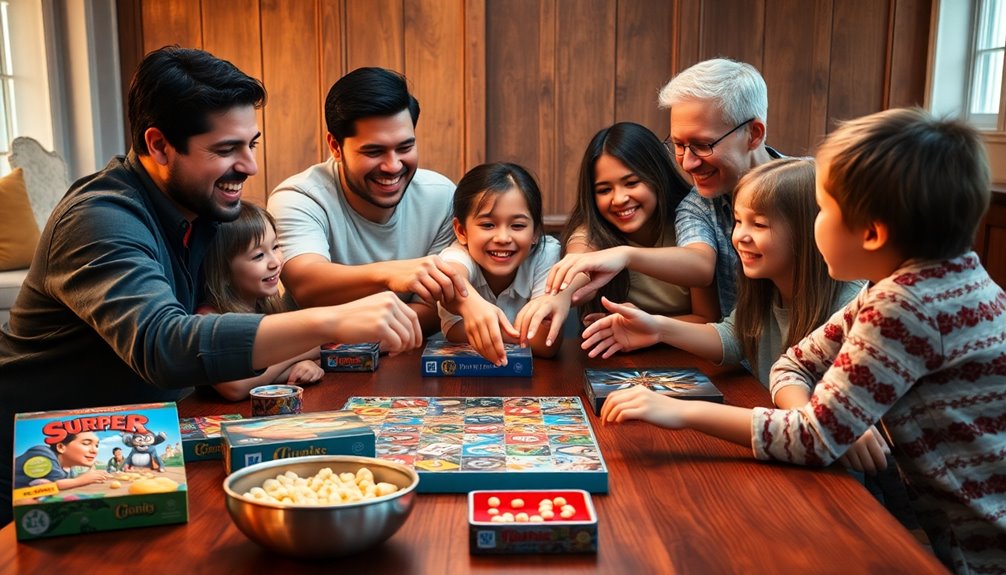

The best board games for families are easy to learn, engaging across ages, and quick to bring to the table. I’d put Sequence Original first for its approachable mix of luck and planning, while Herd Mentality is a standout for lively group laughs and Guess Who? Plus suits focused head-to-head play. The main tradeoff is choosing between games that reward strategy and games built around speed, conversation, or chance. Age range, group size, and tolerance for noisy or competitive play matter as much as the rules. Read on for the full breakdown and help matching a game to your family.

Get your wardrobe favorites delivered free with Prime
- Fast, free delivery on millions of items
- Prime Video, Amazon Music and more included
- Member-only deals all year
Key Takeaways
- Sequence Original earns the overall lead by pairing simple turns with more planning than most quick-play options in this lineup.
- Herd Mentality and Do You Really Know Your Family? favor conversation and shared humor, so they suit groups that value social play over tactical decisions.
- The lineup’s strongest choices for short, direct competition are the Connect 4 games, Battleship, and Guess Who? Plus; each offers a different kind of head-to-head challenge.
- Fast-action games such as Taco Cat Goat Cheese Pizza and Jenga with Digital Die bring energy, but can be less comfortable for players who prefer calm turns or careful planning.
- Families with younger children should prioritize clear rules and age fit over strategic depth; Trouble and Color Stack Challenge offer more accessible entry points than Sequence or Battleship.
| Do You Really Know Your Family? Family Card Game |  | Best for Conversation | Age range: 8 years and up | Players: 3–8 | Components: Cards | VIEW ON AMAZON | See Our Full Breakdown |
| Hasbro Gaming Trouble Board Game for Kids, Ages 5 and Up, 2–4 Players |  | Best for Young Beginners | Brand: Hasbro Gaming | Age range: 5 years and up | Players: 2–4 | VIEW ON AMAZON | See Our Full Breakdown |
| Sequence Original Strategy Board Game |  | Best for Larger Family Groups | Brand: Jax | Players: 2–12 | Recommended age: 7 years and up | VIEW ON AMAZON | See Our Full Breakdown |
| Hasbro Gaming Battleship with Planes Strategy Board Game |  | Best for Two-Player Strategy | Brand: Hasbro Gaming | Players: 2 | Recommended age: 7 years and up | VIEW ON AMAZON | See Our Full Breakdown |
| Hasbro Gaming Jenga with Digital Die |  | Best for Flexible Group Play | Brand: Hasbro Gaming | Age range: 6 years and up | Players: 1 or more | VIEW ON AMAZON | See Our Full Breakdown |
| Color Stack Challenge Color Matching Game |  | Best for Solo and Head-to-Head Puzzles | Brand: WHAT DO YOU MEME? | Model: CG4138 | Recommended age: 6 years and up | VIEW ON AMAZON | See Our Full Breakdown |
| Herd Mentality Board Game with Bonus Questions |  | Best for Large Family Gatherings | Brand: Big Potato | Players: 4–20 | Recommended age: 10 years and up | VIEW ON AMAZON | See Our Full Breakdown |
| Hasbro Connect 4 Game, 2025 Edition |  | Best Compact Two-Player Game | Brand: Hasbro Gaming | Edition: 2025 Edition | Age range: Ages 6+ | VIEW ON AMAZON | See Our Full Breakdown |
| Spin Master Games Hedbanz Classic Edition Picture Guessing Game |  | Best for Family Conversation and Deduction | Age range: 6 years and up | Players: 2–6 | Included components: 6 headbands, 6 headplates, 16 scoring badges, 1 timer, 69 picture cards, 3 sample question cards, instructions | VIEW ON AMAZON | See Our Full Breakdown |
| Sorry! Classic Family Board Game |  | Best for Classic Family Race-and-Block Play | Brand: Hasbro Gaming | Players: 2–4 | Recommended age: 6 years and up | VIEW ON AMAZON | See Our Full Breakdown |
| Hasbro Gaming Connect 4 Strategy Board Game with Blocker Discs |  | Best for Two-Player Strategy | Players: 2 | Recommended age: 6 years and up | Estimated playing time: 30 minutes | VIEW ON AMAZON | See Our Full Breakdown |
| USAOPOLY Flip 7 Card Game |  | Best Press-Your-Luck Pick | Players: 3 or more | Recommended age: 8 years and up | Playing time: 20 minutes | VIEW ON AMAZON | See Our Full Breakdown |
| USAOPOLY Tapple Word Game |  | Best for Word-Game Families | Players: 2–8 | Recommended age: 8 years and up | Estimated playing time: 15 minutes | VIEW ON AMAZON | See Our Full Breakdown |
| Taco Cat Goat Cheese Pizza Card Game | 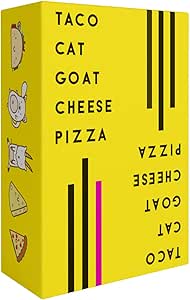 | Best for Fast Group Fun | Players: 2–8 | Recommended age: 7 years and up | Round length: 10–15 minutes | VIEW ON AMAZON | See Our Full Breakdown |
| Hasbro Gaming Guess Who? Plus Board Game with People & Pet Cards | 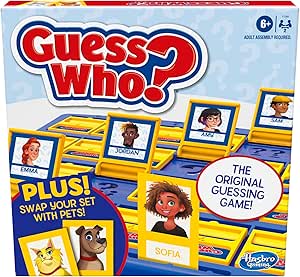 | Best for Travel-Friendly Two-Player Play | Players: 2 | Recommended age: 6 years and up | Included components: 2 gameboards, 48 people face cards, 24 people mystery cards, 48 pets face cards, 24 pets mystery cards, 2 scorekeepers, game rules | VIEW ON AMAZON | See Our Full Breakdown |
| board games for familie | Players | Included components | Recommended age | Brand |
|---|---|---|---|---|
| Do You Really Know Your Family | 3–8 | — | — | — |
| Hasbro Gaming Trouble Board Ga | 2–4 | Gameboard, Pop-O-Matic die roller, 16 pegs, and instructions | — | Hasbro Gaming |
| Sequence Original Strategy Boa | 2–12 | Folding game board, 2 decks of cards, 135 chips, and instructions | 7 years and up | Jax |
| Hasbro Gaming Battleship with | 2 | 2 portable battle cases, 10 plastic ships, 2 plastic planes, 84 red hit pegs, 168 white miss pegs, label sheet, and instructions | 7 years and up | Hasbro Gaming |
| Hasbro Gaming Jenga with Digit | 1 or more | 54 hardwood Jenga blocks, stacking sleeve, and instructions | — | Hasbro Gaming |
| Color Stack Challenge Color Ma | 1 or 2 | 2 racks, 80 rings, 50 challenge cards, instructions | 6 years and up | WHAT DO YOU MEME? |
| Herd Mentality Board Game with | 4–20 | — | 10 years and up | Big Potato |
| Hasbro Connect 4 Game | 2 | Grid and tray, 42 discs (21 red and 21 yellow), and game rules | — | Hasbro Gaming |
| Spin Master Games Hedbanz Clas | 2–6 | 6 headbands, 6 headplates, 16 scoring badges, 1 timer, 69 picture cards, 3 sample question cards, instructions | — | — |
| Sorry! Classic Family Board Ga | 2–4 | Gameboard, 12 pawns, 45 cards, and instructions | 6 years and up | Hasbro Gaming |
| Hasbro Gaming Connect 4 Strate | 2 | Grid, 2 feet, slider bar, 21 red discs, 21 yellow discs, 4 blue Blocker discs, instructions | 6 years and up | — |
| USAOPOLY Flip 7 Card Game | 3 or more | 94 cards and rules | 8 years and up | — |
| USAOPOLY Tapple Word Game | 2–8 | Portable Tapple wheel with built-in timer, 36 cards with 144 categories, instructions | 8 years and up | — |
| Taco Cat Goat Cheese Pizza Car | 2–8 | Cards | 7 years and up | — |
| Hasbro Gaming Guess Who? Plus | 2 | 2 gameboards, 48 people face cards, 24 people mystery cards, 48 pets face cards, 24 pets mystery cards, 2 scorekeepers, game rules | 6 years and up | Hasbro Gaming |
More Details on Our Top Picks
Do You Really Know Your Family? Family Card Game
Questions and silly challenges make this a better fit for families who want to talk and laugh together than for players seeking a strategic board game. It supports 3–8 players ages 8 and up, so kids, teens, and adults can join the same round. Compared with Trouble, which centers on moving pegs and luck, this game puts family knowledge and playful interaction at the heart of the activity. Its portable tin is handy for packing, though the play itself is primarily suited to indoors. The main tradeoff is that it needs at least three players, so it cannot fill the same two-player niche as Battleship. Choose it for a lively family group, not a quiet, tactical game night.
Pros:- Questions and silly challenges encourage conversation across generations
- Designed for a broad age range, starting at 8
- Supports groups of 3–8 players
- Tin container makes the card game portable
Cons:- Requires at least three players
- Conversation-based play may not suit people who prefer tactical decisions
- Designed primarily for indoor play
Best for: Families with at least three players who want a light, conversation-led game for kids, teens, and adults
Not ideal for: Two-player households or families looking for strategy, outdoor play, or a game that works without group interaction
- Age range:8 years and up
- Players:3–8
- Components:Cards
- Material:Cardstock
- Language:English
- Container:Tin
- Dimensions:2 x 4.7 x 6.7 inches
Our verdict“Pick this for a group of three or more that values shared laughs and conversation over board-based strategy.”
Hasbro Gaming Trouble Board Game for Kids, Ages 5 and Up, 2–4 Players
Simple rules and quick setup make Trouble an accessible first board game for children ages 5 and up. Players press the Pop-O-Matic die roller and race four pegs toward the finish, keeping the die contained and the central action easy for younger players to follow. Compared with Sequence, Trouble asks for less planning, which can help new players join without learning card strategy. The tradeoff is that outcomes rely heavily on die rolls, and another player can send a peg back to the start; that setback may frustrate children who dislike losing progress. Its optional Power Up Spaces add a variation, but the core experience remains a direct race. This is a straightforward pick for a family with young children, not for a group seeking deeper decisions.
Pros:- Easy rules help younger children join quickly
- Pop-O-Matic keeps the die contained during play
- Simple setup suits spontaneous family game sessions
- Optional Power Up Spaces vary the classic gameplay
Cons:- Dice rolls drive much of the outcome
- Opponents can send a peg back to the beginning
- Limited to 2–4 players
Best for: Families introducing children ages 5 and up to simple turn-taking games, especially groups of 2–4
Not ideal for: Players who want meaningful strategy, broad group capacity, or a game where progress is less vulnerable to luck and setbacks
- Brand:Hasbro Gaming
- Age range:5 years and up
- Players:2–4
- Included components:Gameboard, Pop-O-Matic die roller, 16 pegs, and instructions
- Edition:Classic Edition
- Model year:2017
Our verdict“Choose Trouble as a low-complexity starter game for young children, but choose Sequence if your family wants more planning.”
Sequence Original Strategy Board Game
Room for up to 12 players is Sequence’s clearest advantage for families that often gather beyond the immediate household. Players match cards to board spaces, then build or block five-in-a-row sequences, so turns mix hand management and tactical choices with some luck from the cards. That gives it more planning than Trouble, while its wide player range makes it more suitable for a group than two-player Battleship. The folding board, two decks, and 135 chips provide everything needed for play, though the many small chips call for care around young children. Card draws can also disrupt a plan, so it is not pure strategy. Choose Sequence when flexible group size and shared tactical play matter more than very simple rules.
Pros:- Supports a broad range of 2–12 players
- Combines card choices, blocking, and team play
- Includes the folding board, decks, chips, and instructions
- Requires no batteries
Cons:- Small chips may pose a choking hazard for young children
- Card draws add luck to the strategy
- The larger player count can make play less suited to a short two-player session
Best for: Families with mixed-age groups or extended-family gatherings that need one game to accommodate 2–12 players
Not ideal for: Households with very young children who may mouth small chips, or players seeking a game with no luck from card draws
- Brand:Jax
- Players:2–12
- Recommended age:7 years and up
- Board dimensions:19.75 x 15.25 inches
- Included components:Folding game board, 2 decks of cards, 135 chips, and instructions
- Chip colors:50 green, 50 blue, and 35 red
- Battery requirement:No batteries required
Our verdict“Pick Sequence for family gatherings where a wide player range and more tactical play matter more than Trouble’s simpler rules.”
Hasbro Gaming Battleship with Planes Strategy Board Game
Two-player deduction sets Battleship apart from the larger-group options in this roundup. Players call coordinates to find and sink ships, with planes adding targets to the familiar search-and-guess format. Compared with Sequence, which can include up to 12 players and uses shared card-and-board tactics, this is a focused head-to-head contest; that makes it easier to bring out for two family members, but it cannot include a whole group. The portable battle cases store the pieces and track hits and misses, though the many pegs mean setup and careful handling are part of play. Its strategy depends on reading the opponent’s hidden layout, not cooperative conversation. Choose it for a one-on-one game, not a family night with three or more players.
Pros:- Adds planes to the familiar Battleship search-and-guess format
- Portable cases hold the game pieces and track hits and misses
- Coordinate calls give two players a direct strategic contest
Cons:- Designed for exactly two players
- Numerous pegs require careful handling and organization
- Hidden-layout guessing may not appeal to players seeking shared group interaction
Best for: Families who want a head-to-head strategy game for two players, such as a parent and child or siblings
Not ideal for: Families who usually play in groups of three or more or prefer cooperative, conversation-led games
- Brand:Hasbro Gaming
- Players:2
- Recommended age:7 years and up
- Genre:Strategy
- Included components:2 portable battle cases, 10 plastic ships, 2 plastic planes, 84 red hit pegs, 168 white miss pegs, label sheet, and instructions
- Model number:C3890
- Warranty:No warranty
Our verdict“Choose Battleship with Planes for a portable two-player contest, but look to Sequence for a game that can include a larger family group.”
Hasbro Gaming Jenga with Digital Die
Physical tension without a fixed player cap gives Jenga a different family role from the card- and board-driven choices here. Players remove and stack hardwood blocks while trying not to topple the tower, and the digital die adds six challenges for groups that want a change from classic play. Unlike Battleship, which is built for two players, Jenga can be played solo or with a group, making it easier to fit different family sizes. The tradeoff is practical: the digital challenges require scanning a QR code or opening a web app on a phone, so the added mode is not entirely self-contained. Tower play also rewards careful movement more than strategic planning. Choose it for a hands-on activity with flexible group size; choose Sequence if your family prefers deliberate, card-based decisions.
Pros:- Can be played solo or with a group
- Six digital die challenges add alternatives to classic Jenga
- Includes 54 hardwood blocks
- Stacking sleeve helps with setup and storage
Cons:- Digital die challenges require a QR code scan or phone web app
- The tower can topple, which may frustrate players who dislike dexterity-based risk
- Offers less card or board strategy than Sequence
Best for: Families seeking a hands-on game that can work for solo play or a group, with optional challenges for variety
Not ideal for: Buyers who want a fully self-contained digital feature, or players who prefer strategic turns over dexterity and tower balance
- Brand:Hasbro Gaming
- Age range:6 years and up
- Players:1 or more
- Included components:54 hardwood Jenga blocks, stacking sleeve, and instructions
- Digital die challenges:6
- Model number:G1499
- Material:Hardwood blocks
Our verdict“Choose Jenga for flexible, hands-on play across different group sizes, provided you are comfortable using a phone for the added challenges.”
Color Stack Challenge Color Matching Game
Color Stack Challenge is the most puzzle-focused pick here: players move rings between posts to match patterns on challenge cards, either alone or against another player. That solo option gives it more flexibility than Connect 4 or Sorry!, both of which need an opponent. Easy and hard cards also let families adjust the mental challenge, though the head-to-head format can favor speed over careful planning. Its compact setup and quick resets suit short turns between other activities, but the description gives no play-time estimate. With only one or two players, it is less useful for a full family group than Herd Mentality or Hedbanz.
Pros:- Supports both solo puzzle solving and two-player competition
- Easy and hard challenge cards offer different difficulty levels
- Quick to set up and reset
- Prompts planning, problem-solving, and color sorting
Cons:- Supports only one or two players, limiting whole-family play
- Head-to-head rounds reward speed, which may frustrate players who prefer a measured pace
- The provided description does not state a play-time estimate
Best for: Families with a child aged six or older who wants a solo puzzle option as well as a quick two-player challenge
Not ideal for: Families seeking a game for three or more players, or players who dislike speed-based competition
- Brand:WHAT DO YOU MEME?
- Model:CG4138
- Recommended age:6 years and up
- Players:1 or 2
- Included components:2 racks, 80 rings, 50 challenge cards, instructions
- Challenge levels:Easy and hard
- UPC:810816038872
Our verdict“Choose Color Stack Challenge for a small family that wants a solo-friendly puzzle, not a group game for the whole table.”
Herd Mentality Board Game with Bonus Questions
When the family group is too large for a two-player board like Connect 4, Herd Mentality can bring everyone into the same round: it accommodates four to 20 players and takes about 20 minutes. The goal is to give the answer most of the group will choose, so the fun comes from anticipating shared opinions rather than solving a puzzle or building a strategy. That makes the rules easy to pick up, while the 20 bonus questions add material beyond the main game. The tradeoff is built into the premise: players who value independent answers may not enjoy trying to match the crowd, and households with fewer than four players cannot play. Compared with Hedbanz, it suits a much larger gathering but offers less of a personal deduction challenge.
Pros:- Accommodates large groups of 4–20 players
- Easy-to-learn rules suit mixed-age family gatherings
- About 20 minutes of play fits a short game-night slot
- Includes 20 bonus questions
Cons:- Requires at least four players
- Success depends on matching the group’s answer, which may not suit players who prefer original or strategic responses
Best for: Families with at least four players who want a quick, conversation-led game for a reunion or game-night group
Not ideal for: Small households with fewer than four players, or players who prefer independent puzzle-solving to matching group opinions
- Brand:Big Potato
- Players:4–20
- Recommended age:10 years and up
- Playing time:About 20 minutes
- Game mechanics:Social deduction
- Edition:Kids Edition
- Includes:Main game and 20 extra questions
- Material:Cardboard
Our verdict“Pick Herd Mentality for a large group that enjoys guessing what relatives will say, but skip it for a small household.”
Hasbro Connect 4 Game, 2025 Edition
Connect 4 is a straightforward choice when two family members want a head-to-head game without a long rules explanation. Players try to line up four discs, and the folding grid doubles as a carrying case with built-in storage for all 42 discs. That makes it easier to pack away or take along than a game with loose pieces and a separate box. Compared with Sorry!, it keeps the contest between two players and focuses on blocking and positioning rather than card-driven movement around a board. The tradeoff is that the fixed two-player limit excludes siblings or relatives who want to join the same round; Herd Mentality is a better fit for a bigger group. It also offers less variety than a game built around changing questions or cards.
Pros:- Folds into a carrying case for storage and transport
- Built-in storage keeps all 42 discs together
- Score trackers help track wins across rounds
- Quick to learn for family play
Cons:- Designed for exactly two players
- The same four-in-a-row objective may feel repetitive to players seeking varied question or card rounds
Best for: Families who want a portable, easy-to-learn strategy game for two players aged six or older
Not ideal for: Families wanting everyone to play together, or players seeking a game with changing rounds and multiple opponents
- Brand:Hasbro Gaming
- Edition:2025 Edition
- Age range:Ages 6+
- Players:2
- Included components:Grid and tray, 42 discs (21 red and 21 yellow), and game rules
- Storage:Foldable grid converts into a carrying case
- Model number:G1500
Our verdict“Choose this Connect 4 edition for tidy, portable two-player matches, not for a family group that needs more seats.”
Spin Master Games Hedbanz Classic Edition Picture Guessing Game
In Hedbanz, players wear a picture card and ask yes-or-no questions to work out what they are holding. The question-and-answer loop gives children a concrete way to practice deduction, while the headbands and picture cards keep the activity lively for a group of two to six. It is a more personal guessing challenge than Herd Mentality, where players try to match the crowd, but it cannot accommodate the large gatherings that game can. The first player to collect three scoring badges wins, giving rounds a clear finish. The tradeoff is that the fun depends on enjoying guesswork and asking questions; anyone uncomfortable performing or speaking up may prefer the quieter pattern puzzle in Color Stack Challenge. It also requires at least two players.
Pros:- Simple rules make it accessible to new players
- Encourages deductive reasoning and creative yes-or-no questions
- Works for two to six players across a broad family age range
- Includes six headbands, picture cards, a timer, and scoring badges
Cons:- Requires at least two players
- The guessing and question-asking format will not suit players who prefer strategy or quiet solo puzzles
- The six-player limit makes it less suitable for larger gatherings than Herd Mentality
Best for: Families with children aged six and up who enjoy asking questions, guessing, and taking turns in a small group
Not ideal for: Players who dislike guessing games or families who need a game for more than six people
- Age range:6 years and up
- Players:2–6
- Included components:6 headbands, 6 headplates, 16 scoring badges, 1 timer, 69 picture cards, 3 sample question cards, instructions
- Winning condition:First player to collect three scoring badges
- Model year:2023
- Edition:2029 Edition
Our verdict“Choose Hedbanz for a small family that likes interactive guessing, rather than a large group or a quiet strategy session.”
Sorry! Classic Family Board Game
Sorry! gives families a shared race around the board, with card draws, slides, and the chance to send an opponent’s pawn back to start. It supports two to four players and is suited to children six and up, making it a broader table game than Connect 4, which is limited to two. Its card-driven movement adds changing decisions from turn to turn, unlike the more direct pattern challenge in Color Stack Challenge. That interaction has a sharp tradeoff: a pawn can lose progress when another player sends it back, which may frustrate children or adults who dislike setbacks. The simple basic objective helps new players follow along, but the card draws mean the outcome is not controlled by strategy alone. Pick it for lively, competitive family play rather than a calm puzzle session.
Pros:- Supports two to four players for small-family game nights
- A clear race-to-home objective is easy to follow
- Cards and slides create changing movement choices
- Opponent interactions give turns a lively, competitive feel
Cons:- Sending a pawn back to start can undo progress and frustrate some players
- Requires at least two players
- Card draws limit how much players can control their movement
Best for: Families with two to four players, including children aged six or older, who enjoy a shared race and playful setbacks
Not ideal for: Players who are easily frustrated by losing progress or families who want a solo option or a game for more than four players
- Brand:Hasbro Gaming
- Players:2–4
- Recommended age:6 years and up
- Included components:Gameboard, 12 pawns, 45 cards, and instructions
- Edition:Standard
- Language:English
- Model number:A5065
Our verdict“Choose Sorry! for a small family that enjoys card-driven races and setbacks, but avoid it if losing progress is likely to sour the game.”
Hasbro Gaming Connect 4 Strategy Board Game with Blocker Discs
The Blocker discs give this familiar four-in-a-row contest a more tactical feel: players can obstruct a space or use a disc to lift their own checkers, adding choices beyond simply building a line. That makes it a stronger fit for head-to-head play than group games such as Taco Cat Goat Cheese Pizza, which thrives on a crowd and quick reactions. The rules remain approachable for children ages 6 and up, while horizontal, vertical, and diagonal winning lines keep each move easy to read. The main limitation is the format: it supports only two players, so it cannot involve the whole family at once. Small pieces also call for care around younger children. I’d choose this version for siblings or a parent-child match, not as a single game for a larger gathering.
Pros:- Blocker discs add tactical choices to the familiar four-in-a-row objective.
- Three winning directions make the board easy to understand while supporting varied plays.
- Includes the grid, discs, slider bar, feet, and instructions needed to play.
- Age recommendation of 6 years and up makes it accessible to many children.
Cons:- Designed for exactly two players, unlike group games such as Taco Cat Goat Cheese Pizza.
- Small discs may pose a choking hazard for young children.
- The head-to-head format may leave other family members waiting.
Best for: Families with two players, especially a child and adult who want a simple game with more tactical choices than basic turn-taking.
Not ideal for: Households seeking one game everyone can play together, or families with children too young to handle small discs safely.
- Players:2
- Recommended age:6 years and up
- Estimated playing time:30 minutes
- Included components:Grid, 2 feet, slider bar, 21 red discs, 21 yellow discs, 4 blue Blocker discs, instructions
- Dimensions:10.98 × 10.51 × 1.61 inches
- Weight:16 ounces
- Material:Plastic
- Batteries:Not required
Our verdict“Choose this for a two-player family matchup that pairs simple rules with more tactical play than the basic four-in-a-row formula.”
USAOPOLY Flip 7 Card Game
Flip 7 turns a simple card reveal into a family-friendly risk decision: keep drawing to build a score, or bank points before a duplicate ends your round. Special cards add ways to change the odds, so the game has more push-your-luck tension than a straightforward word game like Tapple. Its roughly 20-minute play time and compact 94-card set suit families who want a quick round without setting up a board. The tradeoff is that chance has a visible role: a careful choice can still be undone by the next card, which may frustrate players who prefer outcomes driven mostly by planning. It also requires at least three players, making it a poor fit for a parent and child playing alone. I’d put it on the table for a small group that enjoys suspense and changing fortunes.
Pros:- The choice to bank points or keep drawing gives players a clear risk decision.
- Special cards add twists beyond the number-card rule.
- About 20 minutes of play suits short family game sessions.
- The 94-card set is compact and requires little setup.
Cons:- Requires at least three players.
- A duplicate can end a round abruptly, which may disappoint cautious players.
- Luck can outweigh a player’s decisions in a given round.
Best for: Families of three or more who want a compact, quick-to-teach game built around risk decisions and unpredictable rounds.
Not ideal for: Two-player households and players who prefer predictable results or strategy with little luck.
- Players:3 or more
- Recommended age:8 years and up
- Playing time:20 minutes
- Included components:94 cards and rules
- Material:Paper
- Language:English
- Theme:Numbers
- Genre:Family
Our verdict“Pick Flip 7 for a group of at least three that enjoys fast rounds where every extra card could help or bust a score.”
USAOPOLY Tapple Word Game
Tapple makes vocabulary a timed group challenge: players name something in a category, tap an available letter, and pass the turn before the 10-second timer runs out. With 144 categories, it offers more prompts than a single-deck guessing game, while its portable wheel keeps the cards together for travel or playdates. Compared with Taco Cat Goat Cheese Pizza, the competition here centers on word recall rather than reflexes, though the ticking timer still creates pressure. That pressure is also the main catch: younger or more hesitant players may struggle to think quickly, even when they know the category. The built-in timer runs on a battery, and no manufacturer warranty is listed. I’d choose it for families who enjoy wordplay and can keep the pace playful rather than stressful.
Pros:- The 144 category prompts provide variety across repeat sessions.
- The portable wheel stores the category cards together.
- Timed turns keep play moving and give each player a clear challenge.
- Supports two to eight players, including smaller family groups.
Cons:- The 10-second timer can disadvantage hesitant players or children who need more time.
- The built-in timer requires a battery.
- No manufacturer warranty is listed.
Best for: Families with children ages 8 and up who enjoy vocabulary challenges, timed turns, and games that can accommodate two to eight players.
Not ideal for: Players who dislike countdown pressure, need a battery-free game, or prefer play without word recall.
- Players:2–8
- Recommended age:8 years and up
- Estimated playing time:15 minutes
- Included components:Portable Tapple wheel with built-in timer, 36 cards with 144 categories, instructions
- Material:Paper and plastic
- Language:English
- Power source:Battery
Our verdict“Choose Tapple for families who enjoy quick word association and can treat the timer as playful pressure rather than a source of stress.”
Taco Cat Goat Cheese Pizza Card Game
Taco Cat Goat Cheese Pizza is built for families who want a lively, quick round rather than a quiet strategy session. Players chant the sequence of words and slap the pile when a spoken word matches the card; surprise action cards interrupt the rhythm. It accommodates two to eight players and takes around 10–15 minutes, making it more flexible for a crowd than Connect 4 with Blocker Discs, which is strictly two-player. The simple rule is easy to teach, but speed and physical reactions are central to the fun. That can leave slower players feeling outpaced, and the pile-slapping action may not suit everyone. Its cards are easy to pack for travel, but the game offers less deliberate planning than Flip 7. I’d pick it for energetic groups comfortable with fast hands and noisy play.
Pros:- Simple rules make it quick to teach.
- Supports two to eight players, fitting both small and larger groups.
- Short rounds work well for travel and brief game sessions.
- Action cards break up the matching rhythm with surprise twists.
Cons:- Fast reactions and pile-slapping are central to play, which may not suit every player.
- The high-speed format offers less room for deliberate strategy than Flip 7.
- No manufacturer warranty is listed.
Best for: Families with children ages 7 and up who want a portable, energetic game for two to eight players and short rounds.
Not ideal for: Players who prefer calm, thoughtful turns, have difficulty reacting quickly, or do not enjoy slapping a shared pile.
- Players:2–8
- Recommended age:7 years and up
- Round length:10–15 minutes
- Included components:Cards
- Edition:Original
- Manufacturer:Dolphin Hat Games
- Warranty:No manufacturer warranty
Our verdict“Choose this for a group that wants short, active rounds and enjoys quick reactions more than careful planning.”
Hasbro Gaming Guess Who? Plus Board Game with People & Pet Cards
Guess Who? Plus keeps the familiar process of asking questions to narrow down a mystery, then adds people and pet card sets for a change of subject between rounds. The fold-up case and quick setup make it easier to bring along than a larger tabletop game such as Connect 4 with Blocker Discs. Its age recommendation of 6 and up and straightforward question-and-elimination format suit children learning to make choices from visible clues. The key limitation is the same one built into the format: it is a two-player game, so it cannot keep a whole family involved at once. Even with two card sets, repeated rounds follow much the same pattern and may feel familiar quickly. I’d choose it for travel, playdates, or one-on-one parent-child sessions, rather than as the main event for a group.
Pros:- People and pet card sets offer two themes for repeated play.
- The portable fold-up case suits travel and playdates.
- Simple question-based rules are accessible to children ages 6 and up.
- Includes two gameboards and scorekeepers for head-to-head play.
Cons:- Limited to two players, unlike group options such as Taco Cat Goat Cheese Pizza.
- The question-and-elimination format can feel repetitive over multiple rounds.
- The two card sets vary the subject matter more than the core gameplay.
Best for: Families with children ages 6 and up who want a fold-up guessing game for travel, playdates, or parent-child play.
Not ideal for: Households looking for a game that includes three or more players at once, or players who want varied mechanics across repeated rounds.
- Players:2
- Recommended age:6 years and up
- Included components:2 gameboards, 48 people face cards, 24 people mystery cards, 48 pets face cards, 24 pets mystery cards, 2 scorekeepers, game rules
- Brand:Hasbro Gaming
- Model year:2021
- Manufacturer part number:F1360
- Edition:Standard Edition
Our verdict“Choose Guess Who? Plus for portable one-on-one play with young children, but pick a group game if everyone needs a turn at once.”

How We Picked
I compared these 15 games through the needs that shape a family game night: how quickly players can understand the rules, whether different ages can take part meaningfully, how much interaction each game creates, and how well its central activity can hold attention across repeat plays. I also weighed practical fit, including group size, pace, setup demands, and whether the game depends on reading, quick reactions, trivia, or strategic thinking. Those factors can make a game a natural fit for one household and a poor match for another.
The ranking favors broad usability first, then distinguishes games by their strongest role rather than treating every style as interchangeable. Sequence ranks ahead for families seeking a balanced blend of accessible rules and decisions; conversation games and quick party games rank higher for social energy but lower for consistent strategic depth. Head-to-head classics remain appealing, though their narrower player interaction can make them less flexible for larger gatherings. I also considered limitations such as age suitability, repetitive play, and reliance on speed or shared cultural knowledge.
| board games for familie | Brand |
|---|---|
| Do You Really Know Your Family | — |
| Hasbro Gaming Trouble Board Ga | Hasbro Gaming |
| Sequence Original Strategy Boa | Jax |
| Hasbro Gaming Battleship with | Hasbro Gaming |
| Hasbro Gaming Jenga with Digit | Hasbro Gaming |
| Color Stack Challenge Color Ma | WHAT DO YOU MEME? |
| Herd Mentality Board Game with | Big Potato |
| Hasbro Connect 4 Game | Hasbro Gaming |
| Spin Master Games Hedbanz Clas | — |
| Sorry! Classic Family Board Ga | Hasbro Gaming |
| Hasbro Gaming Connect 4 Strate | — |
| USAOPOLY Flip 7 Card Game | — |
| USAOPOLY Tapple Word Game | — |
| Taco Cat Goat Cheese Pizza Car | — |
| Hasbro Gaming Guess Who? Plus | Hasbro Gaming |
Factors to Consider When Choosing Board Games For Families
Choosing a family game is less about finding one title that suits everyone and more about matching the game’s demands to the people at your table. I’d use these broader factors to avoid buying a game that sounds fun but rarely gets played.
Match the Rules to the Youngest Regular Player
Use the youngest person who will play often as your starting point, not the oldest age listed on the box. A game can be technically playable for a child yet still require reading, planning, or patience that makes turns feel like work. If adults are willing to help, a slightly more involved game can grow with a child, but constant rule coaching may drain the fun for everyone else. For mixed ages, look for turns that are short and easy to explain aloud. A common mistake is buying for a child’s current interest while overlooking whether siblings can join without an adult running the table.
Choose the Kind of Interaction Your Group Enjoys
Family games create different social experiences: some invite table talk, others focus attention on one opponent, and some reward quick reactions from everyone at once. Talk-heavy play can bring quieter relatives into the conversation, but personal questions or guessing games may feel awkward in a reserved group. Direct competition can be satisfying for players who like clear wins and losses, though it may be a poor match for sore losers or large gatherings. Before buying, ask whether your family wants to collaborate socially, tease one another, or concentrate on individual moves. Choosing by interaction style often matters more than choosing by theme.
Be Honest About Pace and Noise
Fast games can fit neatly into a short evening, but speed-based play may disadvantage younger players or anyone who needs extra time to process a turn. Physical dexterity games can add excitement while making the table louder and more chaotic. Quieter strategy games give players time to think, though long pauses may frustrate a family that prefers constant action. Consider where and when the game will be played: a lively gathering can welcome shouting and movement, while a weeknight meal may call for calmer turns. Do not assume that a short advertised session will feel short if the rules or interruptions slow the group down.
Check Player Count Against Your Usual Table
A game’s listed player range does not tell the whole story; the feel of play can change sharply as more people join. Some games keep everyone involved at once, while others leave players waiting through each opponent’s turn. If your regular group is larger than four, check whether the game supports that count directly or would require splitting into teams. Team play can help bridge age and skill gaps, but it can also give one confident player too much control. Buy for the group that gathers most often rather than the largest possible holiday crowd.
Balance Replay Appeal With Setup and Storage
A game with a clever central idea may still sit unused if setup takes too long or pieces are easy to lose. Compact card games are simple to store and bring along, while larger boards or many small components may be less convenient in a crowded home. Replay appeal also varies: word prompts and social questions depend on how often the same group plays, while games built around changing choices can feel less predictable over time. Think about whether your family prefers a familiar game they can start immediately or a game with more variety that asks for extra setup. The best fit is often the one that is easy to retrieve, explain, and put away.
Decide Whether You Want Skill, Luck, or a Blend
Luck can give younger or less experienced players a chance against adults, while strategic decisions make outcomes feel more earned for competitive groups. A skill-heavy game can frustrate beginners if experienced players dominate from the first round. At the other extreme, a game driven mostly by chance may lose appeal for players who want their choices to matter. A blend tends to work well for families with varied experience, though no game can perfectly balance every age and temperament. Avoid choosing only by the word “strategy” or “party”; instead, decide how much control your family wants over the result.
Frequently Asked Questions
Which games in this lineup work best when children and adults have different skill levels?
Start with games whose rules are simple enough for everyone to take a turn without adult coaching, then decide whether the group wants luck, conversation, or quick reactions to soften skill gaps. Trouble is a straightforward choice for younger players, while Herd Mentality shifts the focus from strategic expertise to matching the group’s thinking. Sequence offers more room for planning, so experienced adults may have an advantage if children are still learning. For a fairer session, let younger players team with an adult or agree to coach only between turns. The right pick depends on whether your family wants a competitive result or an easy shared activity.
What should I choose for a family that only has a short time to play?
Favor games with quick explanations, short turns, and little setup rather than relying only on a stated playtime. Taco Cat Goat Cheese Pizza and Flip 7 suit groups looking for brisk card play, while Connect 4 offers a compact head-to-head match. A game that requires reading prompts, teaching strategy, or managing many pieces can take longer in practice when new players join. If your family often gets interrupted, choose something that is easy to pause or restart. The most useful short-session game is one your group can begin without a lengthy rules discussion.
Are party-style games a better choice than strategy games for a large family gathering?
They can be, especially when the group wants everyone reacting together rather than waiting through long individual turns. Herd Mentality and the fast-action card games bring social energy, while Sequence and the head-to-head titles focus more on individual decisions or smaller matchups. A party game may be less satisfying for relatives who want a clear strategic challenge, and speed-based play can leave some players behind. Check the player count and think about whether a large group can participate at once. If the gathering includes both preferences, pairing a lively group game with a shorter strategy game can work better than asking one title to do everything.
How can I tell whether a game will still appeal after several plays?
Look at what changes from one session to the next: player choices, group answers, tactical decisions, or simply the people around the table. Conversation and prompt-based games can stay fresh when the group changes, but may repeat familiar material among the same players. Strategy games can offer new decisions, though a family may lose interest if one player consistently wins. Quick card games are easy to replay, but their pace and format need to suit the group’s tastes. Consider whether your family enjoys improving at familiar games or prefers novelty each time.
Should I buy separate games for younger children and older family members?
Not always; one accessible game can serve a mixed-age group if turns are simple and adults are comfortable adjusting how they play. Still, a single purchase may not satisfy both a child who wants clear, concrete actions and an adult who wants deeper choices. Trouble and Color Stack Challenge lean toward accessible play, while Sequence and Battleship ask for more deliberate decisions. A useful approach is to choose one shared game for family gatherings and add a more challenging option for older players to use separately. This avoids expecting a young child’s first game to entertain every adult on its own.
Conclusion
For a single game with a broad blend of accessible rules and meaningful choices, I’d choose Sequence Original as the best overall fit. Best value for easy group play goes to Herd Mentality when your family prefers conversation and shared laughs, while best for beginners is Trouble for its straightforward format. I’d look to Jenga with Digital Die for a more active, playful gathering and to Guess Who? Plus or Battleship for focused two-player sessions; those are better choices for specific needs than all-purpose family nights. The best premium-style pick in this lineup is Sequence for families who want a game with more decision-making than a quick party round. Choose by the kind of evening you want—calm competition, social play, or fast action—and the strongest option becomes clearer.