The best backpacking water filters balance reliable treatment with a setup you will actually want to carry and use. I name the Sawyer Squeeze with CNOC 2-Liter Bladder my best overall pick for its adaptable carry-and-filter setup, while the Platypus QuickDraw stands out for a compact, direct-use system and the Membrane Solutions 6L Gravity Filter Pro for group camps. The main tradeoffs are speed versus weight, personal use versus shared water, and filtration versus broader purification needs. A straw can be simple and light, but it does not provide the same convenience as filling bottles or treating water for a group. Read on for the full breakdown and help matching a filter to your route.

Get your wardrobe favorites delivered free with Prime
- Fast, free delivery on millions of items
- Prime Video, Amazon Music and more included
- Member-only deals all year
Key Takeaways
- The Sawyer Squeeze paired with the CNOC bladder earns the overall lead for flexible collection and filtering, while the two-pouch Sawyer kit is a more self-contained alternative.
- The Platypus QuickDraw and Katadyn BeFree are better fits for hikers who value a compact, quick-to-use personal system over large-capacity group treatment.
- Gravity systems address camp water for multiple people: the 6L Membrane Solutions setup offers greater capacity than the Waterdrop bag, at the cost of carrying a bulkier system.
- Straws and tablets prioritize low carry weight and simple backup use, but neither is as convenient for filling several bottles as a squeeze, bottle, or gravity filter.
- The GRAYL GeoPress and OKO bottles suit travelers who want a contained bottle-based treatment routine, while their larger, more structured designs may be less appealing for minimalist backpacking.
| Katadyn Hiker Pro Transparent Hand Pump Water Filter |  | Best Hand-Pump Filter | Filter type: 0.2-micron glass fiber | Maximum flow rate: 1 liter per minute | Filter capacity: 1,150 liters | VIEW ON AMAZON | See Our Full Breakdown |
| Ultralight Portable Water Filter Straw |  | Best Pocket-Sized Straw | Weight: 1.8 ounces | Dimensions: 8 x 1.2 x 1 inches | Maximum flow rate: 800 ml per minute | VIEW ON AMAZON | See Our Full Breakdown |
| Sawyer Products SP128 Mini Water Filtration System, Blue | 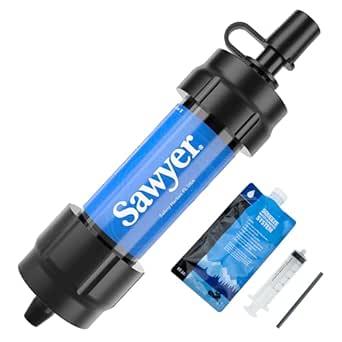 | Best Compact Filter with Specified Pathogen Removal | Filtration method: 0.1-micron absolute hollow-fiber membrane | Bacteria removal: 99.99999% | Protozoa removal: 99.9999% | VIEW ON AMAZON | See Our Full Breakdown |
| OKOH2O DUO Insulated Filtered Water Bottle, 700 ml |  | Best Insulated Bottle for Filtered Sipping | Capacity: 700 ml (24 oz) | Material: 304 stainless steel | Insulation: Hot for up to 12 hours; cold for up to 24 hours | VIEW ON AMAZON | See Our Full Breakdown |
| Sawyer Squeeze Water Filtration System with CNOC 2-Liter Bladder |  | Best for Camp and Shared Water Supply | Purification method: Hollow-fiber membrane | Bladder capacity: 2 liters (64 ounces) | Bladder material: TPU | VIEW ON AMAZON | See Our Full Breakdown |
| Sawyer Products Squeeze Water Filtration System with Two 32 oz Pouches |  | Best Versatile Squeeze Filter | Filter pore size: 0.1 micron absolute | Filter weight: 2 ounces | Pouch capacity: 32 ounces each | VIEW ON AMAZON | See Our Full Breakdown |
| Katadyn BeFree 1L Lightweight Collapsible Water Filter Bottle |  | Best for Fast, Simple Refills | Capacity: 1 liter | Filter method: 0.1-micron hollow-fiber membrane | Maximum flow rate: Up to 2 liters per minute | VIEW ON AMAZON | See Our Full Breakdown |
| Platypus QuickDraw Ultralight 1-Liter Backpacking Water Filter System |  | Best for Fast Flow and Gravity Use | Capacity: 1 liter | Purification method: Hollow-fiber membrane | Maximum squeeze flow rate: 3 liters per minute | VIEW ON AMAZON | See Our Full Breakdown |
| Waterdrop Gravity Water Filter Straw with 1.5-Gallon Water Bag | 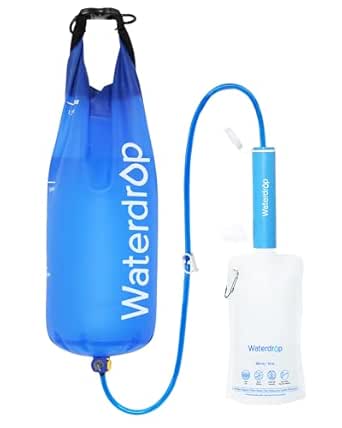 | Best for High-Volume Camp Water | Filtration method: Hollow-fiber ultrafiltration membrane | Pore size: 0.1 micron | Water bag capacity: 1.5 gallons | VIEW ON AMAZON | See Our Full Breakdown |
| Aquatabs Water Purification Tablets, 397 mg, 100 Pack |  | Best Chemical Treatment Backup | Tablet strength: 397 mg | Pack size: 100 tablets | Water capacity: Up to 4 gallons | VIEW ON AMAZON | See Our Full Breakdown |
| OKO ÖKOH2O Water Purification Bottle, Moss, 33.8 oz |  | Best for Broad-Spectrum Bottle Filtration | Capacity: 1 liter (33.8 oz) | Weight: 9.6 oz | Dimensions: 3.5 in W × 10 in H | VIEW ON AMAZON | See Our Full Breakdown |
| GRAYL GeoPress 24 oz Water Purifier and Filter Bottle, Black Camo |  | Best for Fast Bottle-Press Purification | Capacity: 24 fl oz (710 ml) | Purification time: About 8 seconds | Cartridge lifespan: 65 gallons (250 L) | VIEW ON AMAZON | See Our Full Breakdown |
| LifeStraw Personal Water Filter for Hiking, Travel, and Emergencies |  | Best Ultralight Direct-Drinking Filter | Weight: 0.04 kg | Dimensions: 3.75 × 1.39 × 12 in | Filter capacity: Up to 4,000 liters (1,000 gallons) | VIEW ON AMAZON | See Our Full Breakdown |
| Membrane Solutions 6L Gravity Water Filter Pro for Group Camping |  | Best for Camp-Based Group Water | Capacity: 6 liters | Maximum flow rate: 500 ml/min | Dimensions: 3.9 × 2.3 × 10.6 in | VIEW ON AMAZON | See Our Full Breakdown |
| Straw Water Filter – Portable Water Purifier, Reusable Straw for Hiking, Camping & Travel | 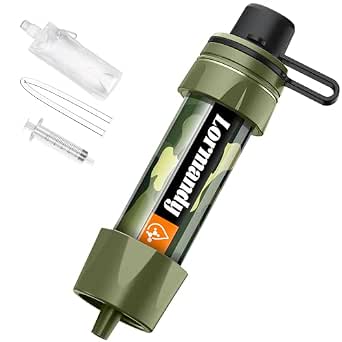 | Best for Versatile Gravity Connections | Dimensions: 6 × 2 × 2 in | Capacity: Up to 1,300 gallons (5,000 L) | Weight: 0.11 kg | VIEW ON AMAZON | See Our Full Breakdown |
| backpacking water filter | Weight | Dimensions | Maximum flow rate | Capacity |
|---|---|---|---|---|
| Katadyn Hiker Pro Transparent | 11.2 ounces | 3 x 3 x 6 inches | 1 liter per minute | — |
| Ultralight Portable Water Filt | 1.8 ounces | 8 x 1.2 x 1 inches | 800 ml per minute | 1,300 gallons (5,000 liters) |
| Sawyer Products SP128 Mini Wat | 2 ounces (41 g) | 4 x 3 x 8 inches | — | — |
| OKOH2O DUO Insulated Filtered | 414 g | 3.5 x 3.5 x 10.75 inches | — | 700 ml (24 oz) |
| Sawyer Squeeze Water Filtratio | Less than 6 ounces | 5.5 x 2 x 11.75 inches | — | — |
| Sawyer Products Squeeze Water | — | — | — | — |
| Katadyn BeFree 1L Lightweight | 2.24 ounces | 4.25 × 10 × 3 inches | Up to 2 liters per minute | 1 liter |
| Platypus QuickDraw Ultralight | — | — | — | 1 liter |
| Waterdrop Gravity Water Filter | — | — | 700 ml per minute | — |
| Aquatabs Water Purification Ta | — | — | — | — |
| OKO ÖKOH2O Water Purification | 9.6 oz | 3.5 in W × 10 in H | 2 L/min | 1 liter (33.8 oz) |
| GRAYL GeoPress 24 oz Water Pur | 15.9 oz | 3.4 × 3.4 × 10.4 in | 5 L/min | 24 fl oz (710 ml) |
| LifeStraw Personal Water Filte | 0.04 kg | 3.75 × 1.39 × 12 in | — | — |
| Membrane Solutions 6L Gravity | 12.8 oz | 3.9 × 2.3 × 10.6 in | 500 ml/min | 6 liters |
| Straw Water Filter | 0.11 kg | 6 × 2 × 2 in | 0.2 gpm | Up to 1,300 gallons (5,000 L) |
More Details on Our Top Picks
Katadyn Hiker Pro Transparent Hand Pump Water Filter
The Katadyn Hiker Pro suits backpackers who want to draw water from a source without squeezing a pouch or drinking directly through a straw. Its manual pump delivers up to 1 liter per minute, while the transparent housing makes it easier to inspect the cartridge than on the opaque Sawyer Squeeze setup. The included intake pre-filter helps keep larger debris out of the cartridge, and activated carbon can improve taste. At 11.2 ounces, though, it weighs more than ultralight options such as the Sawyer Mini. Pumping also takes ongoing effort, and the 1,150-liter cartridge capacity is far below the Sawyer’s stated capacity. I’d choose this for repeated filling at camp, not for hikers counting every ounce.
Pros:- Pump mechanism draws water directly from a source without requiring a squeeze pouch
- Transparent housing allows visual inspection of the cartridge
- Activated carbon helps improve water taste
- Includes an intake pre-filter and bottle adapter
Cons:- At 11.2 ounces, it is heavier than compact options such as the Sawyer Mini
- Manual pumping takes continued effort when filling multiple containers
- The 1,150-liter capacity is much lower than the Sawyer filters’ stated capacity
Best for: Backpackers who regularly fill bottles at water sources and prefer a pump handle over squeezing a pouch
Not ideal for: Ultralight hikers or long-distance trekkers who want the lowest weight and the longest stated filter capacity
- Filter type:0.2-micron glass fiber
- Maximum flow rate:1 liter per minute
- Filter capacity:1,150 liters
- Weight:11.2 ounces
- Dimensions:3 x 3 x 6 inches
- Power source:Manual
- Purification method:Pleated glass fiber
- Model number:8019857
Our verdict“Choose the Hiker Pro if you value pump-based filling and cartridge visibility more than minimum weight or maximum filter life.”
Ultralight Portable Water Filter Straw
At 1.8 ounces, this filter straw is the most compact choice here for hikers who want a simple way to drink directly from a water source. Its listed 800 ml-per-minute flow rate is brisk for a straw format, and it can also attach to a bottle. Compared with the Sawyer Products SP128 Mini, it claims a much higher total capacity, but the supplied description limits its filtration to particulate removal and taste improvement rather than establishing removal of all pathogens. That distinction matters: I would not treat it as a substitute for a filter with specified bacteria and protozoa removal. It also needs backflushing to help restore flow and is designed for personal use, not filling several hikers’ bottles quickly.
Pros:- Weighs less than 1.8 ounces and fits easily in a pocket or small pack
- Listed flow rate of 800 ml per minute supports quick personal drinking
- Can be used directly or attached to a bottle
- Backflushing provides a way to maintain flow
Cons:- The supplied filtration description does not establish removal of all pathogens
- Backflushing can be inconvenient when flow slows in the field
- Personal straw format is poorly suited to preparing water for a group
Best for: Solo hikers who want a very light, pocketable straw for water where particulate and taste filtration meet their needs
Not ideal for: Backpackers who need stated bacteria and protozoa removal, or groups that need to filter larger volumes for camp
- Weight:1.8 ounces
- Dimensions:8 x 1.2 x 1 inches
- Maximum flow rate:800 ml per minute
- Capacity:1,300 gallons (5,000 liters)
- Material:BPA-free ABS
- Filter life cycle:5 years
- Purification method:Activated carbon
- Maintenance:Backflushable
Our verdict“Pick this straw for minimal-weight personal drinking only if its limited stated filtration scope fits your water-safety needs.”
Sawyer Products SP128 Mini Water Filtration System, Blue
The Sawyer SP128 Mini is a strong fit for hikers who want a very small filter with stated removal of bacteria, protozoa, and microplastics. At 2 ounces, it stays close to the straw’s weight while offering more flexible ways to drink: use the included pouch or straw, connect a standard 28 mm bottle, or pair it with compatible hydration tubing. That versatility gives it an edge over the Ultralight Portable Water Filter Straw for hikers who want to collect and carry filtered water, not just sip at the source. The tradeoff is manual operation, and hydration-pack tubing is not included. Its stated 100,000-gallon capacity is extensive, but the small personal format is less convenient than the Sawyer Squeeze with CNOC bladder for gravity-fed camp use.
Pros:- 0.1-micron absolute hollow-fiber membrane with specified bacteria, protozoa, and microplastic removal
- Weighs 2 ounces for a compact pack setup
- Works with the included pouch, a standard 28 mm bottle, a straw, or compatible hydration tubing
- Includes a cleaning plunger for maintenance
Cons:- Requires manual squeezing or drinking through the included straw
- Hydration-pack tubing is sold separately
- Small personal pouch is less convenient for hands-free camp filtration than the Sawyer Squeeze with CNOC bladder
Best for: Solo backpackers who want a light filter with specified bacteria, protozoa, and microplastic removal plus multiple connection options
Not ideal for: Hikers who want hands-free group filtration or do not want to manage a small pouch and manual filtering
- Filtration method:0.1-micron absolute hollow-fiber membrane
- Bacteria removal:99.99999%
- Protozoa removal:99.9999%
- Microplastics removal:100%
- Filter capacity:Up to 100,000 gallons
- Weight:2 ounces (41 g)
- Dimensions:4 x 3 x 8 inches
- Included accessories:16 oz reusable squeeze pouch, 7 in straw, cleaning plunger
Our verdict“Choose the SP128 Mini if you want a compact, versatile personal filter with specified pathogen removal and can accept manual operation.”
OKOH2O DUO Insulated Filtered Water Bottle, 700 ml
The OKOH2O DUO is the bottle-led option in this group: it combines a detachable filter with insulated stainless steel and three drinking methods. Its 700 ml capacity and 414 g empty weight make it less compelling as a primary backpacking filter than the 2-ounce Sawyer SP128 Mini or the Sawyer Squeeze with CNOC bladder. In return, it can keep drinks cold for up to 24 hours or hot for up to 12, and the filter can be used separately with a cup or glass. The listed electro-adsorption membrane is independently verified to reduce more than 200 contaminants, a broader claim than the personal filters’ stated bacteria and protozoa specs. The tradeoff is a fixed, relatively small bottle volume and a filter capacity of up to 756 liters.
Pros:- Offers filtered drinking, direct drinking, and a reusable stainless steel straw
- Insulation keeps contents hot for up to 12 hours or cold for up to 24 hours
- Detachable filter can be used separately with cups or glasses
- Filter performance is independently verified to reduce more than 200 contaminants
Cons:- Weighs 414 g before adding water, considerably more than the Sawyer SP128 Mini
- 700 ml capacity limits how much water it can carry at once
- Filter capacity is up to 756 liters, so replacement comes sooner than with the Sawyer filters’ stated lifespans
Best for: Day hikers and campers who want an insulated bottle with a detachable filter and multiple ways to drink
Not ideal for: Ultralight backpackers or hikers who need to filter and carry several liters at a time
- Capacity:700 ml (24 oz)
- Material:304 stainless steel
- Insulation:Hot for up to 12 hours; cold for up to 24 hours
- Filtration method:Electro-adsorption membrane
- Contaminant reduction:More than 200 contaminants
- Filter capacity:Up to 756 liters
- Dimensions:3.5 x 3.5 x 10.75 inches
- Weight:414 g
Our verdict“Choose the DUO for insulated filtered sipping on day hikes, but skip it if low pack weight and high water-carrying capacity matter most.”
Sawyer Squeeze Water Filtration System with CNOC 2-Liter Bladder
The Sawyer Squeeze with CNOC 2-liter bladder makes the most sense when a backpacker wants more than a personal drinking filter. Its lightweight hollow-fiber filter can connect to compatible bottles or work as a gravity system, while the 2-liter TPU bladder provides a larger reservoir than the SP128 Mini’s included 16-ounce pouch. That capacity is useful for collecting water for camp or sharing filtered water without repeatedly sipping at the source. The system weighs less than 6 ounces, but filtering remains manual unless it is set up for gravity flow. Like the Katadyn Hiker Pro, it can slow down and needs maintenance; here, backwashing with the included cleaning tools can help restore flow. The bladder’s 2-liter limit may still mean multiple rounds for larger groups.
Pros:- 0.1-micron hollow-fiber membrane is specified to remove bacteria, protozoa, cysts, sediment, and microplastics
- 2-liter TPU bladder holds more than the SP128 Mini’s included 16-ounce pouch
- Can be used with compatible bottles or configured as a gravity filter
- Includes a cleaning coupling and plunger for backwashing
Cons:- Requires squeezing or time and setup for gravity filtration
- Flow can decrease and require backwashing
- The 2-liter bladder may require repeated fills for larger groups
Best for: Backpackers who want a lightweight filter for filling camp water or supplying a small group from a 2-liter reservoir
Not ideal for: Hikers who want a rigid bottle, hands-free use without setup, or enough capacity to supply a large group in one fill
- Purification method:Hollow-fiber membrane
- Bladder capacity:2 liters (64 ounces)
- Bladder material:TPU
- Weight:Less than 6 ounces
- Dimensions:5.5 x 2 x 11.75 inches
- Power source:Manual
- Lifespan:Up to 100,000 gallons
- Special features:Reusable, backwashable, bottle-compatible, gravity-filter compatible
Our verdict“Choose this setup for lightweight camp water collection and small-group use, provided you are comfortable with manual or gravity filtration.”
Sawyer Products Squeeze Water Filtration System with Two 32 oz Pouches
The Sawyer Squeeze is the most adaptable choice here for backpackers who want one filter to work across different water-carrying setups. At 2 ounces, it adds little weight, while its 0.1-micron filter can connect to the included pouches, compatible 28 mm bottles, a hydration pack, or a gravity system. That flexibility gives it an advantage over the Katadyn BeFree, which is built around its own collapsible bottle and drinking setup. The tradeoff is that the Squeeze needs manual pressure or a gravity arrangement; it does not offer the BeFree’s direct-drinking convenience. Its long stated lifespan and backwashability suit frequent trips, but the soft pouches may be less durable than rigid bottles. I’d choose it for adaptable camp and trail use, not for the simplest possible refill routine.
Pros:- 2-ounce filter keeps pack weight low
- Works with included pouches, compatible 28 mm bottles, hydration packs, and gravity setups
- 0.1-micron absolute filtration targets bacteria, protozoa, cysts, sediment, and microplastics
- Reusable filter can be backwashed
Cons:- Manual squeezing is needed unless it is configured as a gravity filter
- Included soft pouches may be less durable than rigid bottles
Best for: Backpackers who want a lightweight filter that can switch between squeeze pouches, compatible bottles, hydration packs, and gravity setups
Not ideal for: Hikers who want to drink directly from a filter bottle without squeezing, or who prefer durable rigid reservoirs
- Filter pore size:0.1 micron absolute
- Filter weight:2 ounces
- Pouch capacity:32 ounces each
- Pouches included:2
- Stated filter lifespan:Up to 100,000 gallons
- Bottle compatibility:Most standard 28 mm plastic bottles
- Included accessories:Drinking straw, hydration pack adapters, mesh storage bag
Our verdict“Choose the Sawyer Squeeze if adaptable connections and low filter weight matter more than hands-free drinking.”
Katadyn BeFree 1L Lightweight Collapsible Water Filter Bottle
The Katadyn BeFree suits hikers who want to fill, squeeze, and drink with minimal setup. Its 1-liter collapsible bottle packs down when empty, and the stated flow rate of up to 2 liters per minute makes quick refills possible when water is plentiful. Unlike the Sawyer Squeeze, it is designed as a single bottle-and-filter system rather than a flexible filter that connects to several kinds of containers. That simplicity is useful on the move, though it also means less freedom to adapt your water setup. Cleaning by shaking or swishing avoids tools and disassembly, but you still need to squeeze the bottle to drink. Its stated capacity of up to 1,000 liters is far below the Sawyer’s stated lifespan, making the BeFree a better fit for convenience-focused trips than for buyers prioritizing maximum filter longevity.
Pros:- Collapsible 1-liter bottle packs down when empty
- Stated flow rate reaches up to 2 liters per minute
- Can be cleaned by shaking or swishing without tools
- At 2.24 ounces, the complete bottle-and-filter setup is lightweight
Cons:- Requires squeezing to drink
- Stated maximum filter capacity is 1,000 liters
- Bottle-centered design offers less setup flexibility than the Sawyer Squeeze
Best for: Day hikers and backpackers who want a collapsible bottle with a quick, low-fuss fill-and-drink routine
Not ideal for: Frequent long-distance users seeking a filter with a much higher stated lifespan or a range of connection options
- Capacity:1 liter
- Filter method:0.1-micron hollow-fiber membrane
- Maximum flow rate:Up to 2 liters per minute
- Maximum stated capacity:Up to 1,000 liters
- Weight:2.24 ounces
- Dimensions:4.25 × 10 × 3 inches
- Material:Synthetic
- BPA-free:Yes
Our verdict“Pick the BeFree for quick, compact bottle-based filtering, but choose the Sawyer Squeeze if longer stated filter life and broader compatibility matter more.”
Platypus QuickDraw Ultralight 1-Liter Backpacking Water Filter System
The Platypus QuickDraw stands out for backpackers who want a faster fill than many compact squeeze systems provide. Its stated flow reaches up to 3 liters per minute when squeezed, with a gravity rate of up to 1.75 liters per minute, so it can serve both quick personal refills and a less hands-on camp setup. The included 1-liter reservoir and 28 mm bottle connection make it more adaptable than the bottle-focused Katadyn BeFree, while the BeFree is lighter at 2.24 ounces compared with the QuickDraw’s 3.3-ounce filter weight. Its tested removal figures—99.9999% of bacteria and 99.9% of protozoa—give buyers specific performance information. The main compromise is that filtering still requires squeezing or a gravity setup, and the reservoir holds only one liter.
Pros:- Stated squeeze flow rate of up to 3 liters per minute
- Can be used with a gravity flow rate of up to 1.75 liters per minute
- Connects to compatible 28 mm threaded bottles
- Includes a 1-liter reservoir and backflushing components
Cons:- Filtering requires squeezing or a gravity setup
- The included reservoir holds only 1 liter
- Filter weight of 3.3 ounces is higher than the Katadyn BeFree’s stated 2.24 ounces
Best for: Backpackers who value fast squeeze flow, want a gravity option at camp, and use compatible 28 mm threaded bottles
Not ideal for: Weight-minimizing hikers who prefer a simpler bottle-based system or need a larger reservoir for group use
- Capacity:1 liter
- Purification method:Hollow-fiber membrane
- Maximum squeeze flow rate:3 liters per minute
- Gravity flow rate:1.75 liters per minute
- Filter weight:3.3 ounces (95 g)
- Filter dimensions:5 × 1.8 inches (13 × 5 cm)
- Bottle compatibility:28 mm threaded bottles
- Tested removal:99.9999% of bacteria and 99.9% of protozoa
- Included components:1L reservoir, dirty-side caps, DrinkCap, ConnectCap, backflush gasket
Our verdict“Choose the QuickDraw if faster flow and a gravity option outweigh the BeFree’s lower stated weight and simpler bottle format.”
Waterdrop Gravity Water Filter Straw with 1.5-Gallon Water Bag
The Waterdrop Gravity Filter Straw is the group-oriented option in this set: its 1.5-gallon bag holds far more water than the 1-liter reservoirs supplied with the Platypus QuickDraw or Katadyn BeFree. That capacity can reduce repeated collection trips at camp, and the system works without electricity. It also includes a 16-ounce pouch and can connect to compatible bottles. The tradeoff is slower listed flow—up to 700 ml per minute—and less clarity about what the filter removes. The description names chlorine, particulates, sediment, and unpleasant tastes, but does not specify which microorganisms or contaminants it removes. That gap makes it harder to compare its protection claims with the QuickDraw’s stated bacteria and protozoa removal figures. I’d favor it for bulk camp-water handling, but not as my first choice when clearly specified microorganism removal is the priority.
Pros:- 1.5-gallon bag holds substantially more water than the 1-liter systems in this lineup
- Gravity-fed operation does not require electricity
- Backwashable filter can be cleaned
- Includes a 16-ounce pouch and supports compatible bottle connections
Cons:- Listed maximum flow rate is 700 ml per minute
- Description does not specify which microorganisms or contaminants the filter removes
- Large water bag is less suited to hikers prioritizing a minimal personal setup
Best for: Small backpacking groups or campers who want to collect and filter a larger supply of water at camp
Not ideal for: Solo hikers focused on minimum pack bulk, or buyers who require clearly stated microorganism removal claims
- Filtration method:Hollow-fiber ultrafiltration membrane
- Pore size:0.1 micron
- Water bag capacity:1.5 gallons
- Stated filter lifespan:Up to 1,400 gallons (5,300 liters)
- Maximum flow rate:700 ml per minute
- Filter weight:4.64 ounces
- Maximum supported TDS:300 ppm
- Included components:Water filter straw, 1.5-gallon gravity-fed water bag, 16-ounce water pouch
Our verdict“Choose the Waterdrop for larger gravity-fed camp batches only if its less-specific removal information fits your water-treatment needs.”
Aquatabs Water Purification Tablets, 397 mg, 100 Pack
Aquatabs are the outlier in a roundup of backpacking water filters: they treat water with tablets rather than a reusable membrane, so they add no squeeze effort, gravity bag, or filter to maintain. The product claims removal of bacteria, viruses, and cysts, giving them a different role from the Sawyer Squeeze, whose listed filtration targets bacteria, protozoa, cysts, sediment, and microplastics but does not claim virus removal in the supplied details. Tablets treat up to four gallons in 30 minutes and come in a compact 100-count pack, which makes them practical as backup treatment for trips where a filter could clog, break, or be left behind. Their limits are clear: they do not remove sediment, and waiting half an hour is slower than using the QuickDraw’s stated rapid flow. I’d carry them as a treatment alternative, not mistake them for a filter that clears cloudy water.
Pros:- Claims treatment against bacteria, viruses, and cysts
- 100 tablets provide a compact supply for trips and emergency kits
- Treats up to 4 gallons per tablet in 30 minutes
- Product description states no added taste, color, or odor
Cons:- Requires a 30-minute treatment wait
- Does not remove sediment, so cloudy water may need a separate filter
- Uses a consumable treatment rather than a reusable filter
Best for: Backpackers building a lightweight backup treatment kit who want a compact option with stated bacteria, virus, and cyst claims
Not ideal for: Hikers who need immediate drinking water or want sediment and particles physically filtered out
- Tablet strength:397 mg
- Pack size:100 tablets
- Water capacity:Up to 4 gallons
- Treatment time:30 minutes
- Claimed bacteria reduction:99.9999%
- Claimed virus reduction:99.99%
- Claimed cyst reduction:99.9%
- Item weight:0.06 kg
- Expiration date:February 2029
Our verdict“Carry Aquatabs as a compact backup when pathogen-treatment claims matter more than speed or sediment removal.”
OKO ÖKOH2O Water Purification Bottle, Moss, 33.8 oz
The OKO ÖKOH2O suits backpackers who want a personal bottle that addresses a wider range of contaminants than a basic hollow-fiber straw. Its dual-stage system is described as reducing viruses, bacteria, parasites, heavy metals, PFAS, and microplastics, while the squeeze-through design avoids the direct-suction format of the LifeStraw Personal. A stated flow of up to 2 L/min makes filling or drinking less of a chore, and the 1-liter capacity carries more than the GRAYL GeoPress’s 24 ounces. The tradeoff is its 9.6-ounce bottle weight and hand-wash-only care; it is not as minimal as a standalone filter. Choose it for broad filtration in a self-contained bottle, but check that its cartridge’s 100-gallon capacity suits your trip length.
Pros:- Dual-stage filtration is stated to reduce viruses, bacteria, parasites, heavy metals, PFAS, and microplastics.
- Squeeze-through operation avoids pumping and direct-suction drinking.
- Up to 2 L/min flow supports quicker drinking and filling.
- One-liter bottle includes a retractable nozzle and carabiner.
Cons:- At 9.6 ounces, it weighs more than a standalone straw-style filter.
- Cartridge capacity is limited to up to 100 gallons.
- Bottle requires hand washing.
Best for: Backpackers who want a reusable 1-liter bottle and broad stated contaminant reduction without pumping or drinking through a straw.
Not ideal for: Ultralight hikers prioritizing the smallest filter setup, or users who need a bottle that can go in a dishwasher.
- Capacity:1 liter (33.8 oz)
- Weight:9.6 oz
- Dimensions:3.5 in W × 10 in H
- Filter capacity:Up to 100 gallons
- Maximum flow rate:2 L/min
- Filtration method:Dual-stage electro-adsorptive and mechanical filtration
- Material:Polypropylene
- Care:Hand wash only
Our verdict“Pick the ÖKOH2O if you want a ready-to-carry bottle with broad stated filtration, and skip it if minimum pack weight matters most.”
GRAYL GeoPress 24 oz Water Purifier and Filter Bottle, Black Camo
The GRAYL GeoPress is built for hikers who prefer a clear press-and-drink routine over squeezing water through a filter or sipping through a straw. Its inner press treats 24 ounces in about 8 seconds, and the listed method targets viruses, bacteria, protozoa, particulates, chemicals, and odors. That broad scope separates it from the LifeStraw Personal, which is a lighter direct-drinking filter but is listed for bacteria, parasites, and microplastics rather than viruses. The GeoPress’s cost in pack weight is clear: at 15.9 ounces, it is heavier than the OKO ÖKOH2O and holds less water. The cartridge is rated for 65 gallons, so frequent users will replace it sooner than the OKO’s 100-gallon cartridge. It makes most sense when quick, self-contained treatment matters more than carrying the lightest setup.
Pros:- Purifies 24 oz in about 8 seconds using a manual inner press.
- Listed to help remove viruses, bacteria, protozoa, particulates, chemicals, and odors.
- Works without pumps, batteries, or treatment chemicals.
- Replaceable cartridge and stated 10-year warranty.
Cons:- At 15.9 oz, it is heavier than the OKO ÖKOH2O bottle and straw-style options.
- The 24 oz capacity is smaller than the OKO’s 1-liter bottle.
- Cartridge lifespan is 65 gallons and replacement requires buying another cartridge.
Best for: Backpackers who want fast, press-operated treatment of a bottle-sized batch and value listed virus reduction.
Not ideal for: Ultralight hikers or high-volume users who would rather carry a lighter filter with a longer stated cartridge life.
- Capacity:24 fl oz (710 ml)
- Purification time:About 8 seconds
- Cartridge lifespan:65 gallons (250 L)
- Purification method:Electroadsorption and activated carbon
- Maximum flow rate:5 L/min
- Maximum supported TDS:300 ppm
- Dimensions:3.4 × 3.4 × 10.4 in
- Weight:15.9 oz
- Warranty:10 years
Our verdict“Choose the GeoPress for rapid press-based treatment and broad listed contaminant coverage, not for low weight or maximum cartridge life.”
LifeStraw Personal Water Filter for Hiking, Travel, and Emergencies
For hikers whose priority is keeping filtration weight close to zero, the LifeStraw Personal is the most stripped-down choice here: it weighs just 0.04 kg and can be used directly at a water source. Its stated coverage includes bacteria, parasites, and microplastics, with a claimed capacity of up to 4,000 liters when properly maintained. That makes it a very different tool from the GRAYL GeoPress, which adds a bottle and listed virus treatment but weighs 15.9 ounces. The LifeStraw’s simplicity also means no built-in water storage: you drink through it or use a separate container, and it does not offer the OKO ÖKOH2O’s stated broad contaminant range. Proper use and maintenance matter to reach its rated lifespan. It fits solo hikers with frequent access to water sources better than groups or anyone wanting treated water stored for later.
Pros:- Very low listed weight of 0.04 kg.
- Stated to remove bacteria, parasites, and microplastics.
- Rated to filter up to 4,000 liters with proper use and maintenance.
- Can be used directly from lakes, rivers, and streams or with a container.
Cons:- No integrated bottle or water storage.
- Requires drinking through the filter or pairing it with a separate container.
- Proper use and maintenance are needed to reach its stated lifespan.
Best for: Solo ultralight hikers and emergency-kit builders who want a very light filter for drinking directly from a source.
Not ideal for: Backpackers who need stored treated water, a group water supply, or a filter with stated virus reduction.
- Weight:0.04 kg
- Dimensions:3.75 × 1.39 × 12 in
- Filter capacity:Up to 4,000 liters (1,000 gallons)
- Bacteria removal:99.999999%
- Parasite removal:99.999%
- Microplastic filtration:Down to 1 micron
- Certification:NSF
- Warranty:1 year
Our verdict“Choose the LifeStraw for minimal-weight, single-person source drinking, and choose the GRAYL GeoPress if you need a bottle and listed virus treatment.”
Membrane Solutions 6L Gravity Water Filter Pro for Group Camping
The Membrane Solutions 6L Gravity Water Filter Pro serves a different backpacking need from the personal bottles and straws: it is meant to supply several people at camp, not provide the lightest on-the-move drinking option. Its 6-liter capacity and pump-free gravity operation let a group collect water while setting up, with a maximum stated flow of 0.5 L/min. That is slower than the OKO ÖKOH2O’s listed 2 L/min, but the larger reservoir makes it better suited to shared water than filling one personal bottle at a time. The four-stage system includes a 0.1-micron membrane, carbon, and pre-filters, and the stated filter life reaches 1,320 gallons. The tradeoff is pace: groups needing water quickly may find gravity flow limiting, and its group capacity is excess gear for solo day hikes.
Pros:- Six-liter capacity is suited to shared camp water.
- Gravity-fed operation needs no pump or power source.
- Four-stage filtration includes a 0.1-micron membrane, carbon, and dual PP pre-filters.
- Stated filter life of up to 1,320 gallons.
Cons:- Maximum flow of 0.5 L/min can be slow when several people need water.
- Larger group-oriented setup is less useful for solo, on-trail drinking than the LifeStraw Personal.
- Gravity operation depends on having time and a suitable place to hang or position the system.
Best for: Small backpacking groups and base-camp campers who want to filter a larger batch without taking turns using a personal bottle.
Not ideal for: Solo hikers who prioritize compact, immediate drinking access, or groups that need water faster than a 0.5 L/min gravity system can provide.
- Capacity:6 liters
- Maximum flow rate:500 ml/min
- Dimensions:3.9 × 2.3 × 10.6 in
- Weight:12.8 oz
- Material:TPU
- Purification method:Hollow fiber membrane; gravity powered
- Filtration stages:4-stage: 0.1-micron membrane, coconut shell carbon, dual PP pre-filters
- Filter life:Up to 1,320 gallons (5,000 L)
- Maximum supported TDS:500 ppm
Our verdict“Pick this gravity filter for shared water at camp; choose a personal bottle or straw if you need a lighter, faster on-trail setup.”
Straw Water Filter – Portable Water Purifier, Reusable Straw for Hiking, Camping & Travel
The Lormandy TriplePure6000 stands apart from the LifeStraw Personal by offering more ways to connect: the kit includes a pouch, silicone tubing, syringe, and threaded connector, so it can be used with a water bag, bottle, or direct source. That flexibility is useful for backpackers who want to filter into a separate container rather than drink at the water’s edge. It weighs 0.11 kg and has a stated 0.1-micron hollow-fiber membrane, but the listed maximum flow of 0.2 gpm is modest; the Membrane Solutions gravity filter is also not fast, yet it is designed around a larger 6-liter group batch. The Lormandy’s claimed capacity is up to 1,300 gallons, and regular backflushing is needed to limit clogging. Its claims of broad contaminant removal should be checked against the manufacturer’s documentation for the specific pathogens a route may involve.
Pros:- Compact listed weight of 0.11 kg.
- Includes a pouch, silicone tubing, syringe, and threaded connector for different setups.
- 0.1-micron hollow-fiber membrane and stated filter capacity up to 1,300 gallons.
- Can be used with a water bag, bottle, faucet, or direct source.
Cons:- Maximum listed flow of 0.2 gpm can slow larger-volume filtering.
- Requires regular backflushing to help prevent clogging.
- Does not store water in an integrated bottle, and broad removal claims need checking against route-specific treatment needs.
Best for: Backpackers who want a compact filter kit that can connect to a pouch or bottle as well as work directly from a source.
Not ideal for: Hikers who need fast high-volume filtering, want an integrated bottle, or need clearly specified pathogen coverage before choosing a treatment method.
- Dimensions:6 × 2 × 2 in
- Capacity:Up to 1,300 gallons (5,000 L)
- Weight:0.11 kg
- Maximum flow rate:0.2 gpm
- Filter life cycle:6 years
- Product shelf life:6 years
- Power source:Gravity
- Filtration method:Hollow fiber UF membrane
- Material:ABS
Our verdict“Choose the Lormandy for a lightweight, adaptable filter kit, but favor a faster or more clearly specified system for large batches or uncertain water hazards.”

How We Picked
I compared these backpacking water filters by how well each format fits real trail decisions: how water is collected and dispensed, whether the system serves one hiker or a group, how much gear it adds, and how straightforward it is to use and maintain. I also considered whether the product is a filter, a purifier bottle, or a chemical treatment, since those are not interchangeable approaches. A lightweight straw can make sense for emergency drinking but ranks below a versatile squeeze setup for everyday camp use.
The ranking favors trail-ready versatility first, then specialization. Systems that can supply drinking water efficiently and adapt to common bottle or reservoir routines place ahead of single-purpose options. Group gravity filters, purification bottles, and tablets remain useful picks for their intended situations, but their narrower roles, added bulk, or different treatment workflow keep them from taking the overall lead. I also weighed practical tradeoffs such as included collection capacity and the effort required to filter or replenish water; I do not treat stated flow or capacity figures as proof of performance in every field condition.
Factors to Consider When Choosing Backpacking Water Filters
Choosing a filter starts with the way you collect and drink water, not with the lightest number on a package. I would match the treatment method to the trip’s water sources, party size, and daily routine, then check how the system fits existing bottles or reservoirs.
Match the format to how you drink
A straw works when you expect to drink directly at a source, but it is awkward if you want to fill a bottle for later or prepare water at camp. Squeeze systems let you collect water and filter it into another container, though they ask you to handle a pouch or bladder. Bottle filters keep the process contained and simple, but their fixed capacity can mean repeated refills. Gravity systems reduce hands-on squeezing once set up, yet need a place to hang or position the reservoir. Before buying, imagine your usual stop: if you routinely leave the stream with a full bottle, choose a format that supports that habit.
Choose capacity for the whole party
Solo hikers can often manage with a personal filter and modest collection container, while groups may need to treat several liters at camp. A high-capacity gravity setup can reduce repeated trips and handwork, but its reservoir adds bulk and is less useful when everyone carries water separately. Small personal bottles are convenient for one person but can create a queue when shared. Do not judge group suitability by the filter alone; account for the clean-water container, dirty-water bag, and how many people need water at once. For a mixed group, a shared camp system plus individual carry bottles may be more practical than expecting one personal bottle to serve everyone.
Check what kind of treatment you need
“Filter” and “purifier” describe different treatment claims, so verify the product’s stated capabilities against the risks and water sources on your route. Many backpacking filters focus on physical removal of specified contaminants, while chemical tablets use a separate treatment process and can require waiting time. Purifier bottles may suit travel plans that include uncertain sources, but they can be heavier or more involved than a trail filter. No treatment method makes visibly contaminated or chemically polluted water safe by default. Read the manufacturer’s directions and local guidance, especially when traveling beyond familiar backcountry sources.
Plan for cold, dirty, and low-flow conditions
Fine sediment can slow a filter and make a quick refill frustrating, so source choice and basic pre-filtering can matter as much as the device. Carrying a separate clean-water container helps avoid mixing treated and untreated water during busy camp routines. Cold conditions also call for checking the maker’s care instructions, since freezing can damage some filter elements even when the exterior looks intact. A backup treatment option adds security on remote trips, but it should be selected for compatibility with the main system rather than added without a plan. Test the full routine at home, including cleaning and storage, before relying on it far from a trailhead.
Weigh carry weight against convenience
The lightest option is not always the easiest one to use repeatedly. A straw minimizes carried gear but offers little help when you need water ready for cooking or for a hiking partner. Adding a pouch, larger bladder, or gravity bag increases packed volume while reducing effort at camp. Bottle purifiers can simplify handling but may not suit hikers who already carry a hydration reservoir. Compare the whole system—filter, collection container, clean bottle, and any treatment backup—rather than comparing filter weights alone. Paying more makes sense when the design solves a recurring problem, such as treating water for a group or avoiding repeated transfers.
Frequently Asked Questions
Should I carry a filter and purification tablets together?
That pairing can make sense on remote trips where a clogged, damaged, or frozen filter would leave you without a treatment option. Tablets are light, but they may require a wait and can be less convenient when you need to prepare water repeatedly for cooking or a group. Check each product’s instructions and the treatment coverage you need before relying on the combination. For a short, familiar route, a backup may add little value; for a long trip, redundancy can be worth the small pack-space cost. Keep the backup accessible rather than buried in a repair kit.
Is a water-filter straw enough for an overnight backpacking trip?
It can be enough if your plan is to drink directly from sources and you have reliable access to them along the route. It is a poor match if you need to carry water away from a source, share treatment with another hiker, or prepare water at camp. A straw also does not replace a clean storage bottle or a backup plan if the source is inaccessible. Think through the longest stretch between water stops and how much water you need for meals. If that routine involves filling containers, a squeeze or gravity setup is usually more adaptable.
When is a gravity filter worth carrying instead of a squeeze filter?
A gravity filter is most useful when you regularly need several liters at camp and would rather let water flow than squeeze batches by hand. It can be a poor trade for a solo hiker who refills one bottle at a time, since the reservoir and setup take space. Squeeze filters are easier to pack small and use at a stream, but repeated filtering can become tedious for a group. Compare the complete kit capacity and hanging options, not just the filter component. Your camp layout matters too: gravity systems need a stable place to suspend or position the dirty-water bag.
Can one filter handle water for a group as well as my personal drinking water?
Some systems can serve both roles, but convenience depends on how quickly the group needs water and what containers the kit includes. A personal squeeze filter may work if everyone is willing to take turns, while a dedicated gravity system is better suited to filling shared camp containers. A bottle filter is usually easier to manage as an individual item than as a group station. Check that the system can connect to or fill the containers you already carry. If the group has different schedules, individual filters can prevent one person from becoming responsible for everyone’s supply.
How should I choose between the GRAYL GeoPress and a standard backpacking filter?
Choose a purifier bottle such as the GeoPress if you want a contained, bottle-based routine and your trip includes travel or sources that call for the product’s stated purification capabilities. A standard squeeze or inline filter is often a better fit when low pack bulk and repeated trail refills are the priority. The bottle format has a defined capacity and may add more structure to your pack than a flexible pouch-based setup. Compare the manufacturer’s treatment claims with the water risks on your route rather than assuming all products cover the same concerns. Also check whether the bottle’s volume suits your longest gap between refill points.
Conclusion
For most backpackers who want one adaptable setup, I recommend the Sawyer Squeeze with CNOC 2-Liter Bladder as the best overall choice. The Sawyer Squeeze with Two 32 oz Pouches is my best-value-style pick for hikers who prefer a ready-to-carry pouch kit, while the GRAYL GeoPress is the premium-oriented option for buyers who prioritize a contained purifier bottle and its stated treatment scope. Beginners who want a straightforward personal routine can start with the Katadyn BeFree 1L or Platypus QuickDraw; compare their bottle-style and compact-system formats against how you plan to refill. For group camps, choose the Membrane Solutions 6L Gravity Filter Pro; for the lightest direct-drinking backup approach, look at a straw or tablets, accepting their limits for camp and shared water. Match the format to your actual refill routine, then check the product instructions and water-source guidance before heading out.