For seniors and the people who support them, the best AED is one that is easy to locate, understand, and keep ready—not simply the one with the most accessories. I rank the Philips HeartStart OnSite Ready-Pack as the best overall for its emergency-focused package, while the HeartStart Home with Training Pads stands out for households that want practice gear and the OnSite with Slim Carry Case for a more compact setup. The lineup is largely built around the same Philips HeartStart platform, so the main tradeoffs are package contents, carrying and storage options, and whether a home or shared setting needs business-oriented supplies. Buyers should also check that the device’s voice instructions, maintenance schedule, and replacement supplies fit the intended users and setting. Read on for the full comparison and a guide to choosing an AED setup for a senior household.

Get your wardrobe favorites delivered free with Prime
- Fast, free delivery on millions of items
- Prime Video, Amazon Music and more included
- Member-only deals all year
Key Takeaways
- The package often matters more than the core device: most entries are Philips HeartStart OnSite models, while their Ready-Pack, Value Package, business package, and case configurations change what comes with the AED.
- Practice supplies are a distinct advantage: the HeartStart Home model with Training Pads Cartridge is the clearest fit for households that want to rehearse pad placement without using the emergency pads.
- Portability and quick access can pull in different directions: a slim case is easier to store or carry, while a ready pack may suit buyers who want emergency accessories gathered together.
- Home and shared-use needs are not identical: business packages may suit a workplace or community room, but a household should check whether those additional supplies match its actual storage and response plan.
- Maintenance and placement remain the buyer’s responsibility: whichever package wins, assign someone to check readiness indicators, track pad and battery dates, and keep the AED visible and reachable.
| Philips HeartStart OnSite AED Defibrillator Ready-Pack, M5066A-R01 |  | Best for Ready-to-Deploy Backup Supplies | Model: M5066A-R01 | Manufacturer: Philips Healthcare | Weight: 6.1 pounds | VIEW ON AMAZON | See Our Full Breakdown |
| Philips HeartStart Home AED Defibrillator with Training Pads Cartridge (M5068A-C02) |  | Best for Home Practice | Model: M5068A-C02 | Device type: Automated external defibrillator | Intended setting: Home and residential settings | VIEW ON AMAZON | See Our Full Breakdown |
| Philips HeartStart Home AED Defibrillator with Slim Carry Case, M5068A-C01 |  | Best for a Simple Home Setup | Model: M5068A-C01 | Device type: Home automated external defibrillator | Included accessories: Pre-installed battery, Adult SMART Pads cartridge, slim carry case, setup guide, maintenance booklet, quick reference guide, owner’s manual | VIEW ON AMAZON | See Our Full Breakdown |
| Philips HeartStart OnSite AED Defibrillator Business Package |  | Best for Senior-Care Facilities | Model: M5066A-R01BPB | Manufacturer: Philips | Dimensions: 20.75 x 15.63 x 21.5 inches | VIEW ON AMAZON | See Our Full Breakdown |
| Philips HeartStart OnSite AED Defibrillator with Standard Carry Case | 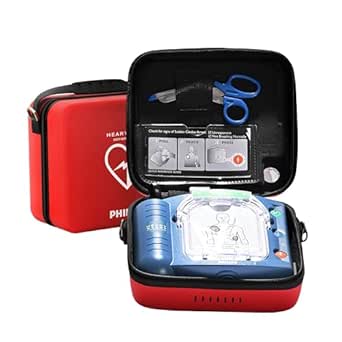 | Best Lightweight Carry Option | Model: M5066A-C01 | Manufacturer: Philips Healthcare | Weight: 5.6 pounds | VIEW ON AMAZON | See Our Full Breakdown |
| Philips HeartStart Ready Pack AED Defibrillator Value Package |  | Best for Home Readiness | Model: M5066A-R01VPB | Dimensions: 20 x 15 x 10 inches | Weight: 6.1 pounds | VIEW ON AMAZON | See Our Full Breakdown |
| Philips HeartStart OnSite AED Defibrillator Value Package | 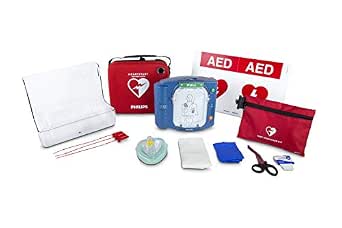 | Best for a Guided Home Setup | Model: M5066A-C02VPB | Dimensions: 20.75 x 15 x 10 inches | Weight: 8.9 pounds | VIEW ON AMAZON | See Our Full Breakdown |
| Philips HeartStart OnSite AED Defibrillator with Slim Carry Case | 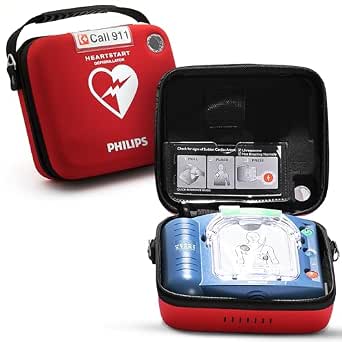 | Best Compact Pick | Model: M5066A-CO2 | Manufacturer: Philips Healthcare | Package dimensions: 12.44 x 11.02 x 7.52 inches | VIEW ON AMAZON | See Our Full Breakdown |
| Philips HeartStart OnSite AED Defibrillator Business Package | | Best for Shared Senior Living | Manufacturer: Philips Healthcare | Model: M5066A-C02BPB | Product dimensions: 20.75 x 15.62 x 21.5 inches | VIEW ON AMAZON | See Our Full Breakdown |
| aeds for senior | Model | Battery | AED warranty | Battery warranty |
|---|---|---|---|---|
| Philips HeartStart OnSite AED | M5066A-R01 | 1 CR123A battery, included | 8 years | 4 years |
| Philips HeartStart Home AED De | M5068A-C02 | — | — | — |
| Philips HeartStart Home AED De | M5068A-C01 | — | 8 years | 4 years |
| Philips HeartStart OnSite AED | M5066A-R01BPB | 1 CR123A battery, included | 8 years | 4 years |
| Philips HeartStart OnSite AED | M5066A-C01 | 1 CR123A battery, included | 8 years | 4 years |
| Philips HeartStart Ready Pack | M5066A-R01VPB | 1 CR123A battery, included | 8 years | 4 years |
| Philips HeartStart OnSite AED | M5066A-C02VPB | 1 CR123A battery, included | 8 years | 4 years |
| Philips HeartStart OnSite AED | M5066A-CO2 | 1 CR123A battery, included | — | — |
| Philips HeartStart OnSite AED | M5066A-C02BPB | 1 CR123A battery, included | 8 years | 4 years |
More Details on Our Top Picks
Philips HeartStart OnSite AED Defibrillator Ready-Pack, M5066A-R01
I rank this Ready-Pack highest for households or small organizations that want spare pads on hand without assembling a separate response kit. Its step-by-step voice prompts and CPR guidance can help a bystander follow the device’s instructions during a suspected cardiac emergency, while automatic self-tests check readiness daily, weekly, and monthly. Compared with the HeartStart OnSite Standard Carry Case, this package adds a spare Adult SMART Pads cartridge; compared with the HeartStart Home AED with Training Pads, it favors backup emergency supplies over included practice equipment. The tradeoff is that its training pads cartridge is sold separately, so it is less suited to buyers who want to rehearse with the AED. At 6.1 pounds, it is portable, but not the lightest OnSite option listed here.
Pros:- Voice prompts and CPR guidance provide step-by-step direction for a bystander.
- Daily, weekly, and monthly self-tests reduce reliance on manual readiness checks.
- Includes a spare Adult SMART Pads cartridge and pads.
- Carry case supports portable storage and transport.
Cons:- Training pads cartridge is sold separately.
- At 6.1 pounds, it weighs more than the 5.6-pound Standard Carry Case model.
- Replacement products are permitted for warranty purposes only.
Best for: Families, senior-living staff, or small community groups who want a portable AED with a spare adult pads cartridge ready for replacement.
Not ideal for: Buyers who want included training pads for practice or who need a lighter carry option than the 6.1-pound package.
- Model:M5066A-R01
- Manufacturer:Philips Healthcare
- Weight:6.1 pounds
- Package dimensions:10.5 x 9.5 x 5.75 inches
- Battery:1 CR123A battery, included
- AED warranty:8 years
- Battery warranty:4 years
- Included accessories:Carry case, pre-installed Adult SMART Pads and battery, spare Adult SMART Pads cartridge and pads, setup and reference materials, maintenance booklet, owner’s manual
Our verdict“Choose this Ready-Pack if having spare adult pads immediately available matters more than included training equipment or the lightest carry weight.”
Philips HeartStart Home AED Defibrillator with Training Pads Cartridge (M5068A-C02)
For a household supporting an older adult, this package’s standout is the included training pads cartridge: family members can practice the device’s prompts without using the emergency pads. The AED also gives step-by-step voice and CPR guidance, runs daily, weekly, and monthly self-tests, and has a Quick Shock feature described as delivering a shock within 8 seconds. Compared with the HeartStart Home AED M5068A-C01, this version adds training equipment, making it a stronger fit for households that want practice materials in the box. The OnSite Ready-Pack, by contrast, includes spare emergency pads rather than a training cartridge. That distinction drives the choice. Pads have expiration dates, and this is an emergency-response device, not a replacement for professional medical care; households must track pad readiness and know when to call emergency services.
Pros:- Includes a training pads cartridge for practice without using the installed emergency pads.
- Step-by-step voice prompts and CPR instructions support bystander response.
- Automatic daily, weekly, and monthly self-tests check device readiness.
- Slim carry case and included battery and SMART Pads simplify home setup.
Cons:- Pads have an expiration date and require monitoring and replacement.
- The training cartridge is a practice aid, not a substitute for emergency-response training.
- Designed for suspected cardiac emergencies and does not replace professional medical care.
Best for: Families caring for an older adult who want an AED plus an included training cartridge for household practice.
Not ideal for: Buyers who prioritize spare emergency pads over training equipment, or who need an AED package for a shared workplace rather than home use.
- Model:M5068A-C02
- Device type:Automated external defibrillator
- Intended setting:Home and residential settings
- Guidance:Voice prompts and CPR instructions
- Self-test schedule:Daily, weekly, and monthly
- Quick Shock:Shock delivery within 8 seconds
- Included accessories:Battery, SMART Pads cartridge, training pads cartridge, slim carry case, guides, manual, and training DVD
- Warranties:AED: 8 years; battery: 4 years
Our verdict“Pick the M5068A-C02 for home caregiving when included practice equipment is more useful than the spare emergency pads in the OnSite Ready-Pack.”
Philips HeartStart Home AED Defibrillator with Slim Carry Case, M5068A-C01
The M5068A-C01 is the straightforward home package in this group: it includes the battery, Adult SMART Pads, and a slim case, without adding a training cartridge or spare pads. Its voice prompts and CPR guidance give a bystander instructions, while daily, weekly, and monthly self-tests check the unit automatically. Compared with the HeartStart Home M5068A-C02, it asks buyers to purchase training pads separately; compared with the OnSite Ready-Pack, it does not include spare emergency pads. That simpler bundle can suit a household that wants the core AED components and a compact storage case, but it leaves less room for practice and backup planning. The listed Quick Shock feature gives a shock within 8 seconds. Owners still need to monitor pads through their expiration date.
Pros:- Includes a pre-installed battery, Adult SMART Pads, and slim carry case.
- Voice prompts and CPR guidance offer step-by-step direction.
- Daily, weekly, and monthly self-tests check readiness.
- Quick Shock feature is specified to deliver a shock within 8 seconds.
Cons:- Training pads are sold separately.
- Does not include the spare emergency pads supplied with the OnSite Ready-Pack.
- Pads must be monitored and replaced by their expiration date.
Best for: Households that want the core AED, adult pads, and slim case for home storage and do not need training pads included.
Not ideal for: Families who want practice equipment in the package or a spare pads cartridge ready for use.
- Model:M5068A-C01
- Device type:Home automated external defibrillator
- Included accessories:Pre-installed battery, Adult SMART Pads cartridge, slim carry case, setup guide, maintenance booklet, quick reference guide, owner’s manual
- Self-tests:Daily, weekly, and monthly
- Quick Shock:Shock delivery within 8 seconds
- AED warranty:8 years
- Battery warranty:4 years
- Pads warranty:Until expiration date
- Other accessories warranty:1 year
Our verdict“Choose this model for a compact, core home setup if you are willing to add training pads or spare supplies separately.”
Philips HeartStart OnSite AED Defibrillator Business Package
This package is the clearest fit for a shared senior-care or workplace setting, where a wall location and response supplies can make the AED easier to find during an emergency. Along with the OnSite device’s voice prompts, CPR guidance, SMART Analysis, Quick Shock, and automatic self-tests, the package includes a basic cabinet, wall sign, fast response kit, and spare Adult SMART Pads cartridge. Compared with the HeartStart OnSite Standard Carry Case, it is oriented toward fixed, visible placement rather than a lighter personal carry setup. It also goes beyond the Home M5068A-C02 in emergency-site accessories, though that home model includes a training cartridge this package lacks. The larger package dimensions suit an installed location, not a bedside drawer, and training pads must be purchased separately.
Pros:- Includes a basic cabinet and wall sign to support visible placement.
- Fast response kit and spare Adult SMART Pads cartridge add emergency supplies.
- Voice prompts, CPR guidance, SMART Analysis, and Quick Shock support the response process.
- Automatic daily, weekly, and monthly self-tests check device readiness.
Cons:- Training pads for trainer use are sold separately.
- Package dimensions are large for compact home storage.
- Replacement products are permitted for warranty purposes only.
Best for: Senior-living communities, clinics, and workplace teams that need a visible AED station with basic response accessories.
Not ideal for: Individuals seeking a compact home AED or households that want an included training cartridge.
- Model:M5066A-R01BPB
- Manufacturer:Philips
- Dimensions:20.75 x 15.63 x 21.5 inches
- Item weight:6.1 pounds
- Battery:1 CR123A battery, included
- Features:Voice prompts, CPR guidance, SMART Analysis, Quick Shock, automatic self-tests
- Included accessories:Carry case, spare Adult SMART Pads cartridge, battery, fast response kit, basic cabinet, wall sign
- AED warranty:8 years
- Battery warranty:4 years
Our verdict“Choose this package for a shared senior-care site that needs a wall-ready AED station and response accessories rather than a compact home kit.”
Philips HeartStart OnSite AED Defibrillator with Standard Carry Case
At a listed 5.6 pounds, this OnSite is the lightest carry option among these five packages, making it a sensible choice when staff or family members may need to move the AED between rooms or locations. It includes the battery, pre-installed SMART Pads, and a case with space for spare supplies; voice prompts and CPR guidance support a bystander, and automatic self-tests check the unit daily, weekly, and monthly. Compared with the OnSite Ready-Pack, this version has room for extras but does not include a spare pads cartridge. The Business Package is better for a fixed, marked station with a cabinet and response kit, while this model favors portability. Training pads are sold separately, so it is less practice-ready than the Home M5068A-C02.
Pros:- Listed weight of 5.6 pounds supports portable handling.
- Standard case has room for a spare battery and pads.
- Voice prompts and CPR guidance give bystanders step-by-step instructions.
- Automatic self-tests run daily, weekly, and monthly; Quick Shock is specified within 8 seconds.
Cons:- Spare pads are not included, unlike the OnSite Ready-Pack.
- Training pads are sold separately.
- Replacement products are permitted for warranty purposes only.
Best for: Families or senior-care staff who need a portable AED with space to carry extra supplies and prefer a lighter listed weight.
Not ideal for: Buyers who want spare pads included, a wall-mounted station, or training pads in the package.
- Model:M5066A-C01
- Manufacturer:Philips Healthcare
- Weight:5.6 pounds
- Package dimensions:10.5 x 9.5 x 5.75 inches
- Battery:1 CR123A battery, included
- Included accessories:Standard carry case, pre-installed battery, pre-installed SMART Pads cartridge, setup guide, maintenance booklet, quick reference guide, owner’s manual
- AED warranty:8 years
- Battery warranty:4 years
Our verdict“Pick this OnSite for portable home or care-team use when lighter weight and room for supplies matter more than included spare pads or training equipment.”
Philips HeartStart Ready Pack AED Defibrillator Value Package
For a senior living at home with family or regular visitors nearby, this package puts the AED and key response supplies together: pre-installed pads, a spare pad cartridge, a carry case, and a Fast Response Kit. Voice prompts and CPR guidance give a bystander instructions during a stressful event, while daily, weekly, and monthly self-tests check the device’s readiness. Compared with the Philips HeartStart OnSite AED with Slim Carry Case, this bundle is more focused on keeping spare pads and setup accessories on hand rather than minimizing the package. Its listed weight is 6.1 pounds, but the 20 x 15 x 10-inch dimensions call for a dedicated storage spot. I’d favor it over the OnSite Slim Carry Case for a household that wants a more complete response setup; skip it if trainer-mode pads are a priority, since those are sold separately.
Pros:- Step-by-step voice prompts and CPR guidance can help bystanders follow the response sequence.
- Daily, weekly, and monthly self-tests check device readiness.
- Includes pre-installed pads, a spare pad cartridge, and a portable carry case.
- Wall mount, wall sign, and Fast Response Kit support an organized home setup.
Cons:- Training pads for trainer mode are sold separately.
- The package dimensions require more storage space than the slimmer OnSite carry-case option.
- Replacement is permitted for warranty purposes only.
Best for: Older adults living with family or caregivers who want an AED, spare pads, and response accessories stored together at home.
Not ideal for: Households with very limited storage or buyers who need training pads included for practice.
- Model:M5066A-R01VPB
- Dimensions:20 x 15 x 10 inches
- Weight:6.1 pounds
- Battery:1 CR123A battery, included
- AED warranty:8 years
- Battery warranty:4 years
- Category:Home and residential emergency use
Our verdict“Choose this package for a senior’s home when spare pads and response accessories matter more than compact storage.”
Philips HeartStart OnSite AED Defibrillator Value Package
The OnSite Value Package suits a senior’s household where a caregiver may need clear instructions and the AED will have a designated, visible place. Voice prompts and CPR guidance support a bystander through the response, and the included wall mount, sign, carry case, and Fast Response Kit give the setup more structure than the Philips HeartStart OnSite AED with Slim Carry Case. Its Quick Shock feature is specified to deliver a shock within 8 seconds, while regular self-tests check readiness. The tradeoff is bulk: at 8.9 pounds and 20.75 x 15 x 10 inches, it is heavier than the 5.4-pound Slim Carry Case model. I’d choose this package when visible placement and included response accessories matter more than portability; buyers wanting trainer pads must purchase them separately.
Pros:- Voice prompts and CPR guidance help a bystander follow instructions during an emergency.
- Quick Shock feature can deliver a shock within 8 seconds.
- Includes a carry case, wall mount, wall sign, and Fast Response Kit.
- Daily, weekly, and monthly self-tests check readiness.
Cons:- At 8.9 pounds, it is heavier than the OnSite Slim Carry Case model.
- Training pads for trainer use are sold separately.
- Replacement units are permitted for warranty purposes only.
Best for: Families and home caregivers who want a wall-mounted, clearly marked AED setup with voice guidance and response supplies.
Not ideal for: Older adults who need a lightweight unit to carry between locations, or households seeking included training pads.
- Model:M5066A-C02VPB
- Dimensions:20.75 x 15 x 10 inches
- Weight:8.9 pounds
- Battery:1 CR123A battery, included
- AED warranty:8 years
- Battery warranty:4 years
- Pads warranty:Until expiration date
- Additional accessories warranty:1 year
Our verdict“Pick this package for a fixed home location where guided operation and a marked, accessory-ready setup outweigh lower weight.”
Philips HeartStart OnSite AED Defibrillator with Slim Carry Case
Among these four options, this is the easiest to justify when a senior or caregiver needs to move an AED between home, a vehicle, and community activities. The package weighs 5.4 pounds and includes a slim carry case, battery, and pre-installed Adult SMART Pads. Its voice prompts adapt to the user’s pace, which may help a responder keep up with instructions without relying on a larger wall-mounted package. Unlike the Philips HeartStart OnSite AED Value Package, it does not include a wall mount, wall sign, or Fast Response Kit, so buyers must plan their own storage and emergency supplies. The product is also described as designed for use on wet and metal surfaces. I’d choose it for portability and a simpler kit, but not for a household wanting spare pads or a ready-made fixed-location setup.
Pros:- At 5.4 pounds, it is lighter than the Value Package and Business Package options.
- Adult SMART Pads and battery are included, with pads pre-installed.
- Voice prompts adapt to the user’s pace.
- Designed for use on wet and metal surfaces.
Cons:- Training pads are sold separately.
- Does not include the wall mount, wall sign, or Fast Response Kit supplied with the Value Package.
- No spare pad cartridge is listed as included.
Best for: Seniors and caregivers who want a lighter AED with a slim case for transport between home and other locations.
Not ideal for: Households that want wall-mounting hardware, a wall sign, a Fast Response Kit, or spare pads included.
- Model:M5066A-CO2
- Manufacturer:Philips Healthcare
- Package dimensions:12.44 x 11.02 x 7.52 inches
- Item weight:5.4 pounds
- Battery:1 CR123A battery, included
- Included components:AED defibrillator, battery, Adult SMART Pads cartridge, setup
Our verdict“Choose this model when carrying convenience matters more than a complete wall-mounted emergency station.”
Philips HeartStart OnSite AED Defibrillator Business Package
This package is aimed at a shared setting—such as a senior community room or care facility—where a fixed, marked AED station can be easier for visitors and staff to find than a device kept in a drawer. It includes a basic cabinet, wall sign, carry case, Fast Response Kit, and pre-installed battery and SMART Pads; voice prompts and CPR guidance assist the responder, while regular self-tests check readiness. The Quick Shock feature is specified to deliver a shock within 8 seconds. Compared with the Philips HeartStart OnSite Value Package, the cabinet makes this more suitable for a public-facing location, but the listed 21-pound package weight and 20.75 x 15.62 x 21.5-inch dimensions make it the least convenient choice to move. I’d select it for a shared site with a planned installation location, not for an individual senior’s portable home kit.
Pros:- Basic cabinet and wall sign support visible placement in a shared location.
- Includes a carry case, Fast Response Kit, and pre-installed SMART Pads and battery.
- Voice prompts and CPR guidance support bystanders during an emergency.
- Quick Shock feature can deliver a shock within 8 seconds.
Cons:- The 21-pound package is substantially heavier than the other options in this batch.
- Its listed dimensions require space for a cabinet-style setup.
- Training pads for trainer use are sold separately.
Best for: Senior living facilities, shared community spaces, and caregiver teams that need a visible, cabinet-based AED station.
Not ideal for: Individual seniors seeking a lightweight home or travel AED, or buyers without room for a cabinet-style package.
- Manufacturer:Philips Healthcare
- Model:M5066A-C02BPB
- Product dimensions:20.75 x 15.62 x 21.5 inches
- Item weight:21 pounds
- Battery:1 CR123A battery, included
- AED warranty:8 years
- Battery warranty:4 years
- Included accessories:Carry case, Fast Response Kit, basic cabinet, wall sign, quick-start and reference guides, maintenance booklet, and owner’s manual
Our verdict“Choose this package for a shared senior-care setting that needs a marked cabinet station, not for portable personal use.”

How We Picked
I compared these nine listings through a senior-household lens: how clearly each package supports a fast response, whether it includes supplies for practice or emergency readiness, how the case affects storage and portability, and how well its intended setting matches a private home or shared location. I gave greater weight to practical differences between packages than to the HeartStart name shared across many of them. Since several entries are variants or near-duplicates, I treat the package configuration—not an assumed difference in device performance—as the main basis for separation.
The ranking favors a balanced emergency setup first, then packages with a clear benefit for a particular buyer, such as training supplies, a compact case, or business-oriented contents. Value means useful included equipment for the likely setting, not a claim about price. I also account for drawbacks: extra supplies can add storage and upkeep, a compact case may leave less room for accessories, and duplicate or similarly named listings can make it harder to know exactly what is included. Buyers should confirm the current package contents, device instructions, and local guidance before purchasing.
| aeds for senior | Manufacturer | Included accessories |
|---|---|---|
| Philips HeartStart OnSite AED | Philips Healthcare | Carry case, pre-installed Adult SMART Pads and battery, spare Adult SMART Pads cartridge and pads, setup and reference materials, maintenance booklet, owner’s manual |
| Philips HeartStart Home AED De | — | Battery, SMART Pads cartridge, training pads cartridge, slim carry case, guides, manual, and training DVD |
| Philips HeartStart Home AED De | — | Pre-installed battery, Adult SMART Pads cartridge, slim carry case, setup guide, maintenance booklet, quick reference guide, owner’s manual |
| Philips HeartStart OnSite AED | Philips | Carry case, spare Adult SMART Pads cartridge, battery, fast response kit, basic cabinet, wall sign |
| Philips HeartStart OnSite AED | Philips Healthcare | Standard carry case, pre-installed battery, pre-installed SMART Pads cartridge, setup guide, maintenance booklet, quick reference guide, owner’s manual |
| Philips HeartStart Ready Pack | — | — |
| Philips HeartStart OnSite AED | — | — |
| Philips HeartStart OnSite AED | Philips Healthcare | — |
| Philips HeartStart OnSite AED | Philips Healthcare | Carry case, Fast Response Kit, basic cabinet, wall sign, quick-start and reference guides, maintenance booklet, and owner’s manual |
Factors to Consider When Choosing Aeds For Seniors
Choosing an AED for an older adult is partly a device decision and partly a household readiness decision. I would first match the package to the people who may respond, then plan where it will live and who will maintain it.
Choose for the likely responder, not only the intended patient
An AED is used by a responder during a suspected cardiac emergency, so the person expected to retrieve and operate it matters as much as the older adult who may need it. Consider whether family, caregivers, neighbors, or staff can hear and follow spoken instructions under stress. Do not assume that a senior will be the only person present or the person operating the device. If vision, hearing, dexterity, language, or memory affects likely responders, review the device instructions and arrange hands-on familiarization where available. A package with training pads can support practice, but it does not replace CPR and AED instruction. The practical choice is the one the household can locate and use confidently, rather than the one with the longest accessory list.
Make the storage location easy to reach and easy to explain
A compact case can make an AED easier to keep near a senior’s usual living area, while a larger package may need a more deliberate storage spot. Avoid putting the device somewhere locked, buried under supplies, or known only to one caregiver. In a shared home, label the location clearly and tell regular visitors and helpers where it is. For a business or community setting, think about access after hours and whether someone can retrieve the AED from its assigned place. A case is useful only if it supports quick access; a tidy cabinet can still become a barrier if people cannot find the key. Test the storage plan by asking another household member to locate the AED without prompting.
Separate training supplies from emergency supplies
Training pads are for practice and should not be mistaken for the pads intended for an emergency. This distinction matters in a household where multiple people may handle the case or put supplies away after a class. Keep practice equipment clearly marked and return emergency supplies to the AED’s designated storage area. Buyers who already plan to attend a class may value a training-pads package; those who will not practice may get more use from a straightforward ready pack. Check the product listing and included instructions rather than assuming two similarly named packages contain the same pads. A simple inventory note inside the storage cabinet can help a caregiver confirm what belongs with the device.
Plan for replacement dates and readiness checks
AED ownership continues after delivery: pads and batteries have service-life limits, and the device should be checked according to its instructions. Assign one person to review the readiness indicator and track replacement dates, with a second household member as backup. Do not wait for an emergency to discover that supplies have expired, been opened, or moved to another room. Added accessories can be helpful, but they also create more items to store and keep organized. Confirm what maintenance tasks apply to the exact model and package, since a package name alone does not tell you when parts need replacement. A calendar reminder and a written record can make this responsibility manageable for a family caregiver.
Match the package to home, travel, or shared use
A home package is usually easiest to judge by its fit with a fixed, familiar storage spot and the people who live there. A slim case may appeal when the AED needs to move between locations, though portability can be less useful if it makes the device harder to find at home. Business-oriented packages may make sense for a workplace, club, or common area where more people share responsibility and additional supplies have a clear role. Before choosing a larger bundle, decide who will inventory and store its contents. For travel or frequent moves, verify that the case and storage plan suit the actual conditions rather than relying on the word “portable.” The right package supports the setting’s response plan without adding supplies no one knows how to use.
Compare exact contents before choosing between similar listings
Several options here share the HeartStart OnSite name, so a familiar model label does not make every listing interchangeable. Check the exact model number, case type, pad configuration, and included accessories before ordering. Similar titles such as “Value Package” and “Ready-Pack” do not, by themselves, describe every item in the box. This is especially relevant when comparing the two business-package listings, which appear as separate entries in the lineup but have the same stated name. Ask the seller or manufacturer to clarify any difference that is not spelled out. A short contents checklist helps prevent choosing based on a package label that sounds more complete than its listed supplies.
Frequently Asked Questions
Should I choose the HeartStart Home model or an OnSite package for a senior living at home?
I would base that choice on the household’s response plan and included supplies, rather than assuming “Home” makes one device inherently easier for an older adult to use. The HeartStart Home option with Training Pads Cartridge has a clear practice advantage for relatives or caregivers who want to rehearse. An OnSite package may fit better if its case and emergency accessories suit the planned storage location. Compare the exact device instructions and package contents before deciding, since the lineup includes several similarly named configurations. If the AED will serve a shared space as well as a home, check whether the selected package fits that broader use.
Are training pads worth choosing if my family has never used an AED?
They can be useful when the people likely to respond will actually practice with them, especially alongside CPR and AED instruction. Practice may reduce uncertainty about handling the device, but training pads are not the emergency pads and should be stored clearly apart from them. If nobody plans to practice, the extra equipment may add clutter without improving readiness. I would decide who will attend training and where practice supplies will live before selecting that package. Keep the emergency kit’s contents and readiness checks separate from practice materials.
Is a slim carry case the best option for a senior household?
A slim case is a sensible choice when storage space is limited or the AED needs to move between nearby locations. It is not automatically the best choice if the household needs room for additional supplies or plans to keep the device in one fixed spot. The more important test is whether every likely responder can find and access the AED quickly. Check what accessories come with the case option and how they fit alongside the device. If the AED will remain at home, a clear, consistent storage location may matter more than a smaller carrying profile.
When does a business package make sense instead of a home package?
A business package is more likely to fit a workplace, community room, or other shared location where multiple people may need to retrieve and maintain the AED. It can be a poor match for a private household if its extra supplies have no clear purpose or assigned storage. Before choosing it, confirm the listed contents and identify who will check the device and restock any used items. Shared settings also need a visible location and a plan for access when the usual manager is absent. A household that wants practice supplies may find the training-pad option more directly relevant.
How can I tell whether two Philips HeartStart package listings are meaningfully different?
Compare the model number and itemized contents, not just the product title. Look for differences in the carrying case, pads, battery, training supplies, and other included accessories, and confirm whether each item is included or sold separately. The two business-package entries in this roundup have the same stated name, so the title alone does not establish a distinction between them. If the listing does not explain the difference, ask the seller or manufacturer before ordering. Keep a copy of the final contents list so the household knows what should be present during readiness checks.
Conclusion
My best overall choice is the Philips HeartStart OnSite Ready-Pack for buyers who want an emergency-oriented package; the best value by practical fit is the OnSite Value Package when its listed contents match a straightforward home setup. For a beginner household that wants to rehearse, the HeartStart Home with Training Pads Cartridge is the most targeted pick. I’d choose the slim-case OnSite for compact storage or easier carrying, and reserve a business package for shared locations with someone assigned to manage supplies. The premium-style choice is the package with the broader set of useful accessories for your setting—not simply the listing with the most items. Before ordering, verify the exact contents, then decide where the AED will be stored and who will maintain it.
Halloween Picks
halloween
As an affiliate, we earn on qualifying purchases.