
Finding the best home pottery kiln on Amazon can be challenging, as options range from simple DIY models to advanced digital furnaces. The Paragon SC2 Programmable Digital Kiln stands out for its precise control and reliability, making it ideal for serious hobbyists. For those on a budget, the WYDDDARY 220V Ceramic Kiln offers high temperatures and portability without breaking the bank. Meanwhile, the Vevor Electric Kiln provides a versatile melting furnace suitable for multiple crafts. Keep in mind that tradeoffs often involve balancing features, price, and ease of use. Continue reading for a complete breakdown of these options and more, to help you find the best fit for your pottery needs.
Key Takeaways
- Digital programmable kilns like the Paragon SC2 offer precise firing control, essential for advanced work.
- Budget-friendly options such as the WYDDDARY kiln deliver high temperatures but may lack advanced features.
- Size and capacity vary significantly, impacting suitability for small projects versus larger pottery pieces.
- Some kilns are multi-purpose, supporting glass fusing or metal casting, offering versatility beyond ceramics.
- Ease of use and safety features are critical, especially for beginners or those firing at home.




More Details on Our Top Picks
Electric Kiln for Jewelry Making, Metal Casting, Pottery Glazing, 2000W Ceramic Laboratory Muffle Furnace
This electric kiln stands out for its precise temperature control up to 1150°C, making it highly suitable for detailed jewelry work, metal casting, and glazing. Its digital display allows for accurate adjustments, while rapid heating reduces wait times. Compared with the WYDDDARY kiln, it offers a more user-friendly interface and better heat consistency, though it is heavier and more expensive, which could be a concern for hobbyists with limited space or budget. The large capacity and even heat distribution make it ideal for batch work and professional use, but its weight and price might deter casual users.
Pros:- Precise temperature control with digital display
- Rapid heating for efficient firing
- Large capacity suitable for batch processing
- Even heat distribution ensures consistent results
Cons:- Limited voltage options may require adapters
- Heavy and bulky for small workspaces
- Price may be high for casual hobbyists
Best for: Professional jewelers, serious hobbyists, or small-scale ceramic artists needing precise control and reliable results.
Not ideal for: Casual hobbyists or users with limited space who prefer lightweight, more affordable options.
- Color:White
- Voltage:110V/220V
- Power:2000W
- Temperature Range:0-1150°C
- Display Accuracy:1°C
- Inner Chamber Size:16 x 16 x 13.8 cm
Bottom line: This kiln makes the most sense for serious artists or professionals who prioritize accuracy and capacity over portability and cost.
How to Use an Electric Kiln: A Complete Beginner’s Guide to Mastering Firing, Glazes, and Kiln Maintenance
This instructional book is an excellent resource for newcomers to electric firing, providing step-by-step guidance on firing techniques, glaze effects, and kiln upkeep. It’s especially helpful for users who are overwhelmed by technical jargon, unlike more advanced manuals that focus heavily on specifications. While it doesn’t provide technical details or specific kiln features, it complements any kiln purchase by improving firing skills. For those who already understand kiln operation, it offers limited new insights, but for beginners, it’s an accessible starting point.
Pros:- Clear, beginner-friendly instructions
- Covers firing techniques, glazes, and maintenance
- Highly recommended for those new to kilns
Cons:- Limited technical details for advanced users
- No specific kiln features or specifications
Best for: Beginners and hobbyists just starting to learn about kiln firing and glazing techniques.
Not ideal for: Experienced ceramic artists or advanced users seeking technical specifications and troubleshooting tips.
Bottom line: This guide is perfect for newcomers who want a straightforward, comprehensive introduction to kiln firing and maintenance.
WYDDDARY 220V Ceramic Kiln, 1300°C Max Firing Temp, 3500W Compact Smart Pottery Firing Furnace for Homes, Classrooms, Art Studio
The WYDDDARY kiln offers a maximum firing temperature of 1300°C, suitable for high-quality ceramic and sculpture work. Its five-sided heating guarantees more uniform firing compared to simpler designs like the VEVOR kiln, making it a better choice for those seeking consistent, professional results. Despite its impressive specs, it is very heavy at nearly 500 pounds and consumes a substantial 3500W, requiring sturdy support and significant power supply. Compared with the VEVOR model, it provides better temperature uniformity but at the cost of increased setup complexity and size, making it less ideal for small or portable setups.
Pros:- High maximum firing temperature of 1300°C
- Five-sided heating for uniform firing
- Programmable controller for automated cycles
- Compact size suitable for small studios
Cons:- Very heavy and difficult to move
- High power consumption at 3500W
- Large size may require dedicated space
Best for: Ceramic artists and educators needing reliable, high-temperature firing with uniform results for small studios or classrooms.
Not ideal for: Home users with limited space or those who need a lightweight, portable kiln for occasional use.
- Voltage:220V
- Power:3500W
- Interior Dimensions:11.8″ x 11.8″ x 11.0″
- Maximum Firing Temperature:1300°C
- Heating Rate:8°C/min
- Weight:486 pounds
Bottom line: This kiln is well-suited for professionals or educators requiring consistent, high-temperature firing in a small but sturdy setup.
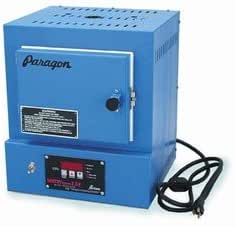
Paragon SC2 Programmable Digital Kiln 1680W 120V with Sentinel Touch Xpress
The Paragon SC2 offers a versatile firing range up to 2000°F, making it suitable for glass fusing, enameling, and ceramics. Its digital controls, combined with the Sentinel Touch Xpress, enable precise, customizable firing schedules, which is a step up from manual or semi-automatic options like the VEVOR kiln. Its portability and user-friendly interface make it ideal for art classrooms and studio setups, though it’s less powerful than larger, high-temperature kilns like the WYDDDARY. The absence of CE certification and automatic shutoff features may require users to stay attentive during firing.
Pros:- Fast and even heating with side elements
- Customizable firing schedules via digital control
- Portable and easy to set up
- Includes a durable fiber shelf and manual
Cons:- No lid switch for automatic shutoff
- Lacks CE certification
- Requires supervision during firing
Best for: Artists, educators, and hobbyists seeking a flexible, programmable kiln for a variety of artistic projects.
Not ideal for: Users who need extremely high temperatures or a kiln with automatic safety features for unattended firing.
- Max Temperature:2000°F (1093°C)
- Voltage:120V
- Power:1680W
- Chamber Dimensions:288 sq inches
- Wall Thickness:2.5 inches
- Volume:0.21 cu ft
Bottom line: This kiln is best for artists who need a flexible, programmable solution for a range of firing projects in smaller spaces.
EWAIDI Microwave Kiln for Glass Fusing & Melting – Professional DIY Glass Jewelry Making Tool for Artists and Hobbyists
The EWAIDI Microwave Kiln offers a unique, space-saving approach to glass fusing and jewelry making. Its compatibility with household microwaves makes it accessible for hobbyists who lack dedicated kiln space, similar to the FUSEWORKS craft kiln but more portable. While it excels in convenience and produces professional-looking results, it’s limited by the maximum temperature achievable with a microwave, which is lower than conventional kilns like the WYDDDARY or Paragon models. Safety precautions are essential, as improper use could pose risks, but for small projects and occasional use, it’s a practical tool for creative glass work at home.
Pros:- Easy to operate without traditional kiln equipment
- Large interior space for bigger projects
- Produces professional-grade glass results
- Lightweight and durable design
Cons:- Limited maximum temperature compared to traditional kilns
- Dependent on microwave power and safety
- Potential safety concerns if improperly used
Best for: Hobbyists and artists wanting an easy-to-use, space-efficient kiln for glass projects and jewelry making.
Not ideal for: Ceramic artists or those requiring high-temperature, large-volume firing for extensive projects.
- Capacity:Large interior space
- Material:Durable construction
- Compatibility:Household microwave
- Applications:Glass fusing, jewelry
- Design:Compact and lightweight
Bottom line: This microwave kiln is a practical choice for hobbyists seeking a simple, space-efficient way to create glass artworks at home.
Alternative Kilns & Firing Techniques: Raku, Saggar, Pit, Barrel (A Lark Ceramics Book)
This book stands out for artists eager to expand beyond traditional kiln firing, focusing on alternative methods like Raku and Saggar firing. Compared with typical kiln guides such as the ‘How to Use a Pottery Kiln’ book, it offers a wealth of unconventional ideas and visual inspiration but lacks detailed step-by-step instructions suited for beginners. This makes it ideal for experienced potters or those wanting to experiment creatively, though it may leave novices needing more practical safety and material guidance. The comprehensive coverage of various firing styles provides a rich resource for artistic growth, though it doesn’t replace hands-on instructions with specific materials or safety protocols. Best for seasoned artists seeking inspiration and exploring new firing techniques, rather than newcomers needing foundational training.Pros:- Broad coverage of alternative firing techniques like Raku and Saggar
- Includes practical tips and visual examples for creative inspiration
- Suitable for all skill levels interested in experimental firing
Cons:- Lacks detailed, step-by-step instructions for beginners
- No specific information on materials or safety precautions
- Primarily focuses on artistic concepts rather than practical implementation
Best for: Experienced ceramic artists and adventurous hobbyists wanting to learn alternative firing methods
Not ideal for: Beginners seeking clear, step-by-step kiln firing instructions and safety guidelines
Bottom line: This book is perfect for experienced ceramists and artists eager to experiment with unconventional firing techniques, not for those seeking basic kiln operation guidance.
Fuseworks Craft Kiln for Artisans & Home Fusers 8.5″ Chamber
The Fuseworks Craft Kiln offers a compact, lightweight solution for glass fusing, jewelry making, and small ceramic projects. It stands out for its quick firing times—fusing in as little as 15 minutes—making it ideal for hobbyists with limited space and time. Compared to larger, more complex kilns like the VEVOR, this model sacrifices capacity for portability and convenience, which is perfect for casual use but limits larger project sizes. Its adjustable timer and included stand provide user-friendly control, though the small chamber size restricts larger pieces or multiple items simultaneously. This kiln is best suited for those who prioritize speed and ease of use over volume and scale.Pros:- Compact and lightweight, easy to store and move
- Fast firing capability, fully fusing in just 15 minutes
- Adjustable electronic timer for precise control
- Includes a kiln stand for safe setup
Cons:- Limited chamber size restricts larger projects
- Requires standard 120V outlet, not suitable for high-power setups
- Pre-fired at factory, may show minor surface markings
Best for: Hobbyists and small-scale artisans working on jewelry, glass, or miniature ceramics at home
Not ideal for: Potters or artists needing to fire large pieces or multiple items at once, due to limited chamber size
- Firing Chamber:8.5″ diameter x 3.5″ high
- Max Temperature:2000ºF
- Voltage:120V
- Watts:1200W
- Item Weight:8.5 ounces
Bottom line: Ideal for hobbyists who need quick, small-scale firing in a compact space, but not suited for larger ceramic works.
Tujoe Large Microwave Kiln with 50 Pcs Kiln Paper for Glass Fusing and Jewelry Making
The Tujoe Microwave Kiln provides a practical solution for hobbyists interested in glass fusing, jewelry, and small pottery projects. Its compact size—roughly 7.7 by 4.3 inches—makes it easy to store and operate in a typical home setting. Compared with the more powerful VEVOR kiln, this model heats quickly within 6-8 minutes, offering efficient turnaround for crafting sessions. While the limited interior space restricts larger pieces, the kit’s inclusion of 50 kiln papers and the simple microwave operation make it accessible for beginners and casual users. This kiln works well for small projects but isn’t suitable for larger ceramic works or advanced firing techniques requiring higher temperatures.Pros:- Complete kit with kiln and 50 kiln papers
- Compact and portable for home use
- Heats quickly in just 6-8 minutes
- Ideal for glass fusion, jewelry, and small pottery
Cons:- Limited interior space for larger works
- Requires careful handling due to high heat
- Small size may restrict project scale
Best for: Casual crafters and jewelry makers needing a quick, easy, and portable kiln for small projects
Not ideal for: Serious ceramic artists or those working on larger or more complex pieces that require bigger chambers and higher temperatures
- Material:Ceramic fiber
- Outer Size:7.68 x 4.33 inches
- Inner Size:5.31 x 1.77 inches
- Kiln Paper Diameter:4.72 inches
- Weight:1.5 kg
Bottom line: Perfect for hobbyists wanting a quick, portable solution for small glass and jewelry projects, but not suitable for large-scale ceramics.
VEVOR Electric Kiln, 1500W Melting Furnace, Max Temperature 2192℉/1200℃, Stainless Steel, for Wax Casting, Clay DIY, Metal Tempering, Glazing on Pottery, Silver
The VEVOR Electric Kiln delivers high power and precise temperature control, making it a solid choice for serious jewelers and potters. Its digital PID system allows fine-tuning, surpassing the basic analog controls found in smaller, lower-wattage kilns like the microwave options. This model’s large internal chamber and high maximum temperature—over 2200°F—support melting metals, glass, and firing pottery with reliability. Compared to the smaller, portable kilns, its weight and size limit mobility but offer enhanced stability and capacity for demanding projects. While it doesn’t specify safety features, its stainless steel construction hints at durability. This kiln balances power, accuracy, and size, ideal for dedicated craft spaces.Pros:- High wattage and large internal capacity for demanding projects
- Digital PID control for accurate temperature management
- Supports melting metals, glass, and firing ceramics
- Durable stainless steel construction
Cons:- Heavy at 38 pounds, less portable for mobile setups
- Limited safety feature details provided
- No advanced programming options beyond basic temperature control
Best for: Jewelry makers, metal clay artists, and pottery enthusiasts needing precise temperature control for medium to large projects
Not ideal for: Casual hobbyists or those with limited space and portability needs, due to its weight and size
- Power:1500W
- Max Temperature:2192℉ / 1200℃
- Material:Stainless Steel
- Package Dimensions:19 x 13.1 x 10.1 inches
- Item Weight:38 pounds
Bottom line: This kiln suits professional or dedicated hobbyist workflows requiring precise control and larger capacity, though it’s less flexible for small or portable setups.
How to Use a Pottery Kiln: Mastering Kiln Firing, Glazing, and Pottery Safety for Beginners
This book offers essential guidance for those new to pottery kiln operation, focusing on firing techniques, glazing, and safety. Its straightforward instructions make it a valuable resource for beginners who need to understand the fundamentals before investing in a kiln or starting firing. Unlike product-specific guides, it doesn’t include technical specs or detailed equipment features, but it fills the knowledge gap for novices. If you’re just starting and want clear, practical advice on safe firing practices, this book simplifies complex concepts and helps build confidence in kiln use. However, it doesn’t replace hands-on experience or provide specific equipment recommendations, which are necessary for serious practice.Pros:- Clear, step-by-step instructions for firing and glazing
- Focuses on safety practices for beginners
- A helpful resource for building foundational kiln skills
Cons:- Limited detail on specific kiln models or features
- No technical specifications or advanced firing guidance
- Basic content may not suit experienced users
Best for: Beginners and hobbyists new to pottery kiln firing and safety procedures
Not ideal for: Experienced potters seeking advanced firing techniques or detailed equipment specifications
Bottom line: This book is ideal for pottery novices aiming to learn safe kiln operation and basic firing techniques, not for experienced ceramists seeking technical details.
How We Picked
The products in this roundup were evaluated based on performance, usability, build quality, and value. I prioritized kilns that balance affordability with reliable temperature control, essential for consistent firing results. Ease of operation and safety features also played a key role, particularly for home users and beginners. Additionally, I considered versatility—whether the kiln can handle different materials like glass or metal—and size, to ensure suitability for various home spaces. The ranking reflects a combination of these factors, aiming to provide options for different skill levels and budgets.Factors to Consider When Choosing Best Home Pottery Kilns Amazon
Choosing the right home pottery kiln involves assessing several factors that directly impact your firing experience and results. While features like temperature range and programmability are important, other considerations such as size, safety, and versatility can make a big difference, especially for hobbyists or small studio owners. Understanding these broader aspects can help prevent common pitfalls, like buying a kiln that’s too small or lacking safety features. Let’s explore key factors to keep in mind before making your purchase.Size and Capacity
Size is one of the most critical considerations. Smaller kilns are easier to fit into a typical home space and are generally more affordable, but they limit the size of projects you can fire. Larger models accommodate bigger pieces or higher batch firing, but they require more space and may be more expensive. Think about your typical project size and available space to choose a kiln that offers the right capacity without overwhelming your studio or home setup.
Temperature Range and Control
The temperature range determines what you can fire—ranging from low-temperature glass work to high-fire porcelain. Digital control panels with programmable firing schedules provide greater precision and consistency, reducing the risk of over- or under-firing. Manual kilns might be suitable for simple projects but lack the fine control that advanced artists need. Balancing your project requirements with control features will ensure reliable results every time.
Ease of Use and Safety Features
For home use, ease of operation and safety are paramount. Look for kilns with clear controls, safety shut-offs, and insulated chambers to prevent accidental burns or fires. Beginners should prioritize models with straightforward interfaces and automatic shut-off functions, while experienced users might prefer more advanced digital programming. Proper ventilation and safety certifications also matter, especially if you’ll be firing frequently or in shared spaces.
Versatility and Multi-Purpose Use
Some kilns are designed solely for ceramics, while others support glass fusing, metal casting, or other techniques. If you plan to explore different crafts, choosing a versatile kiln can be a smart investment. However, multi-purpose models may come at a higher cost or have a steeper learning curve. Clarify your primary use and future interests to select a kiln that offers the right balance of features and flexibility.
Price and Long-Term Value
While it might be tempting to opt for the cheapest option, investing in a quality kiln can save money and frustration over time. Cheaper models often lack durability, precise temperature control, or safety features, leading to inconsistent results or hazards. Conversely, premium kilns tend to offer better craftsmanship, more reliable controls, and greater longevity. Consider your budget carefully, but prioritize long-term value and performance to ensure a worthwhile investment.
Frequently Asked Questions
Can I fire large pottery pieces in a home kiln?
Firing large pottery pieces depends on the kiln’s size and capacity. Many home kilns are designed for small to medium projects, so if you plan to create larger items, you’ll need a kiln with sufficient chamber dimensions. It’s important to check the maximum kiln opening and internal volume before purchasing. Firing oversized pieces in a small kiln can lead to uneven results or damage to the kiln itself, so size compatibility is key for large projects.
Are digital kilns easier to operate than manual models?
Generally, digital kilns provide more precise control over firing schedules, making them more user-friendly for most home users. They often include programmable settings, alarms, and safety features that simplify the firing process. Manual kilns require more experience and attention to temperature changes, which can be challenging for beginners. Investing in a digital model can save time and reduce firing errors, especially if you plan to produce consistent results regularly.
How important are safety features in a home kiln?
Safety features should be a top priority since kilns operate at very high temperatures. Look for models with automatic shut-off, insulated chambers, and proper ventilation options. These features help prevent accidents, fires, and burns, especially in a home environment. Additionally, ensure the kiln complies with safety certifications and is placed in a well-ventilated area away from flammable materials. Prioritizing safety ensures a worry-free firing experience.
Is it worth paying more for a programmable kiln?
Investing in a programmable kiln can be worthwhile if you want consistent, repeatable results and greater control over firing cycles. These models allow you to set precise temperature ramps and soak times, reducing the risk of firing errors. While they cost more upfront, they can save time and material costs in the long run by producing better, more predictable outcomes. For serious hobbyists or professionals, this added control justifies the higher price.
Can I use a home kiln for metal casting or glass fusing?
Many home kilns are versatile enough for glass fusing and certain metal casting techniques, provided they reach the required temperatures and have adequate size. Always verify the kiln’s maximum temperature and interior dimensions to ensure it meets your project needs. Keep in mind that some materials may produce fumes or require specific safety precautions, so proper ventilation and safety gear are essential. Choosing a kiln rated for high-temperature applications will expand your creative options safely.
Conclusion
For the most comprehensive choice, the Paragon SC2 Programmable Digital Kiln stands out as the best overall pick, especially for serious hobbyists and small studios seeking precision and reliability. The WYDDDARY 220V Ceramic Kiln offers excellent value for budget-conscious users who need high temperatures without complex controls. If you’re just starting out, the How to Use a Pottery Kiln guide and simpler models will help you learn safely and effectively. For those with limited space or specific craft needs like glass fusing, options like the Vevor Electric Kiln provide versatile performance. Ultimately, selecting the right kiln depends on your project size, experience level, and budget—match these factors carefully for the best results.