
TL;DR
Listen free for 30 days with Audible
Thousands of audiobooks and originals — cancel anytime.
As an affiliate, we earn on qualifying purchases.
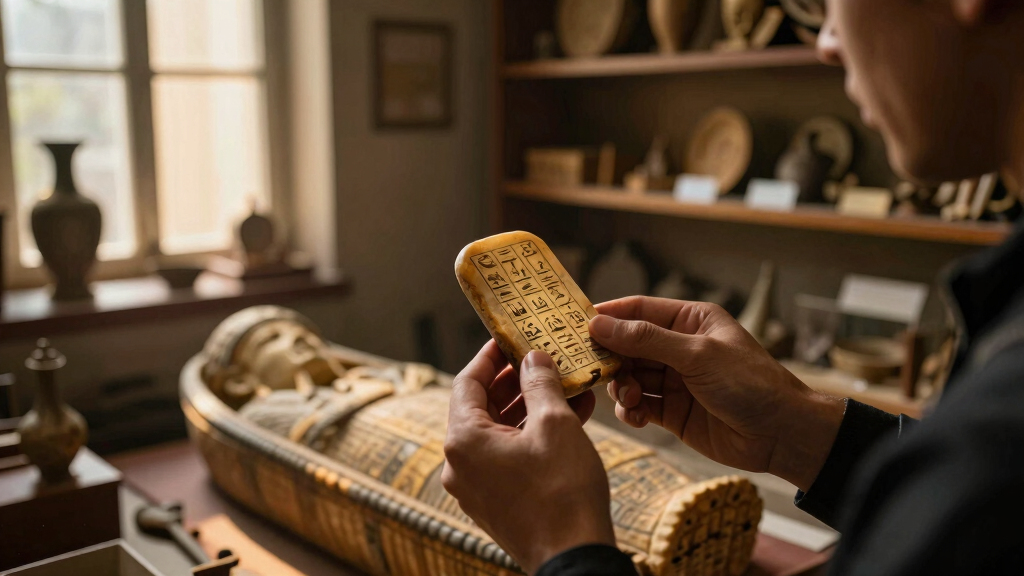
A rare Tutankhamun stele, purchased by the Louvre Abu Dhabi for over $9 million, is suspected of having illicit origins. Investigations reveal a possible scheme to hide its true provenance, implicating major museums in antiquities trafficking.
A rare and remarkably well-preserved stele inscribed with a decree from Pharaoh Tutankhamun, acquired by the Louvre Abu Dhabi in 2017 for over $9 million, is now suspected of having illicit origins linked to antiquities trafficking networks.
The stele, dating to approximately 1318 B.C.E., was purchased from a little-known Egyptian dealer, Habib Tawadros, via a German merchant-navy officer, Johannes Behrens, in 1933. Experts have raised questions about Behrens’s existence and the provenance of the artifact, especially given Germany’s economic turmoil at that time.
Research by Egyptologist Marc Gabolde uncovered inconsistencies in the artifact’s history, noting that similar patterns of forged documentation and fabricated stories are common among looted antiquities. In 2019, authorities seized a looted Egyptian mummy coffin in New York, with evidence suggesting a connection to Tawadros, raising concerns about the stele’s legitimacy.
French museum officials, including Jean-Luc Martinez of the Louvre, had pledged to adhere to strict provenance rules. However, investigations reveal that traffickers may have used elaborate fake stories and forged documents to disguise illicit origins, potentially deceiving high-profile institutions.
Why It Matters
This case underscores the ongoing challenge museums face in verifying the provenance of antiquities amid sophisticated trafficking schemes. It highlights the risk of cultural looting funding illegal networks and the importance of rigorous provenance checks to prevent illicit artifacts from entering public collections.
The involvement of major museums in potentially acquiring looted items raises questions about the effectiveness of current safeguards and the need for enhanced international cooperation to combat antiquities trafficking.
antique artifact provenance verification kit
As an affiliate, we earn on qualifying purchases.
As an affiliate, we earn on qualifying purchases.
Background
The controversy surrounding the stele echoes broader issues in the art and antiquities world, where looted artifacts often appear in reputable institutions due to forged provenance and illegal sales. The case aligns with recent law enforcement crackdowns on trafficking networks that have supplied artifacts to prominent museums, often through complex, clandestine channels.
Historical records show that illicit trade in Egyptian antiquities surged in the early 20th century, with many artifacts ending up in private collections and museums worldwide. Recent investigations have exposed how some of these artifacts may have been stolen or looted during periods of political instability, such as Egypt’s Arab Spring in 2011.
“The provenance of this stele raises serious doubts, especially considering the lack of documentation and the suspicious origins linked to a shadowy dealer.”
— Marc Gabolde, Egyptologist
“We are committed to ethical acquisitions and will review this case thoroughly to ensure compliance with provenance standards.”
— French museum official (unnamed)
“The network behind these artifacts is extensive, spanning deserts to major museums, and involves forged documents and fabricated stories.”
— Law enforcement source (unnamed)
What Remains Unclear
It remains unclear whether the stele was indeed looted or if its provenance was entirely fabricated. The full extent of the trafficking network involved and whether other artifacts are similarly compromised is still being uncovered.
What’s Next
Authorities plan to continue investigations into the artifact’s origins, including forensic analysis of the stele and review of the museum’s acquisition procedures. Legal actions against traffickers and further scrutiny of museum acquisitions are expected.
Key Questions
What specific evidence links the stele to illicit trade?
Research indicates inconsistencies in its provenance, suspicious sales history, and connections to known traffickers involved in looting Egyptian antiquities, though definitive proof is still being gathered.
Could the stele still be legitimate?
While possible, the prevailing suspicion based on current evidence suggests it may have been fabricated or looted, prompting further forensic and provenance investigations.
What actions are museums taking regarding similar artifacts?
Many institutions are reviewing their acquisition procedures, increasing provenance verification, and collaborating with law enforcement to prevent illegal artifacts from entering collections.
Will this case lead to legal consequences for involved parties?
Legal proceedings may follow as investigations continue, particularly if evidence confirms trafficking or forgery linked to the artifact’s provenance.
Flea & tick season Picks
flea and tick prevention
As an affiliate, we earn on qualifying purchases.