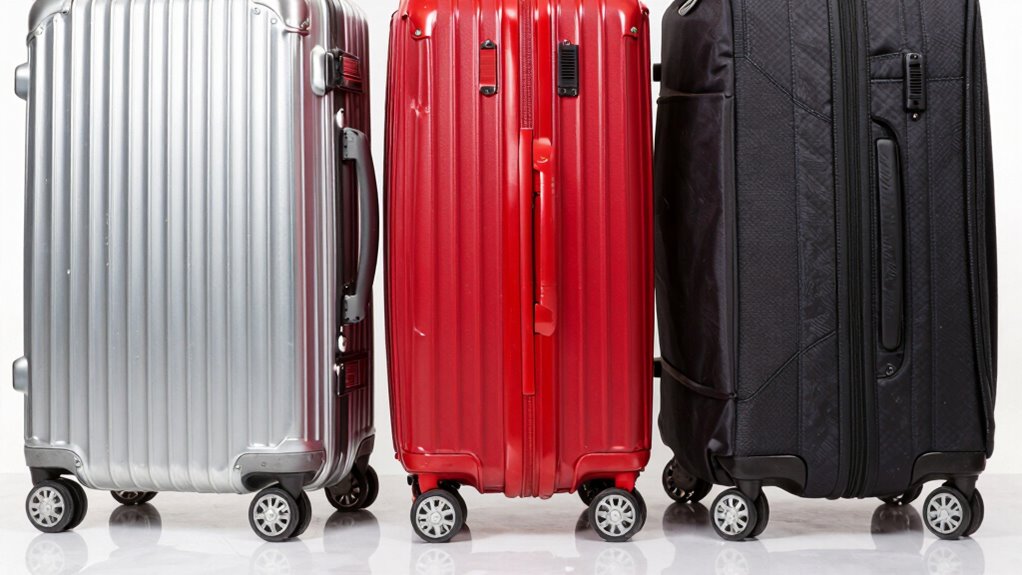

When comparing luggage materials, aluminum offers high durability and a premium look but is heavier and requires more maintenance. Polycarbonate is lightweight, strong, and easy to mold into sleek designs, making it popular for balance of durability and price. Fabric luggage is the lightest and most budget-friendly, with flexible packing options, but less resistant to tears and water. To discover which material suits your travel style best, explore the details further.

Get your wardrobe favorites delivered free with Prime
- Fast, free delivery on millions of items
- Prime Video, Amazon Music and more included
- Member-only deals all year
Key Takeaways
- Aluminum offers high durability and strength but requires more maintenance and is heavier than other materials.
- Polycarbonate is lightweight, resistant to impact and shattering, and can be molded into sleek, modern designs.
- Fabric luggage is the lightest and most flexible, ideal for packing and storage but less resistant to tears and water damage.
- Aluminum tends to be more expensive and needs upkeep, while polycarbonate balances durability and affordability, and fabric is budget-friendly.
- Material choice impacts weight, durability, design flexibility, maintenance, and overall travel convenience.
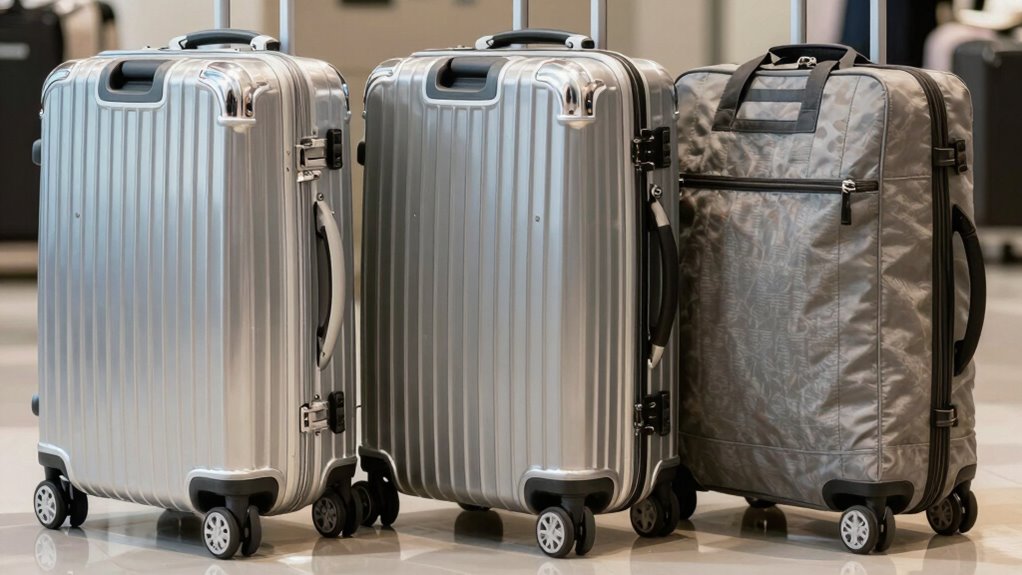
Choosing the right luggage material can make a big difference in durability, weight, and overall performance. When selecting your bag, you want something that will withstand the rigors of travel without adding unnecessary bulk. To do that, you need to consider how each material performs during durability testing, how lightweight they are through weight analysis, and how well they meet your travel needs.
Choosing the right luggage material impacts durability, weight, and travel convenience—consider testing, weight, and your specific needs.
Aluminum luggage stands out for its exceptional durability. During durability testing, aluminum cases prove to be highly resistant to impacts, scratches, and rough handling. If you’re someone who often checks your luggage or travels through crowded airports, aluminum can give you peace of mind, knowing your belongings are protected. However, this durability comes at a cost. Aluminum tends to be heavier than other materials, which can impact your overall weight analysis. Carrying a heavier bag might mean additional baggage fees or more effort when lifting into overhead compartments. Still, if durability is your top priority, aluminum’s resilience often outweighs its weight drawbacks. Additionally, aluminum luggage often requires more maintenance to keep its appearance. Material strength plays a crucial role in determining its longevity and ability to withstand frequent use.
Polycarbonate luggage offers a compelling balance between strength and weight. During durability testing, it demonstrates impressive resistance to cracking and shattering under impact, often bouncing back from rough handling. It’s lighter than aluminum, making it a popular choice for frequent travelers who want sturdy protection without the added weight. Polycarbonate is also easy to mold into sleek, modern designs, and it tends to be more affordable than aluminum. When you perform weight analysis, you’ll find polycarbonate cases are remarkably lighter, helping you stay within airline weight restrictions while providing solid protection for your belongings. Its flexibility also means it absorbs shocks better, reducing the risk of damage during transit. Furthermore, advances in polycarbonate technology have improved its overall durability and aesthetic appeal. This material is frequently praised for its combination of toughness and style, making it a versatile option for many travelers.
Fabric luggage, typically made from ballistic nylon or polyester, offers a different set of advantages. It’s usually the lightest option, which appeals to travelers aiming to minimize their baggage weight. While fabric isn’t as durable as aluminum or polycarbonate during durability testing, high-quality materials can withstand regular wear and tear effectively. Fabric suitcases are often easier to compress or squeeze into tight spaces, and they tend to be more flexible, which can be useful when packing or fitting into overhead compartments. Additionally, some fabric options are treated to improve water resistance, providing extra protection against the elements. However, their softer exterior means they’re more susceptible to tears, abrasions, and water damage. Proper maintenance and choosing high-quality fabric can extend its lifespan and functionality. Overall, fabric luggage remains a popular choice for travelers prioritizing weight savings and ease of storage over maximum impact resistance.
Popular right now

Shark Rocket Pet Plus Corded Stick Vacuum, Bordeaux, HV322

Ninja Luxe Café Premier 3-in-1 Espresso Machine, Drip Coffee & Cold Brew

Dyson Ball Animal 2 Plus Corded Vacuum
As an affiliate, we earn on qualifying purchases.
Frequently Asked Questions
Which Luggage Material Is Most Environmentally Friendly?
You’ll find fabric luggage to be the most eco-friendly option, especially if you choose options made from recycled or sustainable materials. Fabric is generally more recyclable and has a lower environmental impact during production compared to aluminum and polycarbonate. While aluminum is highly durable and recyclable, it requires significant energy to produce. Polycarbonate isn’t as eco-friendly due to its plastic content and limited recyclability.
How Do Luggage Materials Affect Weight Restrictions?
Luggage material considerably impacts your travel experience by affecting weight restrictions. For example, lightweight fabric bags often weigh 20% less than aluminum options, allowing more room for your belongings within weight limits. Durable materials like polycarbonate provide a good balance, offering high weight capacity without excess weight. Choosing the right material helps you maximize your luggage’s capacity while staying within airline weight restrictions.
Are There Specific Warranties for Different Luggage Materials?
You’ll find that warranty coverage varies depending on the luggage material. Aluminum often comes with longer warranties due to its high material durability, offering better protection against dents and corrosion. Polycarbonate usually has moderate warranty coverage, as it’s durable but can crack under impact. Fabric luggage typically has shorter warranties, since it’s less resistant to wear and tear. Always check the specific warranty details for each material to confirm your luggage meets your travel needs.
Can Luggage Materials Be Repaired After Damage?
A stitch in time saves nine, and the same applies to luggage repairs. You can usually fix damaged luggage, but repairability concerns vary by material. Aluminum and polycarbonate cases often withstand damage resistance better and can be repaired at specialized shops, while fabric luggage might need patching or replacing. Remember, quick repairs help maintain durability and prolong your luggage’s lifespan, so don’t delay fixing minor issues to avoid bigger problems later.
Which Materials Offer the Best Security Features?
Aluminum luggage offers the best security features because its sturdy, hard shell resists tampering and provides superior durability. Polycarbonate also provides good security with some flexibility, making it tough to break. Fabric luggage, while lighter, usually has fewer security features but can include built-in lock systems. Your choice depends on your priority: if security and durability are paramount, aluminum is the best option for protecting your belongings.
Conclusion
Choosing the right luggage material is like finding the perfect suit—it’s all about your needs and style. Aluminum offers strength but adds weight, polycarbonate balances durability and lightness, while fabric provides flexibility and ease. Think of it as picking between a sturdy fortress, a sleek sports car, or a comfy hoodie. Whichever you choose, make sure it suits your journey’s rhythm. After all, your luggage should be your trusted travel partner, ready for whatever adventure lies ahead.