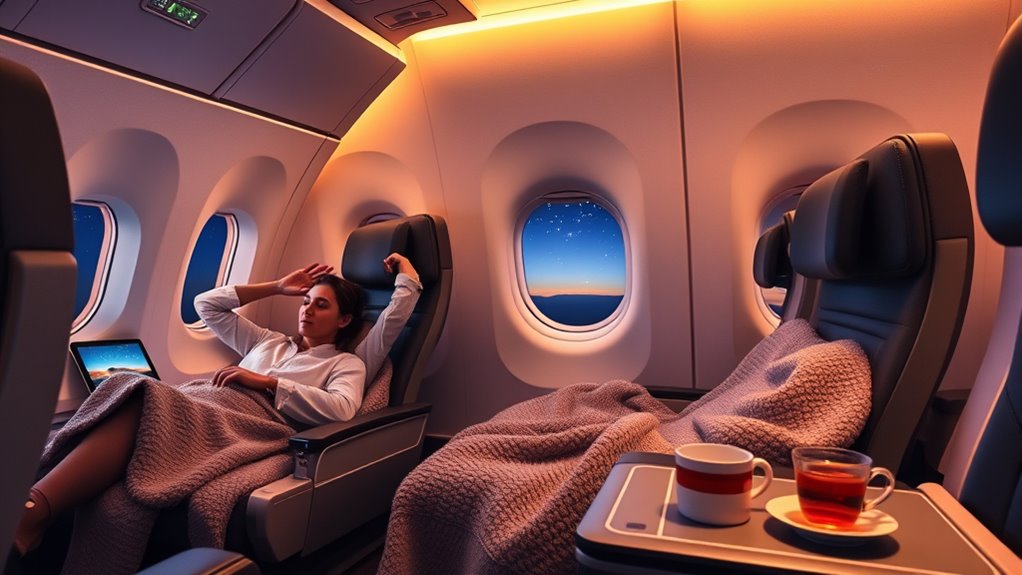

To recover from jet lag, start adjusting your sleep schedule a few days before traveling by shifting your bedtime and wake time closer to your destination’s time zone. Spend time outdoors in natural light, especially in the morning, to reset your internal clock. Create a comfortable sleep environment with blackout curtains and earplugs, and stay hydrated while avoiding caffeine and alcohol. Maintaining routines and eating aligned with local mealtimes also helps. If you continue exploring, you’ll find more effective tips to ease your adaptation.
Key Takeaways
- Gradually adjust sleep schedules before travel to align with the destination’s time zone.
- Maximize natural light exposure during the day, especially in the morning, to reset the internal clock.
- Create a sleep-friendly environment with blackout curtains, earplugs, and eye masks to improve rest quality.
- Maintain consistent routines, stay hydrated, and avoid caffeine or alcohol close to bedtime to support circadian alignment.
- Use short naps strategically and avoid long daytime naps to enhance alertness without disrupting nighttime sleep.
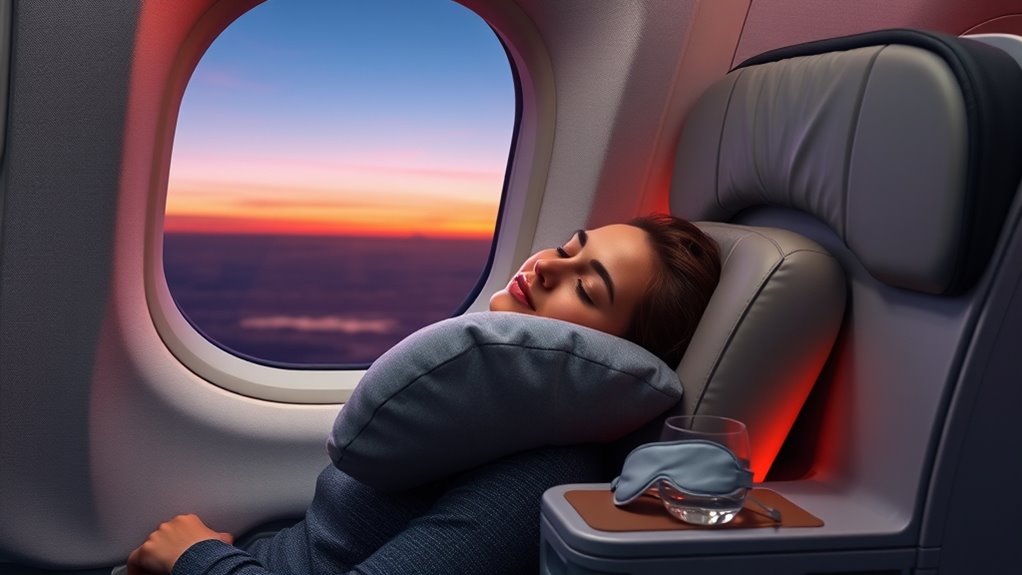
Jet lag can hit hard after long flights across multiple time zones, leaving you feeling exhausted, disoriented, and unproductive. Your body’s internal clock, known as circadian rhythms, gets thrown off, disrupting your sleep-wake cycle and making it tough to adjust quickly. Understanding how circadian rhythms work is essential to managing jet lag effectively. These rhythms regulate many biological processes, including sleep, hormone production, and body temperature, all synchronized to the local time zone. When you travel across time zones, your internal clock remains aligned with your original location, causing a mismatch with the new environment. This mismatch results in the common symptoms of jet lag, such as fatigue, difficulty concentrating, mood swings, and gastrointestinal issues.
To combat this, adopting targeted sleep strategies can considerably improve your recovery. One effective approach is to plan your sleep schedule before departure to better align with your destination’s time zone. If possible, gradually shift your bedtime and wake time closer to the new local time a few days in advance. This helps ease your circadian rhythms into the new schedule rather than forcing a sudden change upon arrival. Once you arrive, exposure to natural light plays an essential role in resetting your internal clock. Spend time outdoors during daylight hours, especially in the morning, to signal your body that it’s daytime and promote adjustment.
Another sleep strategy involves managing your environment to facilitate better rest. Use blackout curtains to block out unwanted light and wear an eye mask if necessary. Earplugs can help reduce noise disturbances, creating a more conducive sleep environment. If you’re feeling sleepy during the day, short naps—about 20 to 30 minutes—can help boost alertness without interfering with nighttime sleep. However, avoid long naps that could further disrupt your circadian rhythms. Additionally, understanding the importance of circadian rhythms can help you better plan your sleep and exposure to light to facilitate quicker adaptation.
Maintaining a consistent sleep routine, even at your destination, reinforces your body’s new schedule. Going to bed and waking up at the same times each day helps your internal clock adapt more rapidly. Additionally, be mindful of caffeine and alcohol intake, as both can interfere with sleep quality and hinder your circadian adjustment. Staying hydrated and eating light, healthy meals aligned with local mealtimes also support your body’s natural rhythms.
blackout curtains for bedroom
As an affiliate, we earn on qualifying purchases.
As an affiliate, we earn on qualifying purchases.
Frequently Asked Questions
Can Jet Lag Affect Mental Health Long-Term?
Jet lag can impact your mental health long-term, especially if it causes ongoing sleep deprivation. You might find your psychological resilience weakens over time, making it harder to cope with stress. Persistent sleep disruptions can lead to mood swings, anxiety, or depression. To protect your mental health, prioritize good sleep habits and give yourself time to recover from jet lag, reducing the risk of long-term psychological effects.
Are There Natural Supplements That Prevent Jet Lag?
The ball is in your court when it comes to natural supplements for jet lag. You can try herbal remedies like valerian root or melatonin, which may help regulate your sleep cycle. Nutritional strategies, such as staying hydrated and eating light before bed, also support recovery. While these options aren’t guaranteed, they can ease your symptoms and help you adjust faster without relying solely on medication.
How Does Age Influence Jet Lag Recovery?
Age influences jet lag recovery because older adults experience age-related circadian shifts and changes in sleep patterns, making it harder to adjust quickly. You might find that the elderly take longer to reset their internal clock after crossing time zones. Their sleep quality can also decline, complicating recovery. To ease this, maintain a consistent schedule, get plenty of natural light, and consider tailored strategies to support their unique needs.
Is There a Difference in Jet Lag Recovery Between Men and Women?
Surprisingly, men and women don’t recover from jet lag the same way, thanks to hormonal differences and sleep cycle variations. You might think gender wouldn’t matter, but your hormones and internal clocks shape your recovery process. Women often adjust quicker because their hormonal fluctuations influence sleep patterns, whereas men’s sleep cycles can be more rigid. So, yes, gender plays a role—ironic how biology can make travel recovery so personalized.
Can Frequent Travelers Develop Permanent Adjustments to Jet Lag?
Yes, as a frequent traveler, you can develop permanent circadian shifts through repeated exposure to different time zones. Your body adapts by establishing more permanent adjustments in your internal clock, leading to adaptive sleep patterns that reduce jet lag symptoms over time. This process involves your circadian system shifting to align better with new schedules, making future travel less disruptive and helping you recover more quickly from time zone changes.
earplugs for sleep
As an affiliate, we earn on qualifying purchases.
As an affiliate, we earn on qualifying purchases.
Conclusion
Imagine waking up refreshed after a long flight—jet lag no longer holds you hostage. By following evidence-based strategies like adjusting your schedule, seeking sunlight, and staying hydrated, you can outsmart jet lag’s grip. Don’t let time zones dictate your energy; instead, take control and turn your travel fatigue into a distant memory. Because, after all, the world is wide, and your journey should start with vigor, not exhaustion.
eye mask for travel
As an affiliate, we earn on qualifying purchases.
As an affiliate, we earn on qualifying purchases.
natural light therapy lamp
As an affiliate, we earn on qualifying purchases.
As an affiliate, we earn on qualifying purchases.

Born in Dubai to Pakistani parents, Aisha deeply understands Middle Eastern and South Asian luxury markets. She excels in forging strategic partnerships with top-tier luxury brands worldwide, fostering cross-cultural collaborations that enhance our global presence.