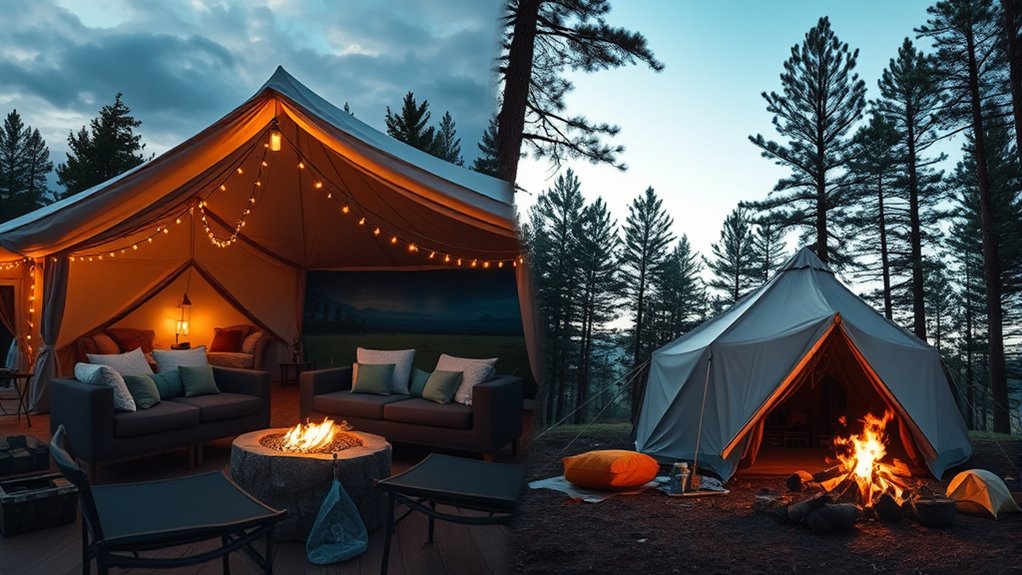

Glamping gives you a luxury outdoor experience with comfy beds, electricity, and private bathrooms, making it perfect if you want to enjoy nature without sacrificing comfort. Traditional camping requires setting up your gear, cooking over a fire, and being more self-sufficient, which deepens your connection to nature. Both options create memorable adventures, but your choice depends on your comfort level and how involved you want to be. Keep exploring to discover which suits you best.
Key Takeaways
- Glamping offers luxury amenities like plush beds and climate control, while traditional camping involves basic gear and self-sufficiency.
- Glamping requires little setup, providing ready-to-use accommodations; traditional camping involves pitching tents and meal prep.
- Traditional camping offers a more immersive, authentic wilderness experience emphasizing adventure and connection to nature.
- Glamping is generally more expensive due to added comforts; traditional camping is more budget-friendly and adaptable.
- Glamping fosters a social, hotel-like atmosphere; traditional camping encourages solitary or intimate outdoor experiences.
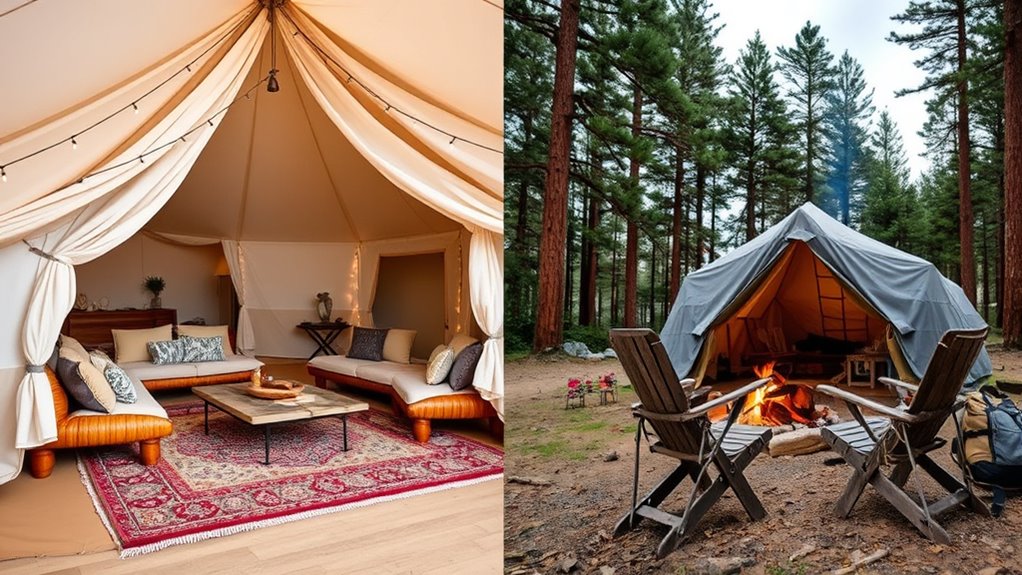
Have you ever wondered whether glamping or traditional camping is better for your outdoor adventure? The choice really depends on what kind of experience you’re after, but understanding the differences can help you decide. When it comes to glamping, luxury amenities are a game-changer. Instead of roughing it out with basic camping gear, you get to enjoy comforts like plush beds, climate control, and even private bathrooms. This means you can relax and unwind without sacrificing the beauty of nature. It’s perfect if you want to immerse yourself in the outdoors but still enjoy the comforts of home. On the other hand, traditional camping involves packing and using more basic camping gear—think lightweight tents, sleeping bags, portable stoves, and minimal amenities. With this approach, you rely more on your resourcefulness and physical endurance, which can be incredibly rewarding if you love a sense of adventure and self-sufficiency.
Glamping tends to attract those who want the outdoor experience without the hassle of setting up camp and managing camping gear. You might stay in a safari tent, yurt, or tiny house, all equipped with electricity, furniture, and sometimes even Wi-Fi. This eliminates many of the inconveniences associated with traditional camping, like uncomfortable sleeping arrangements or unpredictable weather affecting your gear. However, some outdoor enthusiasts find that this comfort takes away from the raw, authentic feel of camping in the wild. Traditional camping, by contrast, requires you to be more involved—you set up your tent, manage your gear, and prepare meals over a campfire. It demands a bit more effort but offers a deeper connection to nature. Additionally, traditional camping often aligns with the principles of cucina povera, emphasizing simple, hearty, and resourceful meals crafted from basic ingredients.
Cost is another factor to take into account. Glamping often comes with a higher price tag because of the luxury amenities, but it can be a good option if you’re short on time or prefer a hassle-free experience. Traditional camping is generally more affordable, especially if you already have the camping gear, and it allows you to spend your money on outdoor activities or food instead. The social aspect can also differ; glamping sites often foster a communal, hotel-like atmosphere, while traditional camping can be more solitary or intimate with close friends or family. Ultimately, it’s about what suits your comfort level, your sense of adventure, and your budget. Whether you choose the plush comfort of glamping or the rugged authenticity of traditional camping, both options promise memorable outdoor experiences.
luxury glamping tent with amenities
As an affiliate, we earn on qualifying purchases.
As an affiliate, we earn on qualifying purchases.
Frequently Asked Questions
What Are the Environmental Impacts of Glamping Compared to Traditional Camping?
Glamping generally has a higher environmental impact than traditional camping because it often involves larger structures and amenities, increasing your carbon footprint. These setups can cause habitat disruption due to construction and infrastructure. In contrast, traditional camping usually leaves a smaller footprint, with minimal equipment and less land alteration. If you’re eco-conscious, you’ll want to contemplate how your choice affects the environment, aiming to minimize habitat disruption and reduce your carbon footprint.
How Do Costs Compare Between Glamping and Traditional Camping Options?
Think of the cost comparison like a balancing scale—you’ll find glamping usually costs more upfront, often ranging from $100 to $500 per night, depending on amenities. Traditional camping, on the other hand, can be as low as $10 to $50 per night if you bring your gear. Glamping’s pricing strategies include premium accommodations and included amenities, making it pricier, but it offers more comfort and convenience than traditional camping.
Are There Health or Safety Concerns Unique to Each Camping Style?
You should be aware that glamping generally has fewer health risks because it offers more comfortable and secure accommodations, reducing exposure to elements and insects. Traditional camping might pose safety concerns like insect bites, food spoilage, or accidents in rough terrain. Always follow safety precautions such as using insect repellent, storing food properly, and staying aware of your surroundings. Both styles require attention to health risks and safety measures to guarantee a safe, enjoyable experience.
Which Camping Style Offers Better Opportunities for Social Interaction?
You’ll find that traditional camping offers better opportunities for social interaction, as you’re more likely to engage in campfire conversations and group activities with fellow campers. When you pitch a tent in a shared campsite, you naturally connect with others, sharing stories and participating in communal fun. Glamping, while comfortable, tends to be more solitary or family-focused, providing fewer chances for spontaneous social interactions around the campfire or during group outings.
How Accessible Are Glamping and Traditional Camping for People With Disabilities?
You’ll find both options vary in accessibility. Glamping sites often feature wheelchair-accessible cabins with smooth pathways, making it easier to navigate comfortably. Traditional camping can be more challenging, but many sites now offer accessible tent platforms and amenities. Service animal policies are generally accommodating at both, allowing your furry companion to join you. With some planning, you can enjoy the outdoors regardless of mobility needs, embracing nature’s beauty without barriers.
portable camping stove for traditional camping
As an affiliate, we earn on qualifying purchases.
As an affiliate, we earn on qualifying purchases.
Conclusion
Ultimately, whether you choose glamping or traditional camping depends on your vibe. Glamping offers comfort and convenience, perfect for those wanting a touch of luxury in nature. Traditional camping keeps you closer to the wilderness, giving you an authentic outdoor experience. Remember, “A journey of a thousand miles begins with a single step.” Whatever you pick, embrace the adventure and make memories—nature’s waiting, and it’s up to you to decide how you want to explore it.
camping sleeping bag for outdoor adventures
As an affiliate, we earn on qualifying purchases.
As an affiliate, we earn on qualifying purchases.
solar-powered camping lantern
As an affiliate, we earn on qualifying purchases.
As an affiliate, we earn on qualifying purchases.

Born in Dubai to Pakistani parents, Aisha deeply understands Middle Eastern and South Asian luxury markets. She excels in forging strategic partnerships with top-tier luxury brands worldwide, fostering cross-cultural collaborations that enhance our global presence.