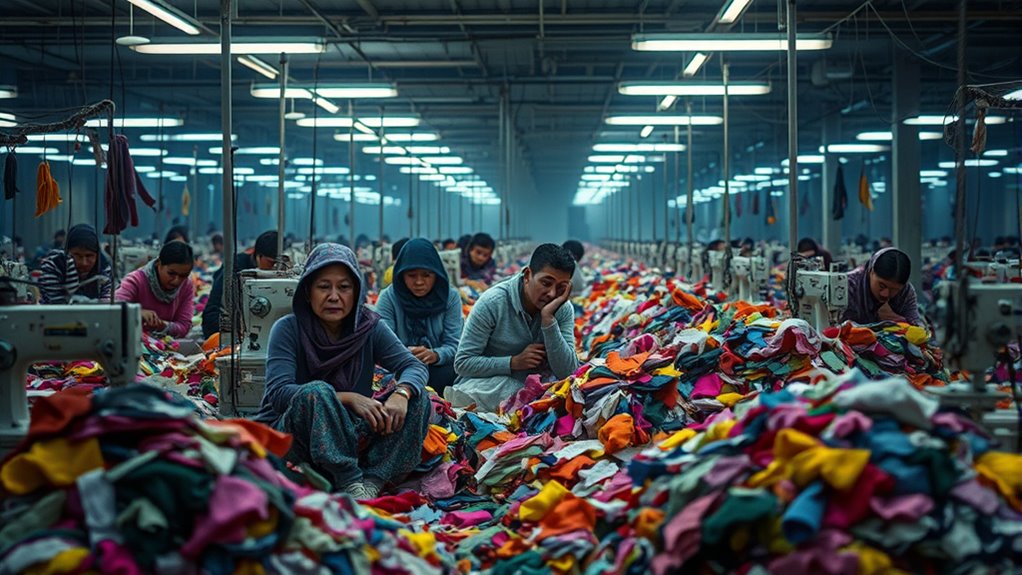

Fast fashion’s human cost involves exploitation of workers in unsafe factories, often in developing countries, where they earn meager wages and face long hours. Many are women and children subjected to mistreatment, abuse, and harassment, all while their voices go unheard. This industry also perpetuates environmental harm through resource depletion and pollution. Supporting fast fashion ties you to these stories of hardship, but understanding more can help you make informed choices that challenge this cycle.
Key Takeaways
- Workers in fast fashion factories often face low wages, long hours, unsafe conditions, and exploitation, especially in developing countries.
- Many laborers are women and children subjected to abuse, harassment, and lack of job security due to industry practices.
- Fast fashion production contributes to environmental degradation through resource depletion, water pollution, chemical runoff, and waste dumping.
- The industry’s rapid production cycle increases environmental and human costs, intensifying pollution, resource use, and climate change effects.
- Consumer purchasing choices influence industry practices; ethical support can promote fair labor and sustainable manufacturing.

Fast fashion may offer trendy clothes at low prices, but behind the glossy storefronts lies a human cost that often goes unnoticed. When you buy that inexpensive shirt or pair of jeans, you might not realize the harsh realities faced by the workers who made them. Many of these garments are produced under conditions of labor exploitation, where workers are paid meager wages, forced to work long hours, and often subjected to unsafe environments. Factories in developing countries, where regulations are lax or poorly enforced, become sites of injustice, and the workers inside them are treated more like commodities than human beings. They toil for hours on end, sometimes in sweatshop conditions, just to keep production costs low and meet the fast-paced demands of the global market.
This cycle of exploitation isn’t just about unfair wages; it’s also about the broader impact on human rights. Workers, including many women and children, often face abuse, harassment, and a complete lack of job security. They have little say in working conditions, and their voices are silenced by the fear of losing their jobs. As a consumer, it’s essential to recognize that your purchasing choices are tied directly to these human stories of hardship. Every cheap garment might have a story of someone who endured mistreatment to produce it. Additionally, the environmental degradation caused by fast fashion’s rapid production cycle exacerbates these issues, as resource-intensive processes and toxic chemicals harm both people and ecosystems.
Equally troubling is the environmental degradation caused by fast fashion’s rapid production cycle. The industry relies heavily on resource-intensive processes that deplete natural resources and pollute ecosystems. To meet the demand for ever-faster turnaround times, companies often use toxic dyes and chemicals that contaminate water supplies and harm local communities. Massive amounts of water are used to produce fabrics like cotton, and when waste is dumped into rivers and oceans, it devastates aquatic life and damages ecosystems. The environmental footprint of fast fashion is enormous, contributing to deforestation, soil erosion, and greenhouse gas emissions that accelerate climate change.
All of this happens while you’re lured by the latest trends and discounted prices. It’s easy to forget that behind each garment lies a web of exploitation—both of human labor and natural resources. As a conscious consumer, you hold power. You can choose to support brands that prioritize fair labor practices and sustainable production methods. By making informed choices, you push the industry toward change, encouraging companies to adopt ethical standards that protect workers and the environment. Your decisions matter, and they can help break the cycle of exploitation that’s been woven into the fabric of fast fashion. Recognizing the role of predictive modeling in supply chain management could help companies better anticipate and address these issues before they escalate.
ethical fashion brands
As an affiliate, we earn on qualifying purchases.
As an affiliate, we earn on qualifying purchases.
Frequently Asked Questions
How Can Consumers Reduce Their Impact on Fast Fashion’s Human Cost?
You can reduce your impact on fast fashion’s human cost by practicing ethical shopping and increasing your consumer awareness. Choose brands that prioritize fair labor practices and sustainable materials. Before buying, research companies’ ethics and production methods. By supporting ethical brands and avoiding fast fashion chains, you help improve workers’ conditions and promote responsible industry standards. Your conscious choices make a difference in creating a more equitable and sustainable fashion future.
What Are the Signs of Unethical Labor Practices in Fashion Brands?
Like a dark cloud over a sunny day, signs of unethical labor practices often appear subtly. You should watch for labor violations such as unsafe working conditions, excessive working hours, and lack of fair wages. Worker exploitation may be evident if workers seem unprotected, intimidated, or if factories lack transparency. Recognizing these signs helps you make informed choices and support brands that prioritize ethical labor practices.
Are There Certifications That Verify Ethical Manufacturing in Fashion?
Yes, there are certifications that verify ethical manufacturing in fashion. Look for labels like Fair Trade, which guarantee fair wages and safe working conditions. Brands that undergo regular ethical audits demonstrate their commitment to responsible practices. These certifications help you identify companies that prioritize workers’ rights and sustainability, making it easier for you to make informed choices and support ethical fashion brands.
How Do Fast Fashion Brands Justify Low Production Costs?
You might think fast fashion brands just get lucky, but they rely on clever cost-cutting strategies. They justify low production costs by minimizing supply chain transparency, often hiding factory conditions and exploiting cheap labor. They cut corners on quality and ethical practices, presenting a shiny facade of affordability. It’s a game of transparency versus hidden costs, where consumers see low prices but overlook the human toll behind the scenes.
What Role Do Governments Play in Safeguarding Garment Workers’ Rights?
Governments play a crucial role by implementing and enforcing labor laws that protect garment workers’ rights. They’re responsible for ensuring fair wages through wage enforcement policies and safeguarding safe working conditions. By actively monitoring factories and penalizing violations, governments help prevent exploitation. Your support for policies that strengthen labor protections encourages brands to prioritize ethical practices, ultimately improving the lives of workers in the fashion industry.

Womens Organic T Shirt | Fair Trade Scoop Neck Tee | Certified Organic 100% Cotton Shirt | Eco Friendly | Black or White (Small, 1, White)
Super soft and Breathable 100 percent Cotton Scoop Neck T-shirt
As an affiliate, we earn on qualifying purchases.
As an affiliate, we earn on qualifying purchases.
Conclusion
As you consider the true cost of fast fashion, remember that over 60% of garment workers are women exposed to unsafe conditions and low wages. Every cheap shirt or pair of jeans you buy contributes to their hardship. By choosing sustainable options, you not only reduce waste but also support fair treatment and better lives for these workers. Your choices matter—every small step helps create a more ethical fashion industry.

Sustainable Preservation: Greening Existing Buildings (Wiley Books on Sustainable Design)
As an affiliate, we earn on qualifying purchases.
As an affiliate, we earn on qualifying purchases.

Allmade Unisex Organic Cotton T-Shirt, Herb Green, X-Large
ORGANIC COTTON COMFORT. Feel good in every way with our eco-friendly crew neck tee for men and women….
As an affiliate, we earn on qualifying purchases.
As an affiliate, we earn on qualifying purchases.

Born in Dubai to Pakistani parents, Aisha deeply understands Middle Eastern and South Asian luxury markets. She excels in forging strategic partnerships with top-tier luxury brands worldwide, fostering cross-cultural collaborations that enhance our global presence.