To reduce microplastics from laundry, switch to natural fibers like cotton or wool, and use microfiber-catching laundry bags or filters. Clean your washing machine filters regularly to prevent fiber escape, wash clothes less often, and choose gentle cycles to minimize shedding. Consider using liquid detergents as they cause less fiber loss. Supporting eco-friendly brands and staying informed helps protect water environments. Keep exploring to learn more ways you can make a difference and reduce microplastic pollution.
Key Takeaways
- Use microfiber-catching laundry bags or filters to trap microfibers during washing.
- Switch to natural fibers like cotton, wool, or linen to reduce microfiber shedding.
- Clean washing machine filters regularly to prevent fiber release into water systems.
- Wash clothes less frequently and select gentler cycles to minimize fiber shedding.
- Support eco-friendly brands and policies that promote sustainable clothing and laundry practices.
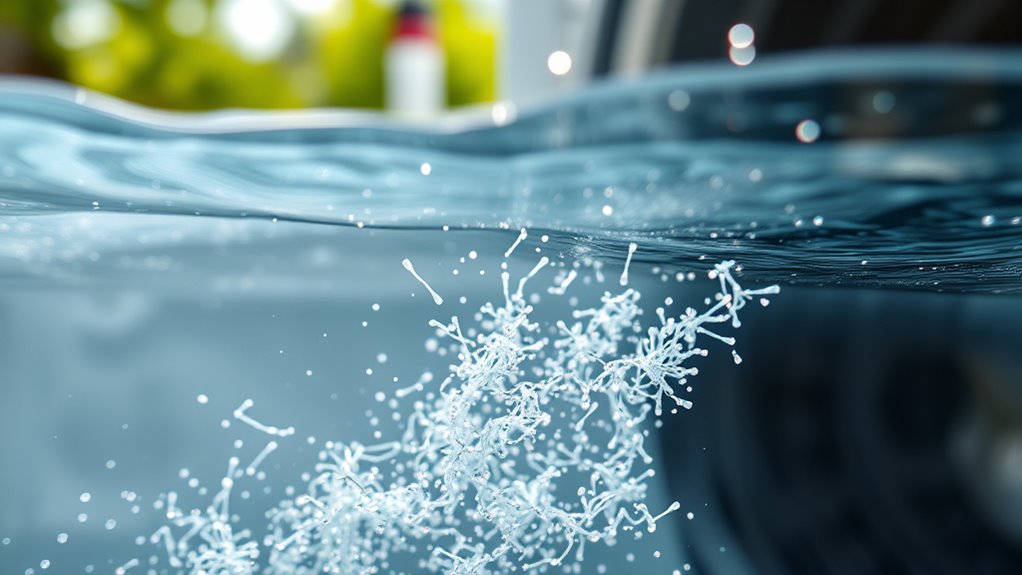
Every time you do laundry, tiny plastic fibers called microplastics are released from your clothes and wash down the drain. These microscopic particles mainly come from synthetic fibers like polyester, nylon, and acrylic, which are prevalent in many garments. As you wash your clothes, these fibers shed and enter the water system, contributing markedly to water pollution. Over time, they accumulate in oceans, lakes, and rivers, harming aquatic life and entering the food chain. Being aware of this process is the first step toward reducing your impact.
Every laundry session releases microplastics from synthetic clothes into our water systems, harming aquatic life and entering the food chain.
Synthetic fibers are designed to be durable and inexpensive, but their durability comes with a hidden downside. When you wash synthetic garments, they shed microfibers that are too small to be caught by standard wastewater treatment plants. Instead, they slip through filters and disperse into water bodies. These microplastics are not biodegradable, meaning they persist in the environment for hundreds of years, causing ongoing water pollution. Marine animals mistake these tiny fibers for food, leading to ingestion, which can cause internal injuries, reproductive issues, and even death. When humans consume seafood contaminated with microplastics, the problem becomes personal and widespread.
You might wonder what you can do to curb this issue. First, consider switching to natural fibers like cotton, wool, or linen for your wardrobe. These materials shed fewer microplastics and are biodegradable, so they won’t add to water pollution as synthetic fibers do. When laundry day arrives, use a microfiber-catching laundry bag or filter. These devices are designed to trap microfibers before they wash away into the water system. Regularly cleaning your washing machine’s filter can also help prevent fibers from escaping. Additionally, washing clothes less frequently and opting for gentler cycles can reduce fiber shedding, minimizing the amount of microplastics released.
Another effective step is using liquid laundry detergents instead of powders, as powders tend to cause more fiber shedding. You can also look for laundry products that are designed to reduce fiber loss or contain additives that bind microfibers. Educating yourself and others about this hidden source of water pollution empowers you to make environmentally conscious choices. Supporting policies and brands committed to sustainable practices can further amplify your impact.
In the end, your everyday actions matter. By making simple adjustments—choosing natural fibers, using microfiber filters, and handling laundry more mindfully—you can reduce the amount of microplastics entering our water systems. While individual efforts are important, collective action and awareness are vital to tackling the broader issue of water pollution caused by synthetic fibers. Every small step counts in protecting aquatic ecosystems and ensuring cleaner, healthier water for everyone. Understanding microplastic pollution is crucial for making informed decisions that benefit the environment.
microfiber-catching laundry bag
As an affiliate, we earn on qualifying purchases.
As an affiliate, we earn on qualifying purchases.
Frequently Asked Questions
Can Microplastics From Laundry Harm Human Health?
Microplastics from laundry can pose health risks through microplastic ingestion, though current research is ongoing. You might unknowingly ingest tiny particles when consuming seafood or even through air and dust. While a full health risk assessment hasn’t been definitive, reducing your exposure—like using eco-friendly laundry methods—can help. Staying informed and supporting studies on microplastic health impacts ensures you’re taking steps to protect your well-being.
Are Natural Fiber Clothes Completely Safe From Microplastic Shedding?
Think of natural fibers as your armor against microplastic shedding—yet, no fabric is entirely foolproof. While natural fibers like cotton and wool shed fewer microplastics than synthetics, they still release some fibers during laundry. To maximize shedding prevention, wash these clothes using gentle cycles, cold water, and avoid overloading the machine. Remember, staying mindful of washing habits minimizes environmental impact and keeps microplastic release at bay.
How Does Laundry Frequency Affect Microplastic Release?
Your laundry frequency directly impacts microplastic release. Washing clothes more often can increase the amount of microplastics released because fibers shed each time you wash, especially with synthetic fabrics. To reduce this, consider washing clothes less frequently, using cold water, and opting for gentler cycles. These steps help minimize microplastic release, protecting the environment and prolonging your clothes’ lifespan.
Do Laundry Detergents Influence Microplastic Shedding?
Detergent formulations act like sculptors shaping the fibers of your clothes, influencing how easily they shed microplastics. Some formulas, especially those with harsh chemicals, accelerate fiber degradation, releasing more microplastics into your wash. To reduce this, choose gentler, eco-friendly detergents that preserve fabric integrity. By doing so, you help keep microplastic pollution at bay, turning your laundry routine into a mindful act of environmental care.
Are There Specific Washing Machine Models That Reduce Microplastic Release?
Yes, some washing machine models are designed to reduce microplastic release. Look for eco-friendly washers that feature built-in washing machine filters, which catch microplastics before they enter water systems. These models often use gentler wash cycles and advanced filtration technology, making your laundry routine more environmentally friendly. By choosing such a machine, you actively help minimize microplastic pollution and protect aquatic ecosystems.
washing machine microfiber filter
As an affiliate, we earn on qualifying purchases.
As an affiliate, we earn on qualifying purchases.
Conclusion
To keep our oceans from turning into a plastic soup, you need to take action now. Every load of laundry is like adding a drop to the bucket—so it’s up to you to make that drop count. Use filters, wash less frequently, and choose natural fabrics whenever you can. By doing your part, you help prevent microplastics from sneaking into our waters—protecting wildlife, our health, and the planet’s future.
natural fiber laundry clothes
As an affiliate, we earn on qualifying purchases.
As an affiliate, we earn on qualifying purchases.
liquid laundry detergent for microfiber reduction
As an affiliate, we earn on qualifying purchases.
As an affiliate, we earn on qualifying purchases.

Born in Dubai to Pakistani parents, Aisha deeply understands Middle Eastern and South Asian luxury markets. She excels in forging strategic partnerships with top-tier luxury brands worldwide, fostering cross-cultural collaborations that enhance our global presence.