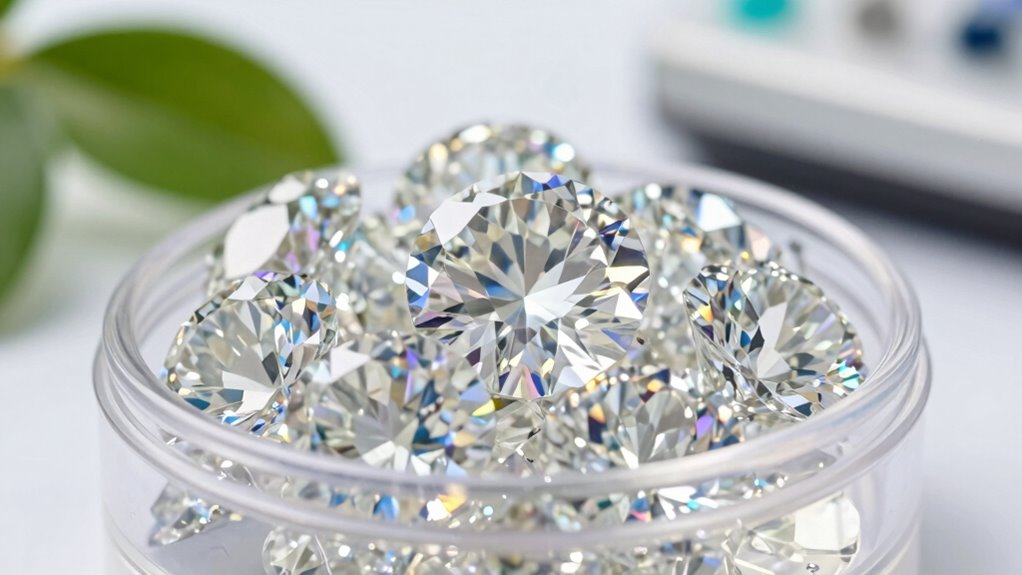

Lab-grown diamonds are seen as a more ethical and sustainable choice because they avoid the environmental damage and social issues linked to traditional mining, such as land disruption, conflict, and unfair labor practices. They’re produced using energy-efficient methods, especially when powered by renewable sources, and offer transparency about their origin. However, their sustainability depends on factors like energy use and manufacturing practices. To understand how genuine and responsible these claims are, explore the details behind their environmental footprint and ethical standards.
Key Takeaways
- Sustainable lab-grown diamonds have a smaller environmental footprint, reducing land disruption, water use, and carbon emissions compared to mined stones.
- Ethical sourcing depends on producer adherence to fair labor practices and transparency throughout the supply chain.
- Using renewable energy in production minimizes environmental impacts and enhances the sustainability of lab-grown diamonds.
- Industry standards and audits help ensure responsible manufacturing, fair wages, and safe working conditions.
- Continuous technological advances and responsible market demand drive improvements in the ecological and ethical sustainability of lab-grown diamonds.
lab-grown diamond engagement ring
As an affiliate, we earn on qualifying purchases.
As an affiliate, we earn on qualifying purchases.
What Are Lab-Grown Diamonds and How Are They Made?

Lab-grown diamonds are man-made gemstones that have the same chemical, physical, and optical properties as natural diamonds. These synthetic gemstones are created through advanced production processes that replicate natural formation conditions. There are two main methods: High Pressure High Temperature (HPHT) and Chemical Vapor Deposition (CVD). HPHT mimics the intense pressure and heat found deep within the Earth, transforming carbon into diamond. CVD involves placing a carbon-rich gas into a chamber, where energy causes carbon atoms to crystallize onto a substrate, forming a diamond layer. These production processes allow for controlled growth, resulting in high-quality gemstones that are indistinguishable from mined diamonds. This technology makes lab-grown diamonds a sustainable and ethical alternative to traditional mining. The ability to precisely control conditions during growth ensures consistent quality and minimizes environmental impact. Additionally, lab-grown diamonds often have a smaller carbon footprint compared to traditional mining methods, further emphasizing their environmental benefits.
ethical lab-grown diamond necklace
As an affiliate, we earn on qualifying purchases.
As an affiliate, we earn on qualifying purchases.
Are Lab-Grown Diamonds Eco-Friendly and Conflict-Free?
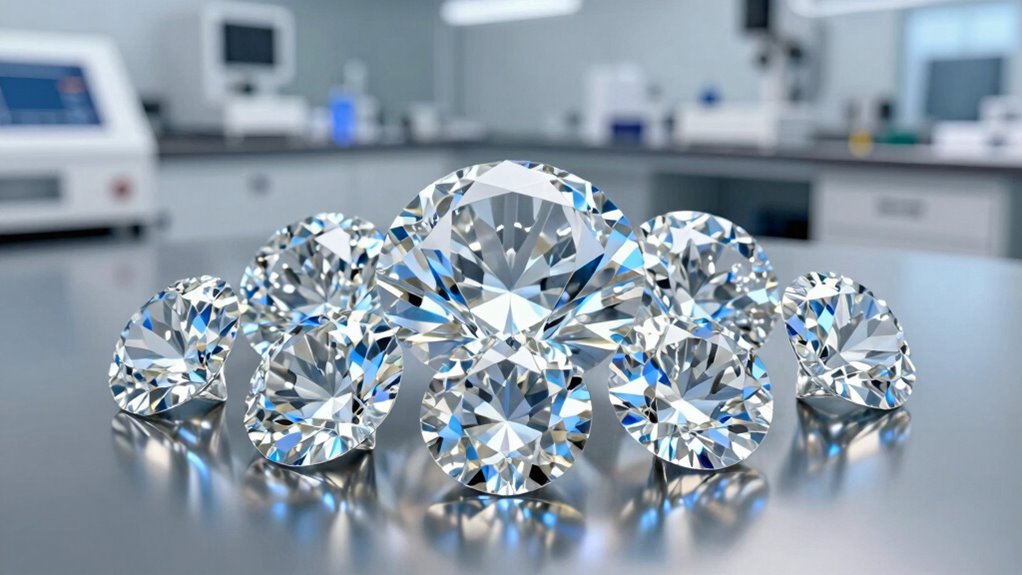
Because they are created in controlled environments, lab-grown diamonds typically have a smaller environmental footprint than mined diamonds. They avoid the extensive land disruption, water use, and carbon emissions associated with traditional mining, making them more eco-friendly. When considering conflict-free sourcing, lab-grown diamonds eliminate concerns about mining ethics, such as child labor or funding conflicts. Additionally, their supply chain is more transparent, allowing you to trace the origin of your stone and ensure it’s ethically produced. This transparency helps prevent the circulation of conflict diamonds and supports responsible practices. While no process is entirely without impact, lab-grown diamonds generally present a more sustainable and conflict-free alternative, aligning with ethical consumer values. By reducing environmental impact, lab-grown diamonds support more sustainable practices in the jewelry industry. Furthermore, advancements in sustainable manufacturing are continually improving the environmental profiles of these stones, making them an increasingly responsible choice for consumers concerned about ethical sourcing. Additionally, ongoing innovations in lab-grown diamond technology are further minimizing their ecological footprint, reinforcing their position as a greener alternative. For example, innovations in carbon-neutral production methods are helping to further lower their environmental impact.
sustainable diamond earrings
As an affiliate, we earn on qualifying purchases.
As an affiliate, we earn on qualifying purchases.
What Are the Environmental Impacts of Lab-Grown Diamonds?

While lab-grown diamonds are generally more environmentally friendly than mined stones, they still have some environmental impacts worth considering. Their production involves significant energy use, affecting the carbon footprint. Recycling impacts also come into play, as old materials and equipment may be discarded or repurposed, influencing resource efficiency. The energy source used in manufacturing directly impacts overall sustainability. You might imagine:
- Power plants emitting greenhouse gases during production
- Rare minerals used in equipment and their extraction impacts
- Waste heat affecting nearby ecosystems
- Water consumption in cooling and processing
- Disposal of electronic waste from manufacturing processes
Though they reduce the need for mining, lab-grown diamonds still leave an environmental mark, especially through energy consumption and waste management. The choice of manufacturing methods can also influence the overall sustainability of lab-grown gems. For example, implementing renewable energy sources can significantly reduce their environmental footprint. Additionally, adopting energy-efficient technology can further diminish their ecological impacts. Considering these impacts helps you understand the true sustainability of lab-grown gems, including the importance of energy efficiency in reducing environmental effects.
conflict-free lab-grown diamond
As an affiliate, we earn on qualifying purchases.
As an affiliate, we earn on qualifying purchases.
Do Lab-Grown Diamonds Meet Ethical Standards?
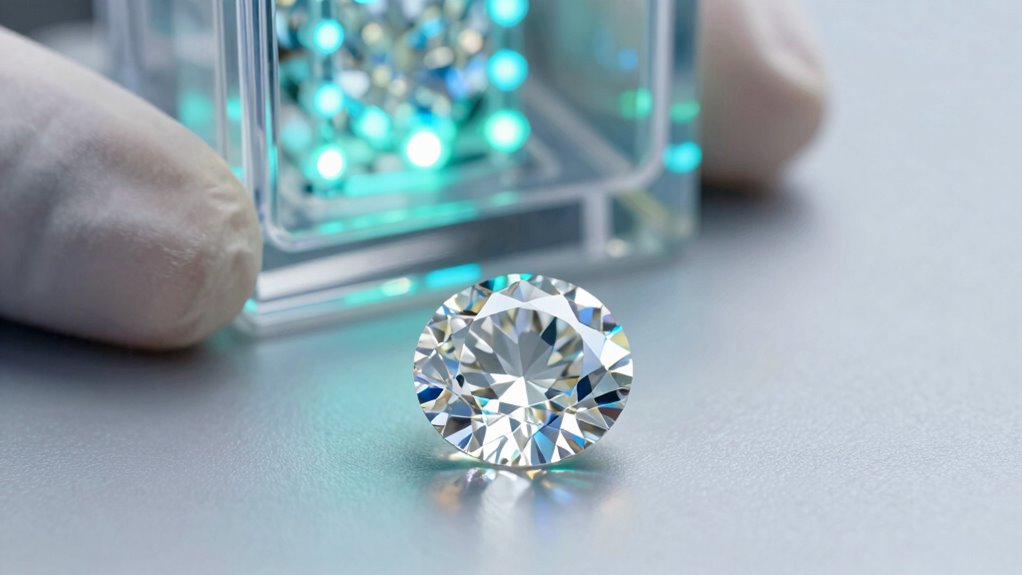
You might assume that lab-grown diamonds automatically meet ethical standards since they avoid the controversies associated with traditional mining. However, ethical sourcing isn’t guaranteed. While lab-grown diamonds generally have fewer environmental and human rights concerns, issues around labor practices can still arise. Some producers may cut corners on fair wages or safe working conditions, especially in less regulated regions. It’s vital to research the company’s commitment to ethical sourcing and transparent labor practices. Reputable brands often prioritize ethical standards, ensuring their diamonds are produced responsibly. Additionally, sustainable sourcing policies vary among producers, making it important to verify their practices. Ensuring that a producer adheres to industry standards can help you identify genuinely responsible options. Moreover, understanding the importance of attention to detail in assessing ethical practices can aid consumers in making informed choices. Recognizing the significance of comprehensive audits can further help verify a company’s claims. Incorporating regulatory compliance into your evaluation process can help ensure that ethical standards are truly upheld. Ultimately, lab-grown diamonds can be a more ethical choice, but only if you verify that the supplier adheres to fair labor practices and sustainable sourcing policies. Doing your homework helps ensure your diamond aligns with your values.
How Do Lab-Grown Diamonds Compare in Cost and Quality?
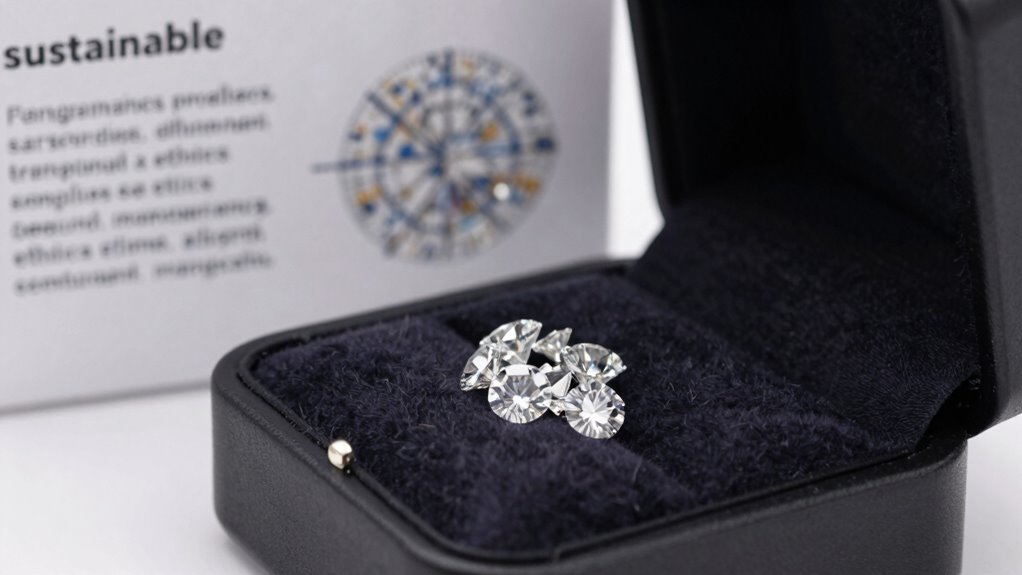
You might notice that lab-grown diamonds typically cost less than natural ones, making them a more affordable choice. When it comes to quality and appearance, many find that lab-grown stones are nearly indistinguishable from mined diamonds. Understanding these differences can help you decide whether they meet your standards and budget. Additionally, the sustainable production process of lab-grown diamonds often results in a significantly lower environmental impact. This lower impact is partly due to the energy-efficient methods used in their creation compared to traditional mining. Moreover, advancements in artistic styles have influenced consumer perspectives on ethical sourcing and environmental responsibility, further supporting the appeal of lab-grown options. Considering whole-house water filtration systems can also align with environmentally conscious choices by reducing overall resource consumption and promoting cleaner water for your home.
Cost Comparison Insights
Lab-grown diamonds typically cost substantially less than natural diamonds, offering a more affordable option without sacrificing quality. When considering pricing trends, you’ll find that lab-grown options maintain consistent affordability, making them attractive for budget-conscious buyers. An affordability analysis reveals significant savings, often up to 50-70% compared to mined diamonds. Visualize:
- Sparkling stones at a fraction of the price
- Clearer, more flawless appearances due to controlled growth growth process
- Consistent quality across batches
- Less price fluctuation over time
- Better value for the same size and cut
These factors highlight how lab-grown diamonds provide a cost-effective alternative that doesn’t compromise on beauty. Their stable pricing and affordability trends make them an appealing choice for those seeking both value and quality in their purchase. Cost stability ensures that buyers can confidently invest in lab-grown diamonds knowing they offer reliable pricing over time.
Quality and Appearance
Although lab-grown diamonds are often more affordable, they match or even surpass natural diamonds in both quality and appearance. They typically exhibit excellent clarity and brilliance, with fewer inclusions and defects, making them visually stunning. You’ll notice that their color consistency is highly controlled during production, ensuring a uniform look that rivals or exceeds natural stones. This precise control results in fewer color variations, giving you a more predictable and desirable appearance. Lab-grown diamonds also tend to have fewer surface imperfections, enhancing their overall brilliance. As a result, they provide a high-quality, visually appealing alternative to mined diamonds, often at a lower cost. When considering quality and appearance, lab-grown diamonds stand out as an impressive choice for those seeking beauty and value.
Can Lab-Grown Diamonds Be a Sustainable Choice Long-Term?
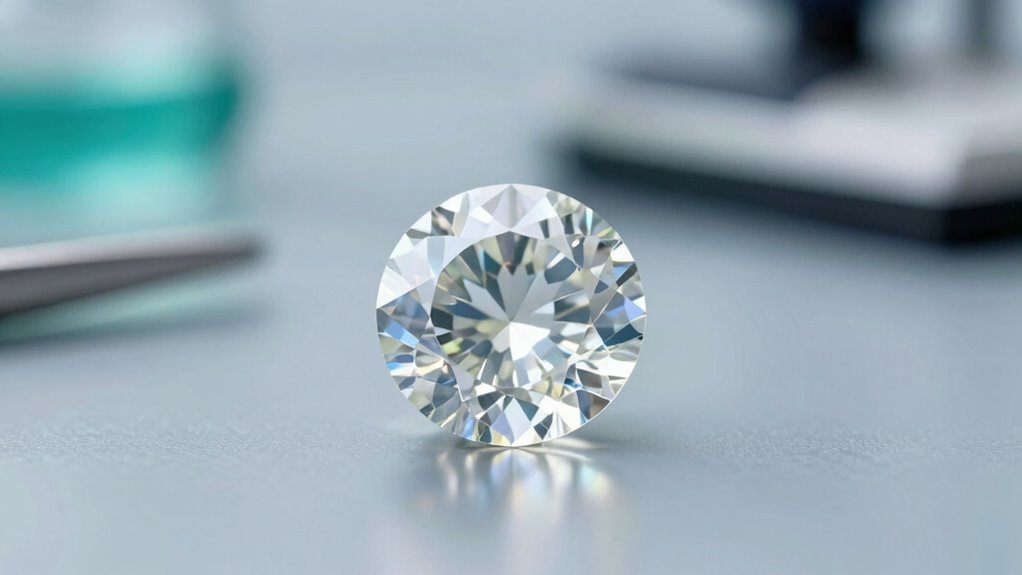
Determining whether lab-grown diamonds can be a sustainable long-term choice depends on several environmental and economic factors. While they often make sustainability claims, their long-term viability hinges on ongoing energy sources, technological advances, and supply chain practices. Visualize a future where:
- Renewable energy powers production plants
- Recycling and waste reduction are standard
- Ethical labor practices are maintained consistently
- Innovations improve energy efficiency
- Market demand remains steady and responsible
These elements influence whether lab-grown diamonds truly offer a sustainable option over time. While they currently reduce some ecological impacts compared to mined diamonds, their sustainability claims need continual validation. Ultimately, your confidence in lab-grown diamonds’s long-term viability depends on how these factors evolve and whether industry standards prioritize genuine sustainability.
Frequently Asked Questions
How Do Lab-Grown Diamonds Impact Local Communities and Economies?
Lab-grown diamonds positively impact local communities by fostering economic growth through new job opportunities and investments. You might notice that they often require less land disturbance and fewer resources, which supports community impact by reducing environmental harm. As a result, these diamonds can contribute to more sustainable local economies, empowering communities and promoting responsible development. You can feel confident knowing your choice supports both economic progress and environmental considerations.
Are There Any Hidden Ethical Concerns With Lab-Grown Diamond Production?
Imagine you’re watching a sci-fi flick where everything’s perfect—until the plot thickens. Hidden ethical concerns with lab-grown diamonds include their environmental footprints and high energy consumption, which can offset their eco-friendly image. While they avoid conflict resources, some production processes may still harm the environment or rely on dirty energy sources. So, it’s wise to contemplate these factors before assuming lab-grown diamonds are completely ethical or sustainable.
How Transparent Are Companies About Their Lab-Grown Diamond Sourcing?
You’ll find that many companies are increasingly transparent about their lab-grown diamond sourcing through supply chain transparency and corporate disclosures. They often publish detailed reports, certifications, and ethical practices to assure customers of sustainable and responsible production. However, the level of transparency varies, so it’s wise to research individual brands. By checking their disclosures, you can better understand their commitment to ethical sourcing and whether they prioritize sustainability.
What Certifications or Standards Verify the Sustainability of Lab-Grown Diamonds?
You can verify the sustainability of lab-grown diamonds through certification standards like the IGI and GIA, which ensure ethical verification and quality. Look for labels such as the Responsible Jewellery Council (RJC) or those indicating compliance with the standards set by the Diamond Producers Association. These certifications confirm that the ethical sourcing and environmental impact of your diamond guarantee recognized sustainability criteria, giving you confidence in your responsible choice.
Can Lab-Grown Diamonds Be Recycled or Reused Sustainably?
Yes, lab-grown diamonds can be recycled or reused sustainably. You can participate in diamond recycling by repurposing existing jewelry or through sustainable reuse programs that melt and recast diamonds, reducing waste and conserving resources. This process minimizes environmental impact and supports ethical practices, ensuring your diamond’s lifecycle extends beyond its initial use. By choosing sustainable reuse, you help promote a more eco-friendly approach to diamond consumption.
Conclusion
Ultimately, choosing lab-grown diamonds lets you hold onto beauty without sacrificing ethics—it’s like finding the shining star that guides your values. As you consider their eco-friendly promise and ethical potential, remember that your decision can spark change, illuminating a more sustainable path for the future. So, will you embrace this sparkling revolution and make your love story not just beautiful, but truly meaningful? The choice is yours—let your conscience be your compass.