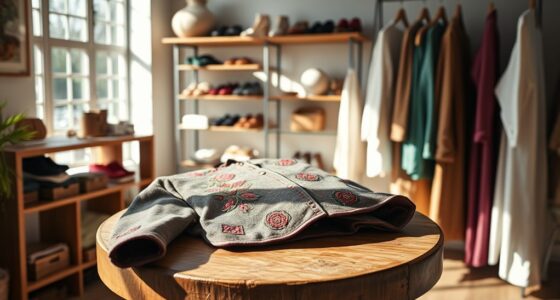
Fast fashion’s dirty secret is that it relies on a supply chain that often sacrifices workers’ rights and safety to keep costs low and speed high. Workers face long hours, unsafe conditions, and unfair wages, all while brands prioritize profits over ethics. Many factories operate in secrecy, making it easy to ignore the human suffering behind cheap clothing. If you want to understand the true social cost, there’s more you need to know.
Key Takeaways
- Fast fashion prioritizes speed and low costs, often outsourcing production to countries with poor labor standards.
- Factory workers face long hours, unsafe conditions, and wages that barely meet basic needs.
- Many brands conceal factory conditions, avoiding responsibility for workers’ rights and safety violations.
- Consumer demand for cheap, trendy clothing perpetuates unethical labor practices worldwide.
- Supporting fast fashion indirectly sustains exploitation and human rights abuses in the supply chain.
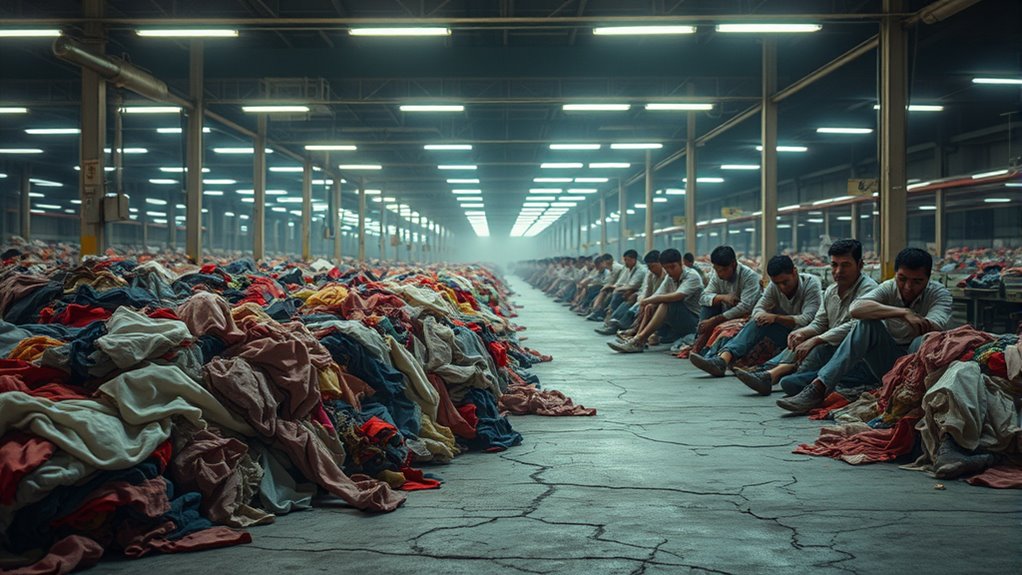
Fast fashion may help you stay trendy without breaking the bank, but behind the scenes, it hides a harsh reality. When you buy that $20 shirt, you’re often supporting a supply chain that prioritizes speed and low costs over ethical standards. Many fast fashion brands outsource production to countries with lax regulations, where supply chain ethics are frequently overlooked. Workers in these factories endure long hours, unsafe conditions, and wages that barely cover their basic needs. This exploitation is driven by the relentless pressure to produce cheap clothing quickly, often at the expense of human rights. You might not see it, but labor exploitation is woven into the fabric of fast fashion’s supply chain, with workers facing mistreatment just so you can snag a deal.
The reality is that many factories producing fast fashion garments operate in secrecy. Brands demand rapid turnaround times, pushing suppliers to cut corners and ignore fundamental labor rights. Workers, often from marginalized communities, are subjected to unfair wages, forced overtime, and unsafe environments. These factories may lack proper ventilation, fire safety measures, and adequate breaks, yet brands rarely take responsibility for these conditions. Instead, they focus on minimizing costs and maximizing profit, leaving workers vulnerable to exploitation. When you purchase from fast fashion brands, your money is indirectly supporting these unethical practices, fueling a cycle of labor abuse that persists across borders. Supply chain ethics play a crucial role in understanding the full impact of fast fashion.
It’s easy to overlook the human cost when you’re focused on getting a trendy outfit for a fraction of the price. But understanding supply chain ethics reveals a different story—one where workers are treated as commodities rather than human beings. Many of these workers lack proper protections or the power to demand better conditions, often because they have little bargaining leverage or legal protections. The race to produce cheap clothing quickly encourages corners to be cut, making labor exploitation almost inevitable. This exploitation isn’t just a distant problem; it’s a reality faced by thousands of workers whose lives are affected by the decisions made in the name of fast fashion.
Amazon Product B0DT4RZWK6
As an affiliate, we earn on qualifying purchases.
Frequently Asked Questions
How Does Fast Fashion Impact Local Economies in Producing Countries?
Fast fashion impacts local economies in producing countries by creating economic dependency, often discouraging diversification. You might not realize that labor exploitation is common, with workers earning low wages under poor conditions. While fast fashion boosts short-term employment, it can harm long-term growth, leaving communities vulnerable. You should consider supporting ethical brands that prioritize fair labor practices, fostering sustainable development and reducing reliance on exploitative industries.
What Are the Long-Term Environmental Consequences of Fast Fashion Waste?
You should be aware that fast fashion waste leads to severe long-term environmental consequences. Textile pollution from discarded garments pollutes waterways and land, harming ecosystems. Additionally, the rapid production deplete resources like water, cotton, and fossil fuels, which are difficult to replace. If this pattern continues, it’ll contribute to climate change, biodiversity loss, and increased pollution, making it urgent for you to contemplate sustainable choices and reduce textile waste.
How Can Consumers Identify Truly Sustainable Fashion Brands?
Imagine walking through a vibrant market, where every stall whispers stories of ethical craftsmanship. To spot truly sustainable brands, look for clear sustainable certifications and ethical branding that prioritize transparency. These labels are your guide, revealing brands committed to eco-friendly practices and fair labor. By trusting these symbols, you guarantee your wardrobe reflects values that support both people and the planet, turning your fashion choices into a powerful act of conscience.
What Are the Health Risks Faced by Garment Factory Workers?
You should be aware that garment factory workers face significant health risks, including chemical exposure from dyes and fabrics that can cause respiratory issues or skin problems. Additionally, ergonomic hazards like repetitive motions and poor workstation design put them at risk of musculoskeletal disorders. By understanding these dangers, you can make more informed choices, supporting brands that prioritize safe working conditions and better protect their workers’ health.
How Can Policies Effectively Regulate Fast Fashion Industry Practices?
Think of policy implementation as a sturdy anchor in a stormy sea. To regulate the fast fashion industry effectively, you need strong regulatory frameworks that set clear standards and hold brands accountable. Governments should collaborate with industry insiders, enforce transparency, and impose penalties for violations. When policies are well-crafted and enforced consistently, they act like a lighthouse guiding the industry toward more ethical practices, reducing social and environmental harm.

DESLOC Smart Door Lock B200, Smart Deadbolt Lock, Keyless Entry Door Lock, Fingerprint Smart Lock, Smart Locks for Front Door, App Control, Touchscreen Keypad Deadbolts,12-Month Battery, BHMA Grade3
𝐀𝐩𝐩 𝐂𝐨𝐧𝐭𝐫𝐨𝐥: Pair with Bluetooth for TTLock App control within the distance of 2 meters. Smart Deabolt Lock...
As an affiliate, we earn on qualifying purchases.
Conclusion
You can’t ignore the true cost of cheap clothing. Every shirt or pair of jeans you buy from fast fashion brands often hides devastating social impacts, like poor working conditions. Imagine a factory worker in Bangladesh risking her health for barely enough to survive, just to keep prices low. By choosing quality over quantity and supporting ethical brands, you help break this cycle and protect the people behind your clothes. Your choices really do make a difference.

Philips Wi-Fi Smart Lock with Handle, Keyless Entry Keypad Door Lock with Handle, Front Door Deadbolt Set with WiFi Gateway, App Control, Fingerprint Unlock, PIN Code Unlock, Auto Locking
𝐊𝐞𝐲𝐩𝐚𝐝 𝐃𝐨𝐨𝐫 𝐋𝐨𝐜𝐤 𝐰𝐢𝐭𝐡 𝐇𝐚𝐧𝐝𝐥𝐞𝐬: Upgrade your home with Philips keyless entry door lock with handles, which enhances...
As an affiliate, we earn on qualifying purchases.

Philips Wi-Fi Door Lock, WiFi Smart Lock Keyless Entry Deadbolt for Front Door, Compatible with Alexa & Google Assistant, Remote Control, Built-in WiFi, APP Fingerprint Passcode Unlock, Auto Locking
𝐅𝐥𝐞𝐱𝐢𝐛𝐥𝐞 𝐖𝐚𝐲𝐬 𝐭𝐨 𝐔𝐧𝐥𝐨𝐜𝐤: Unlock the way you want: app, passcode, fingerprint, physical key, or voice via Alexa/Google...
As an affiliate, we earn on qualifying purchases.

Emma is a culinary expert from New York City, USA, with extensive experience in gourmet cooking and food journalism. She collaborates with prestigious food publications and high-end restaurants, bringing exquisite taste and culinary insights to the A Luxury Lifestyle platform. Emma’s expertise elevates our gastronomic offerings.