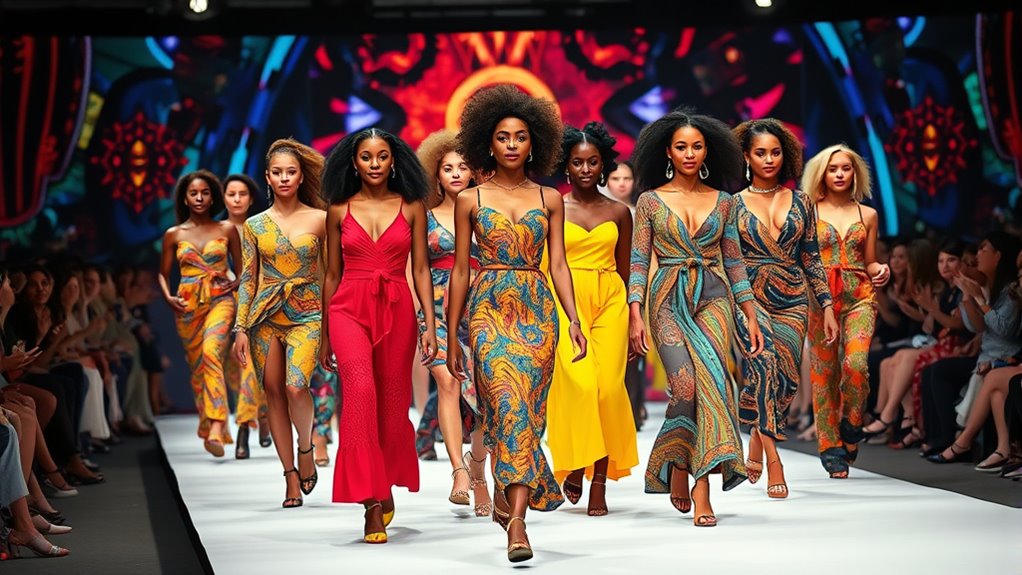

Fashion’s inclusivity revolution is transforming runways and campaigns by showcasing a wider range of cultures, body sizes, and identities. Brands now focus on authentic representation, celebrating diversity rather than stereotypes. This movement empowers you to see beauty in all forms and backgrounds, fostering confidence and self-expression. As this trend continues, the industry becomes more equitable and vibrant. If you keep exploring, you’ll discover how these changes are shaping the future of fashion for everyone.
Key Takeaways
- Fashion shows now showcase models from diverse ethnic backgrounds, emphasizing authentic cultural representation over stereotypes.
- Major brands are adopting varied sizes, promoting realistic beauty standards and empowering all body types.
- Collaborations with designers and influencers from different cultures enrich collections and foster community engagement.
- Innovative designs incorporate cultural motifs and accommodate diverse body types, encouraging individuality and authenticity.
- Consumer support for inclusive brands drives industry change toward greater equity and representation on the runway.
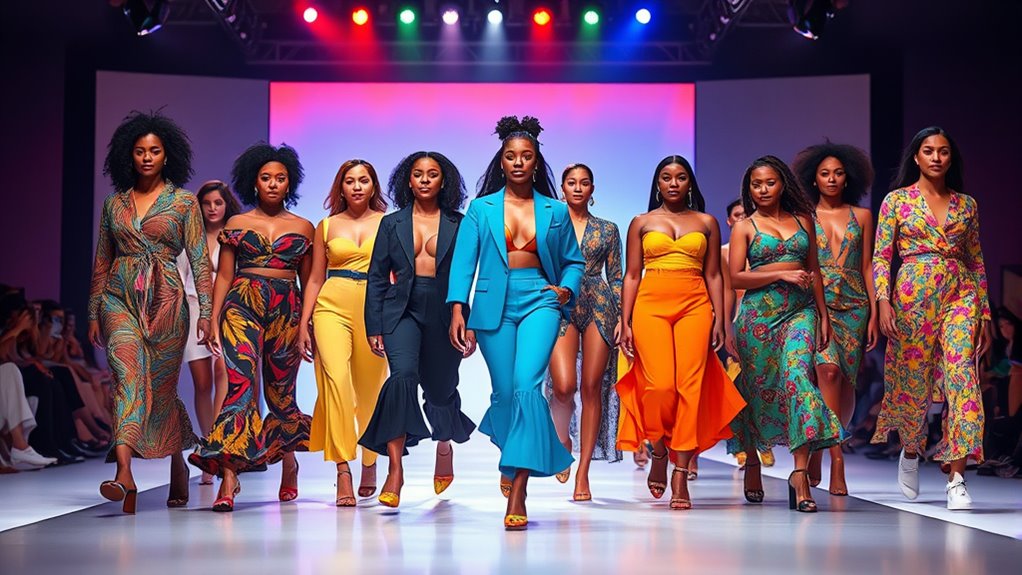
Fashion is undergoing a powerful inclusivity revolution, transforming the industry to embrace diversity in all its forms. No longer are runway shows and ad campaigns limited to a narrow ideal; instead, they now celebrate a broader spectrum of cultural representation and size diversity. You’ll notice designers increasingly featuring models from different ethnic backgrounds, showcasing authentic cultural expressions that honor unique identities rather than stereotypes. This shift allows you to see beauty in a multitude of origins, fostering a more genuine connection between fashion and its diverse audience.
Size diversity plays a *essential* role in this movement. You’re no longer confined to the traditional sample sizes that dictated what was considered fashionable or desirable. Major brands now include models of various sizes, giving you a more realistic and inclusive view of beauty. This change empowers you to feel represented and confident, seeing fashion that aligns with your body type rather than feeling alienated by unattainable standards. When you see models with different body shapes walking the runway, it signals that fashion is for everyone, regardless of size, and helps challenge harmful stereotypes that have long persisted.
The industry’s focus on cultural representation and size diversity is driven by a desire to reflect the world more accurately. You’re likely to notice more brands collaborating with designers and influencers from diverse backgrounds, infusing collections with cultural elements that are meaningful rather than tokenistic. This approach not only enriches the fashion landscape but also educates and enlightens you about different traditions, histories, and identities. As a consumer, you’re given the opportunity to celebrate your own culture or appreciate others’, fostering a sense of belonging and community.
Furthermore, this inclusivity drives innovation. When designers incorporate varied cultural motifs and consider different body types, they create more dynamic, inventive collections that resonate on a deeper level. You’re encouraged to embrace your individuality, knowing that fashion now values authenticity over conformity. The industry’s push toward representation isn’t just about appearances; it’s about redefining standards of beauty and encouraging you to express yourself freely.
Ultimately, this revolution in fashion makes you part of a larger movement—one that champions acceptance, celebrates differences, and recognizes that beauty exists in every form. By supporting brands that prioritize cultural representation and size diversity, you contribute to a more equitable industry. This shift is shaping a future where everyone can see themselves reflected in fashion’s mirror, inspiring confidence and fostering a culture that truly values diversity in all its vibrant manifestations.
Amazon Product B0DT4RZWK6
As an affiliate, we earn on qualifying purchases.
Frequently Asked Questions
How Are Designers Measuring the Success of Inclusivity Initiatives?
You can gauge your inclusivity efforts by observing changes in brand perception and media coverage. When more diverse models walk your runway and your campaigns reflect real-world representation, positive shifts occur. Increased media attention on your inclusivity initiatives signals success. If your brand is celebrated for diversity and receives favorable press, you’re making progress. Regularly analyzing audience feedback and industry responses helps you measure how effectively your efforts resonate and improve your overall brand image.
What Challenges Do Emerging Designers Face in Promoting Diversity?
You’re walking a tightrope when promoting diversity as an emerging designer. Accessibility barriers can limit your reach, making it harder to showcase varied cultural representation. You might struggle with limited resources, industry biases, or pushback from traditionalists. Despite the hurdles, you must keep pushing forward, embracing the challenge head-on. Remember, every step you take toward inclusivity helps break down walls and creates a more vibrant, representative fashion landscape.
How Does Inclusivity Impact Consumer Purchasing Decisions?
You’ll notice that inclusivity influences your purchasing choices, as brands promoting body positivity and diversity often build stronger loyalty. When a brand embraces different sizes, genders, and backgrounds, you feel more connected and valued, making you more likely to support them. This shift encourages you to choose brands that reflect your values, fostering a more authentic shopping experience and strengthening your commitment to brands that celebrate real beauty and diversity.
Are There Specific Regions Leading in Fashion Inclusivity?
You’ll notice that regions like North America and Europe are leading in fashion inclusivity, driven by diverse cultural influences and evolving regional trends. These areas prioritize representation, inspiring designers to showcase varied models and styles. As a result, you’ll see more inclusive collections emerging from these regions, setting a global standard. Their commitment to embracing diversity influences your choices, encouraging brands worldwide to follow suit and celebrate cultural richness.
What Role Do Social Media Platforms Play in This Revolution?
Social media platforms play a pivotal role in this revolution by amplifying voices and showcasing diverse beauty. You can see viral campaigns and influencer collaborations spreading messages of inclusivity quickly and widely, breaking traditional industry barriers. These platforms empower you to engage with authentic stories, challenge stereotypes, and support brands that prioritize diversity. Through social media, you’re part of a global movement that pushes fashion to become more inclusive and representative of real-world diversity.

Tanming Women's Faux Leather Moto Biker Short Coat Jacket (Black-M)
Faux leather jacket women featured with the short length
As an affiliate, we earn on qualifying purchases.
Conclusion
As you witness fashion’s shift toward greater inclusivity, it’s clear that change is happening faster than ever. Embracing diversity on the runway isn’t just a trend; it’s a sign of a more accepting world. The industry is finally realizing that beauty comes in all shapes, sizes, and backgrounds. So, don’t be left behind—this movement is gaining steam, and it’s a golden opportunity to celebrate everyone’s unique style. The ball is in your court now.

Tommy Hilfiger Men's Classic Faux Leather Jacket, dark brown, Large
Premium Quality Faux Leather: Crafted from faux leather with front zipper closure and box quilted interior nylon.
As an affiliate, we earn on qualifying purchases.

Fahsyee Leather Jackets for Men, Faux Bomber Jacket Mens Motorcycle Lapel Asymmetric Zip-Up Belt Slim Fit Biker Coat Black L
[MATERIAL] High quality faux leather. The leather jacket is soft and delicate, comfortable and breathable. With a smooth...
As an affiliate, we earn on qualifying purchases.
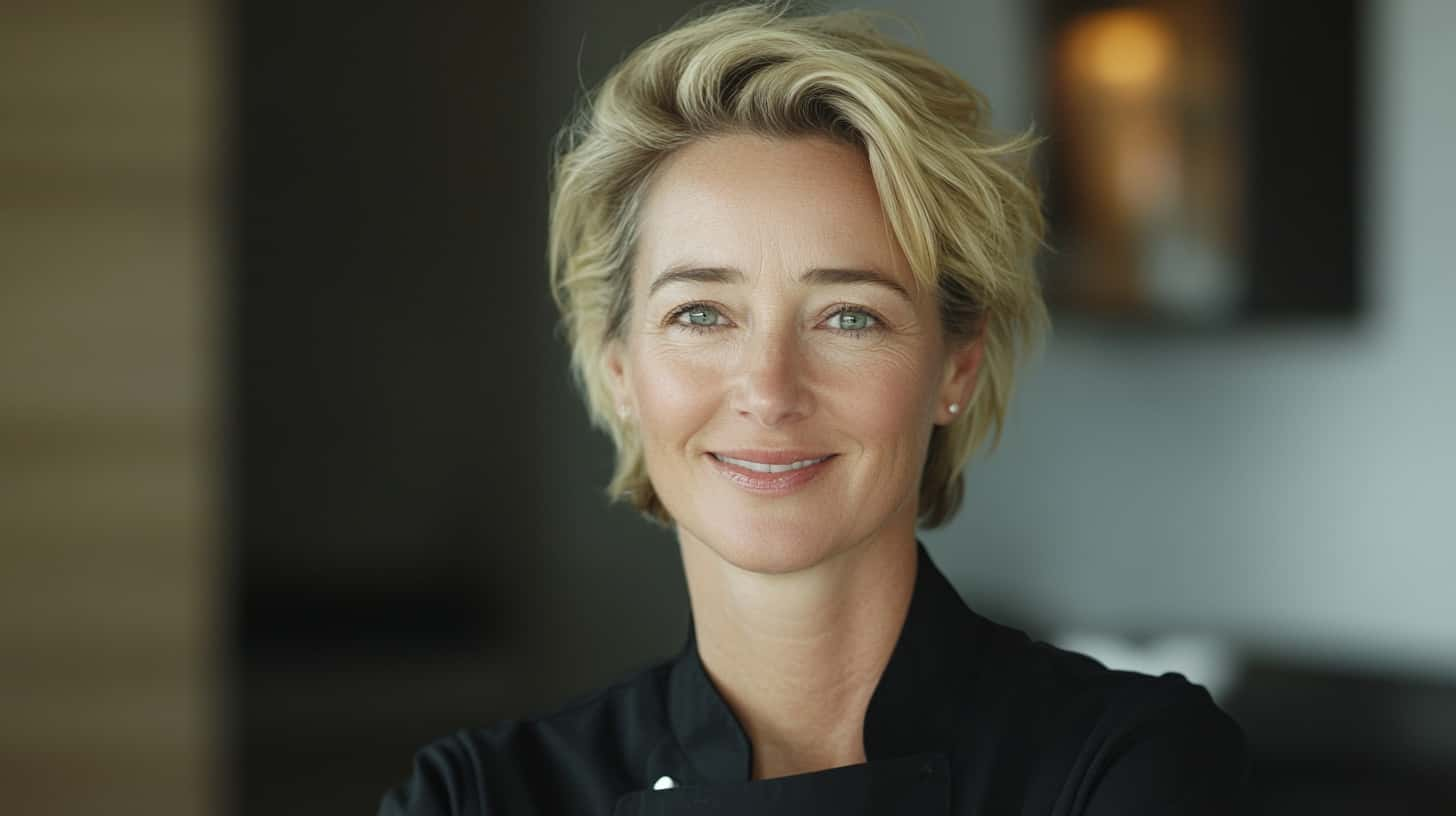
Emma is a culinary expert from New York City, USA, with extensive experience in gourmet cooking and food journalism. She collaborates with prestigious food publications and high-end restaurants, bringing exquisite taste and culinary insights to the A Luxury Lifestyle platform. Emma’s expertise elevates our gastronomic offerings.