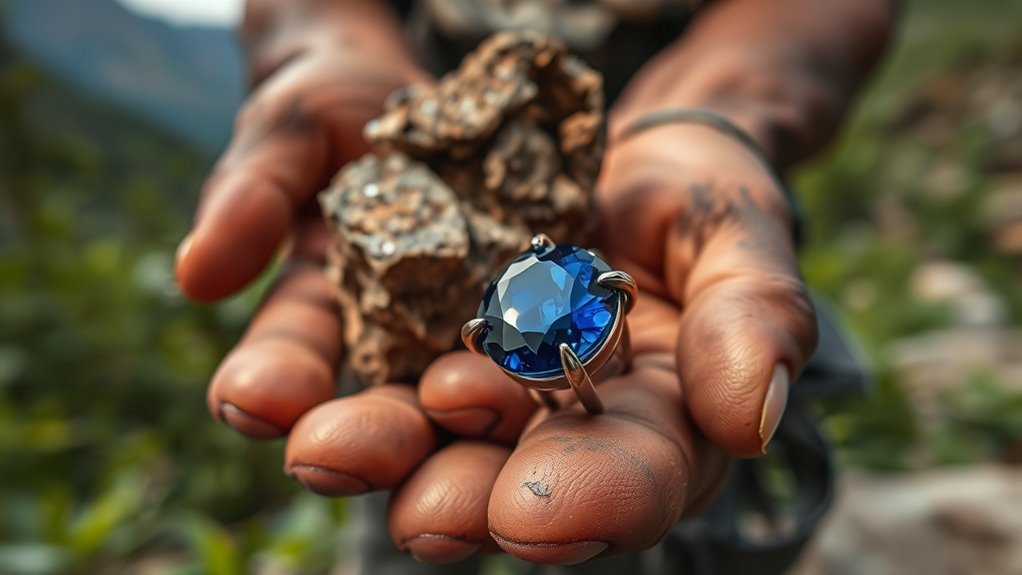

When exploring ethical jewelry from mine to market, you’re supporting responsible sourcing that minimizes environmental harm and promotes fair labor practices. It involves choosing pieces made from sustainably sourced raw materials like gold, silver, and gemstones, while ensuring transparent supply chains. Fair trade standards empower communities and protect ecosystems. By making conscious choices, you help foster industry change toward greater transparency and social responsibility. Keep exploring to discover how your jewelry selections can reflect your values and promote positive impact.
Key Takeaways
- Ethical jewelry emphasizes sustainable sourcing of raw materials like gold, silver, and gemstones to minimize environmental harm.
- Fair trade practices ensure fair wages, safe conditions, and community empowerment along the jewelry supply chain.
- Transparent supply chains help verify that materials are ethically sourced and not linked to environmental degradation.
- Supporting ethical jewelry promotes industry standards that prioritize social responsibility and environmental preservation.
- Consumers’ choices influence a shift toward responsible, sustainable jewelry production from mine to market.

Have you ever wondered if your jewelry choices can make a difference? When you select pieces that align with ethical standards, you’re not just enhancing your style—you’re supporting a system that values responsible practices from the very start. One of the most important aspects of ethical jewelry is sustainable sourcing. This means that the raw materials, like gold, silver, and gemstones, are obtained in ways that minimize environmental impact and preserve natural resources. Instead of supporting mining operations that cause deforestation, soil erosion, or water contamination, choosing jewelry made from sustainably sourced materials helps protect ecosystems and ensures that natural habitats remain healthy. Sustainable sourcing also involves transparency in the supply chain, so you can be confident that the materials you buy aren’t linked to environmental degradation or unethical practices.
Choosing ethically sourced jewelry helps protect ecosystems and supports responsible practices from the start.
Equally essential is the commitment to fair trade practices. When jewelry is produced under fair trade standards, it guarantees that artisans and workers receive fair wages, work in safe conditions, and aren’t exploited. Fair trade practices empower communities by providing economic stability and supporting local economies, especially in regions where mining or jewelry crafting is a primary source of income. By purchasing jewelry that adheres to these standards, you’re directly contributing to the well-being of artisans who pour their skill and tradition into their craft. It’s about ensuring that everyone along the supply chain benefits fairly, rather than just a few corporate interests.
Choosing jewelry that emphasizes sustainable sourcing and fair trade practices also encourages brands to prioritize ethical standards. Many reputable companies now highlight their commitment to these principles, making it easier for you to make conscious choices. When you buy ethically sourced jewelry, you’re supporting initiatives that reduce environmental harm and promote social equity. Your purchasing power becomes a tool for positive change, helping shift the industry toward more responsible and transparent practices. It’s a way to wear beauty with integrity, knowing that your adornments aren’t contributing to environmental damage or social injustice.
In the end, your jewelry choices can speak volumes about your values. By prioritizing pieces made through sustainable sourcing and fair trade practices, you actively participate in a movement that respects both people and the planet. It’s about making style a statement not just for yourself but for the world you want to see—one where ethics and aesthetics go hand in hand. So next time you shop for jewelry, consider the story behind each piece. Your decision can help foster a more responsible and equitable jewelry industry for generations to come.

Wendy Kleiner Lapis Lazuli Crystal Bracelet 3–4mm – Healing Stone Beads – Spiritual Energy Jewelry for Wisdom, Self-Awareness & Intuition – Elastic, Unisex, Gift-Ready
INTENTIONALLY DESIGNED FOR SPIRITUAL WELLNESS – This handcrafted bracelet features 3–4mm ethically-sourced Lapis Lazuli beads chosen for their…
As an affiliate, we earn on qualifying purchases.
As an affiliate, we earn on qualifying purchases.
Frequently Asked Questions
How Do Ethical Certifications Differ Across Jewelry Regions?
You’ll find that ethical certifications differ across regions mainly due to varying certification standards and regional compliance requirements. In some areas, strict standards like the Kimberley Process restrict conflict diamond trade, while others may emphasize fair labor practices or environmental impact. You should check each region’s certification standards to guarantee the jewelry meets regional compliance, helping you make truly ethical choices regardless of where the jewelry is sourced or sold.
What Are the Most Sustainable Alternative Materials for Jewelry?
When it comes to sustainable jewelry, you’re hitting the jackpot with recycled metals and lab-grown gemstones. These alternatives are a win-win, reducing environmental impact and ethical concerns. Recycled metals cut down on mining waste, while lab-grown gemstones save natural resources and avoid conflict. By choosing these options, you’re steering clear of harm to ecosystems and communities, making your jewelry both beautiful and kind to the planet.
How Can Consumers Verify Ethical Claims Made by Jewelers?
You can verify ethical claims by asking for diamond authenticity and lab-grown verification certificates. Research jewelers’ transparency, look for third-party certifications like GIA or IGI, and check their commitment to ethical practices. Don’t hesitate to request detailed information about the sourcing and production process. By doing this, you guarantee your jewelry aligns with your values and supports responsible, sustainable practices.
What Are the Challenges in Sourcing Conflict-Free Gemstones?
You face a formidable challenge in sourcing conflict-free gemstones, where supply chain transparency is often hidden in shadows. Ethical sourcing standards demand rigorous verification, but complex global networks make it tough to trace every step. Suspense builds as you risk unknowingly supporting unethical practices. Ensuring every gemstone meets strict standards requires vigilance, unyielding commitment, and reliable certification. The stakes are high—your choices impact lives and the future of ethical jewelry.
How Does Ethical Jewelry Impact Local Communities and Economies?
Ethical jewelry boosts local communities by promoting community empowerment and driving economic development. When you choose ethically sourced pieces, you support fair wages, better working conditions, and sustainable practices. This encourages local artisans and miners, creating jobs and fostering economic growth. Your purchase helps uplift entire communities, ensuring they benefit from responsible sourcing. By prioritizing ethical jewelry, you actively contribute to positive social change and a more sustainable, equitable industry.

Vintage Silver Knuckle Rings Set for Women Men, Chunky Rings Aesthetic Snake Grunge Stackable Gothic Ring Adjustable Y2K Punk Bulky Boho Finger Alt of Rings, Non-Precious Metal, No Gemstone
【Vintage BOHO Ring Set】: 42 vintage stone black silver rings for women, made up of high quality antique…
As an affiliate, we earn on qualifying purchases.
As an affiliate, we earn on qualifying purchases.
Conclusion
By choosing ethical jewelry, you champion conscientious craftsmanship and curb cruel practices. Your mindful buying makes a massive difference, demonstrating your dedication to dignity, diversity, and sustainability. When you prioritize purity and transparency, you promote positive change from mine to market. So, step confidently into the world of conscious consumption, and let your choices champion a cleaner, kinder, and more responsible jewelry industry. Your decision defines the future—make it meaningful, mindful, and marvelous.

Badu Gemstone Beaded Necklace for Women Colorful Natural Stone Beach Rainbow Necklace Jewelry Gift
Flexible Size: Gemstone necklace is 17+2 Inch length, perfect for wearing alone or layering with other necklaces for…
As an affiliate, we earn on qualifying purchases.
As an affiliate, we earn on qualifying purchases.

Beathoven 10 Strands Acrylic Chunky Chains Linking Rings, Colorful Bag Chain Plastic Chain Twist Linking Rings 15.7” Crossbody Chains for Handbag Purse Phone Strap Keychain Jewelry Making (Detachable)
Package Includes:10pcs Opaque Acrylic Chains,10 colors,1pcs/color.
As an affiliate, we earn on qualifying purchases.
As an affiliate, we earn on qualifying purchases.

Born in Dubai to Pakistani parents, Aisha deeply understands Middle Eastern and South Asian luxury markets. She excels in forging strategic partnerships with top-tier luxury brands worldwide, fostering cross-cultural collaborations that enhance our global presence.